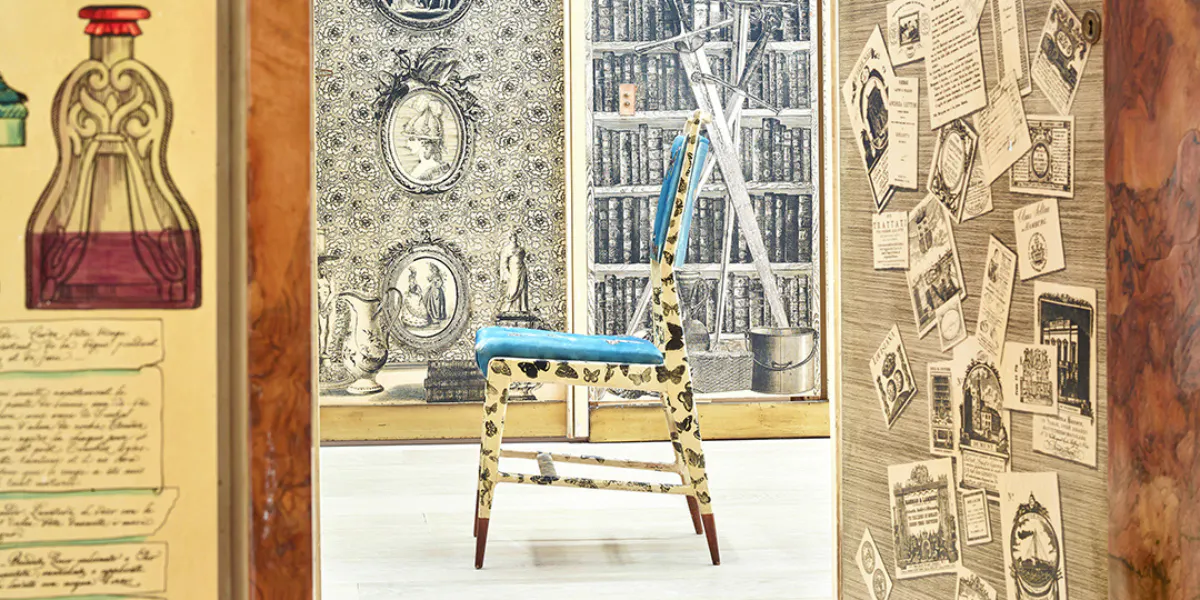
‘Casa di Fantasia’: this is what Gio Ponti called Casa Lucano, an enchanting apartment on Milan's Via Washington, which he was commissioned to design in 1951 in collaboration with his esteemed friend and colleague Piero Fornasetti.
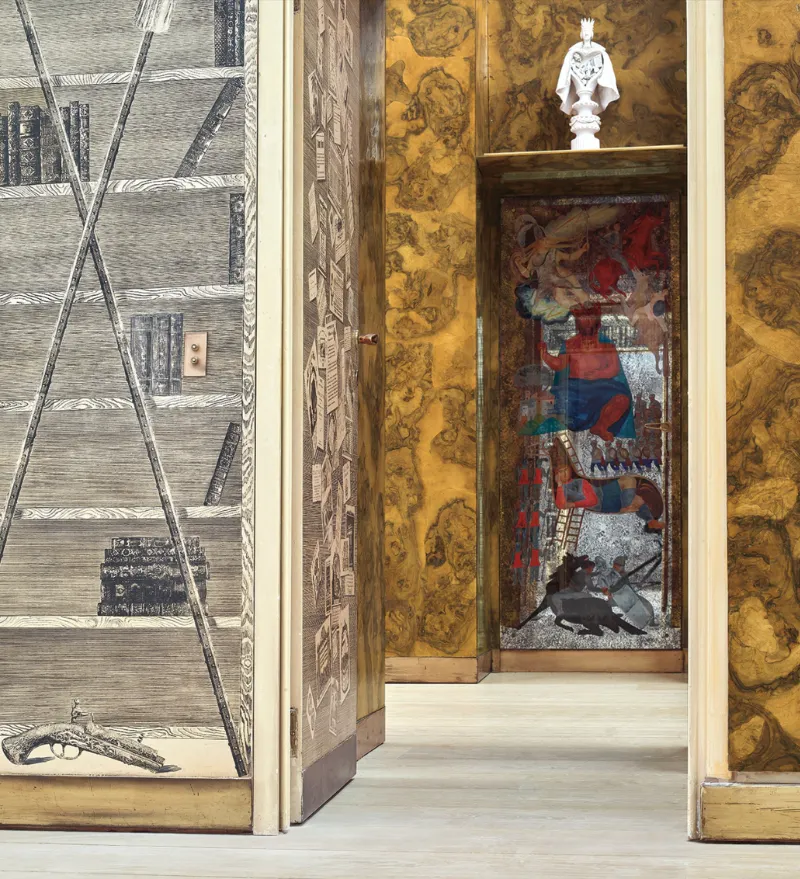
The two artists met at Milan's Triennale V in 1933, when Ponti was a member of the jury. The encounter marked the beginning of a long partnership, where Ponti designed and Fornasetti embellished. When asked about this fruitful collaboration, Ponti said, "What gives me Fornasetti? With a process of speed and prodigious resources, he creates the possibility of having 'unique' things… and the effect of lightness and poetry through his printed decoration".
See also: The Magical Mystical World of Piero Fornasetti
The 1950s was the golden decade for the creative duo, thanks to the numerous projects they did together, such as Casa Cremaschi, Casa Ceccato, Casa Licitra, Casino San Remo and the Dulciora store in Milan. These projects also featured the many surrealist tropes that would come to figure prominently in the later collaborations. And in 1951, Casa Lucano – the Fantasy House – was the culmination of their unbridled geniuses.
See also: Gio Ponti: A Founding Architect
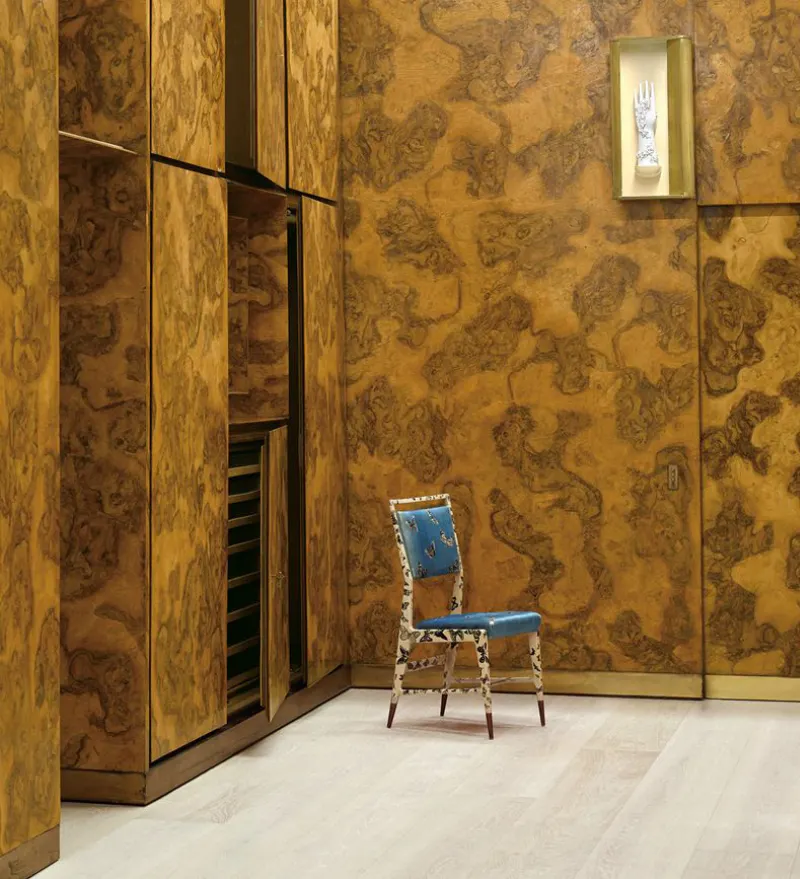
In collaboration with other artists and designers, including Edina Altara, Fausto Melotti and Tapio Wirkkala, the apartment took shape. The interior design was inspired by Italian Metaphysical Art (Pittura Metafisica) and French Surrealism, and was stylistically unique in post-war Italy.
See also: The 10 Most Popular Furniture Designers
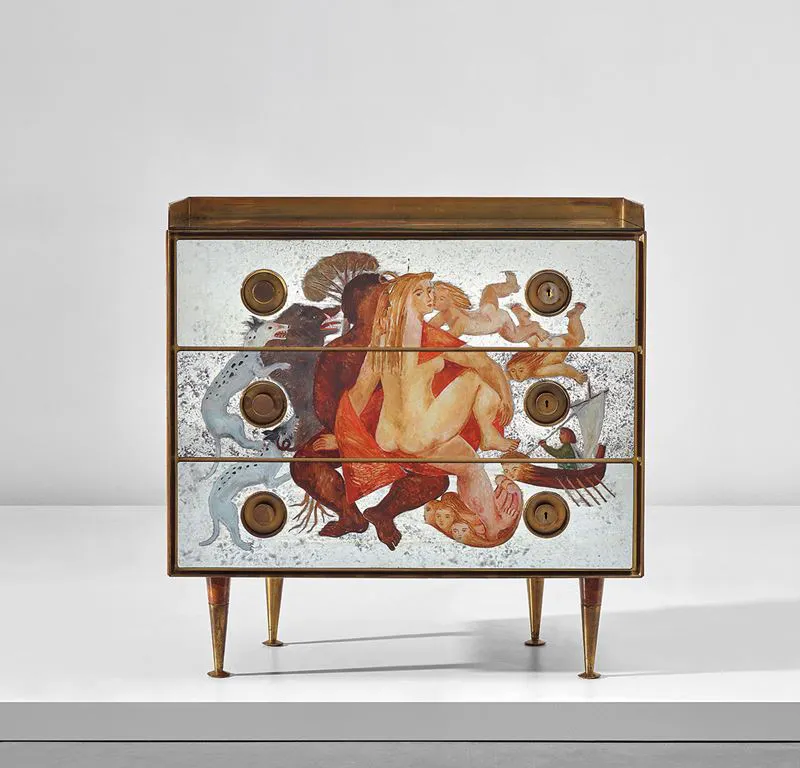
The apartment became like a theatre, an imaginary stage for its future inhabitants. Gio Ponti asserted that "it is those who live in the house that create it, and not the other way around". The spaces were designed around this ethos, creating versatile rooms that could be shaped by its owners.
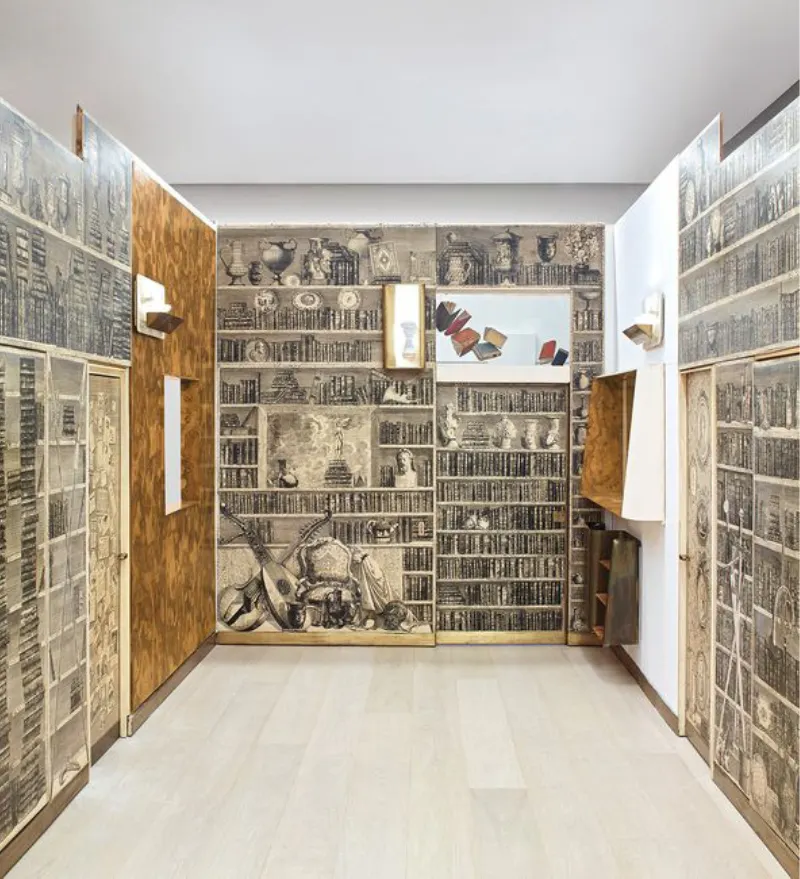
The design did not seem to have any boundaries at all, and it was filled with optical illusions that reinforced and reflected the imaginative dream world shared by the two designers. The optical effects created by Ponti and Fornasetti can be said to be a three-dimensional trompe-l'œil, an attempt to trick the viewer – something very atypical for a home. Gio Ponti himself thanked the owner of the apartment for the opportunity to unleash his creativity and create the ultimate fantasy house in its entirety.
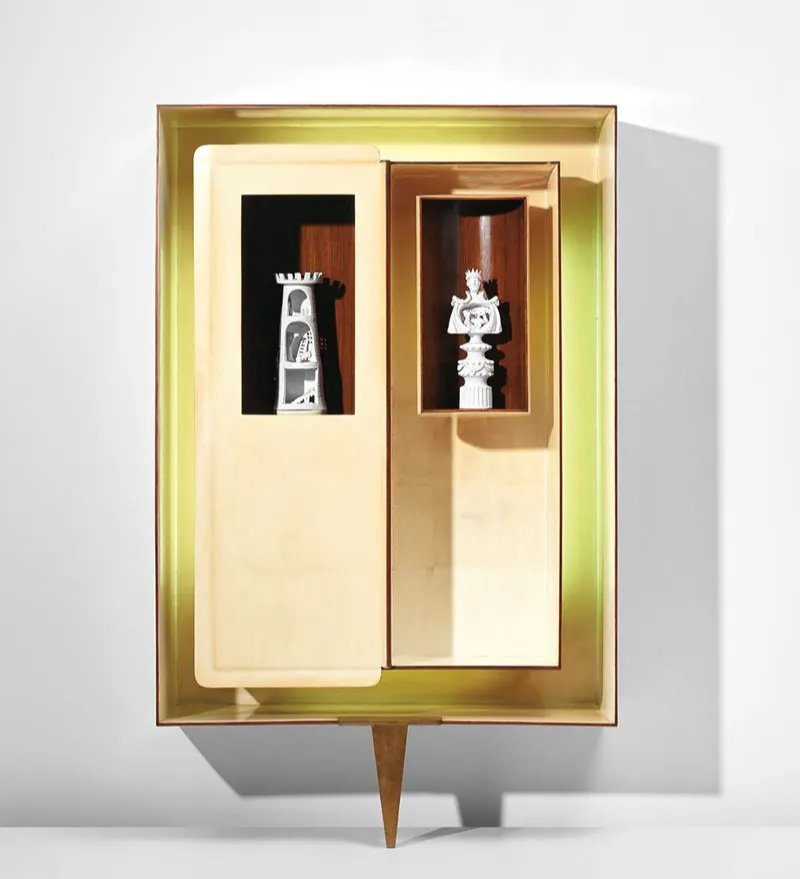
Throughout the fantastical rooms were anthropomorphic objects and human silhouettes. In collaboration with Richard Ginori and Gabbianelli, Gio Ponti created glazed ceramic sculptures inspired by womanly figures and ancient Hellenistic terracotta-style Tanagra figurines.
Want more articles like this delivered straight to your inbox? Subscribe to our free newsletter
Salvatore Licitra, Ponti's grandson and curator of the Ponti archive, commented: “There are two fundamental aspects to consider in the understanding of this work by Ponti... the use of space as an expression of theatrical versatility and the use of surfaces as an expression of ‘illusiveness’, considered by Ponti as an indispensable approach to architecture".
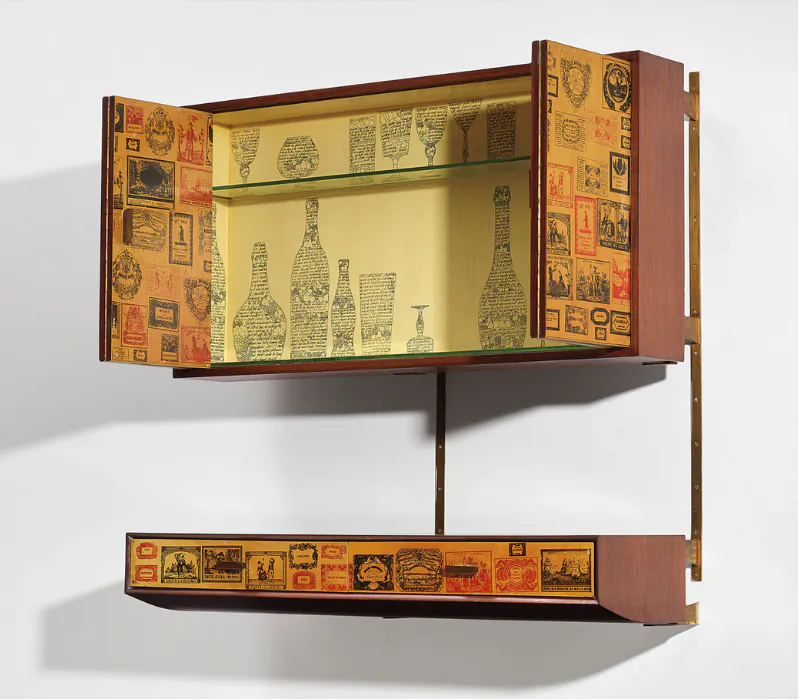
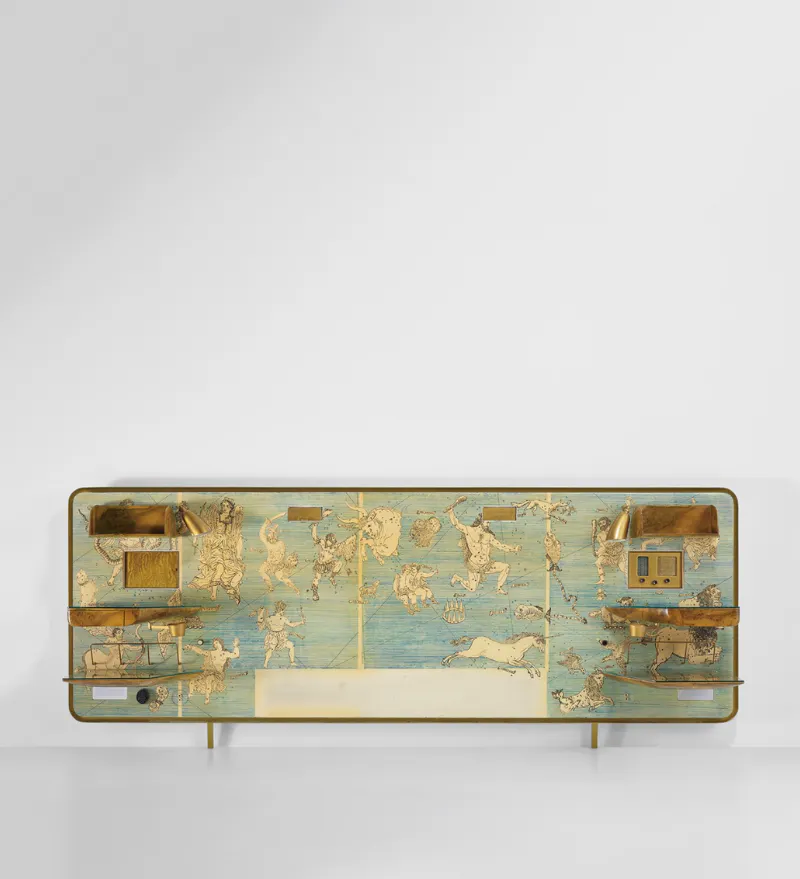
In 2019, Cambi Casa d’Aste and Phillips curated an exclusive auction with 30 prestigious lots from the House of Fantasy collection, which sold in its entirety for a total turnover of £2.4 million. The highlights included the Superleggera chairs, sold for £50,00, and the illuminated 'Positivo-negativo' cabinet, which sold for £68,750.
Check out our podcast episode on Quirky Italian Design!
The art historian and curator of the sale, Brian Kish, wrote that with Casa Lucano, “Gio Ponti reached the apex of his quest for the Fantasy Home, a type of house that echoes both Italian Metaphysical and French Surrealist art of the early and mid-twentieth century within the domestic realm. This approach has almost no equivalent in pre-war Europe except perhaps in Le Corbusier's Beistegui apartment (1929-31) and Carlo Mollino's Devalle apartment (1939-40)”. The house represented the dynamic cultural environment that characterised the Milanese society of the period, and became a hallmark of pan-Italian architecture.
Find more articles in Barnebys Magazine
This is an updated version of a sponsored article originally published on 12 March 2019.