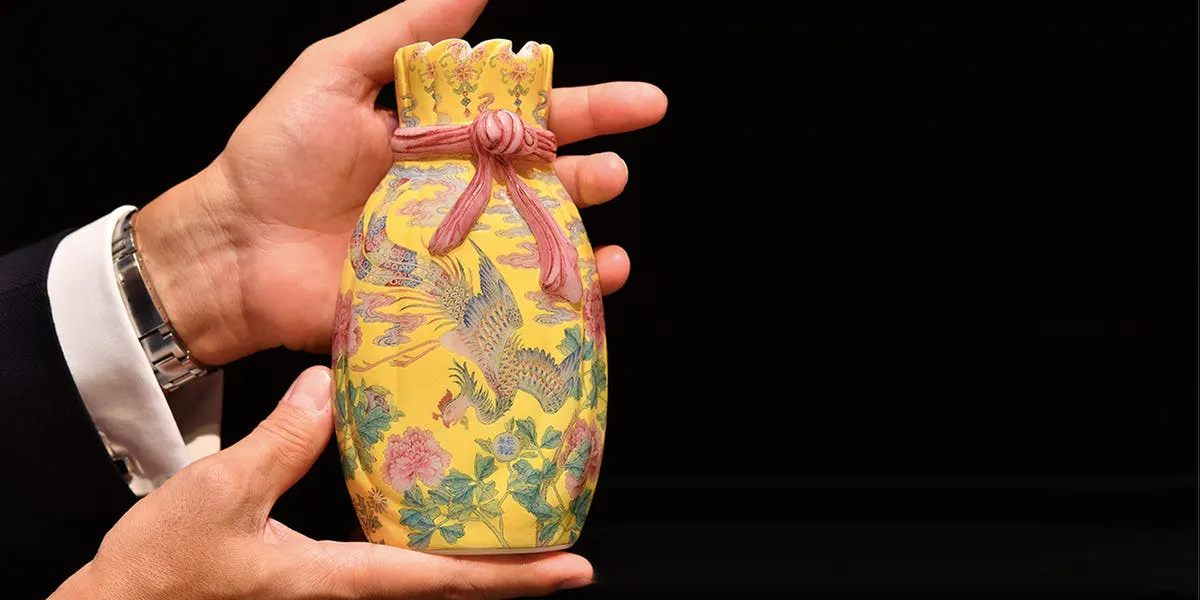
According to the records of the imperial workshops in the Forbidden City in Beijing, in 1738 Emperor Qianlong of the Qing Dynasty commissioned two enamelled glass vases in the form of a pouch. The design of the falangcai (a piece of porcelain with painted enamel) is also reminiscent of embroidered silk brocade.
Only two known copies of these vases were executed as the manufacturing process of such objects was extremely complicated. Each enamel had to be burned individually on the glass body, a risky endeavour since glass and enamel have a similar melting point. The execution of the unusual form, especially with the stately size of 18.2 cm, demanded a high level of precision and skill from the imperial artists.
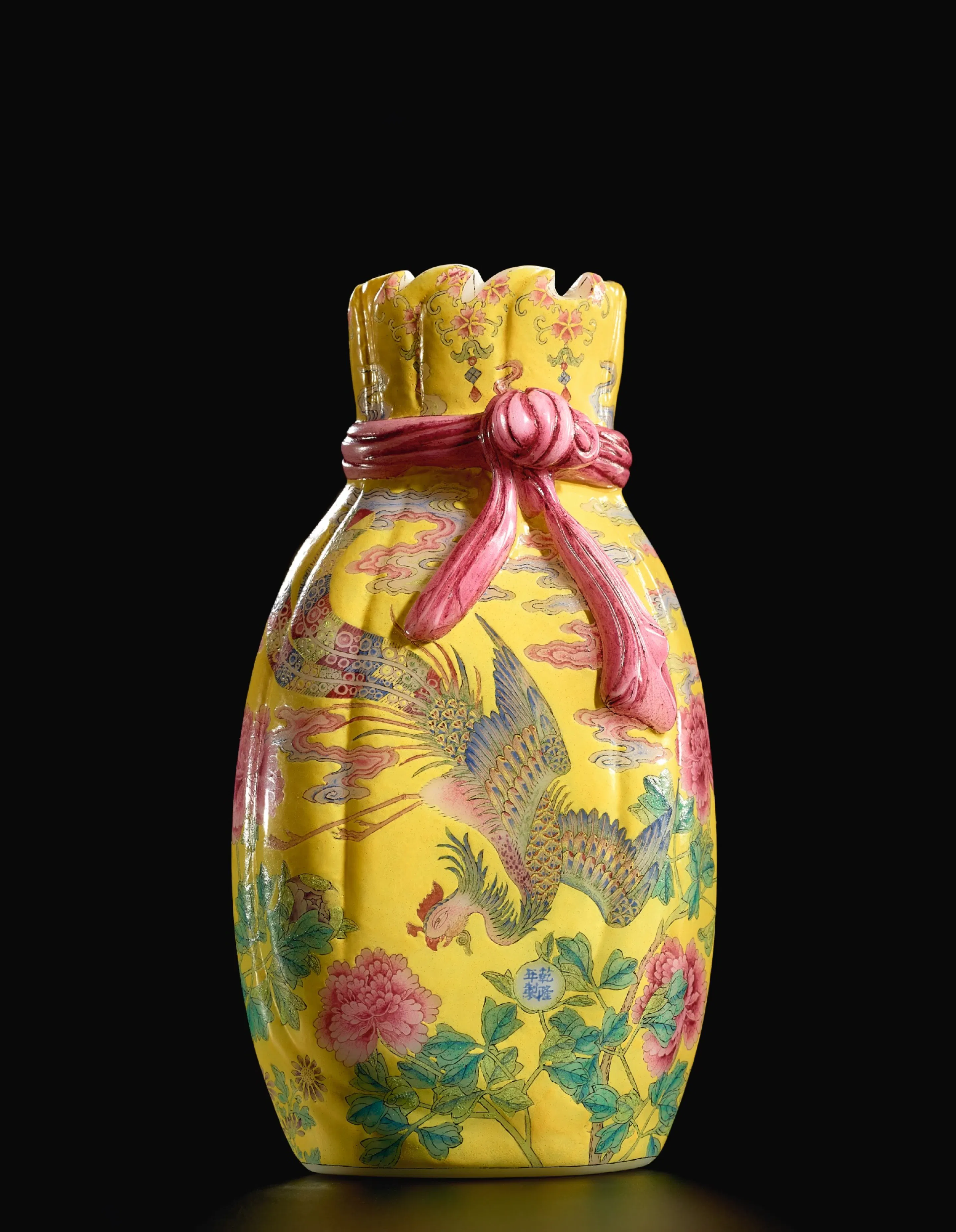
The present glass vase and its twin, which is 0.3 cm larger, are the most outstanding examples of the high level of craftsmanship that prevailed in the workshops of the Forbidden City at the time of the Qianlong Emperor, who ruled from 1735 to 1796. The glass and enamel workshops regularly worked together to make smaller falangcai items for the emperor, including paintbrushes and snuff bottles.
See also: 5 Things You Didn't Know About Ceramics
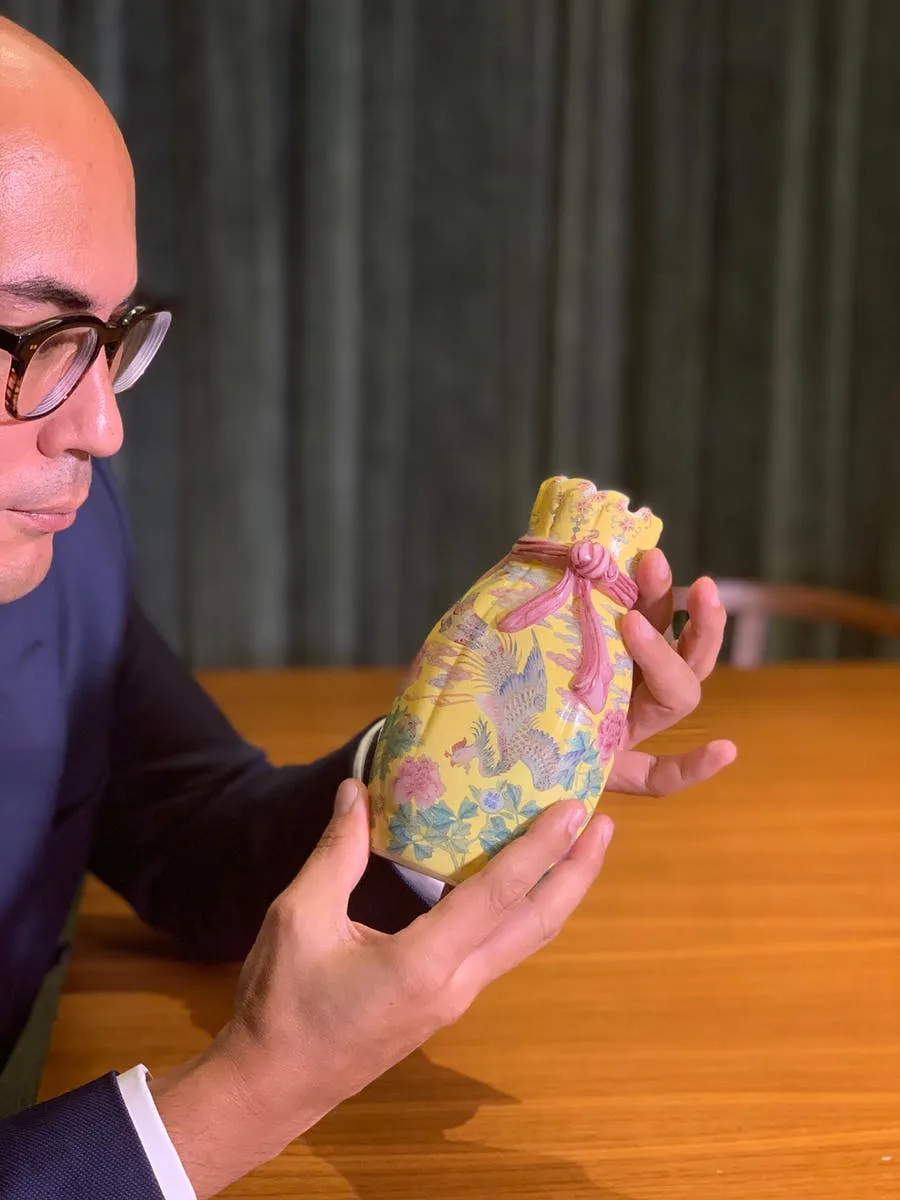
The two pouch-shaped vases remained in the possession of the imperial family even after the fall of the Qing dynasty in 1911, but were eventually sold to the Shanghai-based merchant and collector Abel William Bahr. They were then purchased in 1922 and owned for the next 60 years by Boston collectors Paul and Helen Bernat. After Paul Bernat's death, the vases were auctioned off at Sotheby's Hong Kong in 1988. While the present vase would come under the hammer there again 12 years later, the other vase is now at the Hong Kong Museum of Art.
The Qianlong Emperor's glass vase will be auctioned off on 8 October 2019 at Sotheby's Hong Kong and is expected to achieve about US$25.5 million (or £20.6 mil).