In 1887, a young aspiring lawyer named Ambroise Vollard, born and raised in Reunion, a French colony in the Indian Ocean, arrived in Paris to study law. However, his future in that field quickly ended after he saw a painting by Paul Cèzanne. Though he graduated in 1888 from law school, he started working for an art dealer and then opened his own gallery in 1890. There, he was instrumental in launching the career of several of the world's most famous artists by hosting a major exhibition of Cèzanne's work in 1895 and then one for Vincent Van Gogh that same year. In 1896, he hosted an exhibit of Paul Gauguin's Tahitian works and became the artist's main dealer. In 1901, he showed the first exhibition of Picasso's works, which led to later collaborations with the artist, most importantly the Vollard Suite, a set of 100 neoclassical-themed lithographs that Vollard commissioned during the 1930s.
See also: 8 Patrons of the Parisian Avant-garde
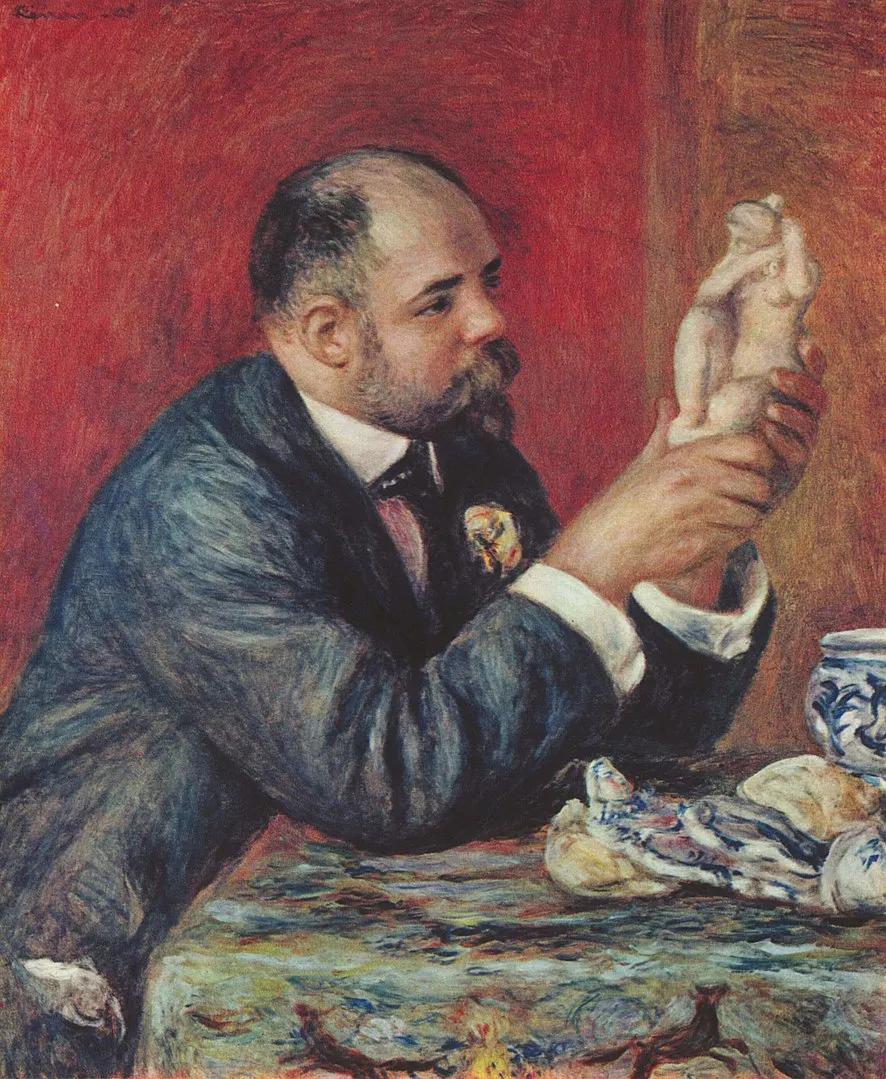
Vollard wrote biographies of Cèzanne, Edgar Degas and Pierre-Auguste Renoir, and worked with some of the world's foremost art collectors of the time, including Albert Barnes (the Barnes Collection, Philadelphia) and the Havemeyer family (the Metropolitan Museum of Art, New York). He was a very successful dealer and through his relationships with these artists also acquired an impressive collection. He died in 1939 at the age of 73 in a carriage accident in Versailles.

After Vollard's death in 1939, his collection was dispersed, with some paintings being mishandled and sold to members of the Nazi party during World War II. Four of these works have been part of the collection at the Musee d'Orsay since its opening in 1986. However, they were recently restituted to the heirs of Vollard, who are now selling them at Sotheby's on 16 May.
See also: Paul Gauguin: The Lost Innocence
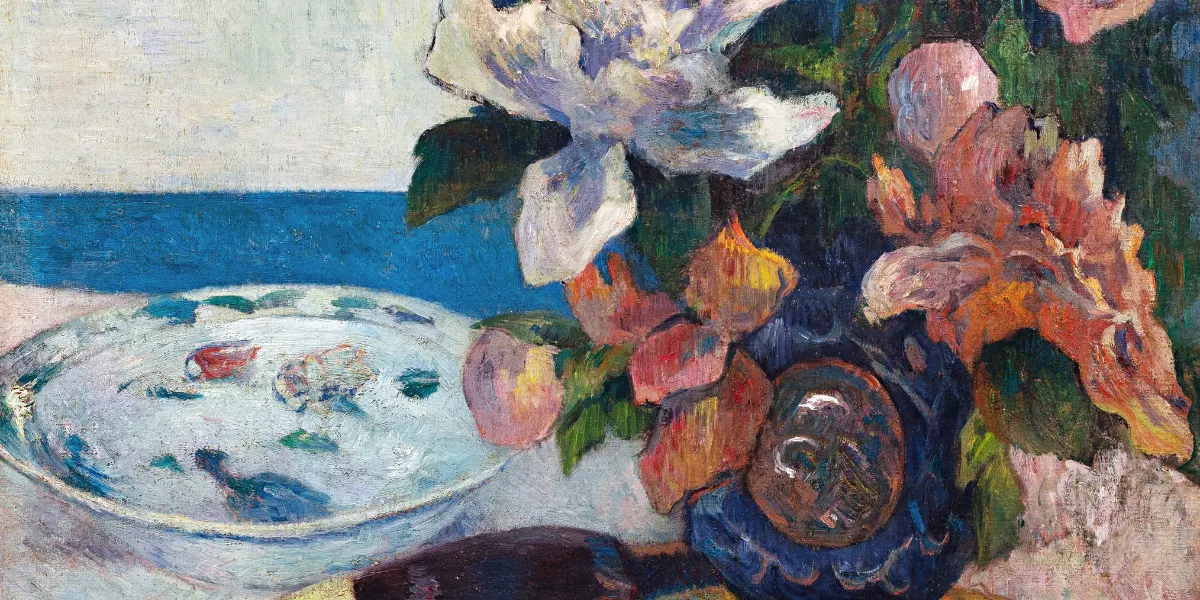
The collection is led by Paul Gauguin’s Nature morte avec pivoines de chine et mandoline, estimated at $15-20 million (£11-16 million). It was painted in 1885 when Gauguin moved to Copenhagen to be closer to his wife Mette-Sophie's family after he lost his stockbroker job in Paris. He only lived in the Danish city for a few months, but they proved to be productive. As he was there during the winter, his painting focused on interior scenes, like this one showing French peonies and the mandolin, an instrument he later learned to play and featured frequently in his art. The still life genre shows influence from Cèzanne, with whom Gauguin painted with years prior. Although Ambroise Vollard became Gauguin's dealer in the 1890s after he had traveled to Tahiti, Vollard actually preferred Gauguin's earlier works.

Other highlights of Vollard's collection that are going to auction include Pierre-August Renoir's Paysage de bord de mer ($1-1.5 million) and his red chalk Le Jugement de Pâris (est. $300,000 – 500,000) and Paul Cézanne's watercolour and pencil work on paper titled Sous-bois (est. $250,000 - $350,000).
See also: Pierre-Auguste Renoir: Joie de Vivre on the Canvas

“The name Ambroise Vollard is one that resonates deeply across generations of the art world, as one of the most legendary dealers of the 20th century," said Allegra Bettini, Sotheby’s Head of the Modern Evening Auction in New York. "Vollard was a major supporter and champion of the artists of his time, including Paul Gauguin, Pierre-Auguste Renoir and Paul Cézanne. Each of these works speak to his importance as a central figure who helped shape modern art and whose legacy is still felt today.”

In 2010, Sotheby's sold 140 works from Vollard's collection that were found in a bank vault in Paris in 1979 for 23 million euros. Now this sale is another opportunity to own a curated work from the collection of one of the most important and visionary art dealers in history, who nurtured, promoted and befriended the artists whose work he owned.