
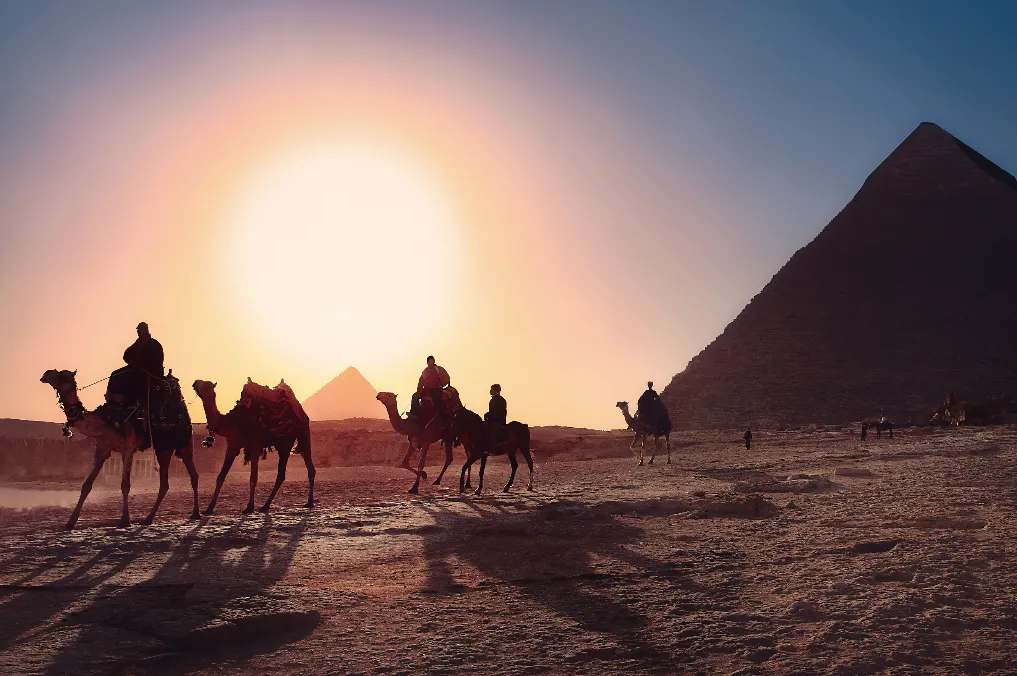
The history and the mysteries of the ancient past, particularly of Ancient Egypt, have intrigued humankind for centuries: from myths and tales about the river Nile, to decoding Egyptian hieroglyphs, to Howard Carter’s discovery of the resting place of Tutankhamun.
The Ancient Egyptian way of life is certainly fascinating, and exploring their sculptures, jewellery, gems, pots and ceramics is a guaranteed way to truly unpack this history.
On 4 May, Hôtel des Ventes de Monte-Carlo is providing this opportunity, with their auction of Classical Archaeology, Far East, Pre-Columbian Art and Oceania, Jewellery and Glyptics. Over 150 lots are included – in all shapes, styles and prices, suitable for any collector or enthusiast of ancient history.
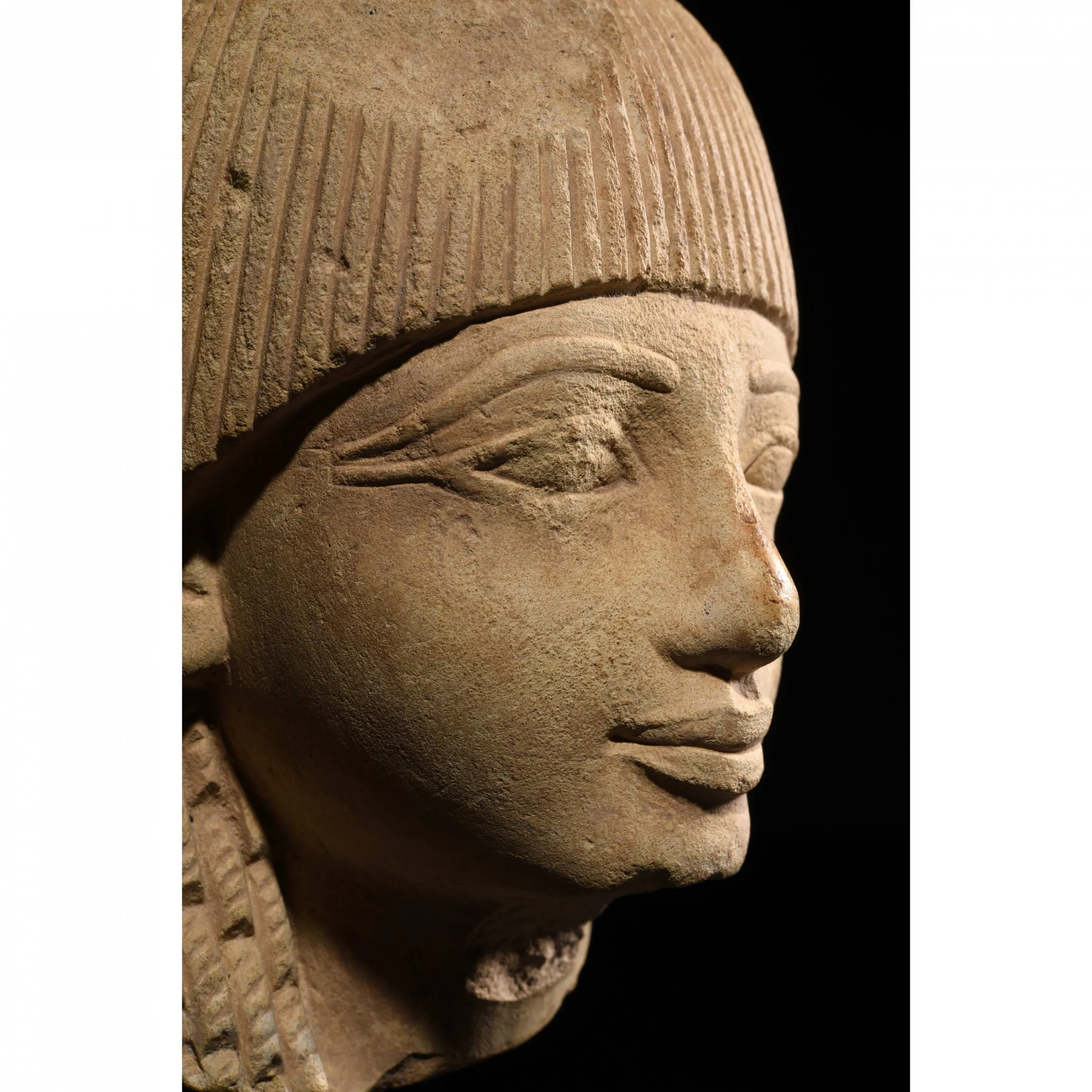
This limestone ‘Masculine Head’ is from 18th Dynasty Egypt, New Kingdom. The work depicts a male face which is broken at the neck; the tearing of material at the chin and neck suggests the presence of a false beard. His finely carved eyebrows are raised and are highlighted by a slight relief and framing of the eyes.
This masculine portrait with its soft and feminine features is typical of the New Kingdom in statuary as well as in reliefs, like those of the Theban Tomb TT55 on the west bank of the Nile.
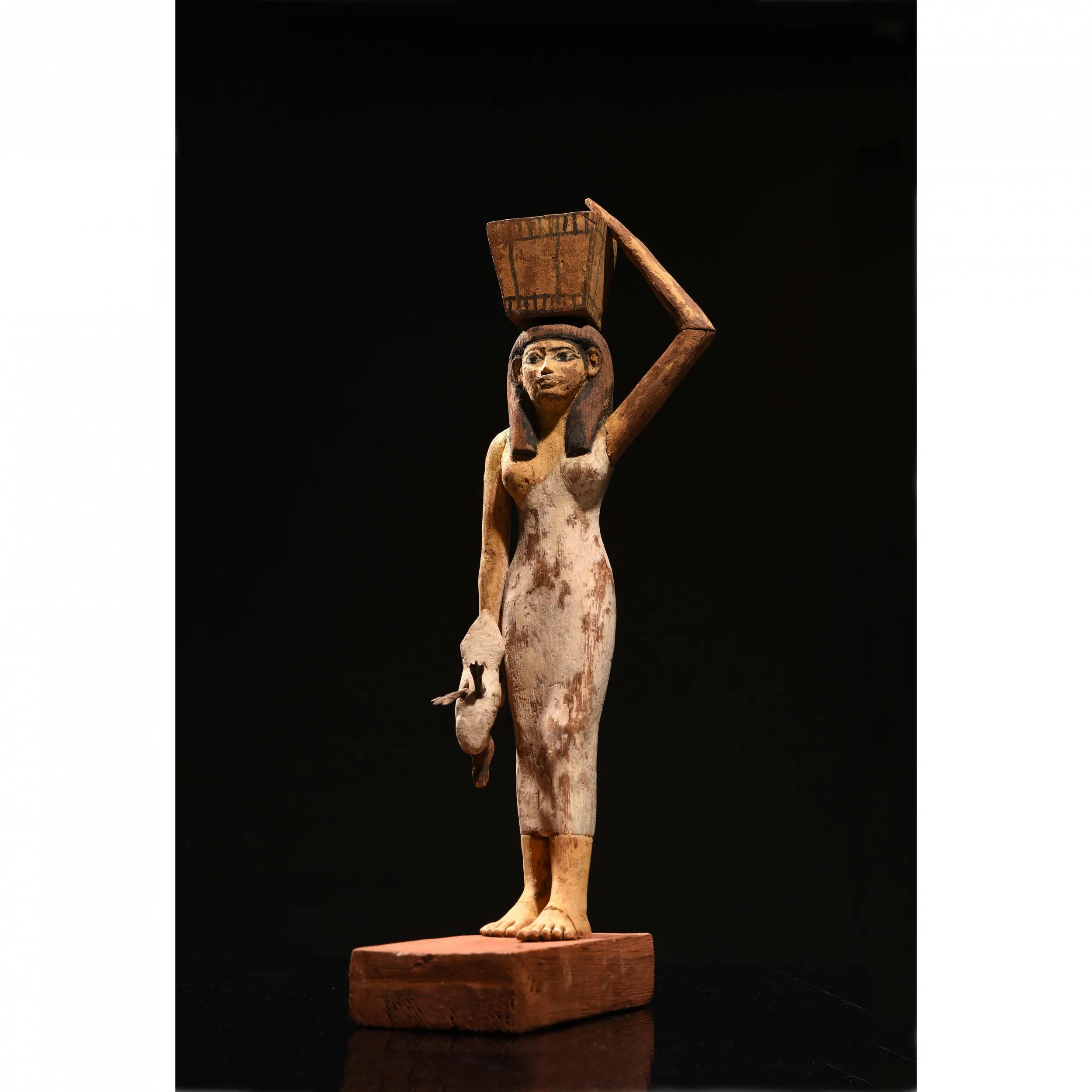
This wooden ‘offering carrier’ statue comes from Egypt, Middle Kingdom, XI to XII Dynasty (2010-1961 BC).
The figures stands in the attitude of a walk, with the left leg forward, and the left arm is carried upwards and brought back to the basket of offerings carried on her head. Meanwhile, the arm around her body holds a duck.
The figure wears a tripartite wig and long, asymmetrical dress painted white, leaving her breast naked, and her body is painted yellow, recalling the colour of grain. She has serene facial features and her eyes and eyebrows are outlined in black.
At the end of the Old Kingdom, wooden models as well as bearers of offerings and scenes of daily life became complements of, or even replacing, paintings of these same subjects on the walls of tombs. Such models remained popular throughout the Middle Kingdom; most of them were carved in a crude manner, but some models were sculpted and painted with great technicality, like those found at Deir el-Bersha in 1915.
This statue would have been carved in a process similar to that of the ‘Bersha process’. She was carved from one and the same block, with the exception of the arms and basket and duck and its wings, which remain attached to her hand.
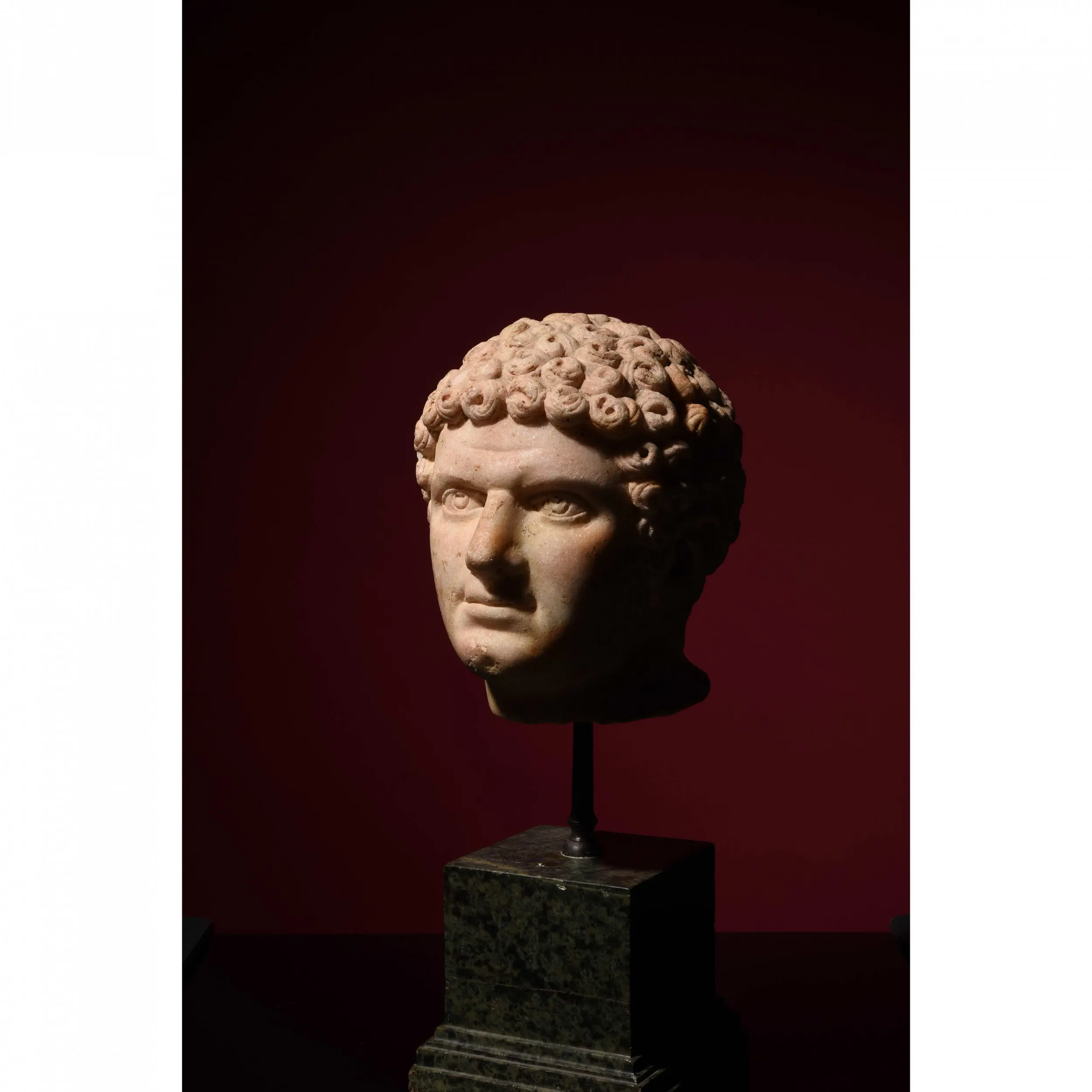
Beyond Ancient Egypt, HVMC’s sale also delves into other corners of history, such as Rome. Measuring 20 cm in height, this Roman marble Head of Young Caracalla is from 188-217 AD.
The portrait of the young prince is characterised by a well-defined profile with a broad nose slightly flattened at the ridge, a round and robust chin, large eyes with pupils incised in depth, giving an ambitious expression, and slightly open mouth formed of fleshy lips.
The technique and execution of style are those of the provincial workshops of the first half of the second century AD. In this instance, the figure can be compared to a member of the imperial dynasty of Severans. The face finds many, quite precise, parallels with the portraits of the young Emperor Caracalla (188-217 AD) and some of his brother Geta (189-212 AD). Some of the closest examples of these can be found of coins from the time.
For example, the aureus representing Geta issued 209 AD - BMC 585, RIC 60c, C.2899. On this coin, the face of the young price is displayed without a crown of laurels on his head, indicating that it was struck in 209 AD shortly after the autumn season while he still only bore the title of Caesar: at the end of this same year, Geta was proclaimed co-emperor at the cost of his father Septimius Severus and his older brother Caracalla.
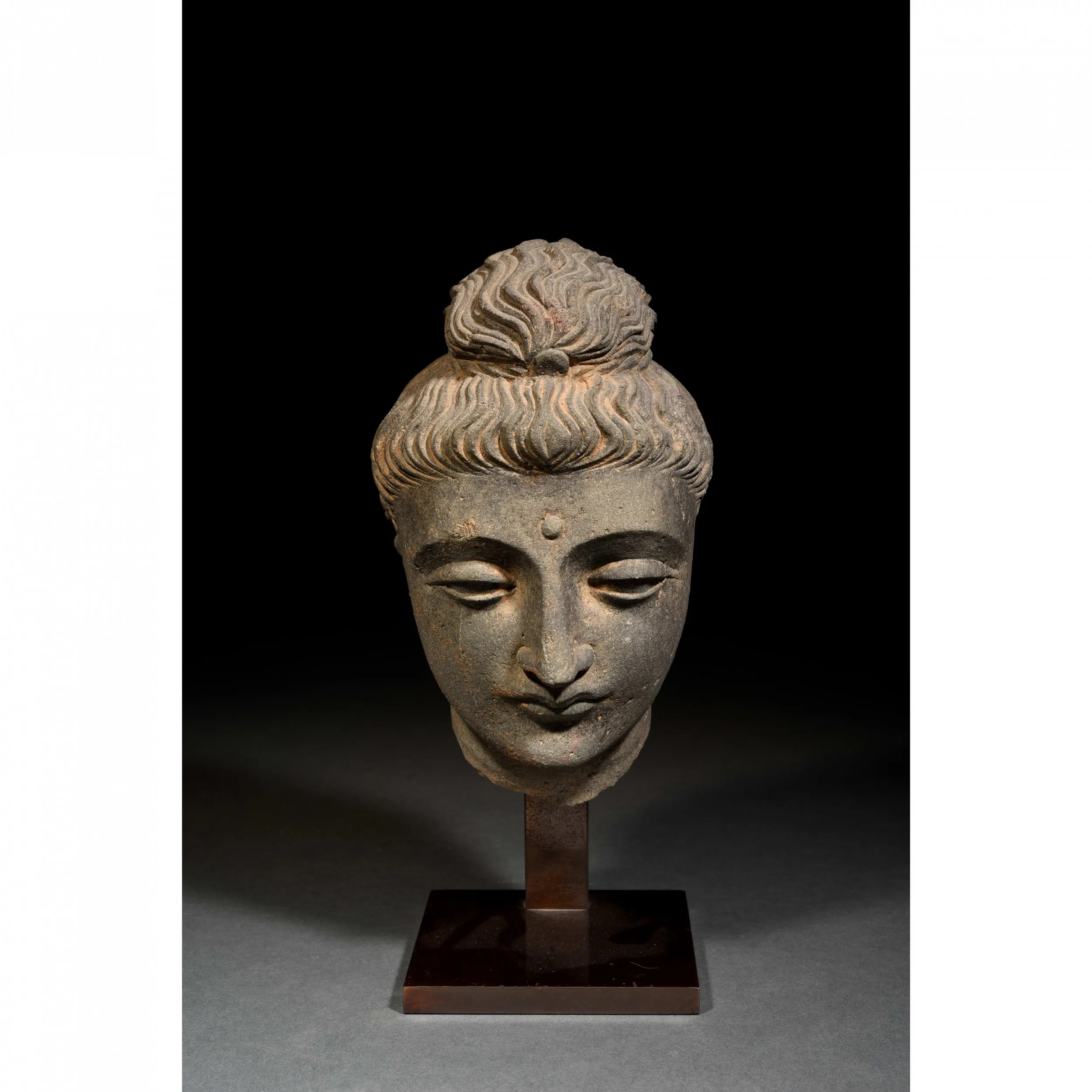
Meanwhile, this Head of Buddha Sakyamuni is a work from Buddhist Greek art, Gandhara, 3rd to 4th century.
The oval-shaped face is slightly leaning down and exudes an expression of serenity. The features are fine, the nose is aquiline, and the eyelids are marked heavily along the brow of the urn. The hair consists of long wisps and wavy ends with ushnisha.
Want to learn more about ancient history? So do we.
![Rolex Cosmograph Daytona, ref. 116500LN, 2021 [detail]. Image © CHRONEXT](https://images.prismic.io/barnebys/fe3c65dd-8a8c-4a0b-ae5b-265264754c00_Cosmograph+Daytona-hero.jpg?auto=format,compress)
![Marble portrait of Emperor Caracalla, 205-209 AD [detail]. Photo © Hermann Historica GmbH](https://images.prismic.io/barnebys/aa19618d-8764-4cf1-a791-57b6d5c506a4_f80dc9b2-938a-4ca5-a10b-289d1fbff6c9_HHTitel.png.jpeg?auto=format,compress)