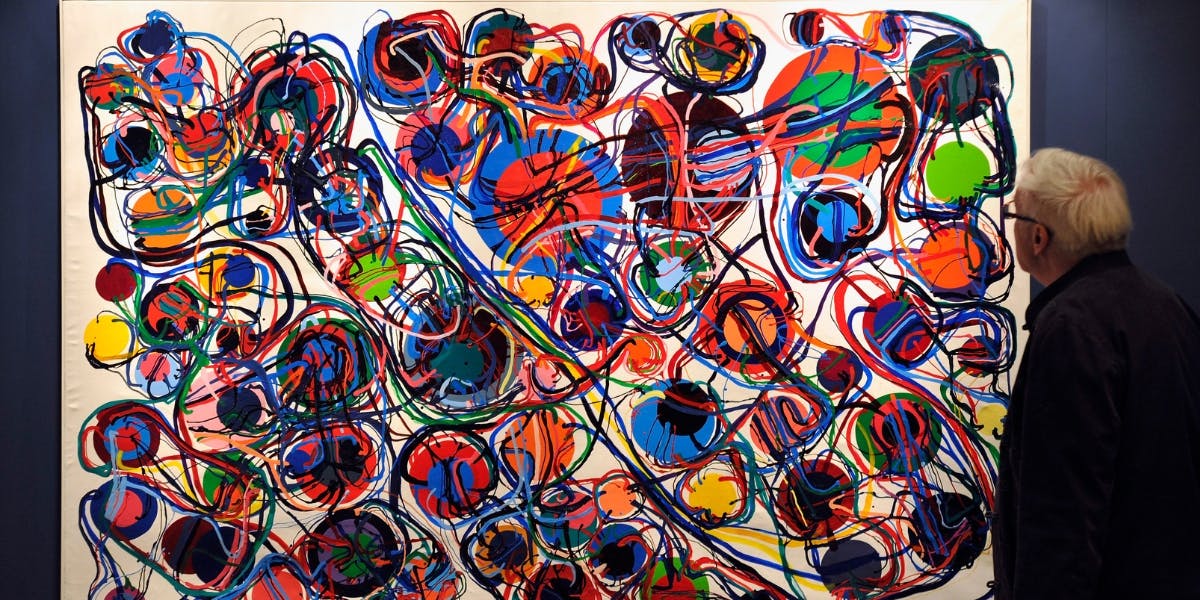
Atsuko Tanaka (1932-2005) helped revolutionise modern Japanese art with her artwork which ranged from conceptual performance and installation work to abstract paintings. However, her innovative work has received more acclaim in the 21st century, with numerous retrospectives worldwide and million-dollar prices for her paintings at auction.
Here are 5 facts to know more about the avant-garde Japanese artist:
1. She was a member of the Gutai Art Association

Founded in 1954, the politically charged Gutai Art Association was a response to the post-war climate of Japan. 'Gutai' comes from 'gu' meaning tool, while 'tai' translates to body, and the Japanese term also translates to 'concrete' or 'embodiment.' The founder of the group, Jirō Yoshihara, encouraged the movement's artists to experiment with their creativity, combining the abstract and figurative to, as Yoshihara extolled, "create what has never been done before!” Members of Gutai organised performance and outdoor installation work to bring their concepts to the greater public in Tokyo, Kyoto and Osaka. Tanaka had originally joined the smaller art collective called Zero Society in college and later joined Gutai in 1955, during which she created some of her most famous large-scale pieces, starting with Tokyo Work (1955). It was later reconstructed at the art fair documenta 12 in 2007.
See also: Yayoi Kusama: The Queen of Cool
2. She is best known for her Electric Dress
While a member of the Gutai Art Association, Tanaka designed her best-known work, the Neo-Dada Electric Dress (1956), a full-body dress constructed with hundreds of flashing lightbulbs painted in primary colours. Inspired by a neon advertisement she saw at Osaka Station, the dress was a response to the rapid technological growth in Japan after World War II and a modern interpretation of the traditional Japanese kimono. A reconstructed copy from 1999 is owned by the Centre Pompidou.
See also: Kimono: The Japanese Dress On and Off the Screen
3. Jackson Pollock was an inspiration
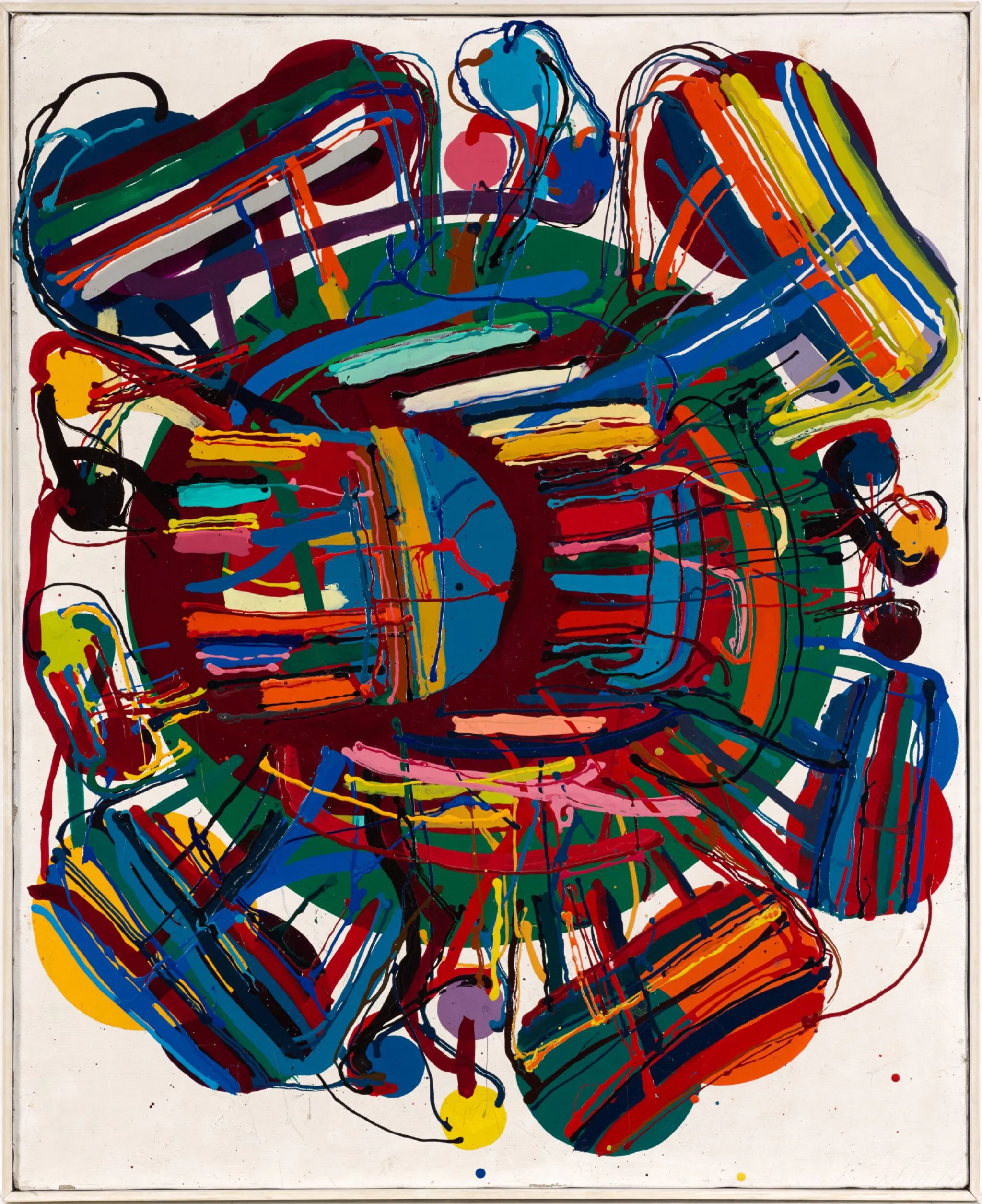
From the late 1950s onwards, Tanaka painted a series of synthetic resin enamel paintings made by placing the canvas on the floor and working around it in the style of Jackson Pollock. She repeatedly painted colourful circles and amorphous forms joined by sinuous lines reminiscent of Electric Dress.
See also: Jackson Pollock: Drawing the Unconscious
4. She has received posthumous acclaim
Following her death in 2005 at the age of 74, Tanaka received more well deserved acclaim, but she remains relatively unknown in the United States. Her work can be found in a number of important collections including the Museum of Modern Art in New York City and the Centre Pompidou in Paris, and she has been included several exhibits in both Japan and abroad including the Kyoto National Museum of Modern Art, the Guggenheim Bilbao, the Moderna Museet in Stockholm and the New York galleries of Paula Cooper and Grey Art Gallery at NYU.
Want more articles like this straight to your inbox? Subscribe to our free newsletter!
5. Her paintings sell for seven figures
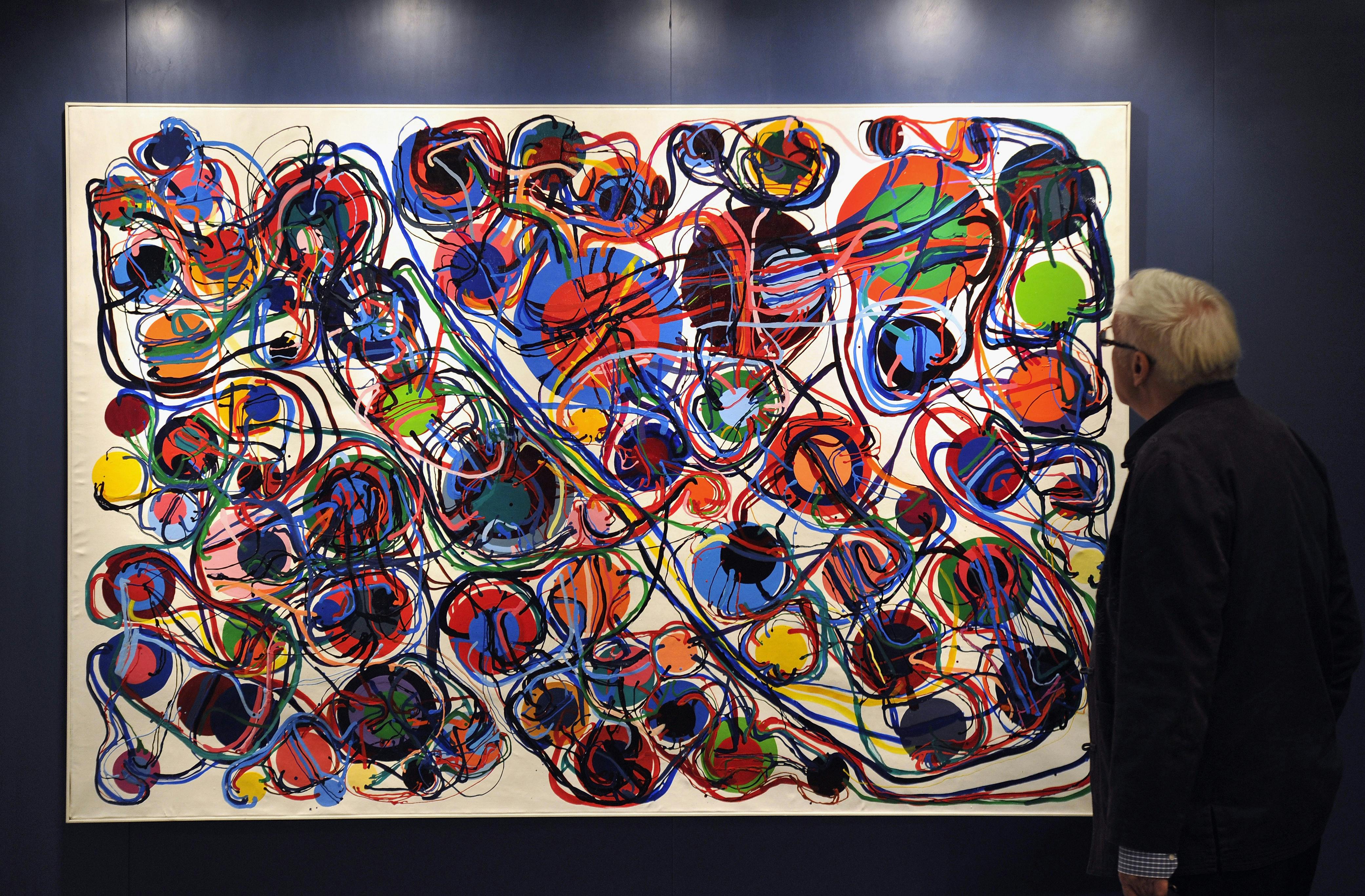
Her colourful abstract paintings have sold for over $1 million, including most recently in March 2023 at Bruun Rasmussen. In 2017, her auction record was set at Sotheby's Hong Kong where her Enchantress on the Stage (1963) sold for $1.62 million.
Find more articles n Barnebys Magazine
This is an updated version of the article originally published on 11 December 2019.