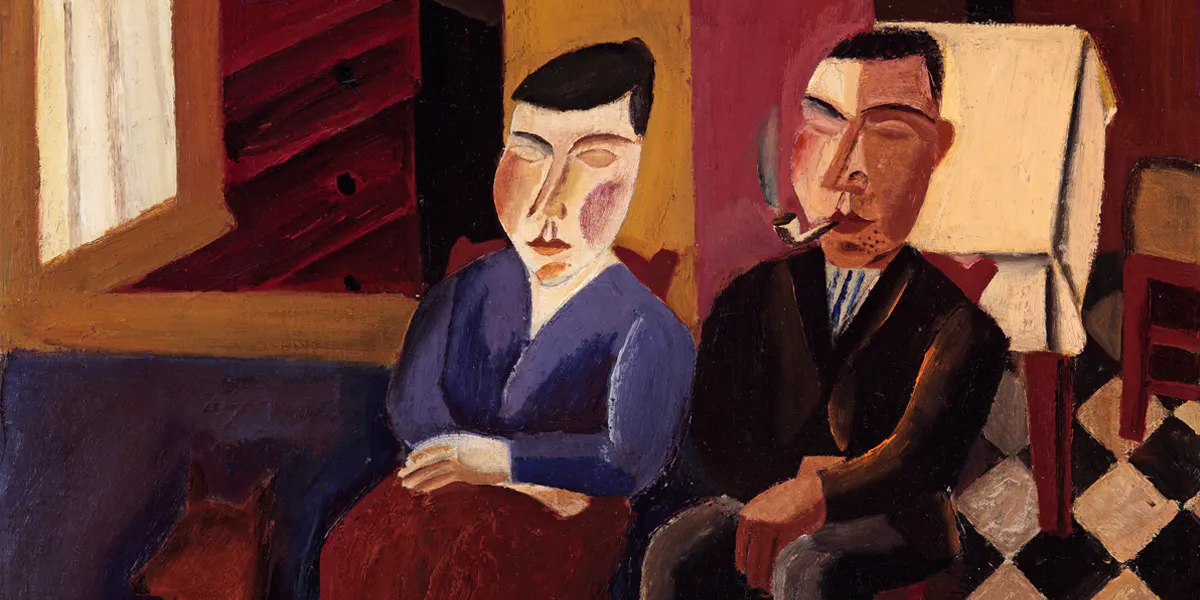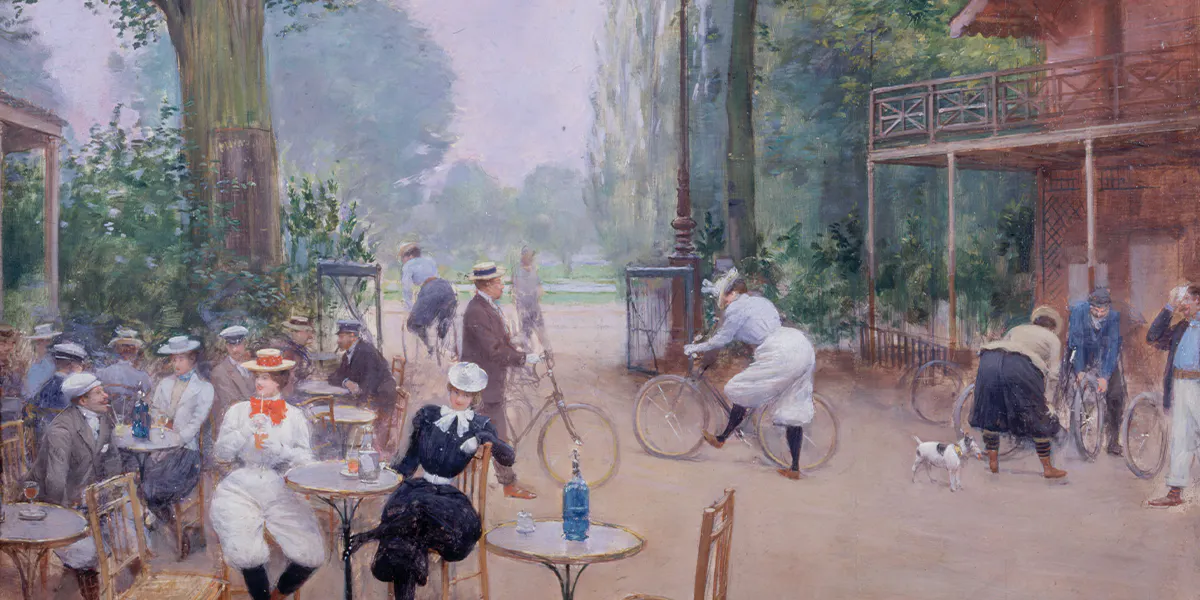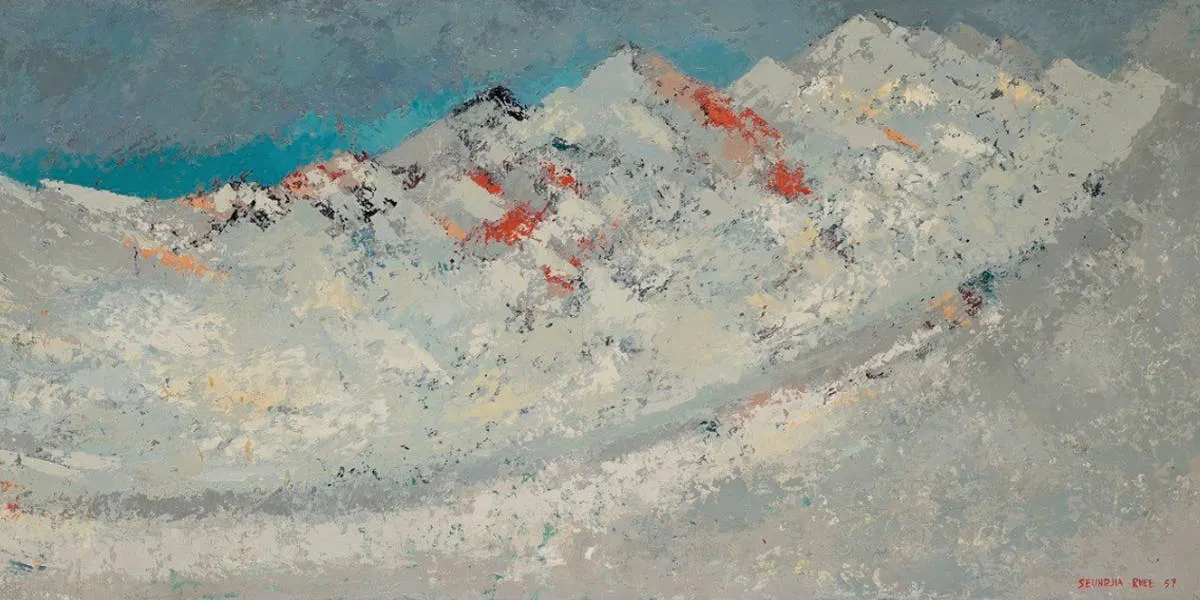
248 paintings and sculptures including a very fine selection of works by Franco-Asian artists will hit the auction room at the Parisian house Rossini in a few days. Among the major works featured in the sale are ink and gouache on silk, as well as a booklet of poems illustrated by Mai Thu, Indian ink on Japanese paper and a lithograph by the Chinese naturalised French artist Zao Wou-ki. Finally, Foujita lovers will be delighted to discover a delightful self-portrait of the artist. The 1st of December sale will also honour the masters of the 19th and early 20th centuries with a set of around thirty lots by Eugène Villon, three ceramics by Pablo Picasso, two oils by Brayer, 10 lots by Richard Guino and 7 paintings by the artist Mad-Jarova.
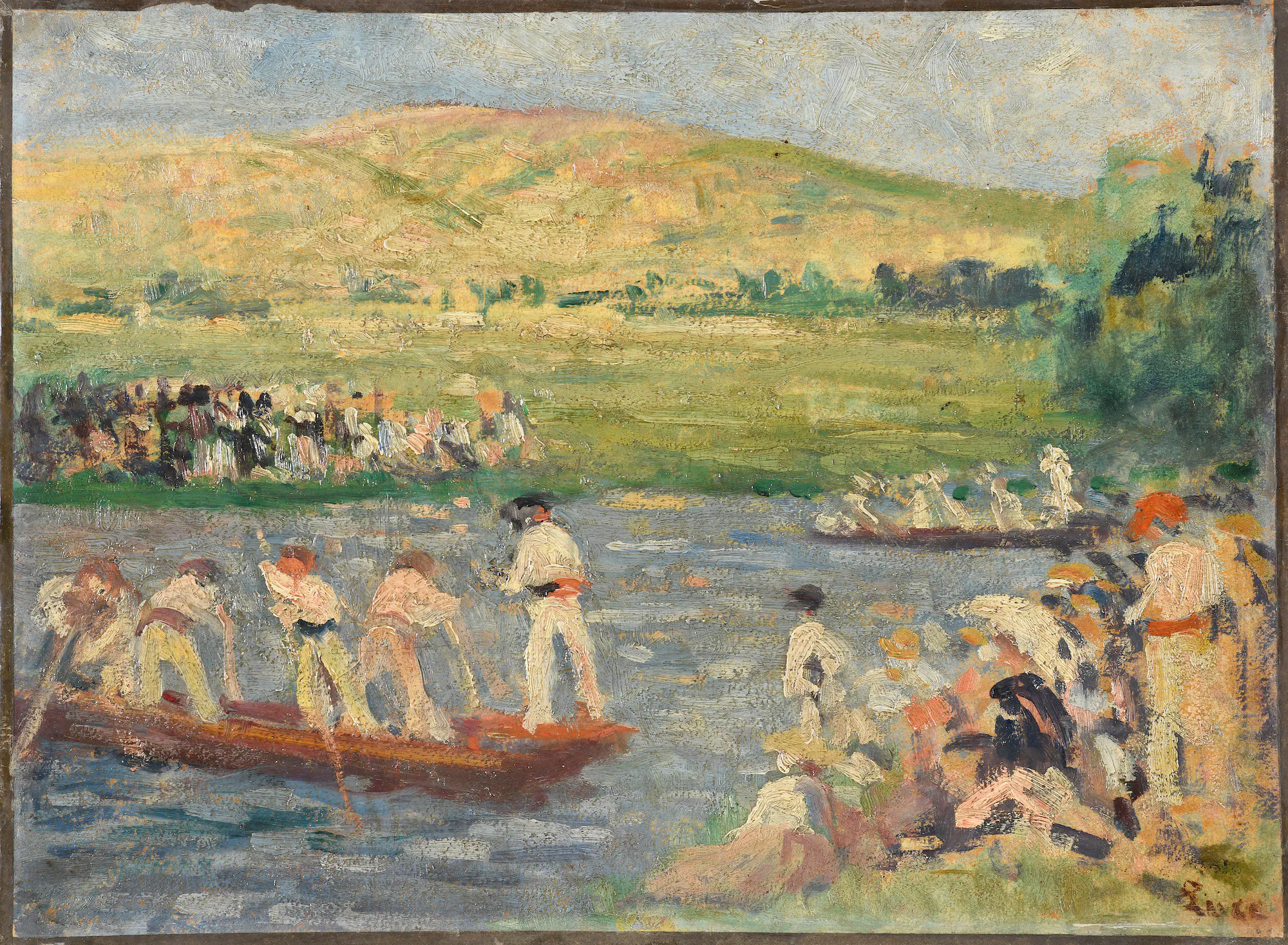
This bucolic painting represents a naval joust in the Yonne, France. Its author, Maximilien Luce, was close to Paul Signac and Paul Seurat, the two landscape painters who spearheaded divisionism and pointillism – two techniques which probably inspired Luce. Like his colleagues, and in particular Camille Pissaro, whom he became close to in the 1890s when he associated with neo-impressionism, the juxtaposition of complementary colours in this painting creates a particular vibration and intense luminosity.
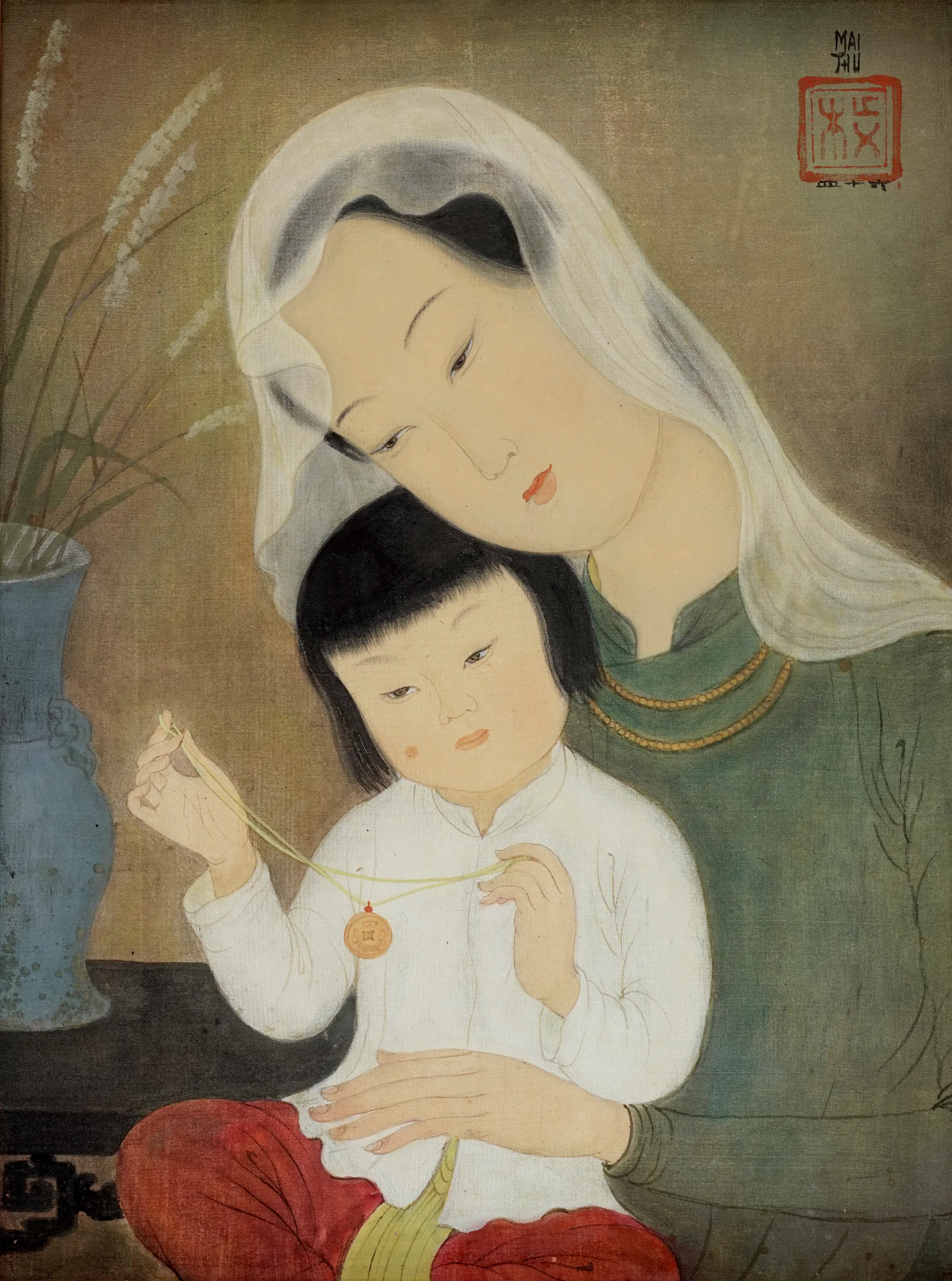
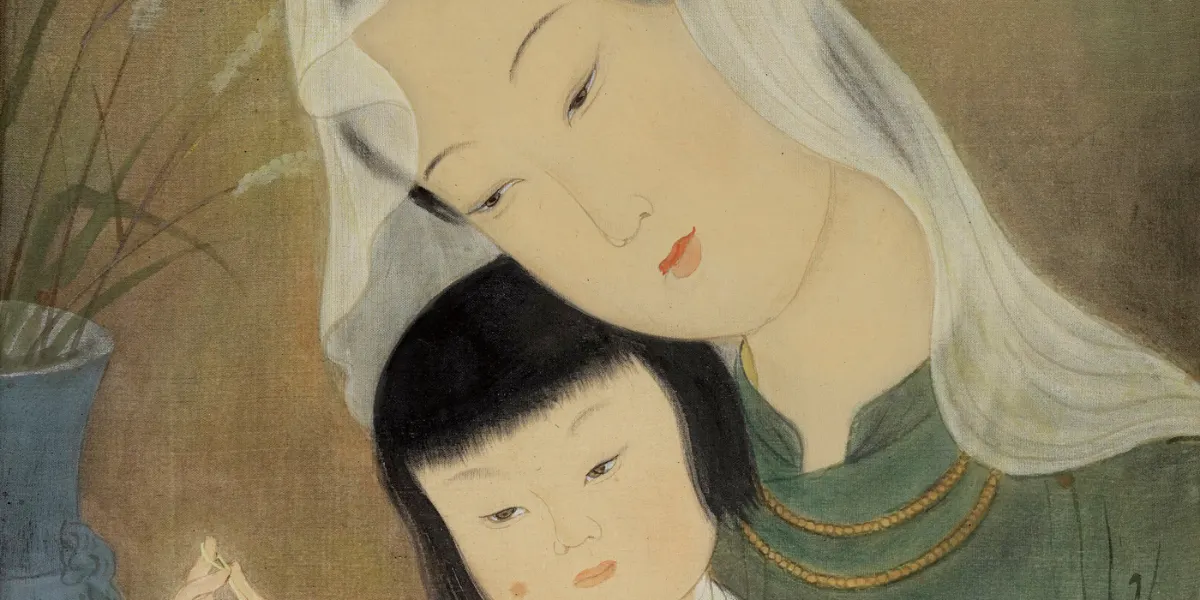
This portrait of a woman and her child playing with an ancient coin was painted by the French artist of Vietnamese origin Mai-Thu (1906-1980) in Indian ink. This technique, particularly appreciated by this great draftsman and portraitist, allows him here to express with great gentleness and finesse a poetic subject, inspired by his own life and his origins. At a time when the artist's wife was dying and time was slipping by, Mai-Thu developed this technique on the recommendations of his friend the poet Henri Michaux. This work evokes the encounter between East and West, between calligraphy and abstraction, thus evoking the history of the artist and his culture.
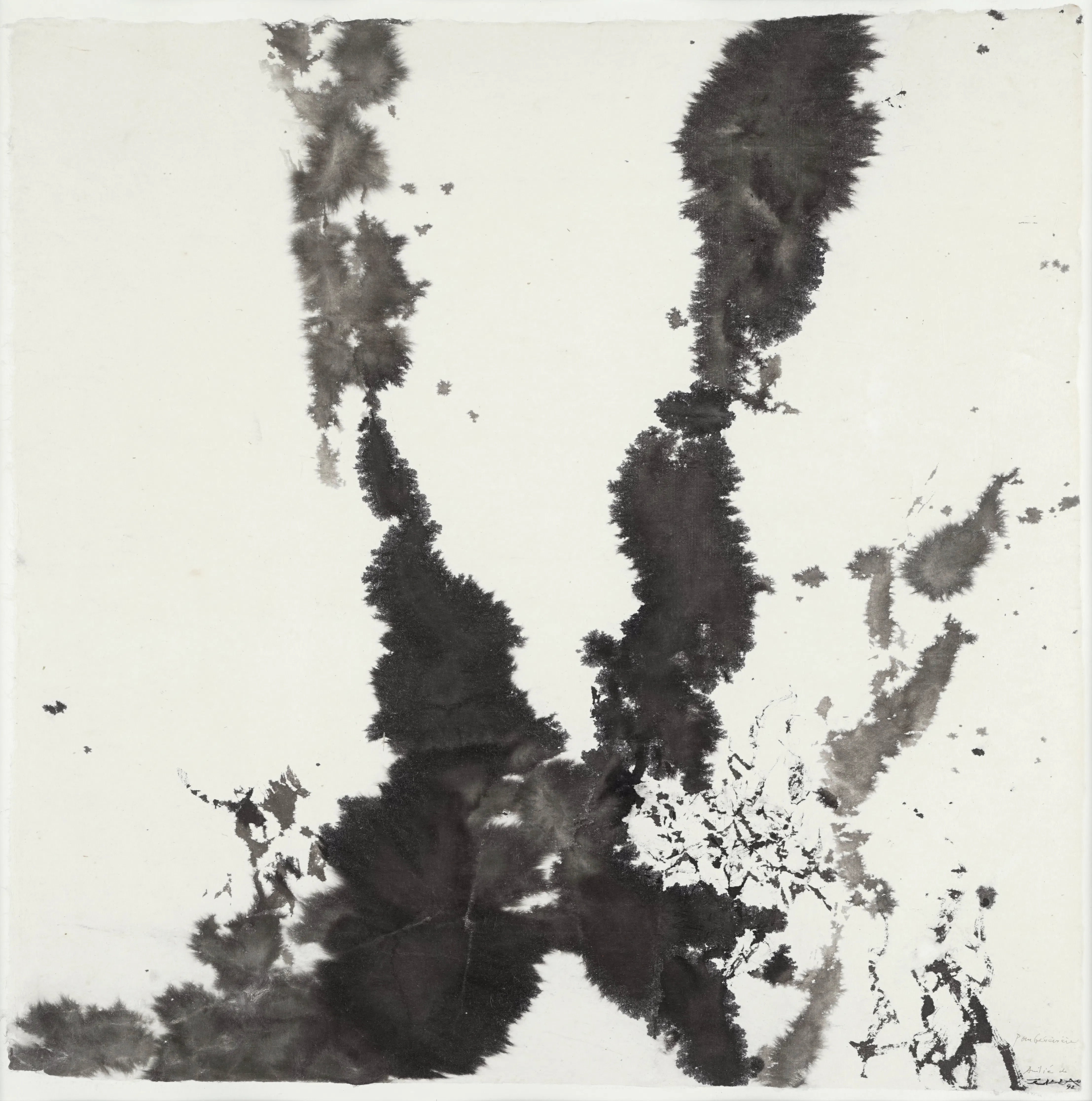
This Indian ink on Japanese paper signed by the Sino-French artist Zao Wou-Ki is another major highlight of the sale. Born in Beijing, the artist studied at the Beaux Arts in Hangzhou and then went to Paris in 1947, where he met Paul Klee, Franz Kline, Alberto Giacometti, Jean Paul Riopellem and Pierre Soulage. Combining his native culture with the abstraction of the 1950s, a fashionable current in the Parisian milieu, his work was quickly noticed by Chinese collectors, until it reached millions in the early 2000s. Like Mai Thu, the poet Henri Michaux encouraged the artist to use Indian ink, a traditional technique in keeping with the painter's approach.
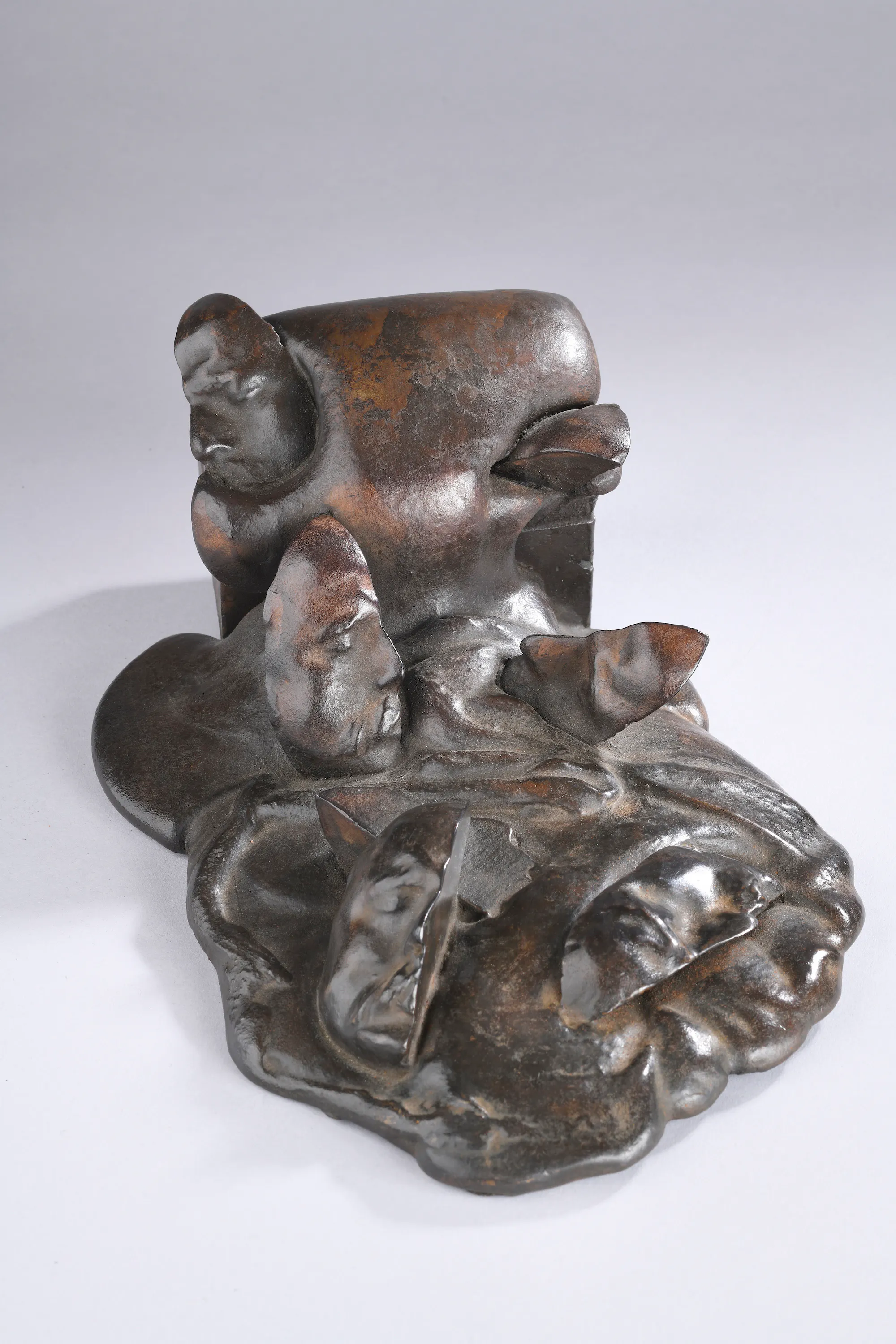
This iron cast titled Self-portrait Expansion testifies to the appetite of its sculptor, César, known worldwide for his use of new materials and radical gestures. This artist, who revolutionised sculpture, joined the New Realists movement founded in 1960 by Yves Klein and the art critic Pierre Restany at the end of the 60s.
César exploits the possibilities of materials in smooth flows, superimposing and juxtaposing the layers, and thus intervening on the rigidity, the coating, and the solidified mass of the material. This sculpture from 1994 is a successful version of this work called Expansion. Rossini will also present Compression palmes et étoiles from 1985, published by Arthus Bertrand in 400 copies, as well as a drawing figuring a portrait of a man on a chair.
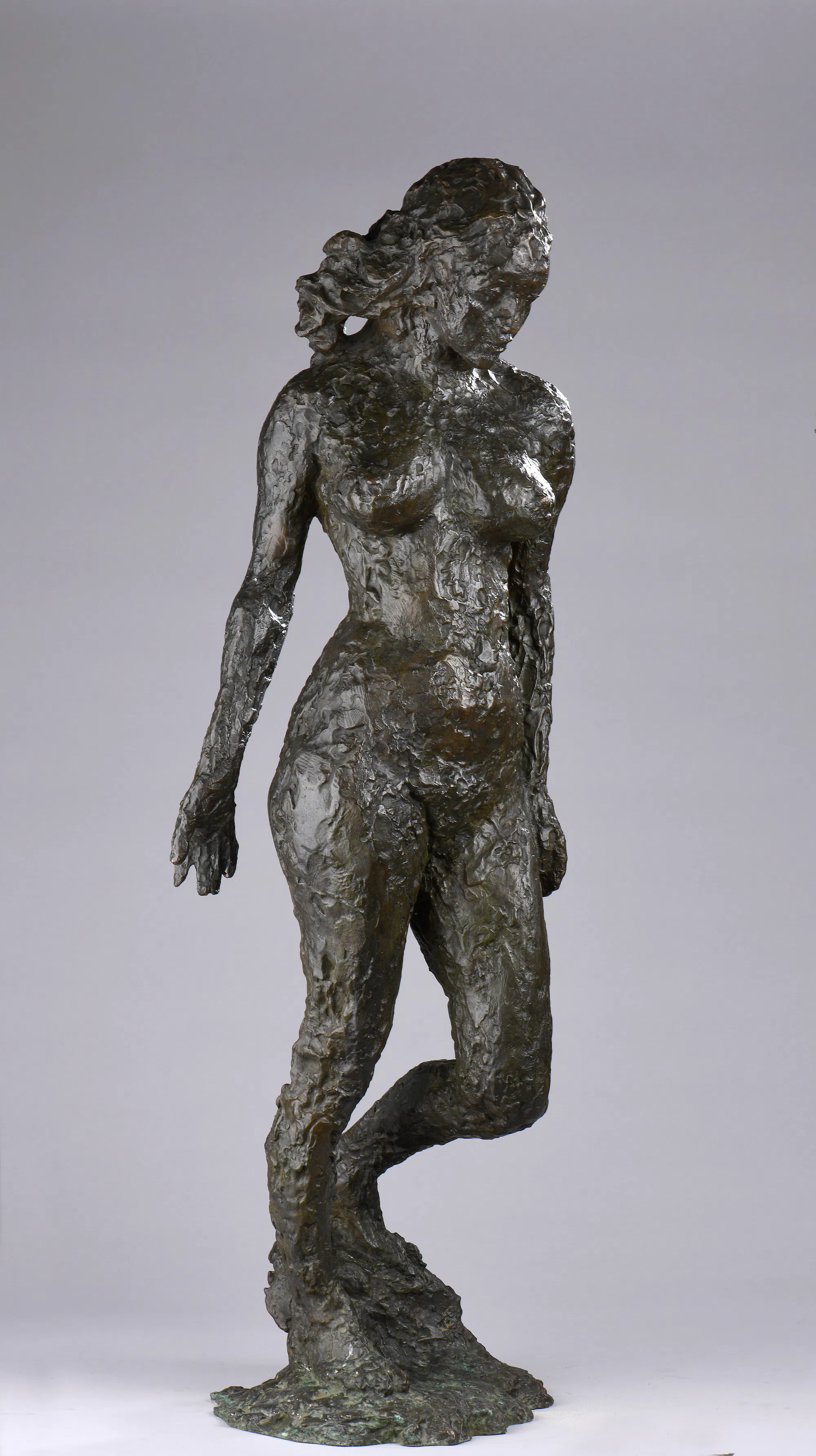
In a different way, Edmond Moirignot is also a genius sculptor. Like Alberto Giacometti and Germaine Richier, Moirignot renewed post-war figurative sculpture. Like many Fine Arts students, he received a conventional education, allowing him to acquire academic techniques and draw inspiration from the great classical masters. Endowed with an incredible sensitivity, the artist puts his faith in the human soul which thinks and loves its centre of gravity. As is the case for this sculpture entitled Eve, Moirignot designs his bronzes with the idea that light can be reflected in them and thus bring out the soul and emotions of his subject. Art, spirituality and a great humanity are therefore at the heart of his approach.
The works of Moirignot have also won the hearts of museum curators. We find his light figures in the galleries of museums in Algiers, Fontainebleau, Geneva, and even Paris at the Museum of Modern Art.
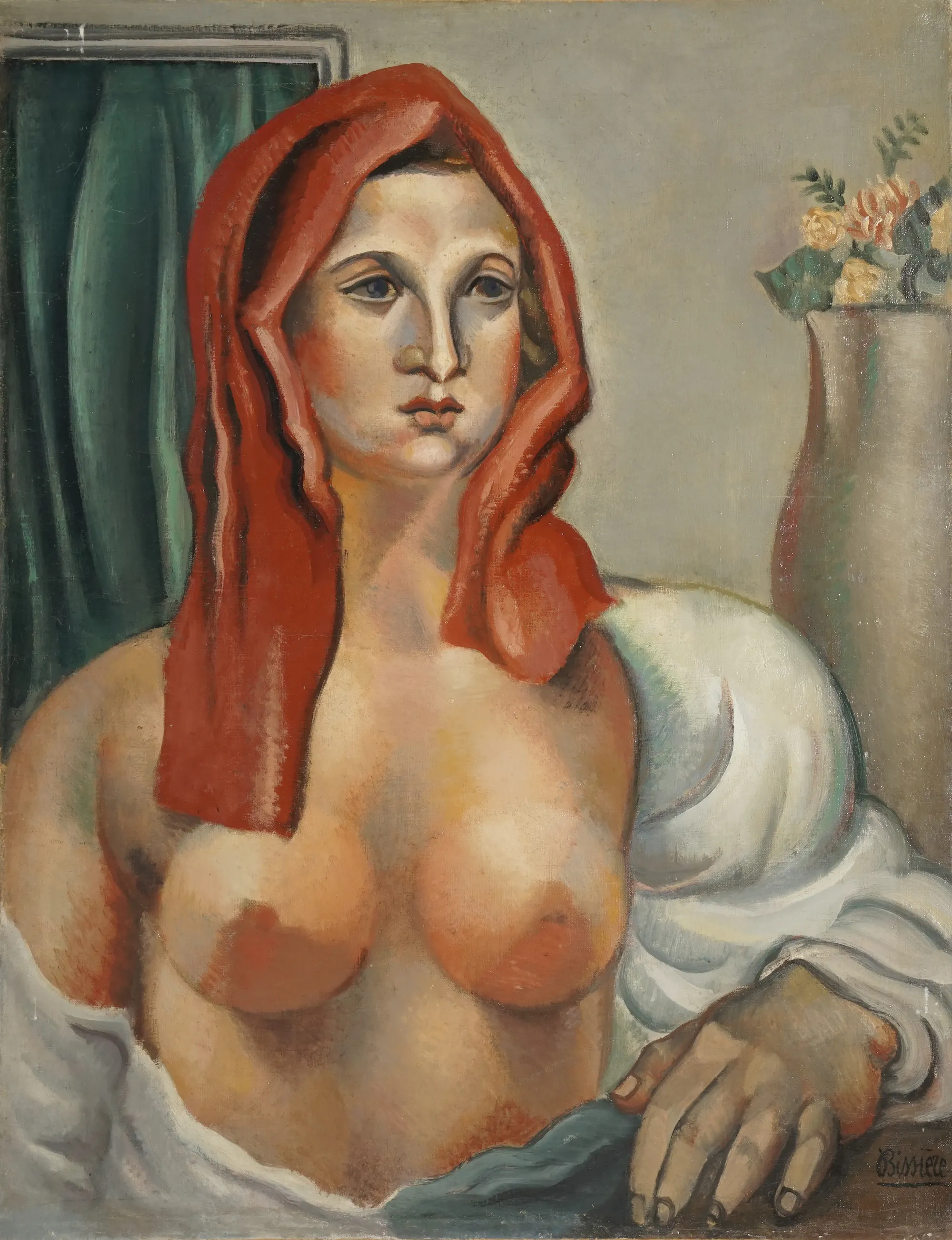
The final highlight is this charming portrait of a woman by Roger Bissière, another representative of the New School of Paris in the 1950s. Friend of Georges Braque and André Lhote, Bissière became known at the beginning of the 20th century by presenting his work at the Salon of Autumn. After the war, he became a key member of the new School of Paris and developed a cubist expression in which the human figure was never absent – although he was moving towards abstraction. Bissière is also an important art critic and teacher. Through his writings, he influenced a whole generation of artists and scholars. This portrait of a woman (Bust of a Woman or The Republic), created in 1920, was presented during his first personal exhibition in the famous Galerie Paul Rosenberg in 1921. This portrait is particularly remarkable, since the painter decided to abandon a few years later his realisation of the human figure, a subject that had until then been at the heart of his work.
The works will be exhibited in the auction room from 29 November to 1 December, and the sale will take place on 1 December.