The history of art is peppered with paintings, drawings and sculptures that have made headlines for their controversial content. Such works have provoked criticism, been the catalyst to debates and outraged the public. Art is a vast field of experimentation and artistic scandal is an integral part of the creative process. Check out these ten major works that shocked and shaped the meaning of the artist's intention:
1. Jacques-Louis David, The Death of Marat (1793)
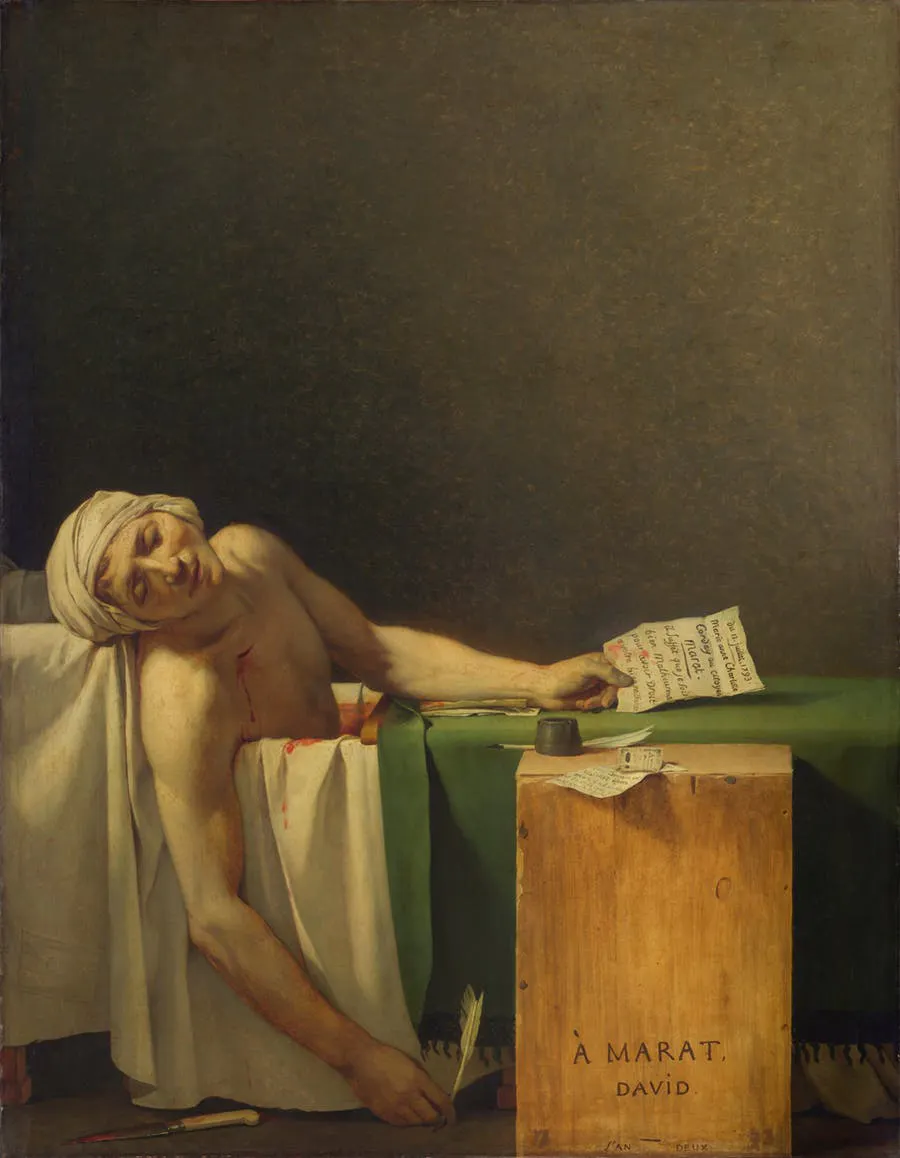
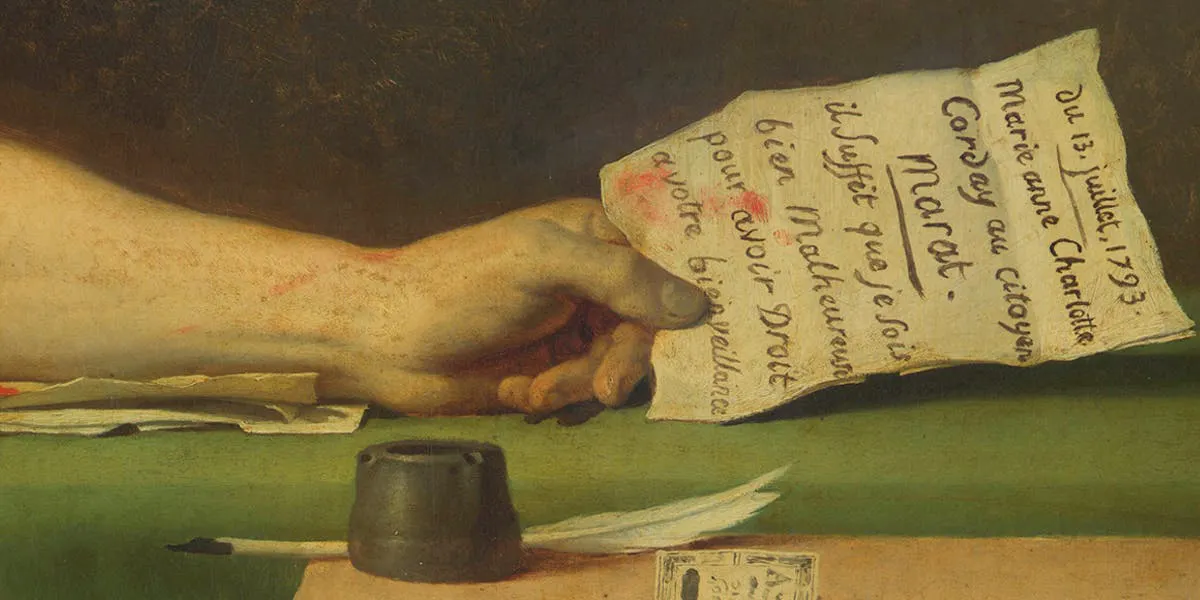
Made for political purposes, La Mort de Marat or Marat Assassiné (The Death of Marat) remains one of the most shocking works in art history. The artist, Jacques-Louis David, represents the journalist and deputy Jean-Paul Marat, murdered at his home on 13 July 1793 by Charlotte Corday. Personally knowing Marat and moved by this highly symbolic crime, David painted the picture as a tribute, and he slips a dedication, To Marat, David, on the wooden box, which served as a support for writing.
Painting this makes it all the more brutal, and makes Marat a martyr for freedom. "The true patriot must avidly seize all the means to enlighten his fellow citizens and to constantly present to their eyes his sublime traits of heroism and virtues," said David, speaking of his friend.
2. Edouard Manet, Olympia (1863)
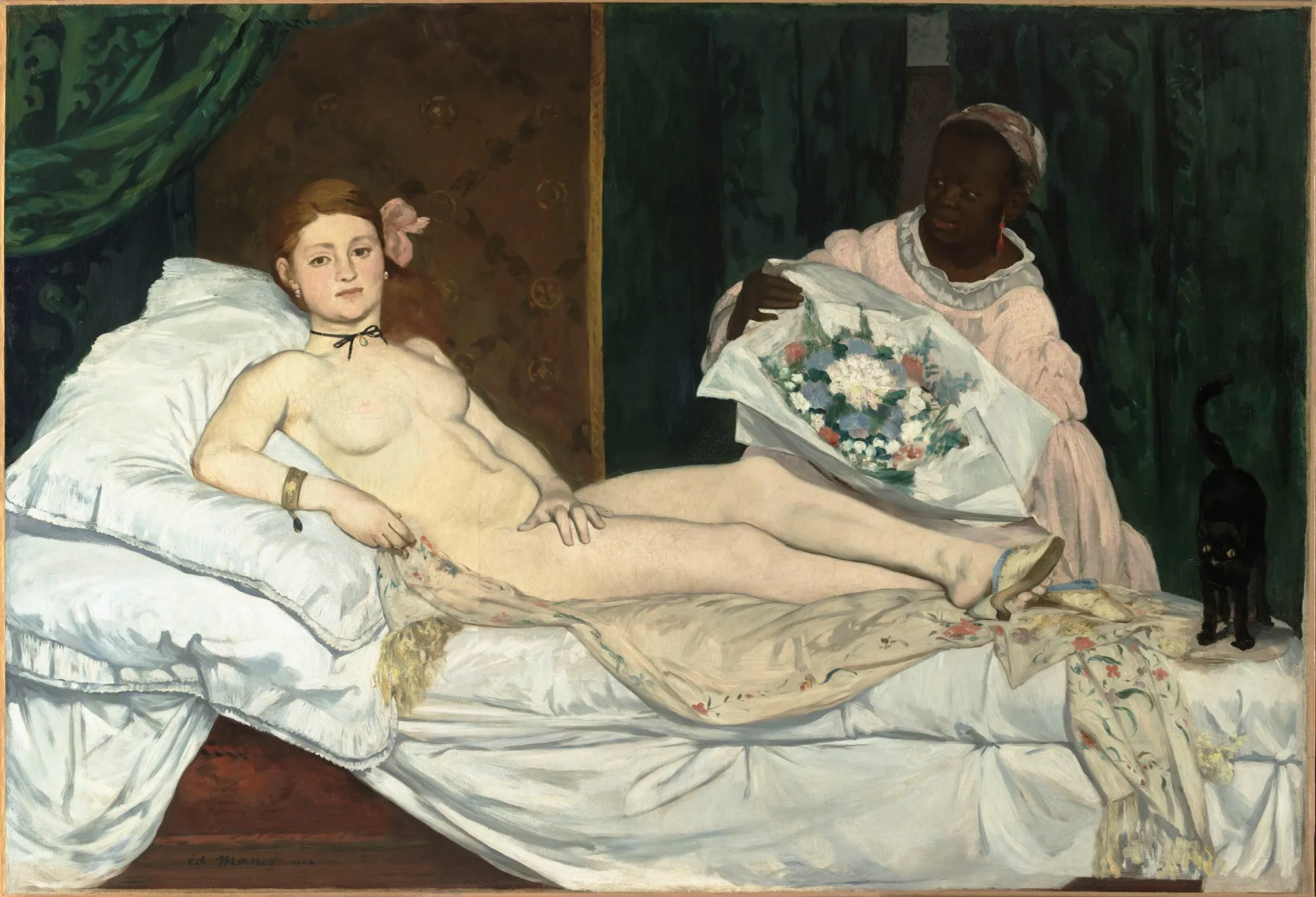
Painted in 1863 by Edouard Manet, Olympia was exhibited for the first time at the Salon of 1865 and caused quite the stir. The painting represents a prostitute preparing for her next client. In addition to her nudity, the model (Victorine Meurent) sits with a provocative gaze at the viewer.
See also: Five Centuries of the Nude in Painting
That same year, Edouard Manet's Le déjeuner sur l’herbe had caused controversy and was refused by the Salon's jury. The painting depicts a naked woman, again looking at the audience, with two fully dressed men.
3. Gustave Courbet, The Origin of the World (1866)
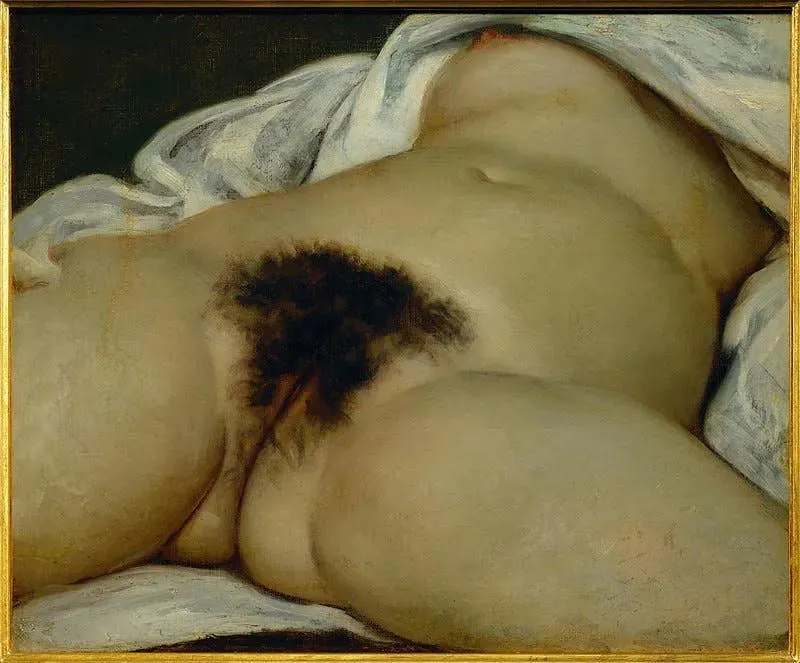
Painted by Gustave Courbet in 1866, The Origin of the World represents the sexual anatomy and torso of a woman lying naked on a bed with her legs apart. The work is framed so that the female's genitalia is at the centre of the painting.
See also: Art Critic Destroys Work Worth Over £15k
Courbet and Manet were rethinking how nudity was viewed in the 19th century, and The Origin of the World, extremely controversial at the time, was the catalyst for future artistic freedom.
4. Egon Schiele, Seated Woman in Violet Stockings (1917)
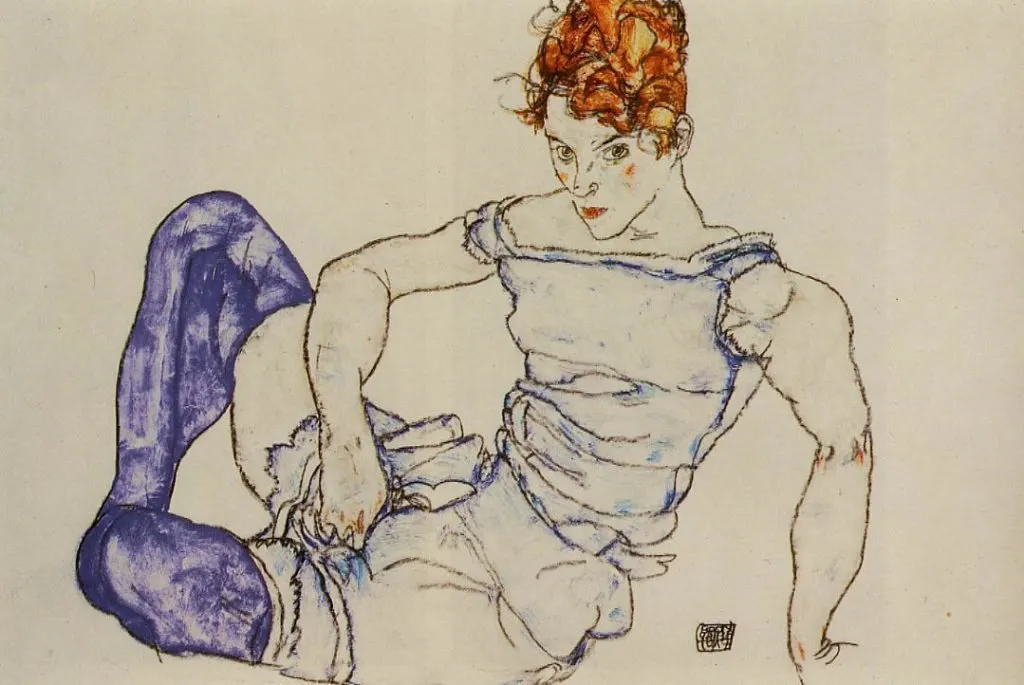
The work of Egon Schiele occupies an essential place in the relations between art and eroticism. His nude models would often sit in explicit poses, as in Seated Woman in Violet Stockings (1917) where the model masturbates in front of the viewer.
See also: Egon Schiele: A Singular Style
Schiele's erotic drawings, coupled with allegations of misappropriations towards minors, even led to a short arrest in 1912.
5. Kasimir Malevich, White Square on a White Background (1918)
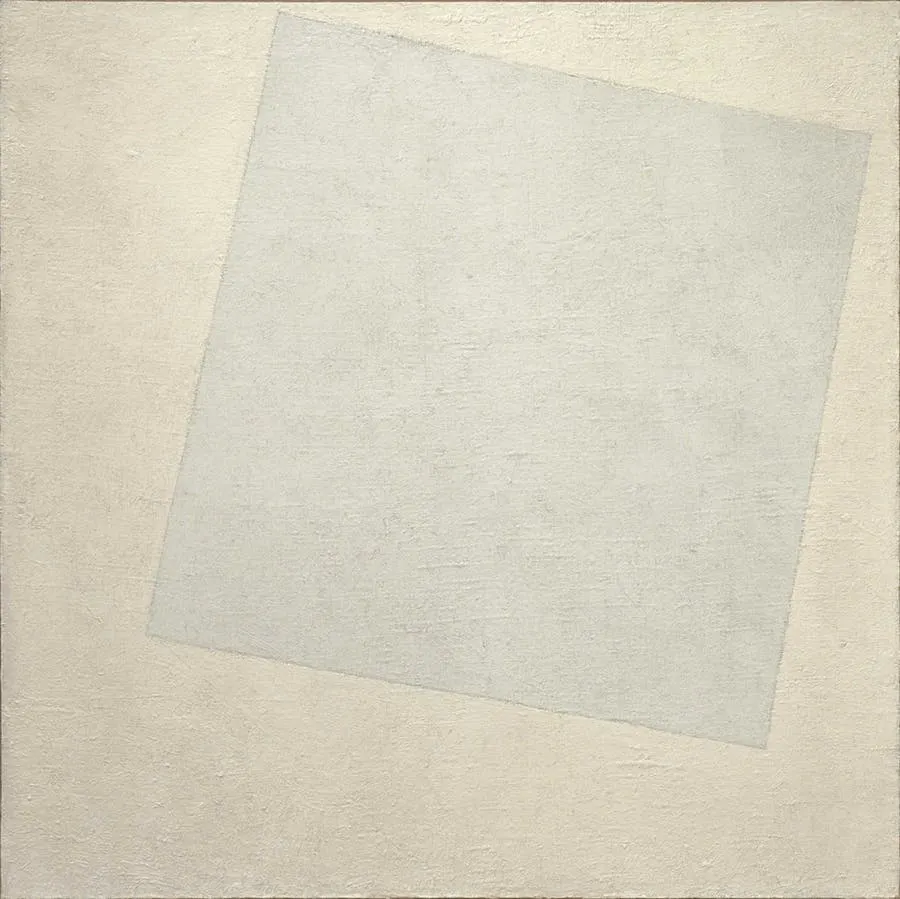
Devoid of any sexual, political or religious connotation, White Square on a White Background nevertheless marked the history of art during its first public appearance in Russia, in 1918. What should we think of this work where 'nothing wins', where all artistic form (metaphorical and literal) has disappeared? In this work, the artist strives to explore an infinitely pure space. The canvas was instantly rejected for its participation in "the death of art".
Kasimir Malevich, the father of supremacism, was imprisoned and tortured by the Soviet power, who saw no utility in his work.
See also: Piet Mondrian: Abstract Geometry on Canvas
6. Robert Mapplethorpe, Man in Polyester Suit (1980)
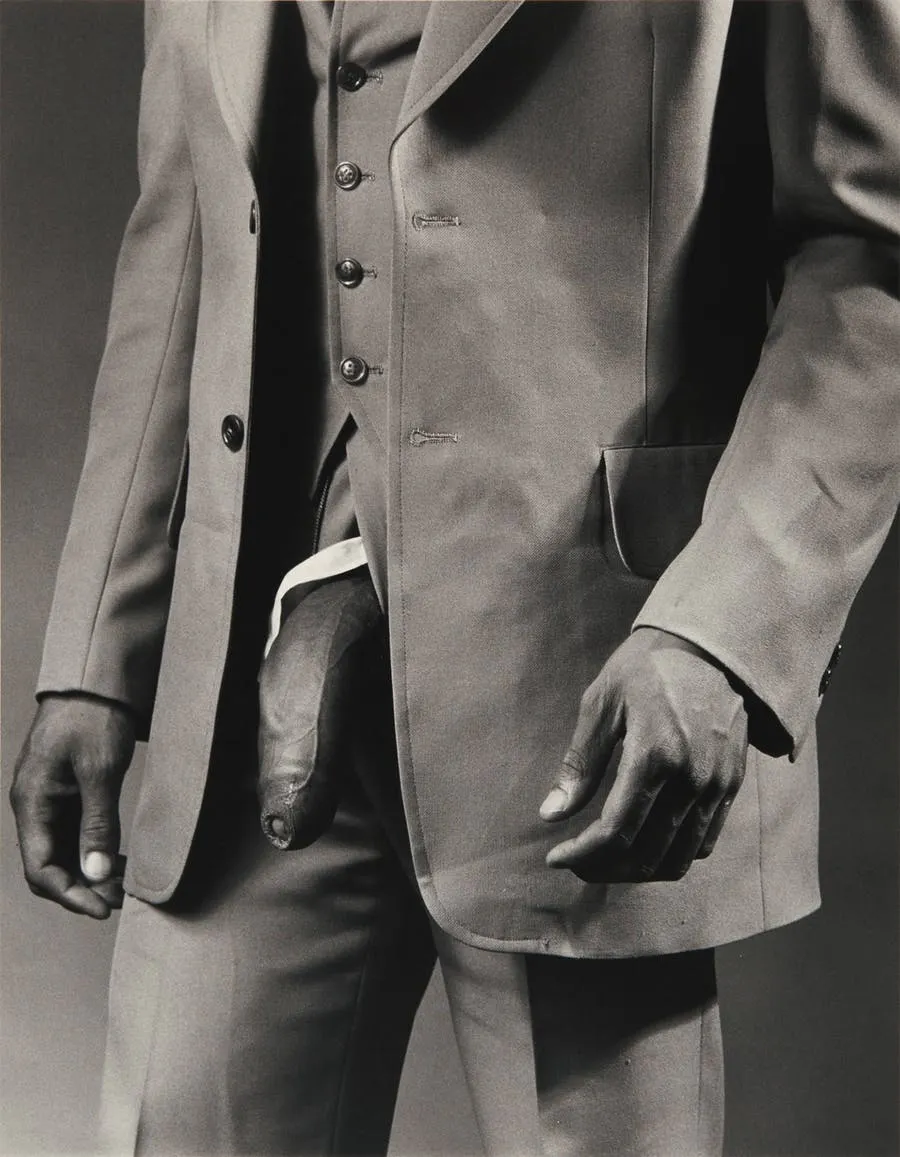
Man in Polyester Suit (1980) is a photograph by Robert Mapplethorpe from 1980. It is part of the series 'X Portfolio'. The photograph depicts the lover of the artist, Milton Moore wearing a three-piece suit with his penis exposed. This work cemented the provocative reputation of the artist. In 2015, Mapplethorpe's photography sold for nearly half a million dollars at Sotheby's in New York.
The erotic nature of works from the middle of Mapplethorpe's career sparked controversies over the public funding of art in the United States, otherwise known as the 'culture wars'.
See also: Wilhelm von Gloeden and the Nude Men of Taormina
7. Maurizio Cattelan, The Nona Ora (1999)
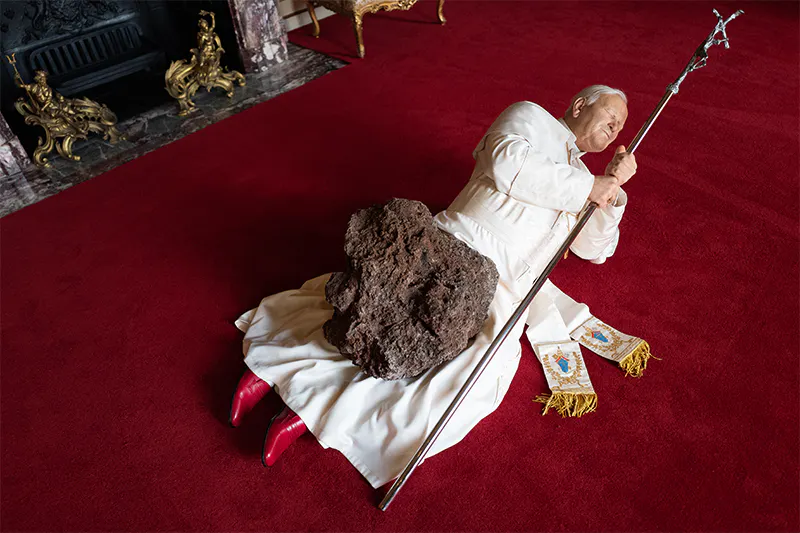
The Nona Ora by Maurizio Cattelan is a hyperrealistic representation of Pope John Paul II flattened by a meteorite. He is depicted with his eyes in a mark of suffering and acceptance.
See also: The Story Behind That $120k Banana
The work refers to the ninth hour, a precise moment according to the Gospel of St. Mark where Jesus uttered the famous phrase: "Father, Father, why did you abandon me?" during the Crucifixion.
8. Paul McCarthy, Tree (2014)
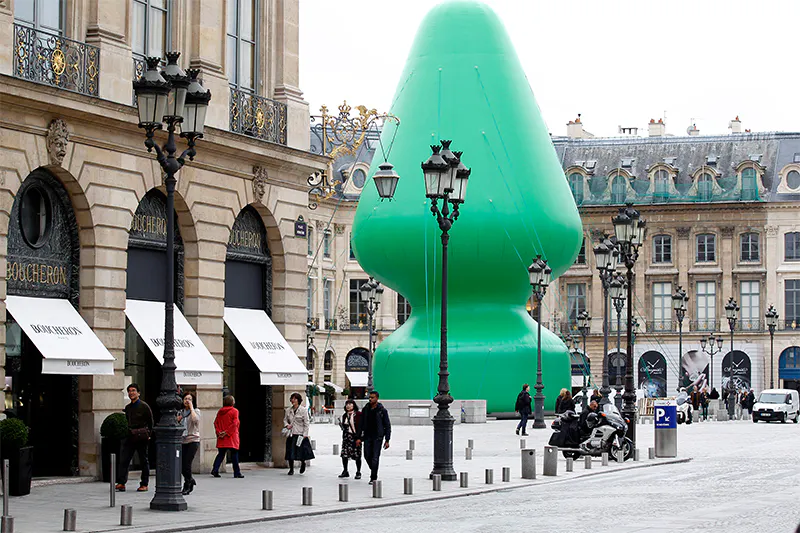
Tree was an inflatable sculpture almost 82-feet-high by the American artist Paul McCarthy. In 2014, the piece was installed at Place Vendôme in Paris during FIAC. Many members of the public were outraged as they believed the piece was a depiction of a giant sex toy and it was deflated by unknown vandals. The artist, in the face of negative reactions, re-inflated the work.
9. Anish Kapoor, Dirty Corner (2015)
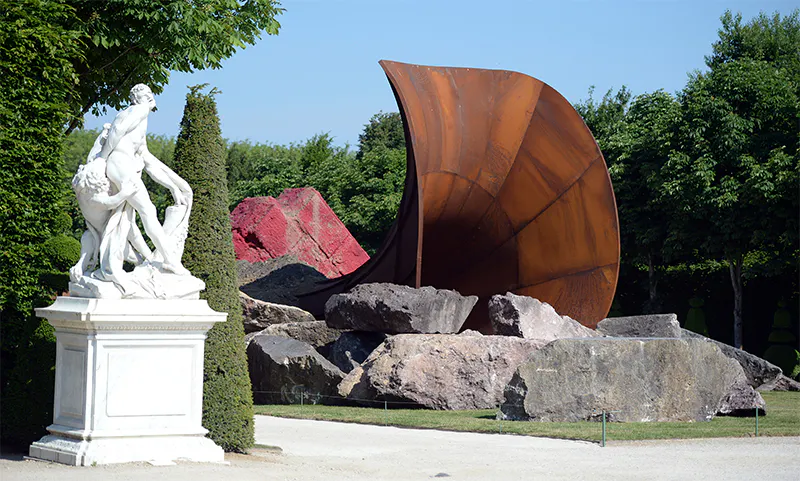
Dirty Corner is a steel horn by British-Indian artist Anish Kapoor, with glaringly obvious sexual connotations. In 2015, while exhibited at the Château de Versailles, the work was vandalised four times.
See also: Top 6: The Art of the Kiss
The work has often been described in the press as "Queen's Vagina", a phrase that Anish Kapoor claims to have never used. The work was nevertheless described by the artist as "very sexual".
10. Joep Van Lieshout, Domestikator, (2017)
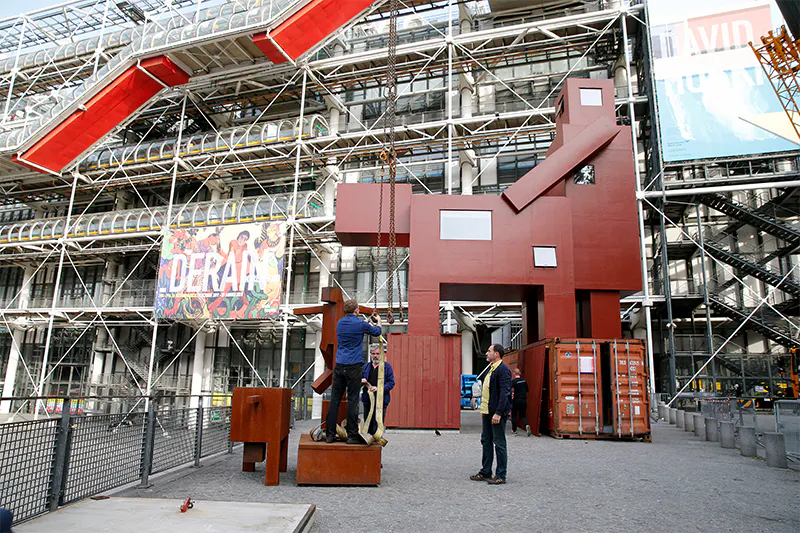
As part of FIAC's 'Beyond the Walls' installations, Domestikator by Dutch artist Joep Van Lieshout was turned down by the Louvre before being accepted by the Pompidou.
This large sculpture, 40 feet high, was installed on the façade of the museum and is in the shape of a greyhound. According to the artist, it is "an allegory of the rape of nature by man". The SPA (Society for the Protection of Animals) denounced it as "an abject sculpture representing a zoophile act openly claimed by its author."