Fascination with Egypt and Egyptian culture has existed for millenia, whether it’s archaeology or Egyptian studies, tourism and travelling, Hollywood films, adventure books or something else altogether.
Fostering and capitalising this enthusiasm for Egyptian goods is the Monaco auction house Hôtel des Ventes de Monte-Carlo (HVMC) with their ‘Egyptian Archeology & Egyptomania’ sale. Included are masks, paintings, statues and statuettes, amulets, relics, furniture elements, lamps, books, and so much more.
Though there are hundreds of captivating pieces to enjoy, we’ve narrowed down our favourite few to the following lots.
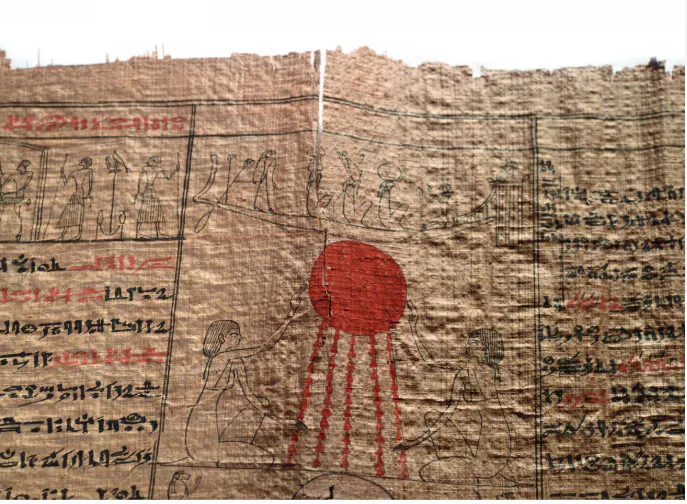
We begin with this magnificent ‘Book of Deaths on Behalf of Defunt Hor-Wedja’. The papyrus roll, with red and black ink, measures 17.4 metres in length. It’s from Egypt from the Saite Period, XXVIth Dynasty, Reign of Psammetichus II (c. 594-588 BC).
The papyrus is a version of the Book of the Dead of the ‘recension saite’ containing 192 chapters, including additional chapters. The text is in hieratic writing retrograde in black ink and the magic formulas and important sections are in red ink in order to accentuate their powers.
The Book of the Dead comes with an export license from Egypt stamped 1952.
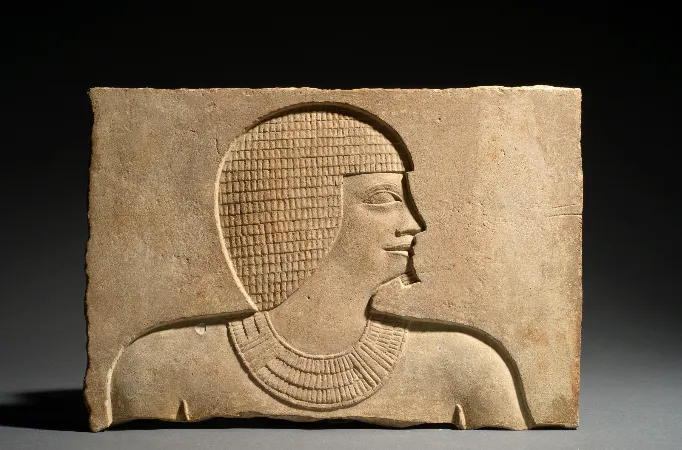
Second is this bas-relief which depicts a male figure in profile facing the right and wearing an usekh collar. He wears a wig which comprises several rows of small tight braids that conceal his ear. His eye, nose and mouth have been finely carved to give an impression of serenity and mystery.
The limestone carved hollow measures 36 x 24.5cm and is from the Old Kingdom of Egypt, 5th-6th Dynasties, c. 2400 BC. Its provenance is Paris from the Armand Trampitsch collection (1890-1975), and then by descendants.
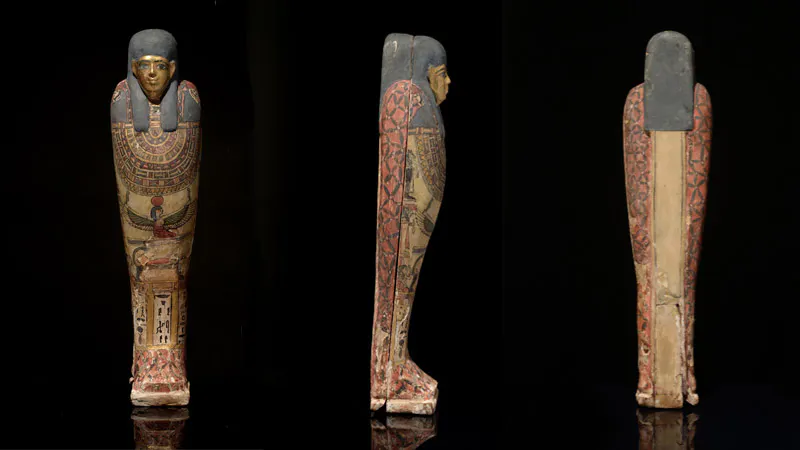
Next up is this Ptah Sokar Osiris hollow mummiform figurine from the Egypt Ptolemaic period (332-330 BC). Its shape resembles that of a small coffin composed of a lid and a tank and its decoration is that of a sarcophagus. It combines the virtues of the demiurge god of Memphis, Ptah, as well as those of the late god Sokaris and the reborn god, Osiris. They were placed in the tomb near the sarcophagus and were among the essential pieces for life in the afterlife.

Finally, we finish with this amulet from the Egypt Ptolemaic period (332-330 BC). It depicts the Eye of Horus on one side and a sphinx surmounted by two ostrich feathers on the reverse. In the field to the left a Horus falcon spreads its wings to protect the sphinx.
There are plenty more Egyptian treasures to be discovered at HVMC. Their sale hits the auction block on 13 October.