At the end of May, the Munich auction house Hermann Historica offered an auction filled with historic art and military treasures. Extremely lively bidder participation via the Internet, which, despite the restrictions caused by the COVID-19 pandemic, contributed to the many outstanding results.

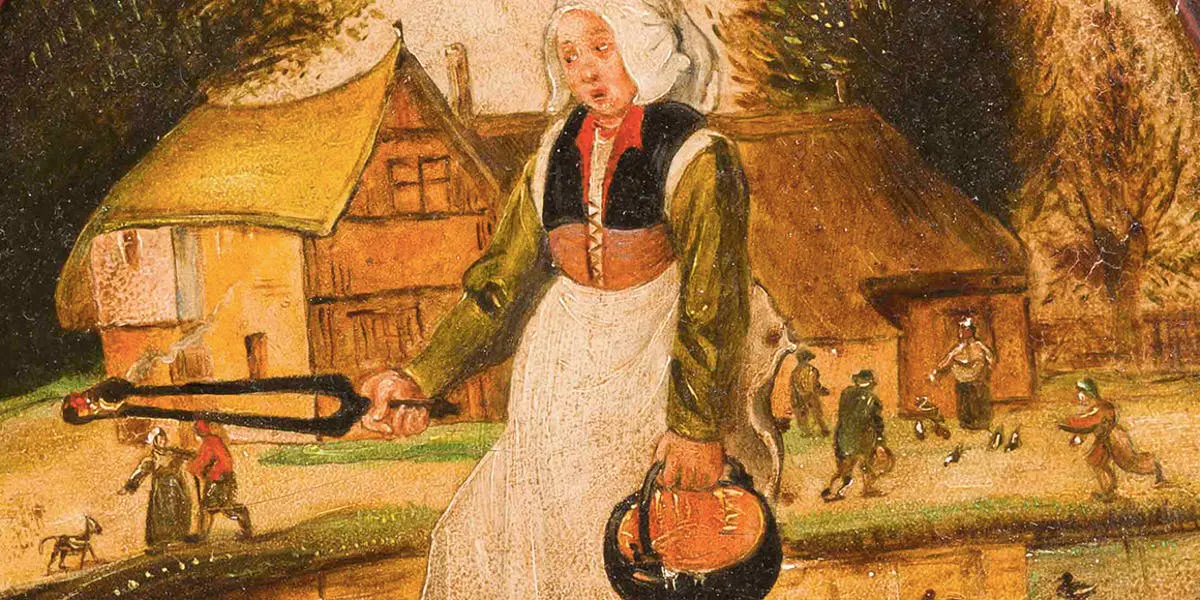
The biggest surprise was the sale of a small painting from the 17th century, with a diameter of just 25 cm. The genre picture of an unknown Flemish master, executed in oil on wood, shows a farmer in front of a farmstead. Several bidders wanted the small painting, which was estimated at €1,500 (£1,345), but after an a bidding battle sold for an astounding €57,500 (£51,500).
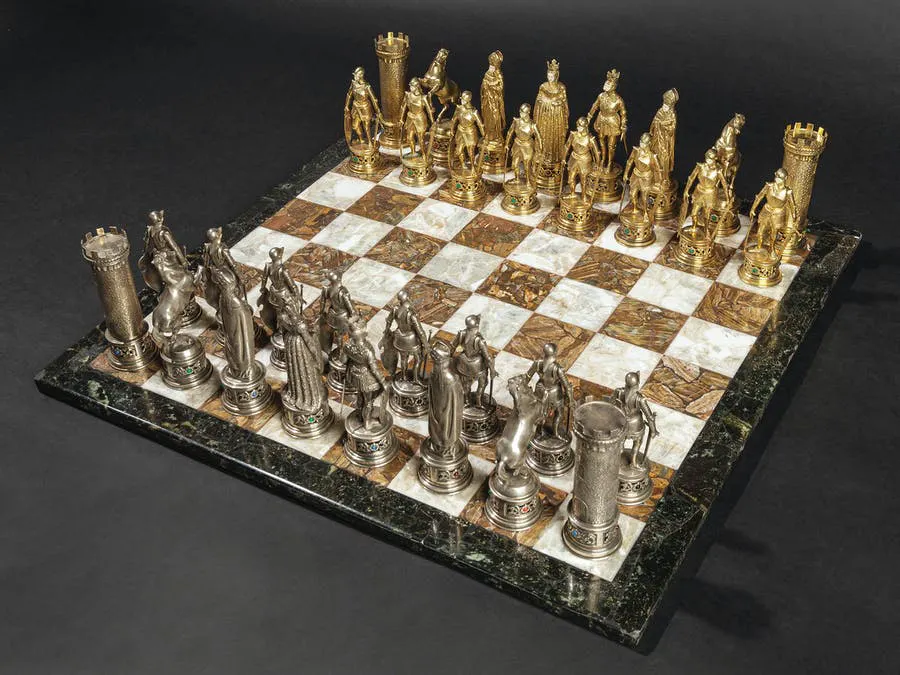
Hanau, Germany is a commercial and industrial city known for its expertise in goldsmiths; according to experts, this splendid chess game from 1900 came from there. The game, with its gold and silver pawns and its luxurious board, entered the auction room with an estimate of €40,000 (£35,900), before finding a buyer for €52,500 (£47,100).
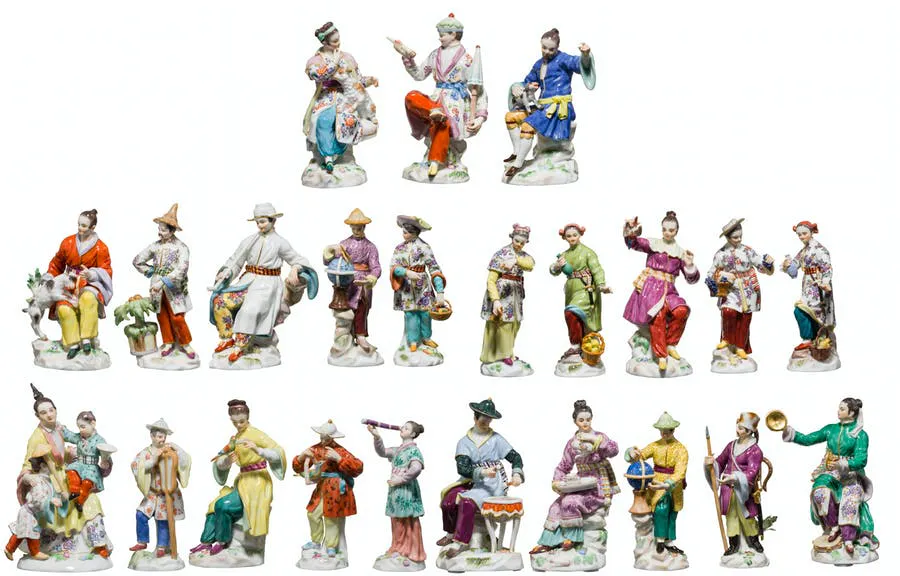
Another highlight of the craft category was a set of 23 Japanese figures offered for €25,000 (£22,500). This group of high-quality figurines produced in the 20th century is the work of the sculptor Friedrich Elias Meyer, who worked in the Meissen porcelain factory from 1748. The final price increased to €32,500 (£29,200).
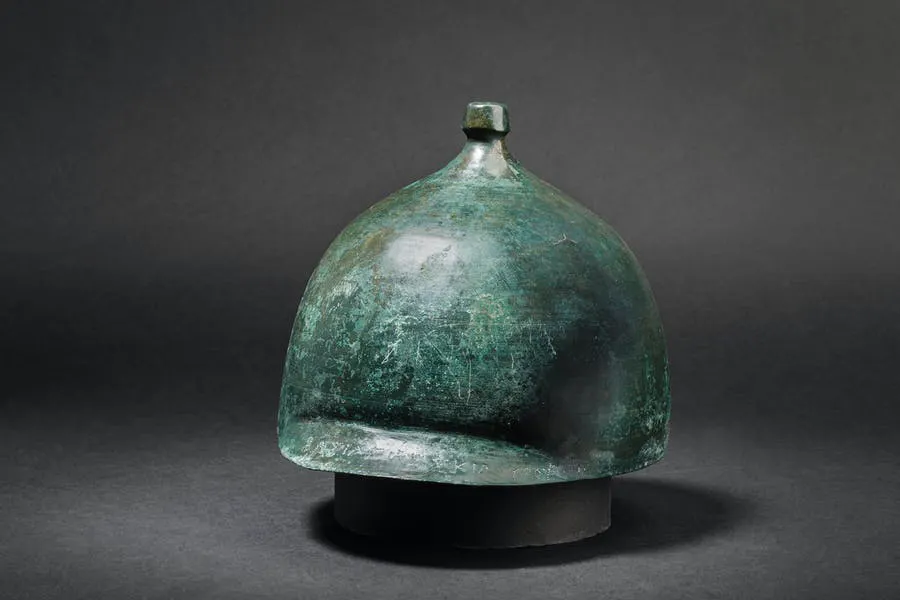
This bronze helmet Montefortino, or Roman helmet, bears the name of the Scythian king Skilouros of Crimea, written in Greek letters. The royal object dated to around 140 to 114-113 BCE increased its starting price from €28,000 (£25,100) to a sale price of €35,000 (£31,400).
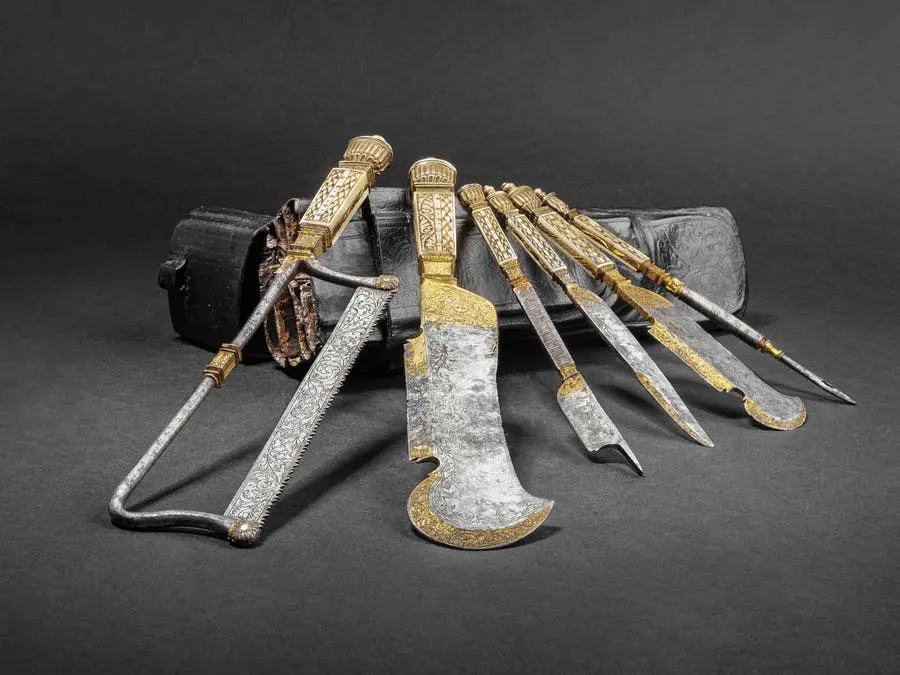
The blades of these strange objects were sharpened in 1571 not for military purposes, but for hunting. The set of tools including three knives, a bone saw, a file and a sharpener achieved €48,750 (£43,750), over an estimate of €32,000 (£28,700).
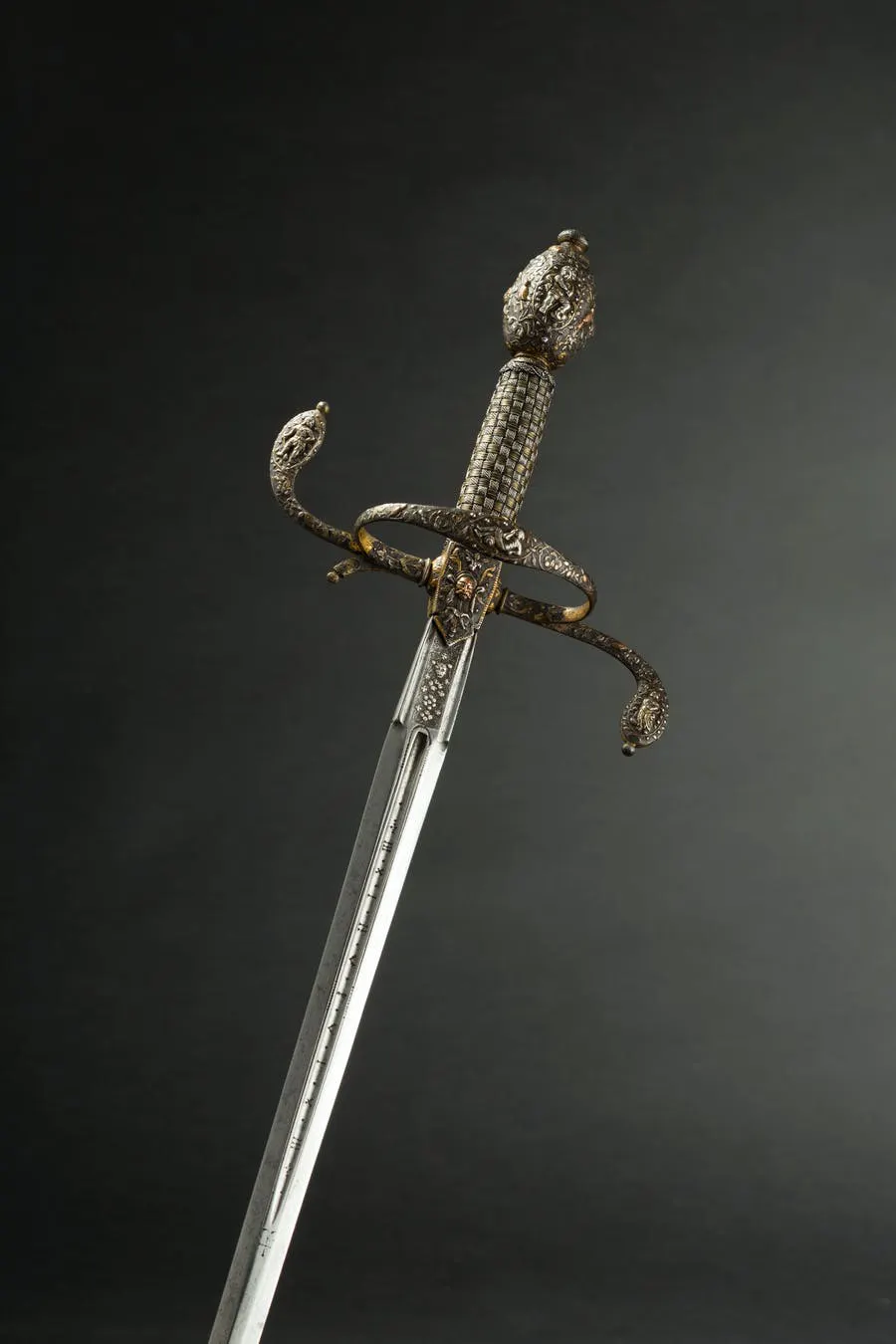
Among the knives, this German luxury rapier dated around 1620 stood out: presented for €29,000 (£26,000), the hammer dropped for €36,250 (£32,500). The braided handle made of copper and iron wire, with its fine patterns, is particularly breathtaking.
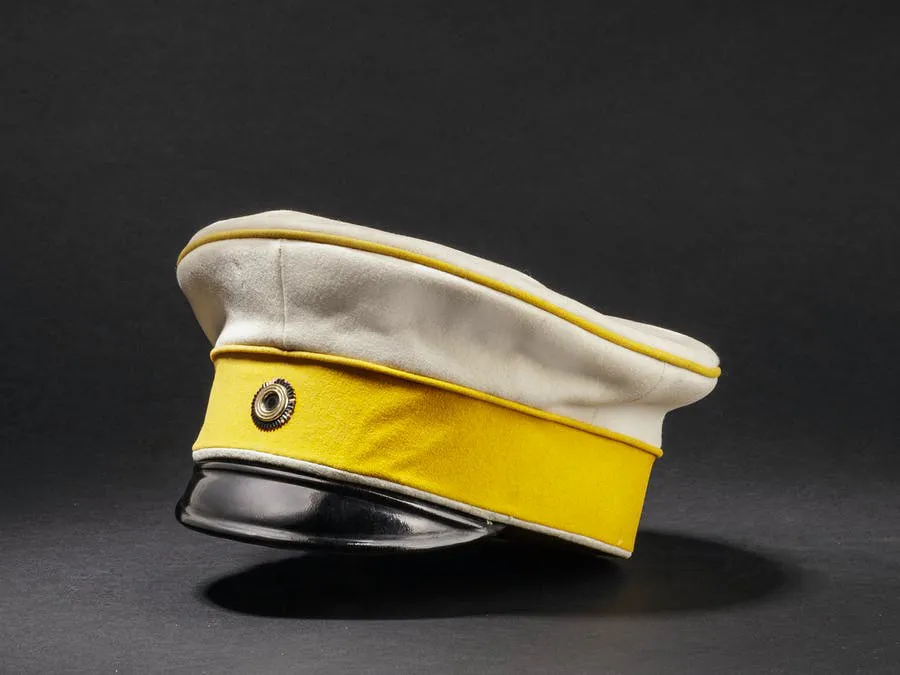
The personal cap of Otto von Bismarck, a Prussian and then German statesman, worn while he was a member of the cuirassier regiment No. 7 of Magdeburg, had a starting price of €15,000 (£13,500). Experts of the auction house said that the personal items of von Bismarck were in great demand by collectors, and this headgear was sold for the high price of €125,000 (£112,100).
A true historic gem of Tsarist Russia, this first-class set of the Order of Saint Catherine adorned with diamonds, produced in Russia around 1910, entered the sale with an estimate of €120,000 (£107,500). The hammer price did not disappoint at €200,000 (£180,000).
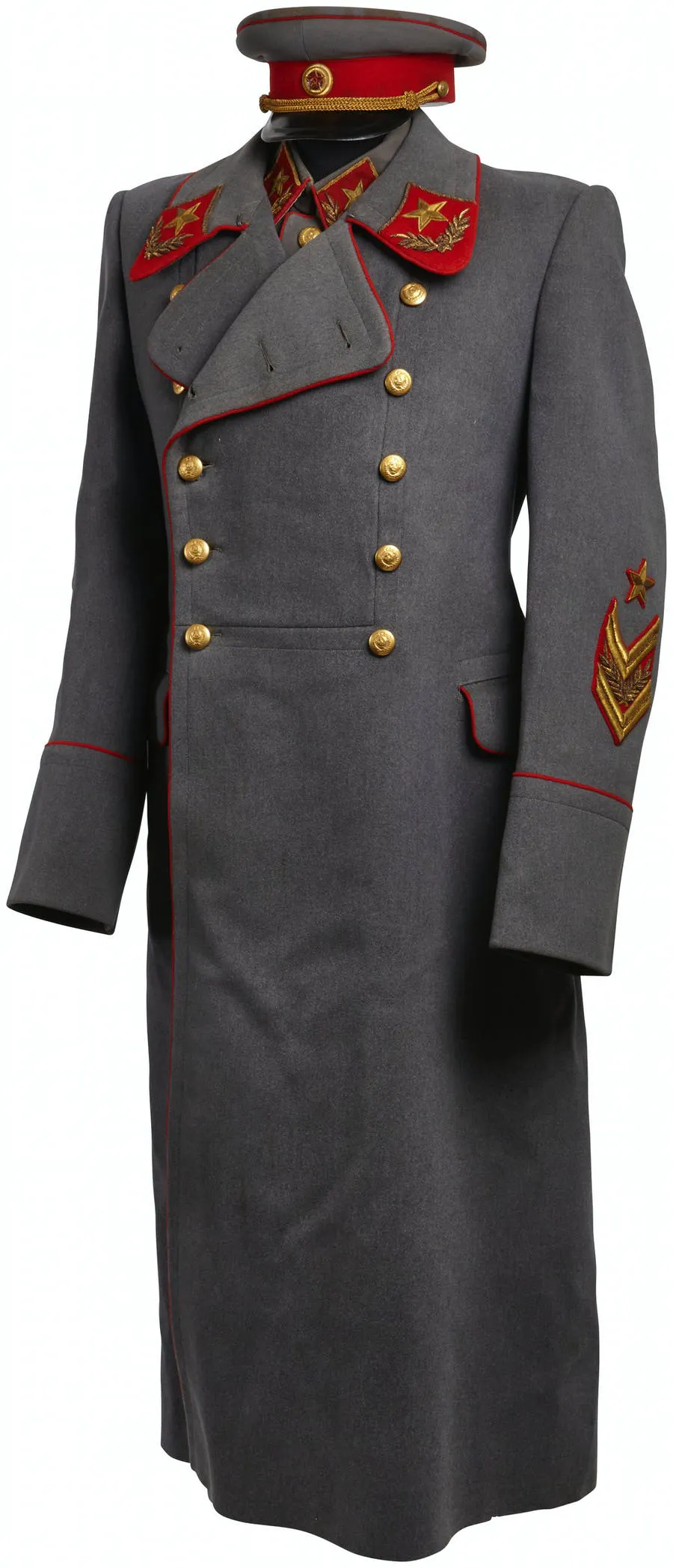
Almost doubling its starting price, set at €23,000 (£20,600), this set included a thick woollen coat, a jacket, a belt, a hat and awards that belonged to a Soviet marshal between 1940 and 1943. The final price reached €45,000 (£40,400).
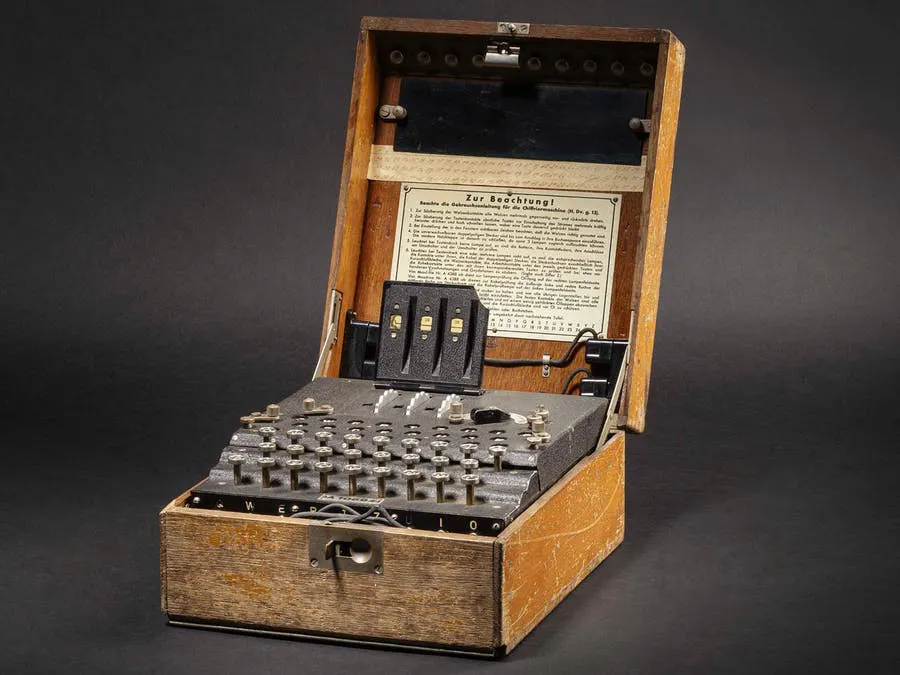
Offered at €50,000 (£44,900), the Enigma I cipher machine, which was used by army and air intelligence services, almost tripled its value. The current model was from 1937 and is rarely found on the auction market, which prompted the new owner to pay €137,500 (£123,400).
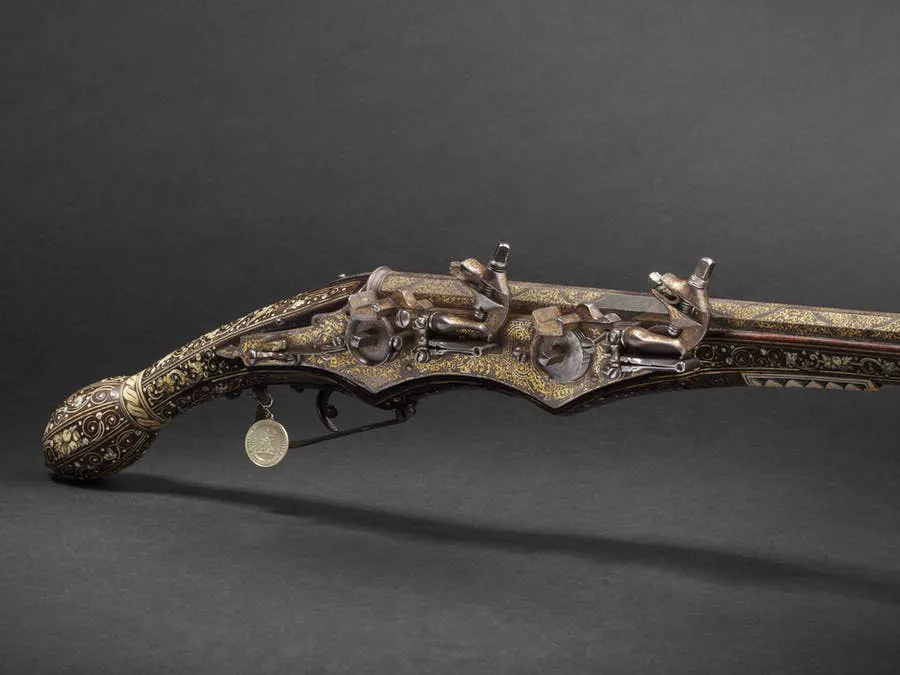
These blocking pistols were the flagship lots of the selection of firearms. These special models with two consecutive loads, produced around 1600 in southern Germany, got €67,500 (£60,500), above a starting price of €40,000 (£35,900).
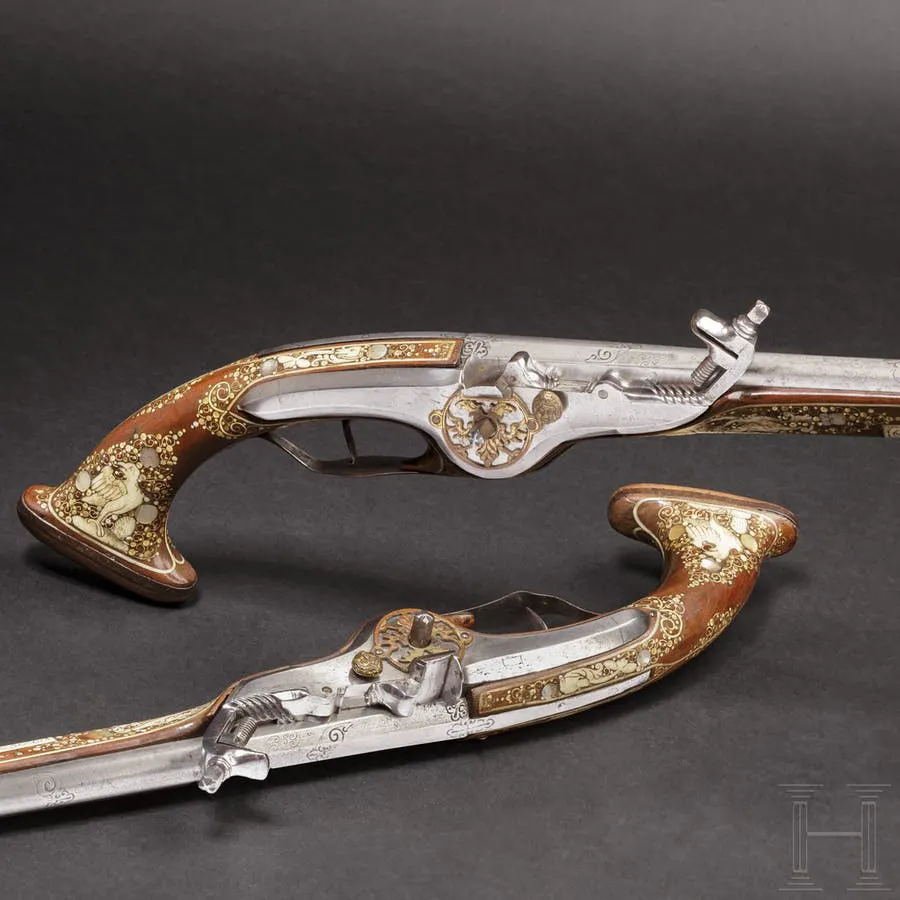
A large pair of luxury wheel lock pistols, probably made in Teschen around 1640, brought in €50,000 (£44,900). Their peculiarity lies in their ornaments, proofs of high-flying craftsmanship. The starting price was €40,000 (£35,900)