
Between 4-7 June, the Munich-based auction house Hermann Historica is hosting four online auctions. The sale begins with firearms from five centuries: a catalogue consisting of no less than 582 items.
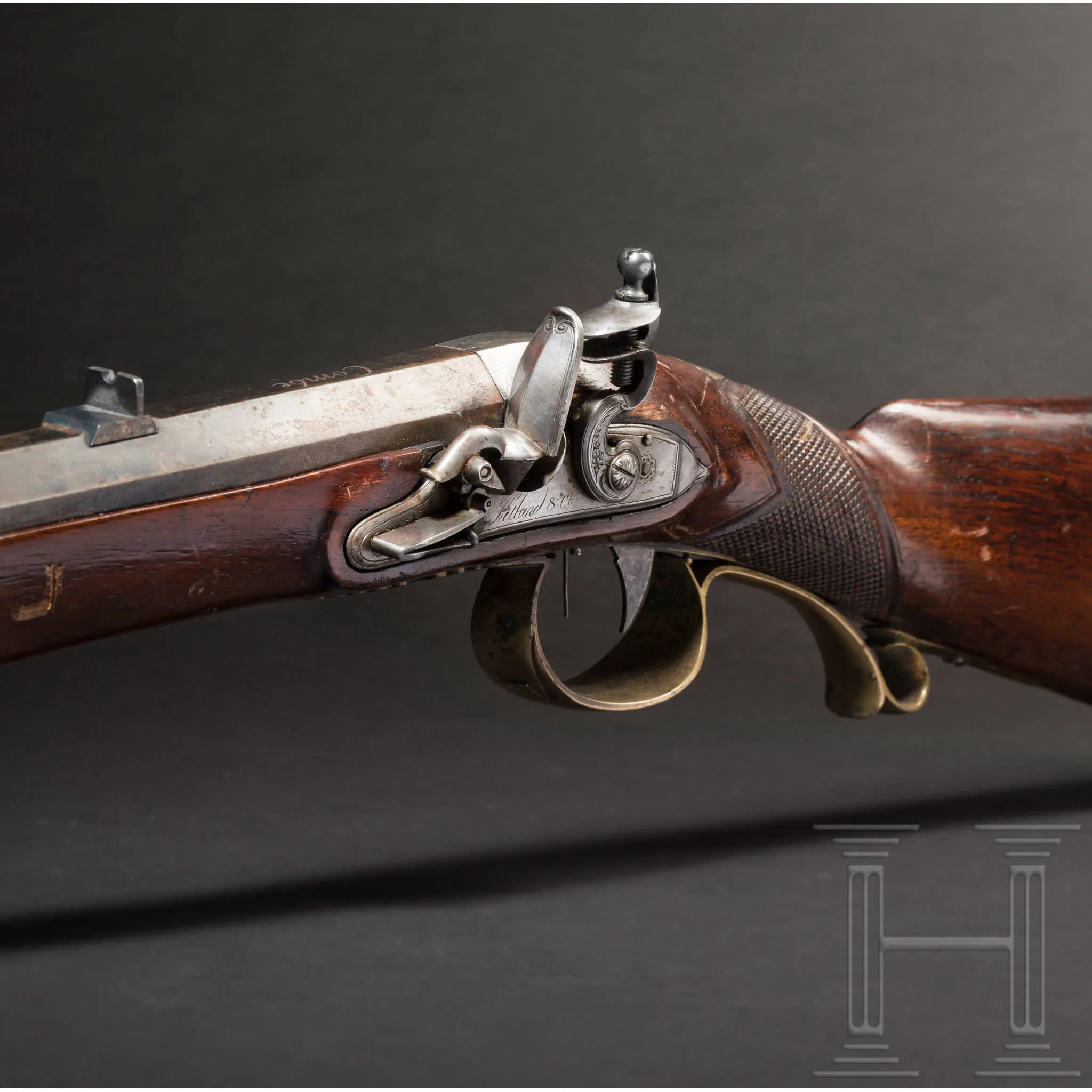
One of the objects was manufactured is this flintlock rifle for left-handers manufactured around 1810. The rifle has a polished, octagon-shaped pipe where the flint lock is engraved with ‘Ketland & Co’. Ketland was a gunsmith who specialised in flintlock weapons and worked in Birmingham between 1760 and 1821.
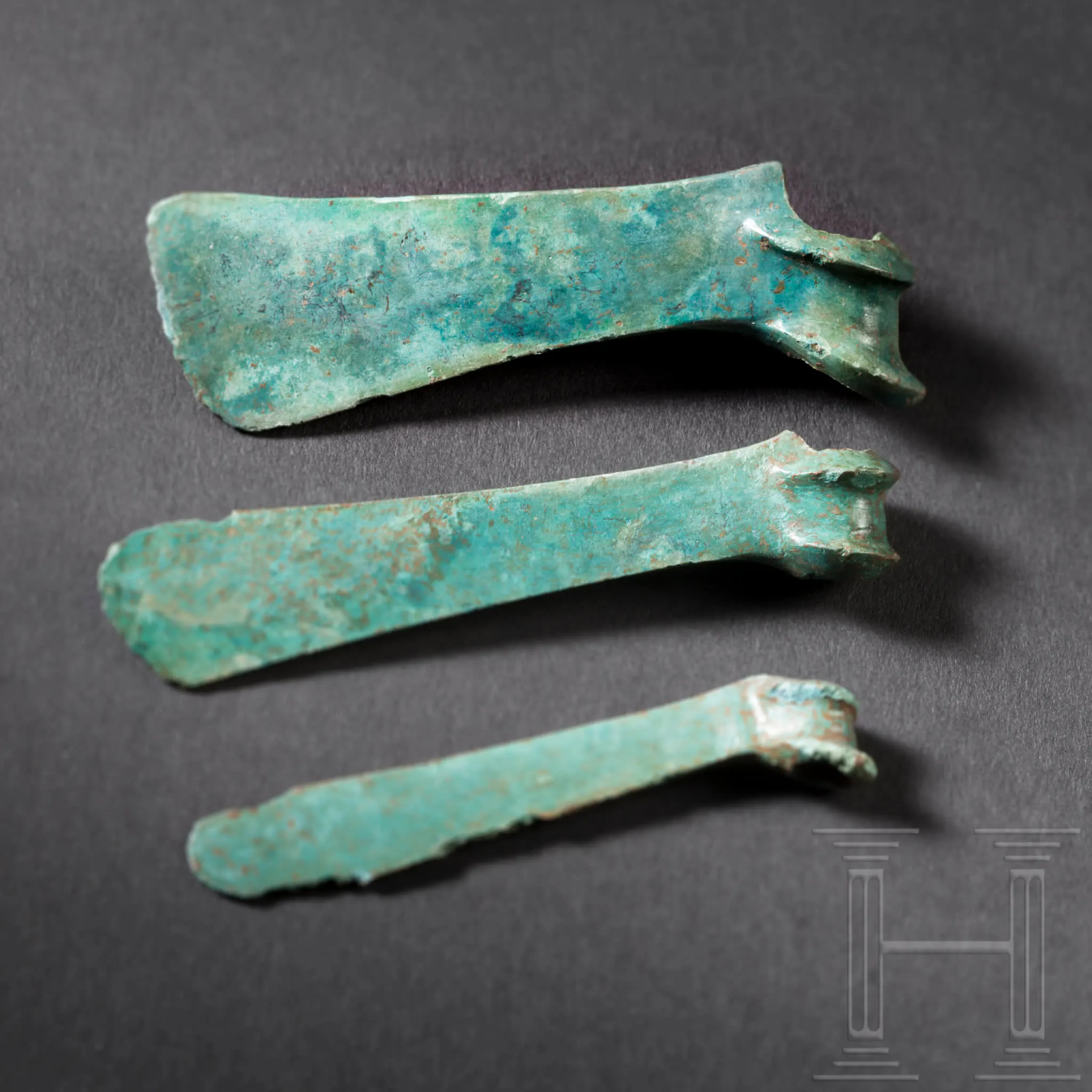
The next two days consist of antique weapons, antiques, hunting and arts and crafts. The catalogue is, to say the least, solid with its over 1200 lots – three of these are votive axes from southeastern Europe dated to the Bronze Age. Thus, these three axes were not used as weapons but rather as offerings, which one can see in their short length, measuring only 7.3 to 8.5 cm.
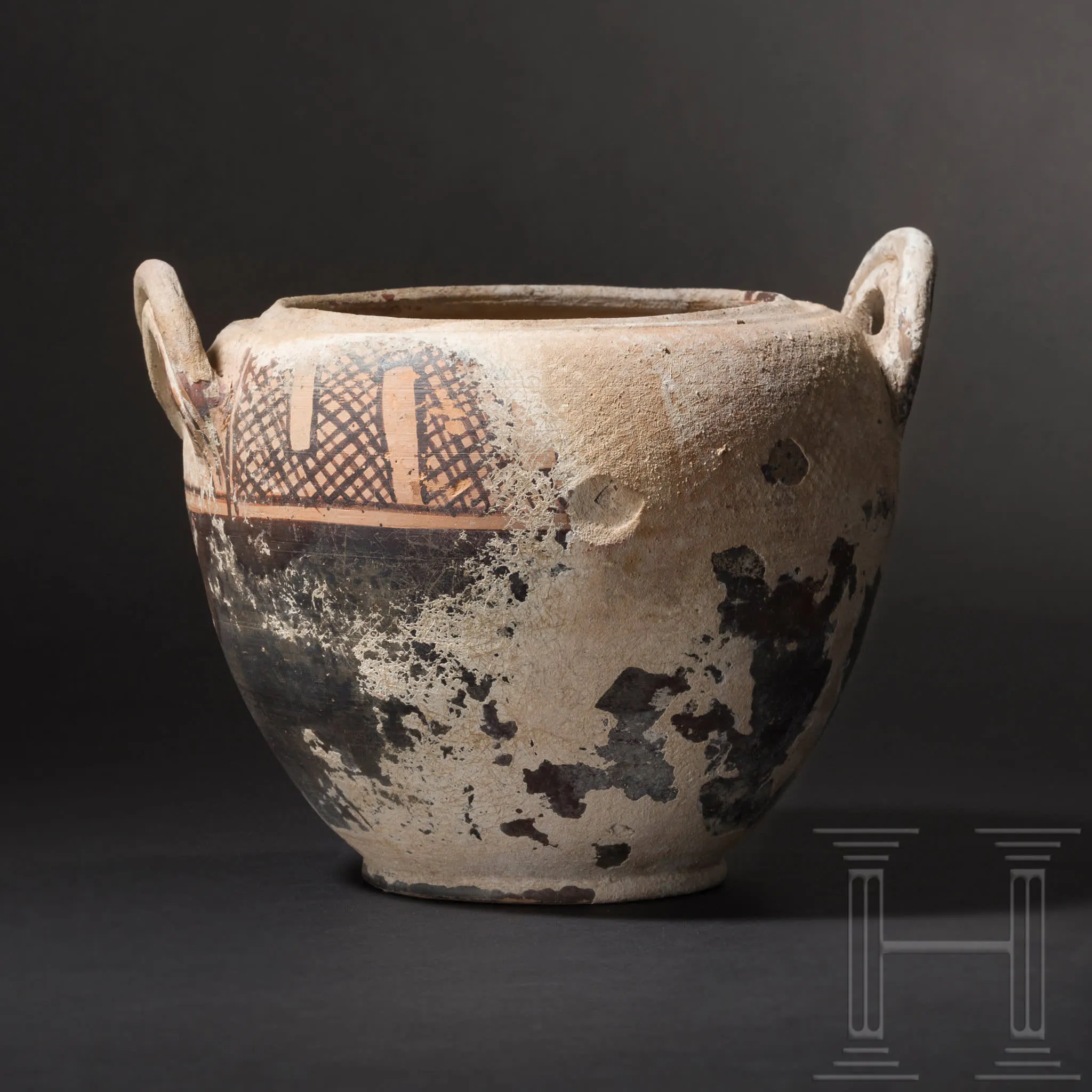
From the late Bronze Age there is this ceramic vessel used in Cyprus as a storage vessel. The shoulder of the intact vessel is decorated with a grid pattern interrupted by rectangles.
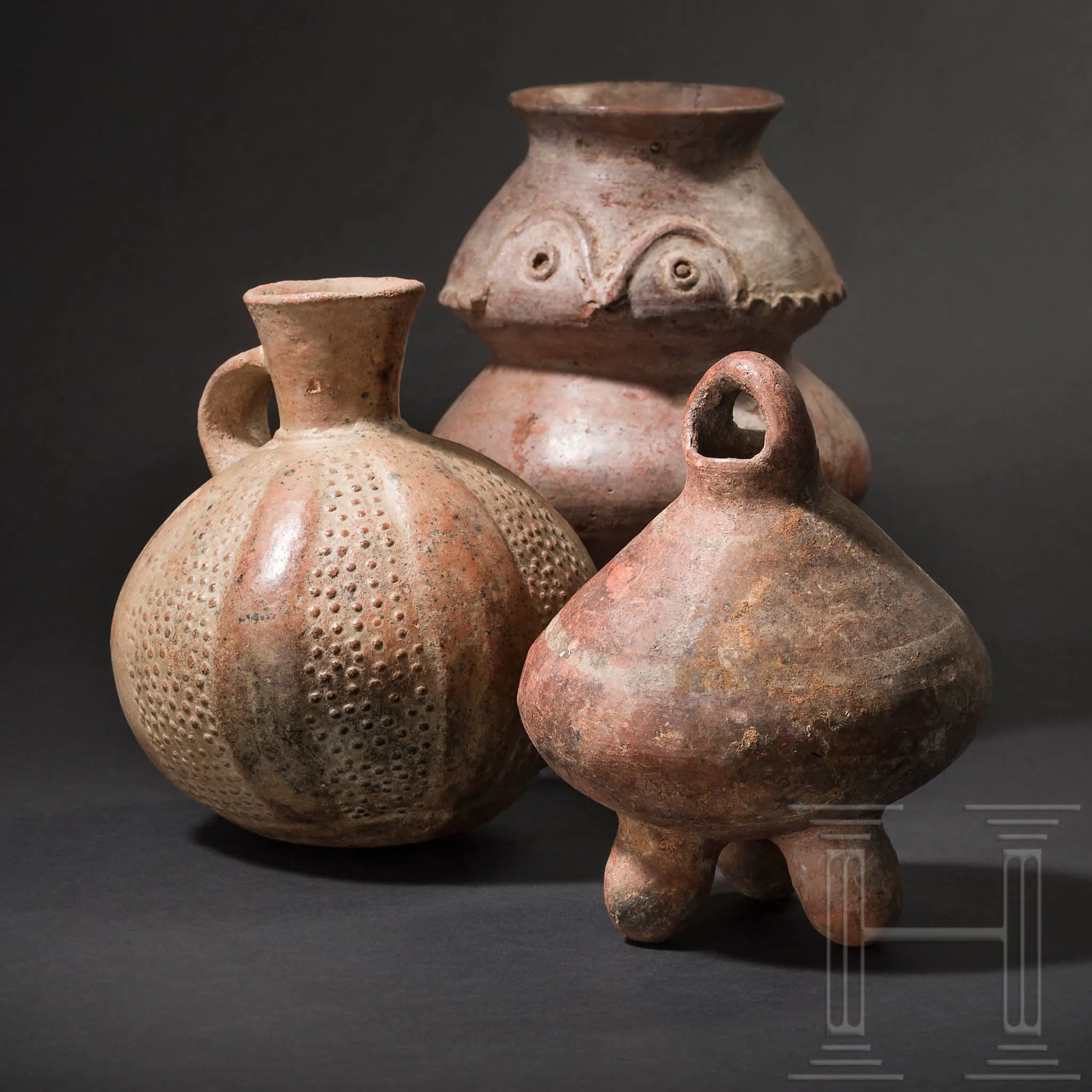
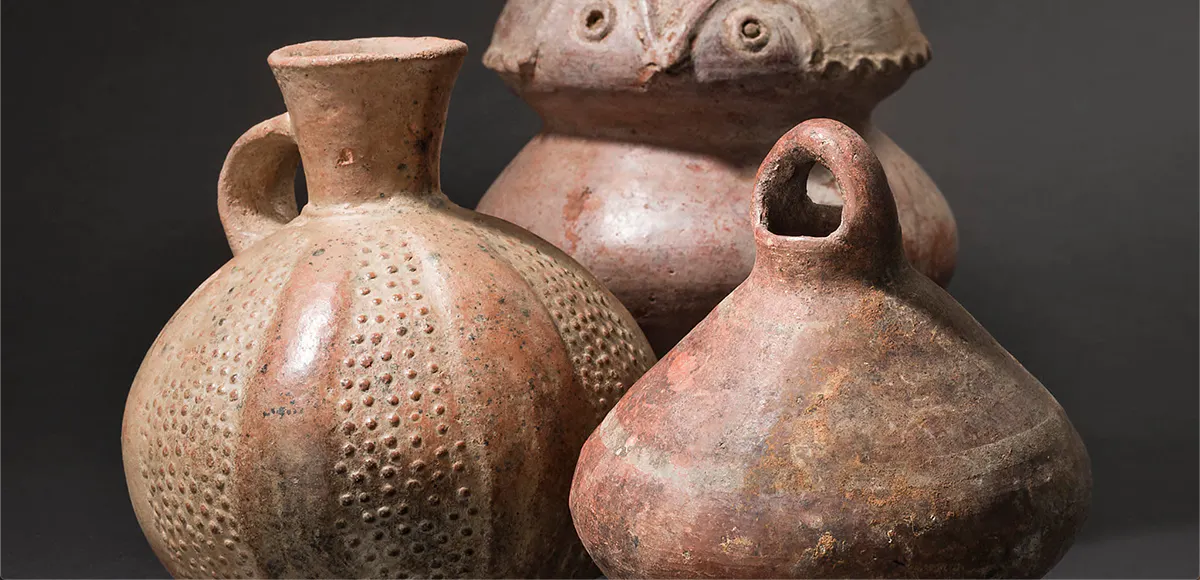
Other ceramic works for sale are these red-coloured vessels from pre-Columbian Peru. One of the three vessels has been attributed to the Chimu people, who were defeated by the Inca Empire in 1470.
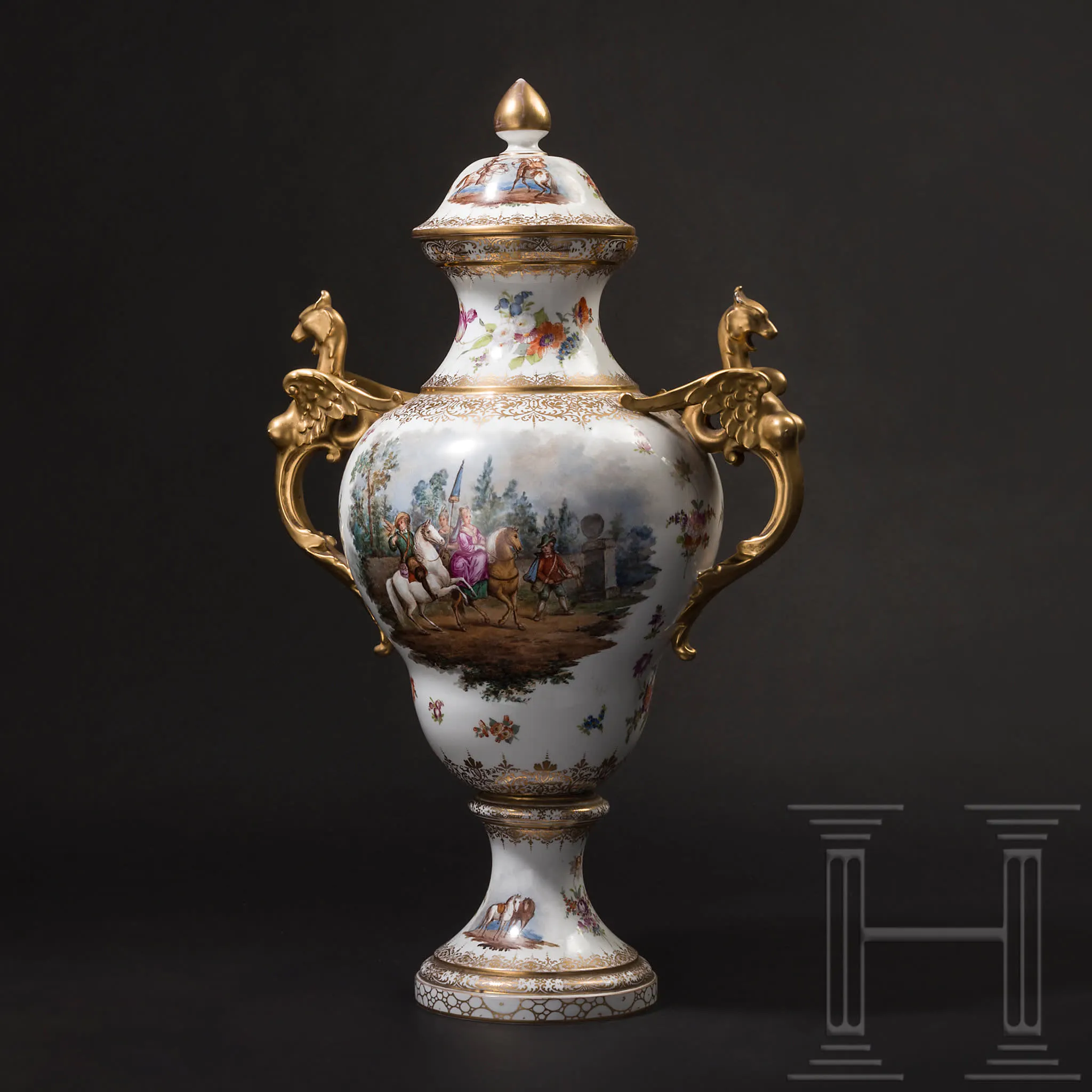
Another lot is a German porcelain vase from the 20th century. The polychrome vase depicts a hunting scene from the 17th century, where one can see a man, two women and a falconer hunting. Falconry, that is hunting conducted with birds of prey, was very common in Europe during the Middle Ages. It became popular once again in the 16th and 17th centuries, and is still performed all over the world today.
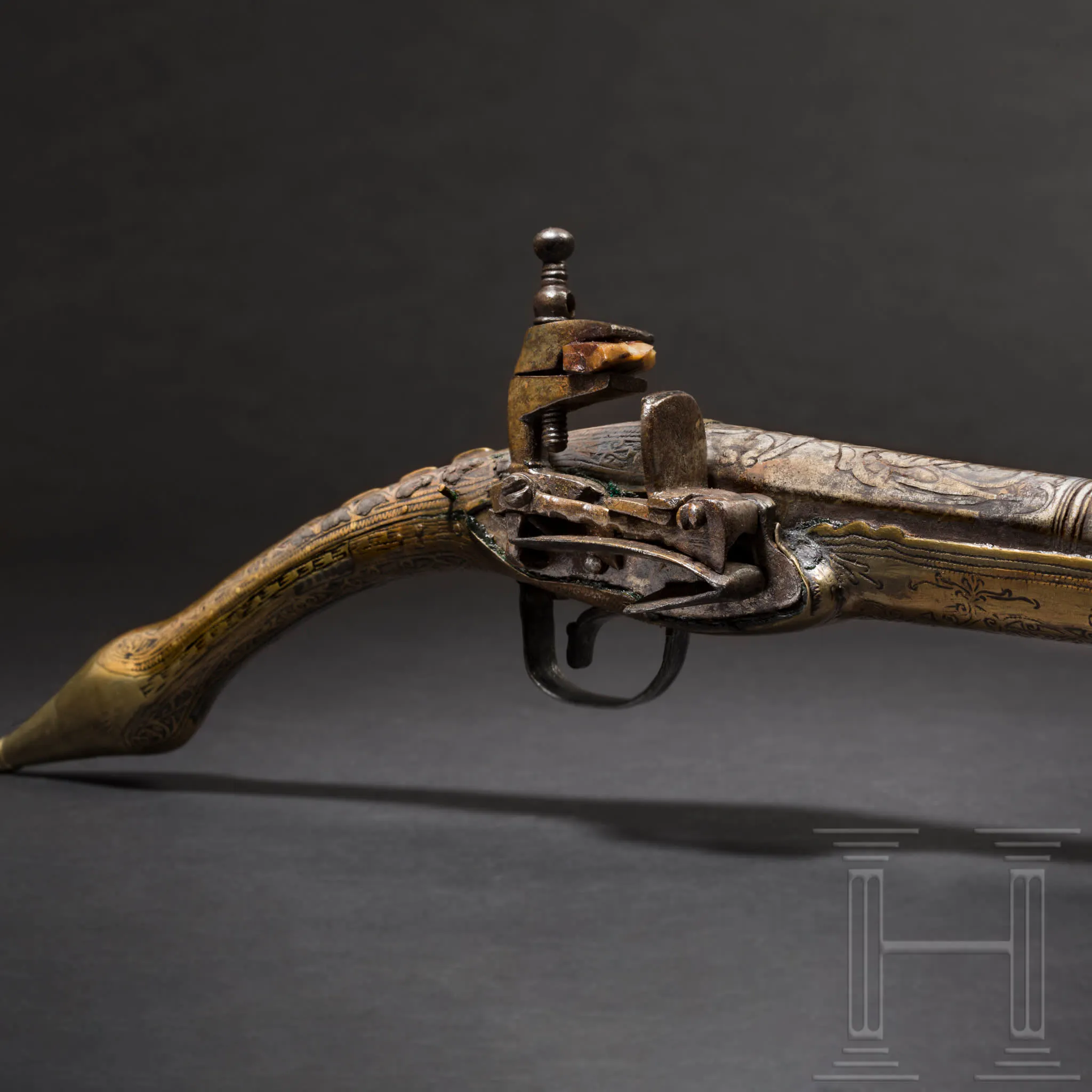
The second day of antique weapons, antiquities, hunting and arts and crafts consists of many interesting non-European objects.
This Miquelet gun was manufactured in Albania during the 19th century. This particular model is often called the ‘rat tail’ because of the shape of the handle. The Miquelet is a 19th-century name for a special kind of firing mechanism that arose in the 16th century and was used in the countries around the Mediterranean and in the Spanish colonies until the 19th century.
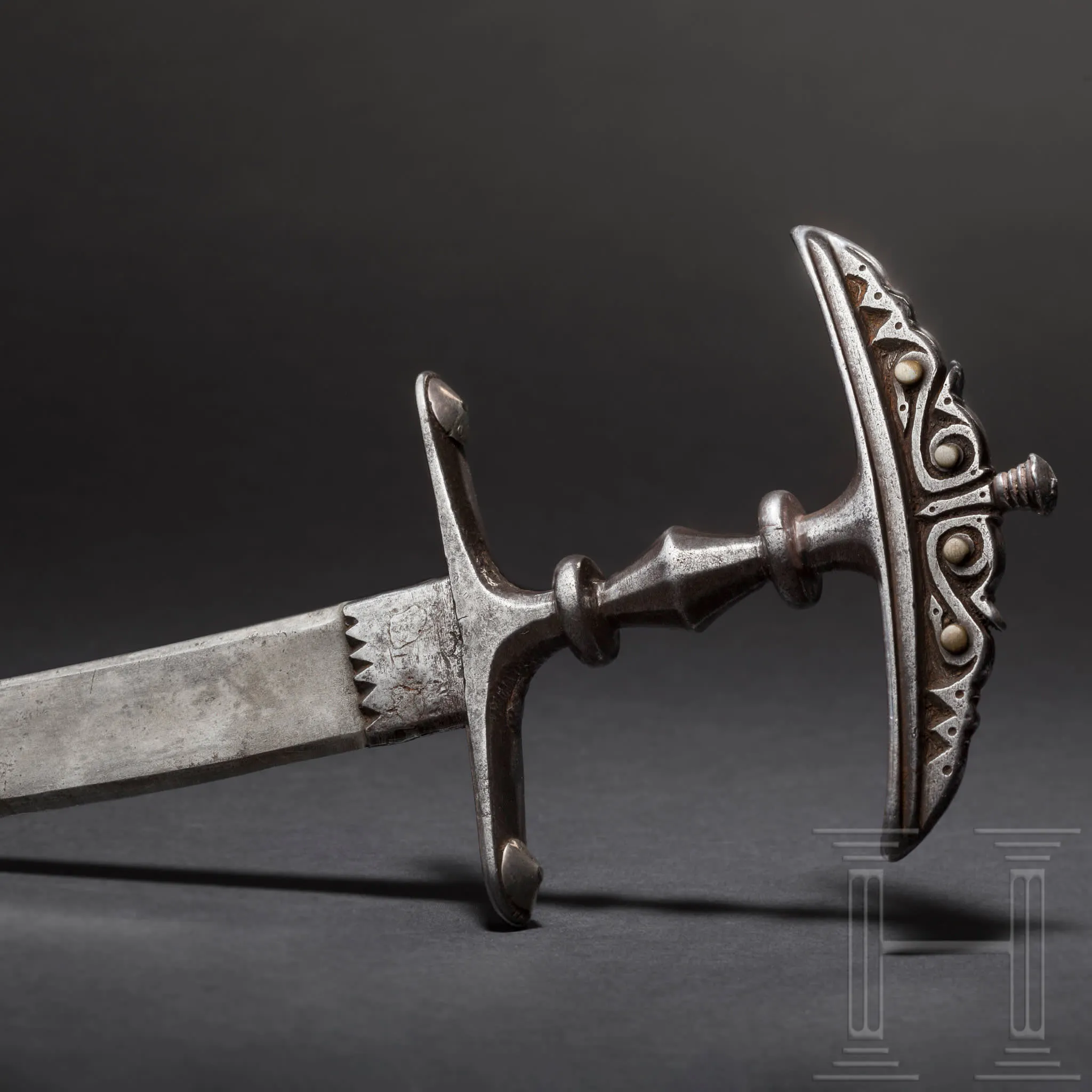
This northern India dagger was made in the 18th century and is called Jamdhar Katari. The dagger is made in Damascus steel, which is often used in the manufacturing of the sword type Quaddara, which is associated with the taresian dagger khanjali.
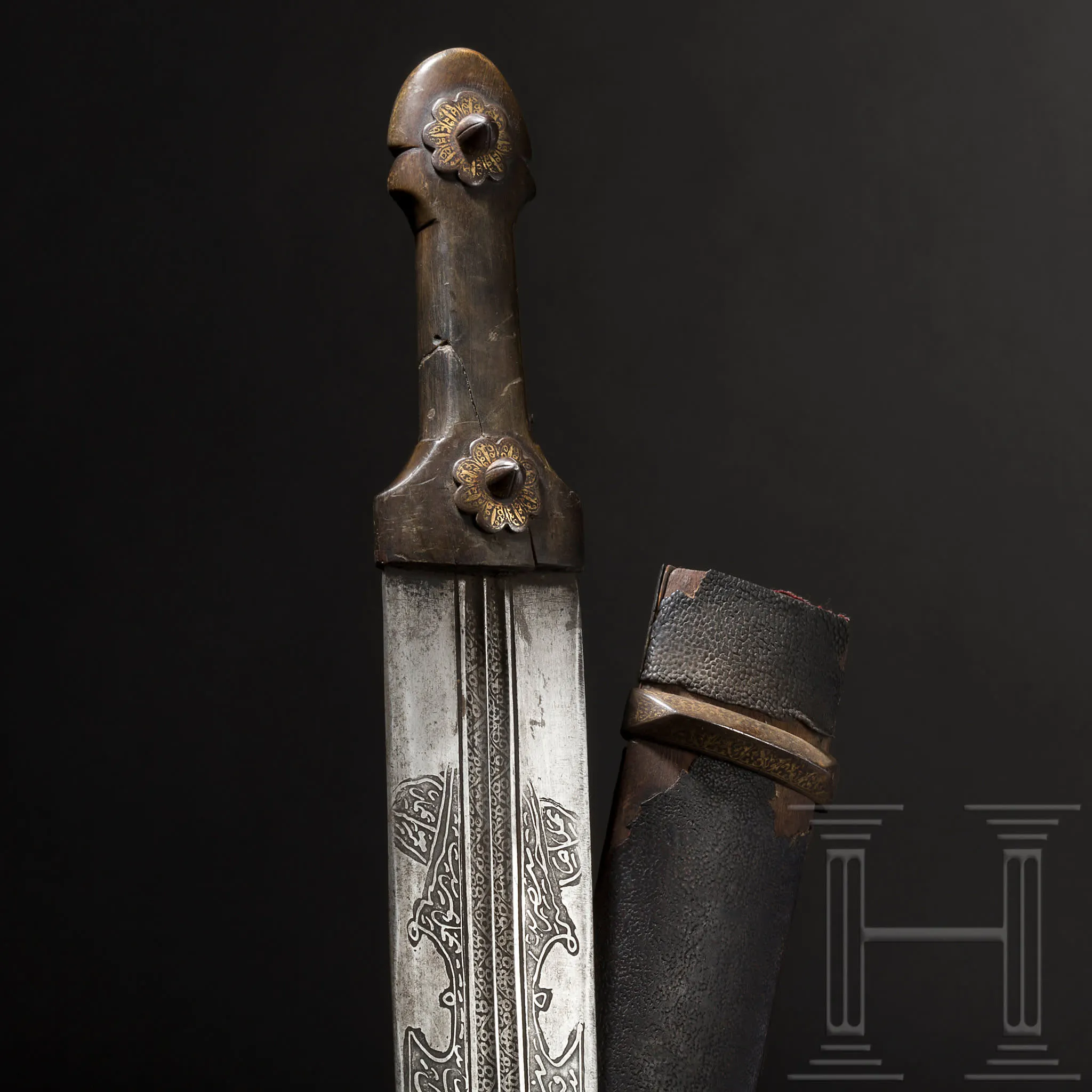
Even such a sword is auctioned off by Hermann Historica. One of the sword's most characteristic features is that the blade is often somewhat skewed.
Damascus steel was also frequently used in the production of the Quaddara. A striking feature of this straight, double-edged weapon is that the blade is often somewhat skewed.
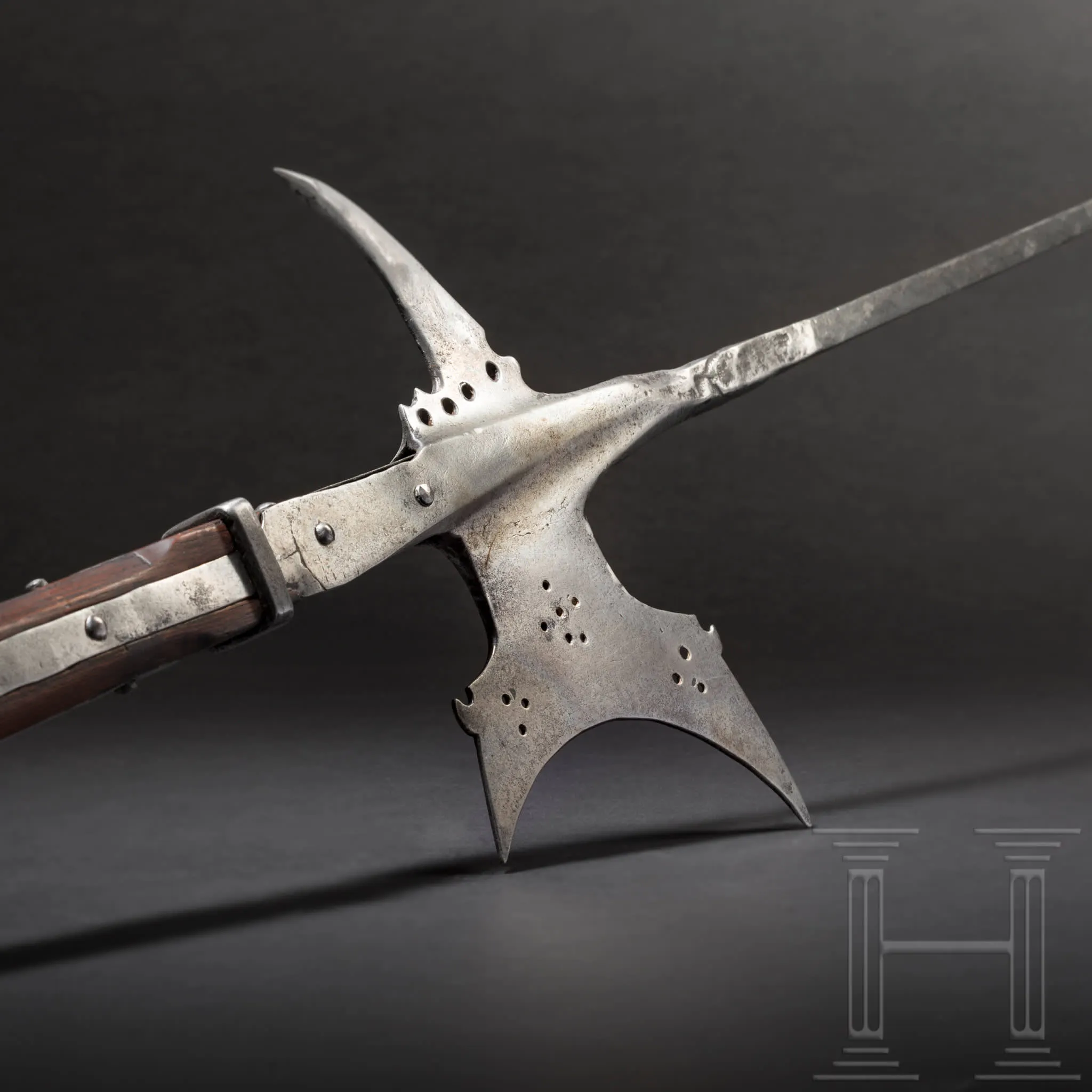
During the 14-16th centuries, hillebard was common among Europe's infantrymen. Hillebard is a chopping and shock weapon (a combination of pike and ax) that eventually went out of fashion due to an increased use of firearms.
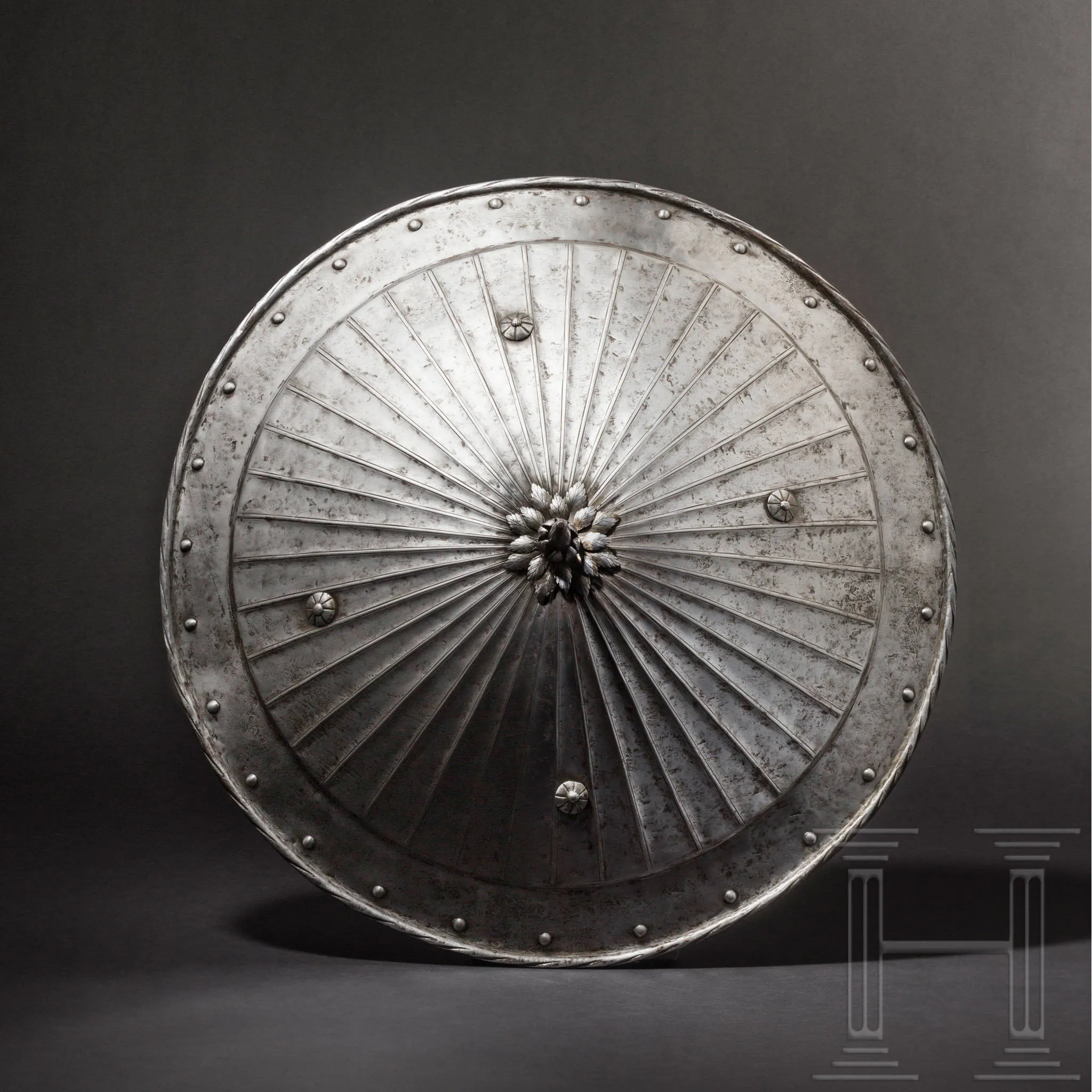
One of the auction's most beautiful pieces of craftsmanship is undoubtedly a German-made shield in iron with details of foliage. The shield was manufactured around 1520-30 and is a copy of an even older version.
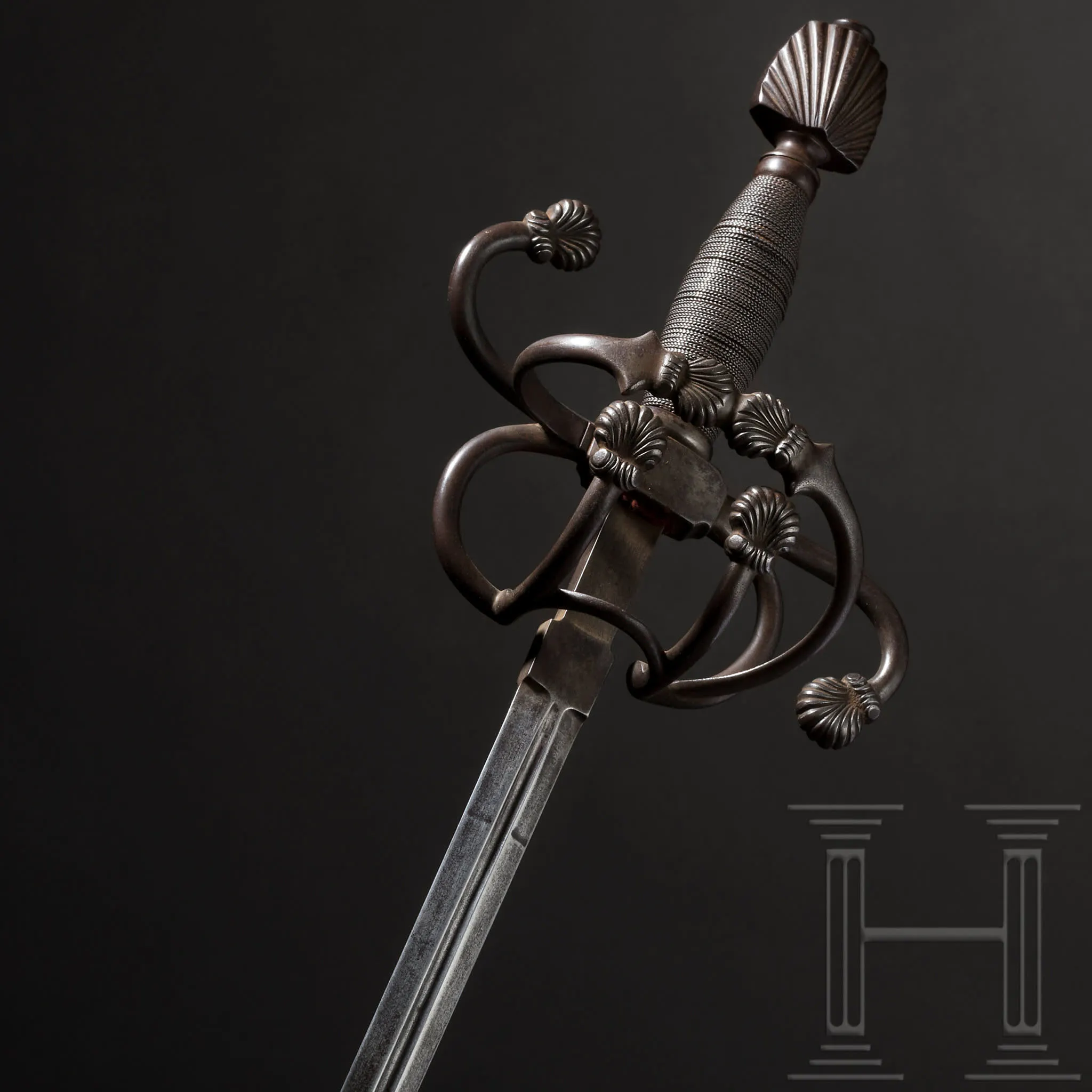
A lot in the 16th-century style of later manufacture is this beautifully-designed rapier. Rapiers often had lavishly decorated cases.
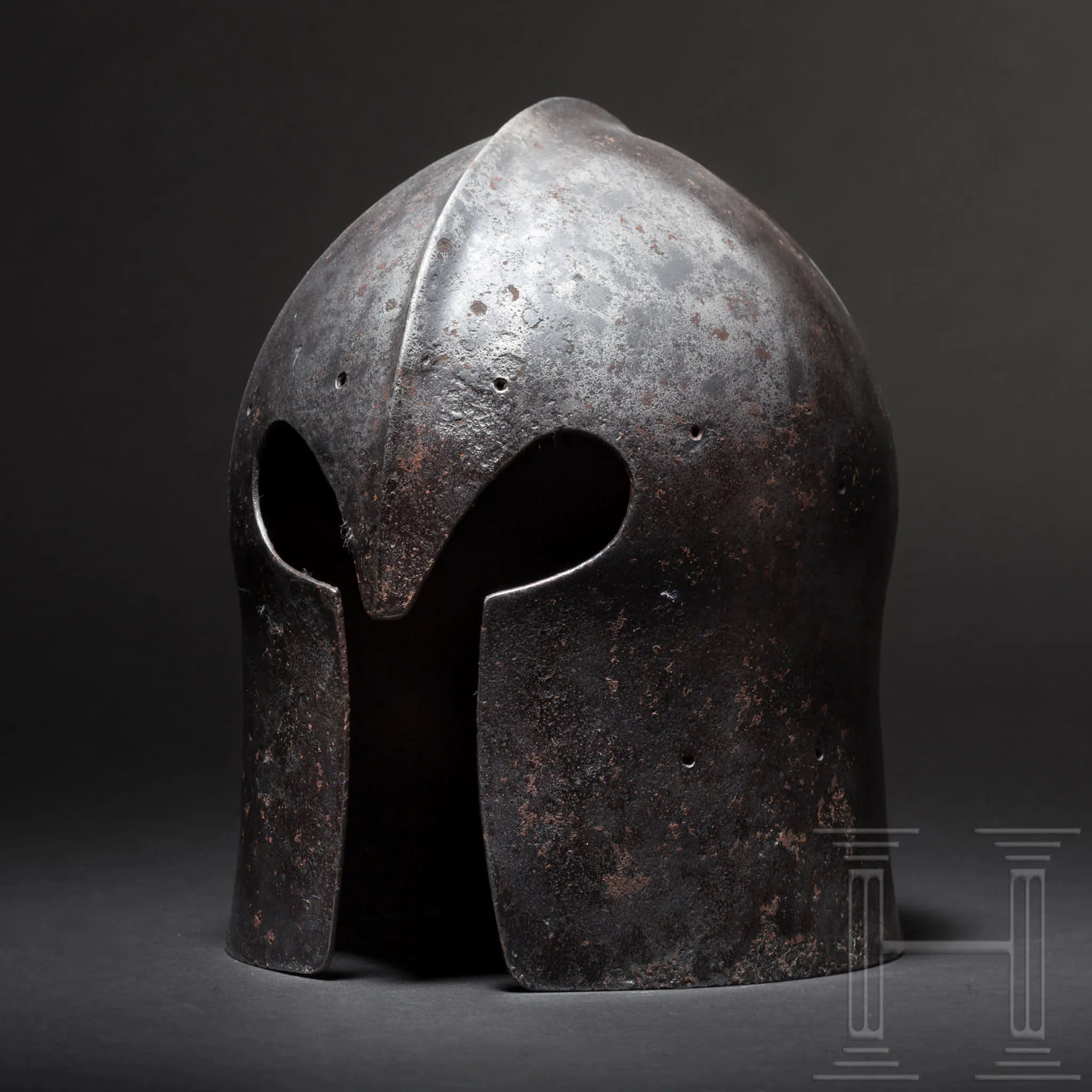
Barbuta was a popular and frequently-used helmet in Italy's 14th and 15th centuries. Barbuta is Italian for bearded. Its t-shaped face opening facilitated breathing by the user and it was also common with y-shaped openings.
On 7 June, the last auctions are held and then the focus turns to order and military collectors' items as well as modern German history. Don’t forget, before the online auction you need to send your bid via Hermann Historic's website or participate in the auction online live.

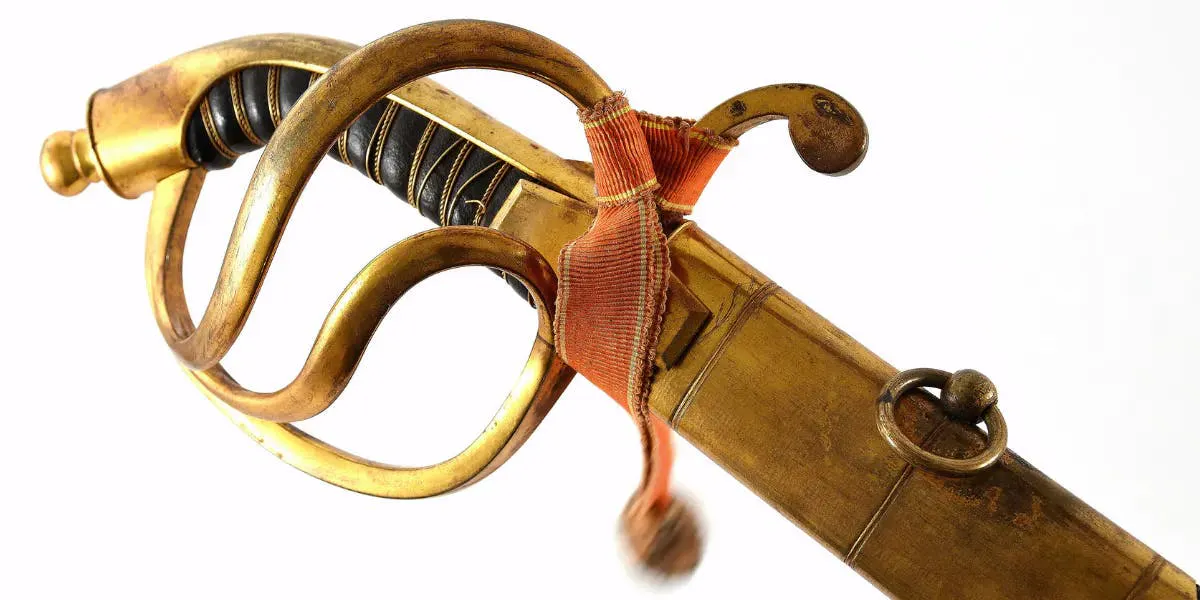
![Coral-studded Kilic, Ottoman, 19th century [detail]. Photo © Hermann Historica GmbH](https://images.prismic.io/barnebys/5fd7f4fb-4d8c-4ada-b74e-7f6e5efb3682_f2cfe355-5eed-472a-9128-a7d9efd4cfe1_HHTitel.png.jpeg?auto=format,compress)