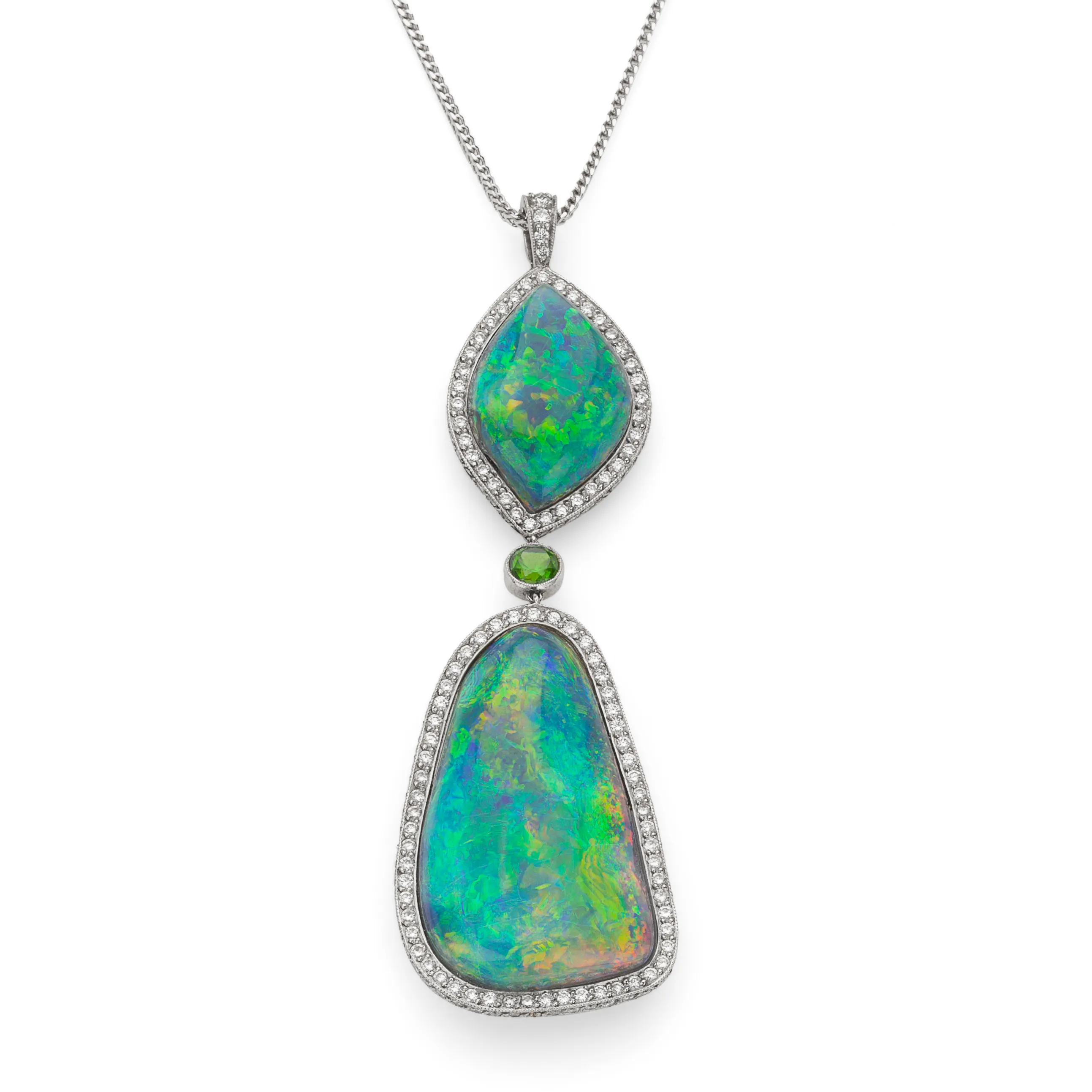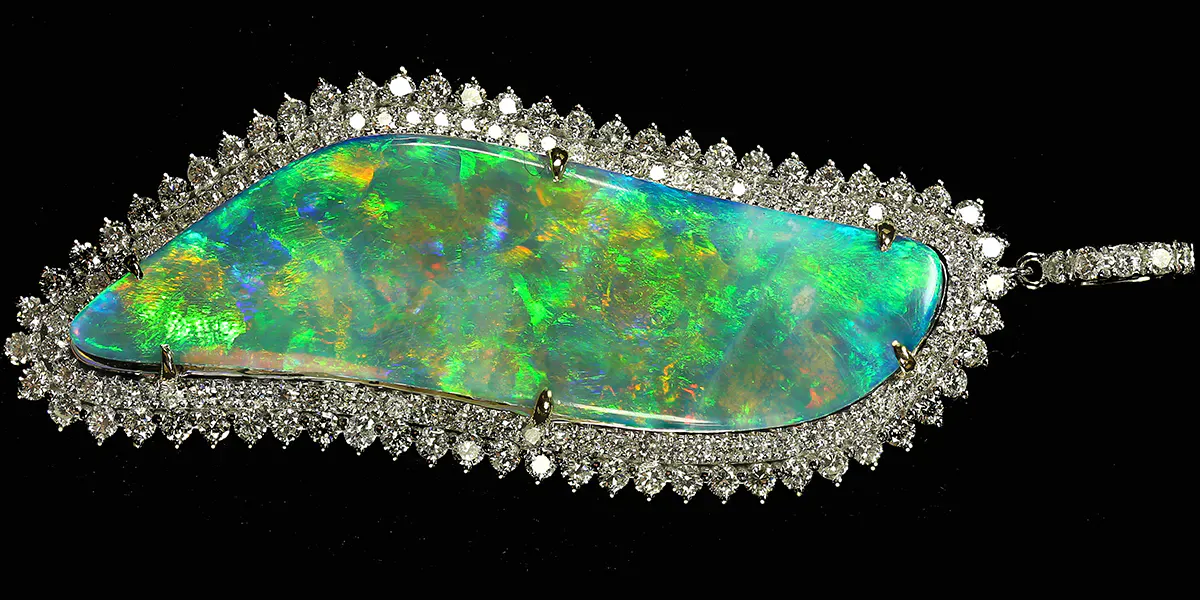
The most beautiful of gems [which] combines the fire of the Ruby, the brilliant purple of Amethyst, and the sea-green of Emerald; all shining together in glorious and incredible union.
Opal is a highly fascinating mineral with a thousand facets, which has enchanted man since the dawn of time. Its colour varies from transparent to milky white, with an infinite range of intermediate colours and shades (green, brown, black, red, yellow...). This stone has inspired many artists, struck by its distinctive colour-changing nature, achieved because of the irregular shapes in its rough and tiny cracks that allow air to penetrate inside and refract the light-creating spectacular shades. Opal symbolises the energy of fire, and in the past, it has also taken the name of 'lamp of fire'.
The fiery and iridescent qualities of opals have long fascinated writers. The history of opals in literature dates back to Rome in 75 AD when the scholar Pliny compared opals to the 'deepest and richest colours of painters' and described how their appearance simulated 'the flaming fire of burning sulphur and even the flash of light of burning oil.'
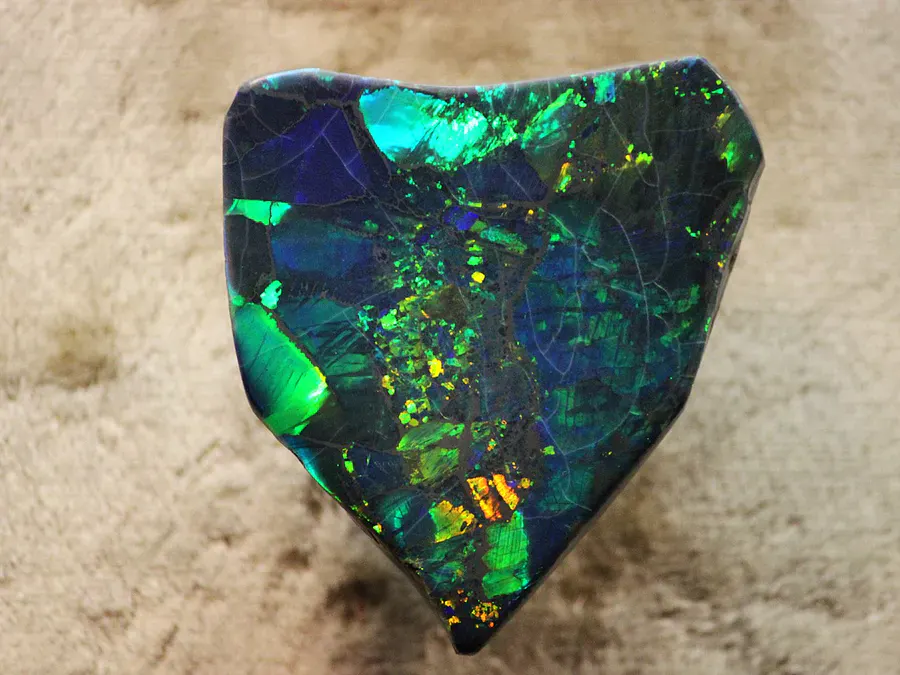
Today Australia dominates the opal mining market, with specialists estimating that South Australia produces over 90% of the world's precious opal. However, the stone has its roots in another continent. It is in Kenya that anthropologist Louis Leakey discovered what is believed to be the earliest known opal artefacts dated to Ethiopia in 4000 BC.
See also: Jade: A Coveted Asian Talisman
According to some the term opal derives from the Sanskrit 'upala', with the meaning of 'precious stone'; according to others it comes from the Greek 'ὀπάλλιος' (opallios), which means 'to see a change of colour'. In Latin the term was opalus, and for the ancient Romans the opal was a symbol of love and purity. Only the rich and powerful could afford to own opals. One Roman in particular, Marc Antony, had a soft spot for opal and is believed to have gifted an opal worth 2 million sesterces to his lover, Cleopatra.
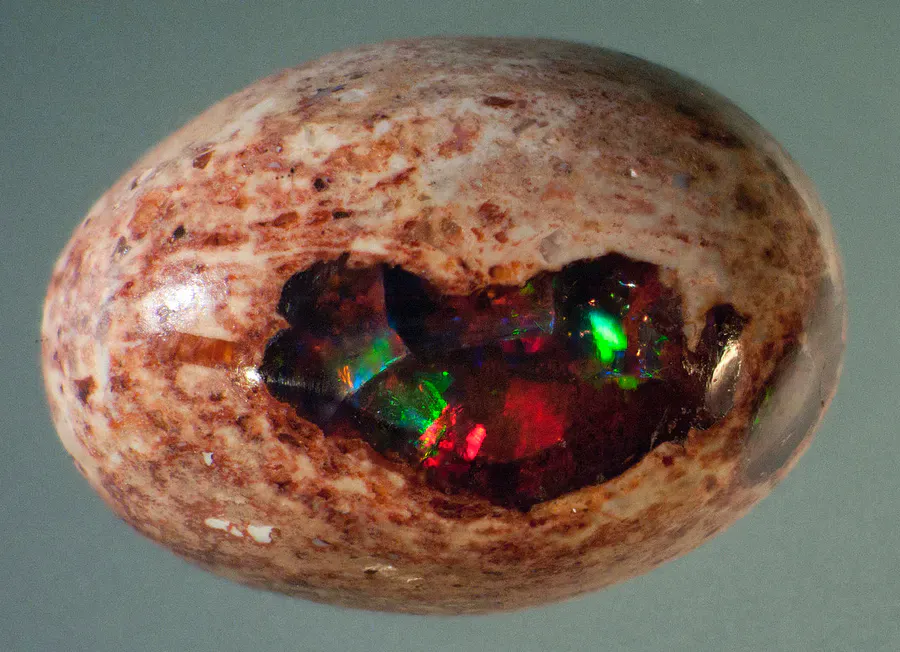
The Greeks believed that opal warded off disease, while Arab legends describe how opals fell from the sky in flashes of light. In medieval Europe, opal was believed to protect eyesight. Blond women also wore opals to preserve their hair colour.
See also: How Diamonds Became a Symbol of Love
Opals were a favourite of the French monarchy. They were set in the jewels of the Crown of France, and Napoleon gave the Empress Josephine a red opal that was called 'The stake of Troy'.
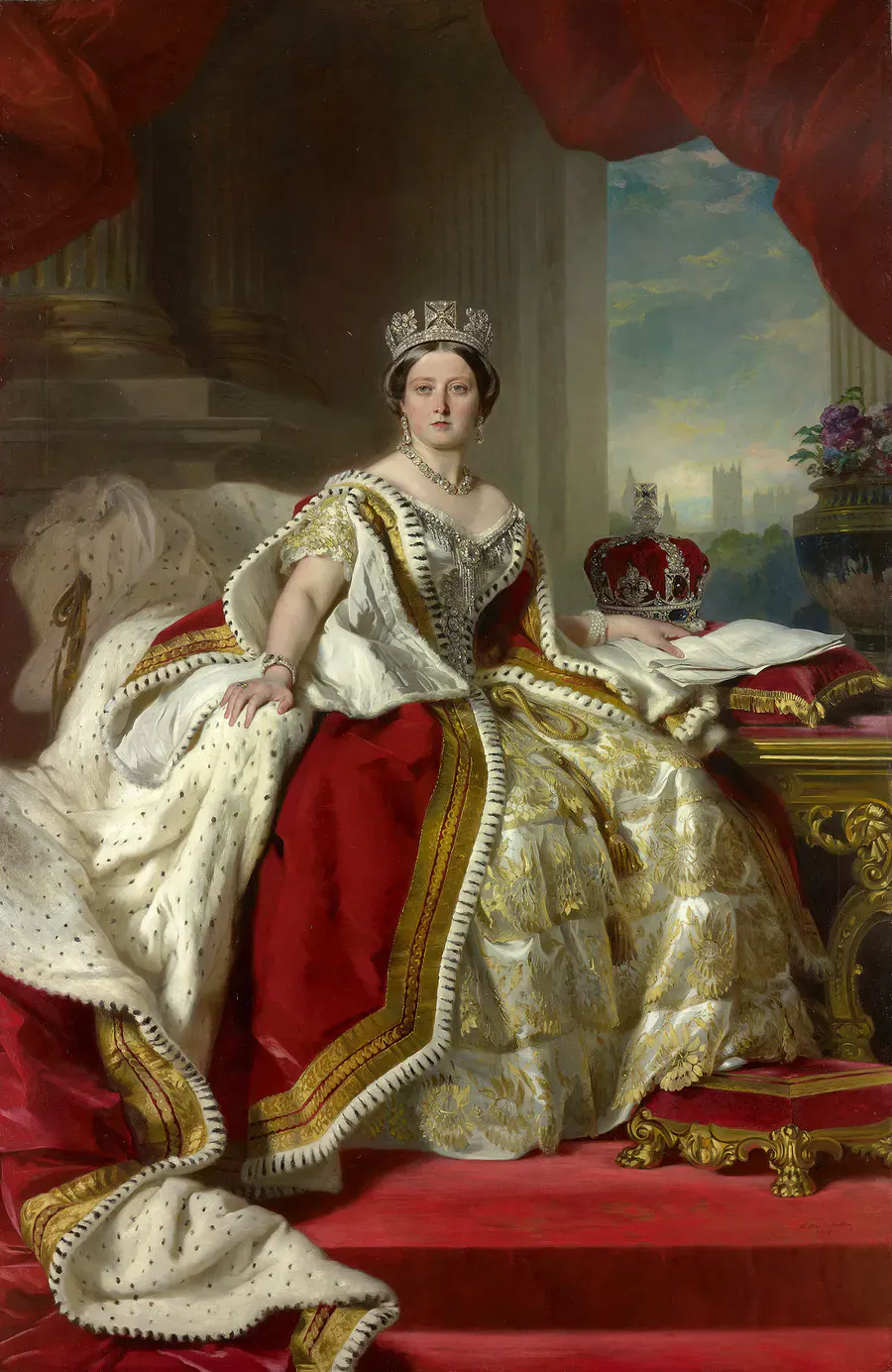
Having first become unpopular around the 19th century, Queen Victoria revived opal. Victoria was a great admirer of opal and often gave away opal jewellery or wore it herself. Since everyone looked to the Queen for what was fashionable, opals became popular again. The Queen's aunt, Princess Mary, Duchess of Gloucester, presented Victoria in 1849 with an opal ring that had previously been owned by Queen Charlotte around 1810.
See also: Crown Jewels: 5 Times Royal Jewellery Made Auction Headlines
Queen Victoria's daughters also adorned themselves with opals. It was during Victoria's reign that opal deposits in Australia were quickly discovered and increasingly mined. A great lover of opal is also Queen Elizabeth II, who often wears the Andamooka opal, given to her by the government of South Australia during her post-coronation tour of 1953-54. It is said to be worth around £1.5 million.
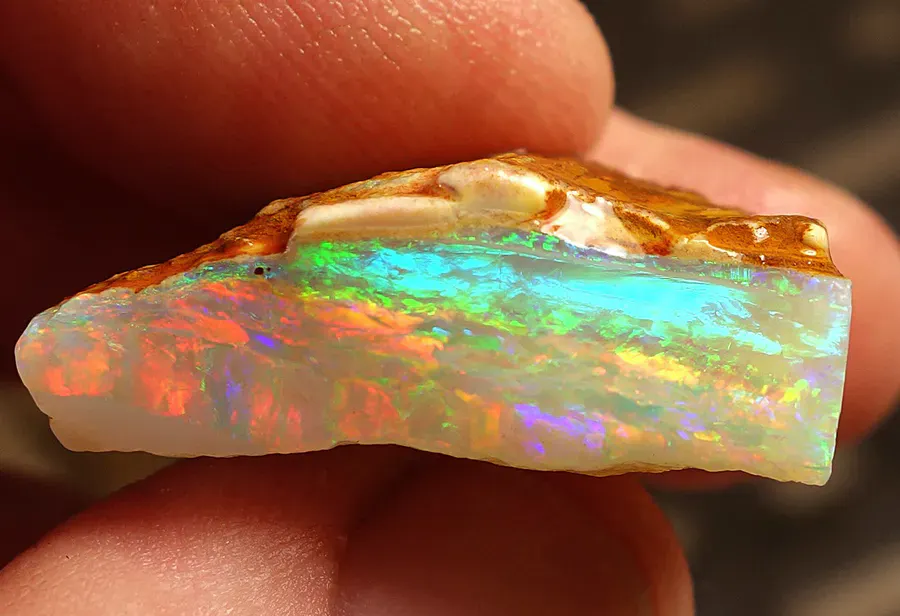
The most beautiful rough opal in the world is a 998 gram gemstone called the 'Fire of Australia', discovered by miner Walter Bartram in 1946, in the Eight Mile opal field in Coober Pedy. Following its discovery, the opal remained in Bartram's family until 2017, when it was sold at the South Australian Museum for AU $500,000, around £285,500, (though it was said to be worth nearly double that). Bartram was determined to keep the opal in Australia and therefore higher offers from foreign buyers were rejected.
See also: Podcast Episode #07: Diamonds Are Forever

Today, you can find opals and opal jewellery on Barnebys at all prices, from a few hundred dollars to a couple hundred thousand. Several opal jewellery pieces have achieved high prices, with the most expensive being an Art Nouveau opal, diamond and enamel necklace that sold for £362,297 at Christie's in 2017.