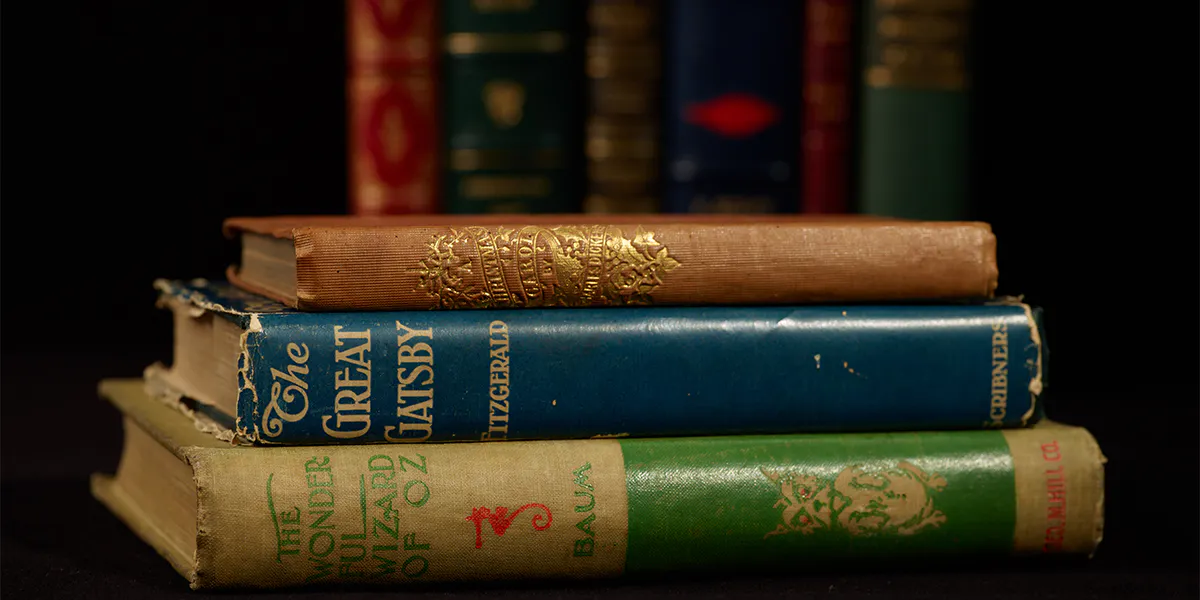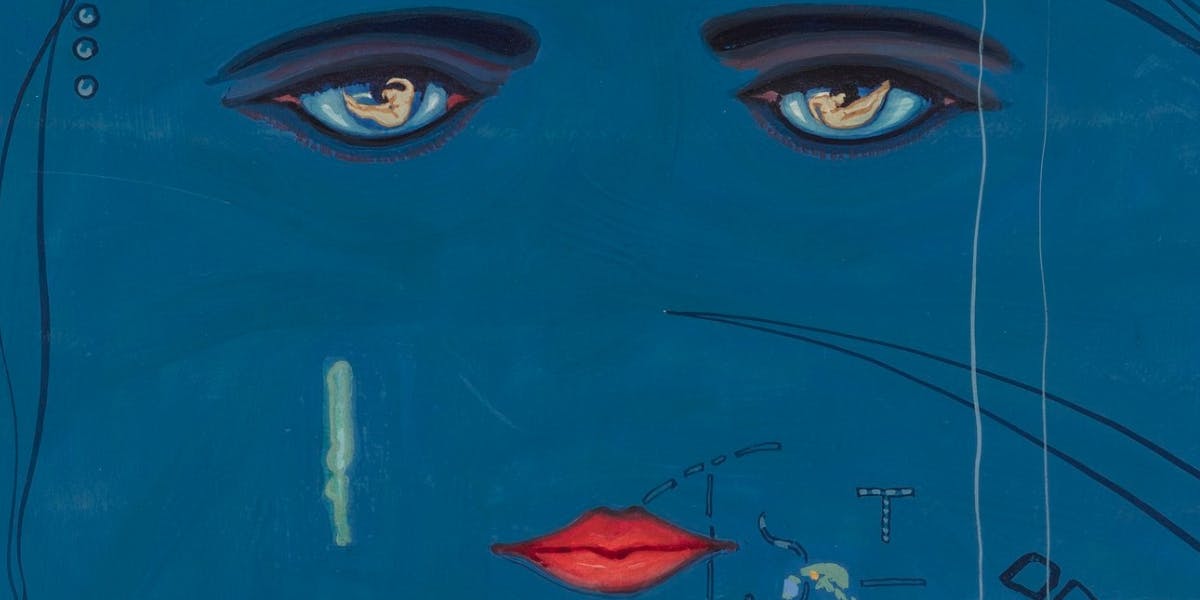
Remember studying these three at school? Time to dust off the bookshelves and delve a little deeper into some of 20th-century literature's greatest reads.
Arthur Conan Doyle, A Study in Scarlet, 1887
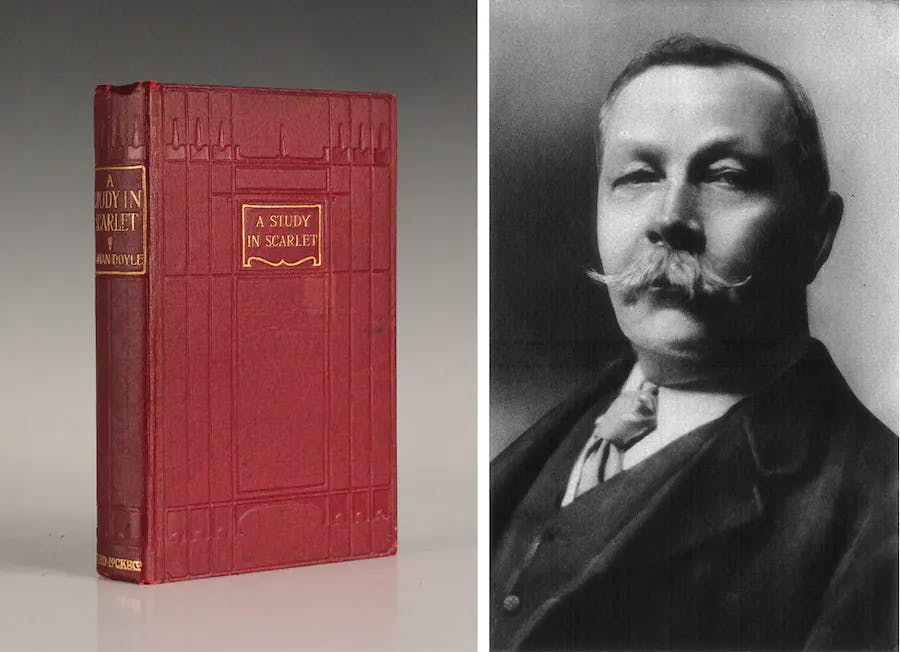
A Study in Scarlet was the novel by which Arthur Conan Doyle (1859-1930) first introduced Sherlock Holmes to the world. In 1886, the newly married Doyle was desperate to become a published writer. Early in his career he was working on a mysterious novel called A Tangled Skein, which he eventually renamed A Study in Scarlet when it was published in Beeton's Christmas Annual.
With his work, Doyle paved the way for a completely new kind of detective novel, in which the solution to the crime no longer comes about by pure chance, but by scientific analysis and logical thinking. With Dr. Watson, the narrator of most of the stories, he provided the ingenious but also eccentric detective with a down-to-earth companion.
See also: 7 Greats and Their Favourite Fountain Pens
A Study in Scarlet didn't get much attention, and neither did the second novel, The Sign of Four, from 1890. Only the story A Scandal in Bohemia established the popularity of Sherlock Holmes. In 1893, Holmes was so popular that Doyle, preferring to write historical novels, had the detective die in the short story The Final Problem.
The grief among the fans, including Arthur Conan Doyle's mother, was great. So by 1901 he resurrected Sherlock Holmes for The Hound of the Baskervilles and finally revised the detective's death in the 1903 short story The Empty House.
Today, original manuscripts of Arthur Conan Doyle's works sell for six figures on the auction market. His current record was set with the original handwritten manuscript of Sherlock Holmes' mystery The Adventure of the Sussex Vampire from 1924 that sold at Christie's in 2004 for £217,728.
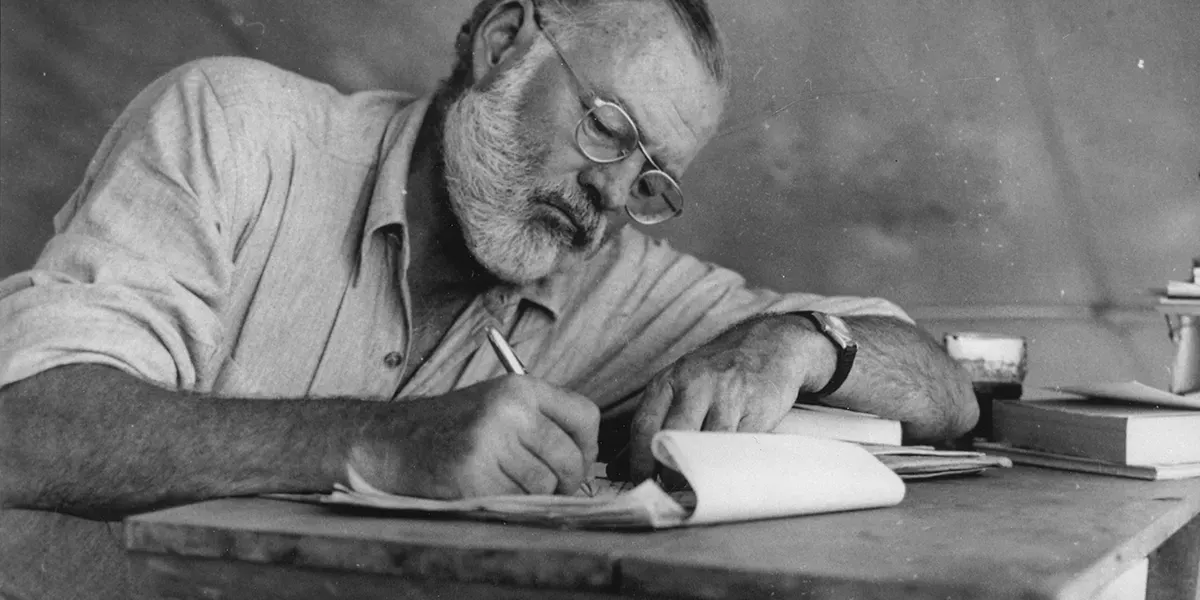
Ernest Hemingway, The Old Man and the Sea, 1952
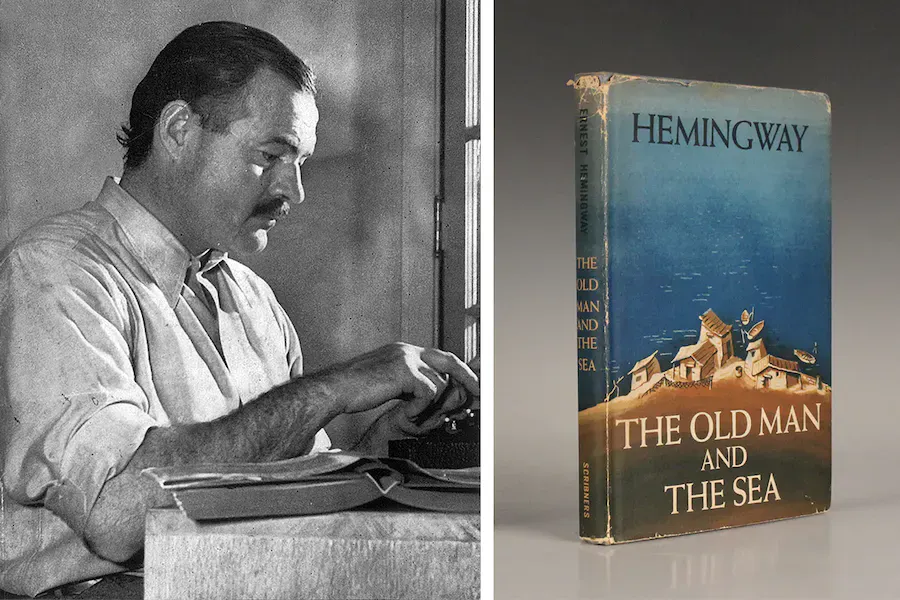
Ernest Hemingway's (1899-1961) struggles as a writer are well documented and continue to make him a great inspiration for 21st century authors. His career was at a turning point when he published The Old Man and the Sea in 1952. Since the publication of For Whom the Bell Tolls in 1940, he had written nothing that had received critical acclaim. As a result, Hemingway's reputation as a writer was badly tarnished by the early 1950s. But then came The Old Man and the Sea, which put Hemingway back in the limelight, and in 1953 he received the Pulitzer Prize for the work and in 1954 the Nobel Prize in Literature.
See also: The Cocktails that Inspired History’s Creatives
Hemingway had a close relationship with the novel, because he had carried the idea around with him since 1936. In 1938 he had begun to adapt the material, but work on it came to a halt when he turned to For Whom the Bell Tolls.
The Old Man and the Sea was not only a literary triumph for Hemingway, but also became one of the most important figureheads in modern literature, grappling with the theme of man versus nature. Even Hemingway's rival, William Faulkner, called the novel Hemingway's best.
An autographed copy of the novel that was given to Spencer Tracy, the actor who played the old man in the 1958 movie version, sold at auction at Sotheby's in 2004 for £89,816.
George Orwell, Nineteen Eighty-Four, 1949
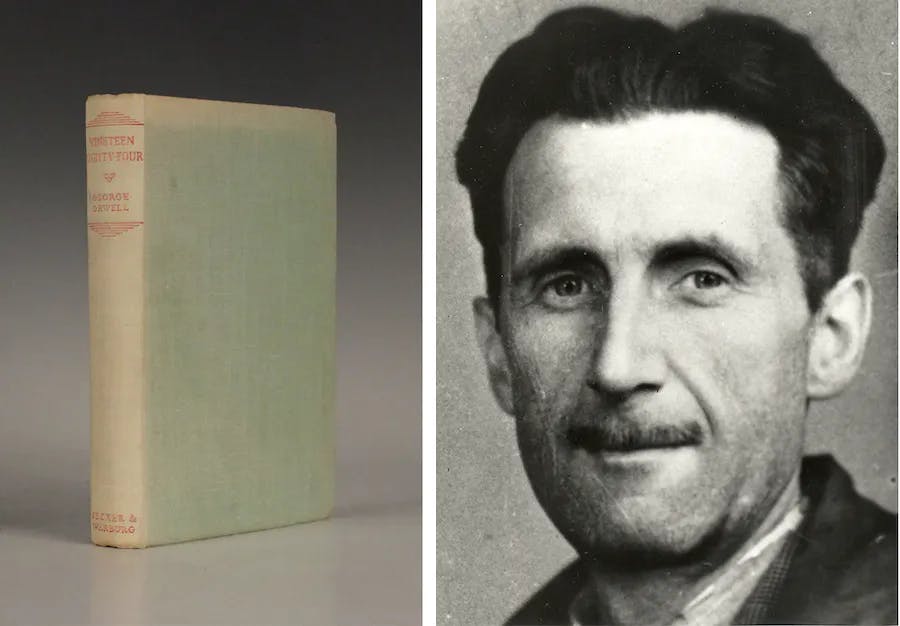
Nineteen Eighty-Four by George Orwell (1903-1950) is a novel that is as chilling today as it was when it was first published in 1949. It is one of the dystopian masterpieces of the 20th and 21st centuries, including Aldous Huxley's Brave New World and Margaret Atwood's The Handmaid's Tale, which are inspired by real-life political events and movements in history. Orwell's novel draws influences from the NKVD and Stalin's regimes, as well as the Kempeitai, the Imperial Japanese Military Police, which existed until 1945.
Orwell wrote most of the text in 1947 on the Scottish island of Jura while recovering from tuberculosis. Initially he had intended the title to be The Last Man in Europe, but changed this in 1948 after a discussion with his publisher Fredric Warburg.
See also: The Transformer of Type: The History of the Typewriter
The novel was also originally set to take place in 1980, then 1982 and finally 1984. He inverted the year he decided on the title: 1948.
However, the date the novel actually takes place is unknown due to the regime's manipulation and control over history and dates. The story begins with, "It was a brilliantly cold day in April, and the clock struck thirteen," with protagonist Winston Smith believing it to be 4 April 1984.
See also: The Best Selling Novel of All Time
Like other dystopian texts, Nineteen Eighty-Four was banned from schools and publishers over the years, making it one of the top ten most banned books in the world. What is interesting, however, is that it was simultaneously translated into 65 languages, making it the most translated English novel of its time.
A signed first edition of the novel sold at Sotheby's in 2004 for £9,810.
Discover more articles in Barnebys Magazine
This is an updated version of an article originally published on 18/04/2016.