
Carlo Mollino was born in Turin, Italy in 1905. His father, Alberto Mollino, was a prominent civil engineer who designed, among other things, the local Molinette Hospital. Carlo followed in his father’s footsteps and enrolled in the School of Engineering in 1925. Mollino was not destined to be an engineer, however, and after one year in the programme, he transferred to the Royal College of Architecture at the Albertina Academy in Turin (today Polytechnic University of Turin) to achieve his creative ambitions.
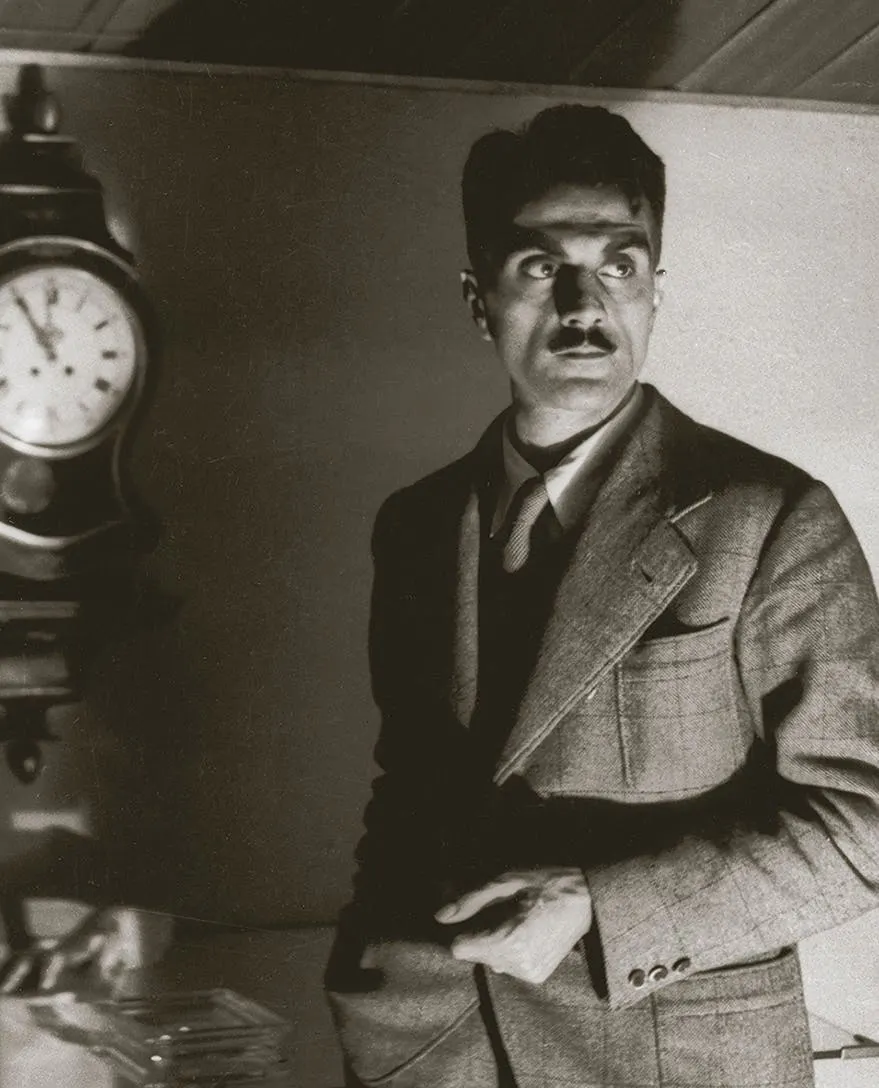
Mollino's career as an architect, designer and photographer mingled with his many personal hobbies (motorsport, aviation, skiing and mountaineering). Characteristic of his oeuvre is his remarkable ability to represent his many passions so seamlessly in his artworks. The creations and the man were intrinsically linked, so much so that once combined, they became difficult to differentiate. Mollino was an eclectic, ironic, eccentric man whose unconventional lifestyle included good wine and beautiful women alike.
See also: 5 Italian Design Brands You Ought to Know
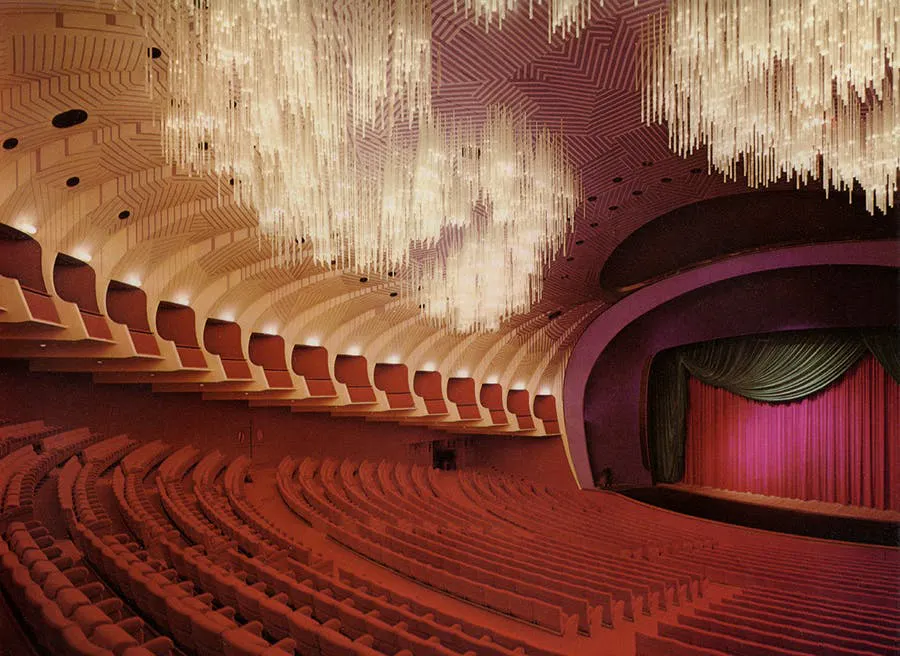
The idiosyncrasies of Mollino’s private life are represented throughout his projects in his hometown of Turin, and it was the peculiarities of his creations that ultimately brought him into prominence. The bold shapes of the Palazzo degli Affari’s façade, as well as the undulating curves of the Teatro Regio and the Rai Auditoriums, are clear examples of the technical and formal innovation that established Mollino as one of the foremost architects from the city.
Want artist biographies straight to your inbox? Sign up to our free newsletter
Mollino’s transition from architect to furniture designer was not a rapid or organic progression. However historic his furniture may be now, at the time it was considered illogical to eschew the norms of mass and serial production.
See also: 6 Giants of Mid-Century Modern Design
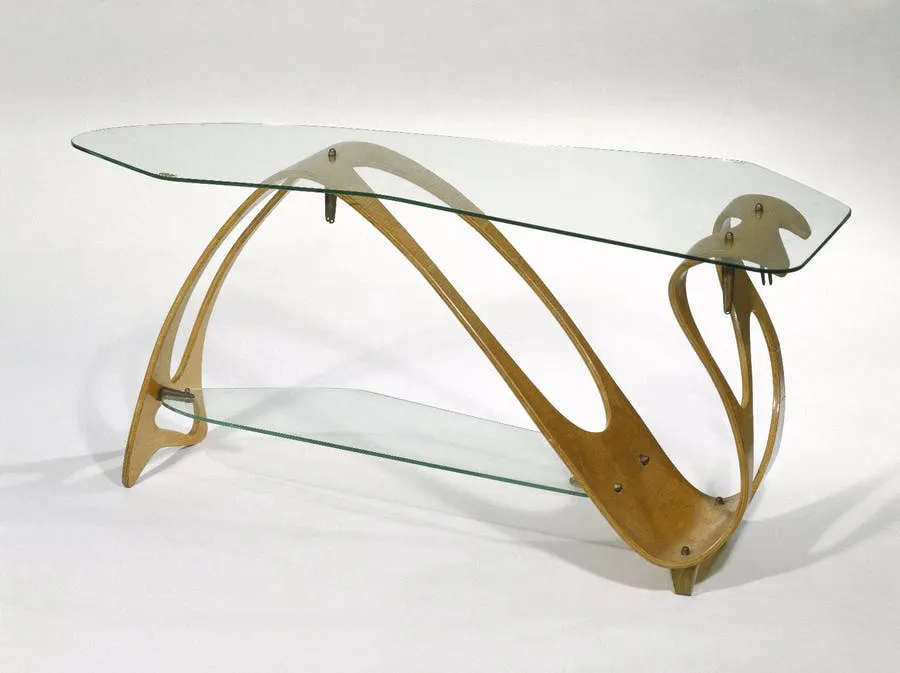
The sinuous lines of the tables and chairs designed by Mollino are reminiscent of sexuality and a thorough knowledge of materials – many of his pieces are based on the curves of a woman’s figure. The human form was one of his greatest design inspirations, along with the spirit of surrealist and futuristic artworks. All too often his pieces were defined as erotic, however, some designs reflect his other interests. The wooden base of the Reale table, for example, alludes to aviary forms.
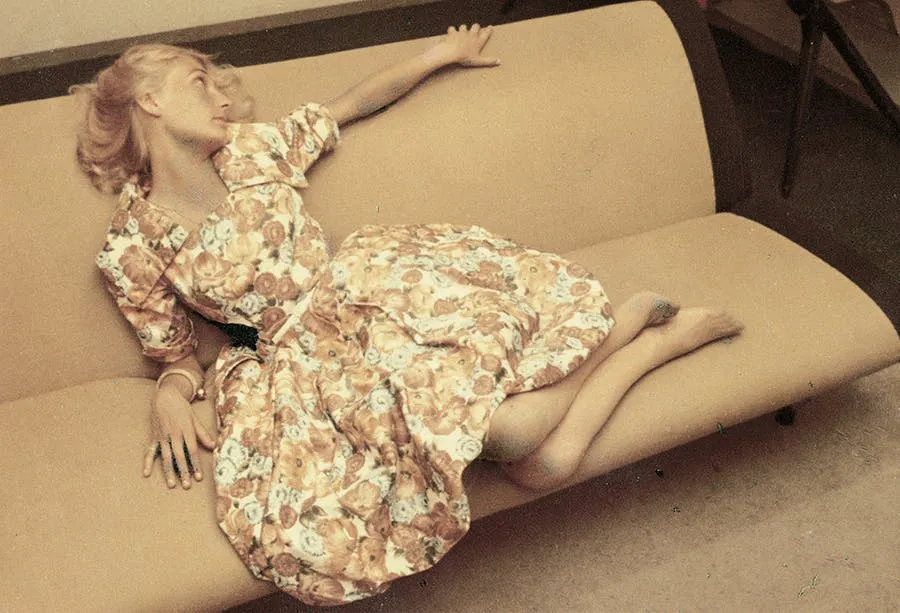
Photography was always a constant in Mollino's life, having been one of his most enthusiastic pursuits since his youth. Ever-present in his work is a juxtaposition between the artistic canon and the dynamism of experimentation.
See also: The 10 Most Popular Furniture Designers
As a man always looking to expand his creative horizons, architecture, furniture and photography gave way to automotive design. In 1954, he designed a surrealist-inspired bus, the Nube d'Argento for Agil-Gas.
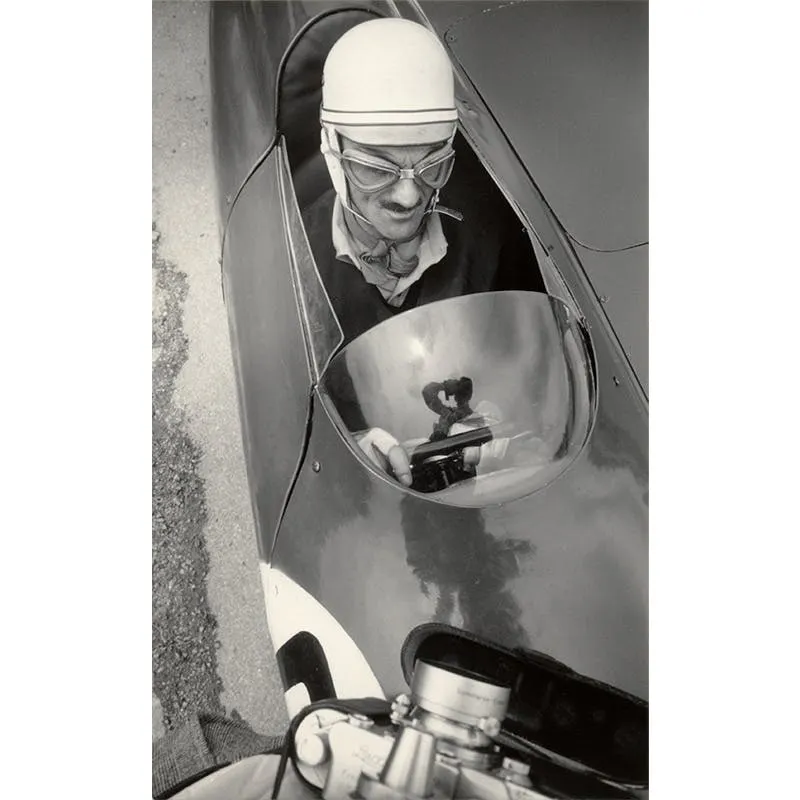
Building on that success, the following year he was commissioned to create the Nardi 750 Bisiluro, a race car that was ultimately selected for the 24-hour race.
Mollino passed away suddenly, in 1973, at the age of 68, but his eclectic designs and passionate ingenuity have left a legacy for the ages. Today, his design pieces sell for millions at auction. His current record was set in 2005 with an oak and glass table designed for Casa Orengo in Turin, which sold for $3.8 million at Christies.
Find more biographies on Barnebys Magazine
This is an updated version of an article originally published on 8 August 2018