In the early 17th century, Japan renounced the rest of the world and led a secluded existence in the western Pacific. Due to external influences, Japan gave up this isolation in the 1850s and traders from all over the world poured into the country.
One of these traders was Heinrich Friedrich Schoene (1838-1896), son of a Prussian surgeon, who settled in Japan in 1856 and became a silk merchant. Two years after Schoene’s arrival in the empire, Tori Tanabe was born to a side branch of the Tokugawa family. She and Heinrich Schoene married in 1885 and settled in Yokohama, and although the bride’s family had lost their power they were still wealthy, and they befitted her accordingly. After the early death of his parents, Schoene died in 1896, and Tori Tanabe passed the next year in 1897. Their daughter Anna, who grew up with her two brothers in Switzerland, asked for her mother's dowry and became caretaker of the items.
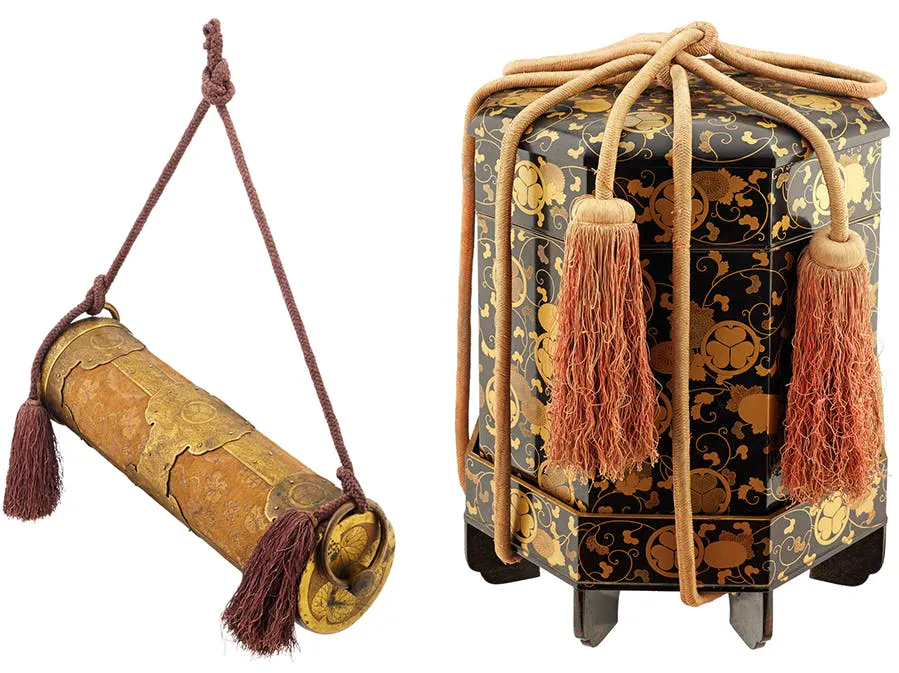
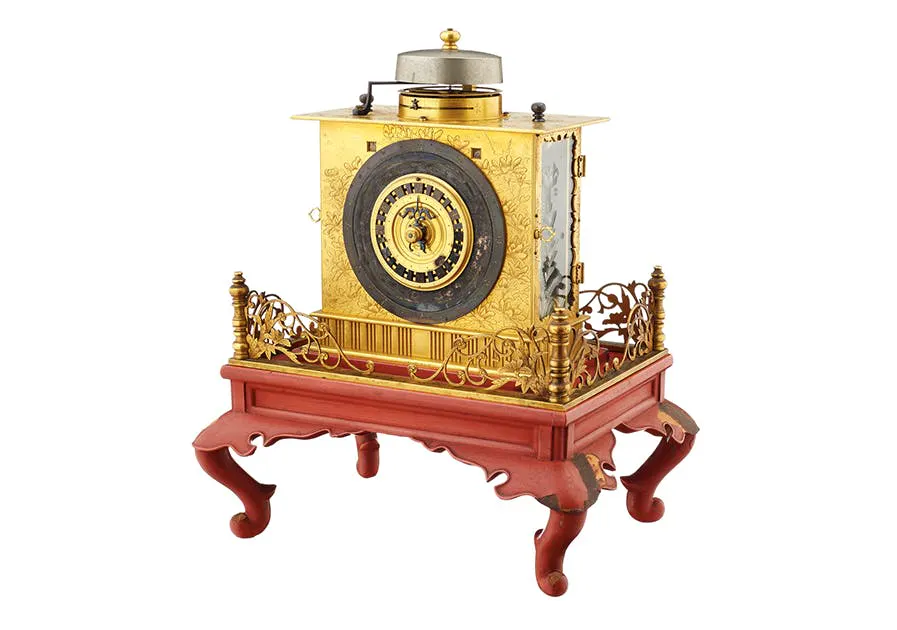
After passing through Japan and the United States, the now reduced bridal treasure is back in Switzerland. 35 pieces of it will go to auction on 15 November at Auktionshaus Zofingen, in the Canton Aargau in Switzerland. Items include a scroll holder for the Sutra with the Tokugawa family crest, an octagonal container for storing shells for the game kai awase, and a so-called ‘pillow’ clock with a finely engraved floral pattern.
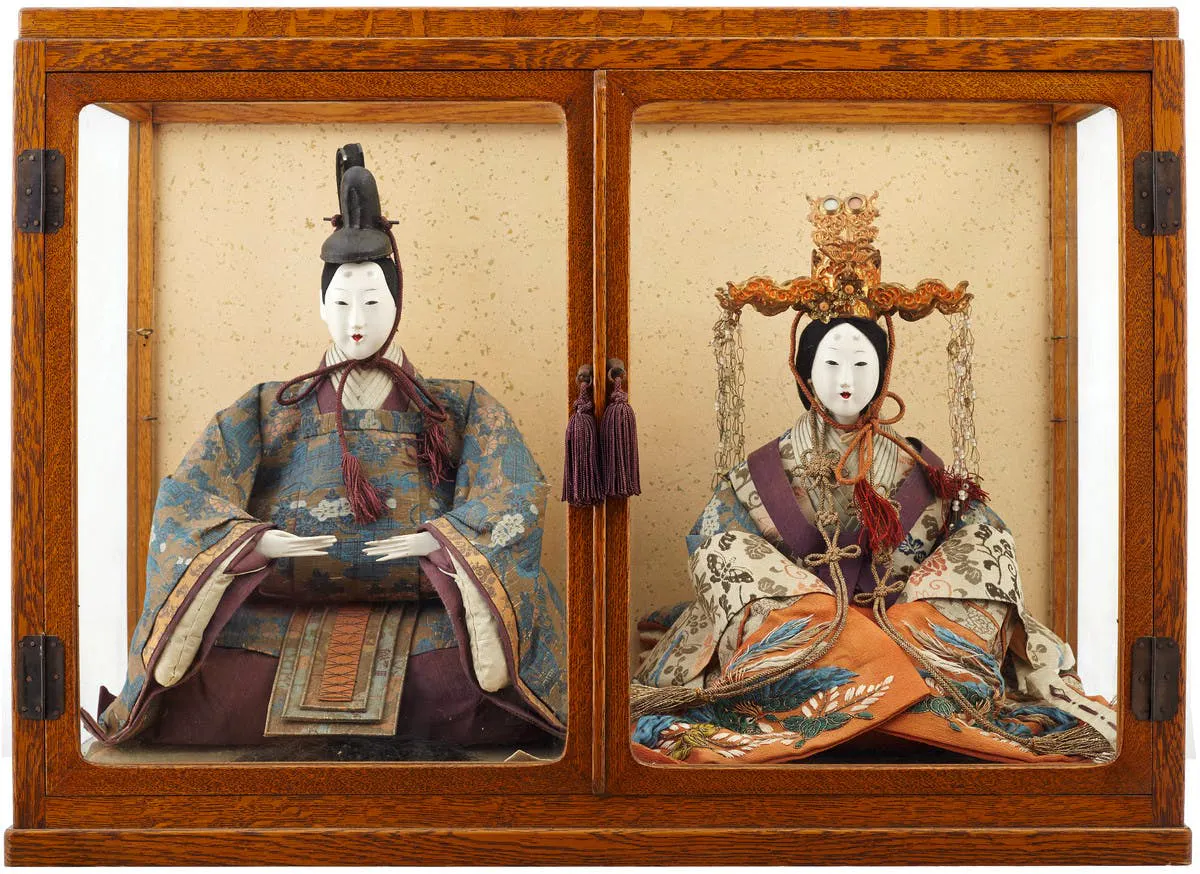
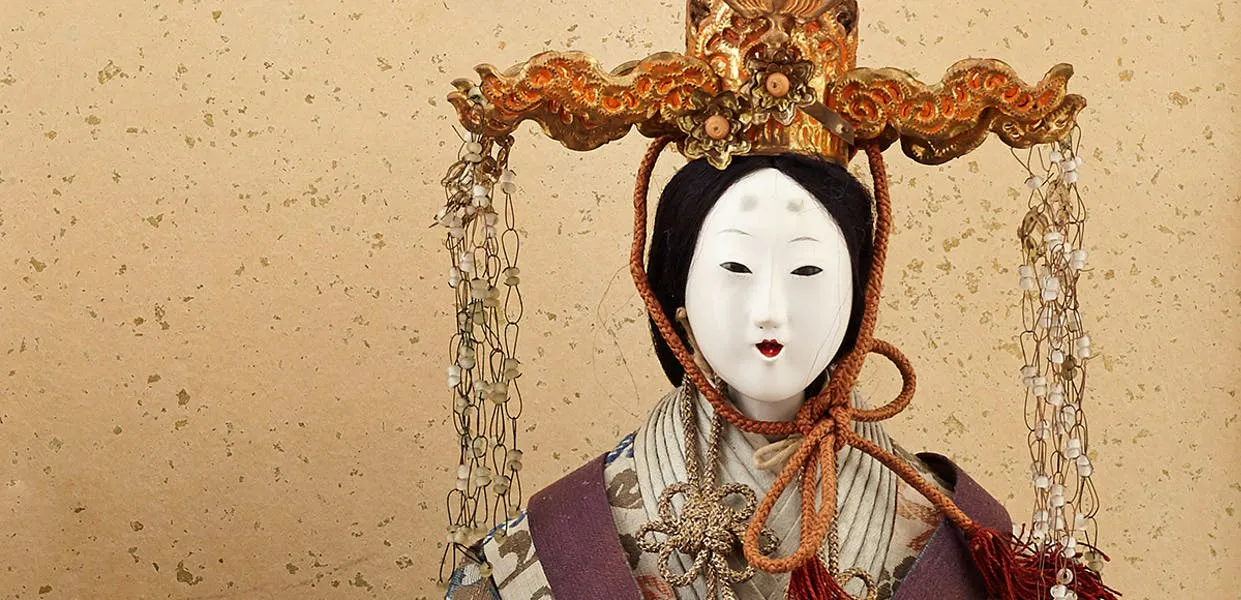
Another highlight of the auction day are dolls representing the imperial couple, which were made for the annual girls' festival Hina-Matsuri.
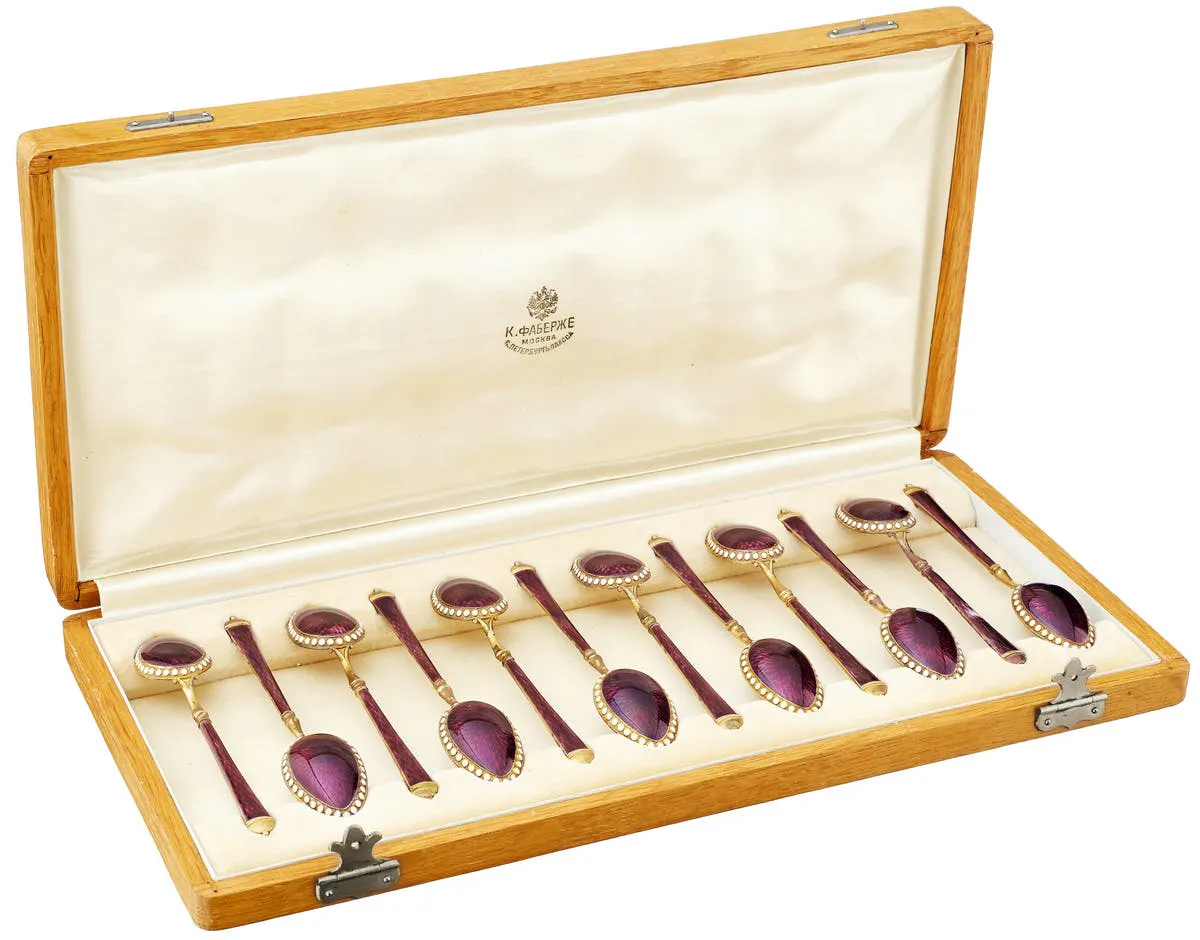
Hailing from a more Western sphere is a set of twelve gold-plated spoons in a case bearing the mark of Fabergé. Created at the beginning of the 20th century by Carl Fabergé in Moscow, the elegant spoons features a translucent violet background detailed with gold.
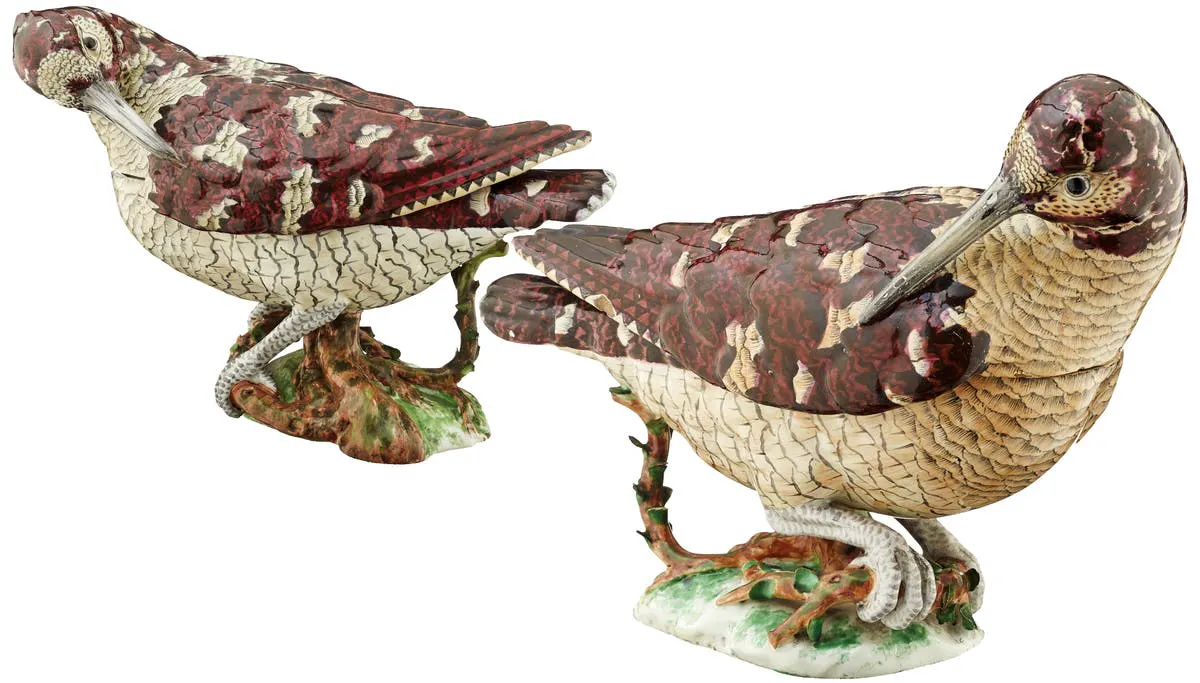
Much attention has been paid to a pair of vessels in shape of snipe, which were produced by the faience factory of Paul Hannong in Strasbourg between 1748 and 1756. Their fine detailing and decorative work make them beautiful and unusual items.
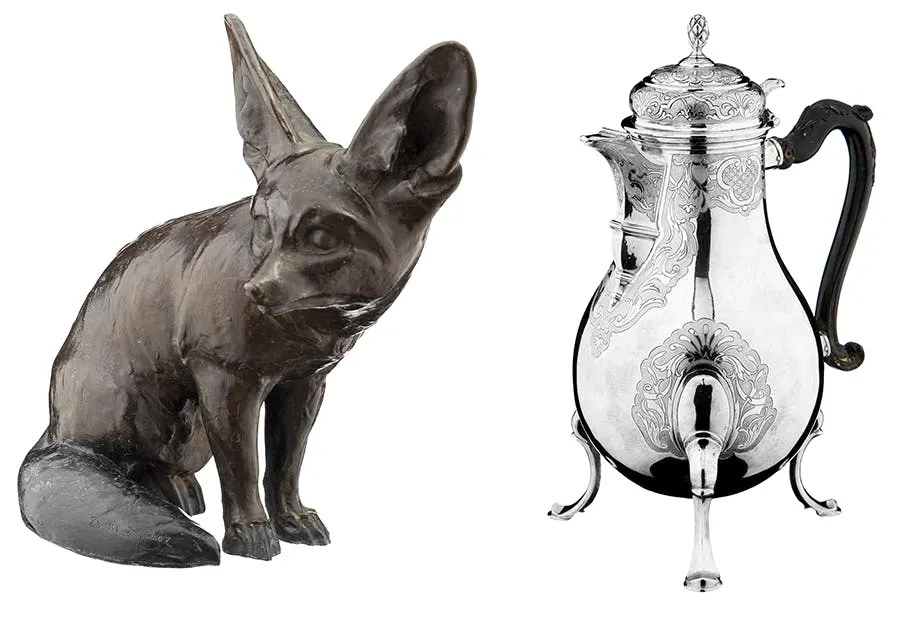
From the Basel silversmith Andreas Braun comes a silver coffee pot with a black wooden handle. Made around 1750, the elegant object was engraved with fine regency ornamentation.
The following auction day (16 November) is devoted to bronzes, sculptures, paintings, drawings and printmaking. From the Swiss sculptor Edouard-Marcel Sandoz comes the bronze Seated Fox, which represents one of the big-eared desert Fennec foxes.
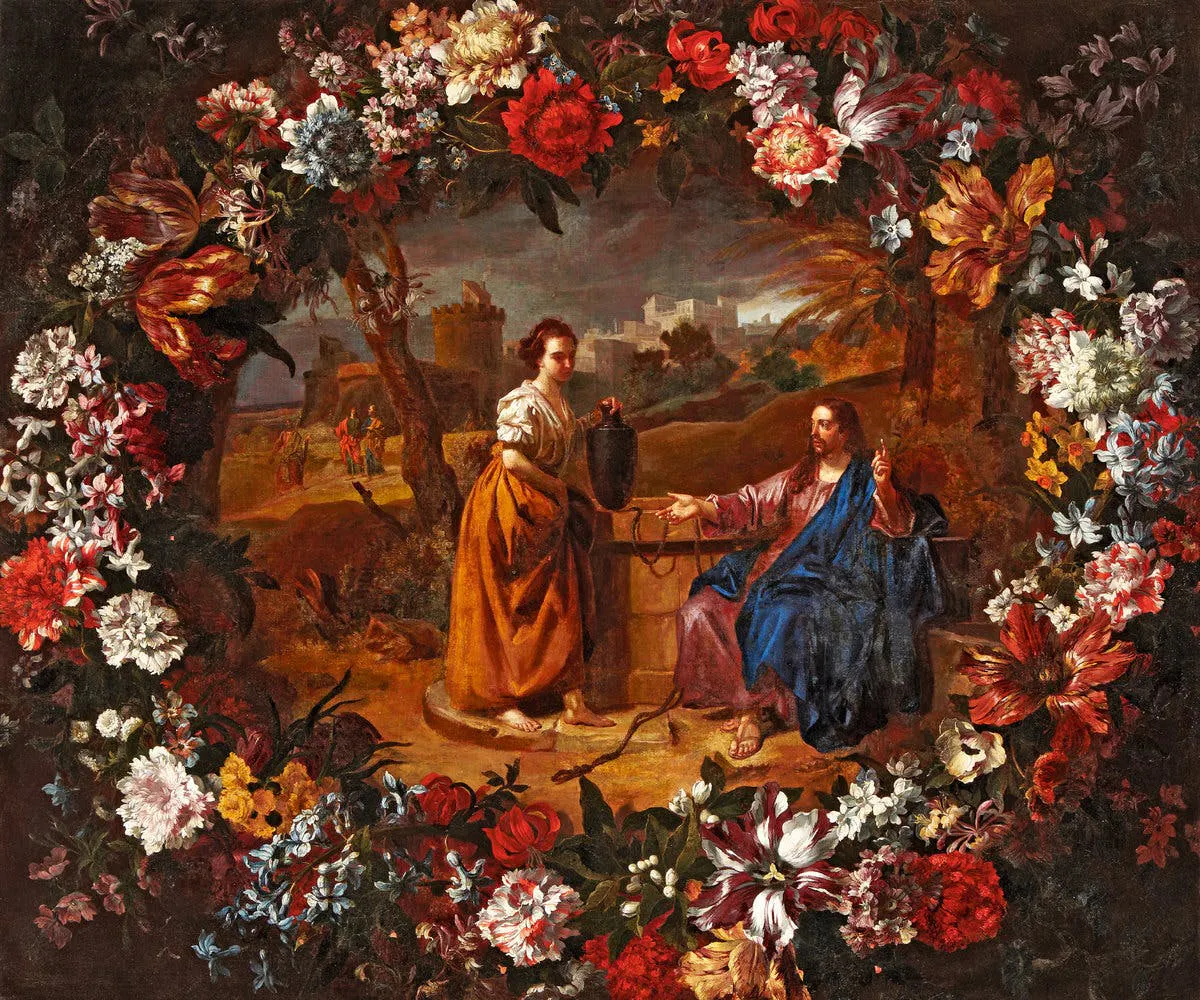
Among the paintings in the catalogue is Christ and the Samaritan Woman at the Well from a 17th-century Flemish painter. The Antwerp painter Daniel Seghers, who studied as a student of Jan Brueghel and specialised in the presentation of flower garlands, is a possible creator.

The Swiss painter and etcher Johann Jakob Biedermann was a specialist in landscapes, and is represented at Auktionshaus Zofingen with three works. One of the oil paintings on display shows the town and the fortress Aarburg in the canton of Aargau.
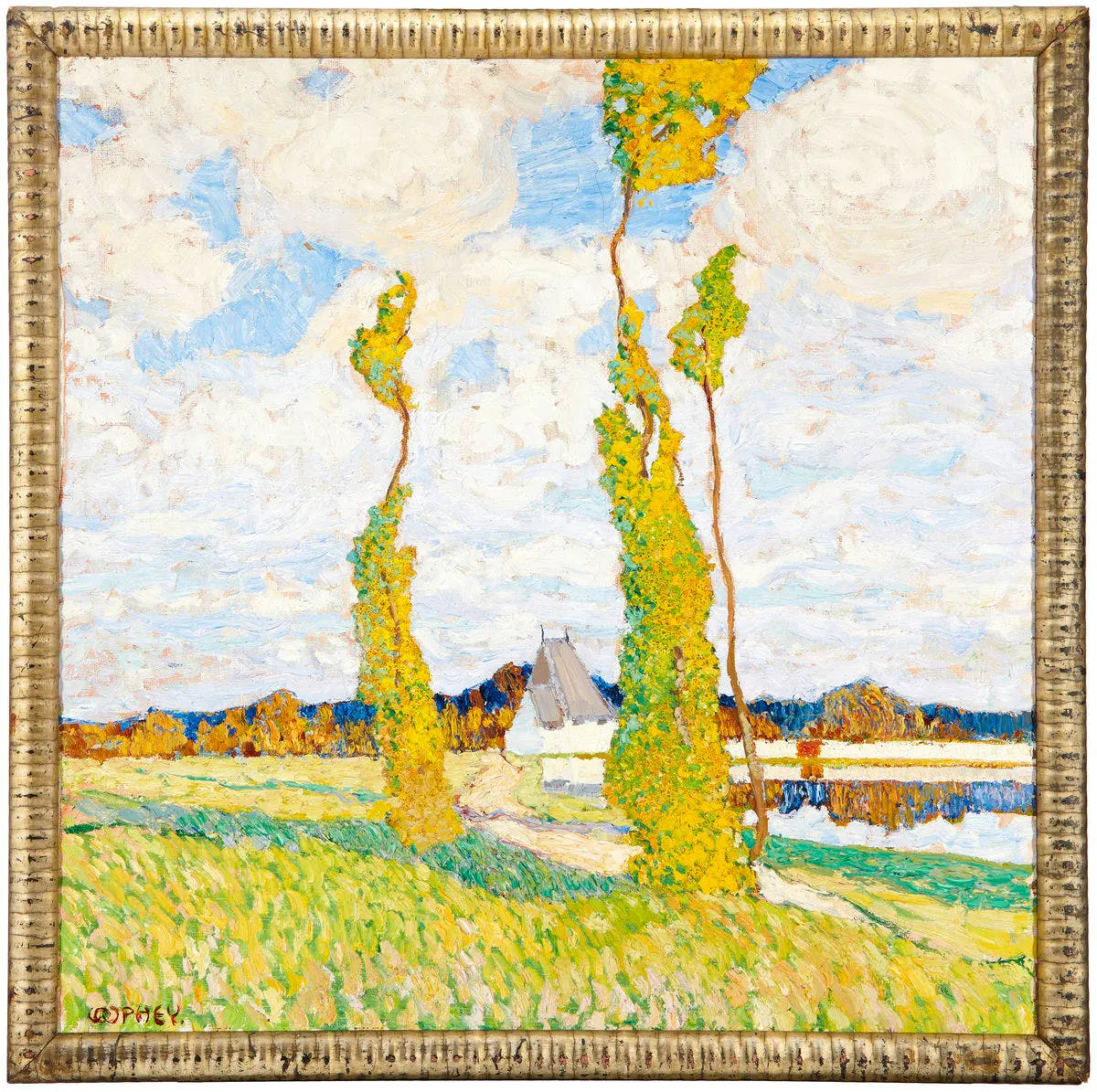
From one of the most important representatives of the Rhenish Expressionism, Walter Ophey, comes the dynamic canvas Summer Landscape.
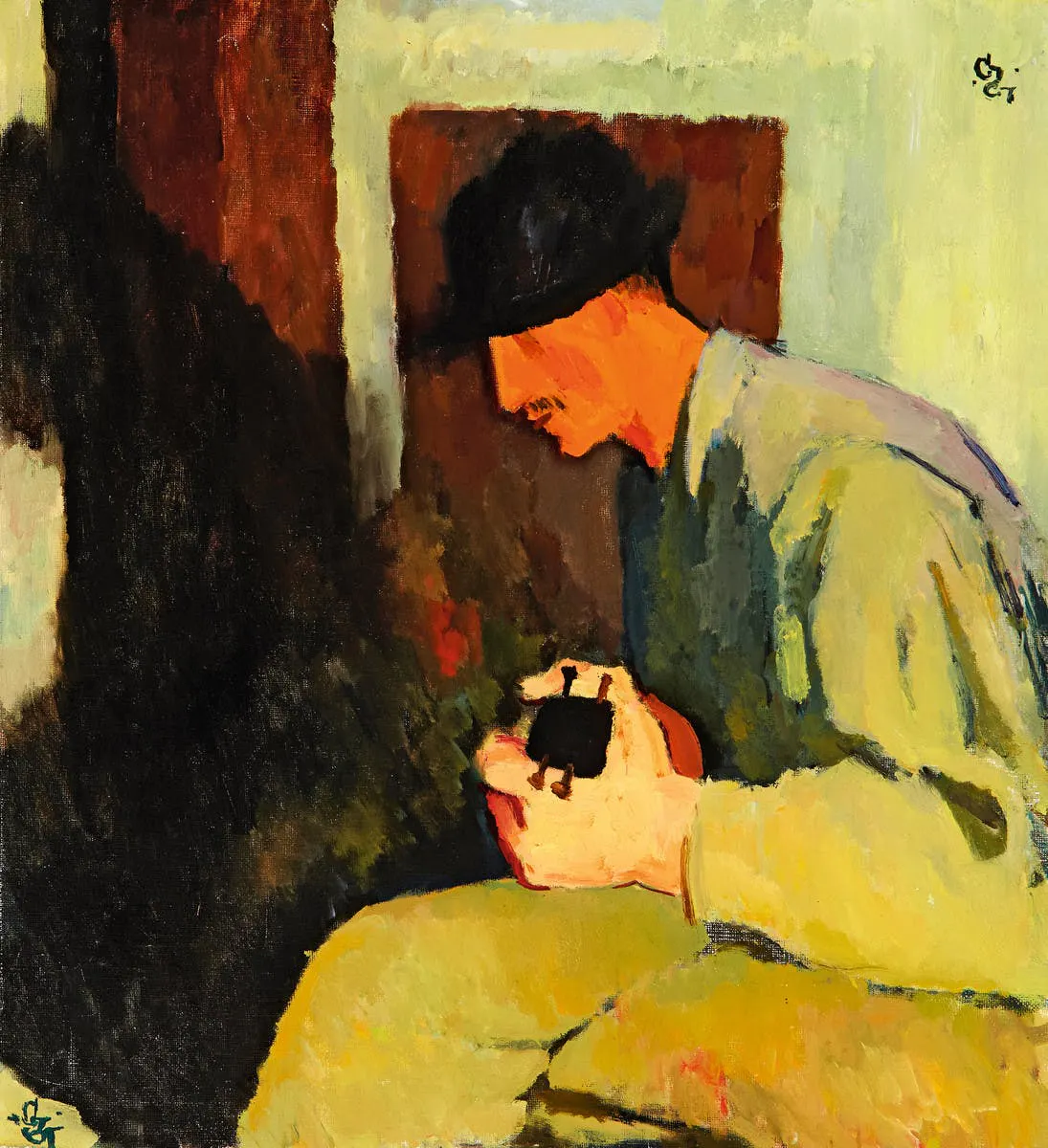
The piece coming to auction with the highest estimated price is the painting Mandolin Player by Giovanni Giacometti. Done in oil paint, the work is monogrammed ‘Gi Gi’ and was made in 1931, a mere two years before the death of the artist.
The upcoming auction at Auktionshaus Zofingen will take place on 14-16 November. Clocks, jewellery, wines, carpets and showcases will be available on the first day of the auction. In total, more than 2700 lots will be auctioned. The venue is the auction house at Klösterligasse 4 in Zofingen, where the exhibition may be visited from 2-10 November.
Discover all Auktionshaus Zofingen lots with Barnebys
This article is sponsored by Auktionshaus Zofingen
![Christian Adolf Scheyer (1828-1899), La Halte des Cavaliers Orienteaux, 1866, oil on canvas [detail]. Photo © AH Zofingen](https://images.prismic.io/barnebys/1c2726fa-c6fa-4791-9107-58edd708c230_unnamed-7.jpg?auto=format,compress)