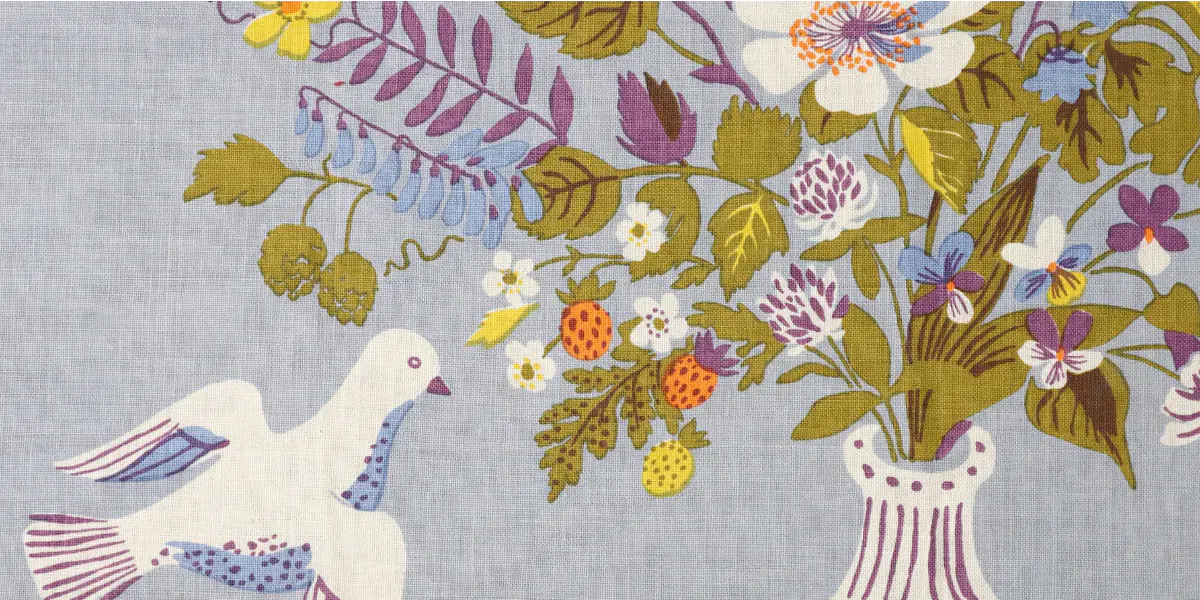
Peer, Lisbet and Gocken Jobs were born in the early 20th century and grew up in an artistic family in Dalarna, Sweden. Their father, Anders Jobs, was an organist and composer. Their mother, Elisabeth Wisén Jobs, both painted and embroidered floral motifs.
Today, the Jobs' brand is associated with textiles in similar colours, often with motifs of flowers and vegetation, though their art actually started with ceramics. The transition to textiles, partly influenced by their mother, was due to the circumstances of the Second World War.
See also: Bernard Palissy's Ceramics: Nature on the Plate
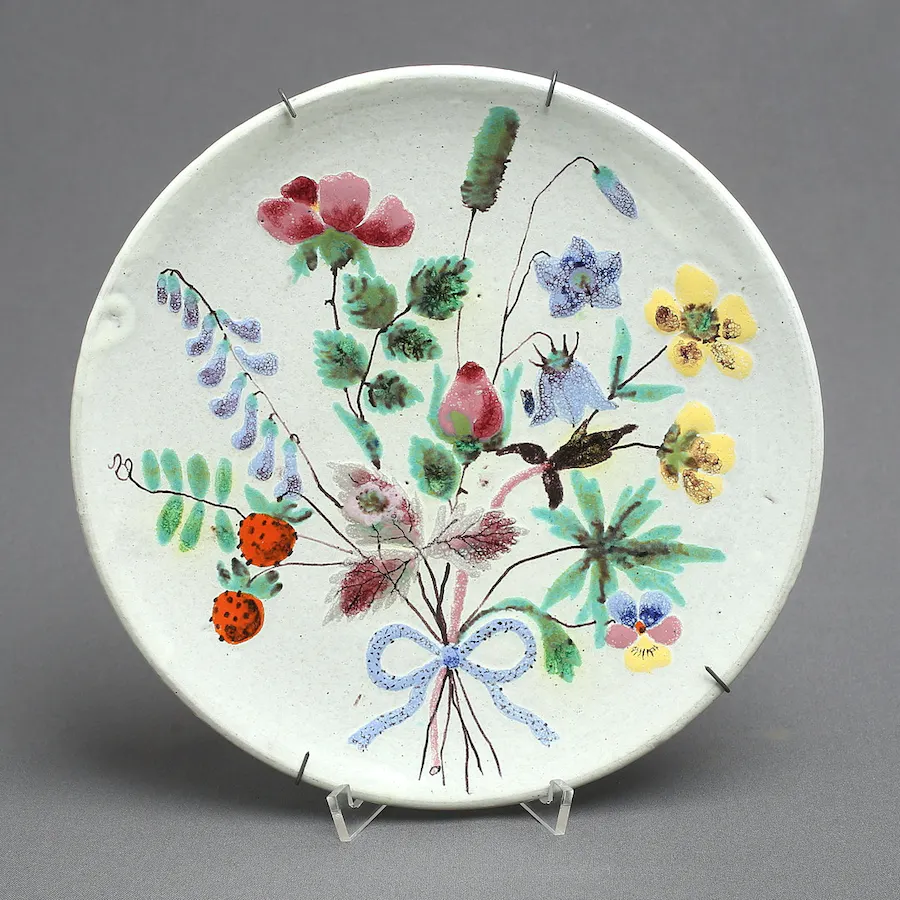
The two sisters moved to Stockholm to train as ceramicists at the Technical School during the late 1920s. A year after she finished her education, Lisbet (1909-1961) opened her own pottery workshop in Stockholm in 1931. She then became the first woman in the country to open her own workshop with a kiln and to burn her works herself. Gocken (1914-1995) soon came to share the workshop with his sister.
In 1934, the company Jobs Ceramics and Textiles was registered after Lisbet opened a shop in Stockholm. In addition to the sisters' ceramics, the mother's own works were also sold.
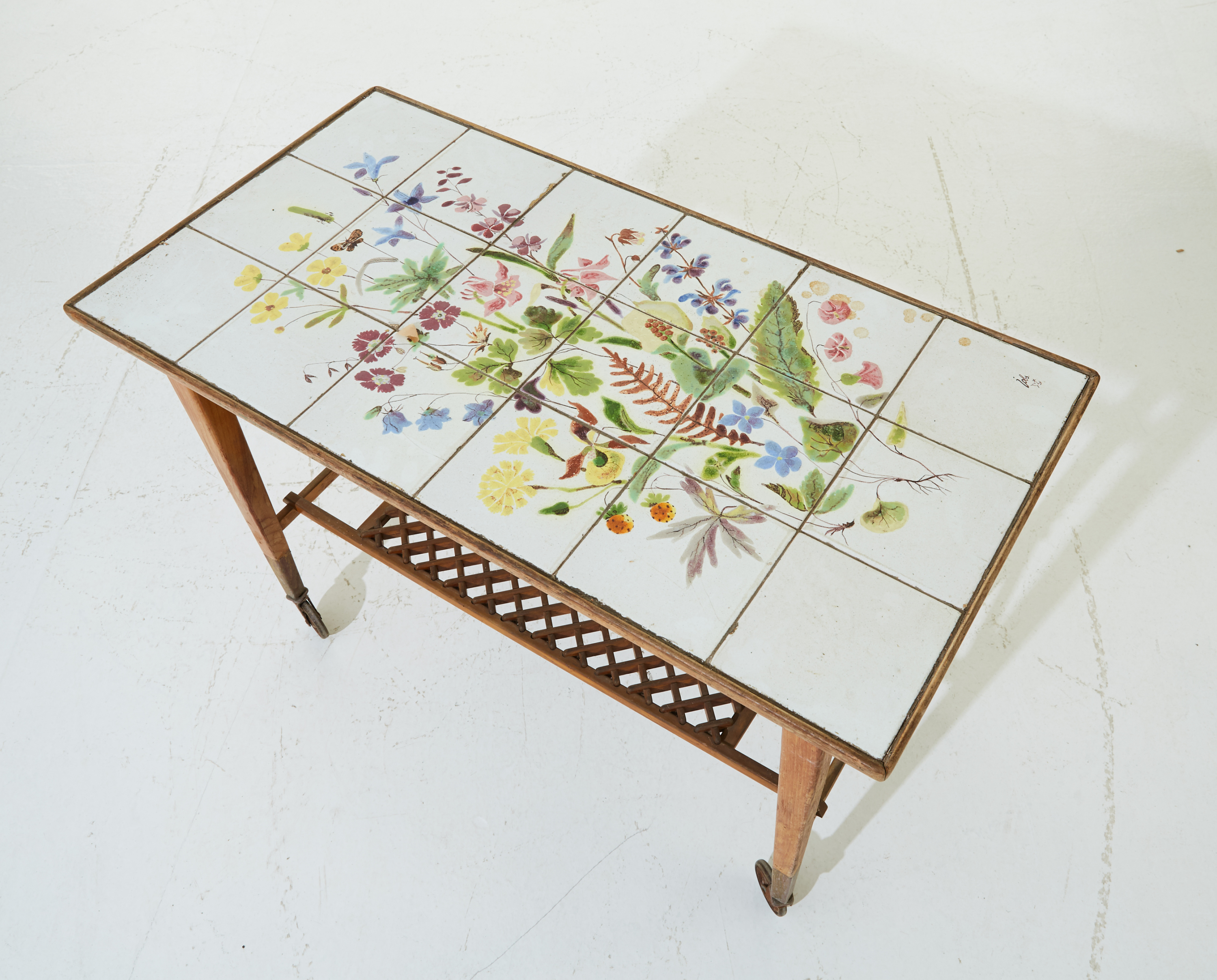
The big breakthrough came in 1935, when Lisbet exhibited at Galerie Moderne in Stockholm. Success followed shortly after and her ceramics became widely known, above all for her floral decorations. Both the National Museum and the Röhsska Museum included her works in their collections, and home craft shops supplemented their assortment with her ceramics. The ceramics were also incorporated into interior design through decorated table tiles.
See also: The History of Rörstrand in 10 Key Dates
During the 1930s, the sisters participated in several international exhibitions, among which the World's Fair in Paris in 1937, the World's Fair in New York in 1939 and the Golden Gate Exhibition in San Francisco in the same year. The magazine Arts and Decoration wrote after the exhibition in New York about Lisbet Jobs: "She is recognised today as one of the best modern potters in the world".
In Stockholm, you can see the sisters' ceramics in the original interior of the Tössebageriet and in the HSB house, where 600 ceramic tiles with floral motifs decorate a wall.
See: Lucie Rie: Art of the Tea Ceremony
But with the Second World War, the sisters' artistic activity would change. Glaze became a limited commodity and the sisters could not carry out their ceramic work to the same extent. In 1942, the shop closed. In 1943, the sisters moved to Västanvik in Leksand where a kiln was built for their work and sales were recorded under the name Jobsboden.
See also: Swedish Folk Art: Timeless Charm
Astrid Sampe, who had been a student with Lisbet, was at the time head of the Nordiska Kompaniet's textile chamber. She was one of those who pushed the sisters to start transferring the designs they created for their ceramics to fabric. NK's textile chamber started printing the fabrics at Ljungberg's in Floda. The small flower motifs that decorated ceramics now populated a completely new range of fabrics. The inspiration was drawn, as for the ceramics, from nature and from the kurbit paintings in Dalarna.
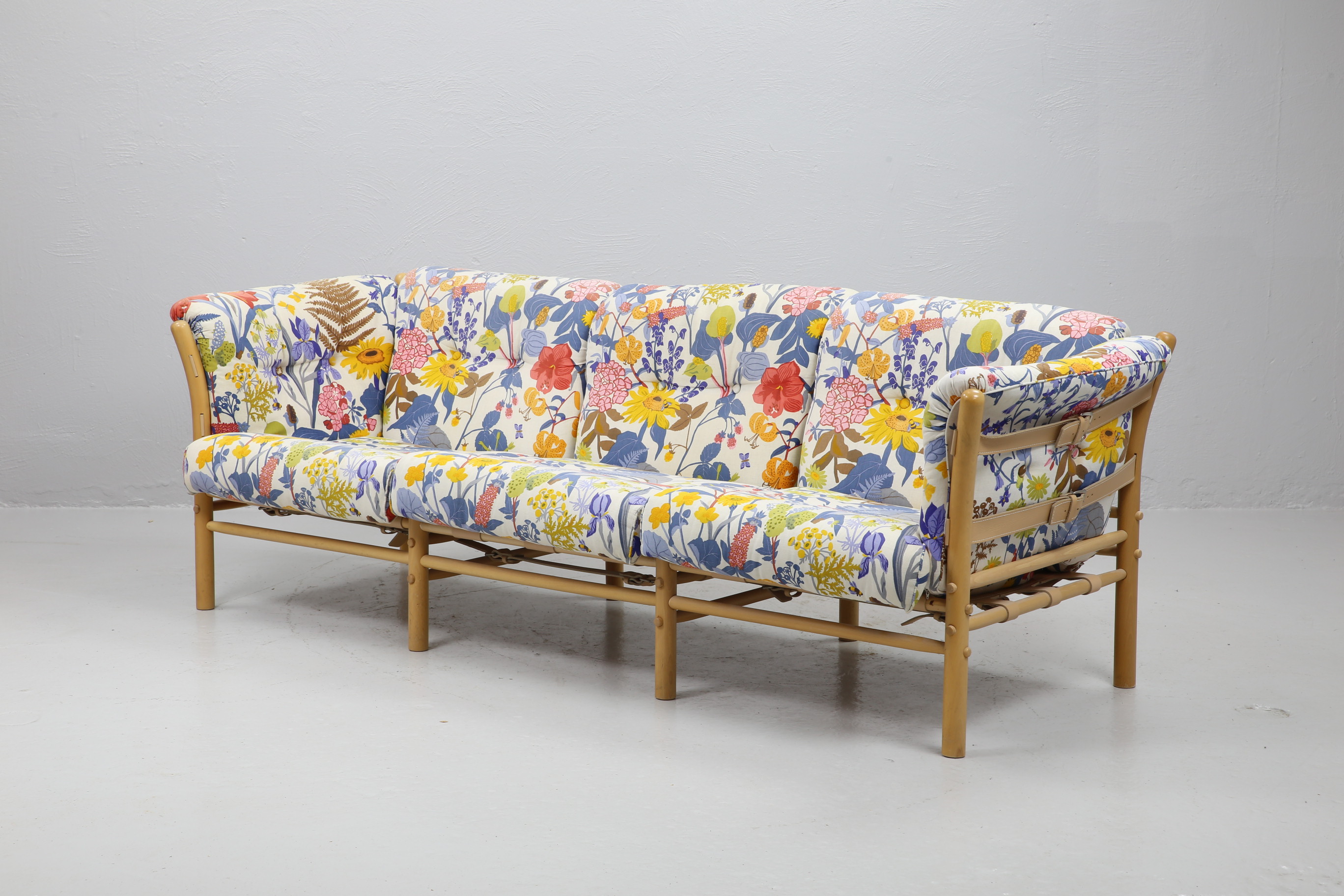
In 1945, both ceramics and textiles were launched at NK in the exhibition When Beauty Came to the Village, which was inspired by Nils Ferlin's poem, of the same name, and set to music by Lisbet's husband Lille Bror Söderlundh. Eighteen prints were shown during the exhibition and several of the patterns were given names connected to the family, including Jobsbarnen and Jobsblommor.
See also: The Magic of Josef Frank’s Patterns
The sisters' brother Peer (1913-1989) had established a hand printing studio in Västanvik in 1944 where he printed his sisters' designs, among other things. In 1944, he founded Jobs Handprints, where the sisters' designs were printed. Other artists have also designed patterns for Jobs Handprints, and since the 1940s, almost 500 patterns have been printed.
See also: The Woman Behind One of the World's Most Famous Patterns
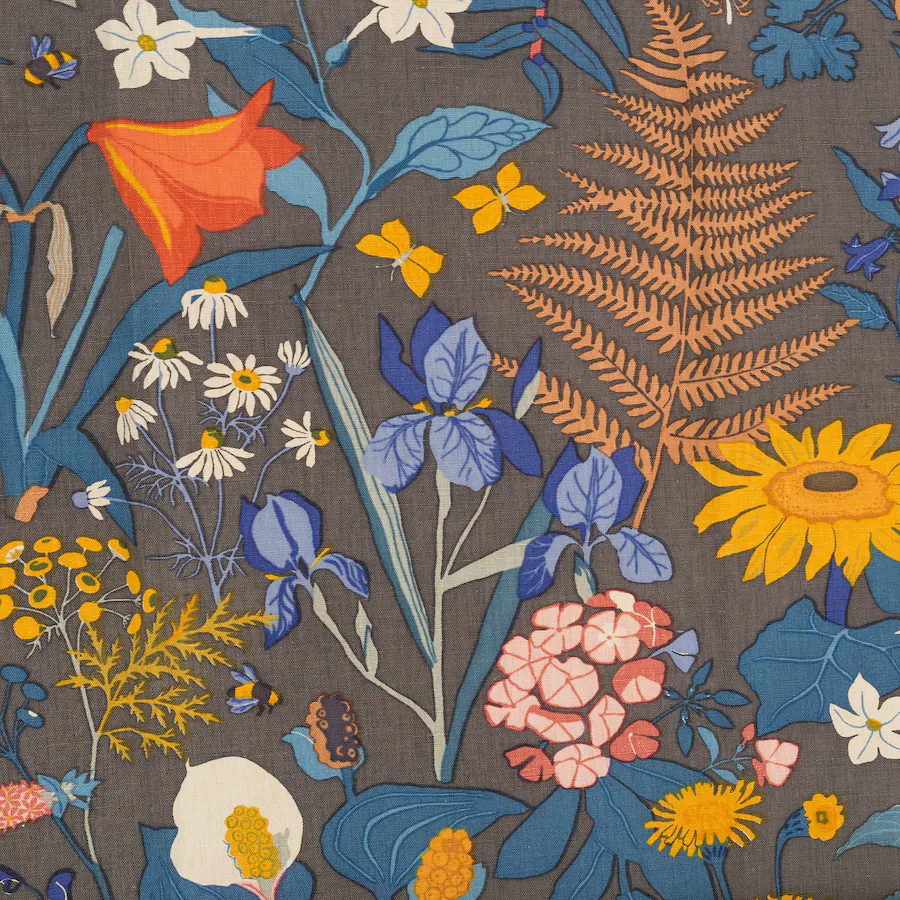
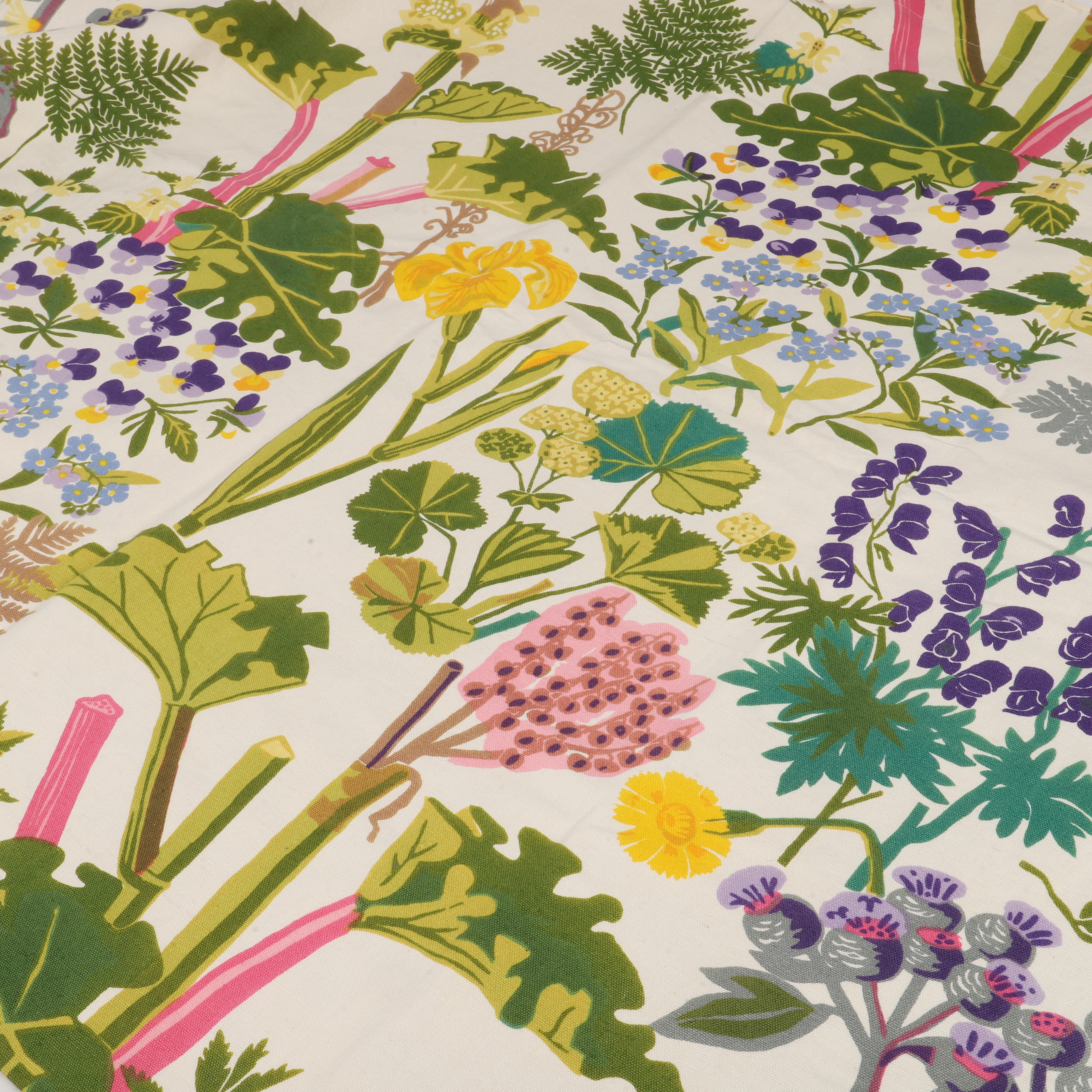
The sisters drew around 100 designs for textiles, most of which bore nature-related names such as Aurora, Dragonfly, Rose and Lily, Pomegranate and Rhubarb, and today both ceramics and textiles are represented in the National Museum's collections.
After the sibling's death, the company has continued to be run by the family. Today, however, there are very few of the sisters' fabrics in new prints.
Discover more designers in Barnebys Magazine
This is an updated version of an article originally published on 26 February 2019.