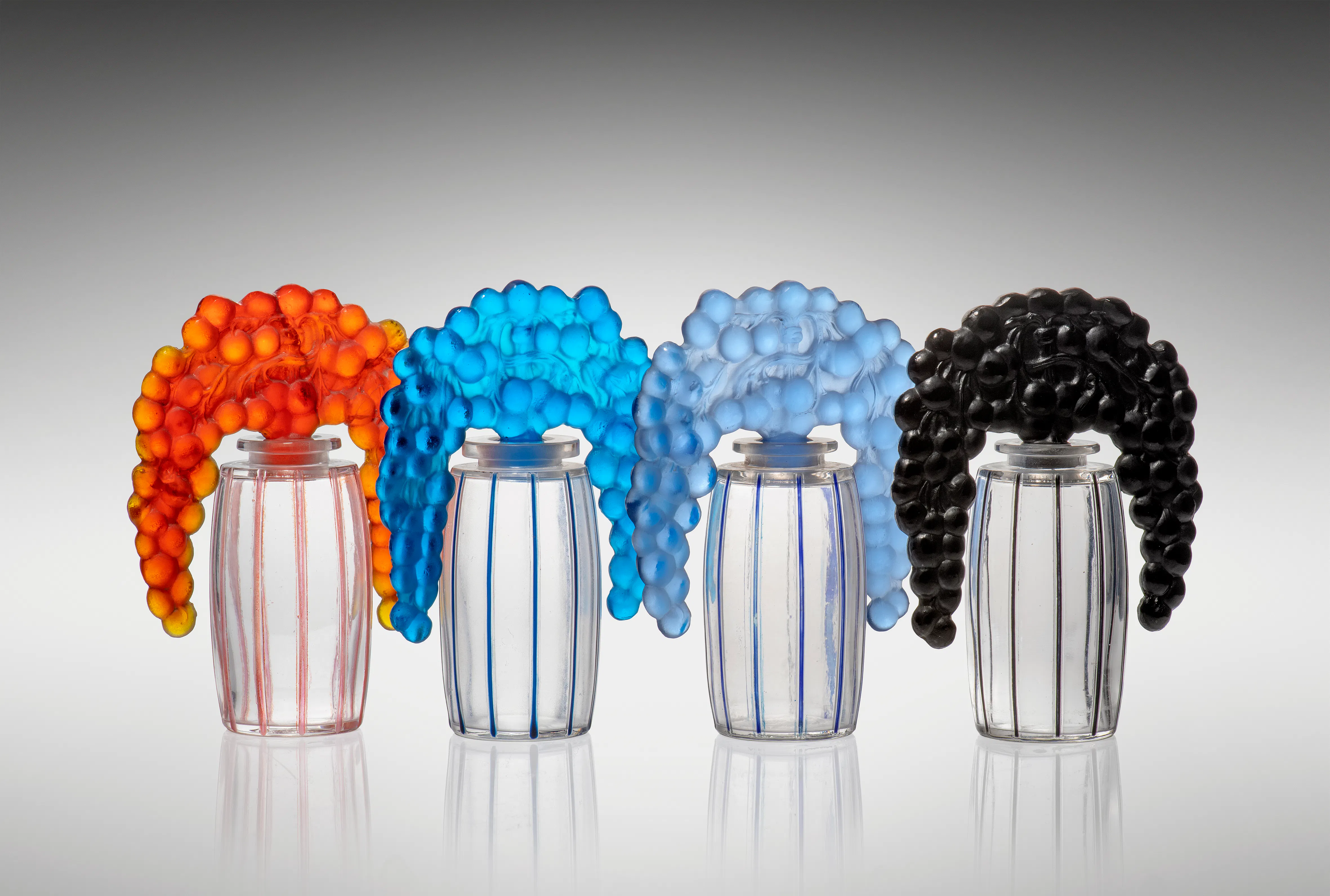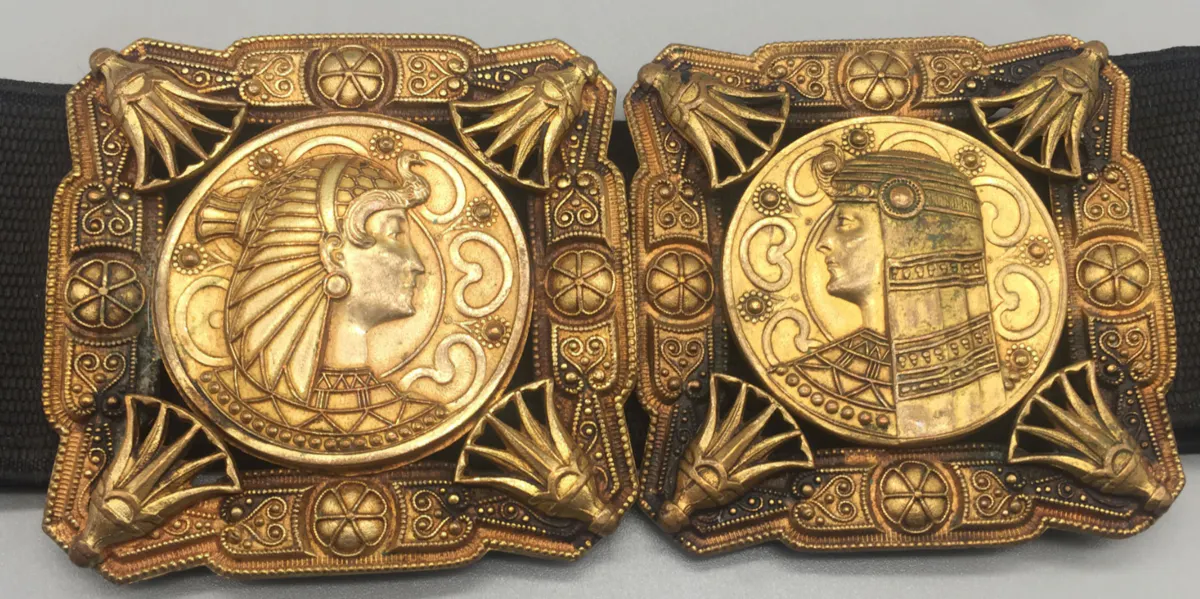
[Lalique] was the master of his material, able to realise his creative vision in glass with a clarity and precision that his contemporaries did not possess. His work is distinguished by his artistry, but also by the quality of execution.
Join us as we discuss all things Lalique ahead of Lyon & Turnbull's auction Lalique in Colour: A Private Collection on Thursday 02 February. With 150 lots from all shades of the rainbow and estimates from £300 to £50,000, the sale promises to offer exceptional designs for seasoned collectors and Lalique aficionados alike. Art Nouveau and Art Deco enthusiasts can choose from a vast array of jewellery, scent bottles, cendriers, seals, boxes and vases.
Senior Specialist Joy McCall heads Lyon & Turnbull's biannual Lalique sales, as she previously did at Christie's for many years. With over 25 years of experience selling Lalique, we're delighted to have asked her about some of her favourite pieces in the collection, as well as her insider tips into the Lalique collectors' market.
Barnebys: Can you tell us a bit about the history of Lalique?
Joy McCall: Lalique is a luxury brand established by the designer René Lalique (1860-1945), who had a visionary imagination, was constantly creative and was fastidious about high quality. Lalique’s first career, as a jewellery designer, started in the 19th century and led to his being recognised as one of the greatest Art Nouveau designers.
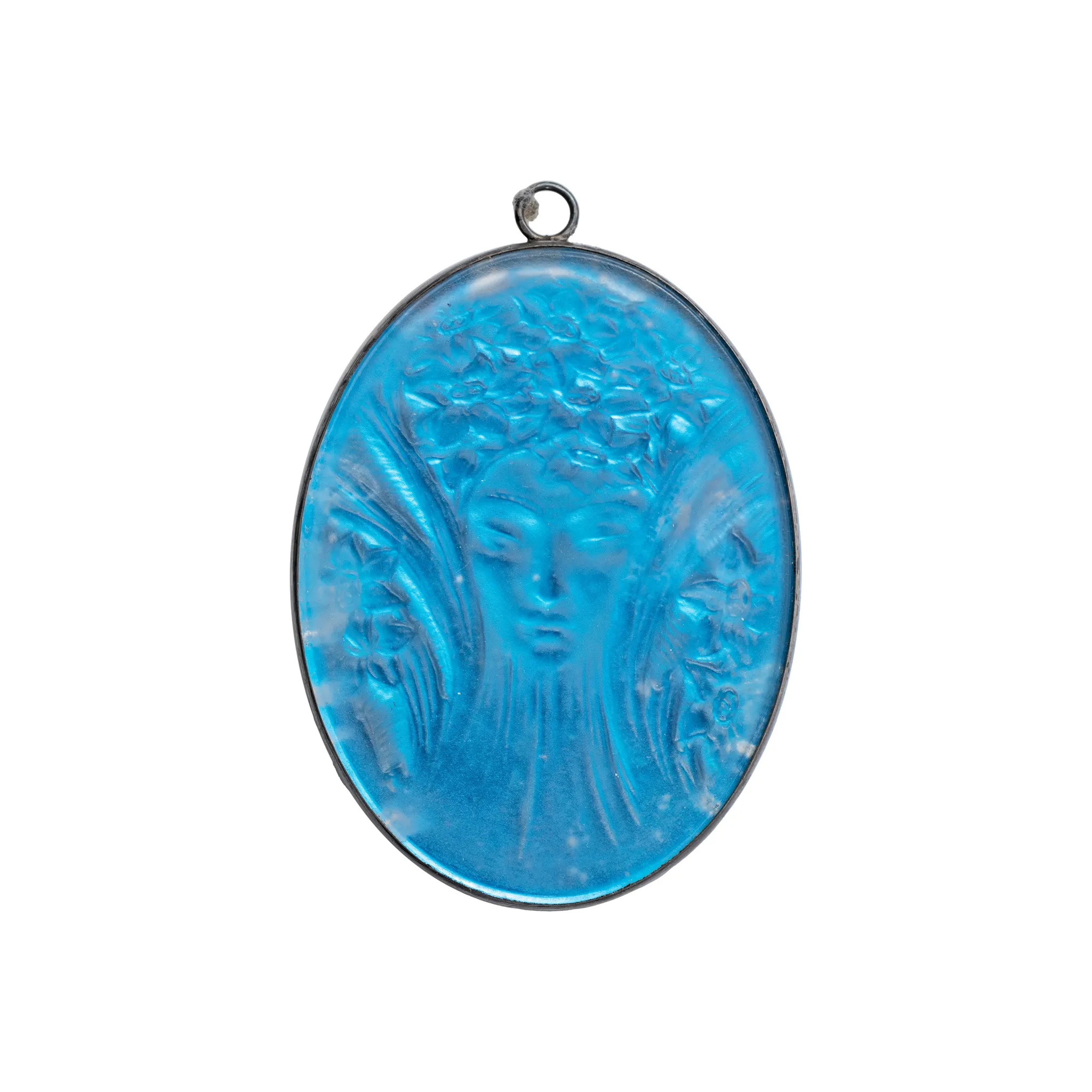
His second career as a glass-maker was mainly in the 20th century, when he established himself as one of the leading Art Deco designers. Lalique always understood fashion and changed with the times, ensuring that he kept in step with the market. He was continually experimenting and sought to realise the full potential of materials. His glass factory in Wingen-sur-Moder, in the east of France, is still producing works today.
What makes Lalique pieces so unique?
This is an interesting question given that René Lalique is celebrated as a craftsman and designer who pioneered innovative techniques that enabled glass to be mass-produced. He was the master of this material, able to realise his creative vision in glass with a clarity and precision that his contemporaries did not possess. His work is distinguished by his artistry, but also by the quality of execution. His subjects have a timeless appeal as they were drawn from nature, and the range of objects he created includes items that can still be used today.
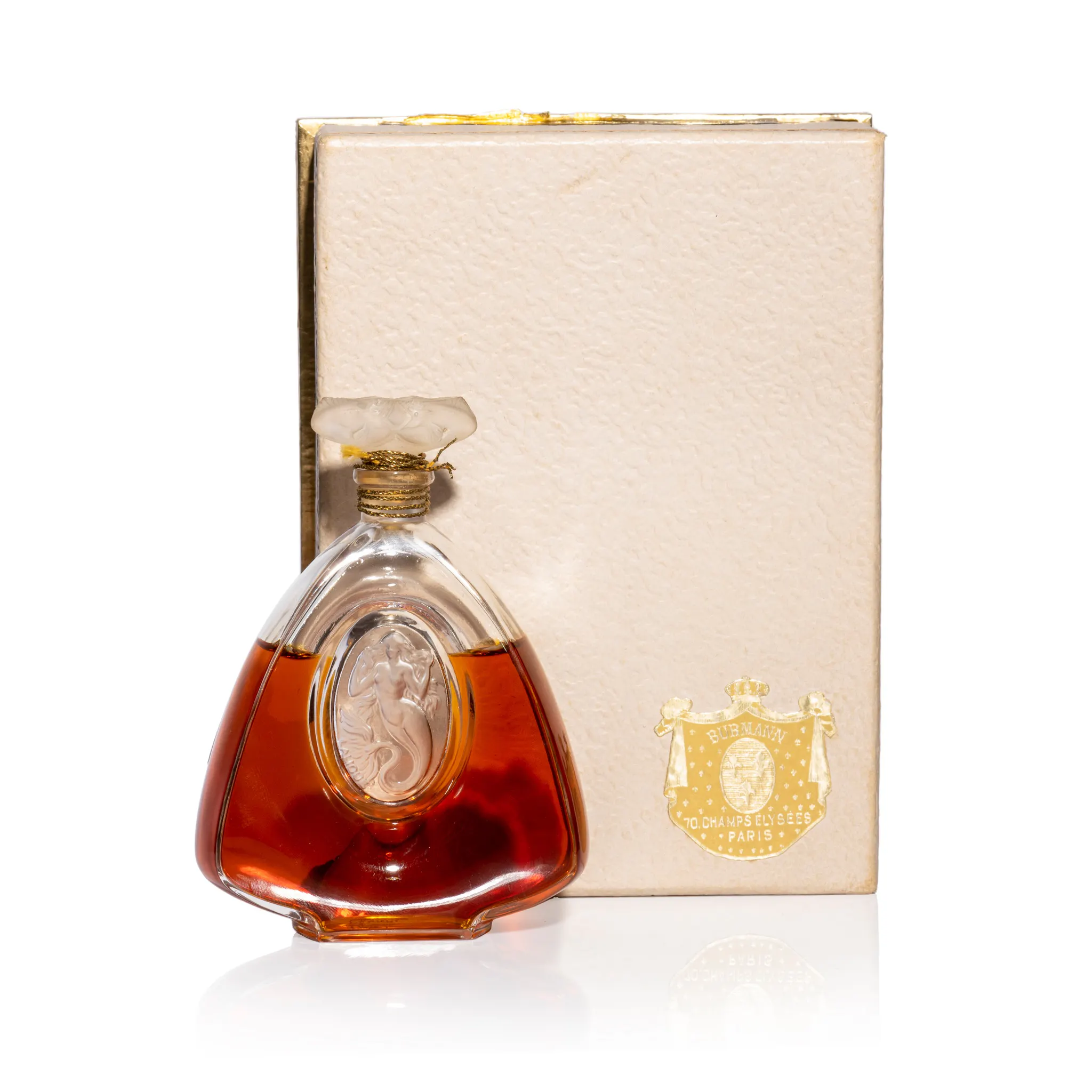
Having said that Lalique mass-produced glass, it should also be mentioned that he did create unique works using the cire perdue technique. Cire perdue is a lost wax technique more associated with the casting of bronze. The form is worked in wax and then covered in plaster, and the wax is then heated and removed in a liquid form, which is replaced by molten glass. Once cooled, the plaster mould is discarded. Cire perdue pieces do not usually come polished and are opaque, with fine detailing and richness of texture. These works are sought after because there is an intimacy to them, with Lalique’s finger marks still visible.
Why do you think collectors have been so drawn to these objects?
It has to be because they are stunningly beautiful. How people come to know about Lalique though varies. I think the majority of collectors who saw an object that captivated them were inspired to investigate further. One piece often became another and the momentum of a collection gathered. I also regularly hear that someone in the family had a piece that they loved, and the passion for Lalique then became a shared one. There are also connoisseurs who focus their collections on specific object types.
What are some of the most popular Lalique designs and periods at auction?
Lalique’s early jewellery is most closely associated with the Art Nouveau period but does not appear so frequently at auction.
However, he really came to the fore in 1925 with the Paris Exposition and became one of the leading designers associated with the Art Deco style. His chosen medium of this period was glass.
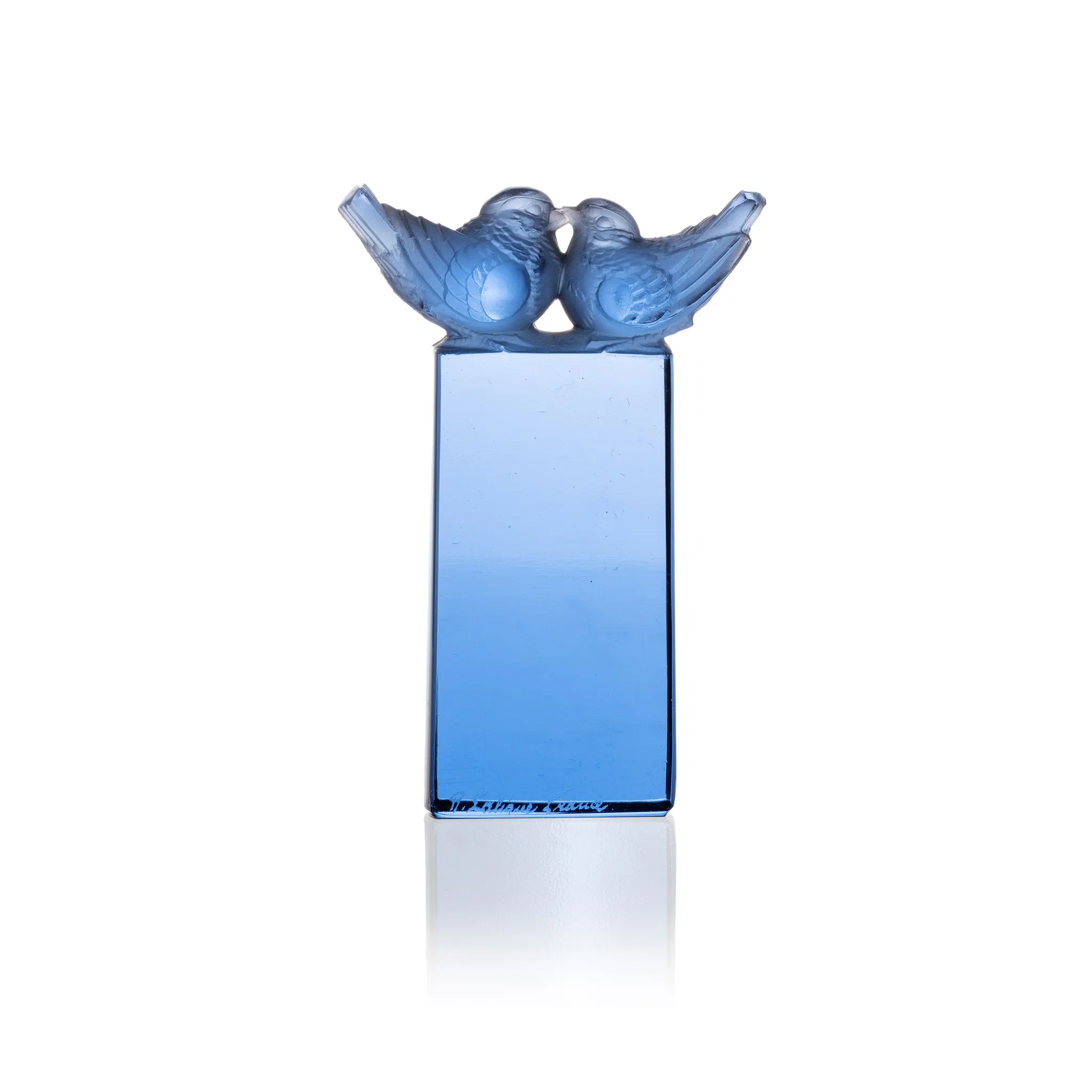
René Lalique was a lover of nature – all his work relates to nature in some way and as a result, his works have a timeless appeal. Figures were a favourite subject and in particular the female form. Animals, birds, insects and fish are also recurring themes in his work, as are flowers, foliage, and fruit.
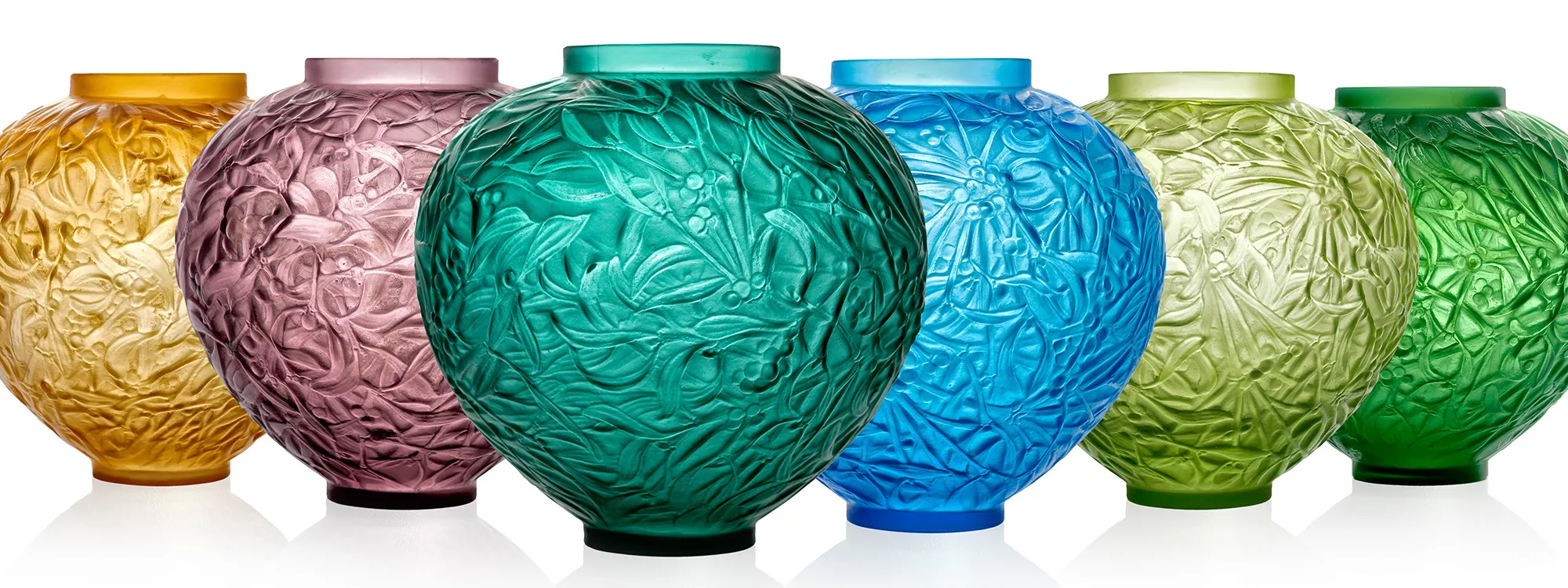
Lalique produced glass that was not just clear and frosted but also coloured, and his opalescent pieces are always popular, as are his coloured works. The forthcoming sale Lalique in Colour exemplifies this with a full rainbow of shades. Different colours command different price levels based on rarity. This can be seen with the range of the Formose and Gui vases.
Can you talk us through some of the top lots in your upcoming catalogue?
The upcoming sale, Lalique in Colour: A Private Collection celebrates 150 lots in a rainbow palette of red, orange, yellow, green, blue and amethyst, with estimates ranging from £300 to £50,000. The sale features a breathtaking array of vases – led by Tortues, Languedoc, Serpent and Bellecour designs – as well as boxes, scent bottles, seals, cendriers and jewellery.
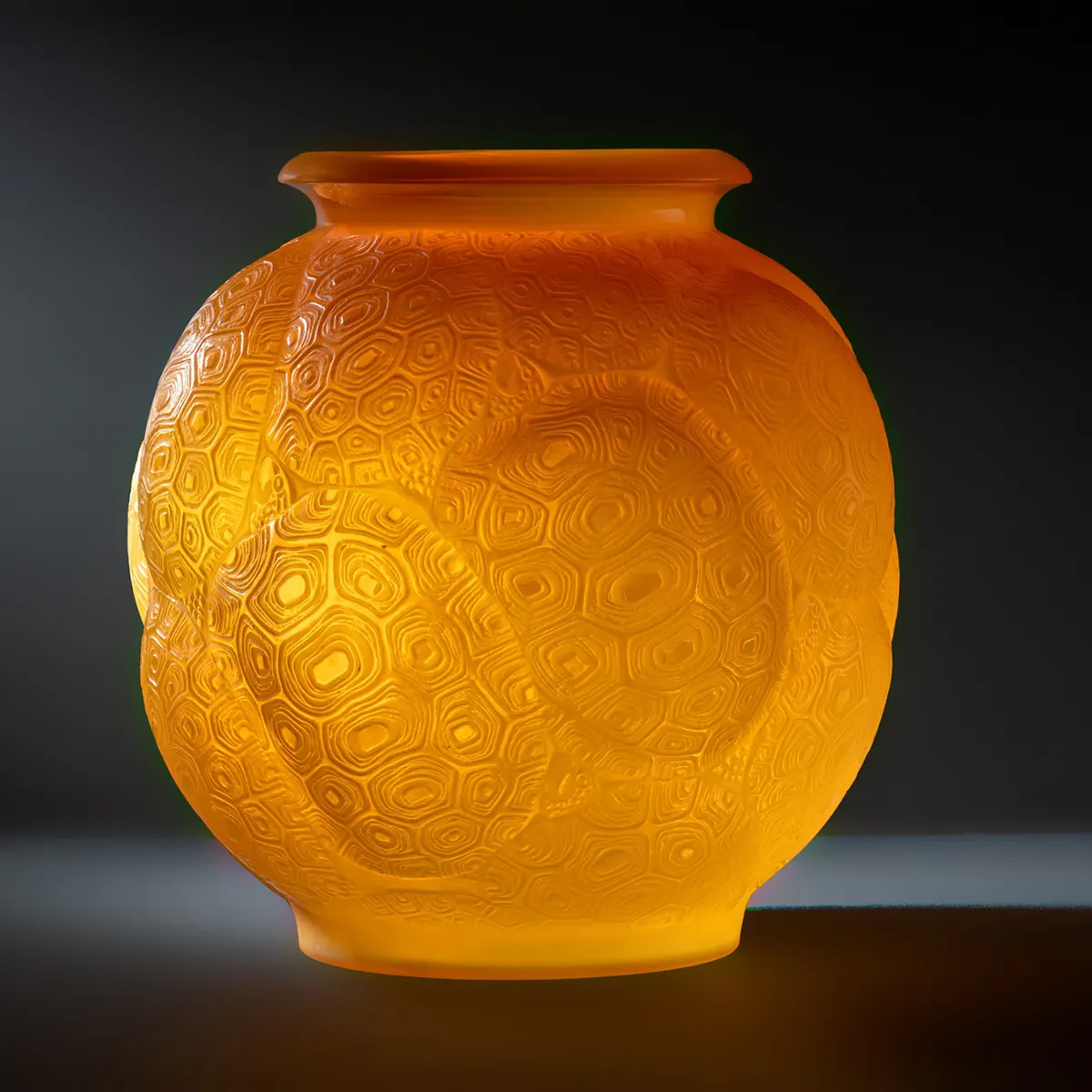
The top lot of the sale is the Tortues vase in butterscotch. This is a rare example. A similar vase appeared at auction in Christie’s New York in 2006 and realised $54,000. When it appears on the market, the Tortues design is usually in clear, frosted and stained, or in deep amber, but not in butterscotch. It is not a common vase design to start with, so to be offering it in this rare butterscotch colour-way is thrilling. It is an absolutely stunning piece.
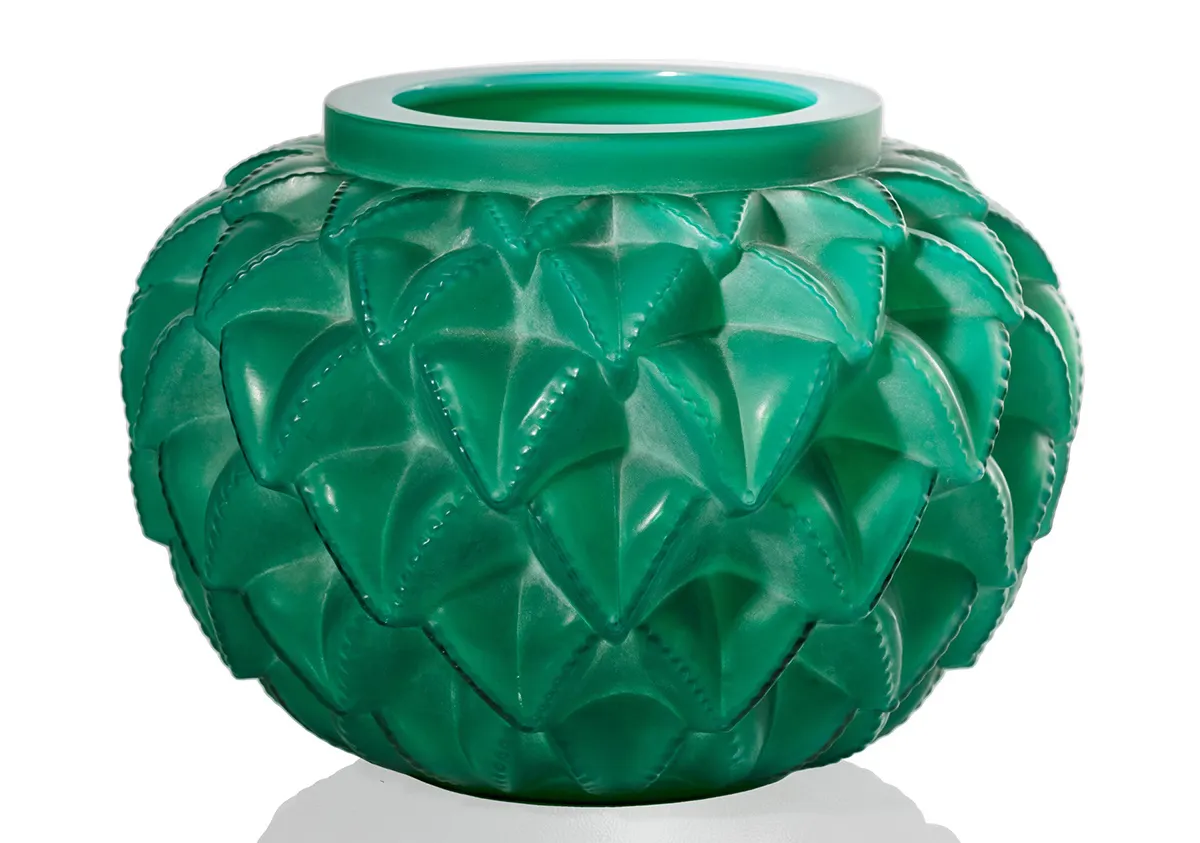
The Languedoc vase is one that gives me great satisfaction because, as we did photography for the October 2022 Lalique sale, I said I would love to offer a Languedoc vase. Sometimes dreams come true! This is a vase which has superb presence: you cannot ignore it when it is in the room. The depth of relief on this cactus form vase is fantastic, and it is such a great colour too, particularly when it appears in a cased form as this example is.
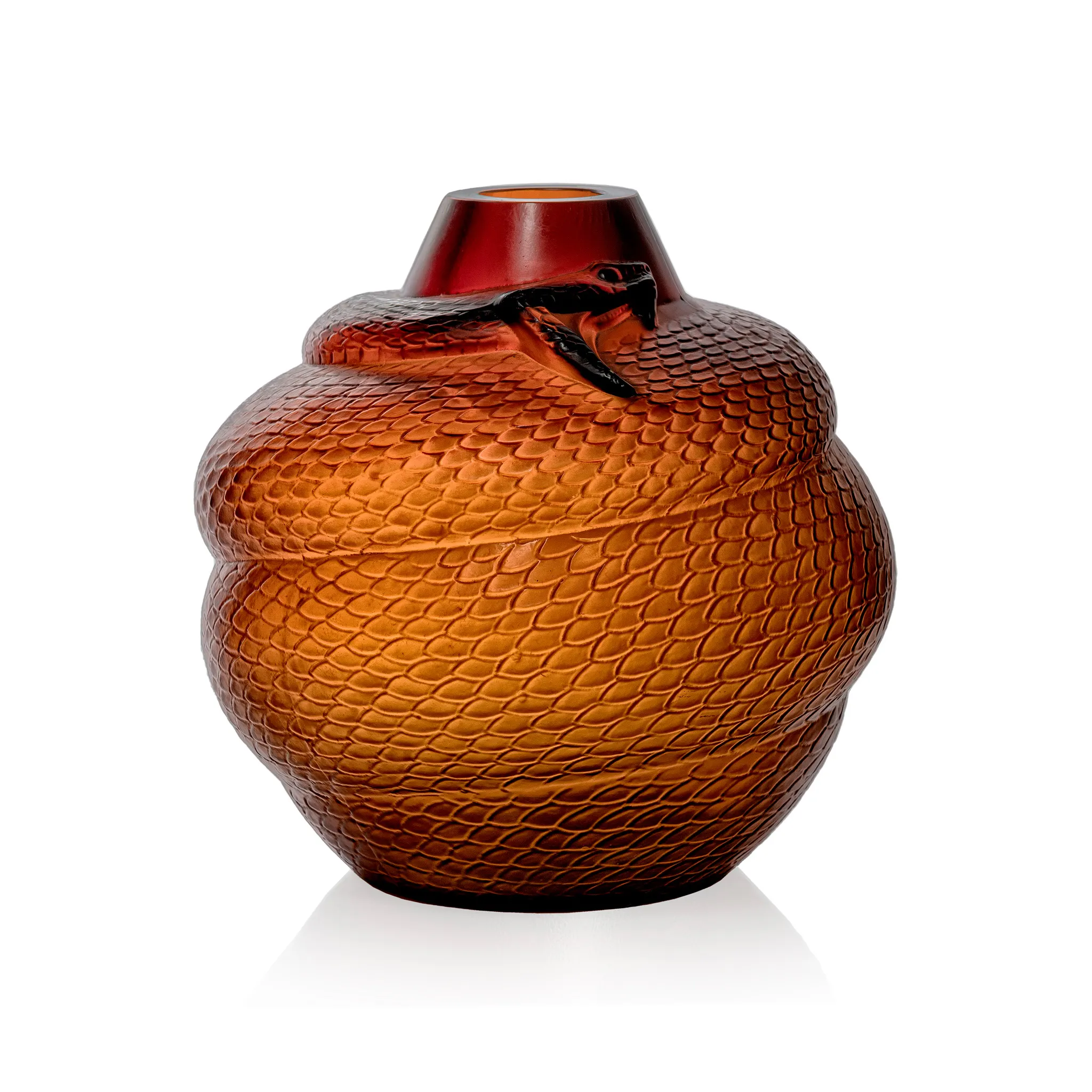
The Serpent vase is also an ever-popular piece. Lalique incredibly manages to combine the subject of the snake with the form of the vessel and it always stands out in a room.
Finally, if you could keep one of the lots for yourself, what would you choose?
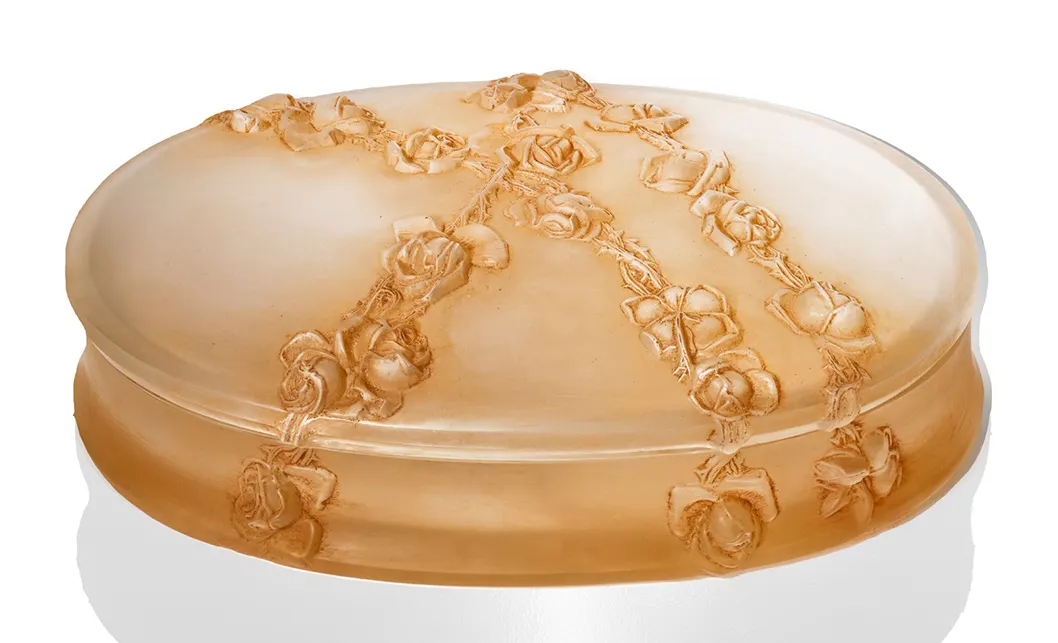
I am completely in love with this Rose En Relief box. It is of oval section, but with the gently convex cover and the graceful curvature of the sides. The design is not symmetrical, and so the cover has to be placed in one way, so that the rose garlands form continuous bands around it. The design runs not just on the cover and sides of the box but on the underside too. The detailing of the roses and foliage is modelled in low relief and is exquisite in its precision. The surface texture is wonderfully smooth, and the applied staining enhances the overall appearance. I have never handled this box before and I am very excited to see how it performs. I really believe it deserves to do well.