![Cartier, Paris, 1930s, exceptional Pendule Mystérieuse, probably a special order, silver, marble, marquetry of rhodonite, onyx and rock crystal [detail]. Photo © Studio Sebert / PIASA](https://images.prismic.io/barnebys/25ad055c-cc73-4277-b708-ed258776958d_61269c23-c5cb-4f7b-8918-5c7b5238d0bd_hero.jpg?auto=format,compress)
French auction house PIASA is presenting a mysterious clock by Cartier from the height of the Art Deco period as part of a first-class jewellery and watch auction later this month.
It all began in 1912, when the 28-year-old watchmaker Maurice Couët decided to follow in the footsteps of the famous illusionist Jean-Eugène Robert-Houdin. Couët developed the object that would become one of the emblems of the Cartier house: the mysterious pendulum. This object, whose mechanics have left the public and the watchmaking world amazed, is composed of a transparent disc with a serrated edge actuated by a system hidden in the frame. It gives the impression that the hands are floating and are not connected to the movement, which is hidden in the base: a true miracle of watchmaking.

Around ninety mysterious clocks were manufactured prior to the 1930s, before production was interrupted by the war. It is considered that Charles Jacqueau and George Remy created most of these clock designs within the Cartier brand. Charles Jacqueau, the Parisian jewellery designer, was hired by Louis Cartier in 1909 and acted as the house’s creative director from 1911 to 1935.
The clock presented here, made around 1930, bears the geometric shapes, sober patterns and heavy and elegant materials that were stylistic marks of Art Deco designs. The clock’s hands clearly reference the Empire State Building in New York, as they borrow the silhouette of ‘the 7th wonder of the modern world’.
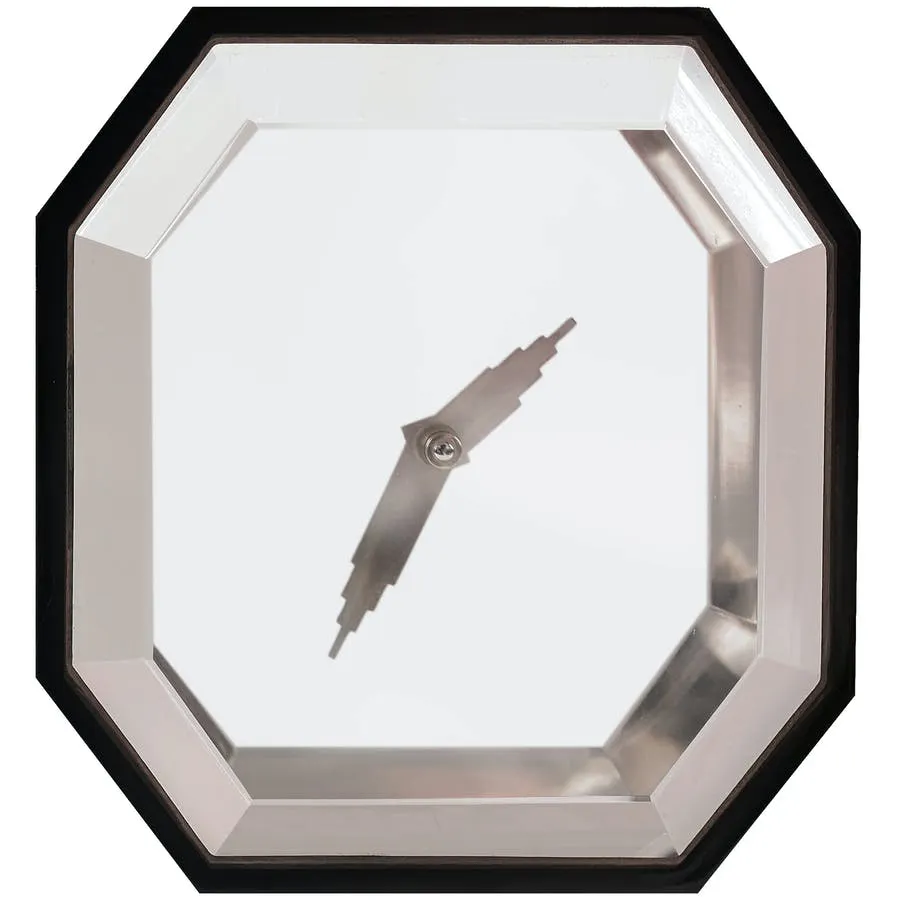
The base is mainly composed of rhodonite (coming from the Greek ‘rhodon’ for its pink colour), a mineral species traversed by black veins of manganese oxide. The rhodonite contrasts beautifully with the pieces of onyx, and gives the clock an architectural appearance. Rhodonite was rarely used at Cartier, this clock being the only known copy that makes use of it.
Equipped with a single axis and a classic eight-day movement, the clock bears the hallmark of Maurice Couët. He developed several versions of the mysterious clock for Cartier in the 1920s, after the initial ‘Model A’ was created in 1912. The master drew inspiration for his clocks from many different cultures, going so far as to develop twelve versions with Chinese aspirations and six using the classically-inspired ‘portico’ structure.

Like the Art Deco wonder shown here, each mysterious pendulum required several months of painstaking work, sometimes up to a year, before being lavishly decorated by a jeweller. Six or seven specialists from Cartier’s Parisian workshops, including a goldsmith, enameller, lapidary, gem-setter, engraver and polisher were required, making the mysterious clock one of the most expensive decorative art objects ever produced by the house.
With a high estimate surpassing half a million euros, this jewel of clockmaking is the undisputed flagship lot of the PIASA sale, which will be held on 19 May. It comes from the private collection of auctioneer Maurice Rheims and is appearing on the market for the first time since it left the Cartier workshops in the 1930s.
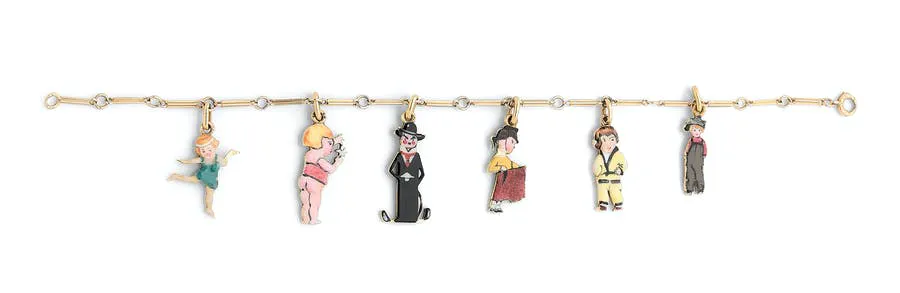
In addition to the mysterious clock, PIASA will disperse a fine selection of jewellery and watches. Another lovely creation attributed to the panther brand is a charm bracelet on the theme of Charlie Chaplin. The jewel supports six yellow gold enamel charms, including a representative Chaplin and a representative Jackie Cogan. Each charm is double-sided, allowing you to see the face and back of each character.
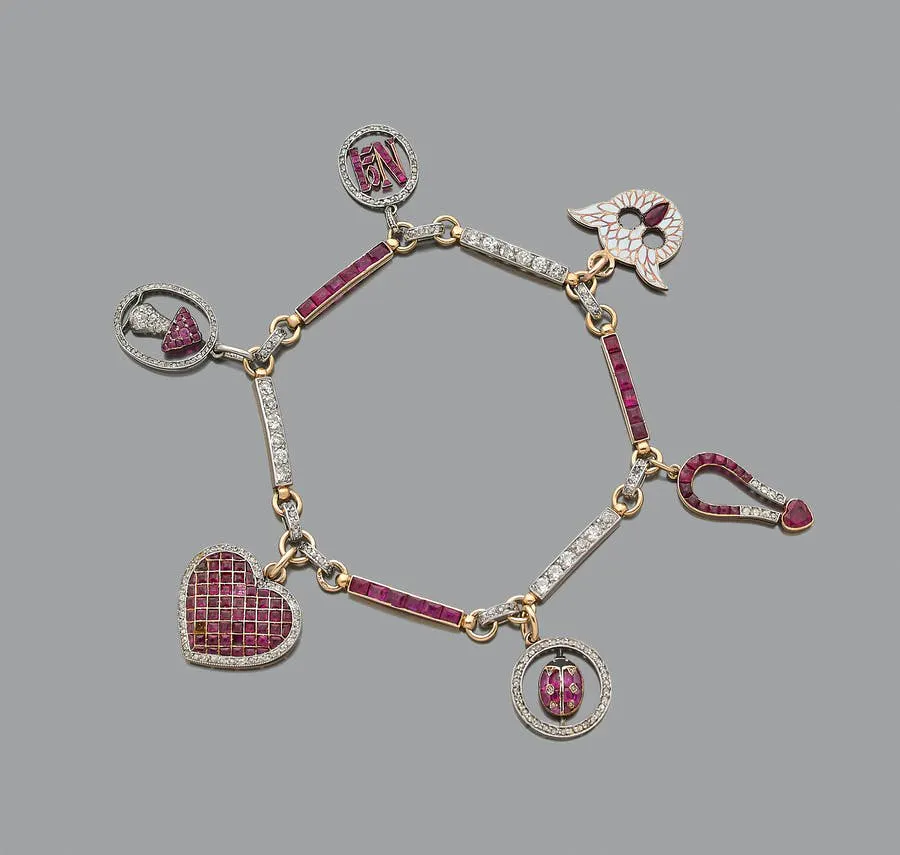
Another charm bracelet will also feature in the auction, but this time it is Lacloche Frères that is in the spotlight. Founded in Paris in 1892 by Jules and Léopold Lacloche, the company established its reputation with innovative creations such as ‘petit point’ bracelets. They also earned recognition with their gold animal-themed accessories created in collaboration with Julien Duval and Paul Frey, and sumptuous Chinoiserie and Egyptian Renaissance-style Art Deco jewellery.
The bracelet shown here, made around 1920, holds six charms related to the idea of love and consists of six articulated links set with old-cut diamonds and rubies.

Also of note are two important designer jewels, one by René Boivin and the other by Lydia Courteille. The two designers are separated by decades, but each brings their adventurous and provocative spirit to their designs.
René Boivin is an emblem of French silversmithing, whose workshop has produced original collections inspired by everything from the marine world to the plant world. The Boivin house put an early spotlight on fine stones such as citrines, peridots and amethysts, as well as polychrome jewellery. This bracelet was designed sometime between 1933 to 1935 by Juliette Moutard, a silversmith employed by Jeanne Boivin after the death of her husband, who breathed new life into the designs of the house.
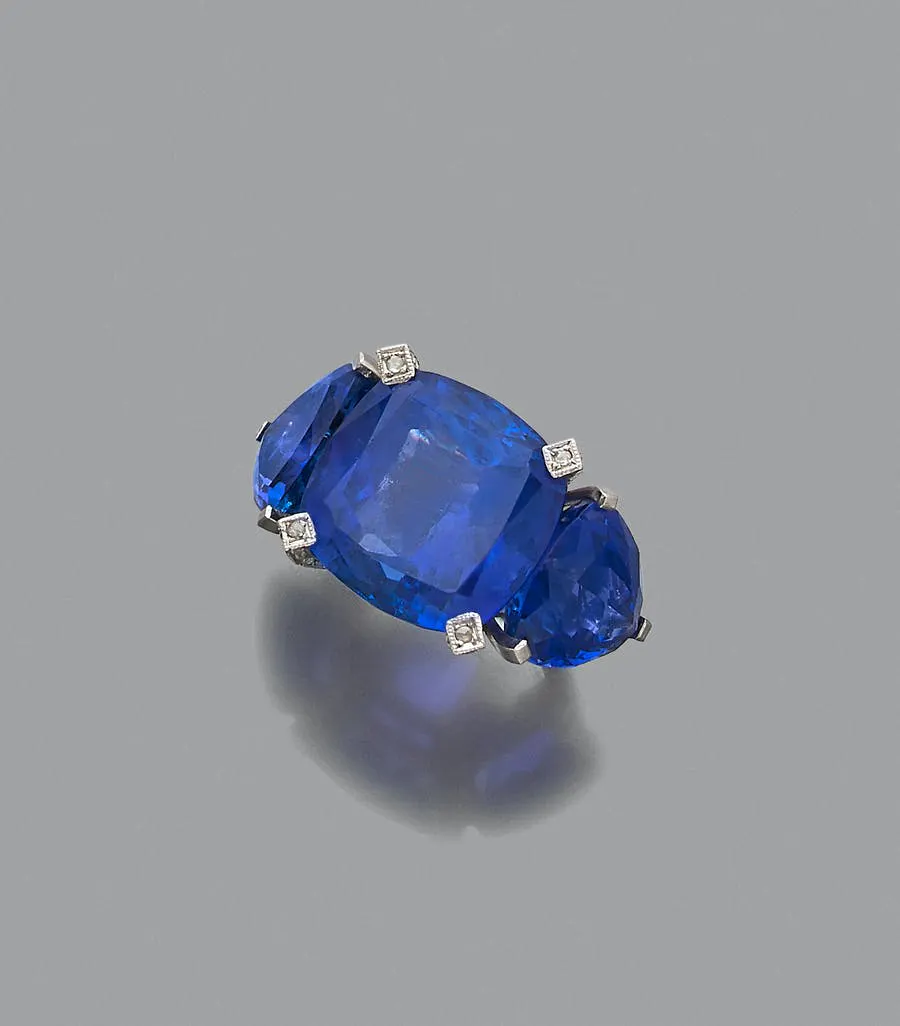
Lydia Courteille, who has declared that "art does not exist without provocation", is a jeweller and gemologist whose creations have adorned the world’s biggest stars. Her store, located on Rue Saint Honoré in Paris, is presented as a cabinet of curiosities and attracts the most discerning collectors. The designer will be represented with a large platinum ring fully paved with rose-cut diamonds set with a cushion-shaped tanzanite between two triangular tanzanites.
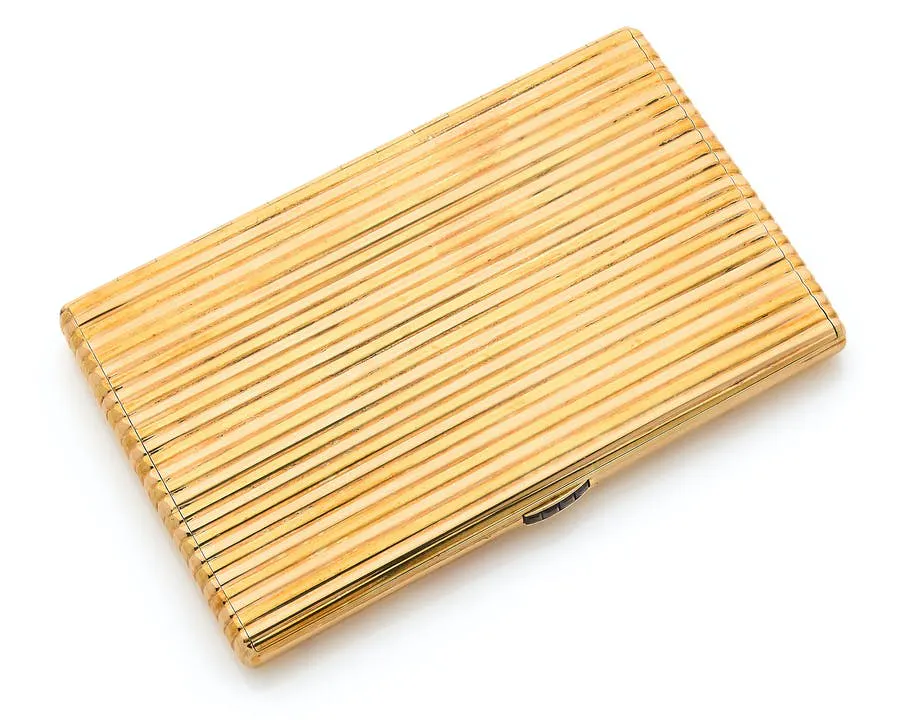
Finally, among the accessories, there is a two-tone gold cigarette case by Arnold Ostertag. Designed in Paris around 1935-40, the case features the ‘J.S’ monogram and a push-piece set with calibrated sapphires.
The sale, which includes nearly 120 lots, will take place on 19 May at 6 p.m. at PIASA in Paris.