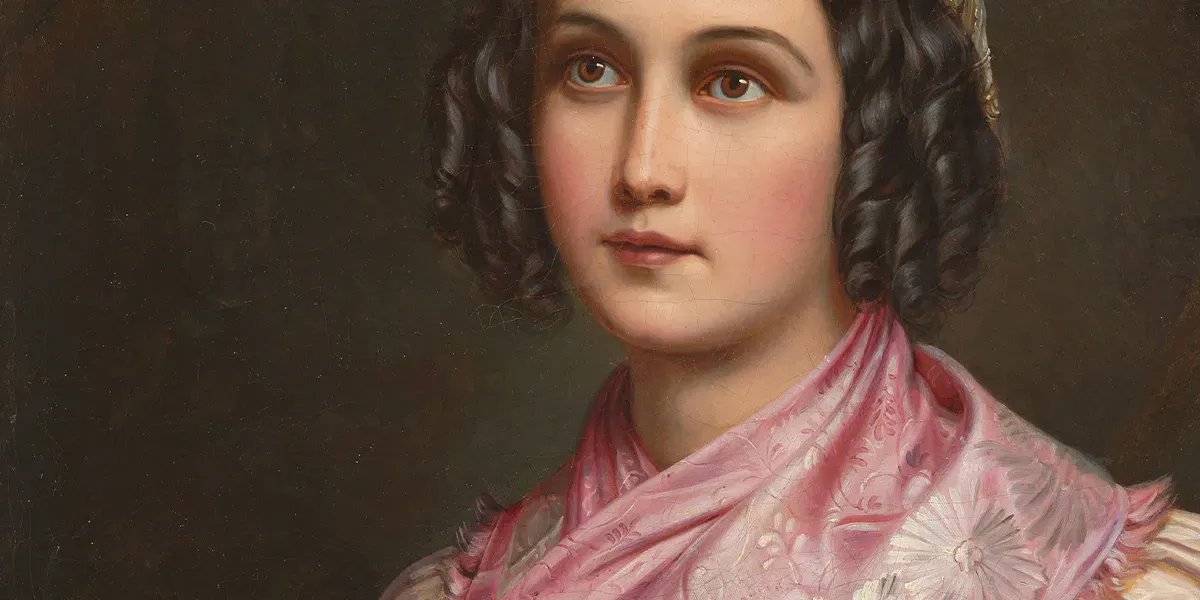
In 1830, 17-year-old Helene Sedlmayr delivered new toys on behalf of the Munich toy shop Auracher to the younger children of King Ludwig I – when she caught the eye of the king.
Helene Sedlmayr was born in 1813 in Trostberg, Upper Bavaria, the daughter of a shoemaker. At 15, she was employed in the Auracher toy shop in Munich, which also supplied the royal court. A few years earlier, Ludwig I had started a project that is widely known to this day: the Gallery of Beauties in Munich's Nymphenburg Palace.
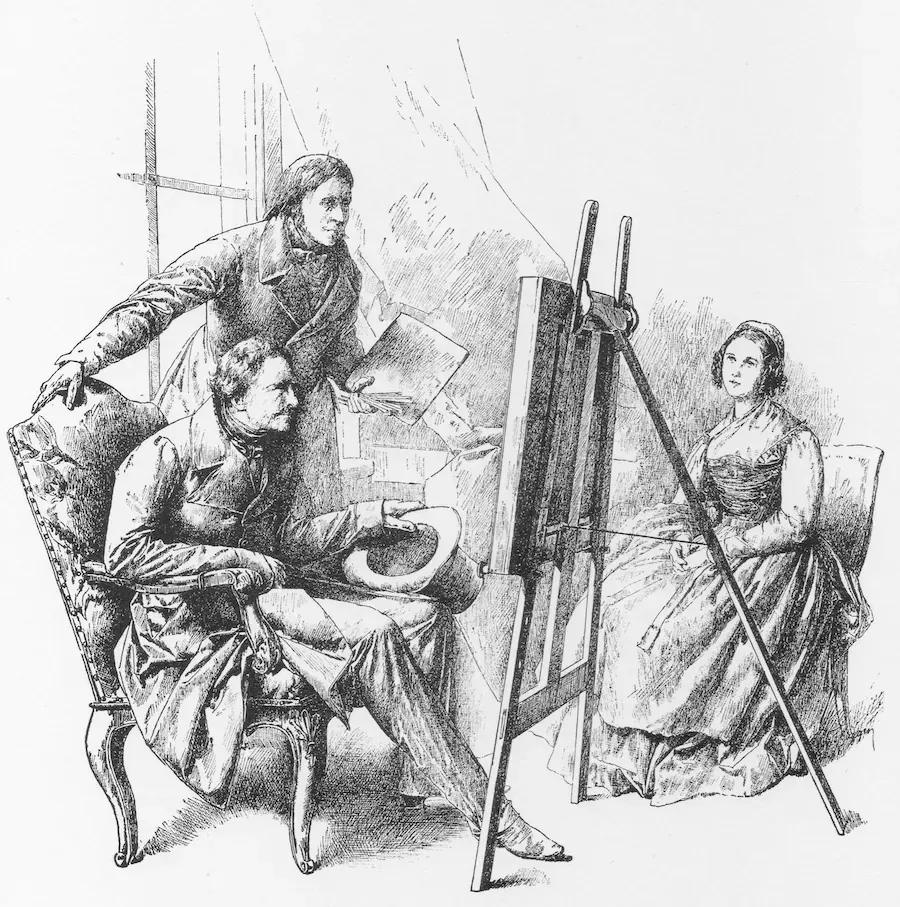
Ludwig I, who could rarely resist a beautiful woman, was not the first to commission such a gallery. There were similar galleries in Italy, England, Saxony and Russia. However, while those galleries of beauties had focused on ladies of the nobility, Ludwig had 'democratised' the portraits by including young women from all classes. In the gallery, for example, there are portraits of royal ladies like Ludwig's sister Sophie, Archduchess of Austria, or the noble adventuress Lady Jane Digby, as well as the commoner Auguste Strobl, the daughter of the royal accountant.
See also: The 6 Most Famous German Paintings
The executive artist of this project, which by 1850 included 36 portraits, was the ingenious portrait painter Joseph Karl Stieler, who had been the Bavarian court painter since 1820. Stieler's beauties were flawless yet realistic at the same time – leaving the impression that one was face to face with them. For 12 of those beauties, the clothing chosen corresponded to the fashion of the time, but he had something else in mind for Helene Sedlmayr, who came from a humble background: the Munich costume of a dirndl. The arrangement might have also been the idea of Ludwig himself, who gave Helene “a beautiful, silver latched hood, silver chains for the bodice, a scarf, [and] a dress” for her sitting.
See also: 5 Portraits of Women in Black
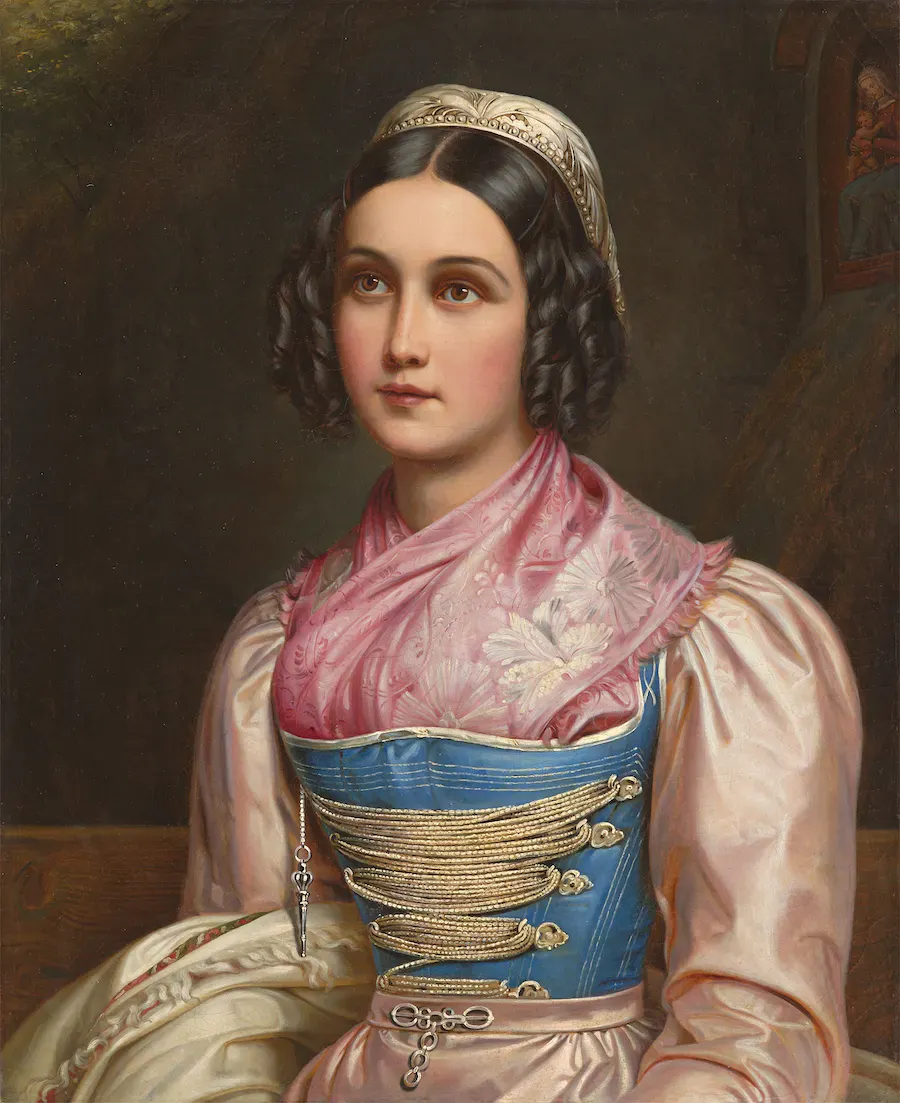
The result was a 1831 portrait that shows Helene in Madonna-like innocence, with soft brown eyes looking up dreamily – the epitome of a “beautiful woman from Munich”. Ludwig was delighted. Of course, the first version went straight to the Gallery of Beauties; a second version, which Stieler painted between 1831 and 1834, was presented to the sitter herself. Perhaps it was a wedding present, as Helene married the royal valet Hermes Miller in April 1834. The happy marriage produced ten children, some of whom had godparents from the royal family, including King Ludwig I himself.
Want articles like this straight to your inbox? Then register today for our free newsletter!
The second portrait remained in the possession of Helene Sedlmayr's descendants until it was offered at an auction of 19th-century art at Grisebach in Berlin last week. With an estimated price of 80,000-120,000 euros, the portrait finally achieved 237,500 euros (including buyer's premium), which means a new record for Joseph Karl Stieler, as Grisebach announced on Instagram. The post also names the Edith-Haberland-Wagner Foundation as the buyer who plans to exhibit the portrait publicly in the future.
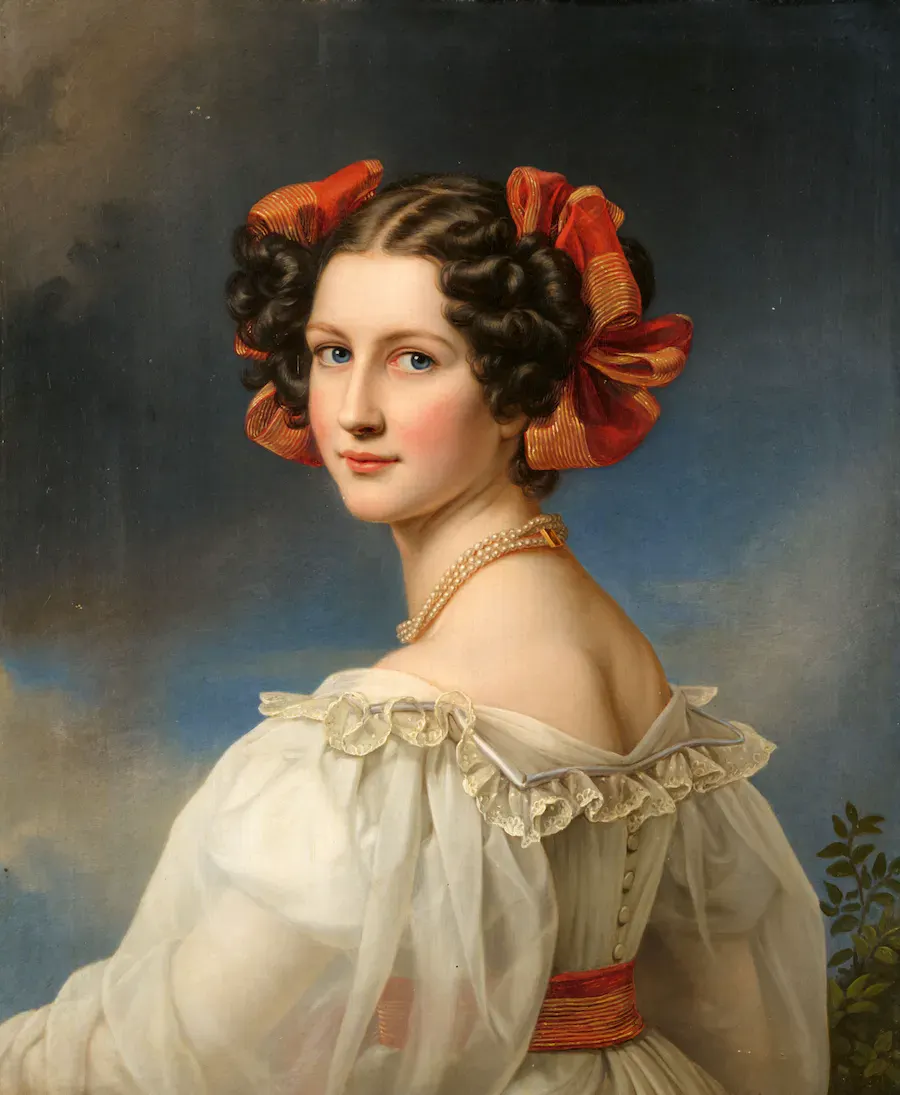
In recent years, portraits executed by Joseph Karl Stieler have repeatedly reached six-figure prices on the auction market, including Portrait of Maria Theresia v. Tettenborn (146,050 euros), Countess Sophie Kisseleff (120,650 euros) and several portraits of the Bavarian royal family. They all changed hands at the Neumeister auction house in Munich. Stieler's third version of the Portrait of Auguste Strobl, which was the first to move into the Gallery of Beauties in 1827, was sold by Lempertz in Cologne in 2019 for the price of 161,200 euros.
Discover more news from the auction market in Barnebys Magazine