Like every other country, Germany, even when it was still the patchwork of sovereign rulers of the Holy Roman Empire, produced artists who stand out from their colleagues and whose most famous works are highly recognised. Here are the six most famous examples:
1. Albrecht Dürer, Self-portrait
See also: Leonardo da Vinci: Universal Genius
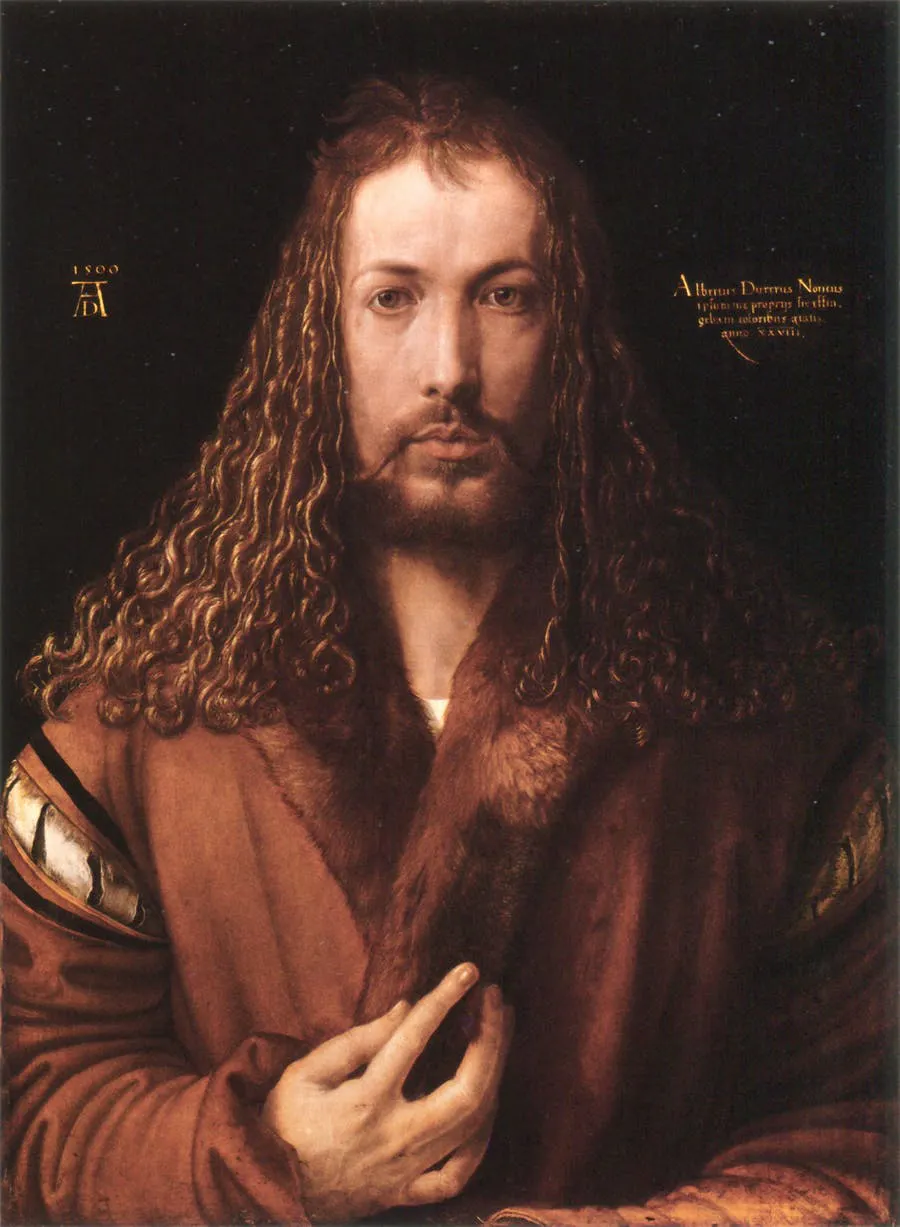
At first glance, one may think the subject of this painting is Jesus Christ, as it seems to resemble Salvator Mundi portraits. However, it is in fact a self-portrait of the Renaissance painter Albrecht Dürer (1471-1528), though he was thinking of the Saviour when painting this work. The pose that the Nuremberg painter assumes was reserved for portraits only of Christ and kings at the time. However Dürer, not lacking in self-confidence, considered himself a 'divine artist' who was endowed with creative power by God. Another important detail is Dürer's clothing, as a fur-trimmed cloak was reserved only for the urban elites, especially council members. Dürer reached this position in 1509, which is why the dating of the painting to 1500 is probably a later change.
2. Johann Heinrich Wilhelm Tischbein, Goethe in the Campagna
See also: The First Works of 10 Famous Artists
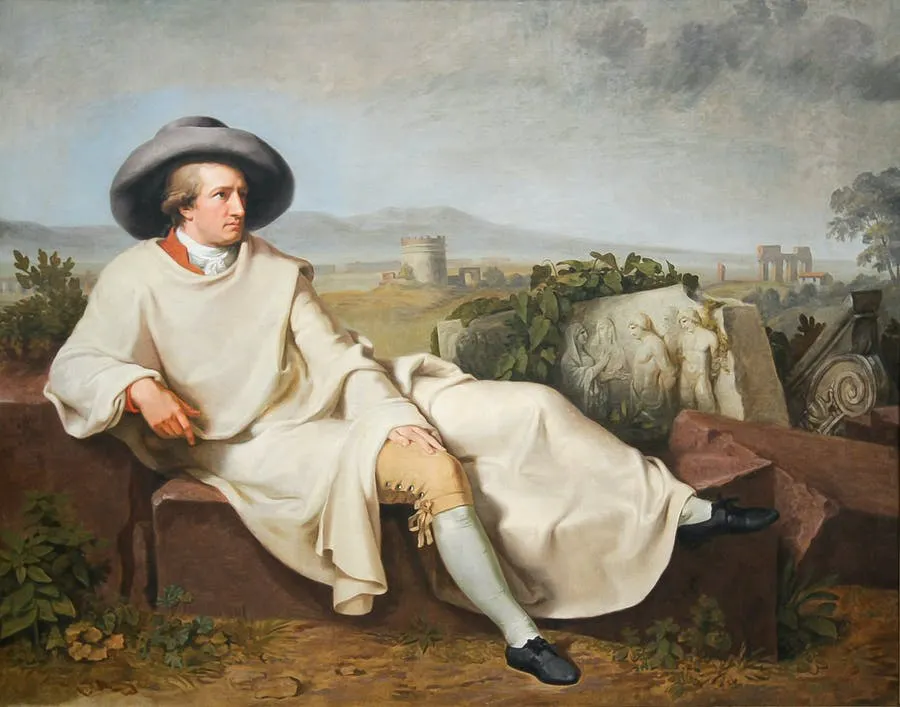
The Hessian artist family Tischbein had produced so many painters that they, like the Brueghels, had to be given nicknames in order to tell them apart. As a rule, they were named after their main places of work ('Kasseler Tischbein', 'Lübecker Tischbein', 'Leipziger Tischbein', 'Hanauer Tischbein'). However, one of them got his nickname due to his most famous painting: at the beginning of 1787, Johann Heinrich Wilhelm Tischbein (1751-1829) met Johann Wolfgang von Goethe who was travelling through Italy. After their initial meeting in Rome, Tischbein accompanied the poet, who usually travelled alone, to Naples. The classicist portrait shows the poet in front of the Campagna landscape populated by ruins. Tischbein became thereafter known as 'Goethe Tischbein'. In 1982, Andy Warhol reused Goethe's profile from the portrait for one of his famous screen prints.
3. Carl Spitzweg, The Poor Poet
See also: 5 Artists Who Went from Sickness to Success
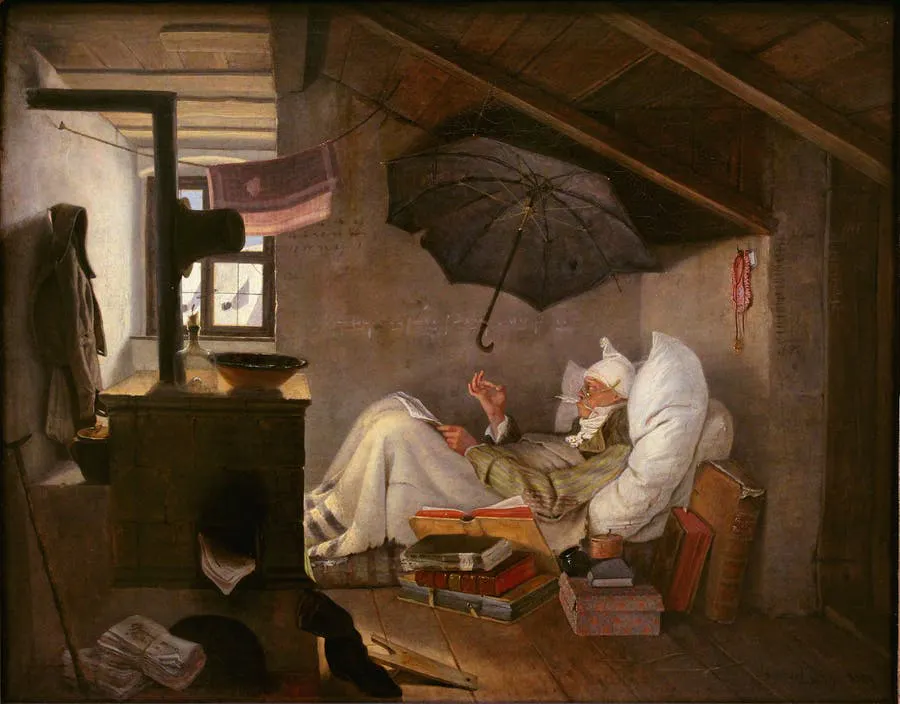
Unlike the princely poet Goethe, the poet takes on a less glorious existence in Carl Spitzweg's (1808-1885) most famous painting. Instead of indulging in the luxury of a trip to Italy, this poet spends the cold winter days in his grim attic. Since he has no money for heating material, the stove stays cold, so that he has to crawl into his makeshift bed with his coat and nightcap. To protect against moisture, he has stretched a demolished umbrella over it the roof. The Poor Poet from 1839 was Spitzweg's first masterpiece, which depicts the quirks of his Biedermeier contemporaries with sensitive humour. First presented at the Munich Art Association, The Poor Poet is Spitzweg's most famous and popular work today, but received such bad reviews at the time that the painter thereafter only signed his work with initials.
4. Caspar David Friedrich, Wanderer Above the Sea of Fog

See also: 10 Artists Between Genius and Madness
An icon of romantic painting and one of the most famous German paintings of all time is Caspar David Friedrich's (1774-1840) Wanderer Above the Sea of Fog from 1818. Here, the painter, who himself suffered from depression, combined the great artistic themes of the epoch with depictions of landscapes, religion, the afterlife and loneliness. The painting appears like the visualization of the German terms 'Wanderlust' (desire to travel) and 'Weltschmerz' (world-weariness), which were coined during the Romantic era and have found their way into many other languages. But Friedrich's work also has a political component, represented by the wanderer who wears an old German uniform, which emerged during the wars of liberation as an alternative to French Empire fashion.
5. Franz Xaver Winterhalter, Elisabeth of Austria
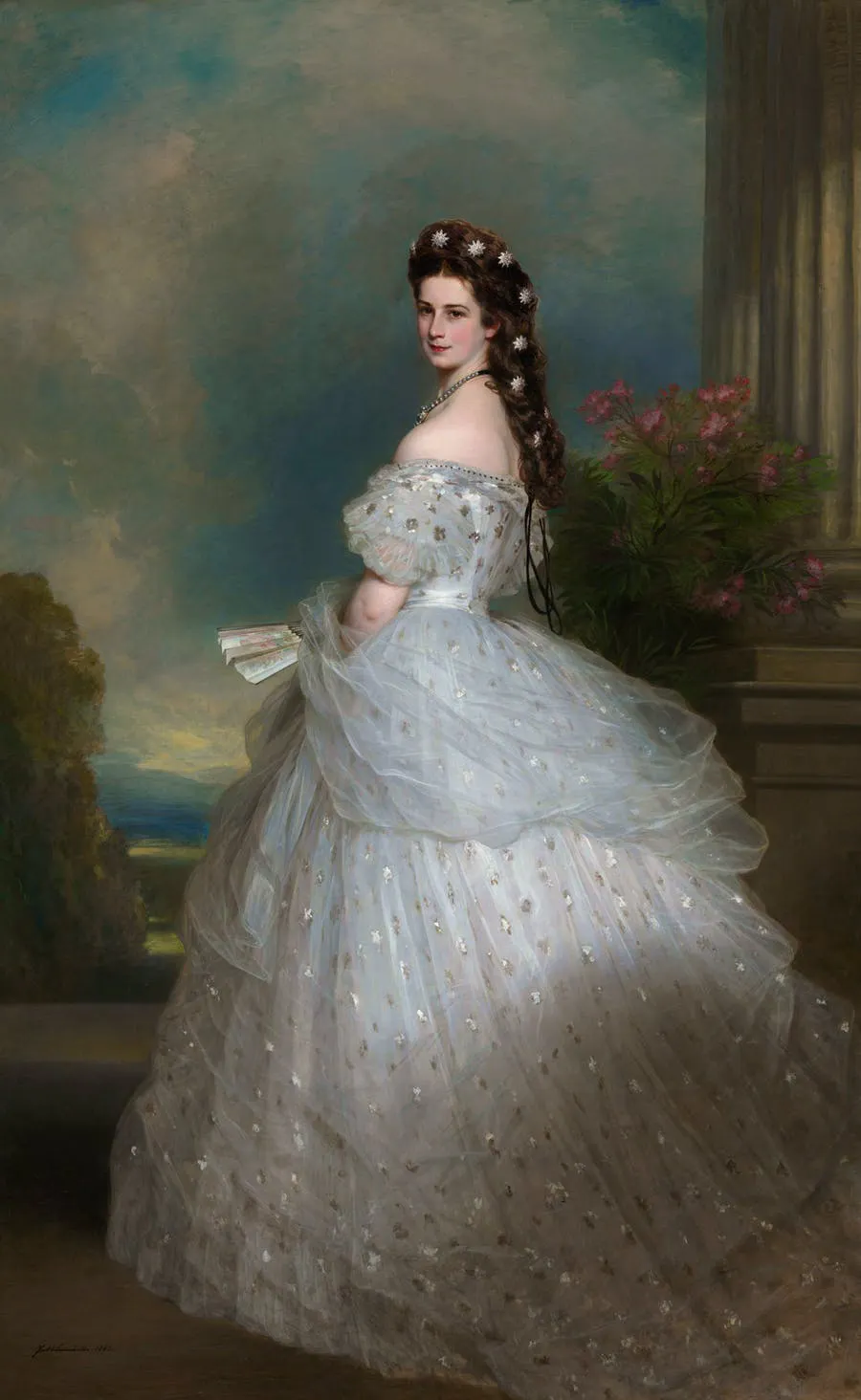
Franz Xaver Winterhalter (1805-1873), born in the Black Forest, painted all the crowned heads of Europe. Completely untouched by the artistic developments of Realism and Impressionism, he was a representative of salon painting who mastered the art of portraying his subjects in the best possible light – a skill that contributed immensely to his popularity. For the royal lady who was the model for Winterhalter's most famous portrait, however, any embellishment wasn't necessary. Empress Elisabeth of Austria wasn't only considered the most beautiful monarch in Europe, but also one of the most beautiful women of her time – an image that Elisabeth cultivated by not allowing herself to be photographed after the 1870s and implementing an intense beauty regimen. Winterhalter's portrait was created in 1865 and shows the Empress in a dress by Charles Frederick Worth and with the diamond stars in her hair that her husband, Emperor Franz Joseph I, had given her.
6. Franz Marc, Blue Horse I

The Munich painter Franz Marc (1880-1916) is best known for his animal motifs, because for him animals were the epitome of the innocence of nature and the harmony of creation. He was particularly fond of horses. At the same time as he turned to animal motifs, Marc began to explore colour theory. In his colour theory, blue stood for spiritual masculinity. A large part of Marc's horse pictures show the noble steeds in blue, as in his famous work Blue Horse I from 1911, which he showed at the first exhibition of Der Blaue Reiter, the group he founded with Wassily Kandinsky. Like so many works by the avant-garde artists of the time, Franz Marc's blue horse was viewed negatively by the general public and critics, but today is one of the most reproduced works of art ever.