
An archaeologist of millennial cyberspace
Born on 19th of July, 1986 in Santa Barbara, California, Petra Cortright came of age in the digital era. She grew up alongside the web, whose codes and mysteries she is well acquainted with, despite their perpetual shifts and growth. After completing her studies at Parsons School of Design in New York and the California College of Arts in San Francisco, she relocated to Los Angeles, where she launched her first artistic endeavour, a computer webcam video. Posted on the then up-and-coming site YouTube, her clips conveyed her profound reflections on image and digital data consumption in under two minutes. Laden with kitschy special effects, these short films were dispatched to all corners of the world through links, tags and keywords.
Cortright and her contemporaries, Jon Rafman, Artie Vierkant and Constant Dullaart, to name a few, are collectively known as ‘post-Internet’ artists. To them, the web is not only an artistic universe, offering infinite sources of inspiration and recyclable materials, but also a field for experimentation, exchange and interaction with the public. In her next series of videos and eclectic GIF-formatted creations, in which she frequently appeared, the artist developed her meditations on the Internet simultaneously as content and creator. As with her work now, she regularly called attention to the trivialisation of the image and the loss or dilution of its meaning through its reconfiguration, a topic Andy Warhol deliberated in his pop art a few decades earlier.

Cortright remains attentive to the technological advancement of special effects software while acting as an Internet-age ‘archaeologist’. She frequently delves into the earliest sedimentary layers of the web to extract newly outdated images and digital waste from the immediate past, which she rearranges to form new work.
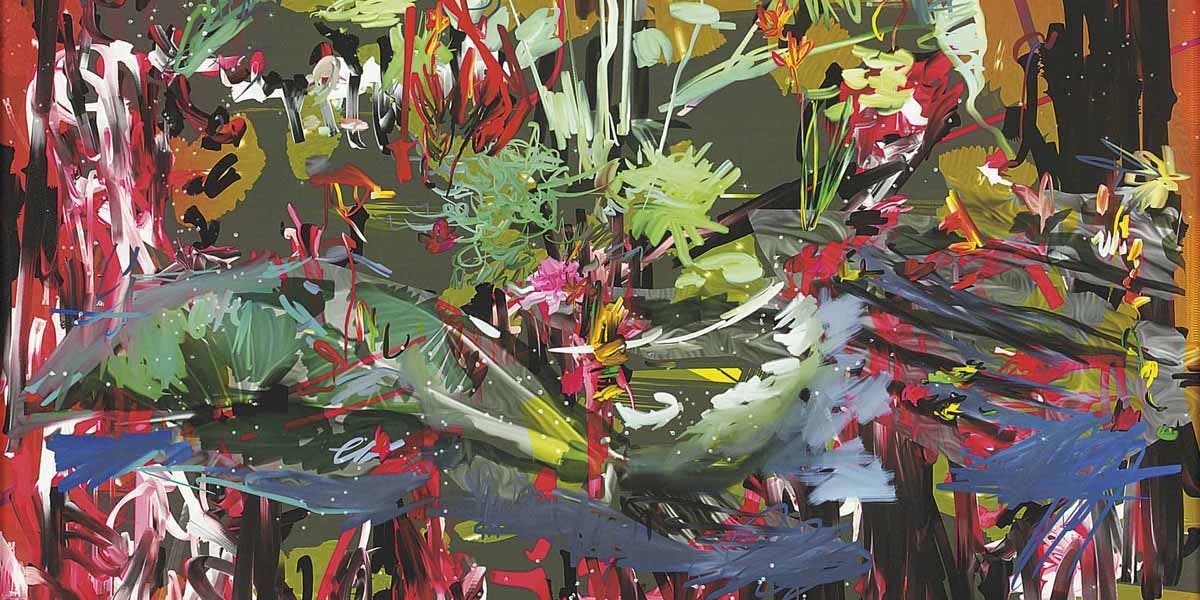
Onscreen impressionism
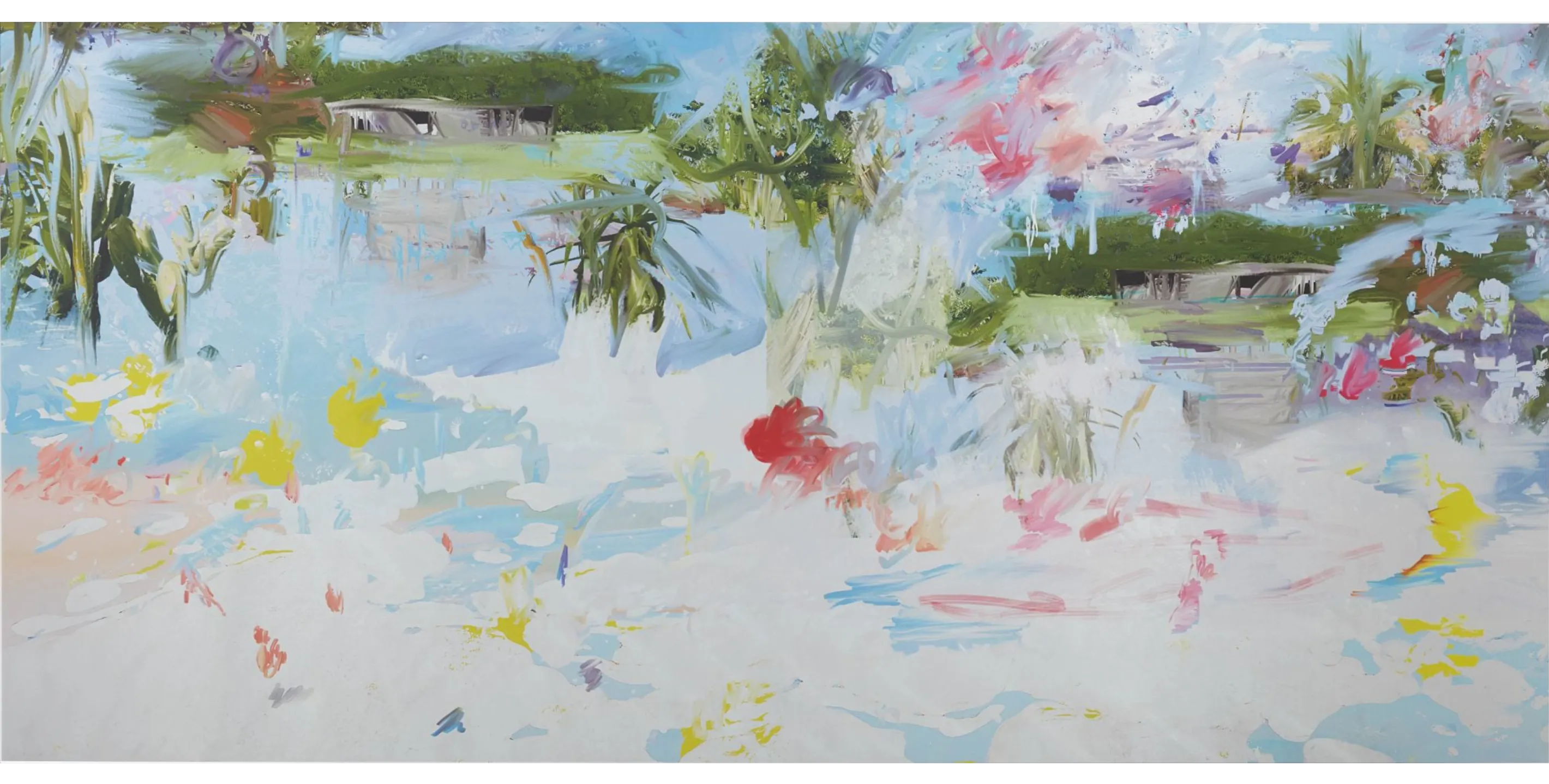
Despite her penchant for virtual pieces, Cortright has, in recent years, spawned more tangible ‘paintings’. Her digital creations, composed of various collages, superimpositions and assemblies of images sourced from what she refers to as the ‘mother file’, are constantly acquiring new textures as she experiments with plexiglass, aluminium, silk and linen. The artist frequently recycles the floral and landscape themes dear to the Impressionists, notably Claude Monet, whose influence – and brushwork – she acknowledges in her work.
See also: Marina Abramović: Not Just Any Body
But while the Impressionists favoured outdoor scenery, Cortright's approach is resolutely focused on the indoors and confined to computer screens and mobile-phone interfaces. Her digital painting sessions can last up to twelve hours in a row, reminiscent of performance artist Marina Abramović's long shifts.
Female representation
Themes of pornography and the representation of the female body are also prominent in the Californian creator's body of work. Niki, Lucy, Lola, Viola – a solo exhibition presented in 2015 at the Depart Foundation in Los Angeles – immersed its public in a universe of towering virtual strip-teasers developed using film industry software and animation techniques such as the green screen. Unlike classic cinematographic narration, Cortright used the visual and narrative codes of teenage net users to develop her stance on the exploitation and marketing of bodies.
See also: The 8 Top Selling Women in the YBA
Since 2014, Cortright and her husband, American artist Marc Horowitz, have collaborated to produce a series of YouTube videos for Stella McCartney highlighting the materials and motifs in the fashion designer's collection.
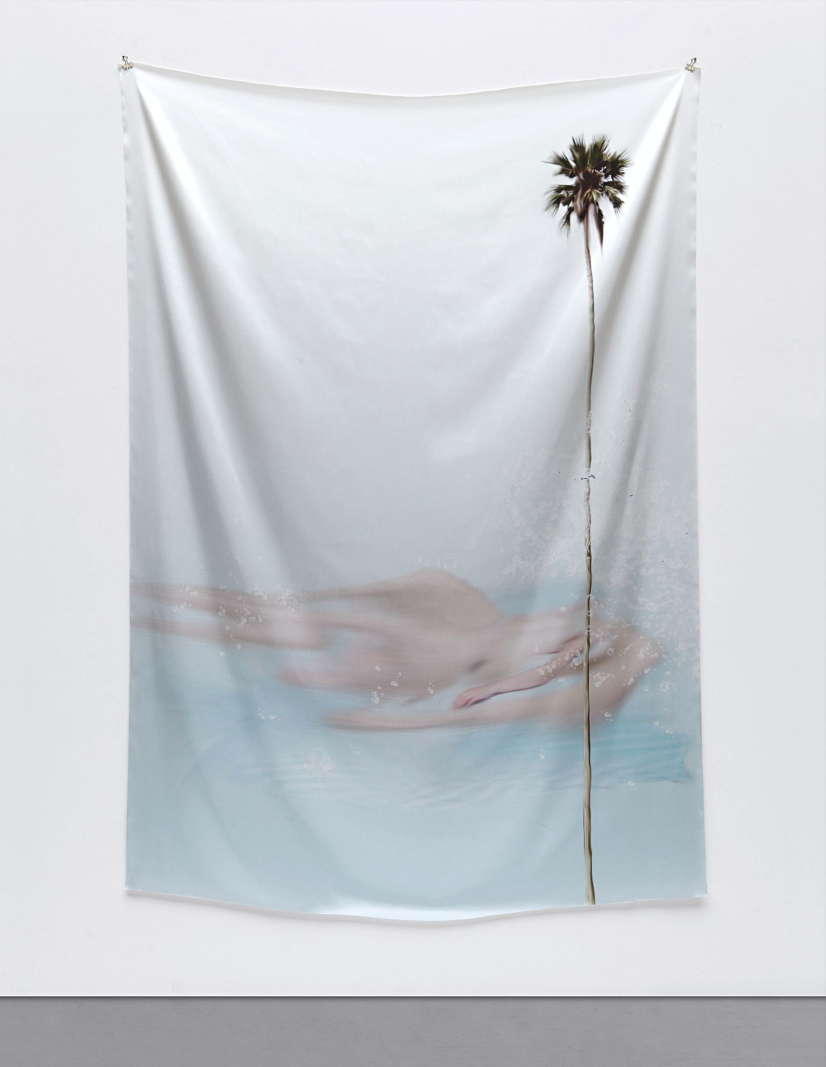
While digital art is only in its early stages, particularly in terms of monetisation, Cortright is already at an advantage, thanks to a network of militant gallerists capable of selling her works at over £40,000 a pop. Likewise, her work goes for tens of thousands on the auction market, and has been hailed in numerous international contemporary art events.