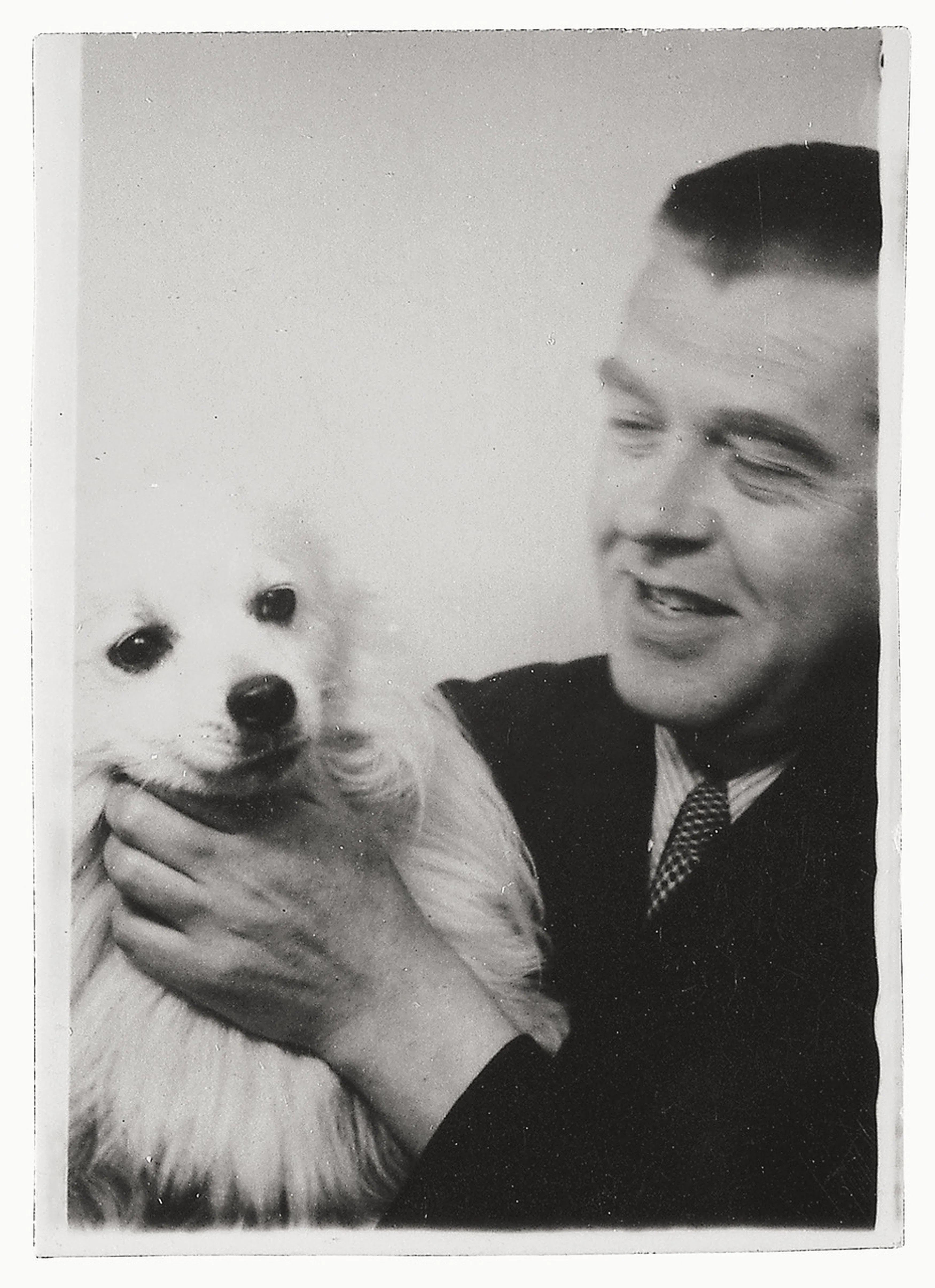
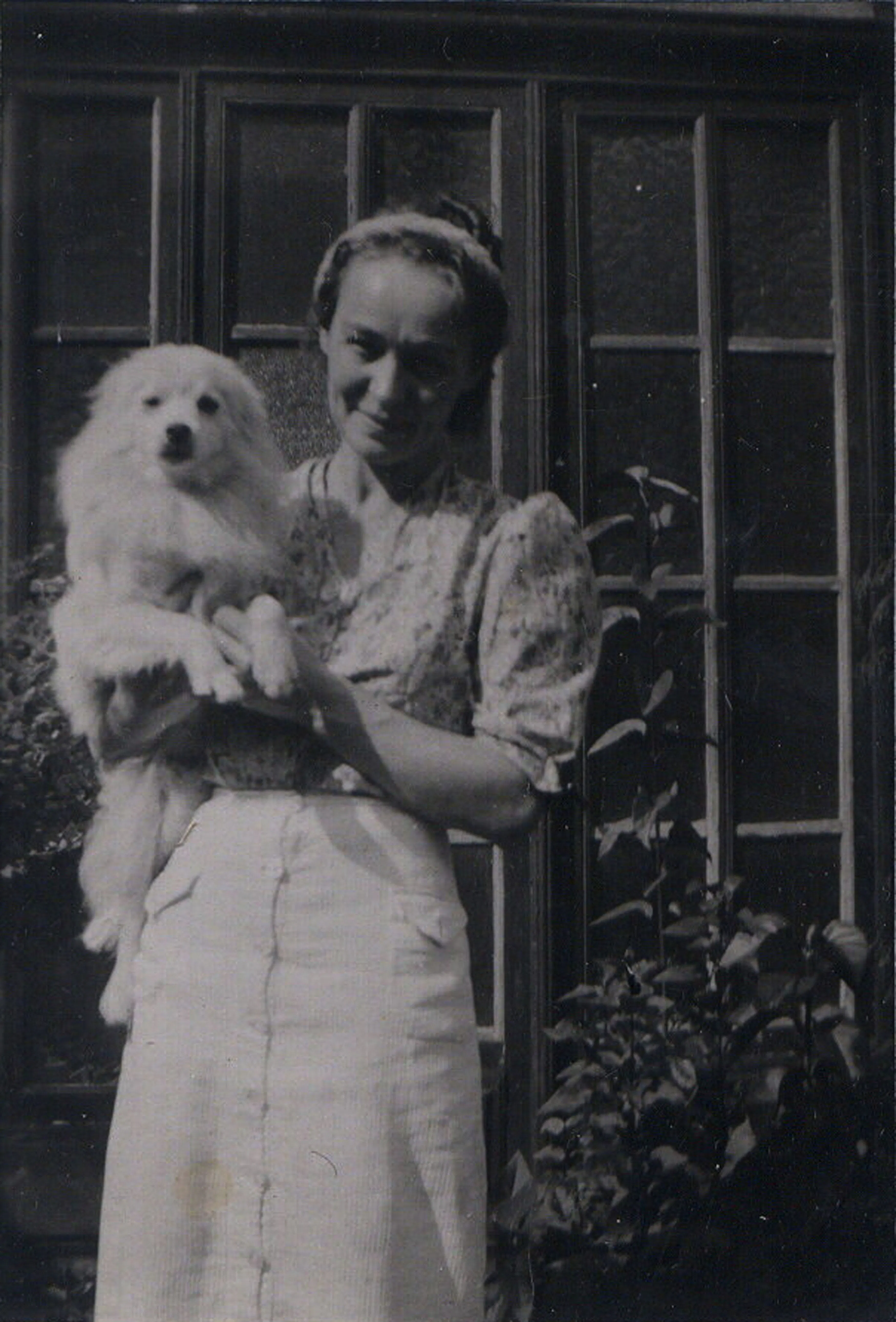
The strong bond between Georgette and René Magritte and their beloved dogs was well known to the public. Since their marriage in 1922, until Georgette's death in 1986, the two – who had no children – devoted themselves to their animals, with a special attachment to their Pomeranians: they had four, two named Loulou and two named Jackie.
In December 1965, for his retrospective at MoMA, Magritte made his first and only trip to the United States. His main concern was whether Loulou could travel by plane with him and stay at his hotel, so much so that he was ready to cancel the trip if the answer was negative. Belgian Airline made an exception and allowed Magritte to cross the Atlantic Ocean accompanied by his precious Loulou.
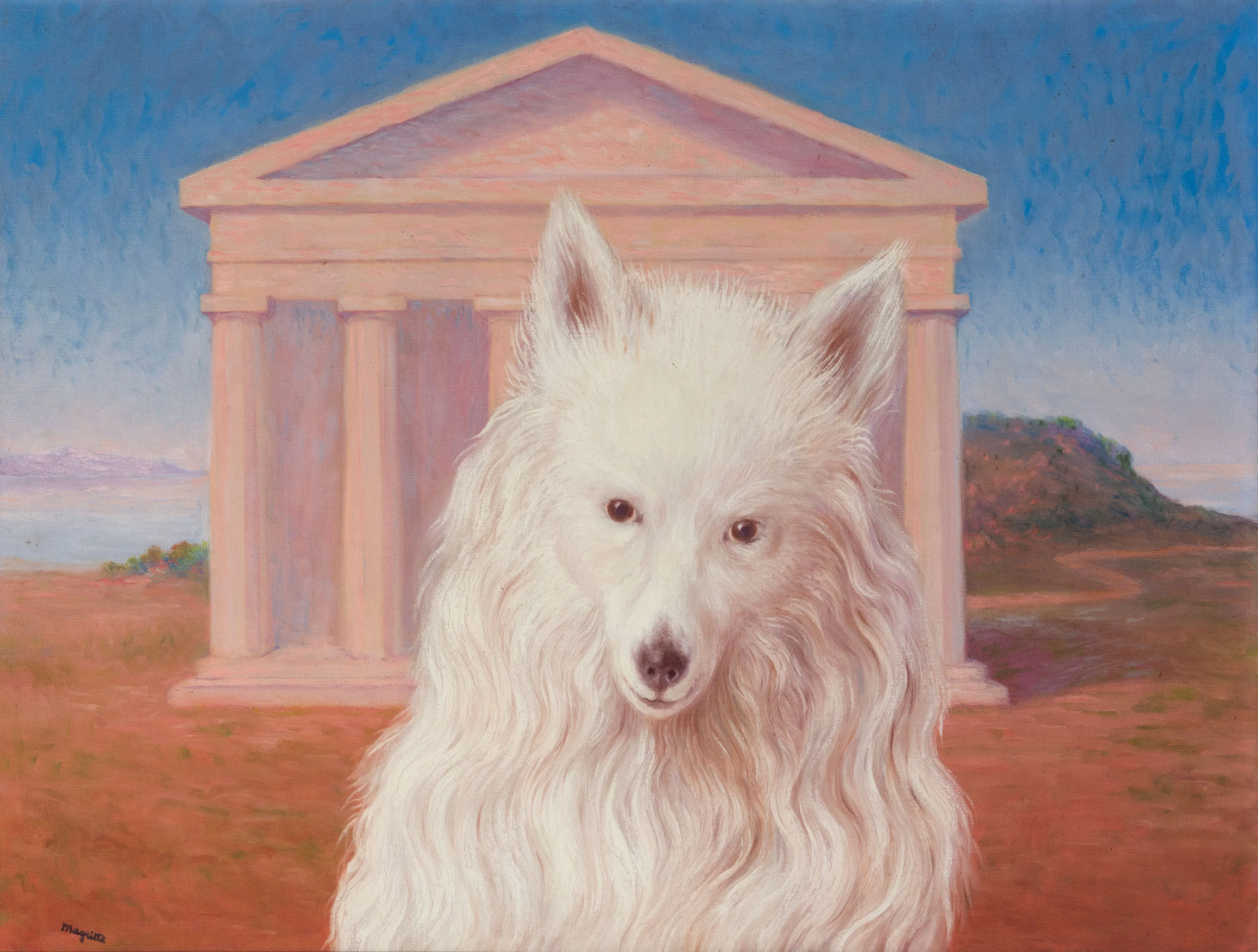
Le Civilisateur (The Civiliser), an oil on canvas created by Magritte in 1944, is a portrait of Jackie, the third Pomeranian adopted by the couple. The painting will be presented on 12 December by Wannenes, with an estimate between US$880,000-1.3 million (£672,000-£990,000). In the painting, the wise-looking pet scrutinises the viewer with his little black eyes and seems to be making a harsh judgment on the deadly madness observed during the war, all of whose atrocities had not yet been revealed.
"Portrayed half-length in front of the landscape of a Doric temple, in the painting Jackie takes the aura of an emperor rather than a guardian, a historical figure posing in front of an immutable decor," describes Xavier Canonne, a member of the expert committee of the Fondation Magritte in Brussels. "The ephemeral life of the dog is thus opposed to the perpetuity of the building, juxtaposing the whiteness of its mantle to the marble tinged with pink by the lights of dawn."
Much more than a painting of circumstance, Le Civilisateur has an impressionist touch that Magritte inserted into his practice during his 'Renoir period'. In 1943, at the height of the Second World War and in the darkest hours of occupied Belgium, Magritte read a book on Impressionism and fell in love with Renoir's warm tones, reinterpreting some of his paintings as The Great Bathers or The Shepherd. This period allowed him to avoid the gloom of everyday life during the Occupation and to tackle more serious subjects while continuing his pictorial research.
The theme of humanised animals entered Magritte's paintings in 1944: the horse in The Meteor, the pig in The Good Fortune, and the owl in The Somnambulist. In a letter dated June 1944 (accompanied by a sketch), Magritte confides to his friend, the Belgian surrealist writer and photographer Marcel Mariën: "It is curious, I think, to see the human figure... replaced by animals, which seem to better illustrate life. (The real life, different from that which statesmen build)."
Magritte made a second version of the work just two months later, in August 1944, in which his dog is shown in profile in front of a bright landscape. This second interpretation of The Civiliser shows Magritte abandoning the rectangular format of his paintings and adopting the vignette format.
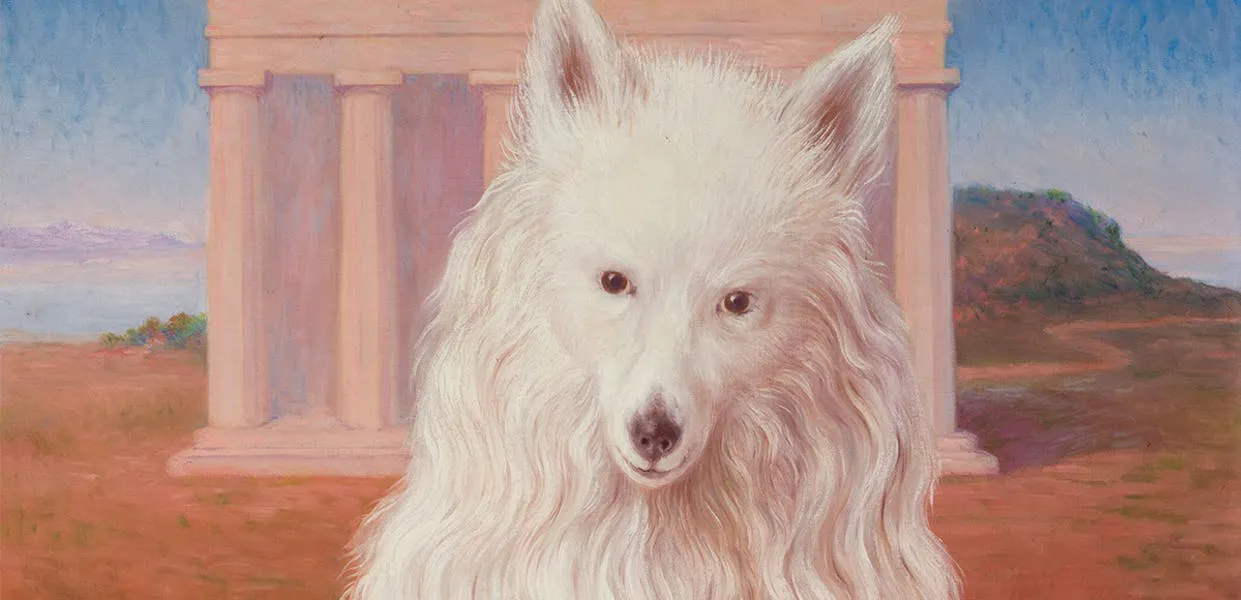
This 1944 masterpiece, made in a pivotal period in the history and career of Magritte, will be auctioned on 12 December next to an important work by Fernand Léger: Composition à la pipe, completed in 1928 while Léger met with Le Corbusier and Piet Mondrian to explore the relationship between art and architecture.
Works by Robert Rauschenberg, Alberto Burri, Vincenzo Agnetti and Giorgio de Chirico will also be represented.
Find all Wannenes lots on Barnebys now
This article is sponsored by Wannenes