Modern art is a period characterised by a new way of observing the world. Born from various technical and industrial revolutions, the notion of modernity emerged as early as 1850 (two decades before the rise of the Impressionists), but it took more than fifty years to fully integrate into the world of art.
It is precisely this key period in history that the auction house Rossini will highlight during a remarkable sale on 6 April. This sale of 162 lots will be mainly dedicated to the production of artists from the end of the nineteenth century to the beginning of the twentieth century, with several works dated between 1910 and 1930. We thus find big names such as Gen Paul, Théo van Rysselberghe, Armand Guillaumin, Édouard Drouot and, of course, the one who promoted modern art after Édouard Manet (and alongside Monet and Sisley), the great Pierre-Auguste Renoir.
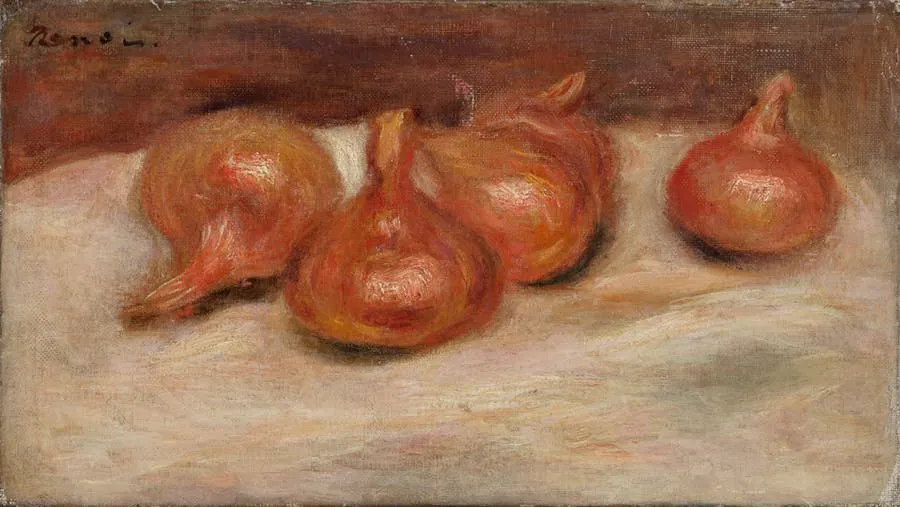
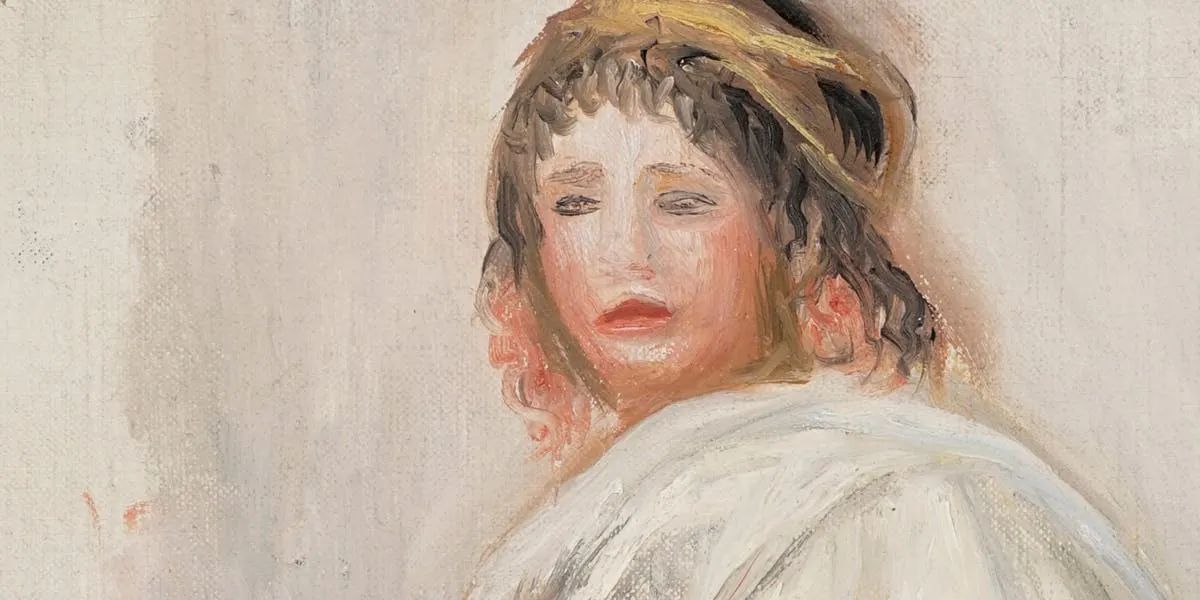
The master Pierre-Auguste Renoir, star of the session, mainly distinguished himself in the art of portraiture and the female nude, but touched almost all genres, from landscapes to still lifes, including seascapes. Among the two works by Renoir that appear in the catalogue, there is a still life from 1916-17 illustrating onions, placed on what seems to be a light linen. Far from his early still lifes marked by the influence of Gustave Courbet, this oil on canvas was produced at the end of his life and bears witness to the more shimmering tones and more fluid pictorial material that characterise his artistic maturity.
The second work that will be presented focuses on a completely different genre, that of the creation of sets, with the world of theater as a backdrop. In 1895, Paul Gallimard, friend of the Impressionists and art collector, commissioned Renoir to decorate his houses in Paris and Normandy. Gallimard being the director of the Théâtre des Variétés in Paris, Renoir's friend Mounet-Sully suggested he created frescos on the theme of Oedipus.
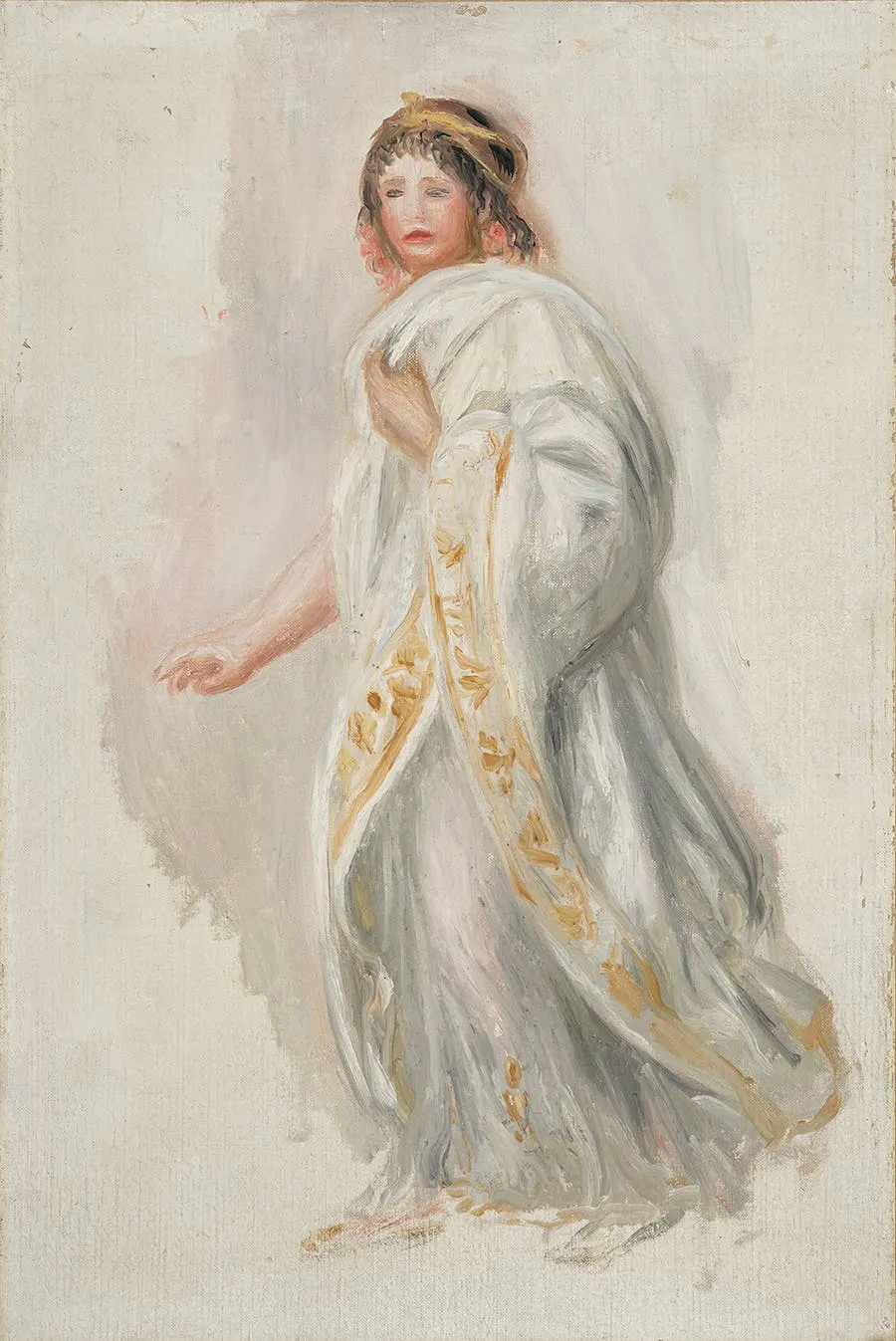
Few Impressionists have tried this difficult exercise, and even fewer on a classic theme like that of Sophocles' tragedy. Nevertheless, Renoir delivered remarkable works in a fresco style, intended for the establishment of the general composition and the individual study of the figures. The work in the sale, one of the finished paintings that were to adorn architectural vertical panels, features a draped female figure walking to the left. Although composed similarly to the figures of Oedipus and Jocasta, this Roman woman displays a powerful and theatrical attitude, turning her noble face directly towards the viewer.
Gallimard ultimately did not use his friend Renoir's decorations, and the latter retained most of the paintings and preparatory studies for the project. This Roman woman, treated with virtuosity in a few brushstrokes, subsequently belonged to the great art dealers Ambroise Vollard and Jean Dauberville.
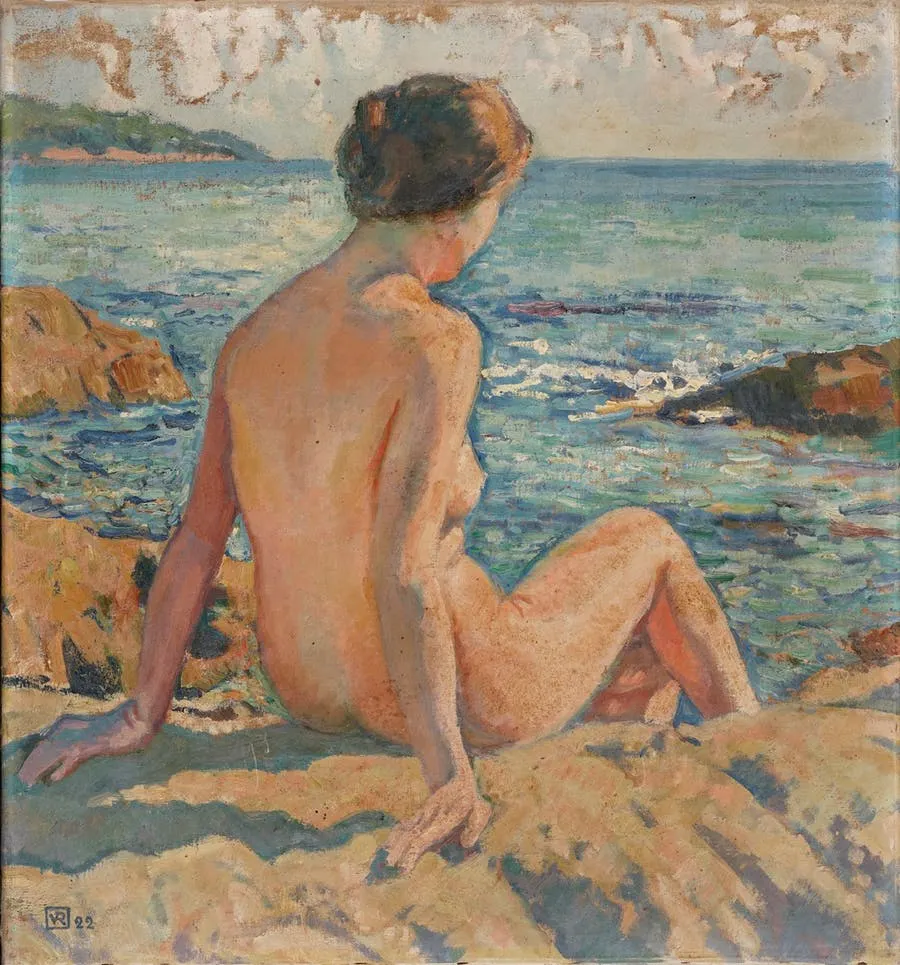
A member of Post-Impressionism and Divisionism in Belgium, Théo Van Rysselberghe appears in the catalogue with Bather on the Rocks, a 1922 canvas in shimmering colours. This painting is one of the many female nudes produced by the artist, a genre that became his favourite theme from 1910. Unlike some of his contemporaries, his nudes seem devoid of eroticism and will even be defined by the writer André Gide as "hygienic nudes".
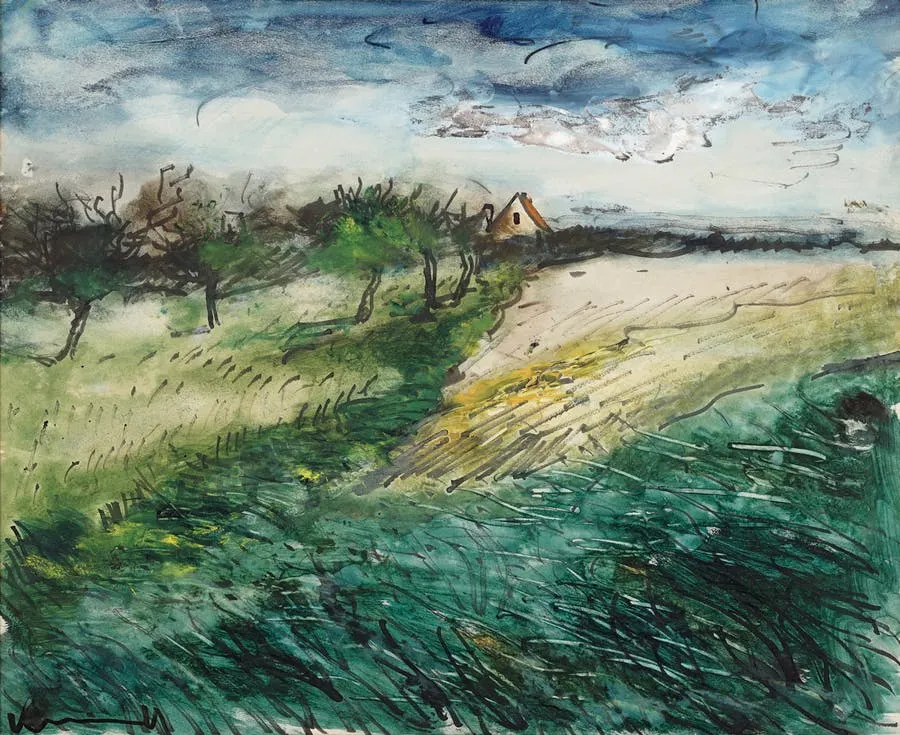
Representing a slightly later current of modern art, Fauvism, Maurice de Vlaminck joins the selection with Field and orchard, a gouache on paper that one might think characteristic of his production after 1907. Indeed, it was during this pivotal year that the artist discovered Paul Cézanne (who profoundly influenced his graphic design) and began to paint many landscapes with stormy and tormented skies, devoid of the warm colours of his early days.
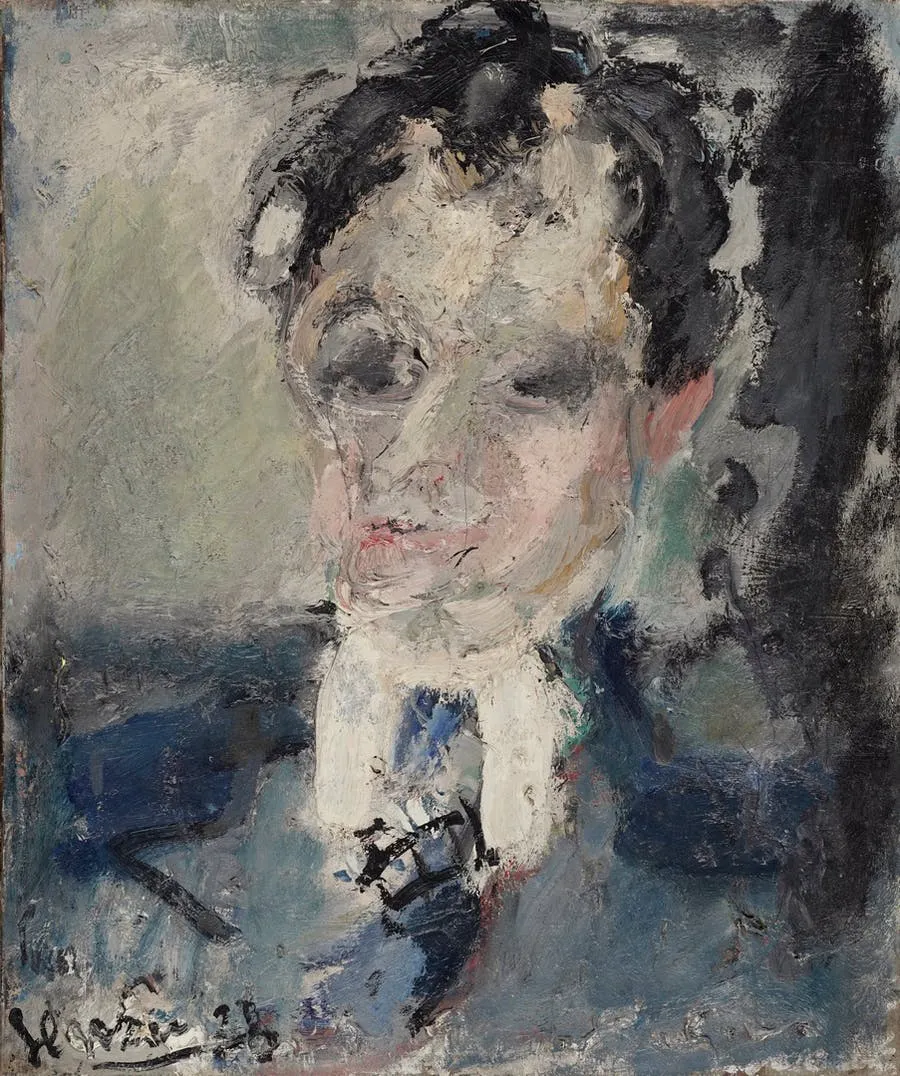
The sale will also include a portrait of Paul Colin by the expressionist Eugène Paul, also known as Gen Paul. Self-taught painter of landscapes and portraits, Gen Paul very early asserted a vigorous style and an unusual dynamism. He has often been called an innovative painter, especially for his fractured, abstract style, which can be admired in this portrait from 1928.
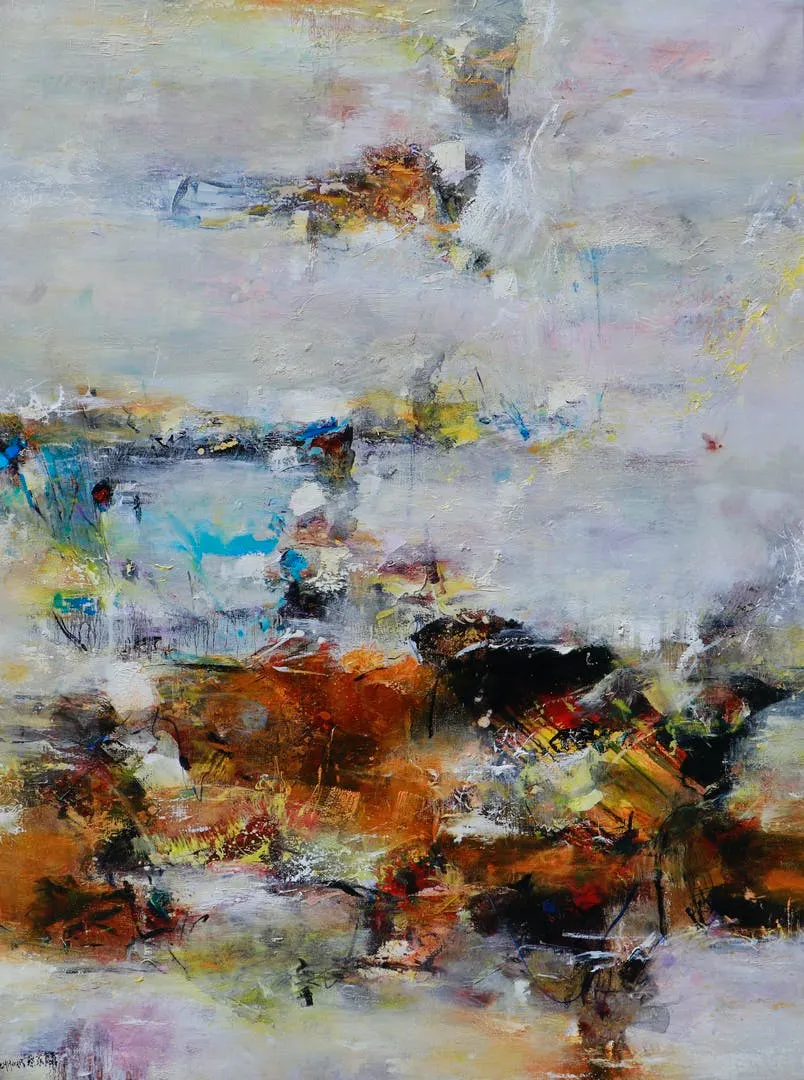
The more contemporary side of the sale will be led by a work by Kaloon Chhour, an oil on canvas entitled RPA 31, which testifies to the artist's maturity through his use of warm colours and his combination of Impressionist and Asian influences.
This catalogue compiled under the prism of modern art will feature many renowned painters and will be presented on 6 April at Rossini in Paris.