Drawing, delicate and intimate, is at the root of creation. It initiates a creative exploration, a deep reflection that’s perceived as the most personal gesture of an artist. If this truth applies to the field of fine arts, it also finds its full meaning in that of fine jewellery.
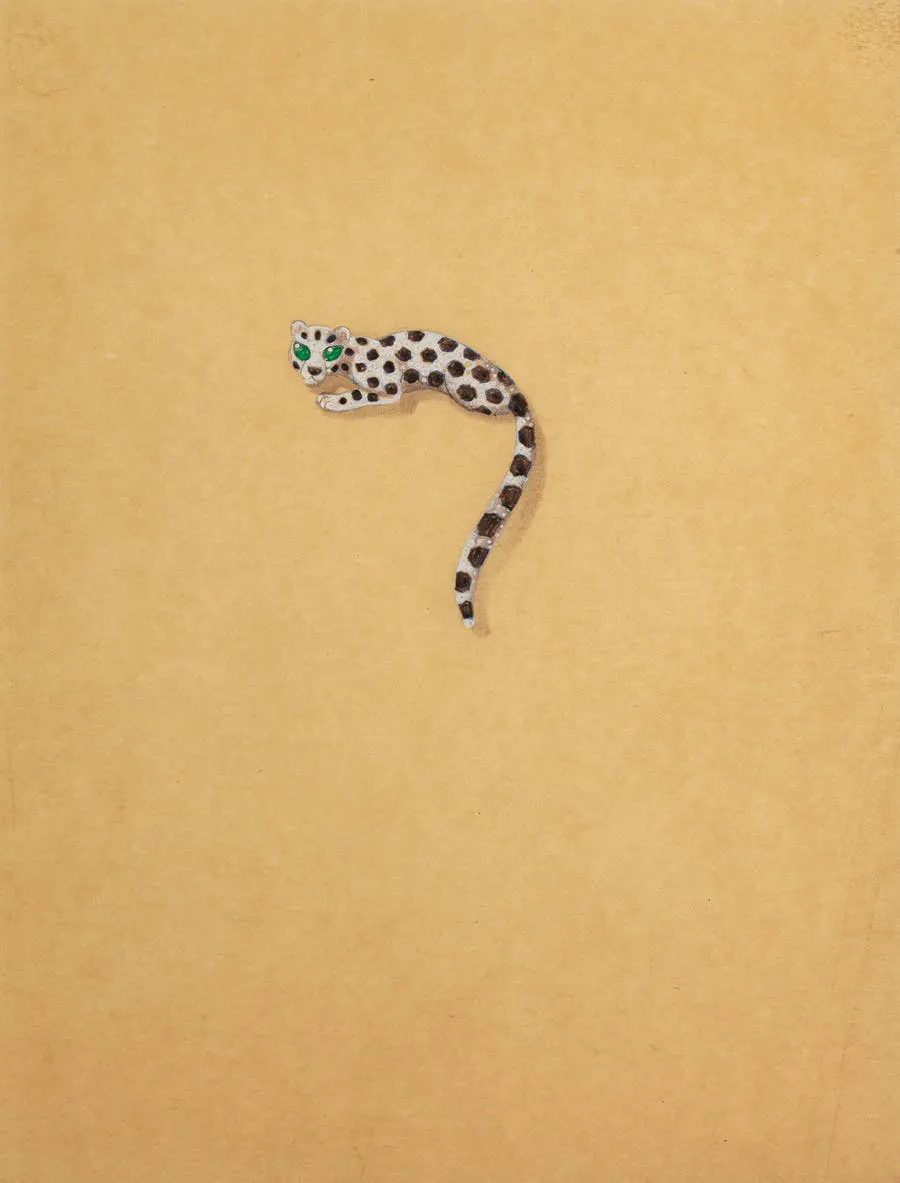
The first known jewellery designs date back to the Renaissance and were made by artists such as Pisanello or Benvenuto Cellini. Indeed, the gouache drawing is the first step in the process of creating jewellery. It is that which prefigures the final piece, reflecting the textures, colours and tiny details that will be infused into it. Realised at a life-size, it is precise and emphasises the volumes of the piece, thanks to a skilful use of chiaroscuro.
This type of sketch is “generally carried out on coloured paper to bring out the gems better, and, by convention, the light comes from the upper left corner", specifies Guillaume Glorieux in the book Les Arts Joailliers (editions Gallimard/L’école des Arts Joailliers, Paris 2019). Although this type of drawing acts as a document demonstrating the stages in the making of a piece of jewellery, it is also a work of art in itself.
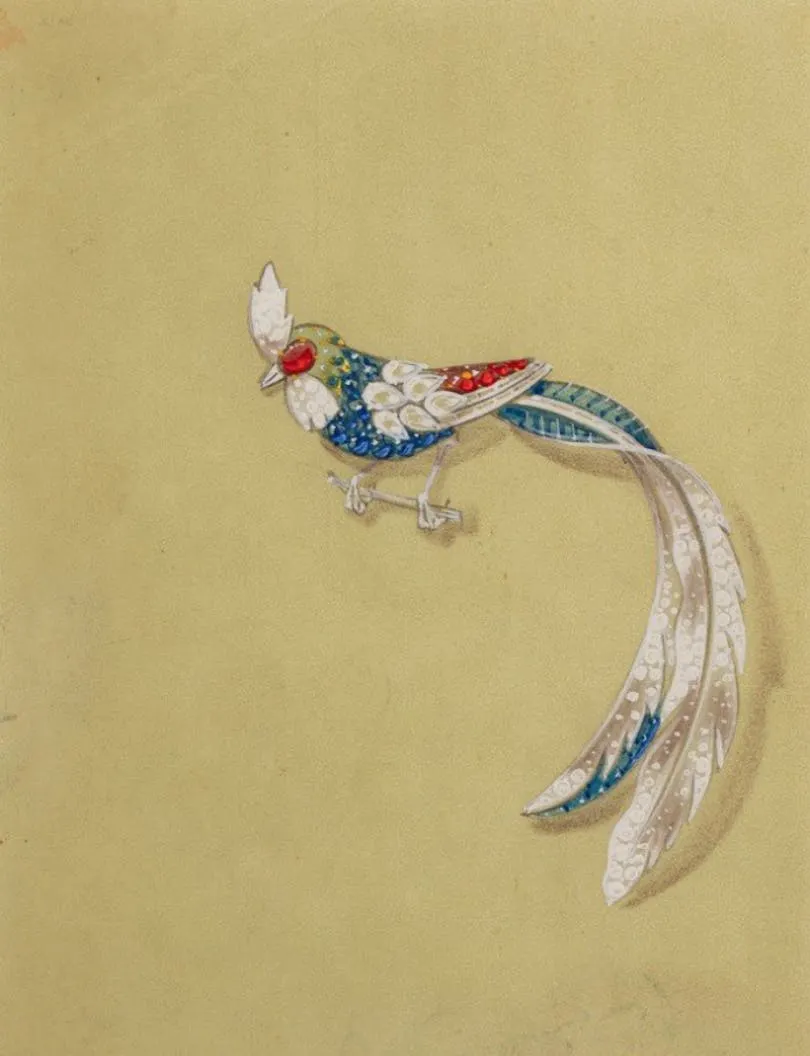
As if to initiate the sale of the 200 or so jewels in its auction catalogue, the French auction house Rossini takes us into the world of jewellery design with a selection of 33 gouache sketches of jewels, probably made for Cartier in the 1950s and ‘60s. The works, as in most of the major jewellery houses today, were produced anonymously and use Cartier's most famous motifs, such as the panther, other felines and even the birds of paradise.
We thus find a design for a gold ring centred with a yellow stone, a design for a panther brooch in white gold, and sketches of felines with cabochon ruby eyes. So many works that lift the veil on the design of pieces on one of the most famous brands in the world.

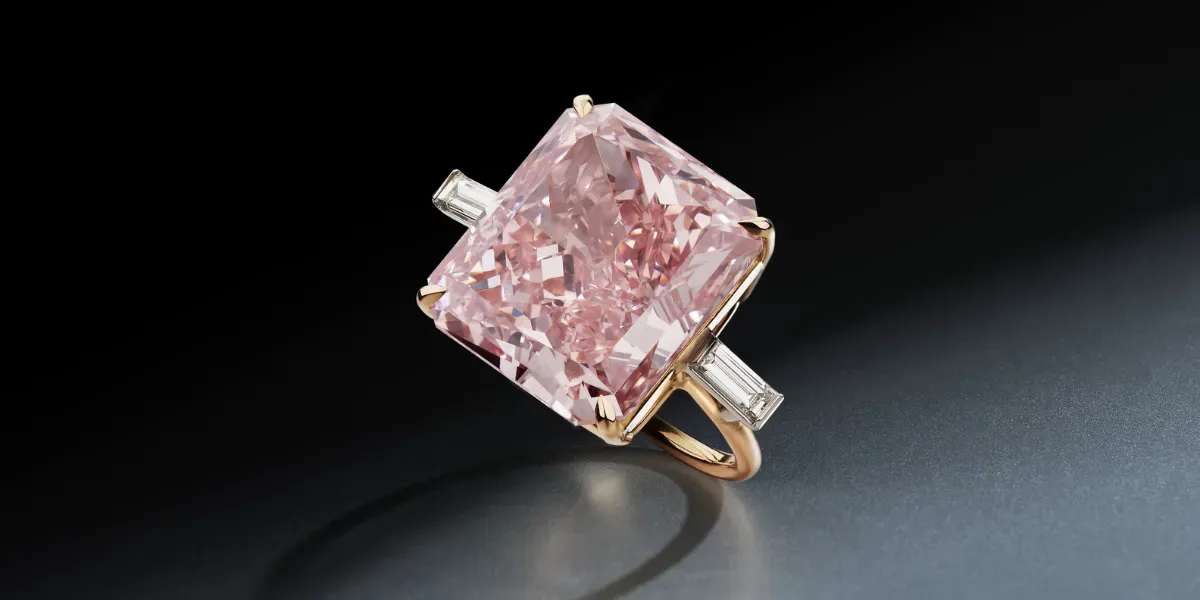
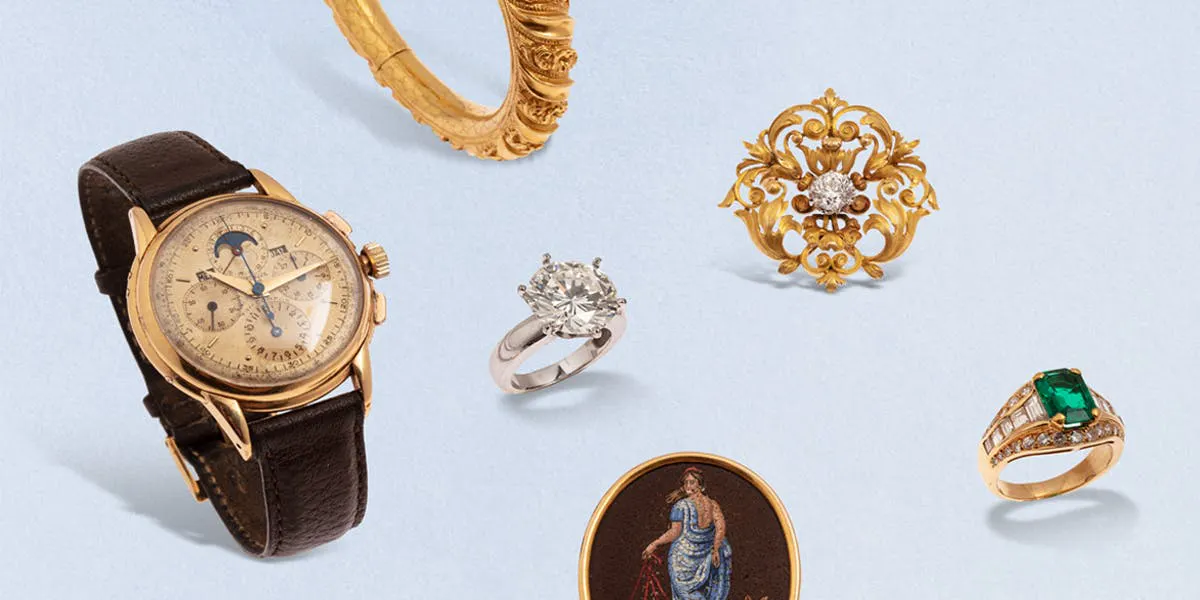
A fine selection of diamonds set in rings, necklaces and bracelets will succeed the body of sketches, with, in particular, some Art Deco creations from the 1920s-30s and more contemporary works. Among them is an 18K white-gold solitaire ring adorned with a 9.01 carat brilliant-cut diamond, which is accompanied by an LFG gradation report indicating its colour, J, and its SI2 purity.
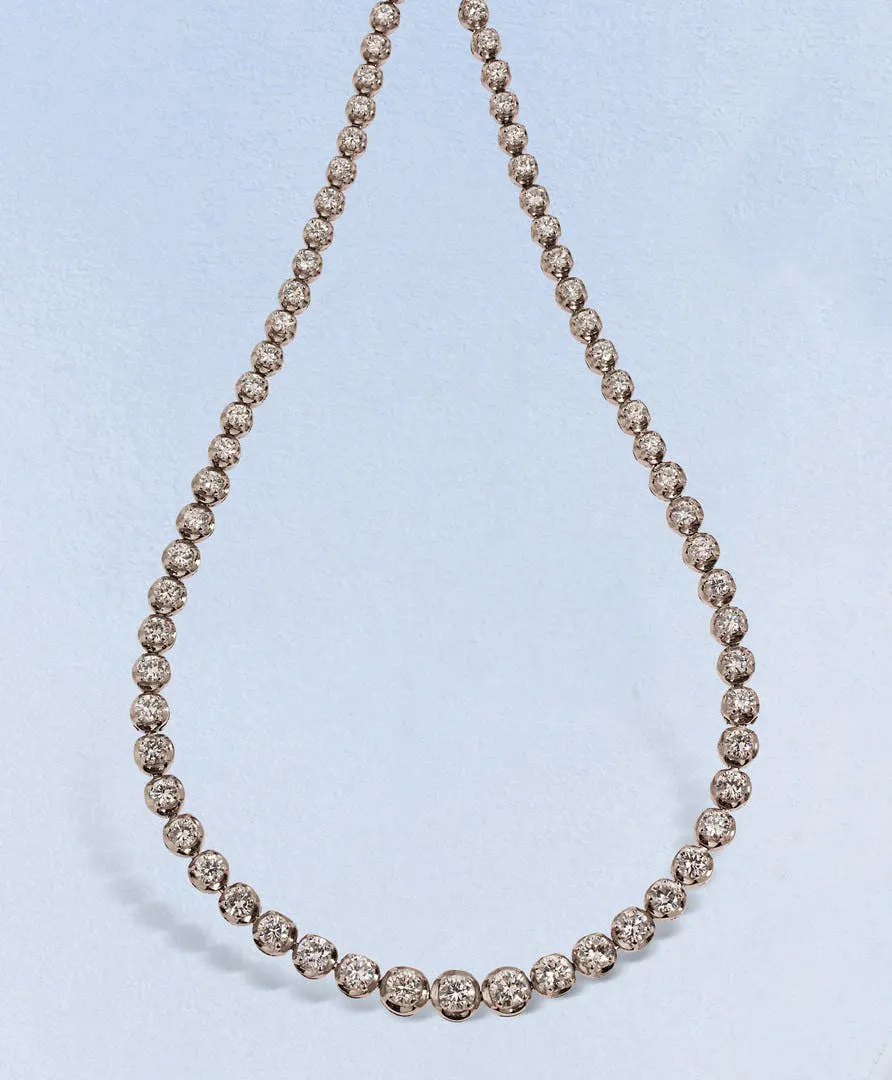
We also find a ‘river’ necklace in 18K white gold, set with brilliant-cut diamonds weighing approximately 20 carats. The necklace is hinged, bears an eagle's head hallmark and has a double safety ratchet clasp.
Some designer jewellery, including pieces by Pierre Sterlé and Zolotas, enhance the sale. Designer jewellery is a concept held apart in the jewellery world. Between a craft object and a work of art, they bear witness to an artistic vision that goes beyond jewellery or goldsmithing.
This kind of jewellery designer is perceived as a craftsman of luxury and many people have, through their inimitable creations, revolutionised the wearing of jewellery. Often more innovative, designer jewellery sometimes requires techniques that do not relate to traditional jewellery.
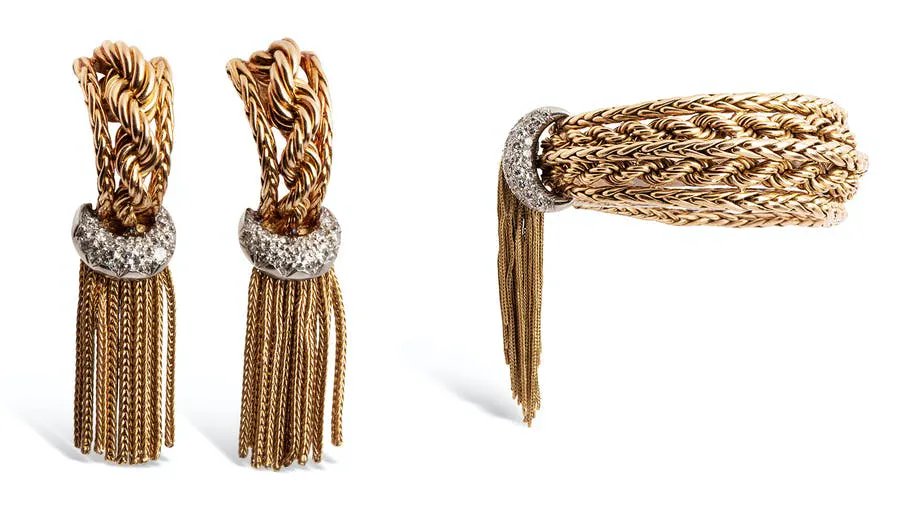
Among the signed models in the catalogue, a half-set by Pierre Sterlé stands out. Sterlé was nicknamed the ‘couturier de la joaillerie’ (jewellery designer), an innovative jeweller with a style easily recognisable for his themes, treatment and technical mastery. Unlike the arabesques and opulent geometric shapes observed in the traditional jewellery of the time (mid-twentieth century), Sterlé favoured an asymmetrical and baroque treatment, accentuated by mixtures of still unseen materials, such as the combination of precious stones and semi-precious stones, or the use of shell.
The half-set shown here includes a flexible platinum and 18K yellow-gold bangle and a pair of matching clip-system earrings, dated c. 1950. The pieces feature dropped rows of alternating palm and rope chain chains, a crescent-shaped pattern paved with diamonds and a fringe of fine column-link chains.
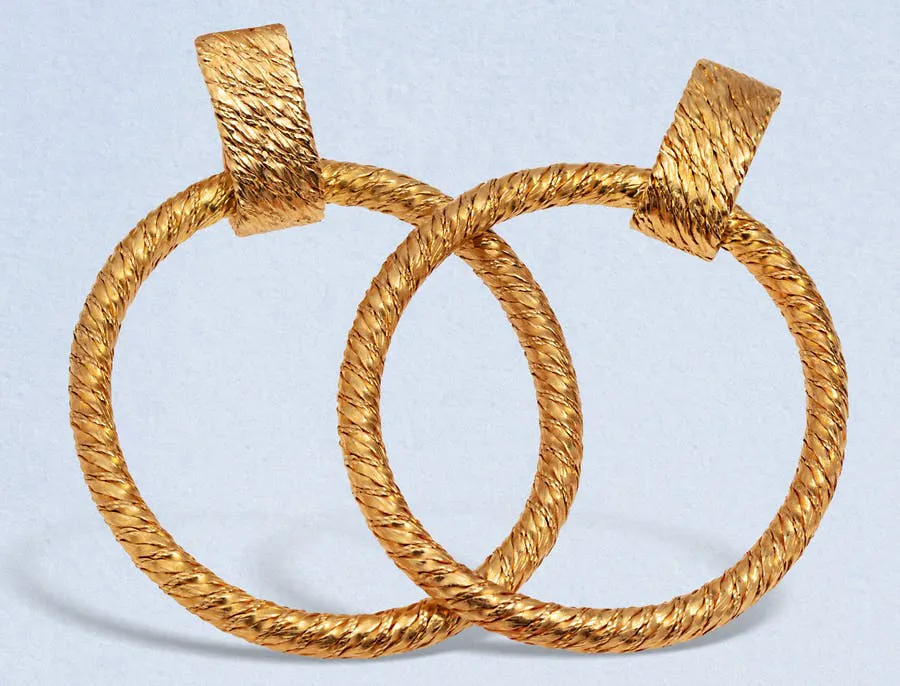
A pair of large yellow gold hoops by Jacques Lenfant, son of the jeweller Georges Lenfant, is also available. These earrings are part of the ‘paillette’ collection, a bestseller by Jacques Lenfant, the pieces of which have a texture that is both granite and shiny. This rendering is obtained from a Milanese fabric rolled around a mandrel, then textured, testifying to the technical research and the formal novelty which formed the reputation of the creator.
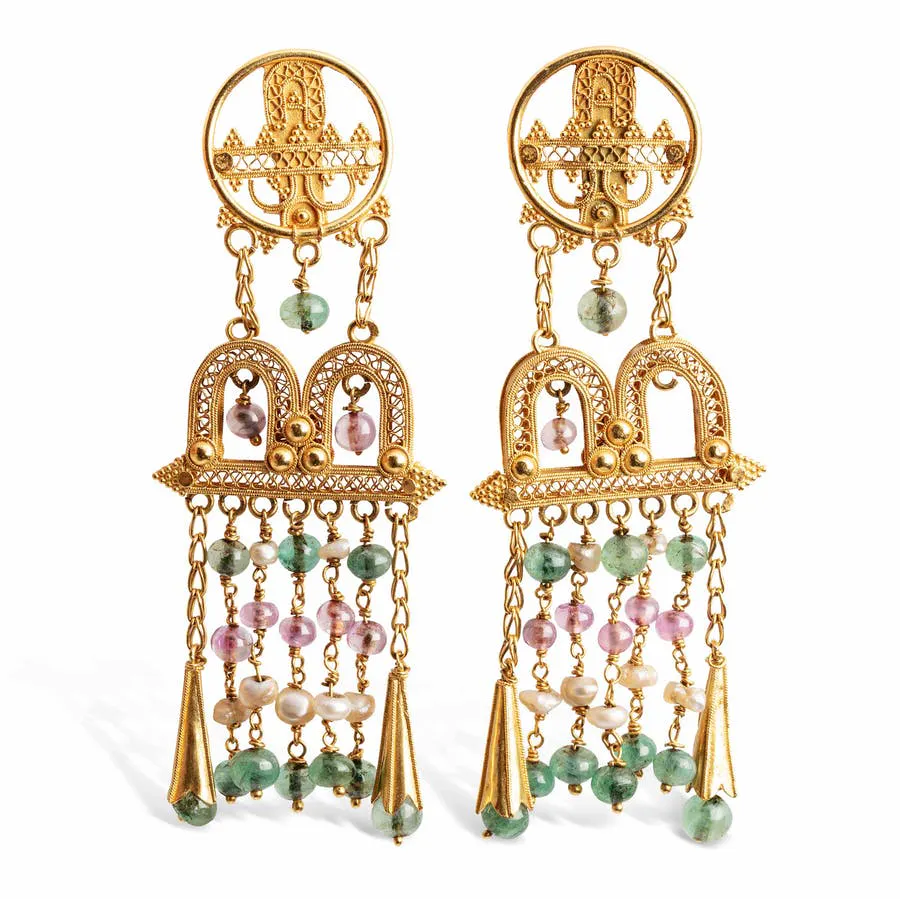
A short tour of Athens brings us to the Zolotas house and this pair of large articulated earrings. Founded in 1895 by Efthimios Zolotas, the brand seduced the Athenian high society with creations inspired by the artistic heritage of the country. Zolotas' fame was cemented by an order from the Greek royal family in 1910, for adornments to be worn at the coronation of George V of England. The house has known many famous ambassadors, such as Romy Schneider, Maria Callas and Elizabeth Taylor.
A model inspired by Byzantine jewellery, these pendant earrings were made around 1960 and consist of yellow gold, white pearls, emerald balls and pink sapphires.
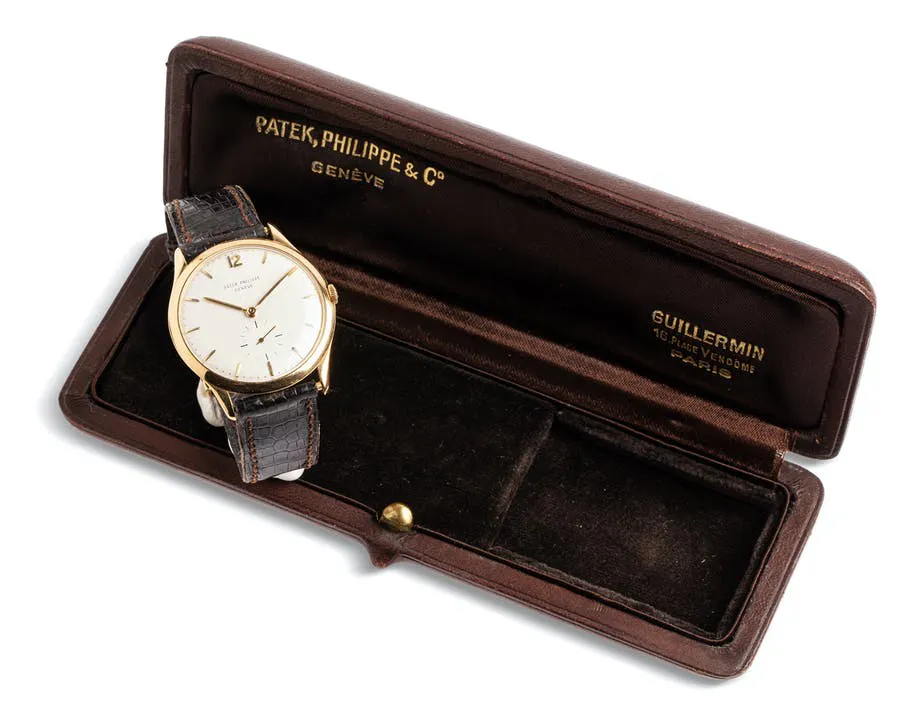
Watches, which can be found at the end of the auction, is led by a yellow-gold Patek Philippe wristwatch Ref. 2557. Sold by the Guillermin house in Paris, the model features a case back with snap closure, a white dial and a railroad type minuterie.
The sale will take place in the afternoon of 21 March, after an auction dedicated to stock market gold in the morning. The showcase will be open to the public on 30 March, subject to continued government clearance. For all the information relating to the health security measures in force, we invite you to consult the auction house's website.