On 15 May 2019, Robert Rauschenberg’s silkscreen collage Buffalo II went up for auction at Christie’s Post-War and Contemporary Art Evening Sale in New York. Estimated at $50 to $70 million, it became the second most expensive work of the night after Jeff Koons’ Rabbit. It also set a record for the artist, selling for $88,805,000.
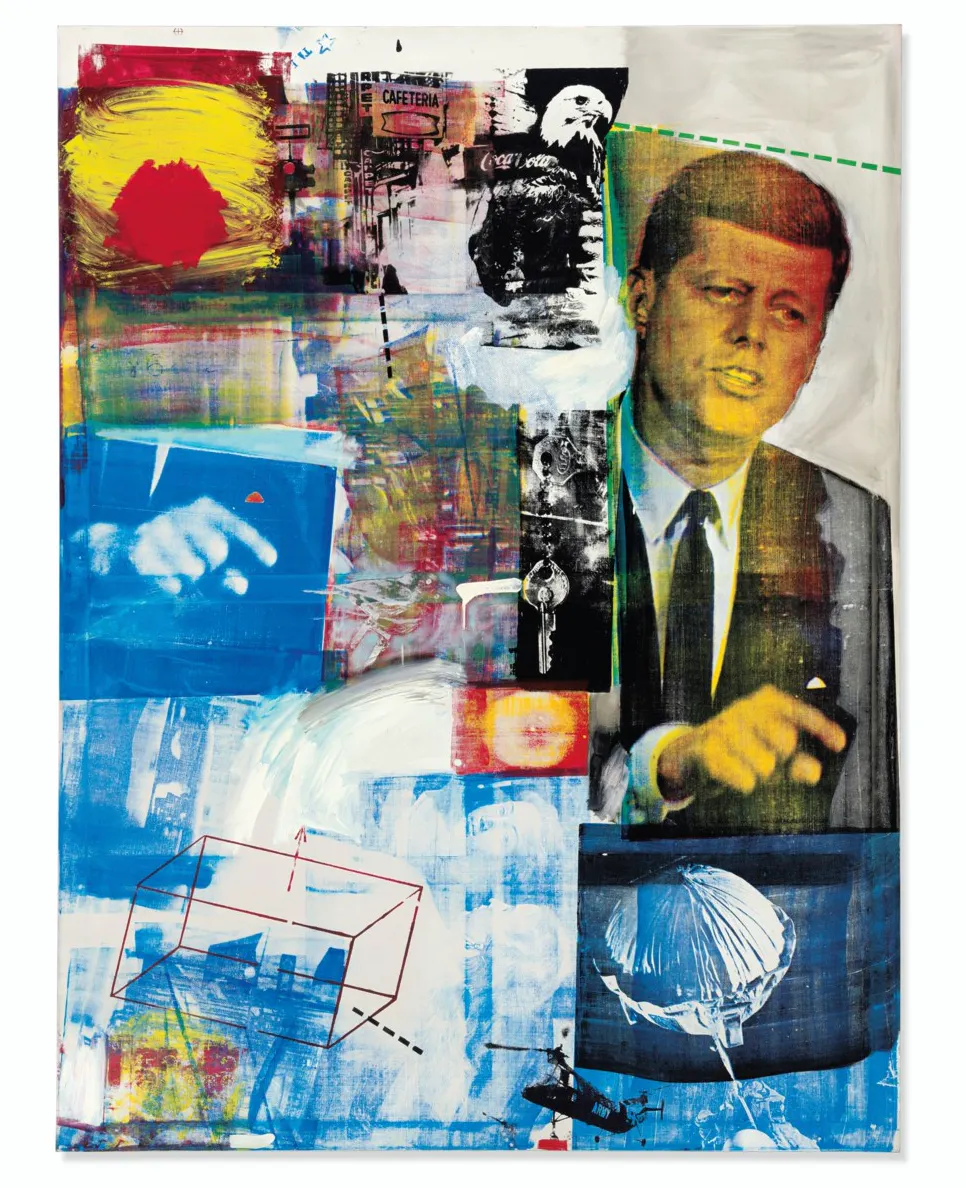
Rauschenberg created Buffalo II in 1964 and presented it that same year at the 32nd Venice Biennale, where he became one of the first American artists to receive the event’s gold medal. Screen printing was still new to him at the time. He had begun using it only in October 1962 after encountering the process in Andy Warhol’s studio. Unlike Warhol, he did not pursue repetition. Instead, he repeatedly recombined about fifty stencils based on newspaper clippings and his own photographs and paired them with painted areas. After receiving the gold medal, he instructed his assistant in New York to destroy the stencils, stating that he could not go any further with the technique.
See also: The 10 Most Expensive Artworks of 2019
Rauschenberg was born Milton Ernest Rauschenberg on October 22, 1925, in Port Arthur, Texas. As a child, he painted in his bedroom and designed costumes and sets for school theatre productions. He later dropped out of pharmacology studies and served two years in the United States Navy before enrolling at the Kansas City Art Institute. In 1948, he went to Paris to study at the Académie Julian, where he met the artist Susan Weil. There, he realised that the prevailing trend of non-representational painting did not interest him.
See also: Jackson Pollock: Drawing the Unconscious
Rauschenberg and Weil returned to the United States and enrolled at Black Mountain College in North Carolina, then known for its progressive approach. His teacher was former Bauhaus professor Josef Albers, whose strict methods he disliked but from whom he learned important fundamentals. At the college, he also experimented with different artistic techniques.
See also: Josef Albers: Thinking Outside the Box
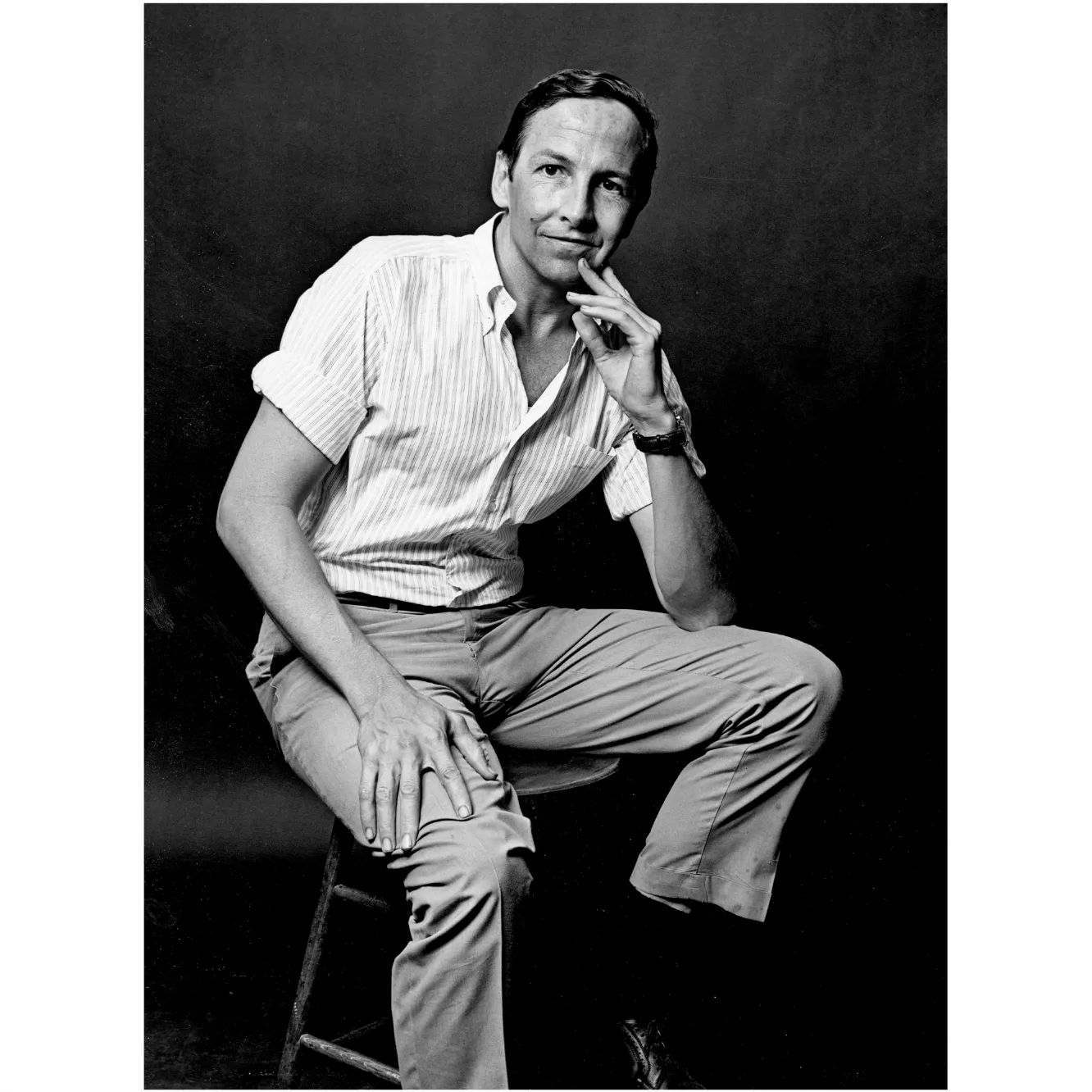
In the fall of 1949, Rauschenberg and Weil moved to New York to study at the Art Students League. They married in 1950, but the marriage ended two years later despite the birth of their son, Christopher. In 1951, Rauschenberg had a solo exhibition at the Betty Parsons Gallery, where none of the works sold. The exhibition, however, still proved valuable. He met the composer John Cage, who later became an important collaborator, and Leo Castelli, who became his dealer in 1957.
In 1952 and 1953, Rauschenberg traveled through Europe and North Africa with the artist Cy Twombly, whom he had met and fallen in love with at the Art Students League. During the trip he took numerous photographs and combined them with found objects and souvenirs to create collages, which he was able to sell.
See also: Paul Klee: 6 Facts to Know
Early on, Rauschenberg worked to integrate people and their surroundings into his art. Together with Weil, he created life-size cyanotypes by having friends pose on light-sensitive paper so their outlines could be captured by light. This led to the White Paintings in 1951, whose plain surfaces reflected light and shadow in the room. They were followed by the Black Paintings, altered with newspaper fragments, and then by the Red Paintings, which he considered the most challenging.
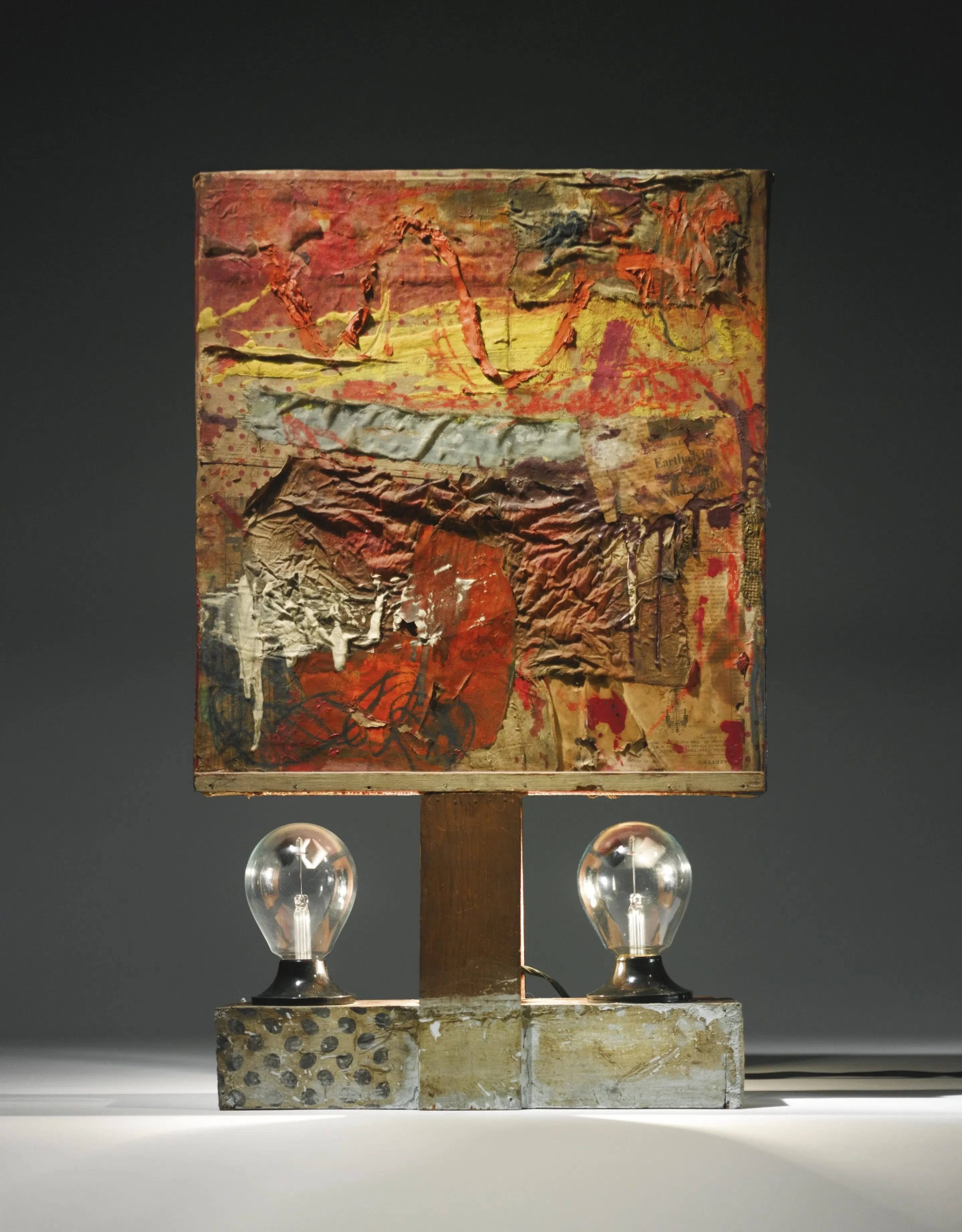
In 1953, Rauschenberg met Jasper Johns. They became partners until 1961, living and working in neighbouring studios. Both distanced themselves from the Abstract Expressionists who dominated the art scene, and both worked in an environment that criminalised homosexuality. They influenced each other’s work. Rauschenberg painted a small part of Johns’ Flag (1954–55), while Johns selected the frame for Rauschenberg’s Erased de Kooning Drawing (1953). Willem de Kooning had agreed to provide a drawing for the project, understanding Rauschenberg’s intention to create a new work by erasing an existing one.
See also: Top 6 Iconic American Paintings
Rauschenberg moved from the Red Paintings into the Combines by incorporating everyday objects and expanding his color palette. The Combines are three-dimensional works that blur the boundary between painting and sculpture and broaden the definition of art. He considered Untitled (1954), which includes a stuffed chicken, to be his first true Combine.
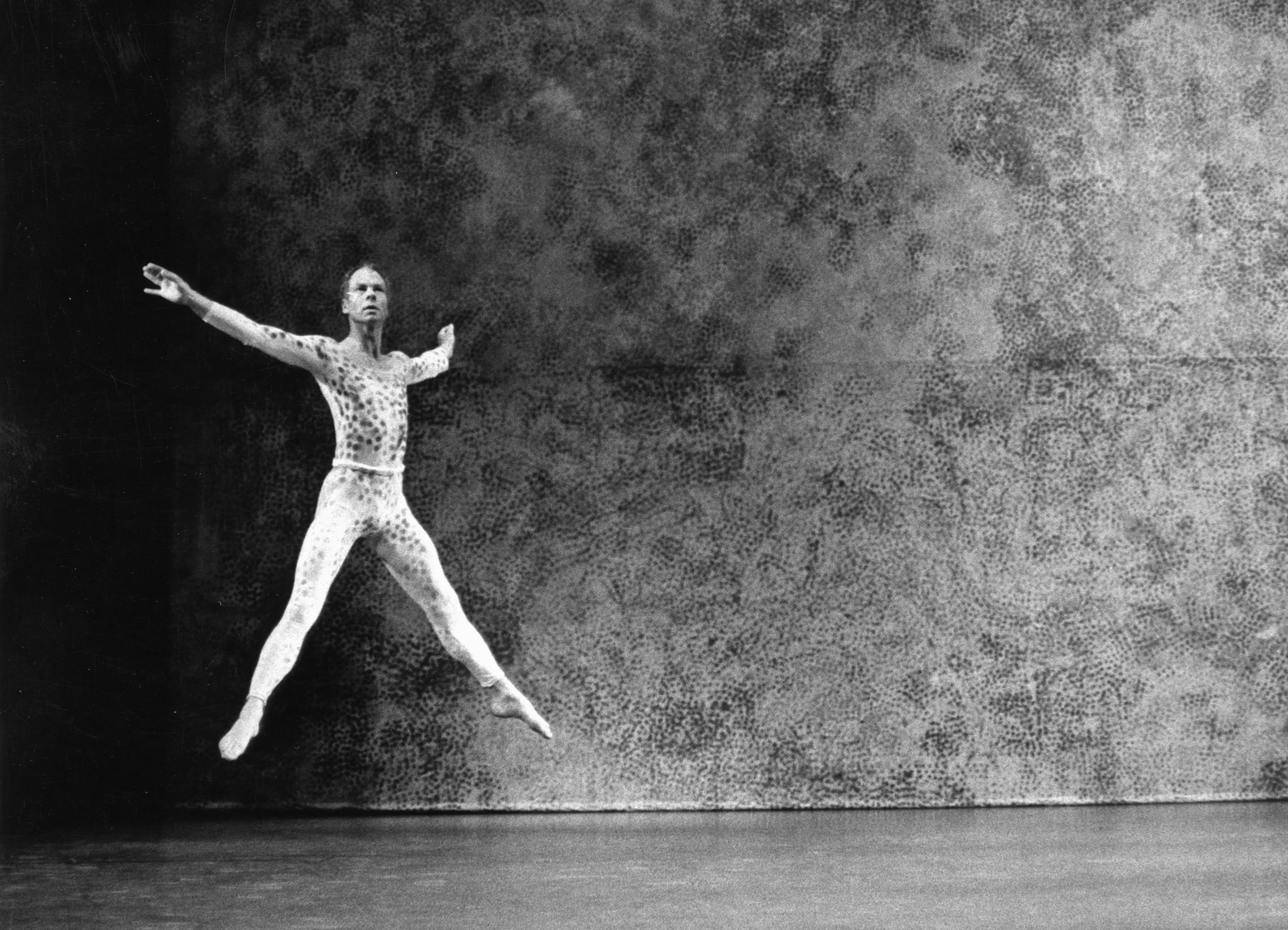
One early Combine, Minutiae (1954), was created as a stage set for the Merce Cunningham Dance Company. Cunningham, a central figure in contemporary dance, was the partner of John Cage. Rauschenberg, Cage, and Cunningham later worked together on numerous happenings and performances.
See also: Collecting Opera and Ballet in Art
In 1954, the Charles Egan Gallery held a solo exhibition of Rauschenberg’s Red Paintings and Combines. In 1958, Leo Castelli held another exhibition devoted entirely to the Combines. These exhibitions were not financial successes. Castelli was the only buyer in 1958, acquiring Bed (1955), now in the Museum of Modern Art. Even so, Rauschenberg gained growing recognition. His first retrospective was held at the Jewish Museum in 1963, and European institutions also took interest, including documenta 2 in 1959, which contributed to his later success in Venice.
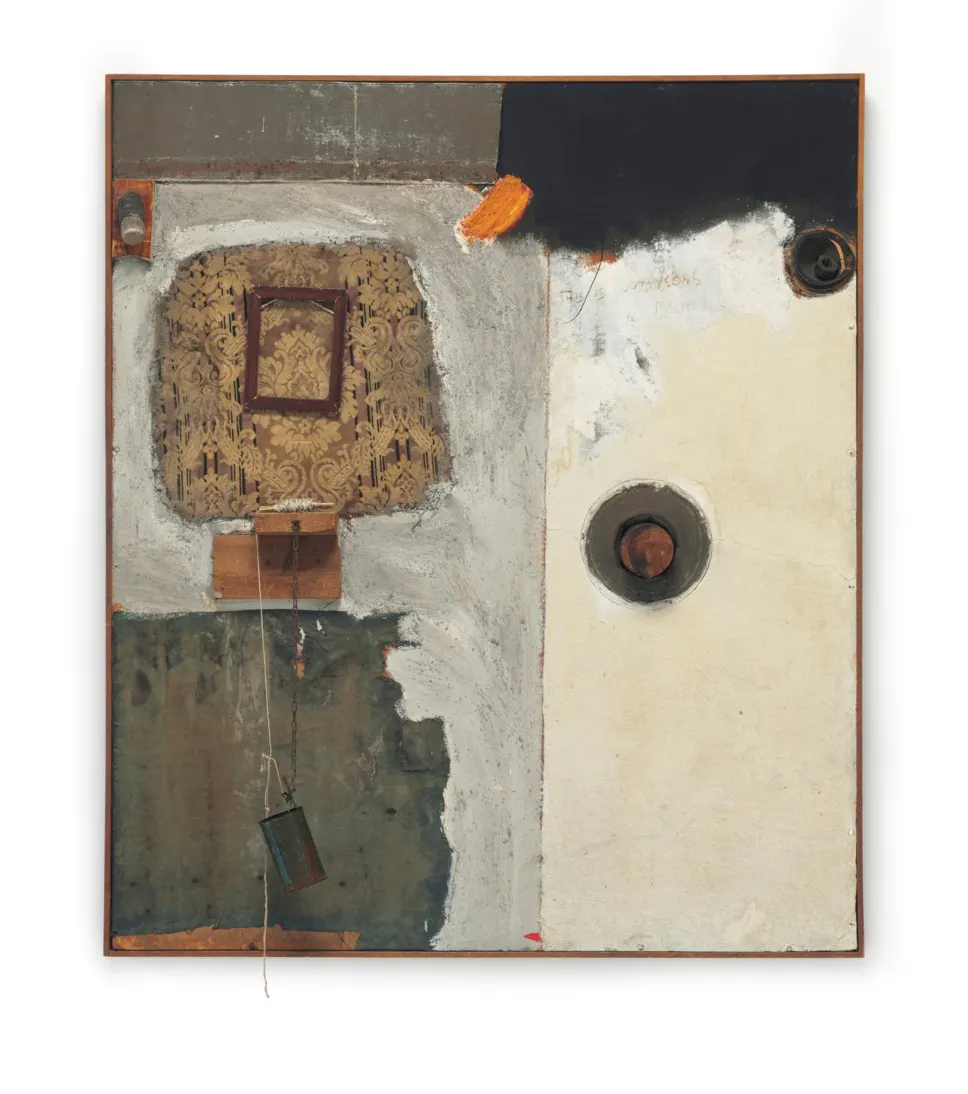
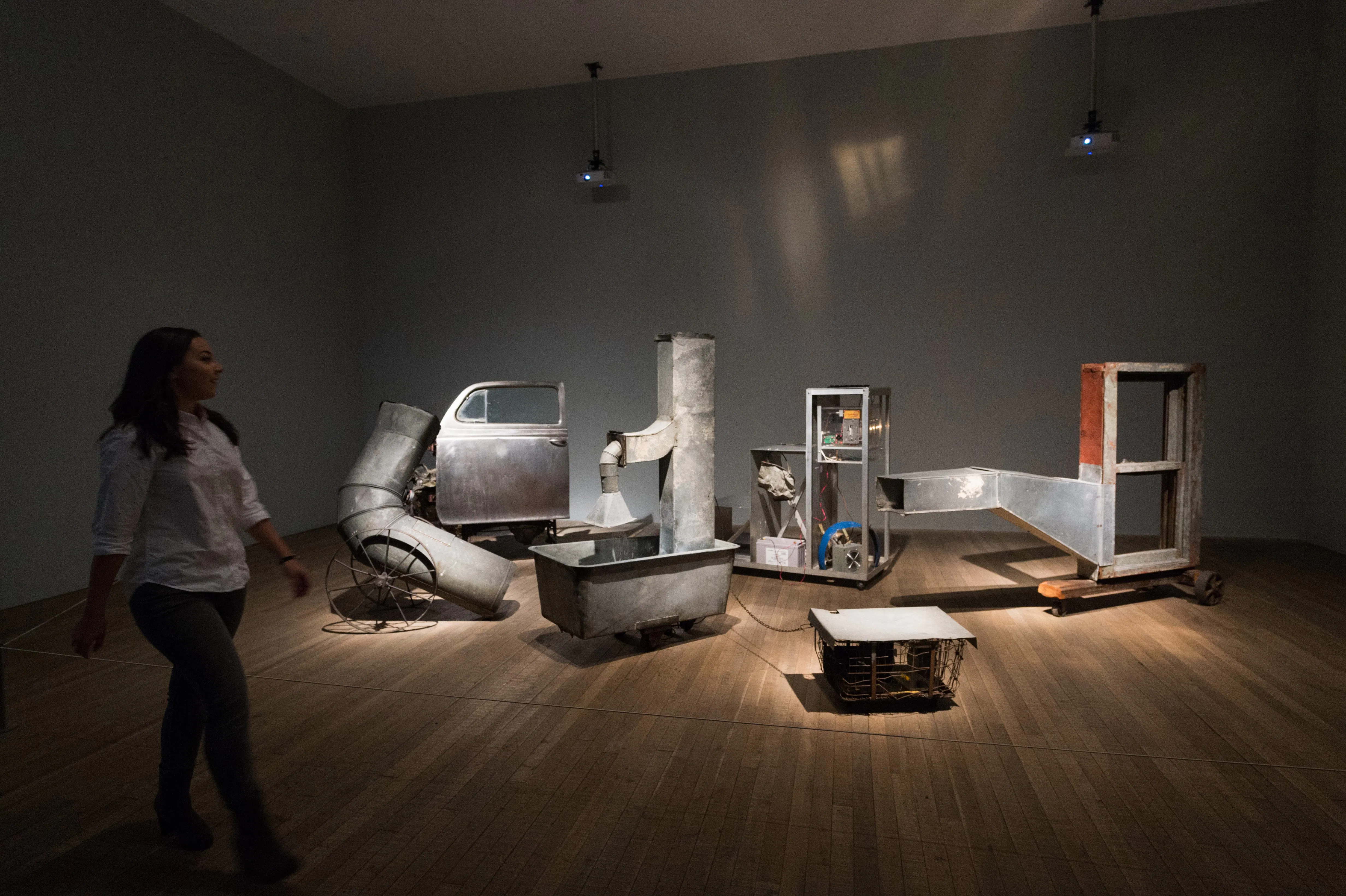
Rauschenberg’s interest in movement and in involving viewers and surroundings in his work continued in the 1960s with Experiments in Art and Technology (E.A.T.), which he developed with engineer Billy Klüver. Rauschenberg had previously collaborated with Jean Tinguely and contributed Money Thrower for Tinguely’s H.T.N.Y. in 1960 to Tinguely’s Homage to New York. Among the E.A.T. works was Soundings (1968), in which light elements respond to sounds made by the audience. Rauschenberg and Klüver also presented their ideas in the series 9 Evenings: Theatre and Engineering, which received mixed reviews and was even called a disaster.
See also: Jean Tinguely: Mechanics of Chance
A turning point came in 1971, when Rauschenberg left New York and settled in his house on Captiva Island on the west coast of Florida. This marked the beginning of a period of extensive travel and international projects. His largest undertaking was the Rauschenberg Overseas Culture Interchange (ROCI), which took place from 1984 to 1991 and involved travel to ten countries and cities, including Cuba, Chile, Venezuela, Tibet, Russia, Mexico, Malaysia, Japan, and Berlin. He collaborated with local artists in each location. He also revisited screen printing during this period, this time working exclusively with his own photographs.
A major retrospective opened at the Solomon R. Guggenheim Museum in 1997 and traveled to Houston, Cologne, and Bilbao through 1999. Other large touring exhibitions included Robert Rauschenberg – Works 1950–1980 in 1980 and 1981 and Robert Rauschenberg – Combines from 2005 to 2007. Rauschenberg received numerous honours throughout his career, including the National Medal of Arts in 1993 and the Praemium Imperiale in 1998. He also received a Grammy Award in 1983 for his cover design for the Talking Heads album Speaking in Tongues.
Want more articles like this straight to your inbox? Subscribe to our free newsletter!
In 2002, Rauschenberg suffered a stroke that left him in a wheelchair and paralysed his right hand. He continued working with his left hand and with the assistance of long-time studio staff. He remained active as an artist and patron until his death on 12 May 2008, on Captiva Island. His career spanned six decades.
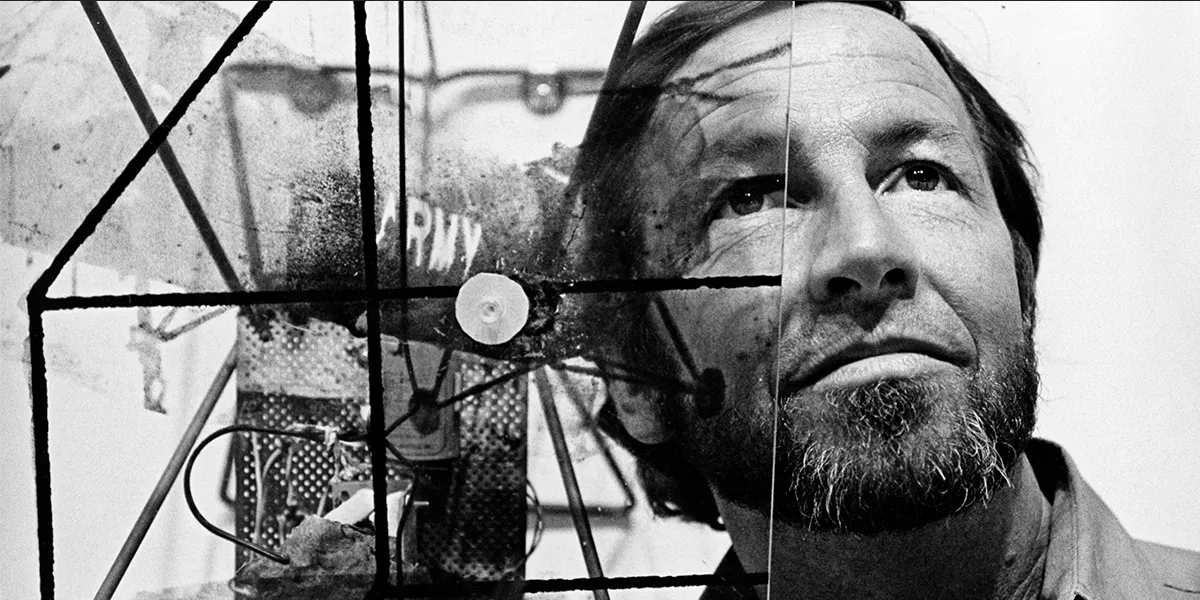
Robert Rauschenberg is one of the most influential artists of the 20th century. His broad and complex body of work helped shape the path toward Pop Art and continually challenged the definition of art. For Rauschenberg, art was all-encompassing and always connected to people and their surroundings, a principle visible both in the Combines and in his commitment to movement, action, and reaction.