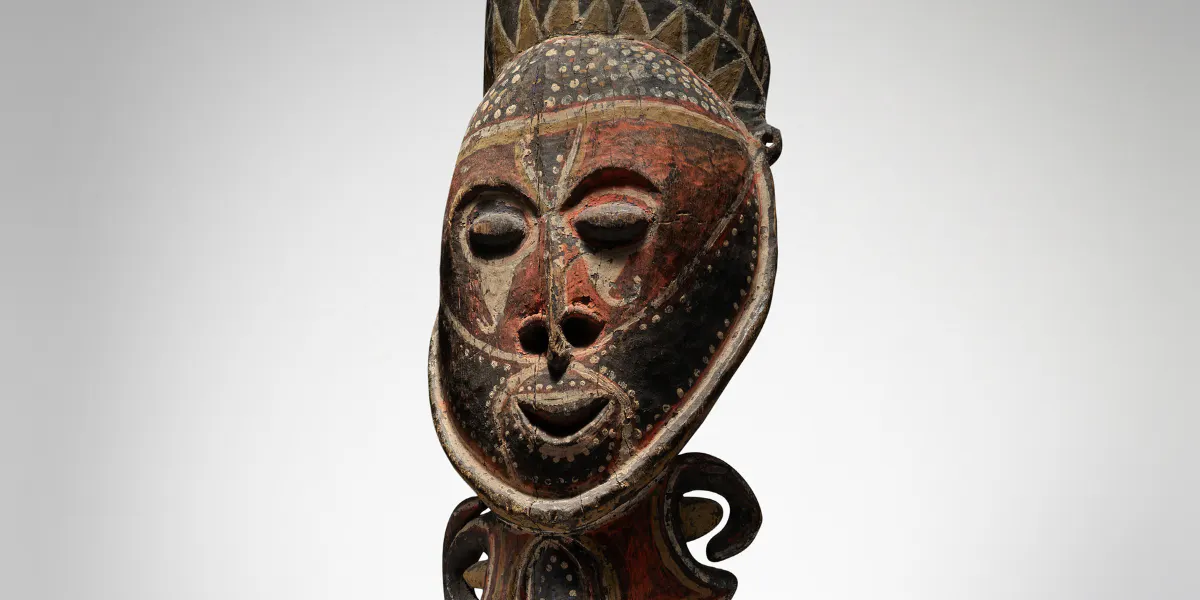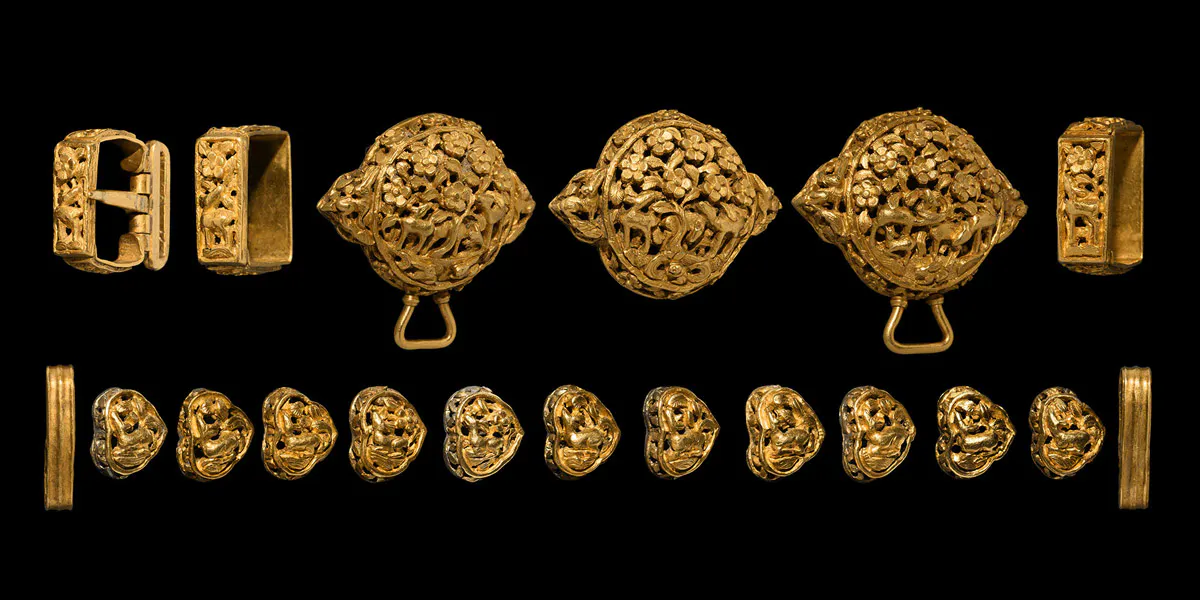
With great passion and a trained eye for the unique, the Belgian collector Bernard De Leye assembled his collection of paintings, sculptures and objets de vertu, as well as gold and silver of museum quality, over many decades. The 220 objects in the collection, which will be auctioned at Lempertz in Cologne, Germany on 15 July, are of a valuable and extraordinary quality which is rarely offered on the auction market.
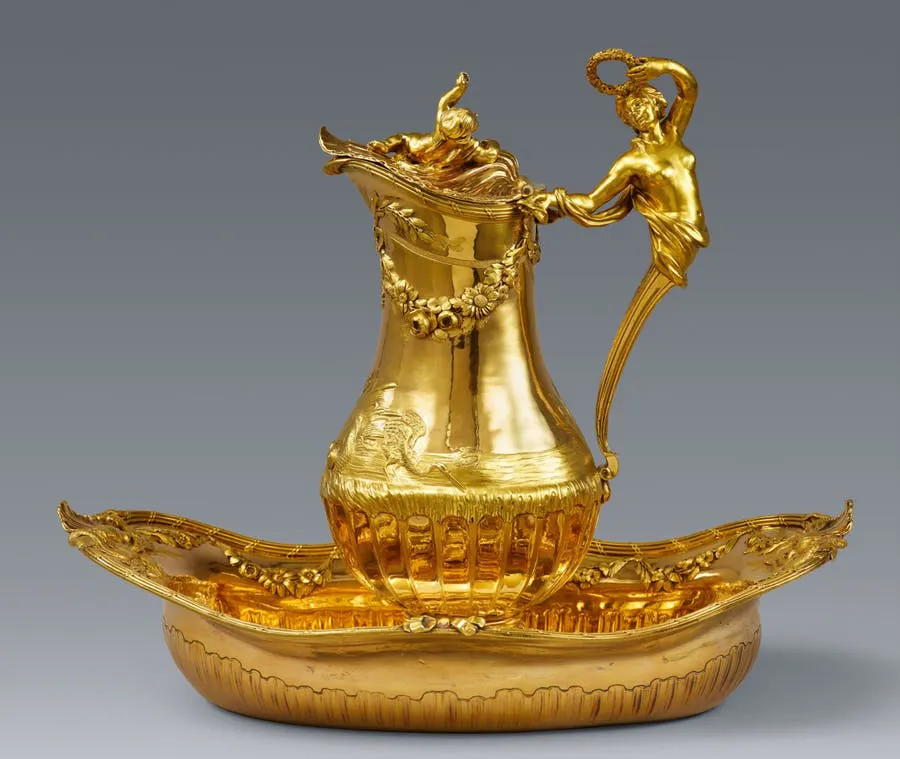
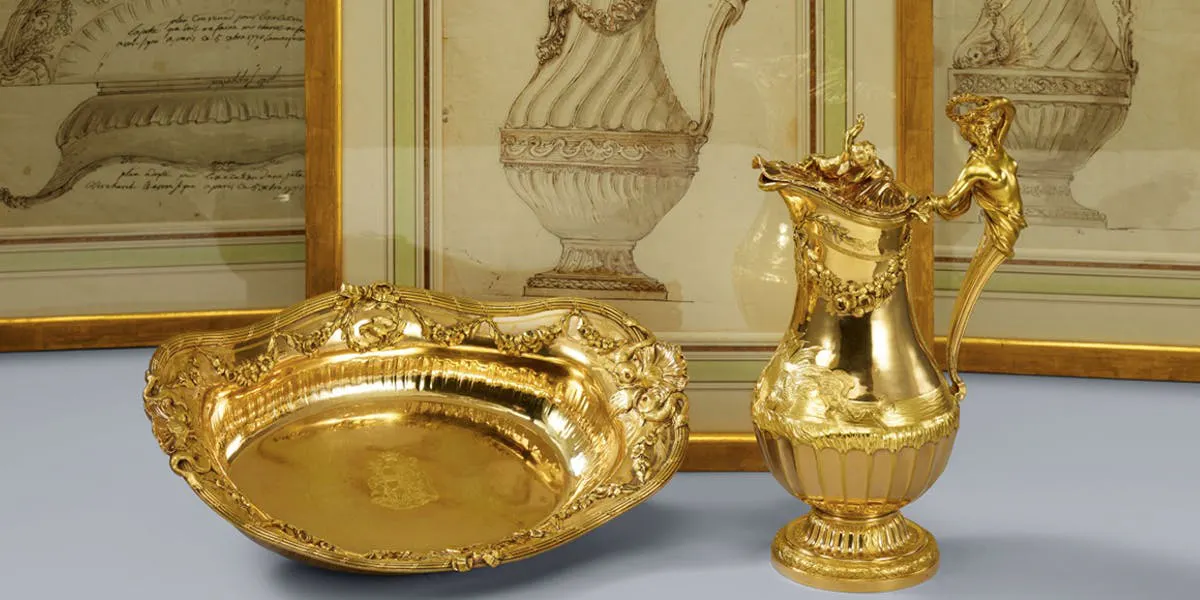
Bernard De Leye paid special attention to French works from the 18th century. The top lot of the auction, with an estimated price in the millions, also dates from this era: a silver lavabo set that King Louis XV of France gave to his former mistress Marguerite-Catherine Haynault and her husband, the Marquis de Montmelas around 1770.
After two illegitimate daughters emerged from the affair between Haynault and the king, their birth was legitimised by her marriage to the Marquis. The couple received a truly royal dowry, which is only confirmed by the extremely valuable object at hand, to which the original draft drawings are also attached.
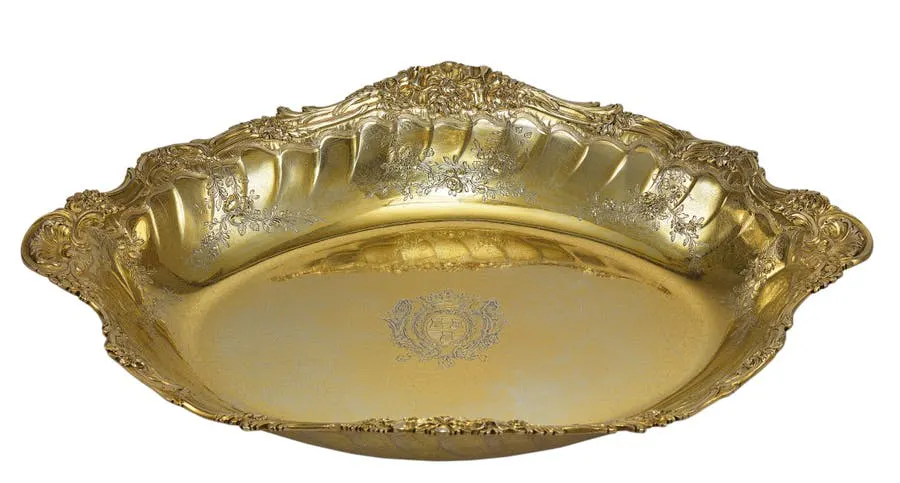
While Louis XV was more or less secretly infatuated with Mademoiselle Haynault, the Marquise de Pompadour was his official mistress. A silver-gold-plated wash basin with her coat of arms is also part of the selection going to auction.

Another extraordinary gift is a ship-shaped ecritoire which Louis XV in 1752 presented to his seal bearer, Jean-Baptiste de Machault d'Arnouville.
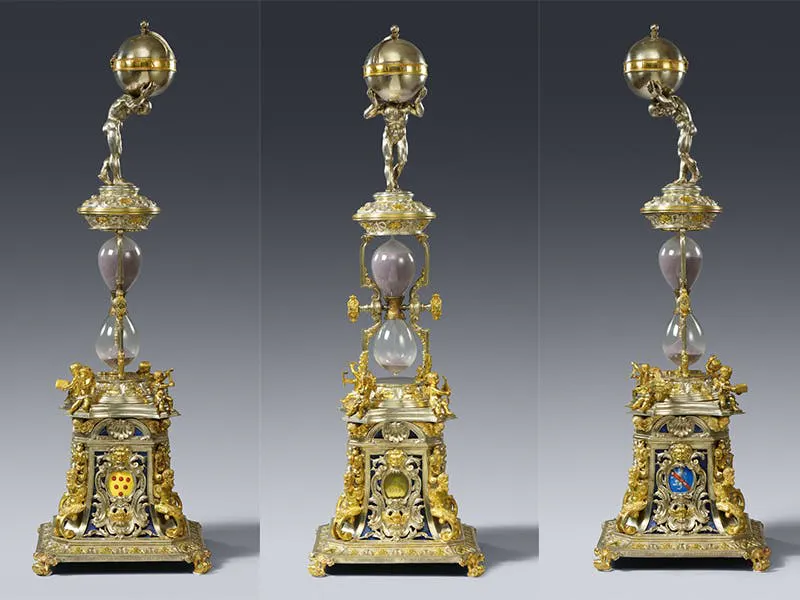
Though not a king, Pope Sixtus V gave Ferdinand I Medici this exceptional hourglass, which is both historically and art-historically significant, as a gift. The occasion was Ferdinand's wedding to Christine von Lothringen in 1588.
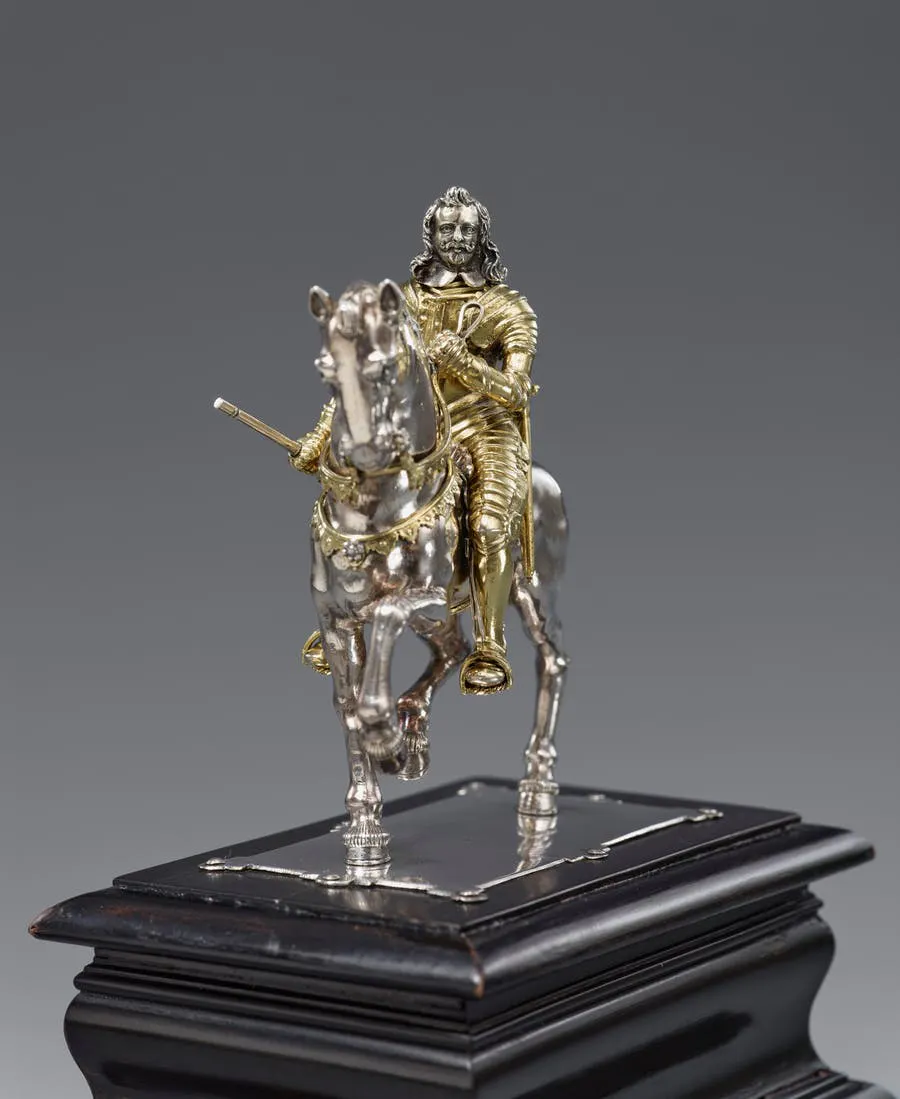
This silver equestrian statue of Emperor Ferdinand III is an Augsburg work. In addition to the attention to detail, the detachable head made it possible to continue using the figure for the subsequent emperor.
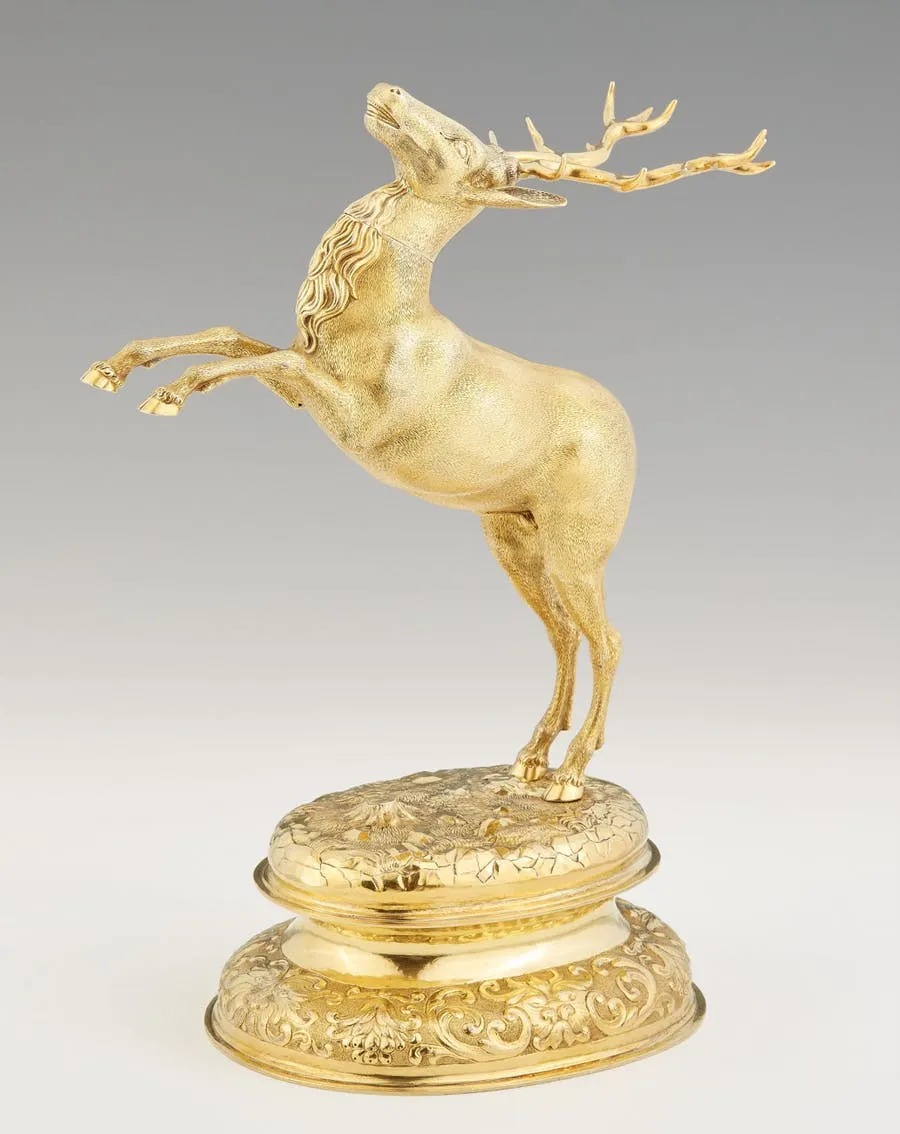
This Zurich goblet in the shape of a deer, which was made around 1640 by silversmith Hans Caspar Gyger, also has a detachable head, in this case serving as a hunting drinking vessel.
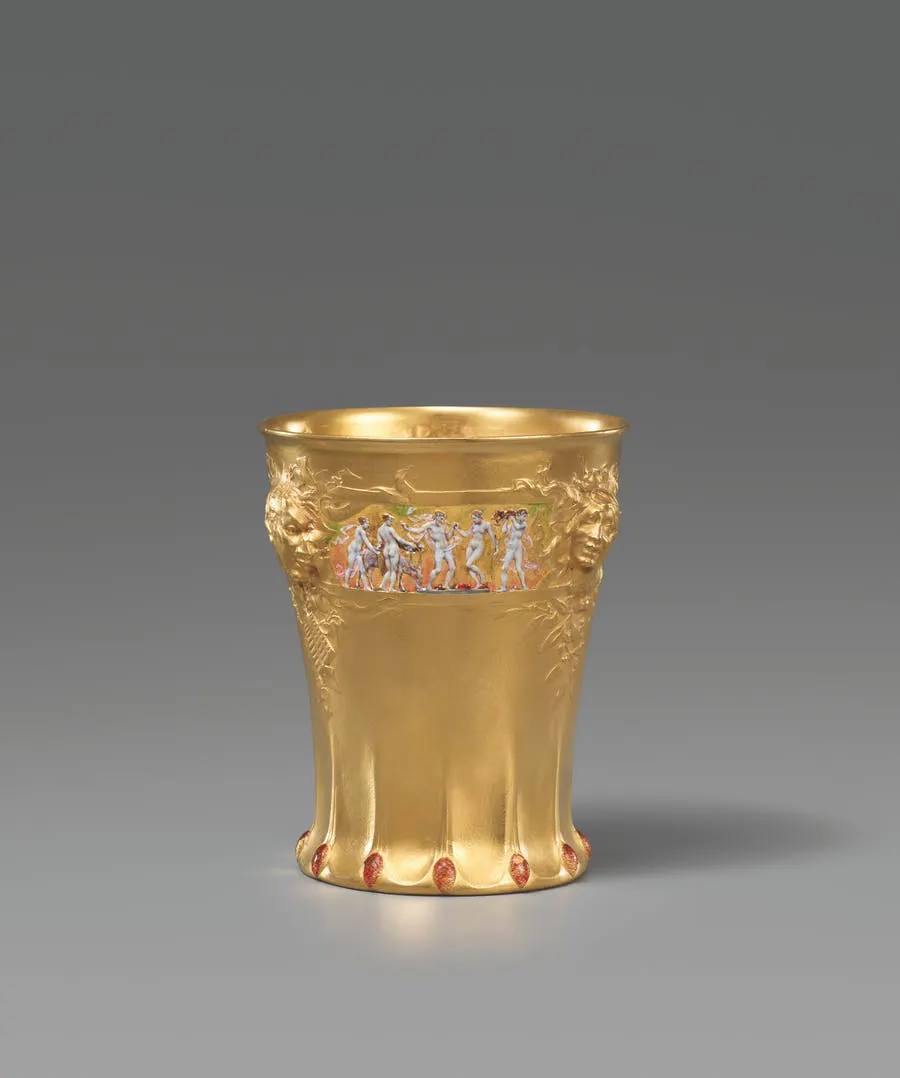
Another drinking vessel is one of the more recent but no less important pieces in the collection. The museum-quality gold cup Les Vendanges with relief mascarons and bacchanal scenes made of enamel was designed by goldsmith Jules-Paul Brateau and enameller Paul Grandhomme for the 1893 World's Fair in Chicago.
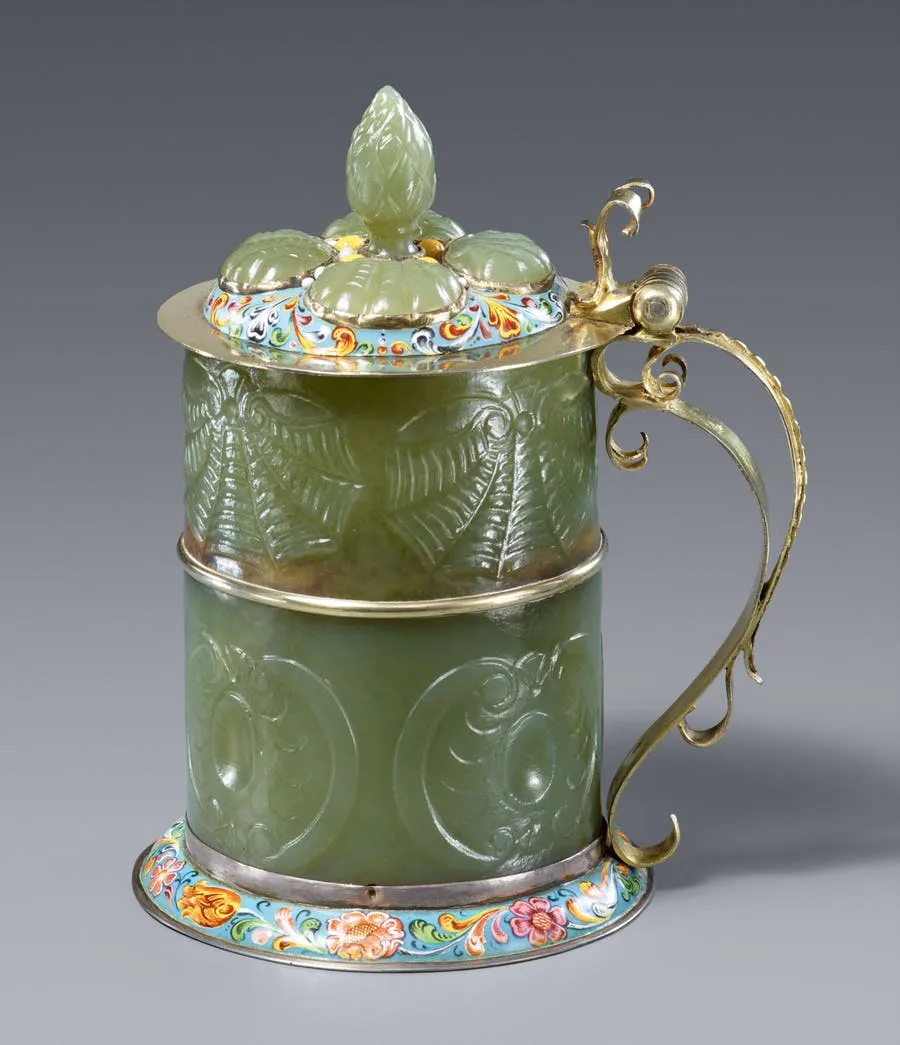
This two-part tankard made of carved jade, polychrome enamel and vermeil fittings, which is attributed to the Augsburg gemstone carver Johann Daniel Mayer, is also very unusual. The upper part of the translucent jade body is decorated with carved scallops.
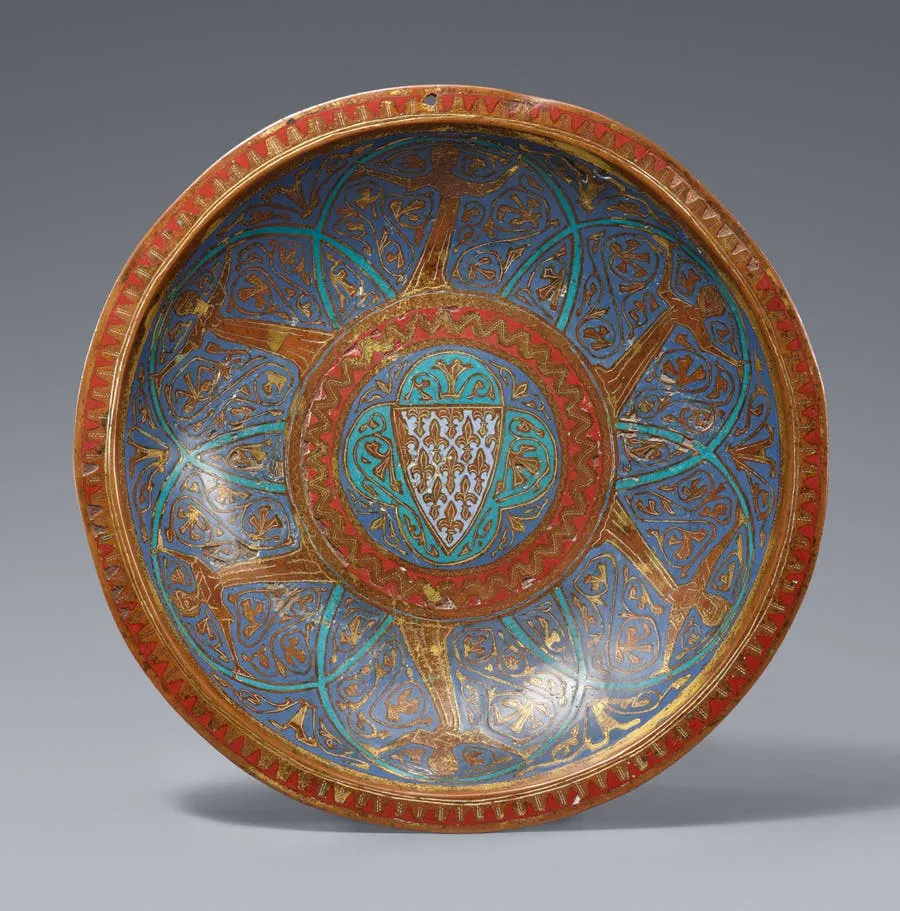
We are returning to the Kingdom of France with this enamelled bronze bowl from Limoges. It features a central coat of arms, with the golden lilies on a light blue background, and was used by the French kings of the late 12th and early 13th centuries. The six dancers in courtly clothes which surround the coat of arms are a special touch.
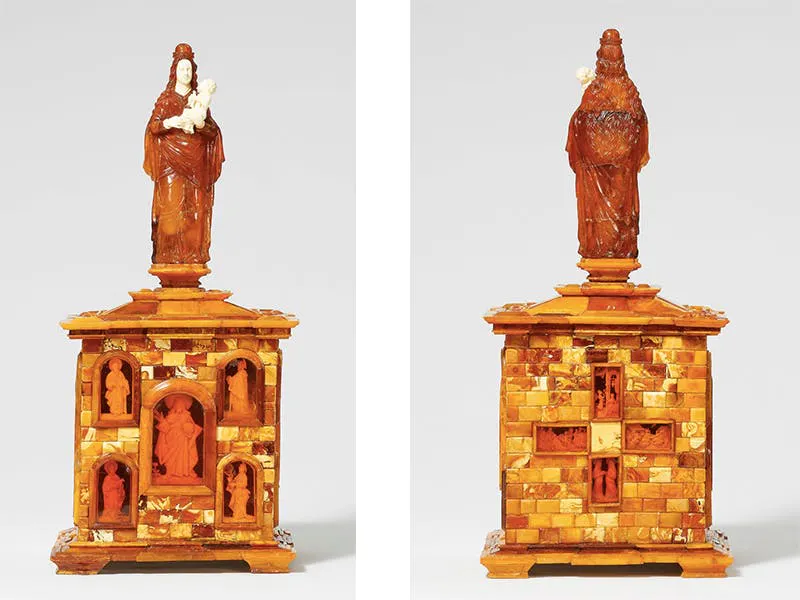
This important amber altar originally came from the treasury of the Swiss monastery in Einsiedeln. It is probably a work by the amber carver Christoph Maucher from Danzig.
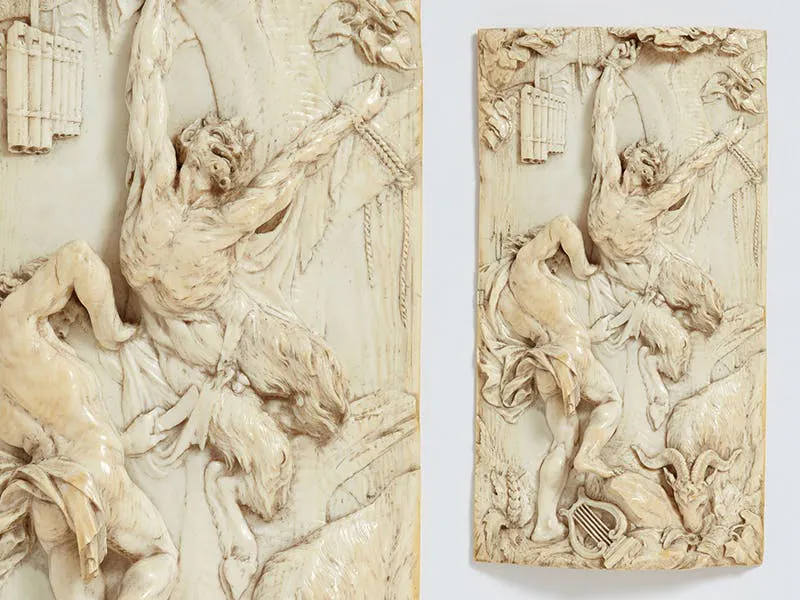
This ivory panel tells the story of the satyr Marsyas, who, convinced of his flute playing, challenged the god Apollo to a musical competition, which the latter won. As a punishment, the unfortunate Marsyas was skinned alive. It was likely the Flemish sculptor François van Bossuit who reproduced this gruesome scene on this ivory panel.
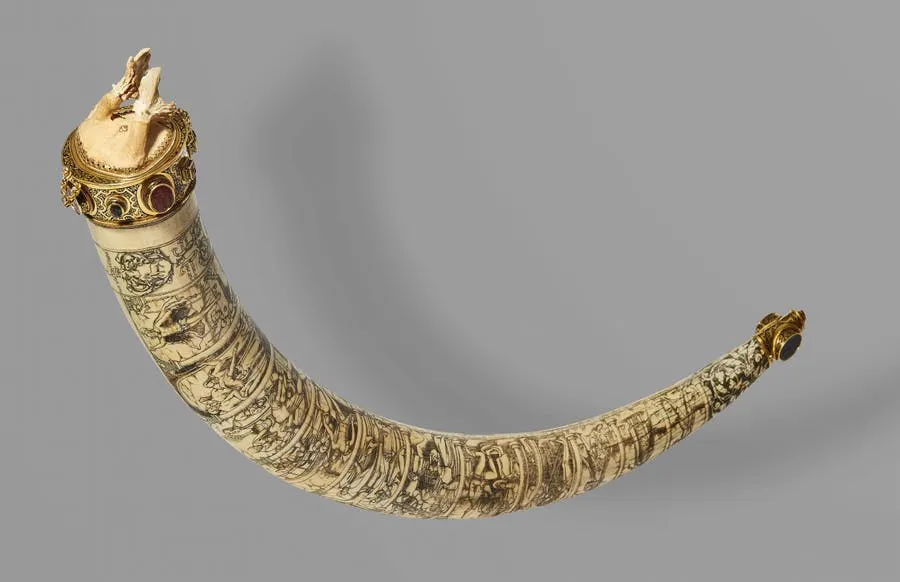
We conclude this small preview with another extraordinary piece: the 'Eingehurn' to the Würzburg cathedral canon Andreas von Thüngen, from approx. 1550-65. The elephant's tusk, which was extremely rare and valuable at the time, was set in pure gold and decorated with carved precious and semi-precious stones. The carvings on the tusk itself, however, require special attention, depicting scenes from the Passion of Christ that are inspired by Albrecht Dürer's corresponding woodcut series.
The auction will take place on 15 July at Lempertz, Neumarkt 3, in Cologne.