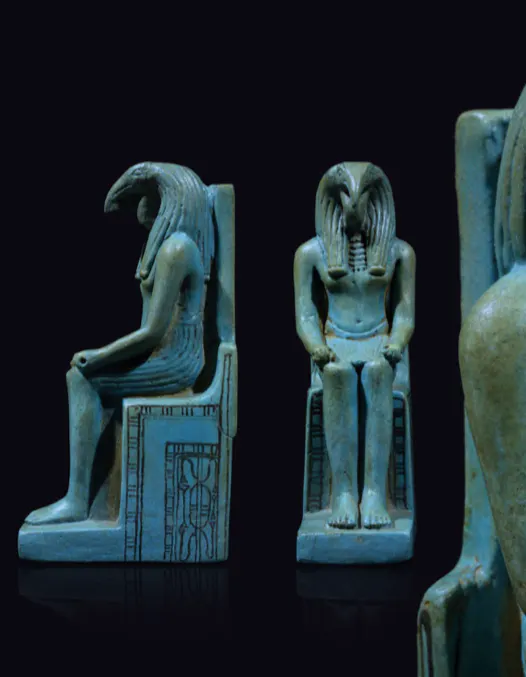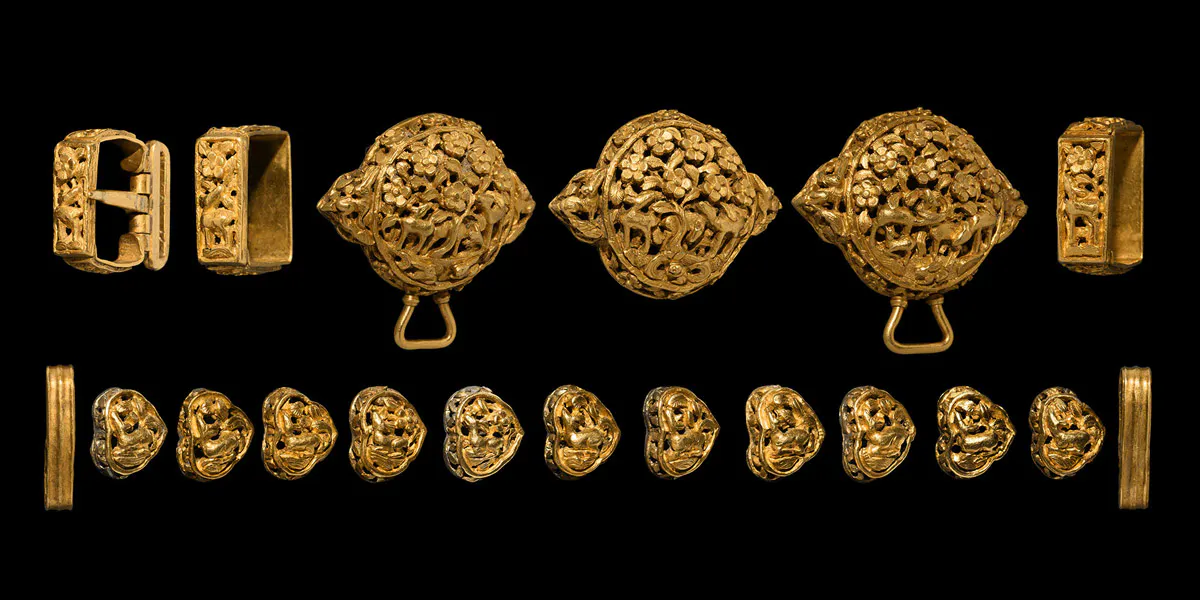
Uncover the mysteries of the past with Timeline Auctions: the UK auction house is hosting its ‘Ancient Art, Antiquities & Coins’ sale this month, with bidding open from 24 to 28 November on its many thousands of lots. Spanning countless years to places since risen and fallen, these ancient treasures have seen worlds and wars go by. For those looking to add to their historic collections, or learn more about the past, Timeline Auctions’ catalogue is everything you need and more. Here are some of the highlights of the sale.
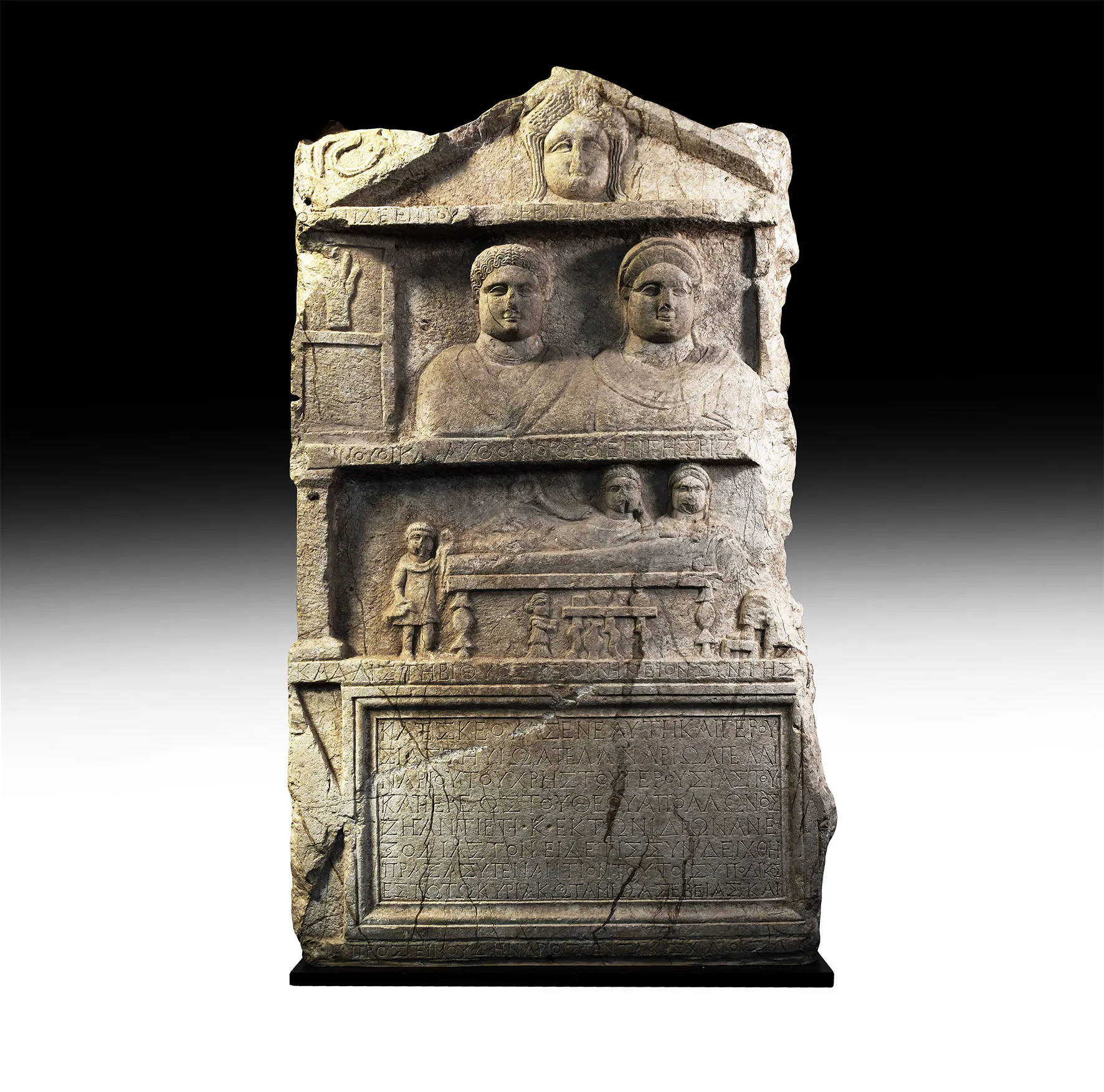
Dating back to 3rd century AD is this extremely large and imposing funerary stela, divided into three distinct sections, surmounted by a triangular pediment within which the head of a female with long braided hair is presented. Below this, we find the first panel, a rectangular frame inscribed at the top with Greek inscription: AND AS… WE DISAGREE. Inside the frame are the facing portraits of Apellinarius (with wavy hair incised in stylised curls) and Kallisti (shown as a commanding middle aged matrona with veil indicating married status), who are depicted as equals. To the far left of the frame follows another Greek inscription: GODS OF THE UNDERWORLD UPON THE EARTH ROOTED. Below this is the second central panel representing a stylised funerary scene in shallow relief. In the following lower panel is eight lines of Greek text, with a ninth incised on the frame below.
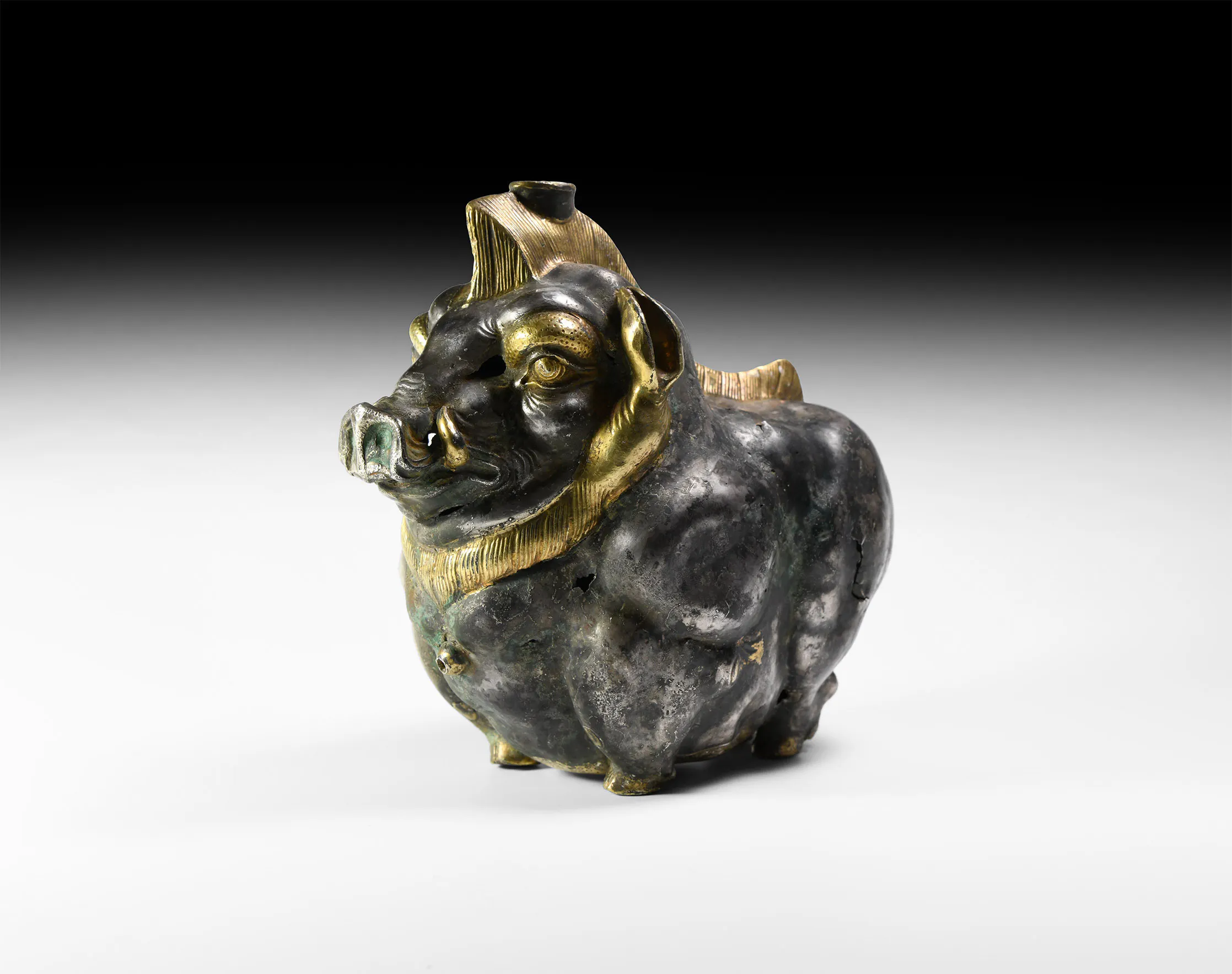
Going further back to 5th century AD, this gilt silver vessel is formed as a standing wild boar with exaggerated muscular legs and chest with a bulging gut. Its detailed facial features include a large snout, curled tusks, alert eyes with heavy eyelids, erect ears, the animal's mane running around its face and along its head and back, which reaches a tightly-curled tail and detailed buttocks, cheeks highlighted with gilding, and a series of small circles that are repeated on the underbelly. An oval vessel mouth emerges from the mane, while the spout is formed as a pierced gilt stud at the centre of the boar's chest.
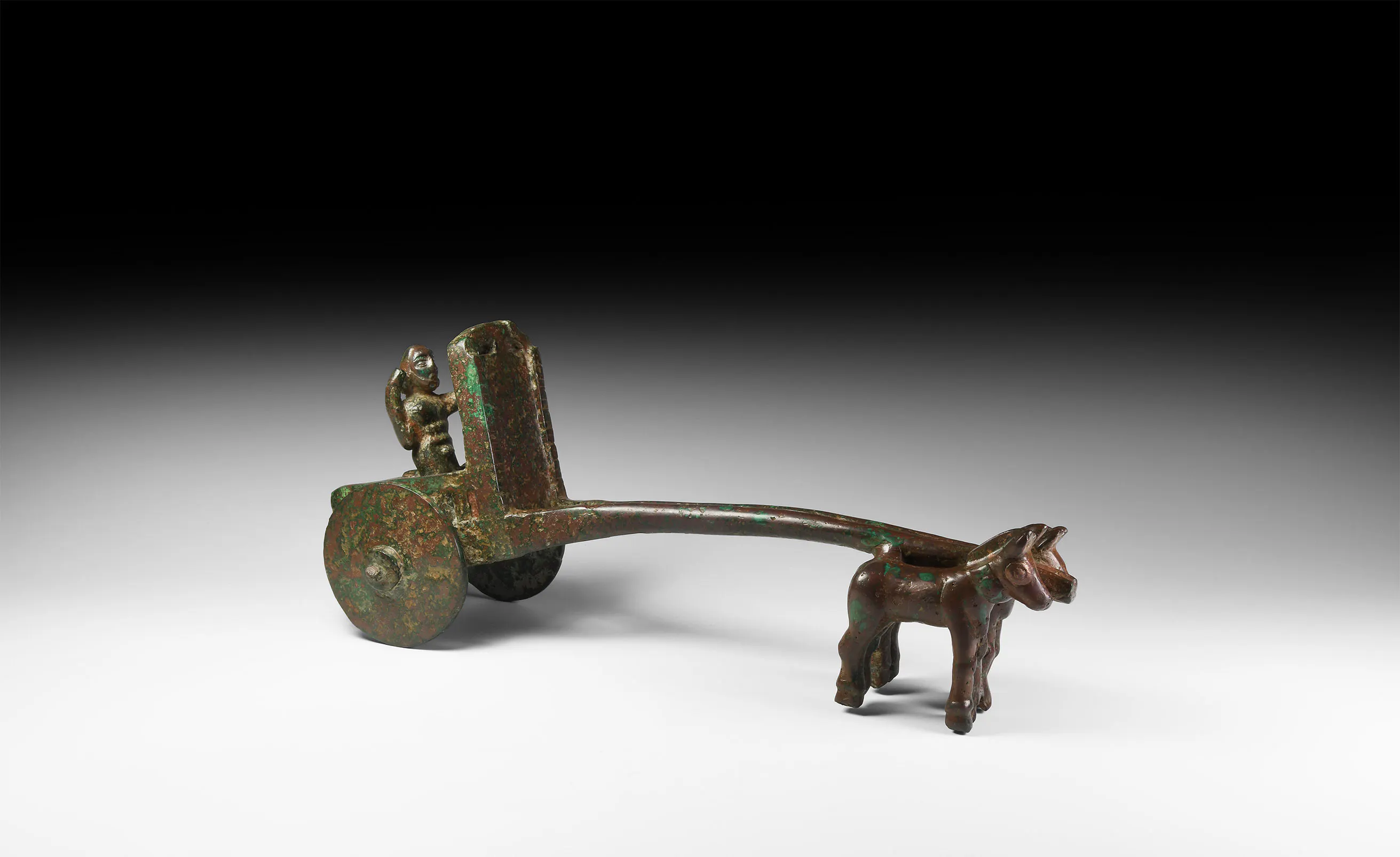
This bronze model of a proto-war chariot, dating to 2nd millennium BC, is formed as a squared box, the axle attached underneath with a gauge extending to full disk wheels with visible nave and hoops. On the front is a squared shield protection for the driver, furnished with two sight holes and wide edge, behind which the standing driver is in fighting position, the left hand holding on to the chariot panel, the right one raised to throw a weapon, probably a spear.
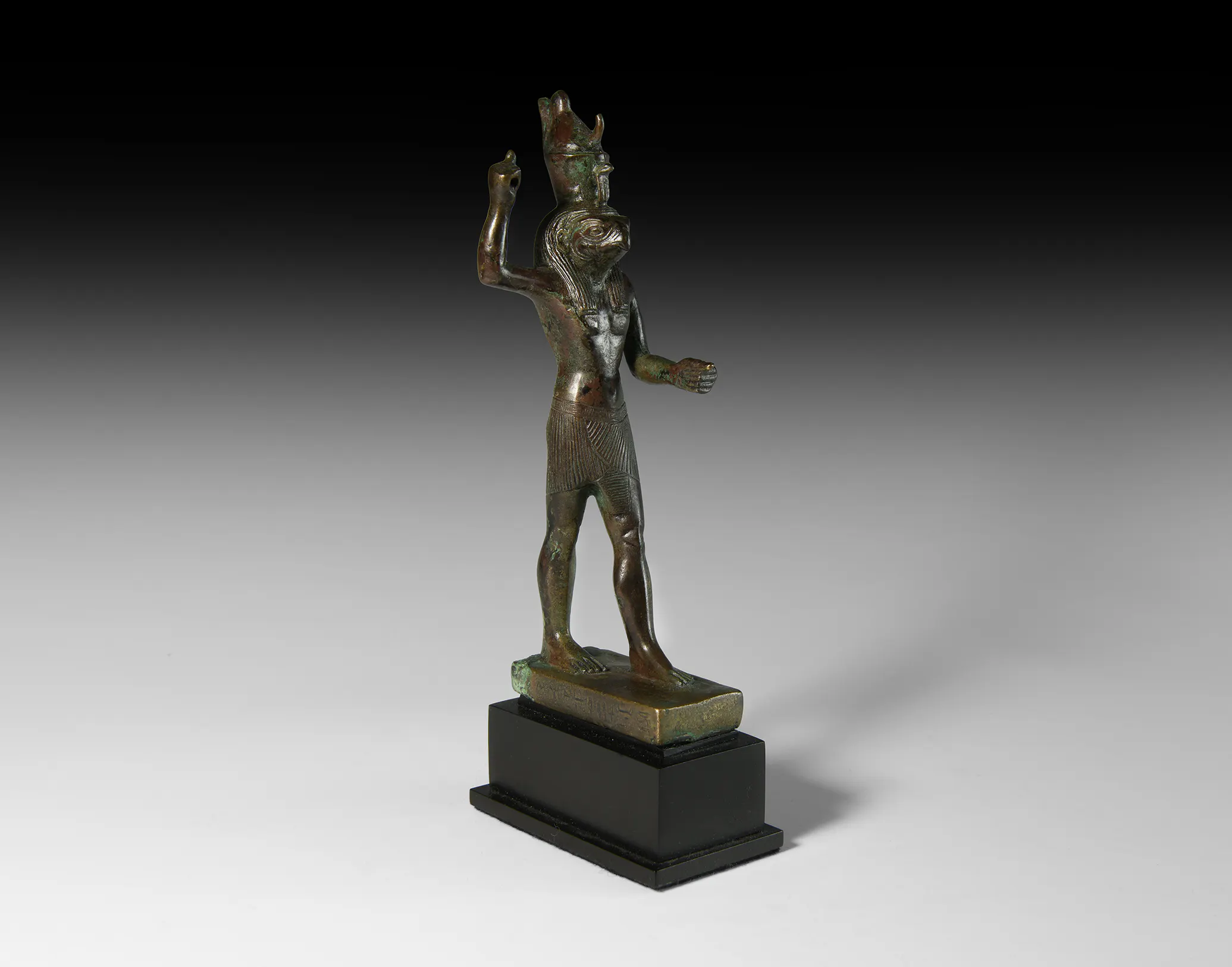
This bronze figure is of a striding Horus, one of the most significant ancient Egyptian deities, and dates to the 26th Dynasty, 664-252 BC. His right arm is raised with hand clenched and hollow to accept a spear, left arm bent with fist clenched. The god is featured here with his hawk head, tripartite wig and Pschent (double crown) of Upper and Lower Egypt with frontal uraeus. On the rectangular base reads the hieroglyphic inscription: 'May Horus, Lord of Heaven, Grant Life, Prosperity, Health, a long lifetime [and a good] old age', with the mother's name '[Nes]gereh'.
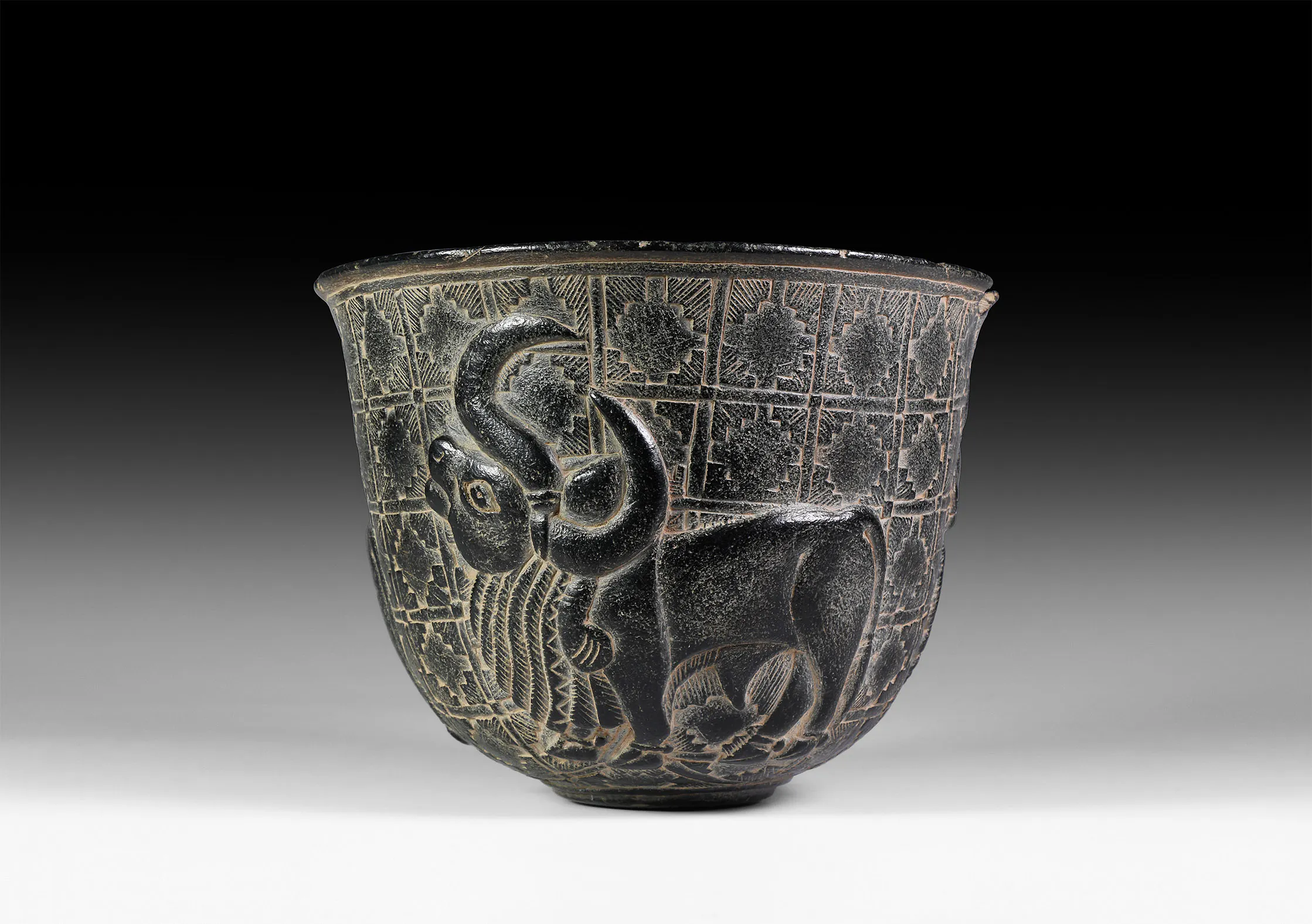
This dark grey-black steatite vessel with reverted rim and circular foot, with surrounding basal ring, dates to 3rd-2nd millennium BC. The outer face features three standing bulls facing left, each unique in detail. Rows of square panels enclose the same geometric design to circumference.
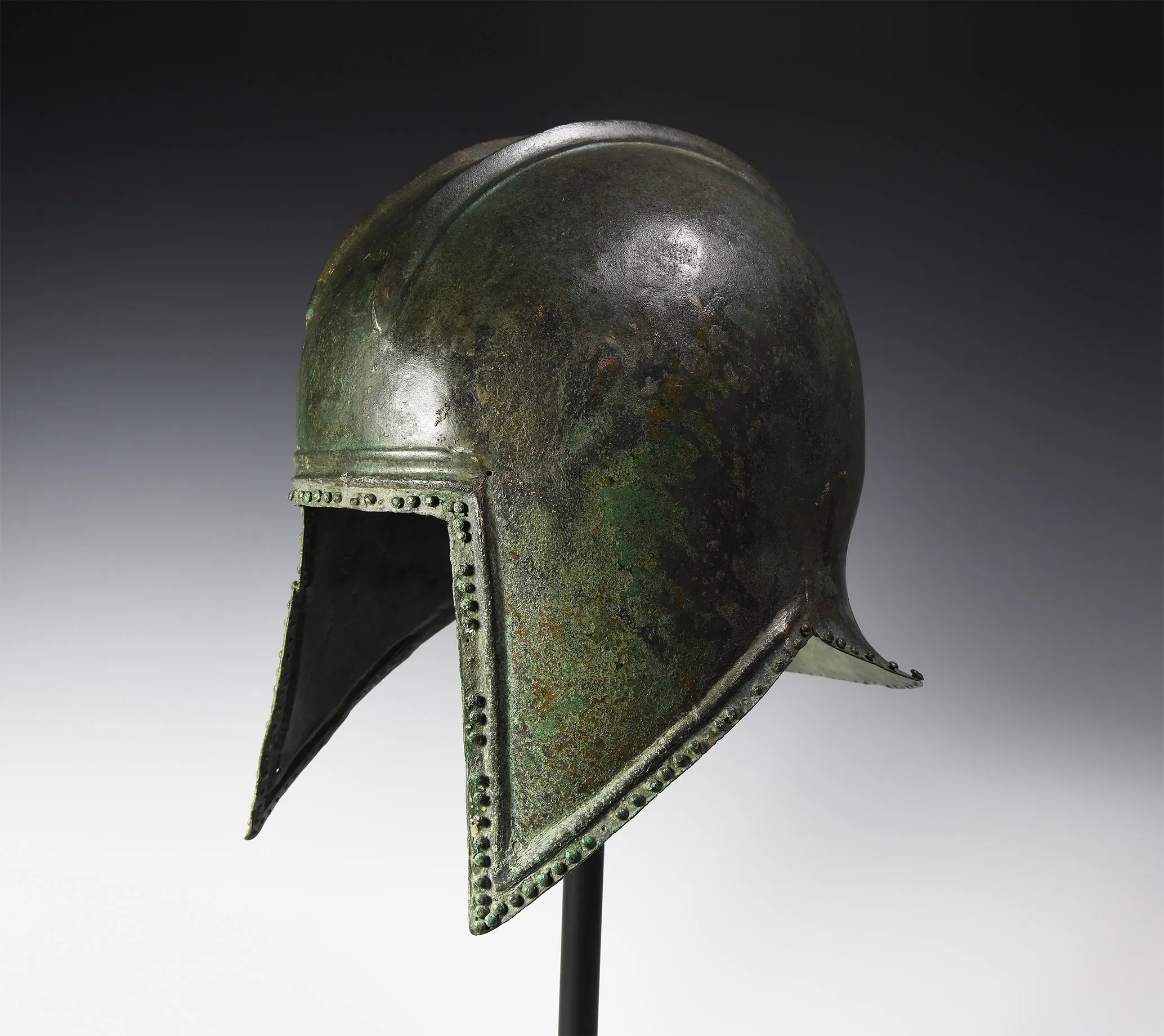
This substantial bronze helmet with protective cheek-guards from mid 6th-5th century BC is made from a single sheet. The bowl of the domed form with the crown is fitted with a broad raised band, made of two parallel corrugated ridges running over the skull from front to back, each with a smaller ridge at the outer edge.
Interestingly, we find two holes to the side of the temples, probably for attachment of a funerary gold mask, and three holes to the back, possibly for the loop of the crest attachment. Weighing 1.7kg in total, the helmet features curving protective cheek-pieces, which are perforated at the tip for the attachment of a chin strap.
Don’t forget, the catalogue for Timeline Auctions’ many thousands of ancient objects is currently available for viewing digitally. The auction will take place from 24 to 28 November.