![Peter Paul Rubens, ‘Portrait of a Lady’, three-quarter view, wearing an elegant black dress and a coat, in front of a red curtain and a distant landscape [detail], oil on canvas, image © Sotheby's](https://images.prismic.io/barnebys/f58d0e95-61b1-4c26-8aec-c2bff9b44a72_Cover.jpg?auto=format,compress)
Held in a private collection for almost 140 years, a 17th-century Portrait of a Lady has just re-emerged on the auction scene as a work by the Dutch master Peter Paul Rubens. The quality of the work was revealed beneath several layers of dust and dirt, after meticulous restoration work carried out by Sotheby's experts.
The masterpiece had been exhibited at the Royal Academy in London in 1902 as a Rubens, but its origins had since been "forgotten about", said Andrew Fletcher, Sotheby’s head of department for Old Master paintings.
The portrait collected dust for more than a century before being bought for €87,000 (£78,000) three years ago, but as a work from Rubens’ workshop. Experts then believed that the painting had been made by one of his assistants, perhaps under his supervision, and dated from the mid-1620s.
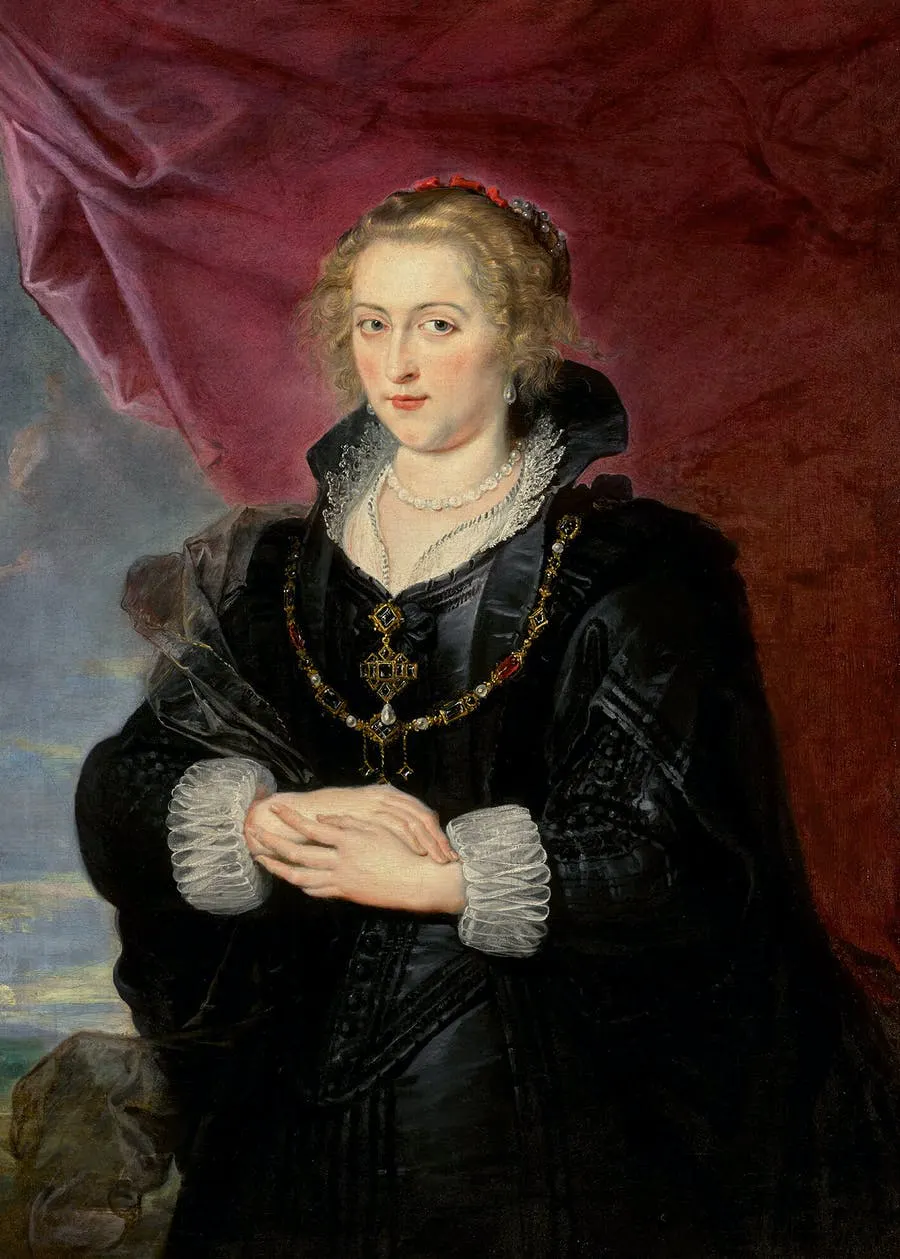
Hoping that the portrait was in fact by the master, the new buyer brought it to Sotheby's to have it evaluated. Fletcher said the painting was quite dirty, with “100 years of dirt and old varnish”, but, once cleaned, "this rather wonderful Rubens was revealed".
See also: A New Renaissance for Old Masters
‘Hidden details’, spotted using an infrared camera, indicated that modifications had been made during the production and proved, according to Fletcher, the authenticity of the painting. For the expert, these modifications testify to real work and research on the part of the artist and differentiate the painting from a “slavish copy”.
It's one of those moments that you have a couple of times a year…
“There is one enormous change in the sky where the red curtain descended... Rubens obviously wasn't happy with that so pushed it back up and included more sky. And to the contour of her dress, you can see that he painted it one way first and then... he's broadened her shoulders and the contour of her dress. And in a more minor way you can see lots of little changes in his painting of the fingers and hands,” Fletcher added.
See also: On and Off the Canvas: Art's Most Famous Muses
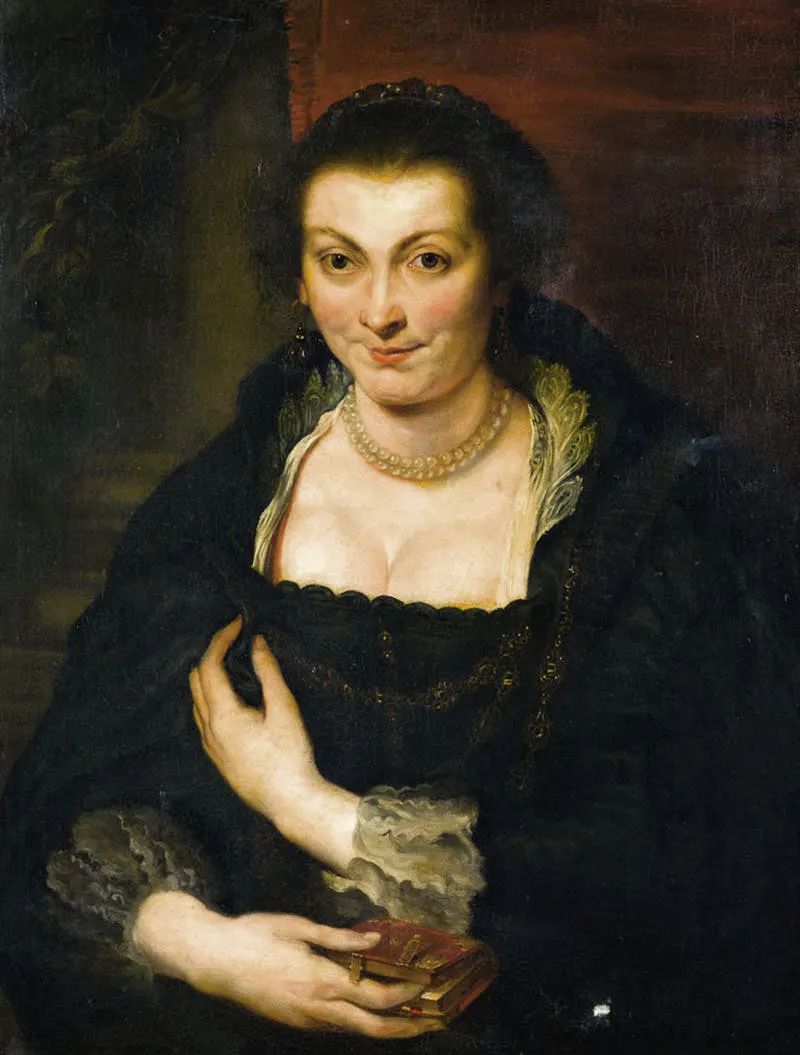
The dating of this portrait (from the beginning to the mid-1620s) is supported by the dress and hairstyle of the woman, predominant in female portraits of the time. We find this type of dress in two portraits of Rubens’ wife, Isabella Brant, the first painted by Van Dyck just before his departure for Italy in 1621, and the second by Rubens himself in the famous portrait now. kept at the Uffizi Gallery in Florence.
Rubens’ career was at its peak in the 1620s – he received commissions from major European courts and other patrons, and from 1623 onwards practised as a diplomat. If his ambition and his creative genius led him to favour the great historical and mythological scenes over the portrait, he nevertheless strongly contributed to evolve the somewhat schematic norms that characterised the genre at the end of the 16th century.
See also: Another Botched Restoration Hits Spain
Rubens had a particular talent for revealing the personality of a model, for giving his characters an almost palpable appearance and very often, as in this portrait, for revealing a certain exuberance in his subject. “There's a real sense of character to her face even though she's actually posed in quite a formal way… I love the way she's looking out slightly out the corner of her eye with a little bit of a grin,” Fletcher enthused.
The painting will be offered with an estimate of £2.5-3.5 million on 28 July during a major evening sale at Sotheby's, the first since coronavirus restrictions were put in place. "It's one of those moments that you have a couple of times a year when you walk in, and you just have this wonderful instant reaction of glee."