After several failed restorations in Spain that have caused considerable damage to historic works, conservators and defenders of Spanish heritage have expressed their concerns about the lack of regulations in the field.
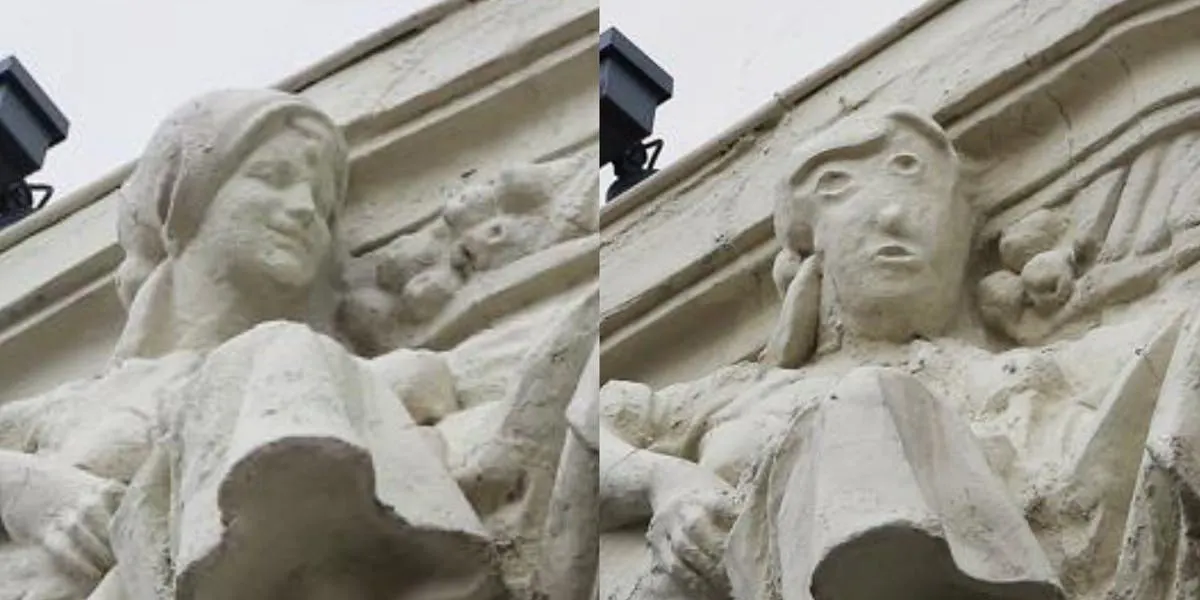
After the Ecce Homo, the statue of Saint George and the Virgin Mary from last June, a new work has just paid the price of an amateur: the statue of a young woman, affixed to the façade of a bank of Palencia since 1923, has a more than dubious new face.
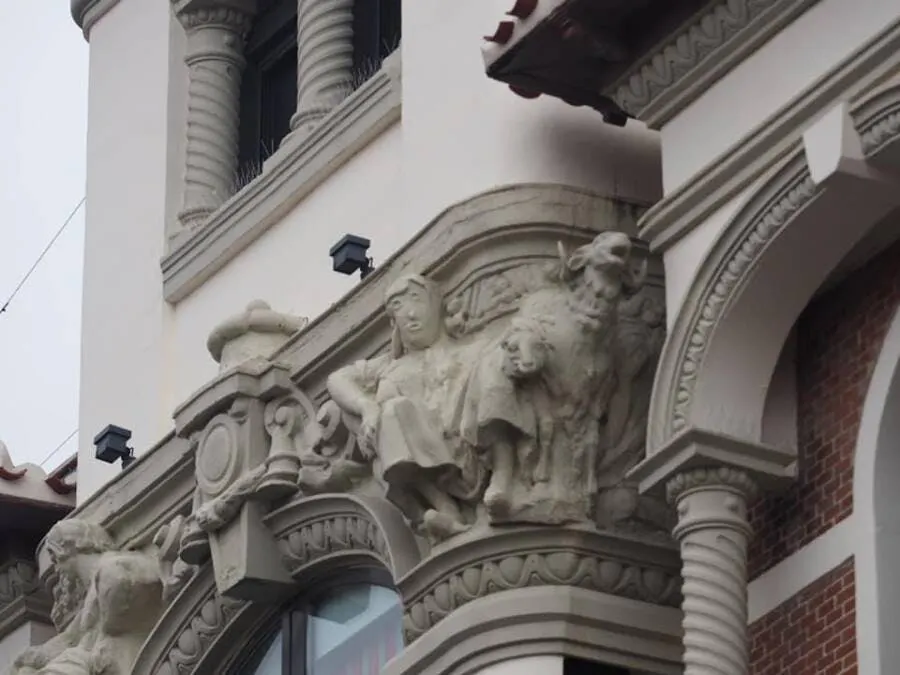
Antonio Guzmán Capel, a local painter, posted a photo of the work on his social networks, questioning the identity of the person responsible. It didn't take long for the image to go around the web, catching the attention of the Spanish Association of Conservation and Restoration Professionals (ACRE).
See also: The 10 Most Expensive Sculptures Sold at Auction
The statue, which once watched passers-by on Calle Mayor with a smile, has unrecognisable features, a crooked nose, and openings placed at the forehead for the gaze. According to ACRE, “this work was not carried out by professional curators, but by unqualified people, surely masons”.
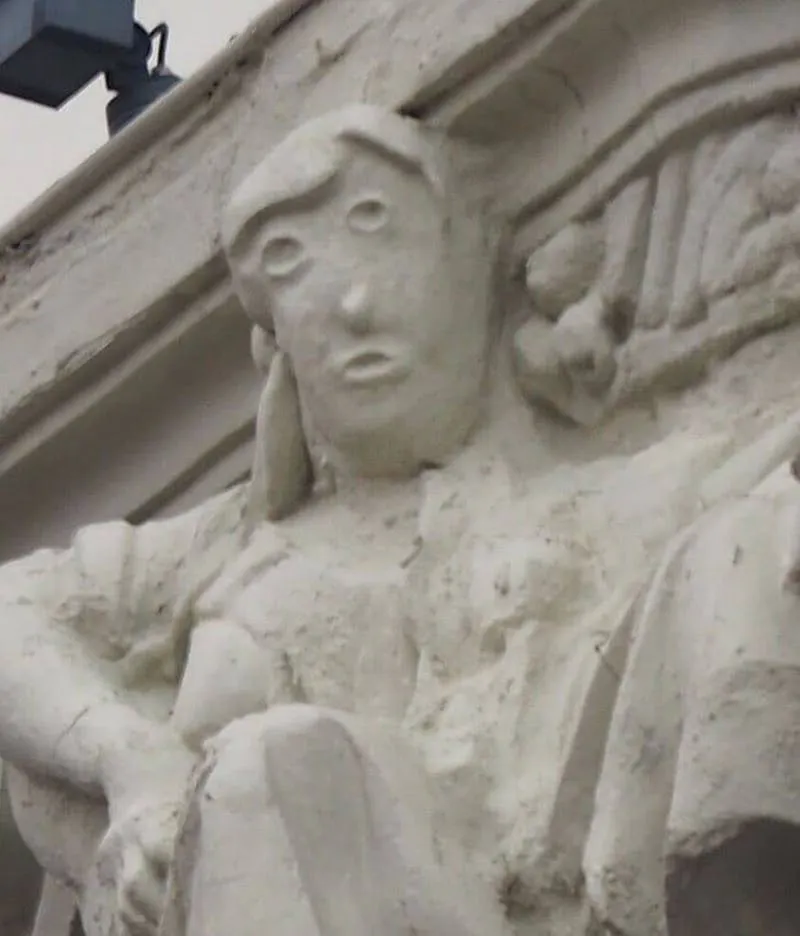
The qualifiers ‘potato head’ and ‘cartoon character’ have already been used by the media, and if the situation has a comical aspect, this only demoralises the experts who demand, once again, the establishment of laws by the State to supervise future restorations. Today, Spanish law authorises anyone to undertake the restoration of a work deemed obsolete, at the risk of permanently damaging it.
The identity of the person responsible for this new scandal remains unknown.