![Regency roll-top bureau [detail], c. 1820, mahogany. Photo: Nimbus Antiques](https://images.prismic.io/barnebys/42887271-3a0d-4231-b1d7-c25d65def10c_Webp.net-resizeimage-26.jpg?auto=format,compress)
Established in 1978, Nimbus Antiques has over thirty years’ experience handling fine furniture and décor. Specialising in Georgian, Regency, Victorian and Edwardian pieces, Nimbus Antiques sources and, if necessary, carefully restores furniture in their own workshop using only traditional methods. Their extensive catalogue of over 600 items is well worth exploring, but to begin, here is one highlight from every era.
George III (1760-1820)
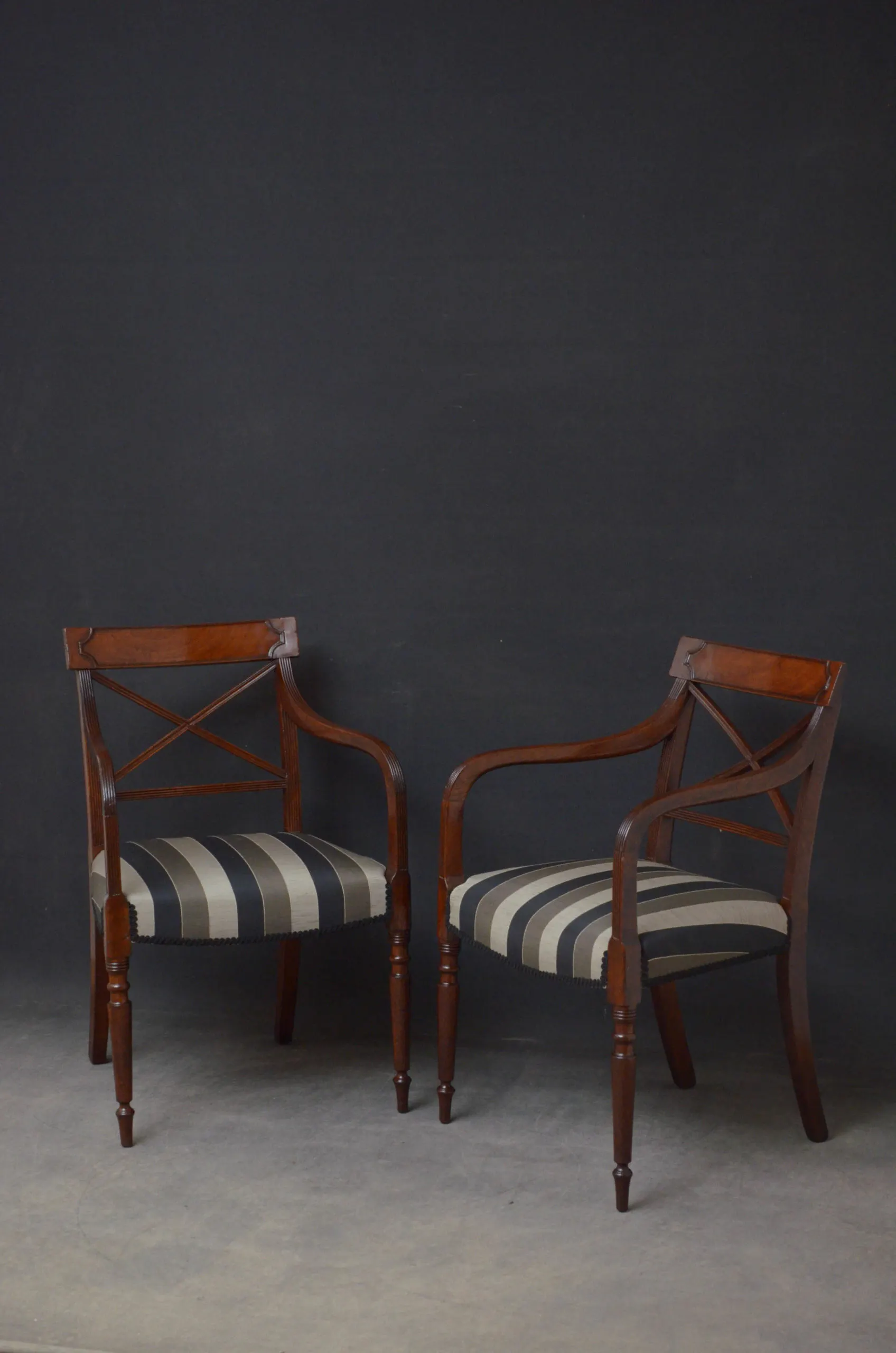
Mahogany was the wood of choice during the Georgian period, and this pair of carver chairs uses the material to great advantage while retaining their original luminous finish. The legs come up gracefully to form the arms and backs of the chairs, typical of the carver design, and the tops and arms are delicately reeded while the tapered legs are ringed. Each chair is finished with an overstuffed cushion and upholstered with a new striped cover.
Regency (1811-1820)
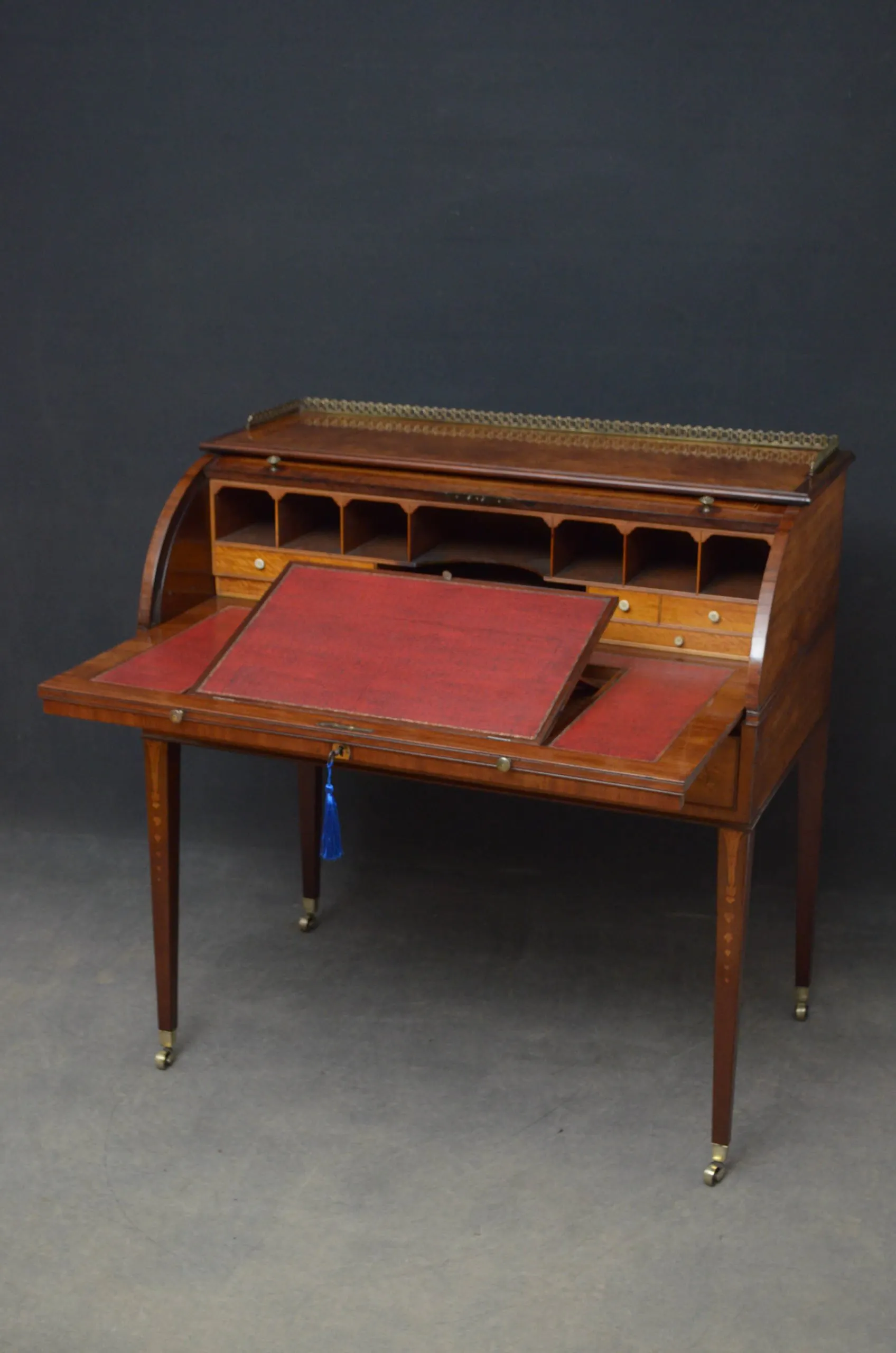
Channel your inner Jane Austen or Percy Shelley by sitting down to work at this Regency-era roll-top writing bureau. The desk features a finely inlaid top, which rolls up to reveal pigeon holes and satinwood drawers, as well as an adjustable leather writing surface. Underneath are two oak-lined drawers with satinwood inlay and original brass handles. The inlay appears again on the legs, which end in their original brass castors for ease of transportation.
George IV (1820-1830)
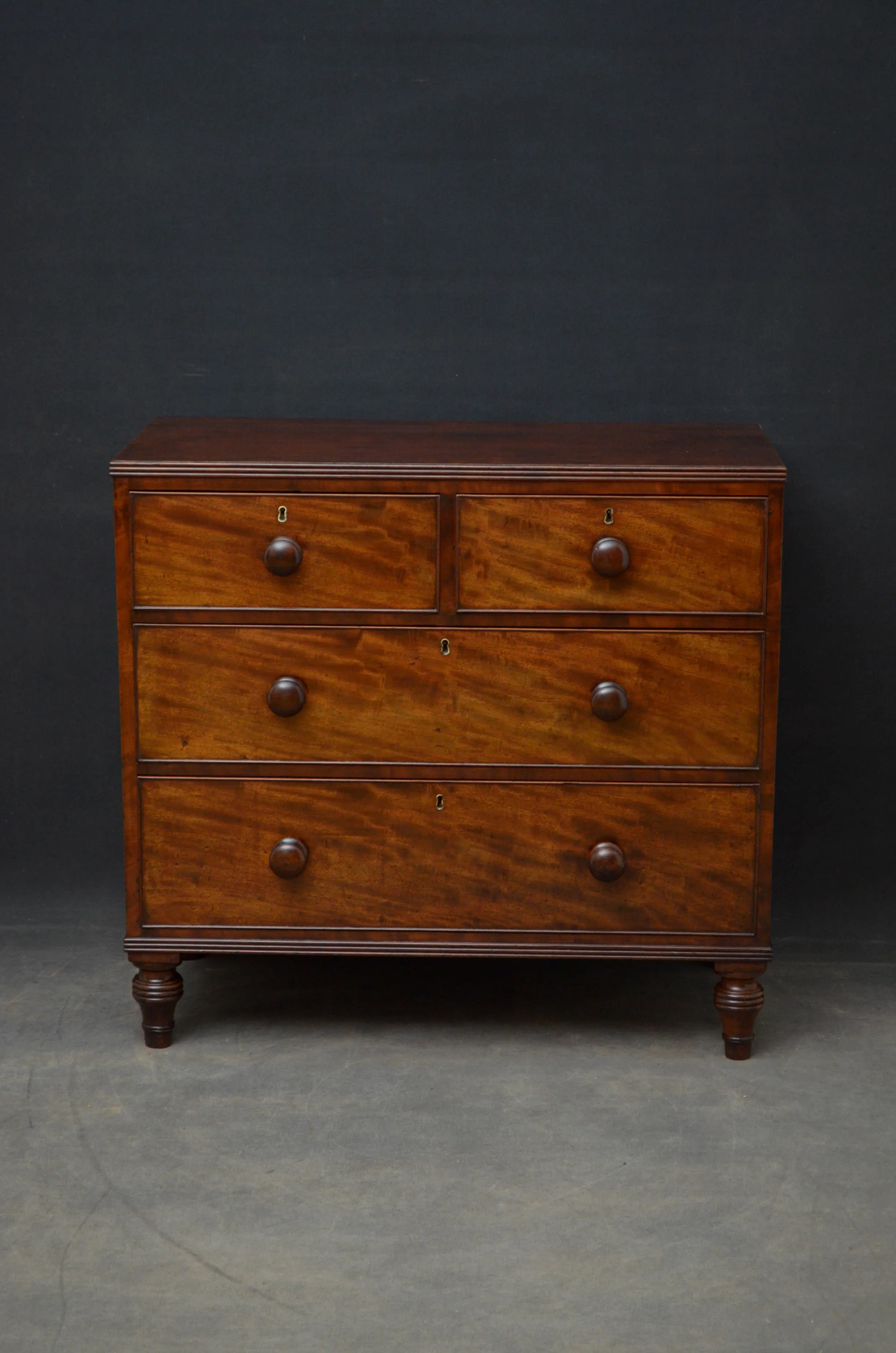
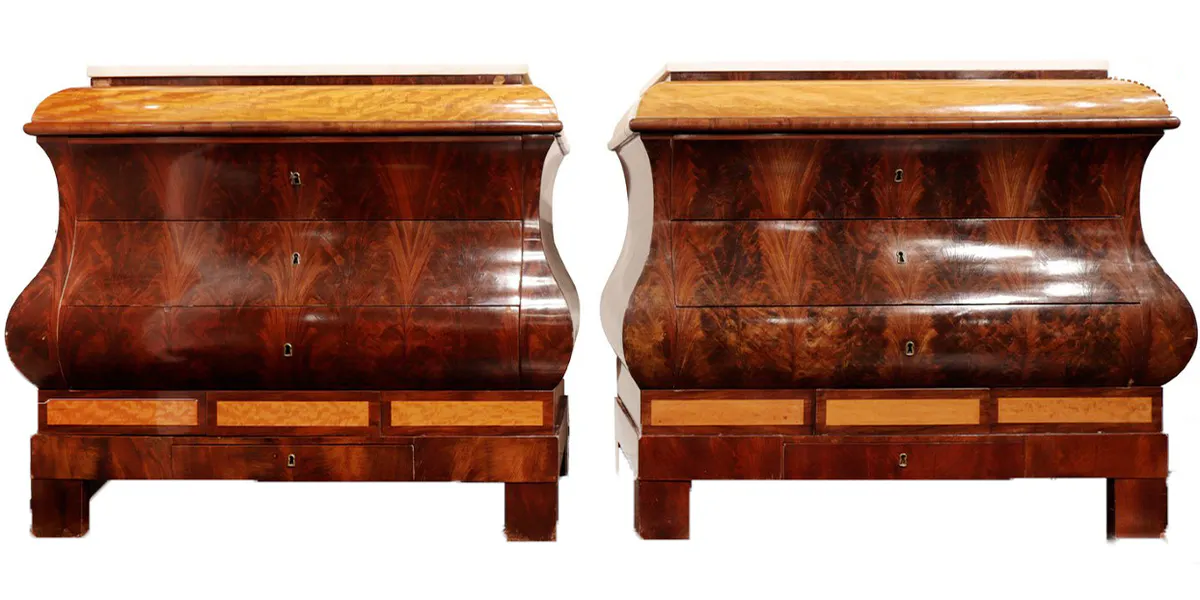
A simple yet elegant piece, this chest of drawers is well-suited to joining existing furniture without seeming out of place. The grain of the mahogany shows through the original soft finish, lending the chest a beautiful colour variegation. The reeded edges and turned legs give the piece a more delicate silhouette, and the oak-lined drawers are finished with their original knobs.
William IV (1830-1837)
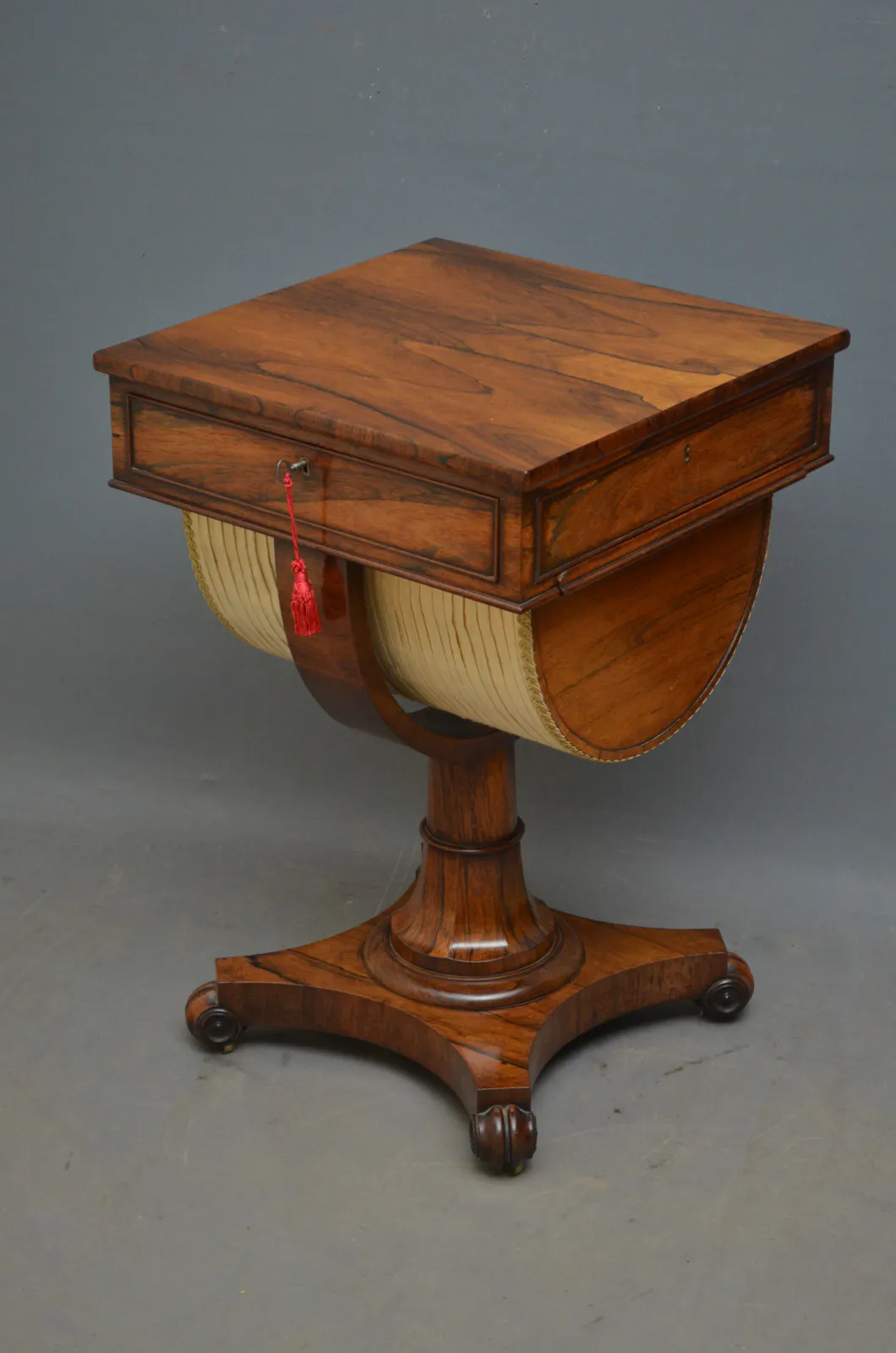
Made around 1830, this unusual table was originally designed for a dual purpose. The upper drawer opens to reveal a pen compartment and a black leather section for writing, while the silk pleated box below slides out to store sewing materials. The table is made out of rosewood, and stands on a small pedestal with a quadrofoil base that ends in scrolled feet.
Victorian (1837-1901)
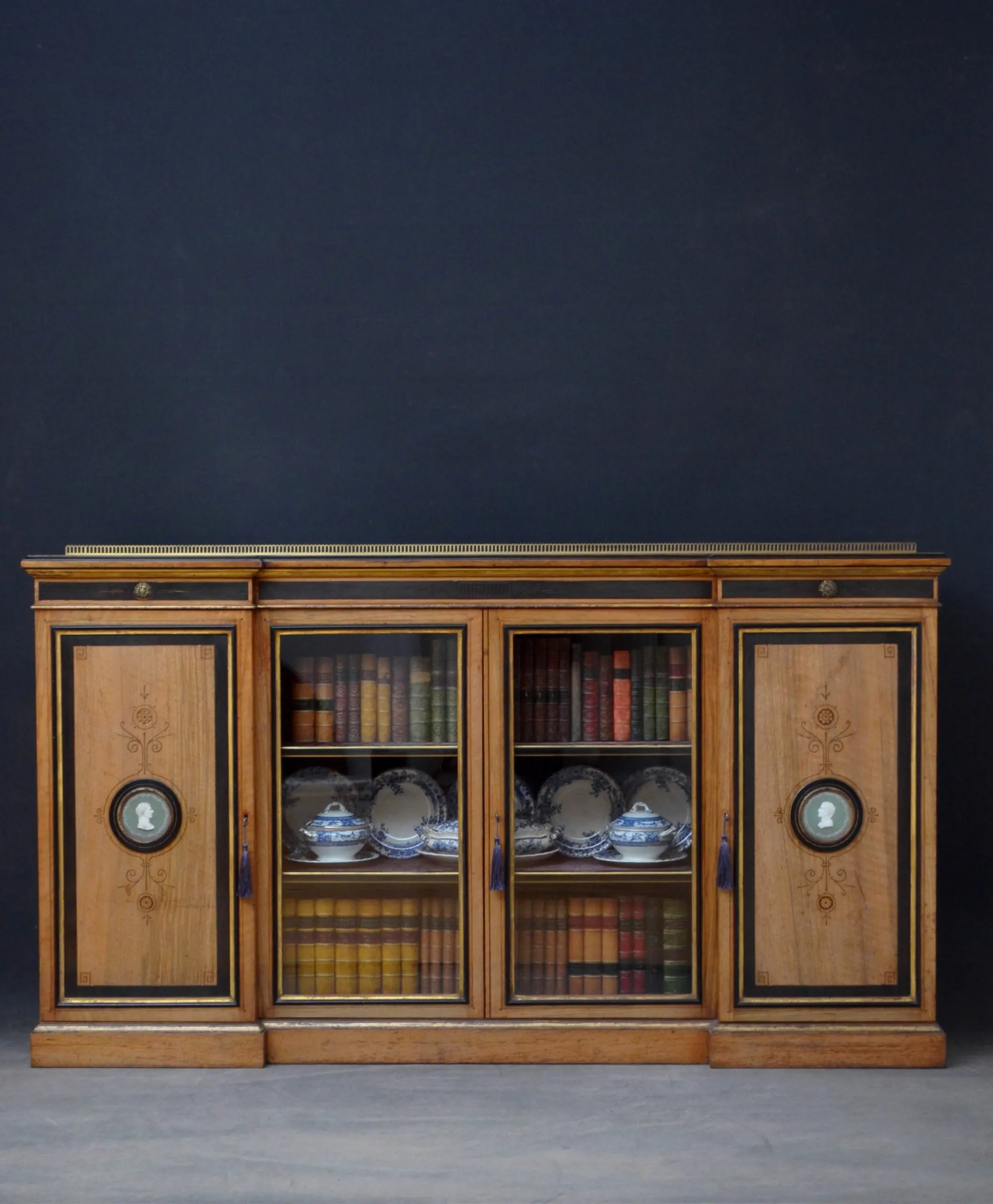
Founded by James Lamb, the renowned Lamb of Manchester was originally a cabinet-making firm that later expanded to create many types of furniture. This walnut bookcase is divided into three segments, with a glass-encased centre cabinet flanked by two panelled doors decorated with Wedgwood plaques of Nero and Caesar. The borders of the doors and the edge of the top are ebonised to appear darker and encased with gilt edging, while the doors are decorated with a lightly incised floral motif.
Edwardian (1901-1910)
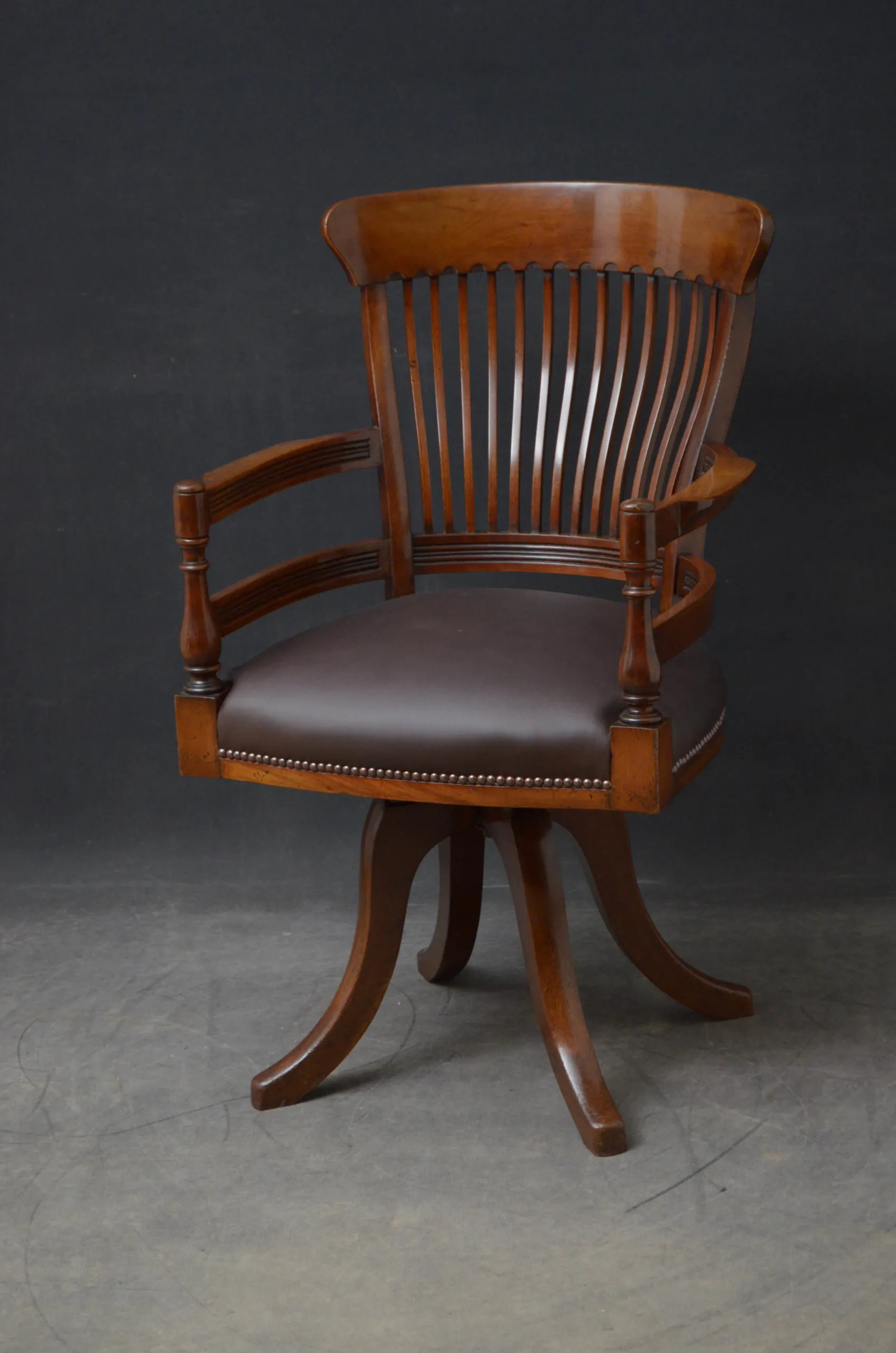
Edwardian furniture was visually ‘lighter’ than that of the previous eras, and this revolving desk chair perfectly encapsulates the new aesthetic. Standing on four gracefully s-shaped legs, the chair has a delicately curved slatted back and a double reeded arm. The seat is covered in a fine brown leather, finished with a closely studded edge.
Nimbus Antiques is located at 14 Chapel Road in Derbyshire, and offers free shipping within mainland UK. In light of the COVID-19 pandemic they are currently accepting online orders only, and their entire catalogue is available on their website.