!['The Little Mermaid' in Copenhagen [detail]. Image: Denny Richter via Wikimedia](https://images.prismic.io/barnebys/91b2dd13-f052-4fa5-9bef-6f26e0f52a85_StatuenTitel.png?auto=compress,format)
Statue, statuette, sculpture, figurine or monument. The works of sculptors have different names depending on their size, function or production method. They have been an integral part of our world since the Stone Age - a fairly long success story. Discover some of the most famous three-dimensional art in history below.
10. Unknown artist, Great Sphinx of Giza (3rd millennium BC), Giza
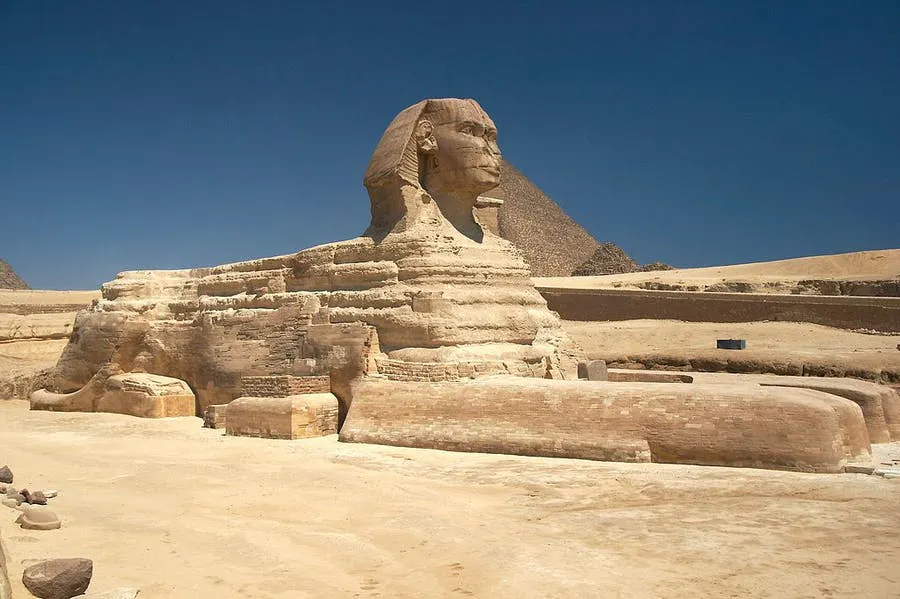
Is it a lion or is it a pharaoh? No, it's the Great Sphinx of Giza that has been guarding the pyramids not far from the ever-expanding Egyptian capital of Cairo for over 4,000 years. What original function this lion with the head of a pharaoh actually had is still unclear. The simplest explanation for its creation would be that the material was there for it. The Sphinx consists mainly of a limestone rock that was left over from the extraction of the building material for the Great Pyramid of Cheops. The head, which has probably been reworked again and again, possibly represents Pharaoh Chepren (approx. 2570-2530 BC).
9. Unknown artist, Venus de Milo (late 2nd century BC), Louvre Museum, Paris
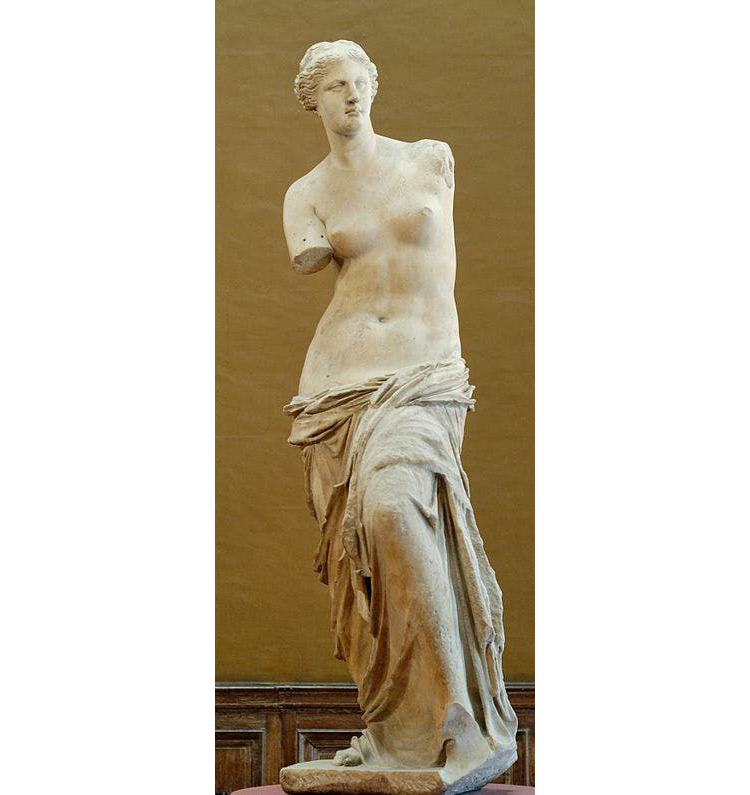
The two oldest representations of the human body come from the younger Paleolithic era and show female forms. Both were inspired by the symbol of feminine beauty par excellence, the goddess of love Venus: Venus of Galgenberg, Lower Austria, and Venus of Hohle Fels, Swabian Alps. Probably the most famous Venus in the world is Venus de Milo, which was discovered by chance by a farmer on the Greek island of Melos in 1820. The marble goddess, who unfortunately lost her arms, comes from the Hellenistic period (336-30 BC). The statue found its way to the Louvre through the French ambassador in Constantinople (Greece was then part of the Ottoman Empire), who was able to acquire it for the Paris museum.
See also: The Ten Most Valuable Sculptures Sold at Auction
8. Unknown artist, Moai (1400-1600), Easter Island
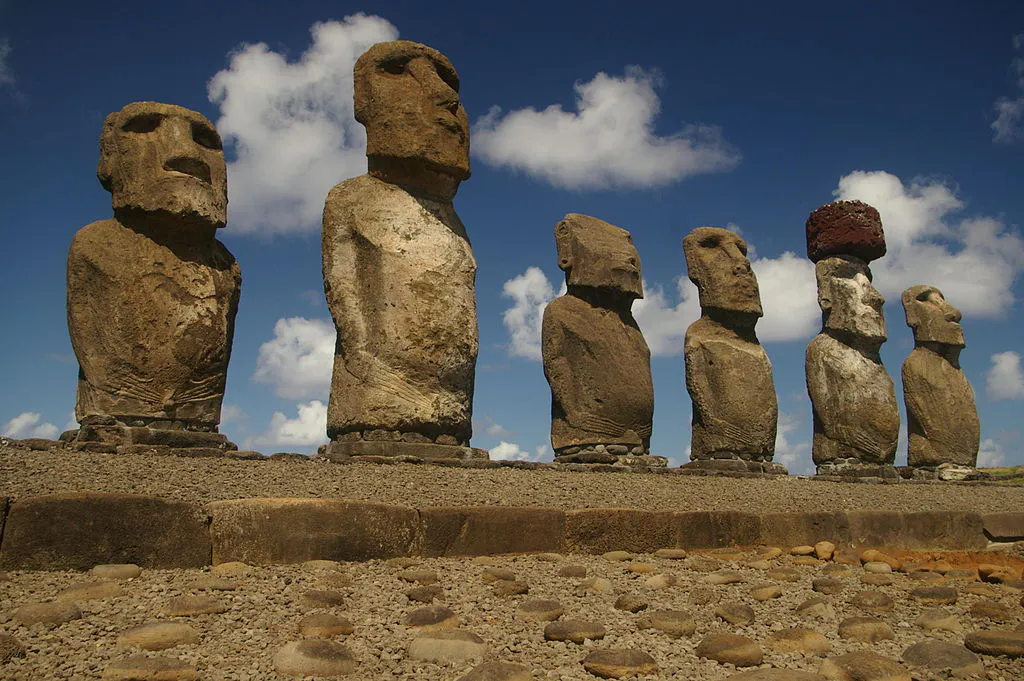
No less enigmatic than the Great Sphinx of Giza are the Moai, the colossal statues for which Easter Island in the Pacific is world-famous. The Moai, which means 'stone figure' in the Polynesian dialect spoken by the island's inhabitants, are on average 4.05 m high and weigh 12.5 tons. Presumably, they served a cult of ancestors or the dead, as they were often set up in groups in connection with altar-like graves. Today, you can still admire 638 Moai on Easter Island, though originally there were a thousand. In the 17th century, the 500 year old tradition of Moai came to an end with the fall of Easter-Island culture.
7. Michelangelo Buonarroti, David (1501-04), Accademia Gallery, Florence
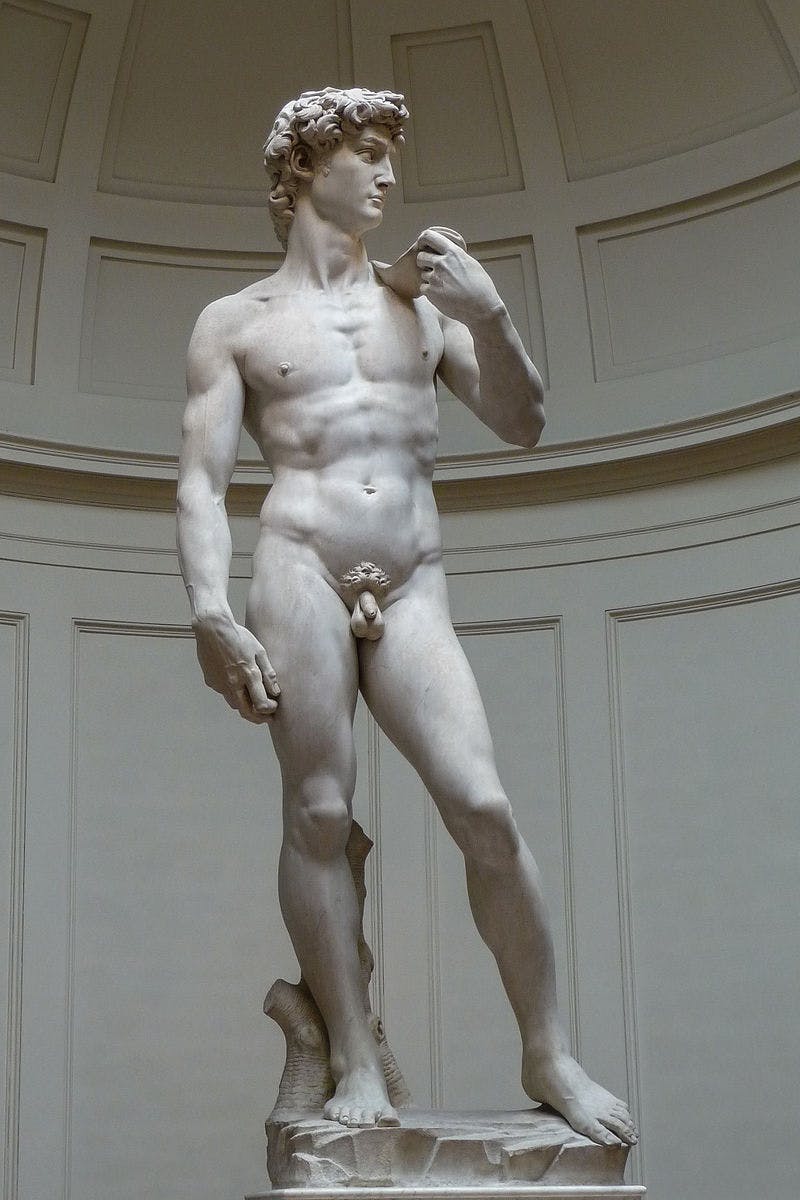
In 1501, Michelangelo Buonarroti was commissioned by the influential and wealthy wool weavers' guild of Florence to create a monumental statue of the biblical hero and later King David. He had a gigantic block of marble brought in from nearby Carrara and, from it, spent the next three years carving out the first colossal statue of the Renaissance. The result was a 5.17 m tall teenage David in form of Adam. In addition to the fact that the statue consisted of a single piece of marble, the contraposto, the posture with one standing and one bent leg, that had arisen in classical antiquity, was emphasised. In the Middle Ages, however, contraposto took a back seat.
See also: The First Works of 10 Famous Artists
6. Jérôme Duquesnoy, Manneken Pis (1619), Brussels
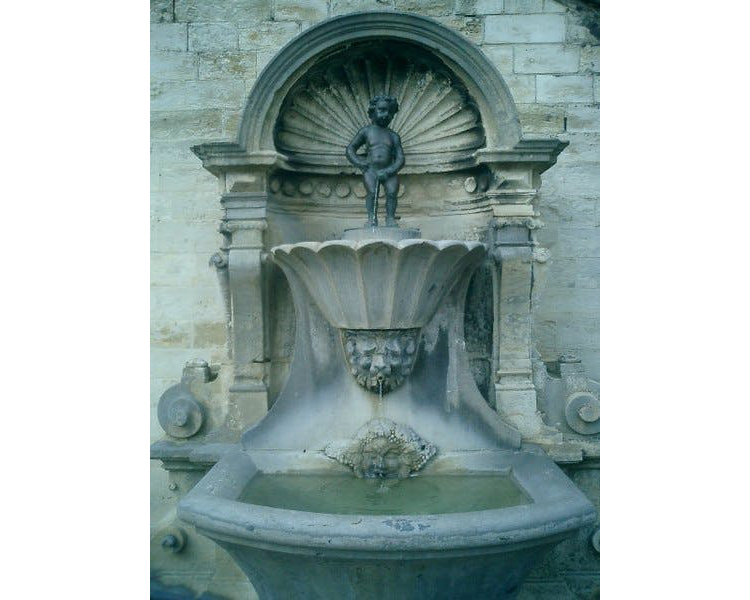
Day after day, many tourists in the capital of Belgium line up in front of a fountain to watch a 61 cm bronze boy urinate: Manneken Pis is a cult figure. The uninhibited boy was created in 1619 by the Brussels sculptor Jérôme Duquesnoy as an ornament for one of the many fountains that supplied the city's residents with drinking water. Originally intended as a simple 'drolerie', a medieval term for coarse and funny works of art, the Manneken Pis is today a symbol of resistance and freedom of expression in the capital of the European Union. With all this political weight, the fashion sense is not neglected: the Manneken Pis is dressed in suitable costumes on various occasions. 950 now hang in his – presumably walk-in – closet.
5. Auguste Rodin, The Thinker (1880-82), Rodin Museum, Paris

In the garden of the Musée Rodin in Paris you can admire a thoughtful man made of bronze and raised on a stone plinth. The Thinker was originally intended as an element of The Gates of Hell, which was to serve as the entrance to the Musée des Arts Décoratifs in the French capital. This installation never came about, but Auguste Rodin worked the rest of his life on this commission, which he had received in 1880. The literary model for The Gates of Hell was Dante Alighieri's Divine Comedy, and The Thinker is supposed to portray Dante himself. Rodin used the prize boxer Jean Baud as a model for this, with whom he also worked on other works.
See also: Henry Moore: 8 Little Known Facts
4. Frederic-Auguste Bartholdi, Statue of Liberty (1875-86), Liberty Island, New York City
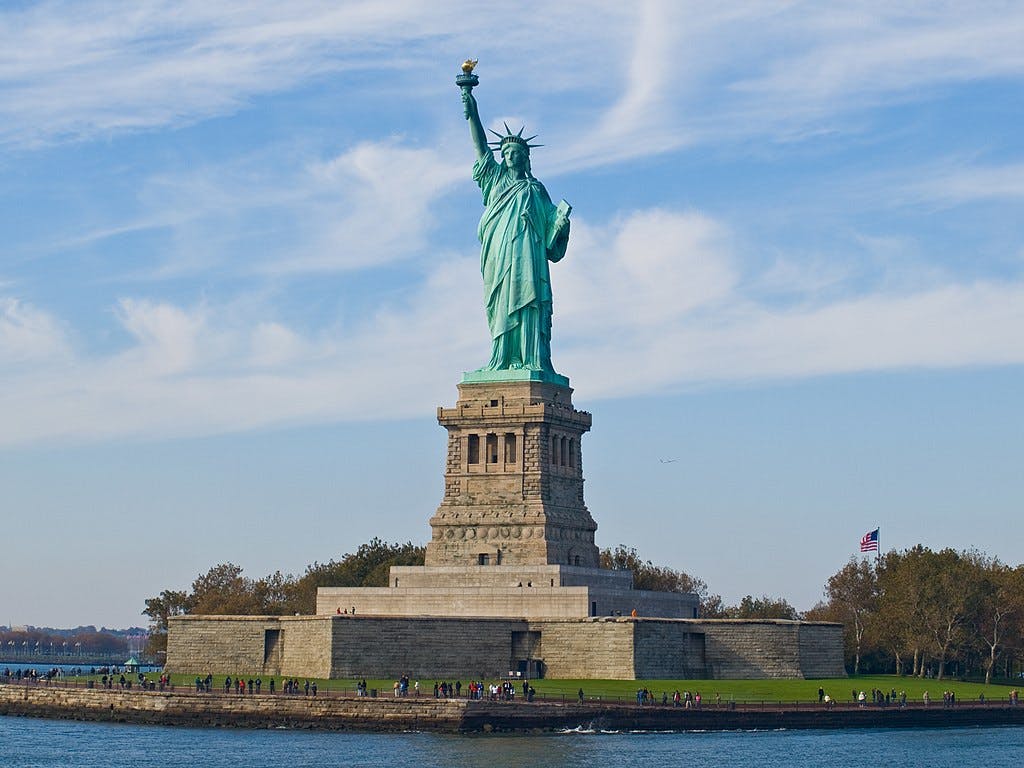
What was going on in the minds and hearts of the many immigrants who reached the port of New York in the late 19th century and saw the Statue of Liberty for the first time, located on the offshore small island called Liberty Island? The idea for a statue symbolising freedom came from the French sculptor Frédéric-Auguste Bartholdi, who found the perfect place for it in New York harbour. To finance this, donations were collected on both sides of the Atlantic. Bartholdi designed the statue in the style of a Greek goddess with a seven-pointed sun crown and a torch held in the raised hand, and named it La Liberté éclairant le monde ('Freedom illuminates the world'). On 28 October 1886, the time had finally come and the 93 m high Lady Liberty was inaugurated. Incidentally, it was not originally green: its outer shell is made of copper, which only gradually took on its current colour.
3. Edvard Eriksen, Little Mermaid (1913), Langelinie waterfront, Copenhagen
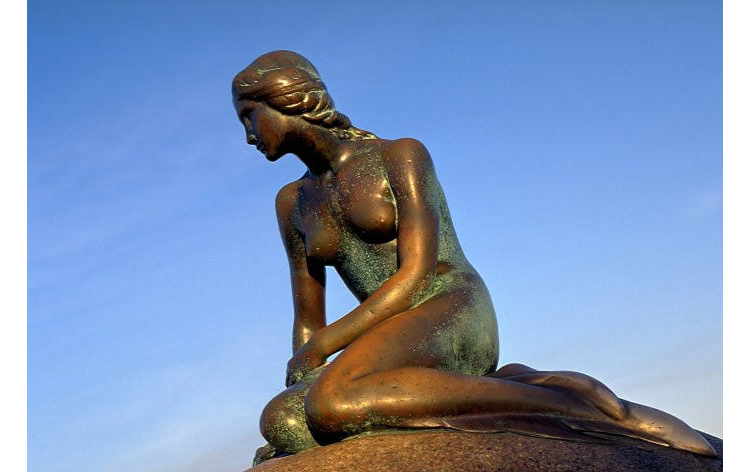
She sits very quietly and modestly on the waterfront in Copenhagen: The Little Mermaid from the fairytale of the same name by Hans Christian Andersen from 1837. In the famous tale, a mermaid falls in love with a prince from the human world and wishes to transform into a human. The 125 cm high bronze statue by the Danish sculptor Edvard Eriksen perfectly captures the longing of the mermaid, which is why it is an absolute magnet for visitors today. Eriksen used three women as a model: the sculpture Jeanne d'Arc écoutant ses voix by his French colleague Henri Chapu for the posture, the naked body of his own wife for the figure, and the face of the popular prima ballerina Ellen Price, who played the Little Mermaid in a ballet, for the expression.
2. Henry Bacon & Daniel Chester French, Lincoln Memorial, (1915-22), National Mall, Washington, D. C.
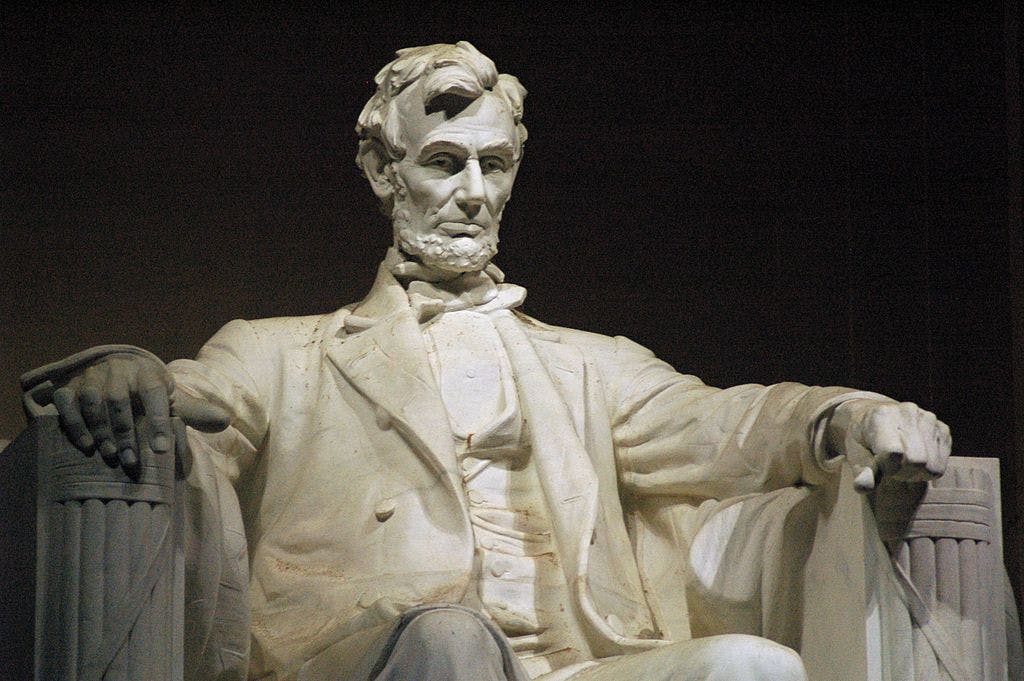
In a temple inspired by the Greek-Doric style, Abraham Lincoln, the 16th President of the United States, sits and enjoys the view over the National Mall to the Capitol. Work on the Lincoln Memorial began in 1915, on the 50th anniversary of Lincoln's death. The temple, whose 36 pillars symbolise the 36 states that existed during Lincoln's tenure, was built to a design by Henry Bacon. The 5.6 m high Lincoln statue inside is the work of the American sculptor Daniel Chester French. As with Michelangelo's David, white marble served as the material. In contrast to the Renaissance statue, however, French's Abraham Lincoln consists of not just one, but 28 blocks of marble.
1. Heitor da Silva Costa & Paul Landowski, Christ the Redeemer (1922-31), Corcovado, Rio de Janeiro
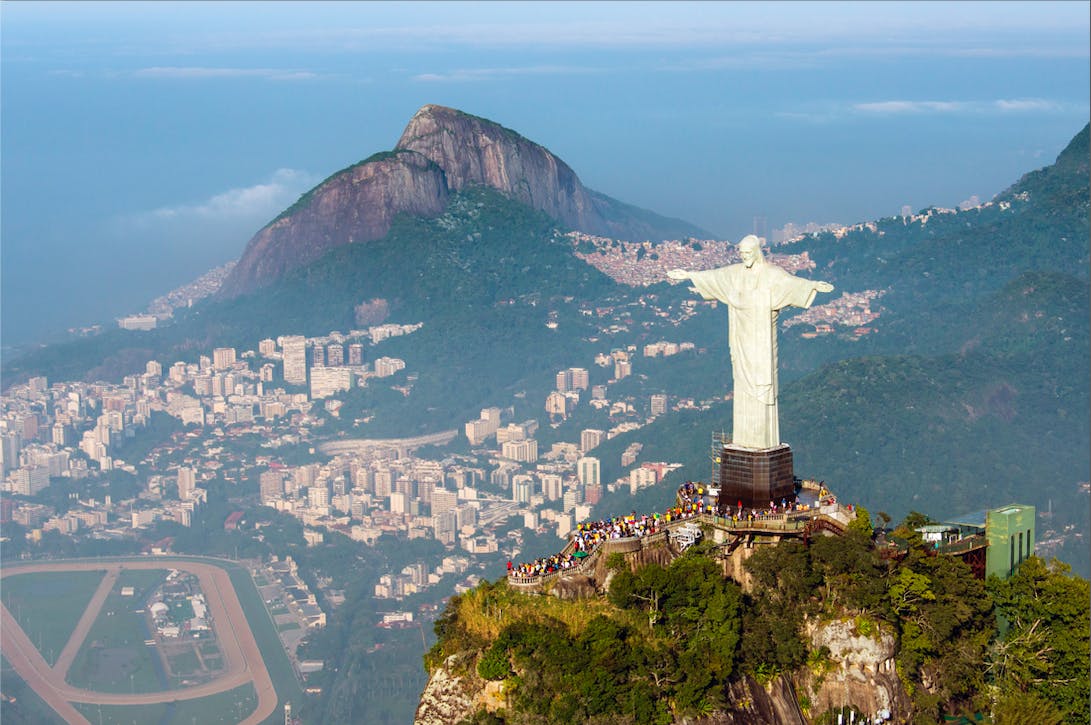
The metropolis of Rio de Janeiro is a city full of contrasts, where great joie de vivre and great poverty go hand in hand. The statue of Christ the Redeemer has been overlooking the city with outspread arms since 12 October 1931. On the occasion of the 100th anniversary of Brazilian independence, the Brazilian civil engineer Heitor da Silva Costa was commissioned to design a sculpture in 1922. For the design of the hands and the head, he turned to the Polish-French sculptor Paul Landowski. The result was a 30 m high statue in the Art Deco style, which is made of reinforced concrete, which in turn is covered with a soapstone mosaic. The 710 m high Corcovado mountain was chosen as the installation site, from which Christ Redeemer looks out over the city and Guanabara Bay out to the famous Sugar Loaf mountain.