![Fransisco Goya, ‘Equestrian Portrait of Don Manuel Godoy, Duke of Alcudia’ [detail], 1794, image © Sotheby's via Barnebys price bank](https://images.prismic.io/barnebys/0fdb18dc-71ed-492a-8598-1f54c2050679_Goya+cover.jpg?auto=compress,format)
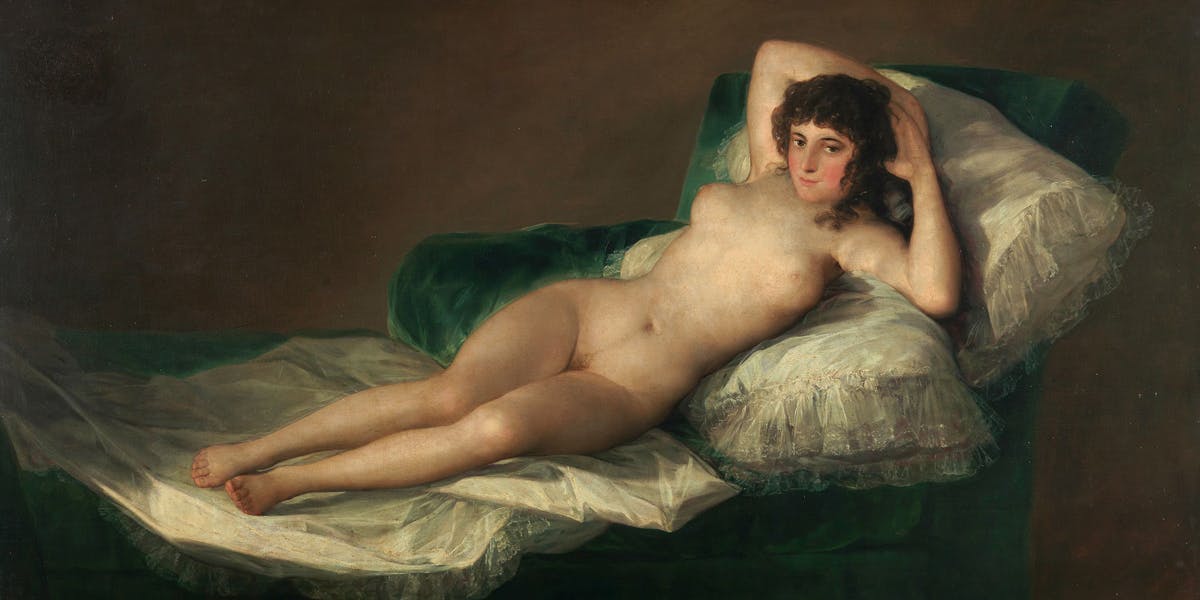
The Aragonese painter and engraver Francisco José de Goya y Lucientes represented the vagaries of the history of his time, and especially the upheavals of the Napoleonic wars in Spain. By trying his hand at portraiture (the most famous being his controversial La Maja desnuda, or The Maja Nude), Goya paved the way for a new bourgeois art. His sometimes dangerous relations with the Spanish court lifted him to the top and greatly contributed to his notoriety. Goya introduced several stylistic breaks that initiated romanticism and heralded the beginning of contemporary painting. Goyesque art is considered a precursor of the pictorial avant-gardes of the 20th century. Here are his seven most expensive works:
7. The Butterfly Bull
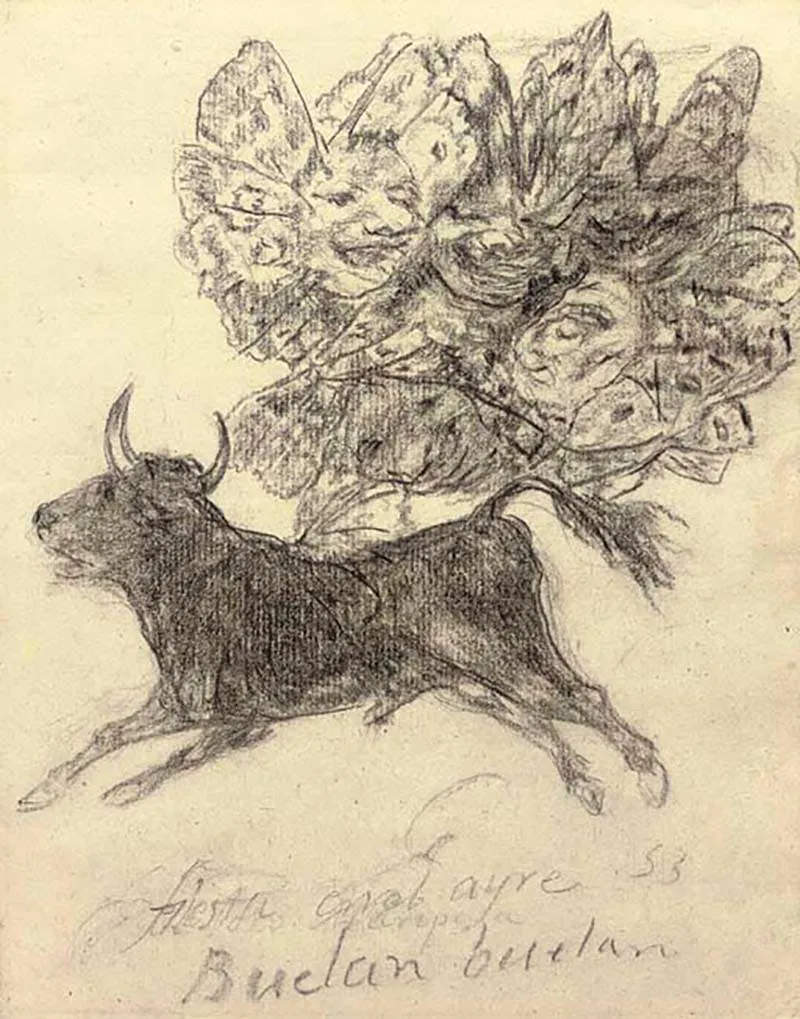
In 1976, Francisco Goya began to fill albums; he drew all kinds of characters who, most often, tackle a specific task. Goya not only drew the scenes he saw, the mundane aspects of everyday life, but also the spiritual themes specific to the human condition. In thirty years, he managed to fill eight albums, of different sizes and numbers of pages, and which included nearly 550 drawings. It was Eleanor Sayre (an art historian specializing in Goya's work) who undertook to label all the albums, affixing the letters A to H.
El toro mariposa was the 53rd page of album G, one of two albums that Goya seemed to use simultaneously from 1825, after his arrival in Bordeaux in September 1824. The subjects of these albums are varied, they include scenes of madness and despair, satirical subjects, and also some French themes.
This sketch, like many drawings from Goya's private albums, is subject to several interpretations. In this scene, heads intertwine in the shape of butterfly wings and float in the air, carrying a charging bull, a probable reference to the balloons sold during bullfights. Sold for £1.46 million at Christie's in 2006, this is the painter's seventh most expensive work.
6. Useful Work
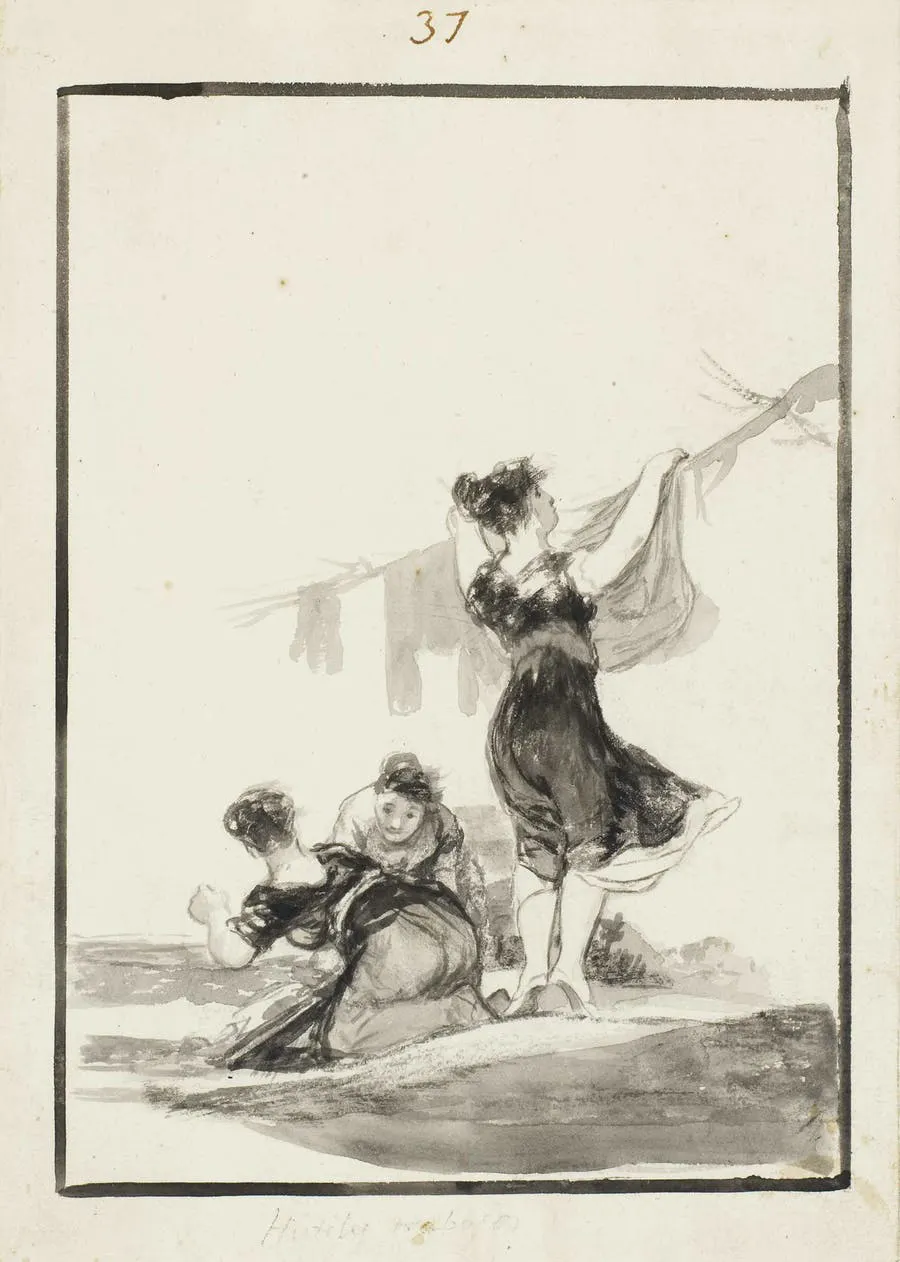
This freehand drawing with rough lines, executed in ink on paper, remained in Goya's family until 1854 (the year of his death), then it moved into the possession of the painter Federico de Madrazo between 1855 and 1860. Purchased in Paris by Jean Friborg in 1930, the work passed to his descendants and remained in the family until its auction sale at Christie's in 2011, when it achieved £2.28 million.
See also: The 5 Most Notorious Art Forgers
You can see the letter ‘M’ sketched in brown ink in the upper right corner. The inscriptions that we sometimes find on these pages demonstrate the intellectual progress of Goya who, not without irony, exclaims, asks questions, advises, comforts and even goes as far as to make threatening notes. The painter's grandson, Mariano, deconstructed the albums to sell the drawings separately, notably to Federico de Madrazo, who ended up selling them in turn, completely destroying their original order and even deciding to number them again.
5. Equestrian Portrait of Don Manuel Godoy, Duke of Alcudia
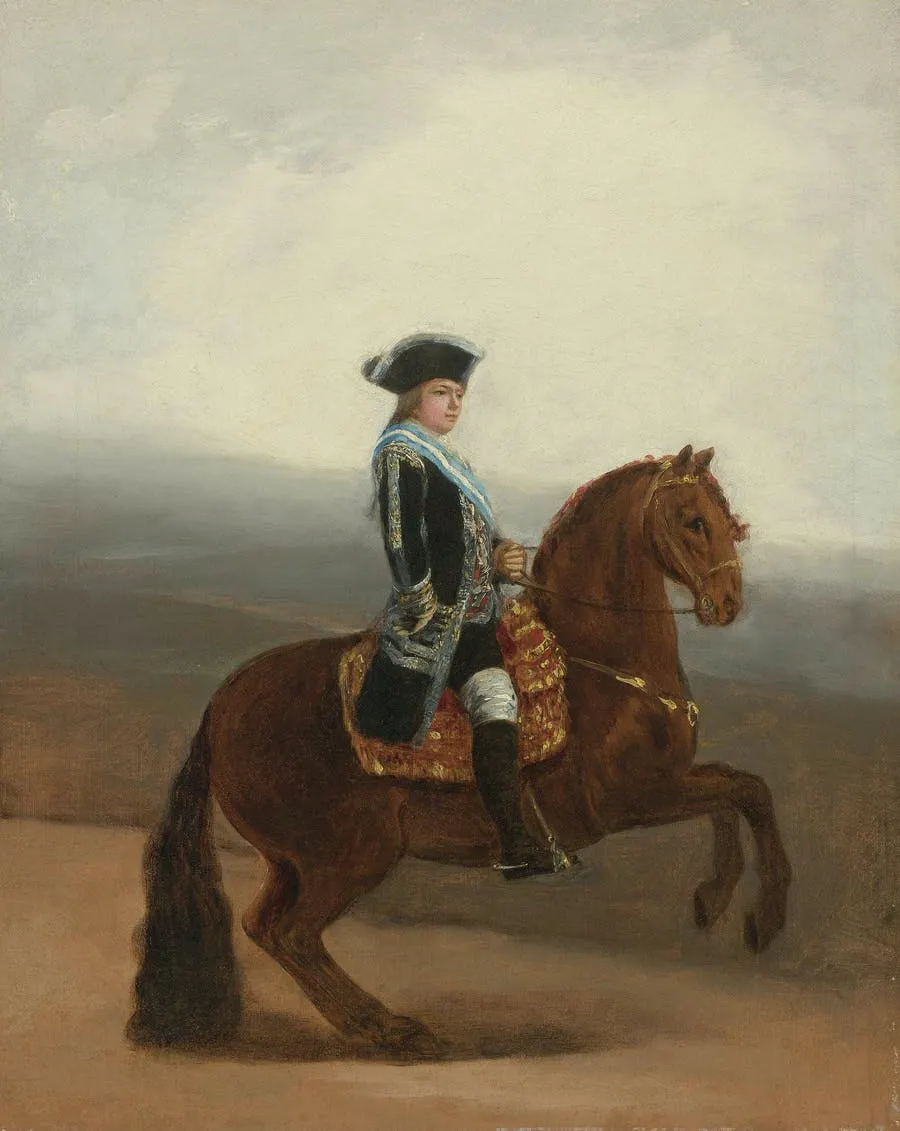
This portrait of Don Manuel Godoy, Duke of Alcudia, was painted in 1794. The Duke of Alcudia was the lover of Maria Luisa de Bourbon Parme (the Queen of Spain), and also the most powerful political and military figure under the reign of Carlos IV. His contemporaries nicknamed him ‘The Prince of Peace’, a nickname that followed him throughout his life. Between 1792 and 1808, Don Manuel Godoy was part of what Queen Maria Luisa liked to call the ‘Trinity on earth’: even though Carlos IV was the official head of state, it was Godoy who really held the reins of power. This portrait went under the hammer at Sotheby's in July 2009 for £2.6 million.
4. They Go Down Quarreling
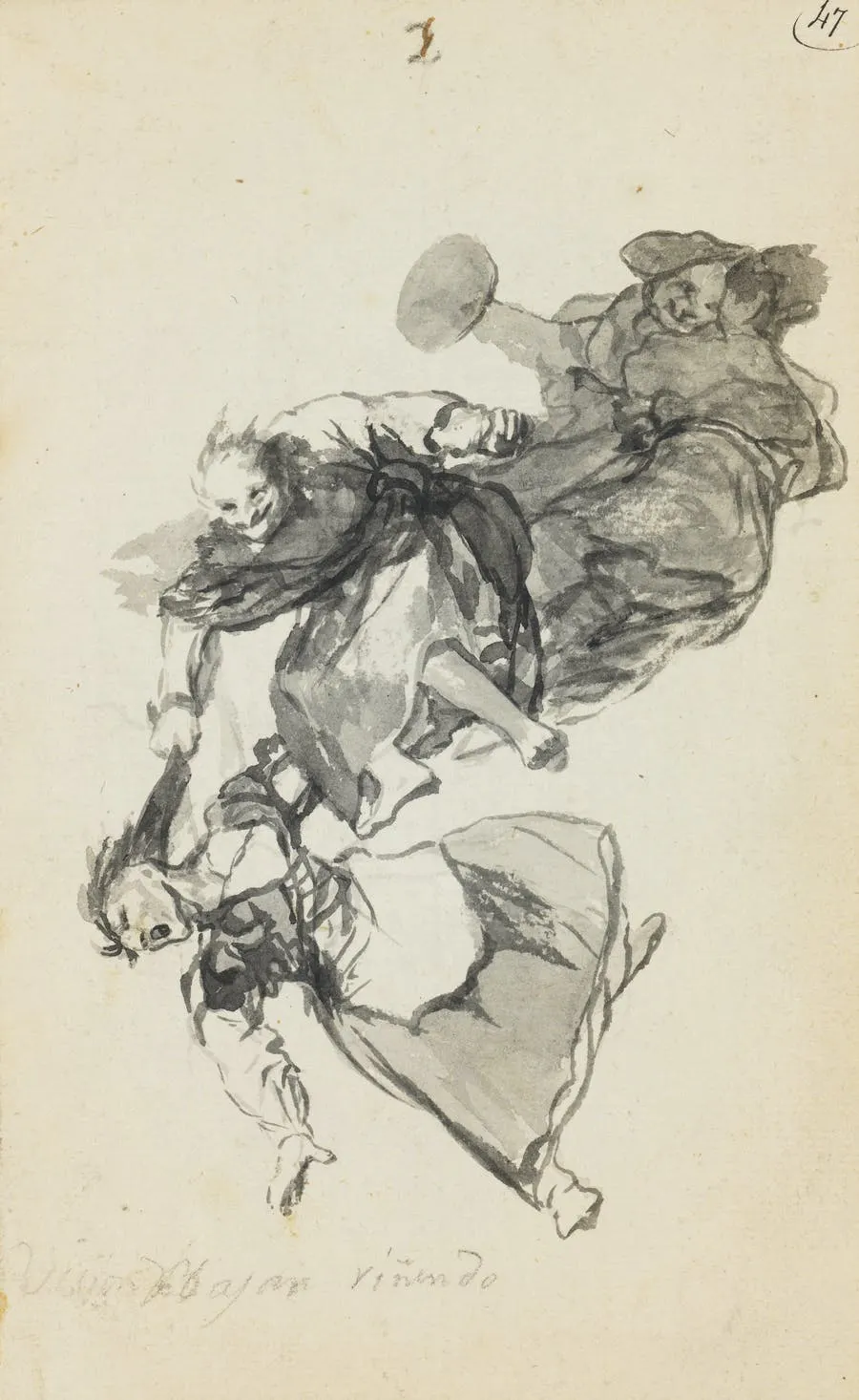
We can see on this drawing an inscription by the hand of the artist himself: Bajan riñendo, as well as the number ‘2’, a number written with a pen that has been corrected from a ‘1’ or a ‘5’. The work represents two women in the middle of a fight who are falling into the void.
The drawings that make up Goya's eight albums were not preparatory studies for paintings or engravings – the artist used to paint with a brush directly on his canvases, without sketches made beforehand. Bajan riñendo, a sketch that appeared on the first page of Album D, was sold at Christie's in July 2008 for £2.28 million.
3. A Still Life of Dead Hares
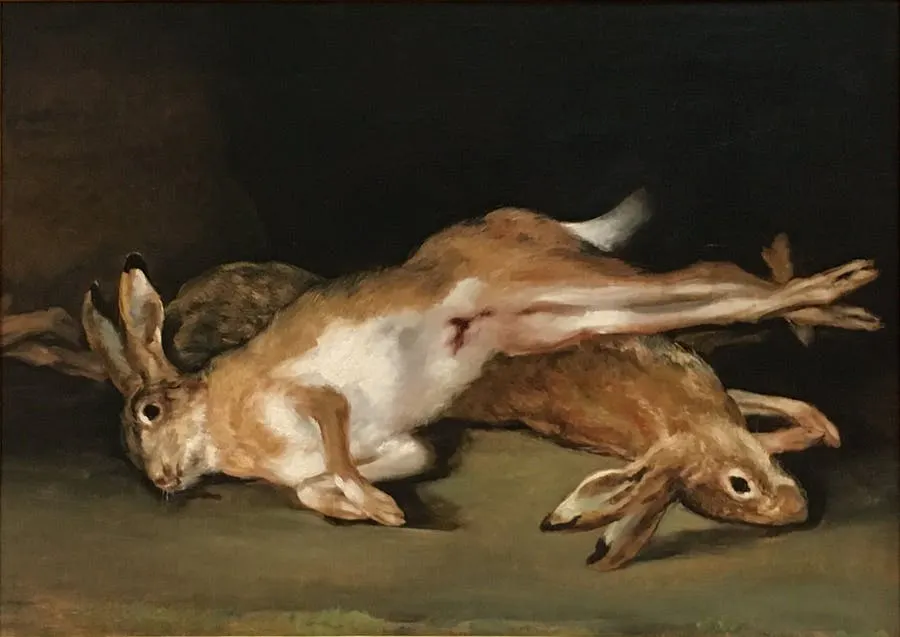
A Still Life with Dead Hares belonged to the Goya family until the middle of the 19th century, before it passed into the hands of the family of Francisco Javier de Mariátegui and left Spain in May 1877 to be sold in Paris. All traces of the canvas's path were lost until 24 January 2003, when Christie's collected it in order to sell it at auction for £3.14 million, 153% above its estimate.
According to the Goya Foundation in Aragon, this still life systematically draws the viewer's eye to the two elongated hares, their bodies forming a sort of cross that stands out against the neutral background, while we vaguely see a wicker basket on the left side of the canvas. Goya's series of still lifes demonstrates his great talent for the genre as, despite the limited range of colors used, both animals' furs exhibit an impressive texture.
Want more articles like this directly in your inbox? Subscribe to our newsletter!
2. Suerte de Varas (Bullfight)

Death also plays a role in Goya's second most expensive work, but not in a silent way as in the previous painting, rather in the middle of an arena surrounded by loud spectators. Goya's best-known engagement with the bullfight theme is in the form of the etching cycle Ta Tauromaquia published in 1816.
The present oil painting was created in 1824, four years before the artist's death. It had been held in the same collection of Spanish owners for many years until it was auctioned on 9 December 1992 at Sotheby's. For £5.94 million, the J. Paul Getty Museum was able to take it to Los Angeles, where it has been on display ever since. For nearly 30 years, Bullfight had remained Goya's most expensive painting.
1. Portrait of Doña María Vicenta Barruso Valdés and Portrait of her mother Doña Leonora Antonia Valdés de Barruso

The new record for Goya was set in early 2023 when his Portrait of Doña María Vicenta Barruso Valdés and Portrait of her mother Doña Leonora Antonia Valdés de Barruso sold for £13.6 million at Christie's. The portrait duo was commissioned in 1805 by Don Salvador Anselmo Barruso de Ybaretta, the husband and father of the two women, who was a wealthy member of the Spanish bourgeoisie. This shows a broadening of Goya's patronage in the late 18th century to include others besides members of the Spanish court and nobility. The portraits were rare in the sense that only a few of Goya's portraits are in private hands (with most in Spain) and it is the only pair of two women.
Find more articles in Barnebys Magazine
This is an updated version of the article originally published on 29 July 2020.