Artists use pigments and understand colour subjectively. How they perceive variations in colours and tones can define their entire artistic approach. Some artists are defined by the colour palette that fits best in their body of work, while others are constantly looking for the one that will express the concept of their next creation.
Among the infinite palette available to visual artists today, a handful of colours are synonymous with an artist's oeuvre. Sometimes inimitable, sometimes controversial, but always highly prized by the creative industries, here are four colours with a unique history.
The Klein Blue
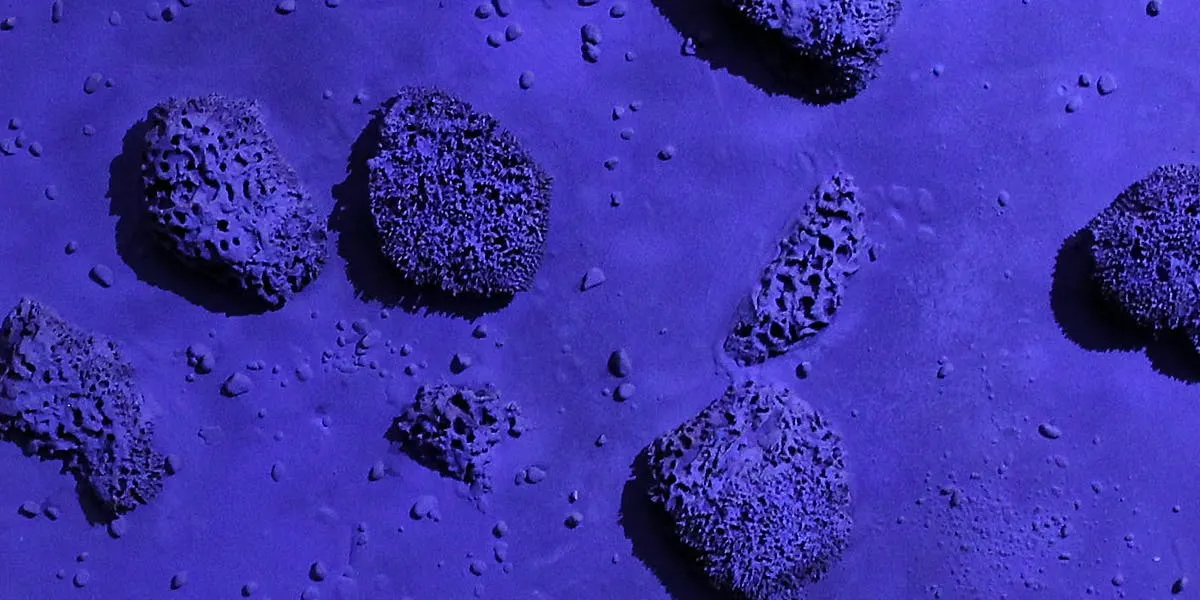
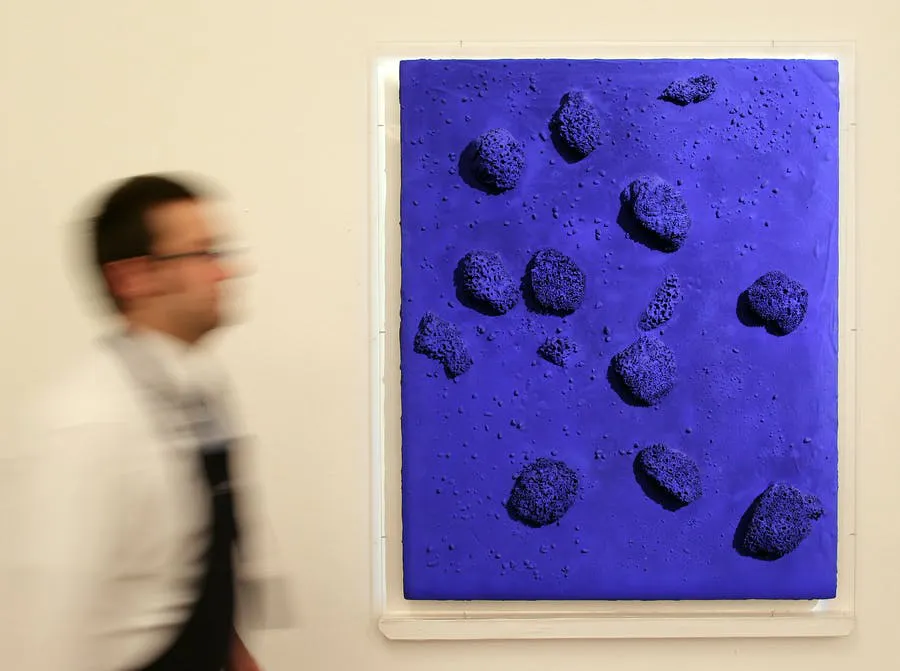
Probably the most famous colour created and used by an artist, the IKB (International Klein Blue) is a shade of deep blue associated with the French painter Yves Klein. Klein Blue was developed by the artist in collaboration with Edouard Adam, a Paris-based paint dealer, whose shop is still located on rue Boulevard Edgar-Quinet in Montparnasse.
The visual impact of Klein Blue lies in its strong dependence on ultramarine blue, but also in the substantial quantity that the artist deposited on his works, which further textures the canvases.
See also: Yves Saint Laurent & Art: The Mondrian Collection
The uniqueness of the colour doesn't derive directly from the pigment, but rather from a matte binder developed by Adam in which the colour is suspended, and which allows the pigment to retain its original intensity and luminosity. This binder is now called 'Medium Adam 25'. After merging it with ultramarine blue, Klein deposited the formula in the Soleau envelope No. 63,471 at the National Institute of Intellectual Property in May 1960.
The Klein Blue has appeared in many films, several works of literature and even on the faces of the electronic music trio Blue Man Group.
The Vantablack
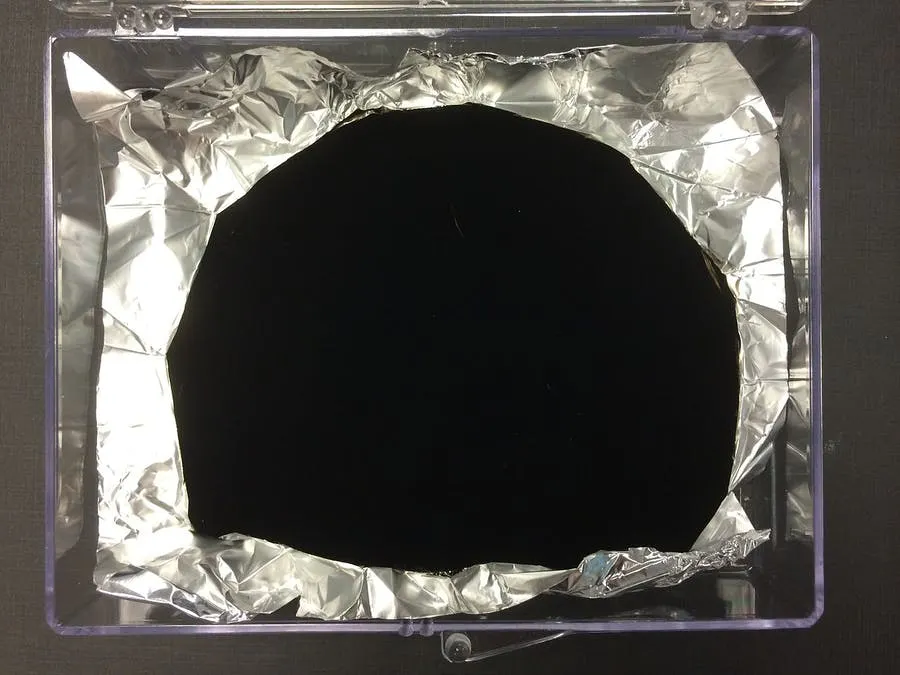
Some may remember the acquisition of the Vantablack by artist Anish Kapoor in February 2016, an act that caused waves of protests in the art world.
See also: 5 Portraits of Women in Black
Vantablack has extraordinary properties and is the most absolute black that can be found, since it has an absorption coefficient of 99.965%. This deep black is made up of carbon nanotubes whose vertical arrangement is similar to that of a very dense 'forest'. The name of the colour also includes the English acronym 'Vertically Aligned NanoTube Arrays'.
The English company Surrey Nanosystems developed the Vantablack in 2012. The colour was then marketed in two forms, for direct application or as a spray. In Vantablack, light, instead of being reflected, is diffused by the nanotubes then remains trapped in the dense 'forest', before being transformed into heat.

See also: The Woman Behind One of the World's Most Famous Patterns
Four years after its conception, Anish Kapoor bought the Vantablack. By buying it, he appropriated the exclusive rights for its artistic use. Kapoor had realised the creative potential of the material long before its acquisition and had been working on its use since 2014. He confided that the pigment was very technical, extremely difficult to handle and apply in sufficient quantity.
Artists around the world have protested against Kapoor, not so much because he owned the colour, but because he prohibited its use to anyone else.
"I have never heard of an artist monopolising a material," artist Christian Furr said in an interview with the Daily Mail. "All artists have a soft spot for pure black (Turner, Manet, Goya…). This black is dynamite for the art world. We should all be able to use it. It is not fair that it belongs to only one person."
PINK pigment
The response to the Kapoor act didn't take long. In November 2016, the pinkest of roses entered the market, with one rule: it is available for everyone… except for Anish Kapoor!
The PINK pigment was purchased and is sold by artist Stuart Semple for just $3.99 a jar. It is considered the most intense pink ever created. The extra-concentrated pigment of PINK pink reflects light so powerfully that when applied, the paint creates a fluorescent effect.
Semple didn't hide his indignation that Kapoor deprived all artists of an exceptional commodity. He said he was dying to use the Vantablack for his own work and that he was terribly disappointed to hear the news.
See also: The 10 Most Scandalous Artworks
Online buyers are even required to sign a sworn statement that they are not Anish Kapoor, are not related to him, and that the pigment will not end up in his hands. The punishment, as symbolic as it was, did not last very long: in December 2016, Kapoor published an insulting image on his Instagram showing his middle finger dipped in Semple's pink pigment. Public reactions to Kapoor were fierce, calling this little colour war "ridiculous".
In response, Semple published a video of him making the hand signal for peace, his two fingers covered with a substance strangely resembling Vantablack. The artist's colleague Emily Mann, after being asked about the authenticity of the black pigment in the video, said that she could not, "for obvious reasons", deny or confirm that it was Vantablack. Semple told Gizmodo magazine that he didn't want to stir up tension, saying "Anish is the one that’s deprived the artistic community of the black, stolen our pink and given us the middle finger, we’ve just been making cool brightly coloured glittery stuff." The statement has seemed to close the debate since there have been no new public attacks between the two artists since.
Love Symbol #2
This colour has history in the music industry. In 2017, the Pantone Colour Institute announced the release of its new shade of purple, Love Symbol #2, dedicated to the singer Prince.
The estate of the legendary singer of Purple Rain made this purple Prince's official colour. The shade, which has risen to the rank of certified colours, is mainly inspired by his Yamaha piano, but also by his guitar and his eccentric outfits that used purple as his trademark for decades.
See also: Worth Millions: Behind the Appeal of Celebrity Memorabilia
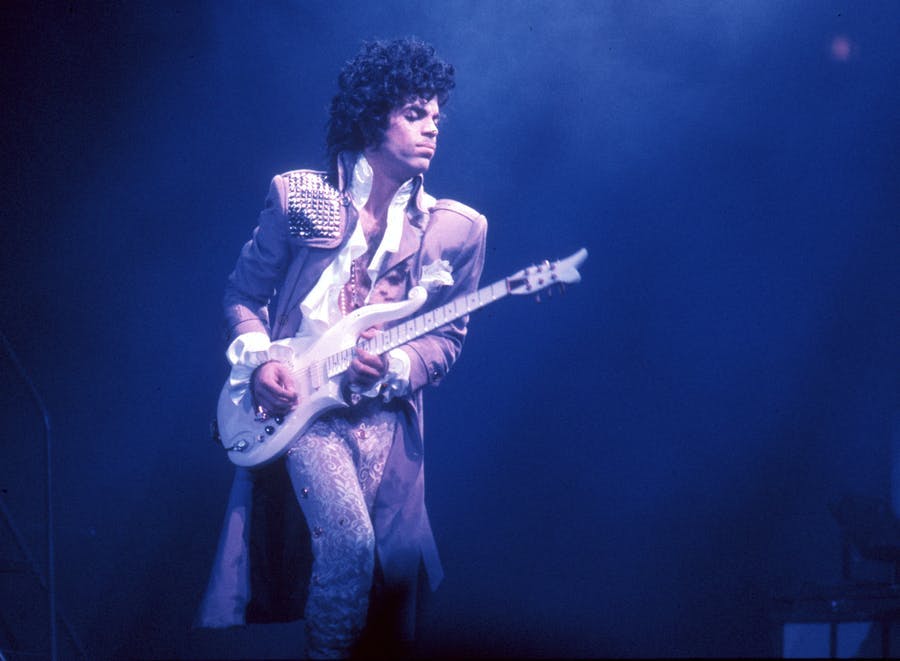
The tribute shade is accompanied by the famous hieroglyph of the singer, a mix of the the symbols of Man and Woman, which was found on many of his clothes and accessories.