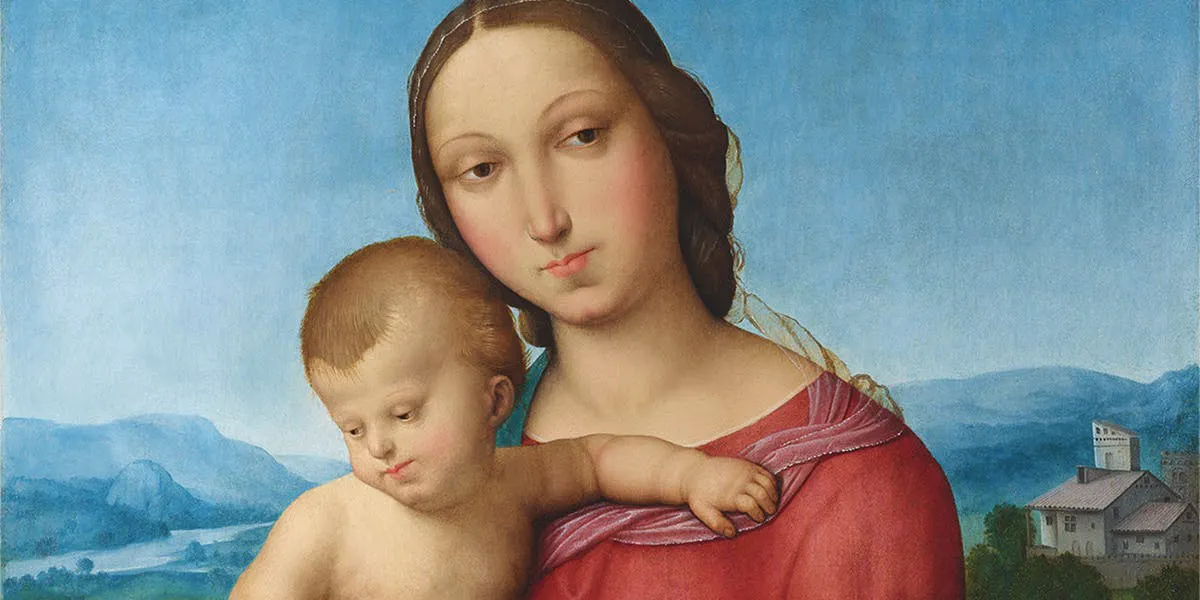
Dorotheum in Vienna is holding their auction week from 22-24 October, and the spotlight is on Old Masters and paintings of the 19th century. The absolute highlight of the Old Masters is a previously unseen Madonna and Child, which has been owned by the same noble family for nearly two hundred years, and is now appearing at auction for the very first time.
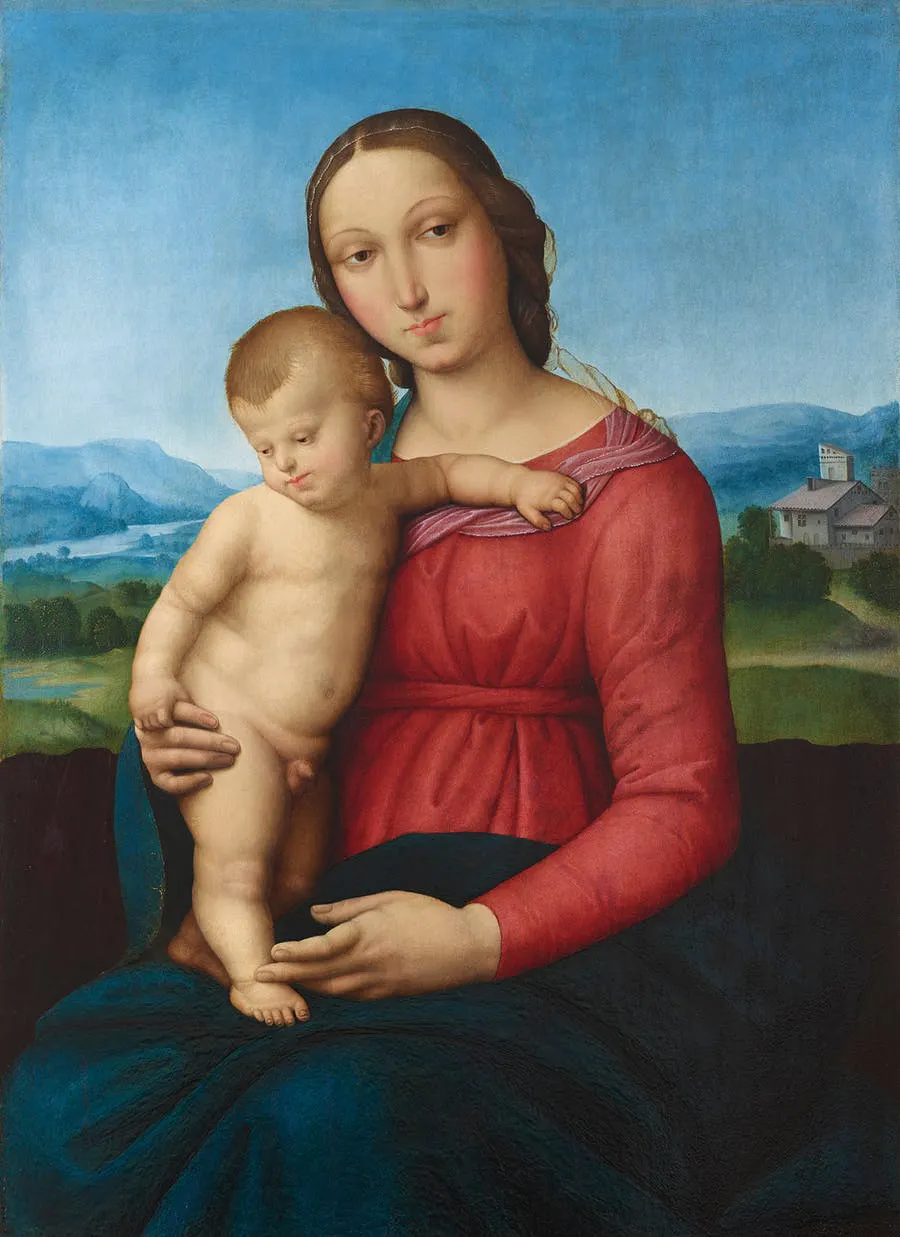
The piece is oil on hardwood panel, and it has been carefully studied both stylistically and scientifically to ensure its authenticity and determine its origins. After much research it has been dated to the early 16th century, and there is much to suggest that the work is from Raphael’s immediate environment; perhaps even carried out under his supervision and according to his designs.
However, there is another work that is anticipated to reach an even highest amount: Artemisia Gentileschi’s David with the head of Goliath. This iconic biblical piece was painted in 1631 in Naples, where, very unusually for women of the time, Gentileschi maintained her own workshop.
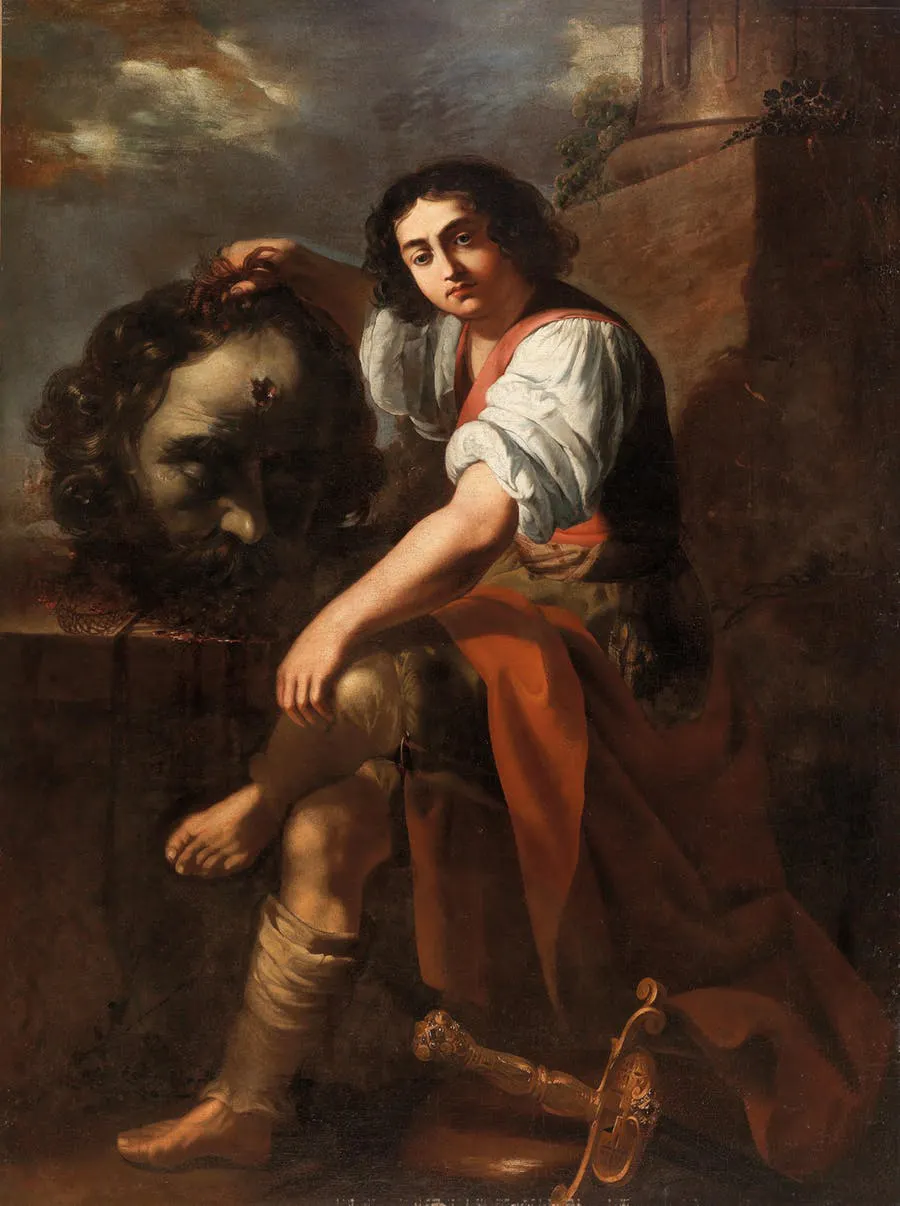
David, whose hand rests on the severed head of giant Goliath, looks directly and confidently into the eyes of the onlooker, with a similar calm intent shared by Gentileschi's most famous heroine: Judith, cutting off the head of her tormentor Holofernes.
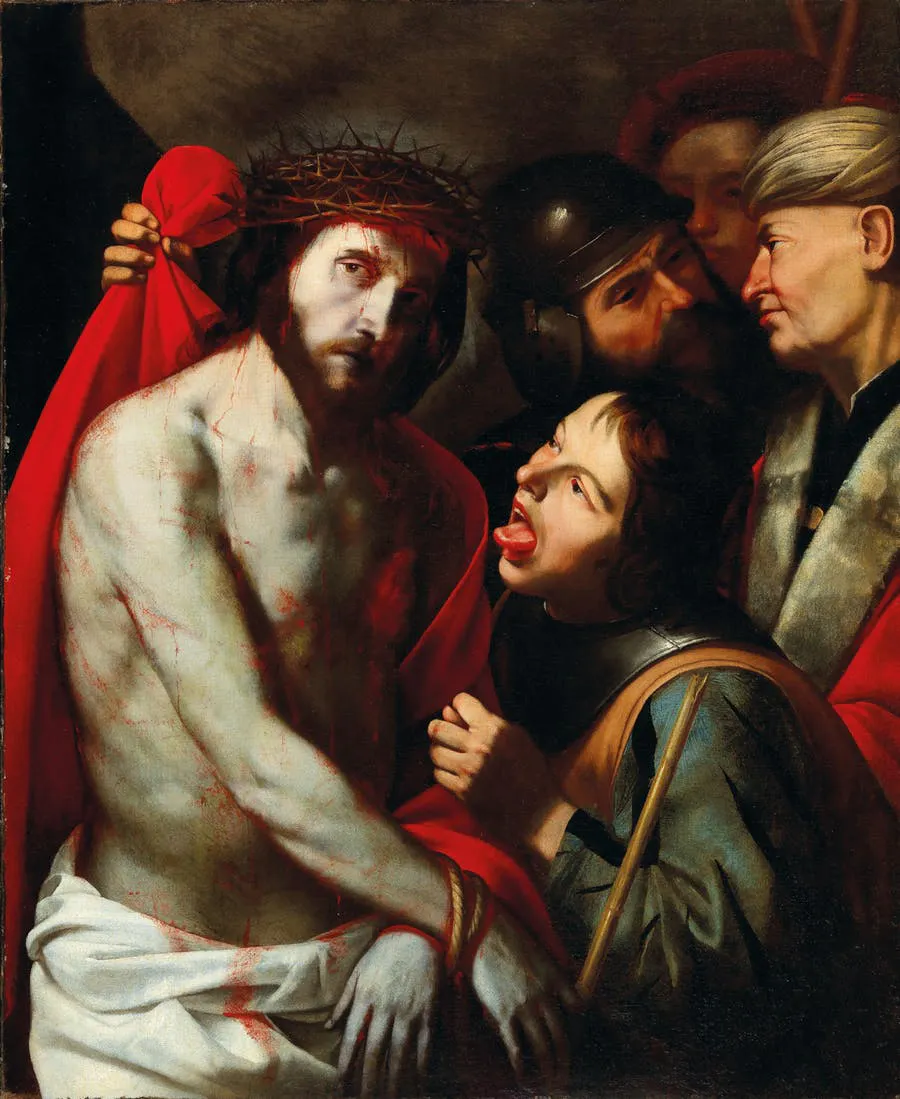
Jusepe de Ribera painted with great intensity, and around 1615 produced The Mocking of Christ, in which he displays the sharp contrast between the ashen Christ and his young, jeering tormenter. The man sticks his tongue out at the bound and bloodied Christ, and holds his left hand in the ‘fig’ sign, a rude gesture that supposedly also wards off the evil eye.
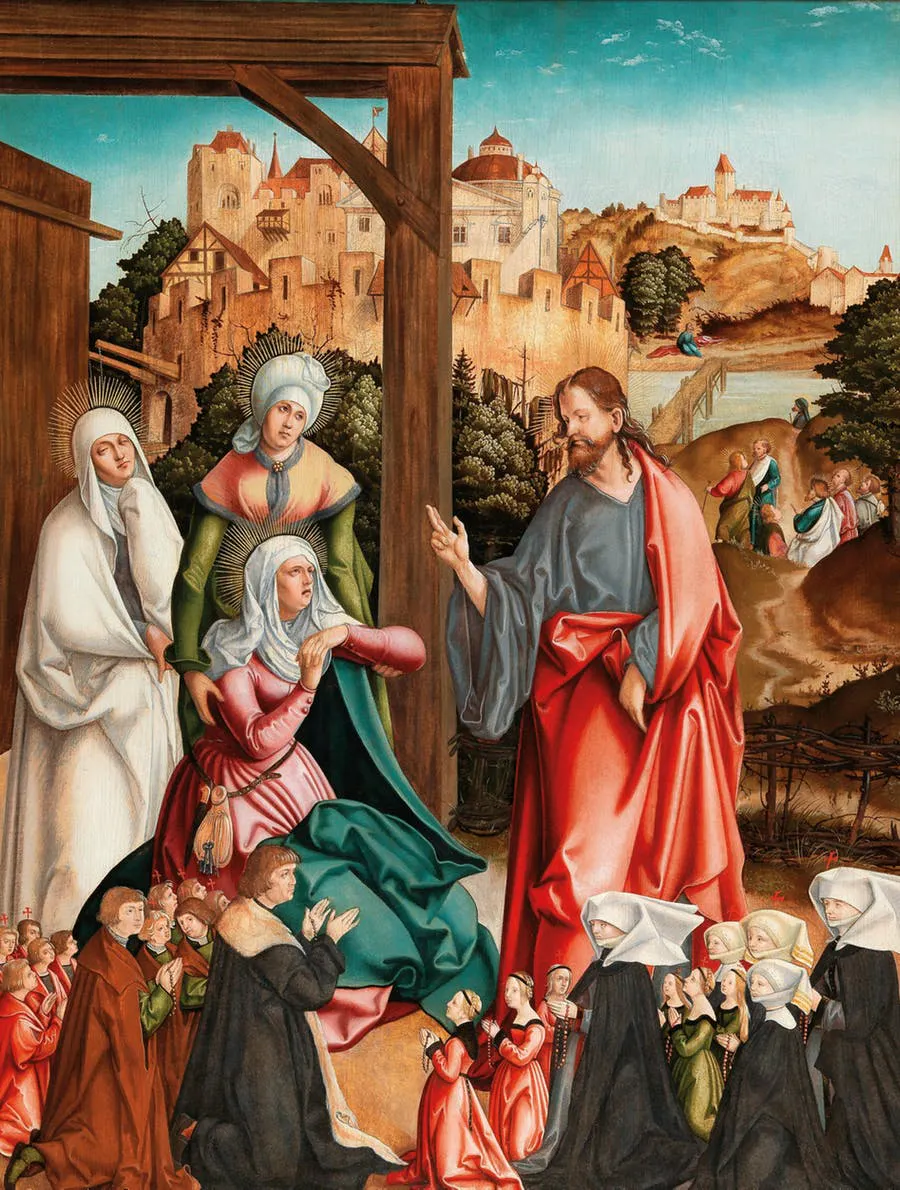
As a template for Christ bids Farewell to His Mother, Jörg Breu of Augsburg referenced Christ's Farewell to His Mother from Albrecht Dürer's 1504-1505 woodcut cycle Die Marienleben. In the foreground are the kneeling praying members of the donor family, who commissioned the painting. Although their comparatively small size looks odd from today’s perspective, the hieratic scale demonstrates their humanity compared to the divinity of the beings above them.
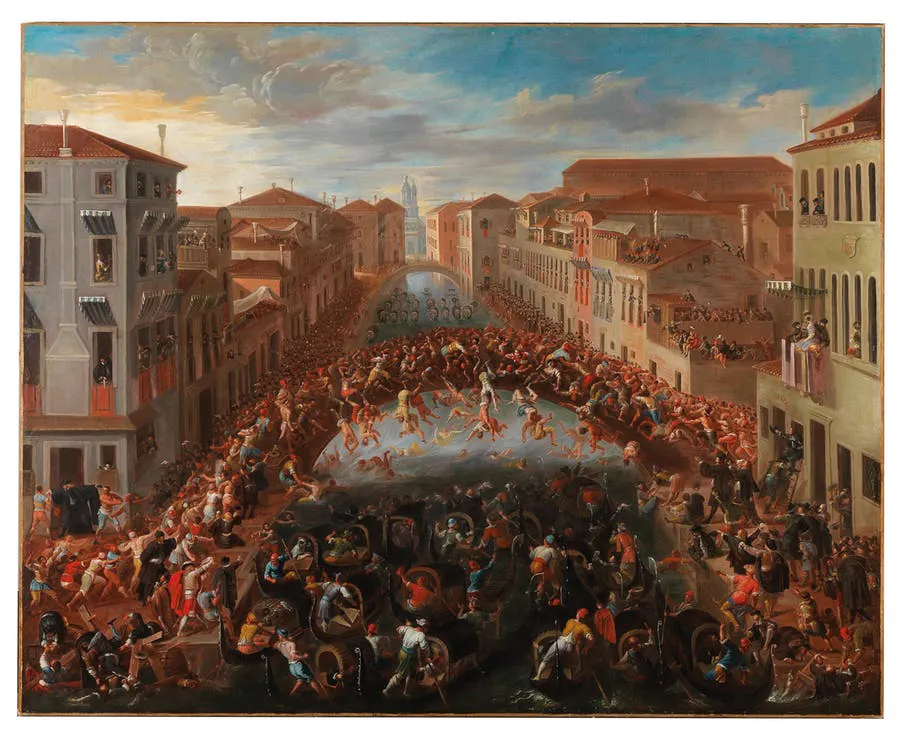
Another resident of Augsburg is represented at the auction; Joseph Heintz the Younger, a pioneer of Venetian veduta, or cityscape, painting in the 18th century. Heintz spent most of his life in Venice, and often drew on the city for artistic inspiration. In The Battaglia dei Pugni on the Ponte San Barnaba in Venice, he captured the legendary ‘battle of fists’, which, although it had transcended to myth, was based on real territorial struggles during the founding of the city.
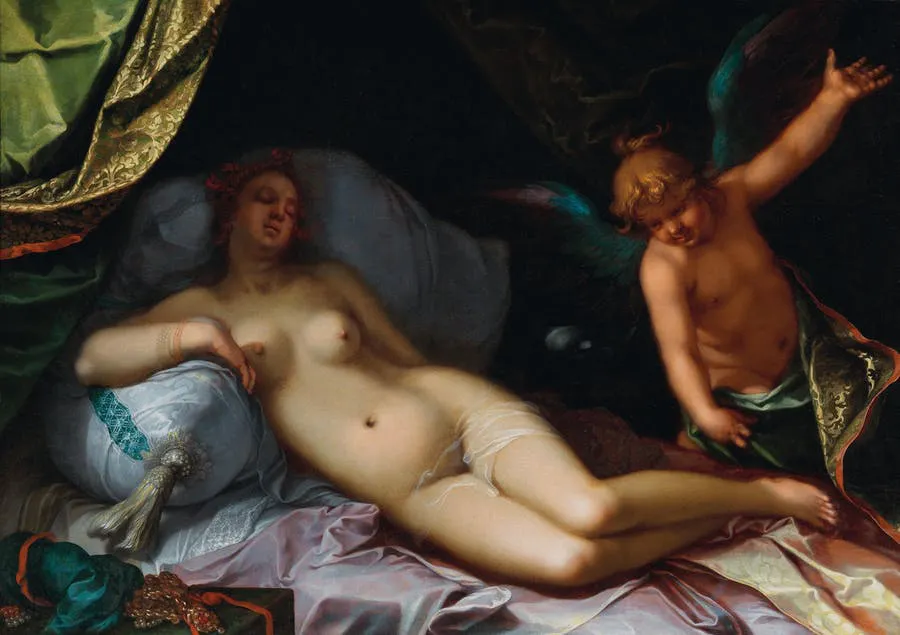
In this painting, the Dutch artist Abraham Bloemaert depicts the beautiful Psyche draped on a luxurious bed, half-concealing and half-revealing her with smokey sfumato. According to myth, the jealous Venus had put her into a deep sleep, in which she remained until Cupid came to awaken her. Bloemaert has shown the moment just before her awakening – however, the putto is unlikely to be cupid; rather, that role is taken over by the viewer.
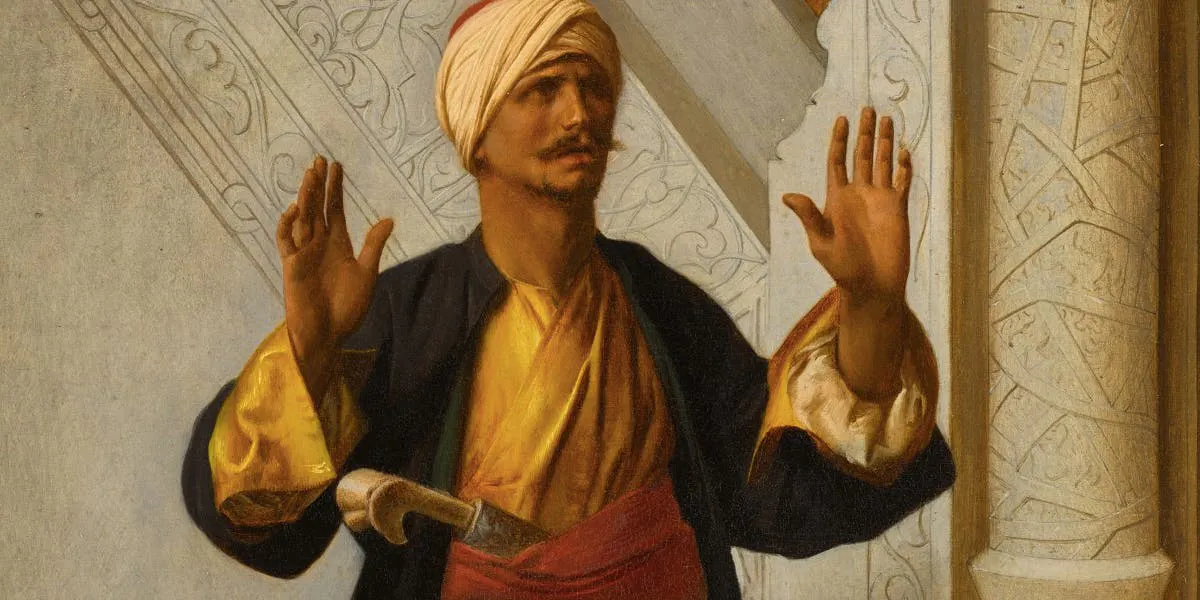
The auction of 19th-century paintings on 23 October is similarly peppered with treasures. Most notable is the Lady turque de Constantinople by Osman Hamdi Bey, an Ottoman painter who was educated in Paris and later founded his own painting school in Constantinople.
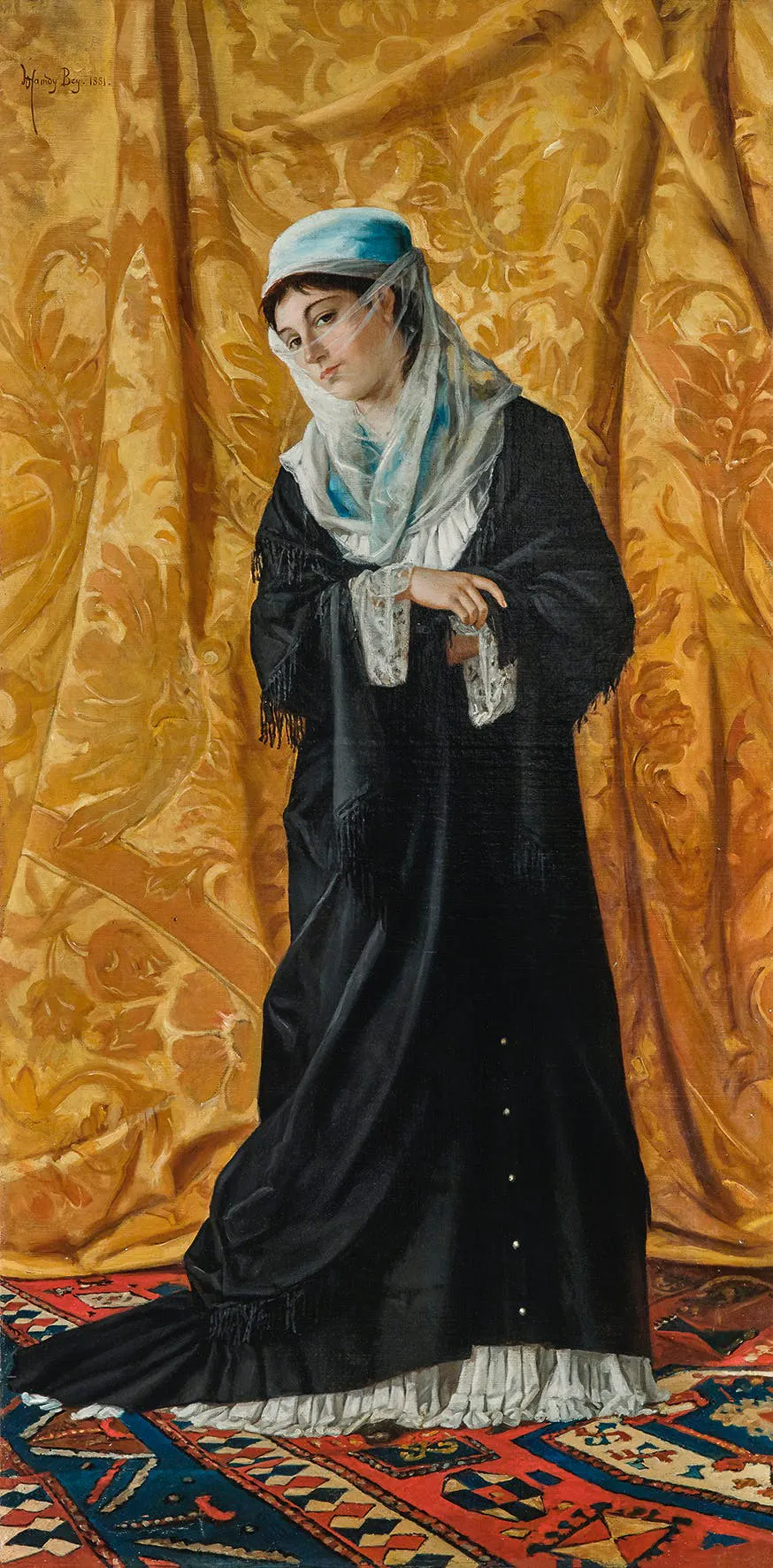
At the end of September, another painting by Osman Hamdi Bey set a new record for the artist, selling for over ten times its low estimate for £6,690,363 at Bonhams London. The estimate for this Bey piece is already in the seven-digit range, but Orientalist works are still increasingly popular and the bidding is sure to be exciting.
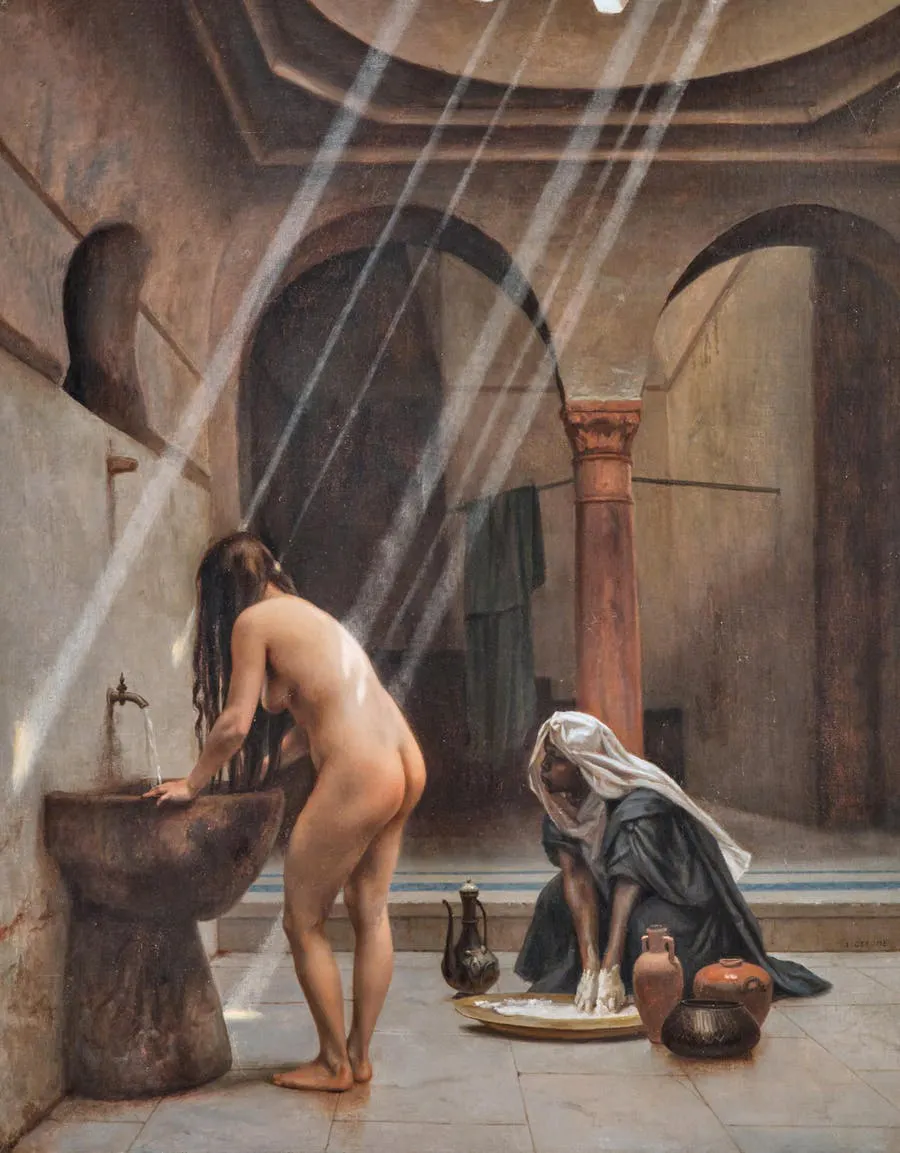
Jean-Léon Gérôme, Osman Hamdi Bey's teacher and a great history painter in his own right, is also represented in the auction. Le Bain Maure seems to have been left unfinished by Gérôme and later completed by an unknown artist, but it remains a striking work.
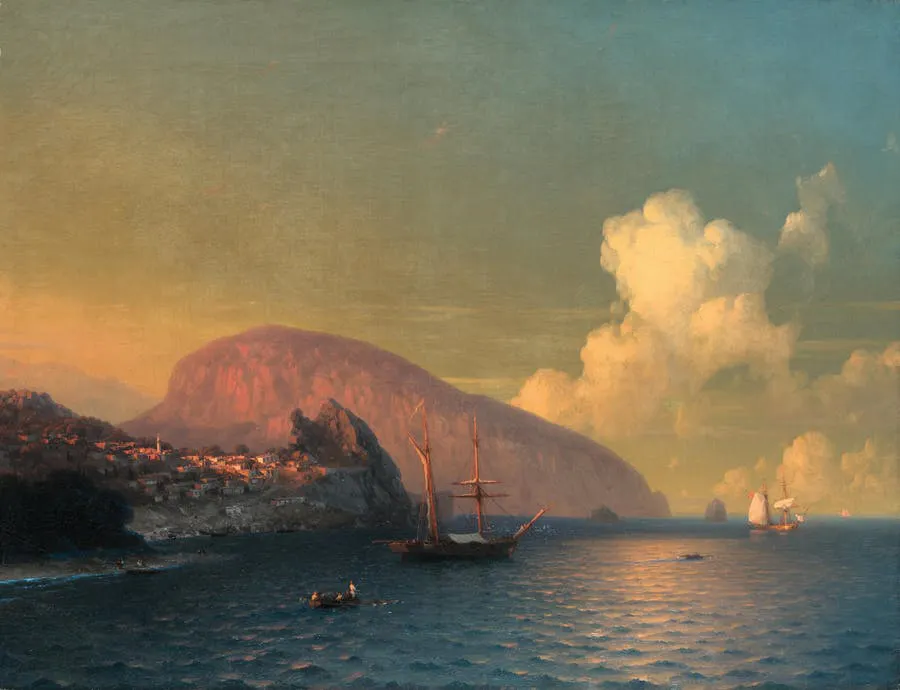
Ivan Konstantinovich Aivazovsky proves his skill at depicting natural light in this work. The sunset over the Crimea illuminates the sky and clouds while also dappling the ocean, and the balance between land, sea, and sky is impeccable.
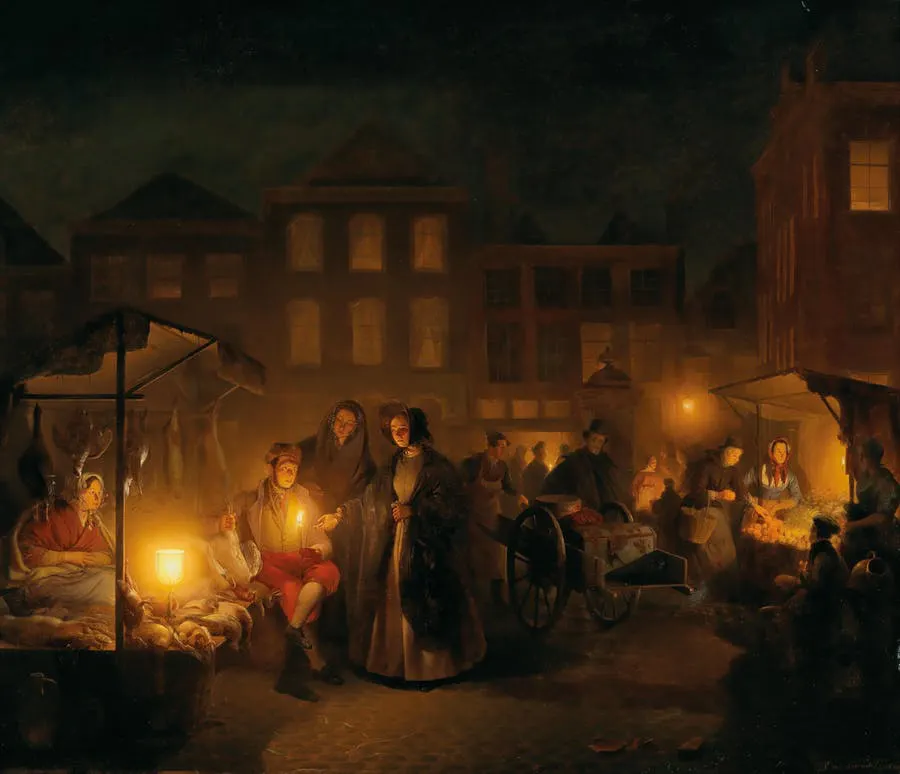
Petrus van Schendel is similarly adept at depicting light, here playing around with different light sources to create a chiaroscuro effect throughout the outdoor market. The pools radiating from the lanterns illuminate their surroundings just enough to emphasise the faces and create intimate pockets within the larger scene.
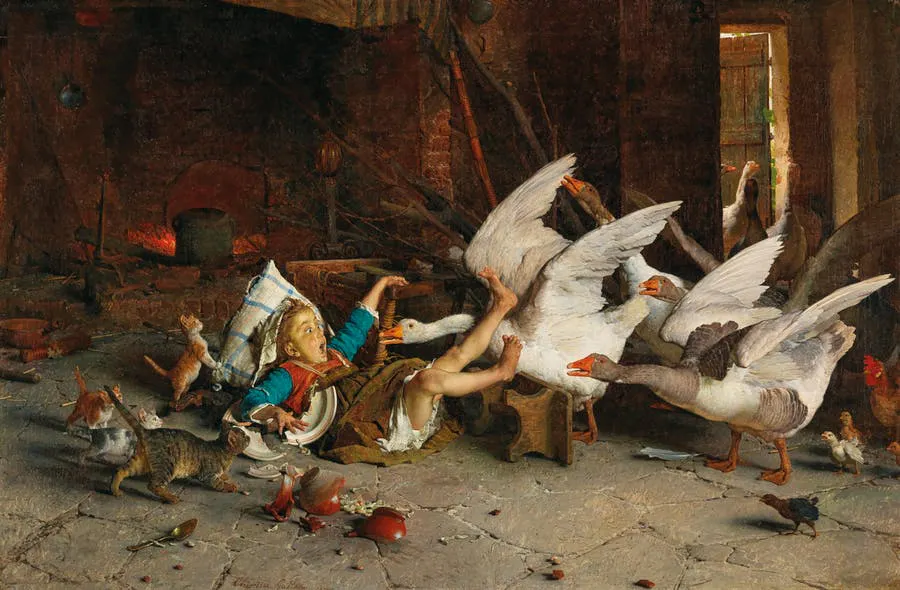
Gaetano Chierici shows his sense of humour in his genre piece Una Catastrofe from 1887. The little girl is powerless to resist the invasion of poultry into her kitchen, while her cats rush eagerly (if ineffectually) to her aid.
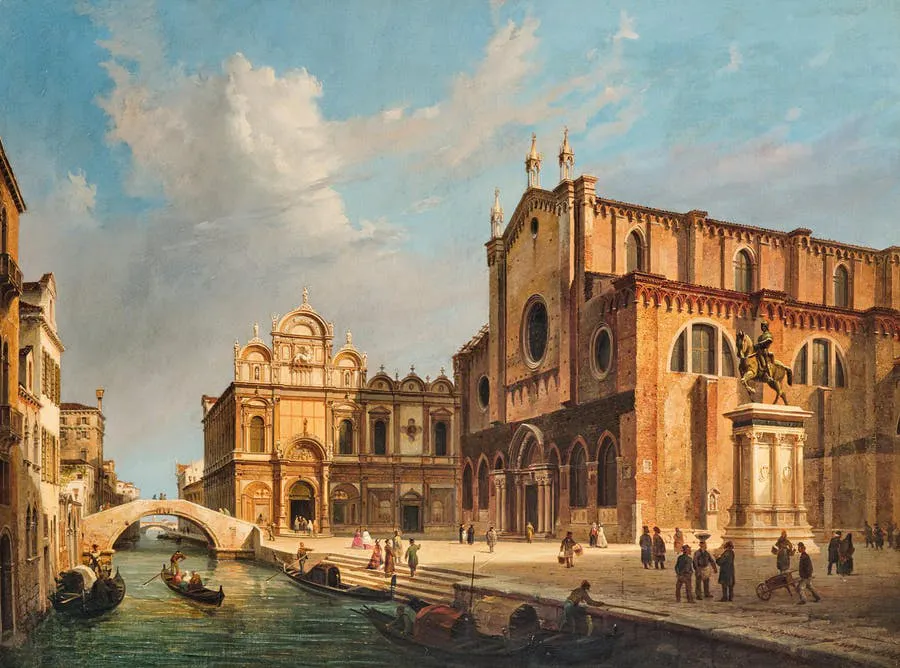
Venetian cityscapes are also on offer, as the lagoon city was still a popular destination for artists from all over Europe well into the 19th century. Of course, local artists appreciated the city as well – notably Luigi Querena, who here immortalises one of the largest churches in Venice, Santi Giovanni e Paolo.
The auctions’ painting will be complemented by a jewellery auction on 23 October, as well as an auction dedicated to furniture and decorative art, sculpture and antiques, and glass and porcelain, on 24 October.
The auctions will take place at the Palais Dorotheum in Dorotheergasse 17 in Vienna, Austria.