Every kiss is an earthquake.
Love has fascinated since the dawn of time and appears in all its forms in the history of art. Whether we are talking about a flirtation, an intimate moment or even a passionate embrace, each representation of the kiss immerses us in a period of history and reveals a little more about the mores or the vision of an artist. By looking at these eight famous representations of the kiss in art, we realise that we have been kissing for a long, long time...
Giotto, The Kiss of Anne and Joachim at the Golden Gate, 1303-1305

In this painting, the Florentine painter, sculptor and architect of the Trecento, Giotto, gives us a precocious kiss. Centuries before displays of affection were commonplace in painting, Giotto depicts Mary's parents, Joachim and Anne, in an embrace upon their reunion. As the Gospel of James tells it, Joachim and Anne had still not had a child after 20 years of marriage, and it was during a trip to the desert that an angel came to Joachim to announce the coming of his daughter, Mary. The scene, a fresco depicted in the Chapel of the Scrovegni, shows the couple kissing and discovering that Anne is miraculously pregnant. The treatment of the characters (their posture and their expression) seems somewhat rigid and the depiction of the affectionate feelings they have for each other other is not, as the pictorial standards of the Trecento would have it, at the centre of the painter's purpose. Giotto's works are, in many ways, at the origin of Western painting as we know it.
See also: The Tales Behind Art History's Most Important Muses
Antonio Canova, Psyche Revived by Cupid's Kiss, 1787-1793

Among the most beloved sculptures of all time, Antonio Canova's Psyche Revived by Cupid's Kiss is a timeless depiction of mythological love. The work depicts the moment before the kiss between the two protagonist lovers of The Golden Ass, a Latin novel, as they gaze at each other with eroticism and tenderness before their lips touch each other. Cupid gently supports Psyche by covering her breast, while she wraps his head with her arms, brushing his hair. Their bodies, expertly modelled in marble, seem to become flesh. Canova received the commission in 1788 from Colonel John Campbell and was inspired by a scene from a fresco of Herculaneum depicting a bacchante embraced by a faun. The sculpture is now in the Louvre Museum and there is a second copy in the Hermitage Museum in St. Petersburg.
See also: The 10 Most Expensive Sculptures Sold at Auction
Francesco Hayez, The Kiss, 1859
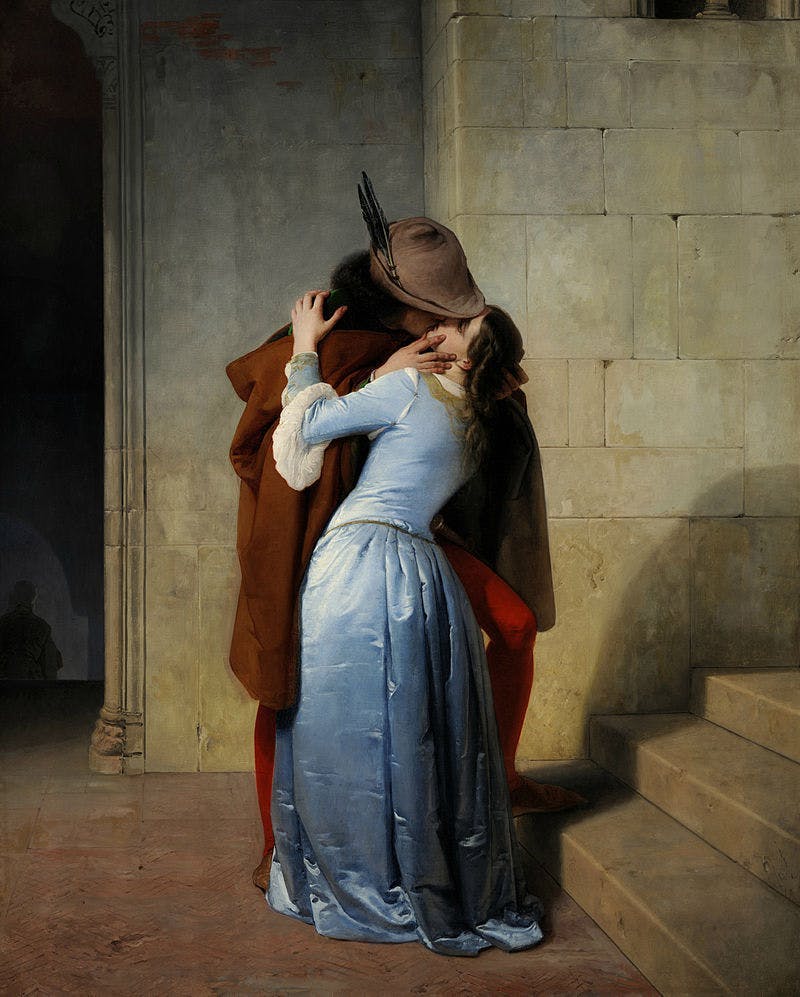
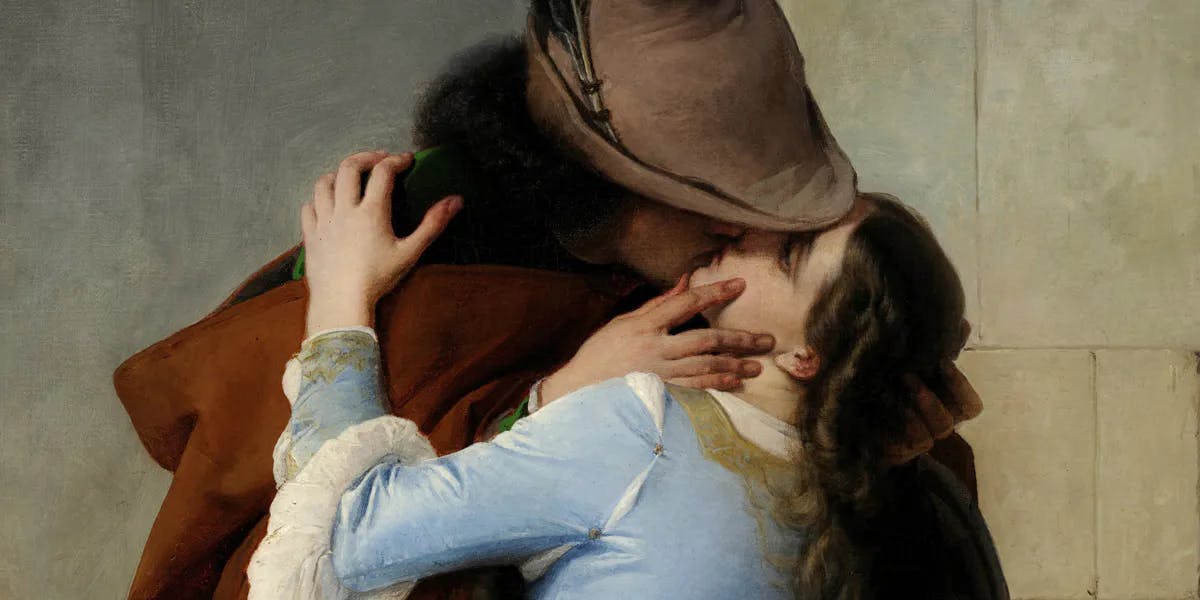
A famous work depicting two lovers is Il Bacio by Francesco Hayez, considered the manifesto of Italian romantic art. Set in a medieval glimpse, the scene is full of passion and suggests a certain tension. The kiss between the two lovers is sensual, the man holds the woman's face in her hands as she turns up to him. But the man seems to reveal a certain nervousness, visible in the pose on the staircase and from the dagger in sight. In addition, a disturbing shadow appears on the bottom. Is it in fact a farewell kiss? After this meeting will the girl remain alone, in her melancholy and sadness? The work is full of allegorical meanings that refer to the patriotic ideals of the Risorgimento (the Italian reunification in the mid-19th century) and there are three other versions also created by Hayez.
See also: The New Renaissance of Old Masters
Edvard Munch, The Kiss with the Window, 1892
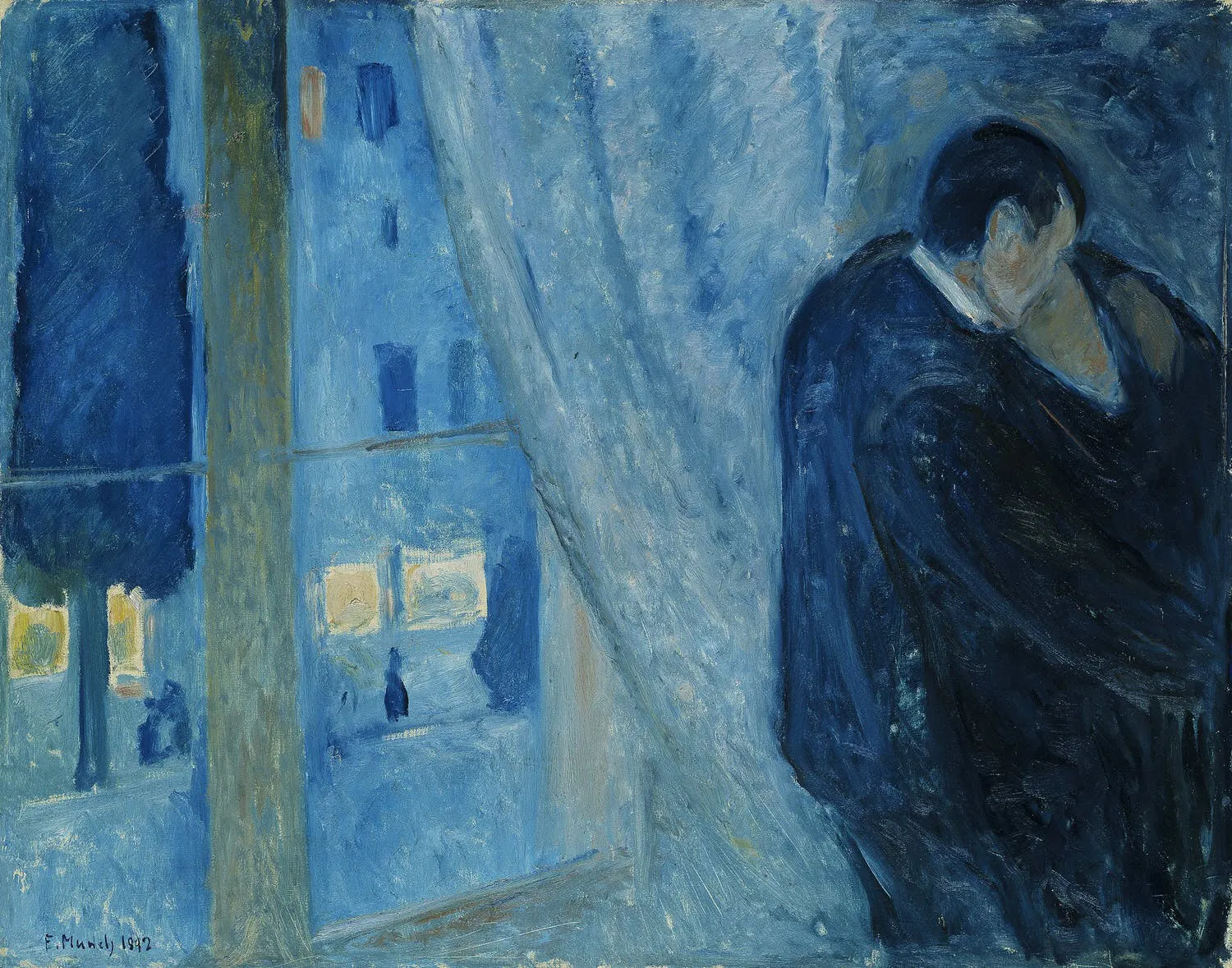
An expressionist kiss in cool blue tones, The Kiss by the Window by Edvard Munch is part of a group of works entitled The Frieze of Life. The two lovers are not recognisable, their faces are in fact hidden and the embrace between the two occupies the right part of the painting, ending up almost in the background compared to the view on the road that can be glimpsed from the window. The couple shows no tenderness and the embrace is sensual but not joyful. Theirs seems almost more a struggle than a love bond. Munch therefore represents another facet of love: that of tension and the fear of loving, sensations linked to his personal affairs. The work can be found in the National Museet in Oslo.
See also: Edvard Munch: 5 Facts to Know
Gustav Klimt, The Kiss, 1907-08

The most famous kiss in art history is by Gustav Klimt. Painted between 1907 and 1908, during the painter's golden age, the painting is a real hymn to the idyll of love. The two lovers huddle and abandon themselves to an intense kiss in what appears to be an indefinite place: they are the centre of everything. The woman, abandoned in the embrace, has a delicate and sweet expression, while her partner holds her protectively. With this work Klimt wanted to glorify the power of eroticism, amplifying it with the use of gold and the rich decoration typical of the Liberty style. Klimt's kiss is a manifesto of love but also of Viennese secessionist art and the Belle Époque. It is located at the Österreichische Galerie Belvedere, Vienna.
See also: The 10 Most Famous Works of Art and Where to Find Them
Henri de Toulouse-Lautrec, In Bed the Kiss, c. 1892-1893
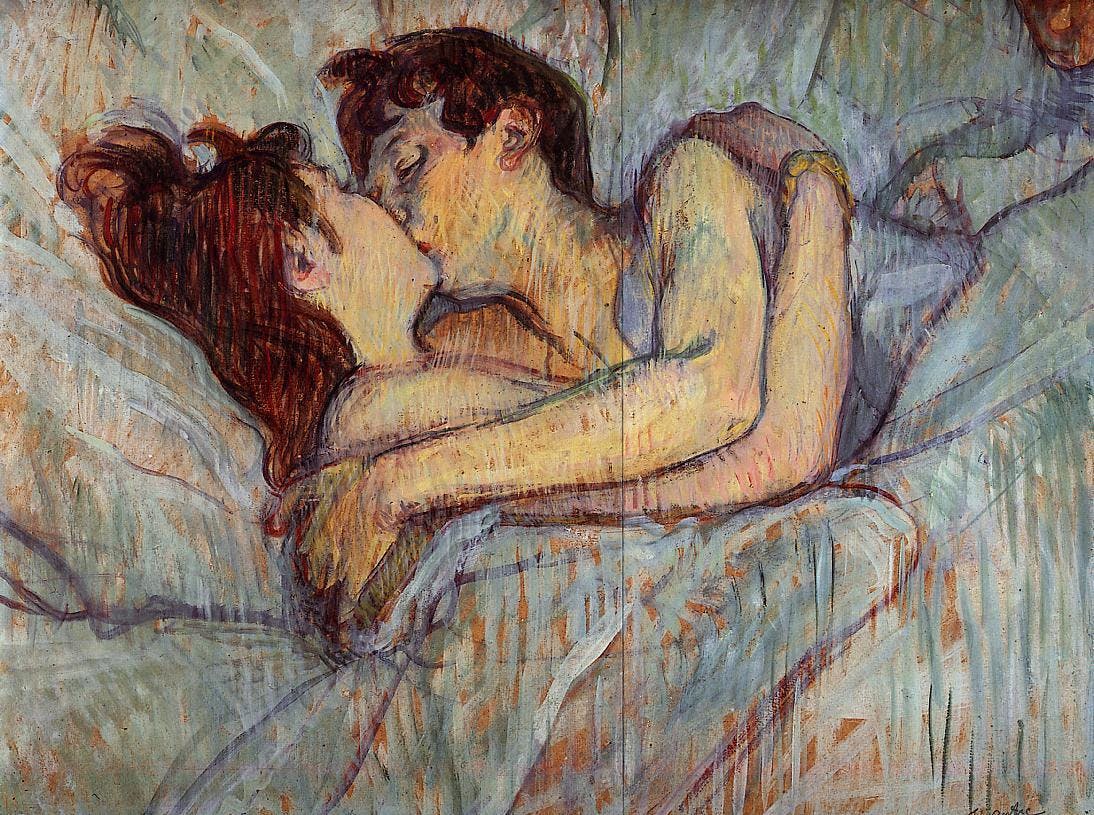
If there is one artist whose work symbolises bohemian Parisian life, it's Henri Toulouse-Lautrec. Known as the painter who documented the nightlife of the French capital, he also distinguished himself as a designer of beautiful posters produced using the technique of lithography. In this artwork depicting an affectionate embrace, he reveals to us the passion for feminine love. The work In Bed the Kiss captures two young women, supposed prostitutes, sharing an intimate moment. Toulouse-Lautrec produced a series of works on the subject, exploring the emotional and physical relationship between two women.
See also: 10 Artists Between Genius and Madness
Jean-Honoré Fragonard, The Secret Kiss, c. 1780
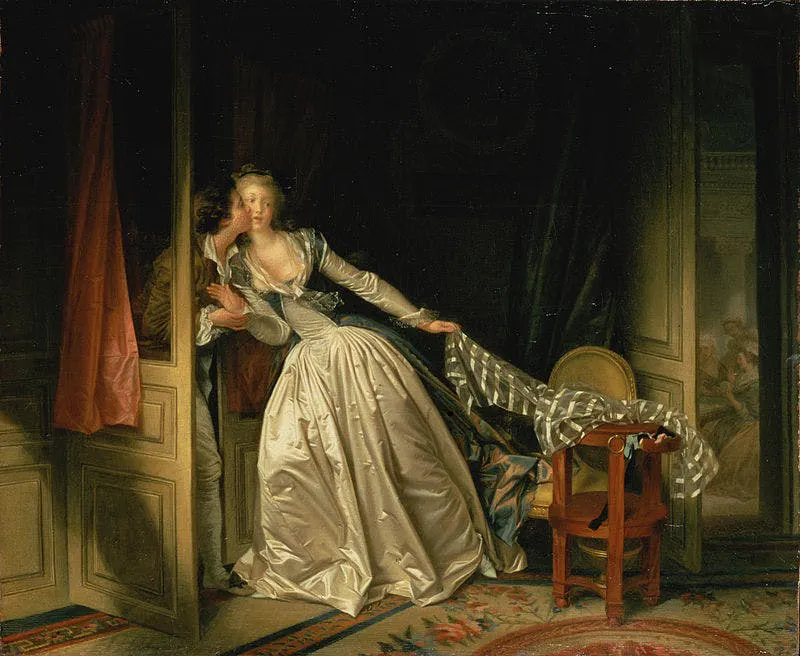
In Le Baiser à la Secrete (The Secret Kiss), Jean-Honoré Fragonard creates a scene of clandestine love. A young man stealthily kisses a girl who has come to retrieve a shawl in a boudoir. The woman leans in slightly, but does not return his kiss and seems concerned. She is, for a moment, away from the mannered society which fills her daily life, which we can see by the door ajar on the right. The work is kept at the Hermitage Museum, Russia.
See also: A Lost Fragonard Painting Sold for $9 Million
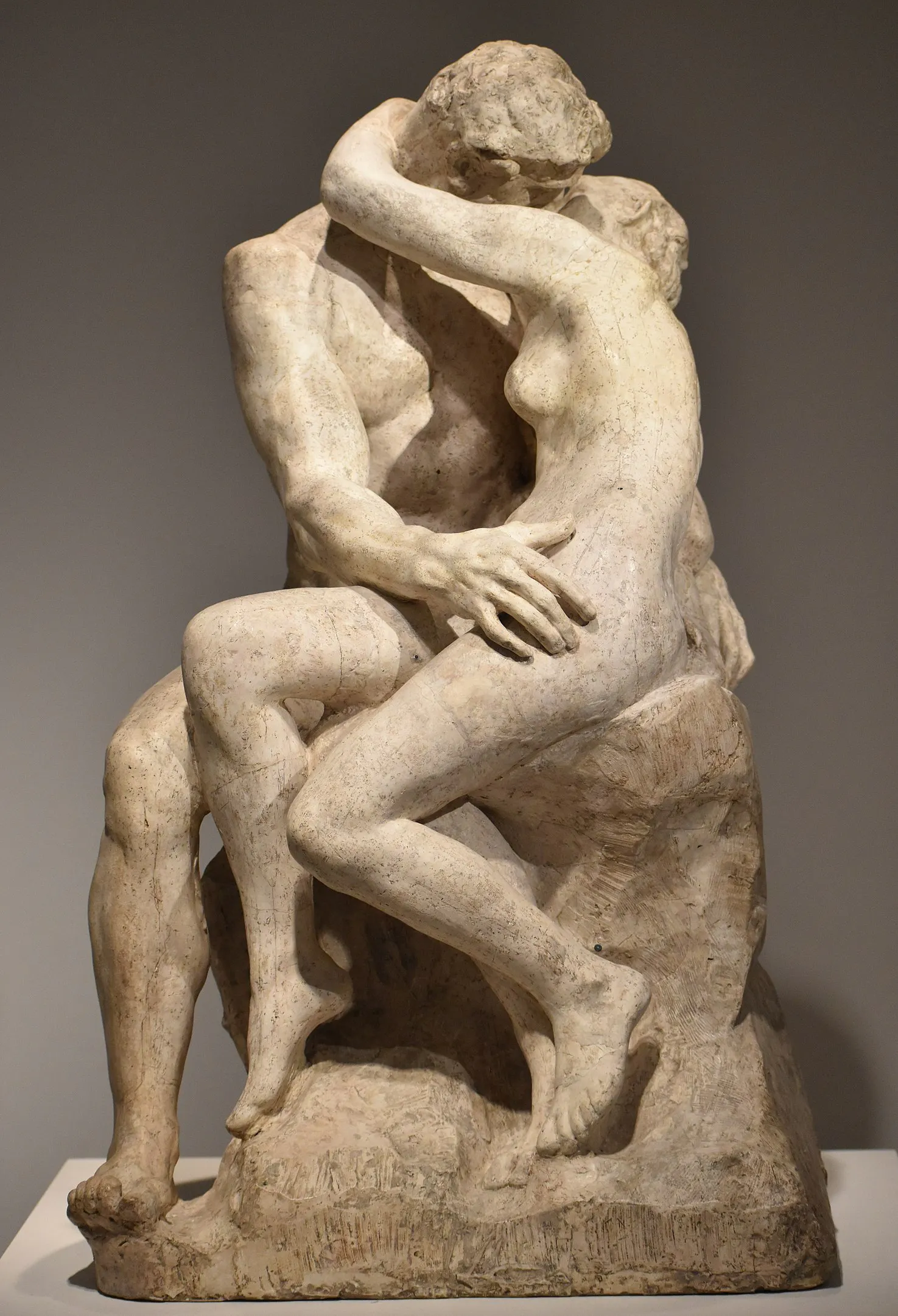
Auguste Rodin, The Kiss, 1882
See also: 10 Famous Sculptures in Art History
Probably the most famous and ubiquitous sculpture of a kiss ever made, Auguste Rodin's The Kiss was meant to depict two forbidden lovers from Dante's Inferno. It was originally part of Rodin's large relief sculpture The Gates of Hell, commissioned by the Directorate of Fine Arts in 1880, but would later became stand-alone and life-size in a variety of materials, from marble and bronze to plaster.
Discover more articles on Barnebys Magazine
This is an updated version of the article originally published on 13 February 2020.