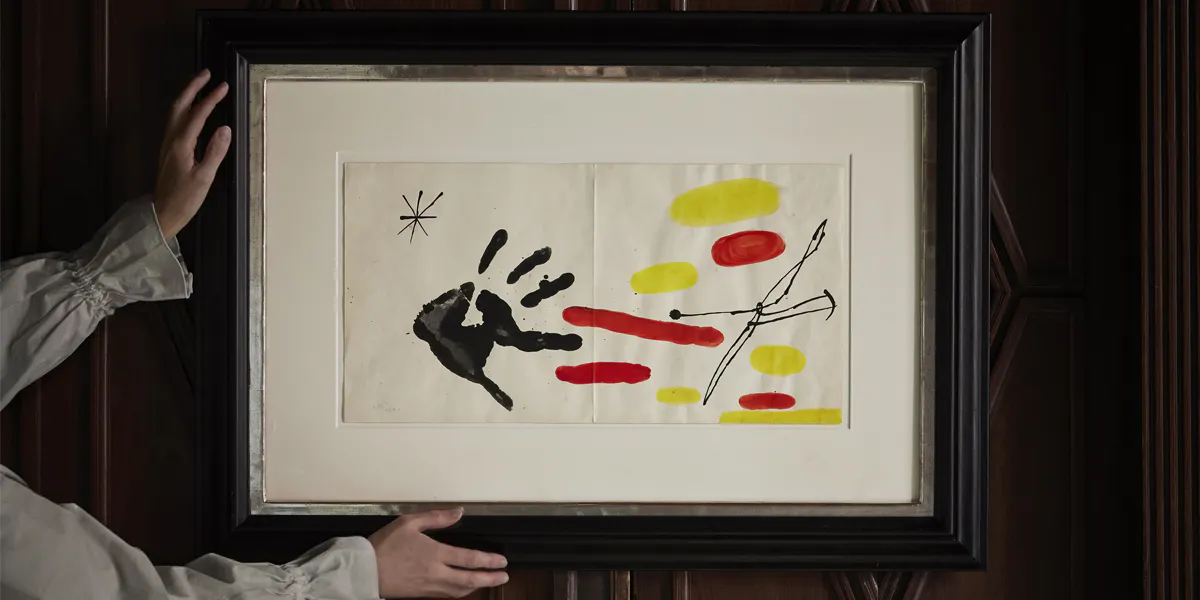
The upcoming Ten by Ten exhibit at Stockholm gallery CFHILL features 10 artworks by modern and contemporary stars, including Banksy, Konrad Klapheck, Sam Francis, Joan Míro and Harvey Quaytman. These works were curated for their depth and ability to engage in a dialogue with the viewer.
The 22 November to 20 December exhibition will bring together a bevy of artists, styles and periods, and the messages of the works offer both harmonious associations and oppositions. Here are two highlights of the show.
A wall is a very big weapon. It’s one of the nastiest things you can hit someone with.
Soldiers, cops, surveillance cameras, rats, monkeys, flowers, and balloons. While Banksy’s subjects may vary, his message tends to stay the same: anti-capitalist, anti-way, pro love, and pro free art.
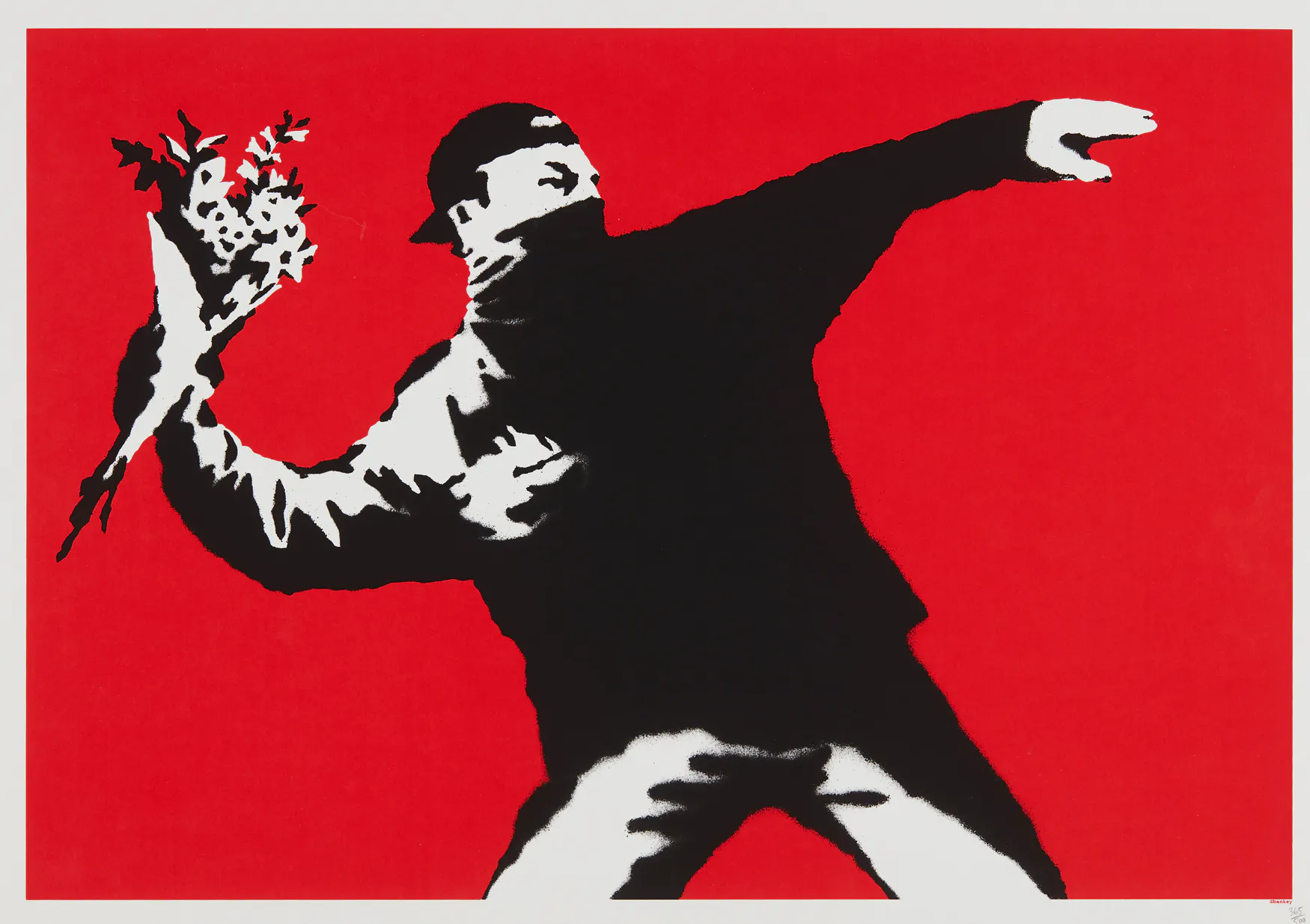
The first of CFHILL’s highlights is Love is in the Air, a silkscreen by street art star Banksy. The work, also titled Flower Thrower, was originally executed in large scale in Jerusalem on a stretch of the 700 km of wall that divides Israel and Palestine, which had only recently been built at the time. It depicts a man who is dressed as a militant protestor, about to throw what might have been a hand grenade, but which has, through Banksy’s vision, been morphed into a bouquet of flowers – a symbol of peace and love. Love is in the Air is one of Banksy’s most iconic works, and one which he chose to use as the cover image for his 2005 book Wall and Piece.
There has been much speculation on Banksy’s true identity, and several likely culprits have been suggested, but so far, nothing has been confirmed. Whoever he is, we know that he is male, was born in 1974 in Bristol, and is inspired by and associated with the Massive Attack music collective. He is an artist, film director, political activist, and a creative genius, as well as one of the most influential visual presences on the contemporary political scene.
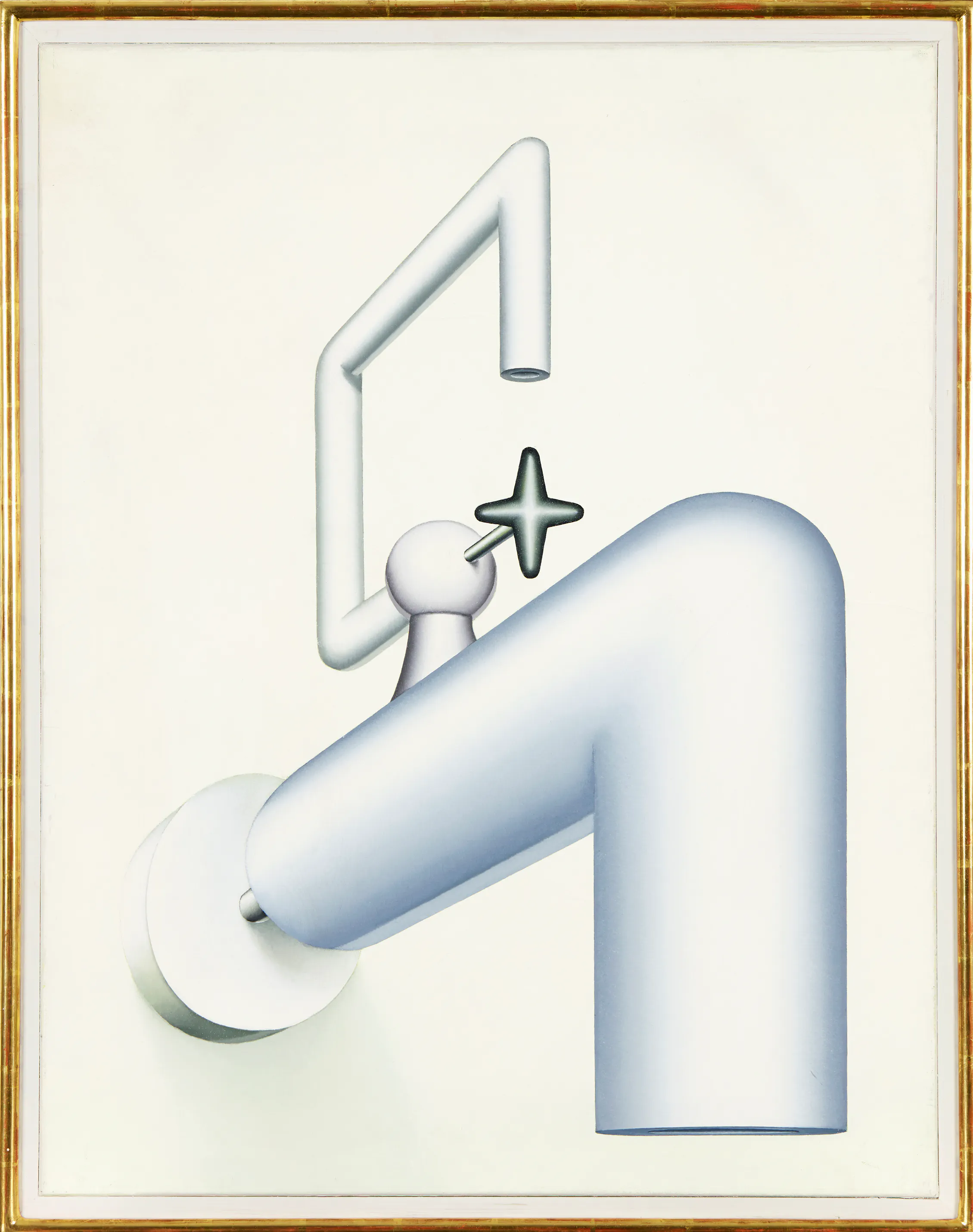
Die Selbstsichere (‘The Confident One’) depicts a water tap portrayed in absolute, icy solitude on the canvas. We view cool, hard metal over an eggshell backdrop alongside a perspective that grants the viewer a height disadvantage, so that we have to gaze up at the towering piece of plumbing. Here, Konrad Klapheck transforms the act of depicting an everyday object into a complex work of art by presenting the viewer with a new point of view from which to regard it.
Klapheck was born in Düsseldorf in 1935 as the only child of two professors. After his father passed away in 1939, the majority of his childhood was spent in the company of his mother. His artistic path began in secondary school, where he took drawing classes and other art-related subjects. Later, in his twenties, when he produced his first paintings of typewriters, he spent a year as a student under Bruno Goller at Kunstakademie Düsseldorf, from whom he received much encouragement to pursue his interest in the figurative. Since the very beginning of his career, Klapheck has exhibited at prestigious international art institutions, and is ranked among the most important German artists of both the post-war and the contemporary eras.