This year's autumn auction at Hermann Historica will take place in two auction blocks in November: 5-10 and 20-23. The interested public may look forward to an accustomed thrilling offer of objects of historical and military historical significance, complemented by outstanding craftsmanship.
Antiques
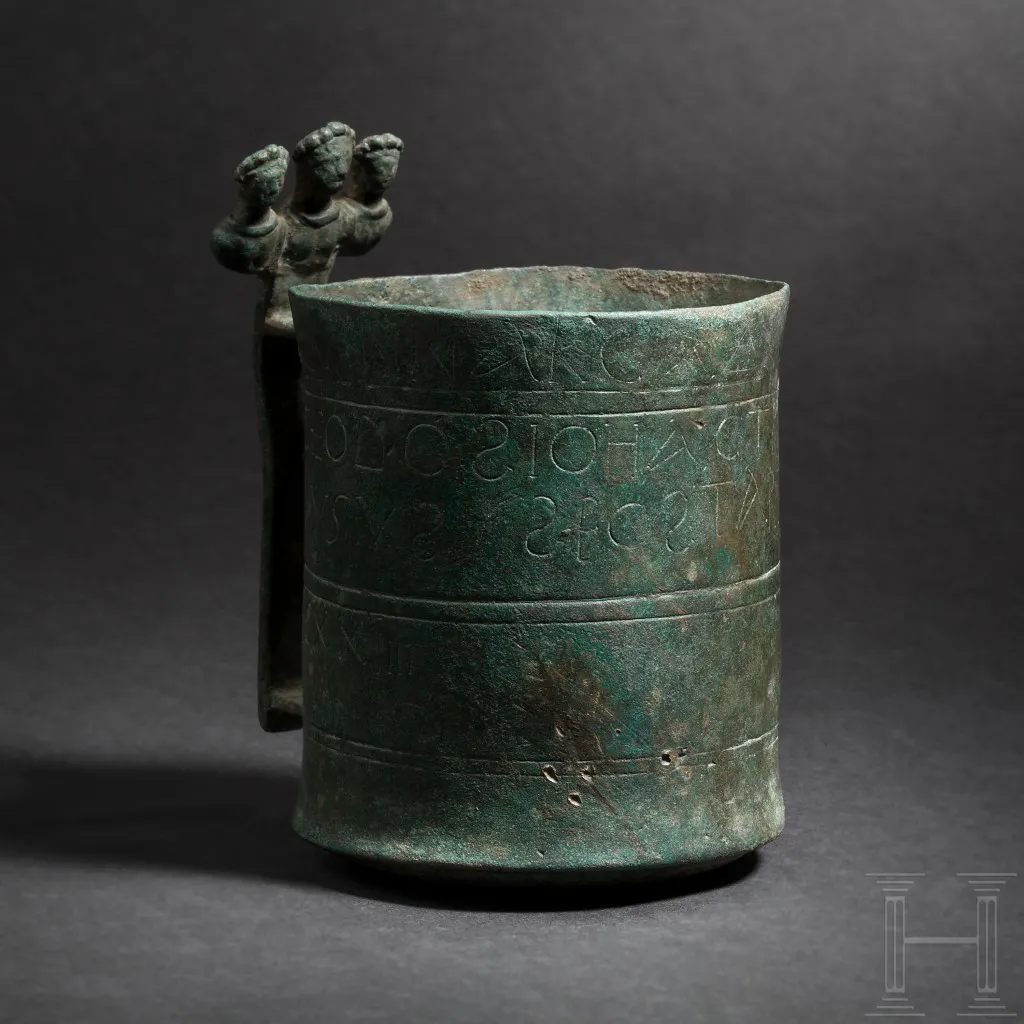
In most cases, the dating of pre-historic and early-historical objects requires comparative methods that allow only a relative classification. However, this can also depend on context and local history, such as the Greeks and Romans. This is the case with the present late Roman measuring cup, which can be dated on the basis of its inscription on the period between 402 and 408. In those years, three emperors ruled in the Roman Empire, which had just been divided into an eastern and a western part: Arcadius and his son Theodosius II in the east, and Honorius in the west. The busts of the three emperors also graced the handle of the measuring cup, the traces of which indicate a temporary use as a mortar.
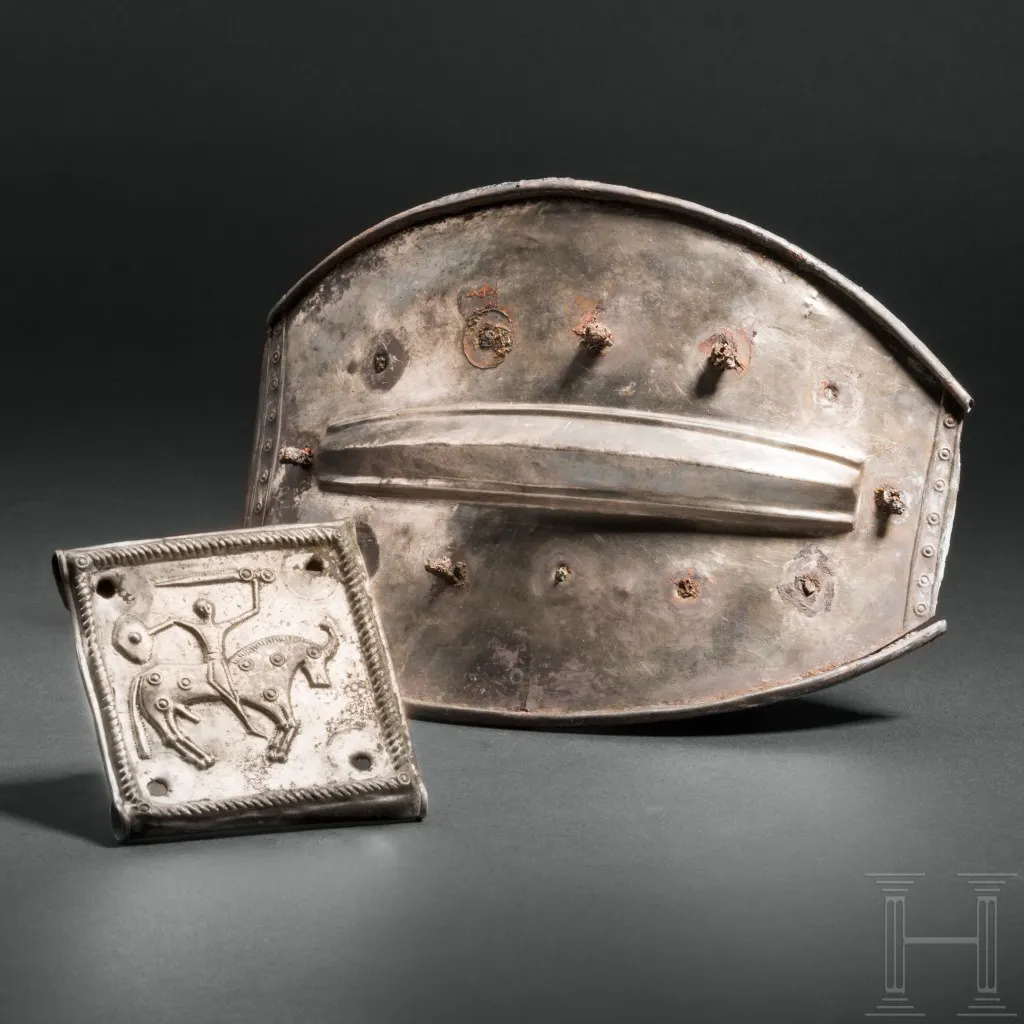
From the other side of the Murus Gallicus, so to speak, there is the fittings of a Celtic pompous belt made of silver, the square element of which represents a warrior on horseback. The region of origin is the eastern Celtic area between the Balkans and the Black Sea. The square fitting is an excellent example of the high-quality silver iron ore of the late Iron Age in that area.
Crafts
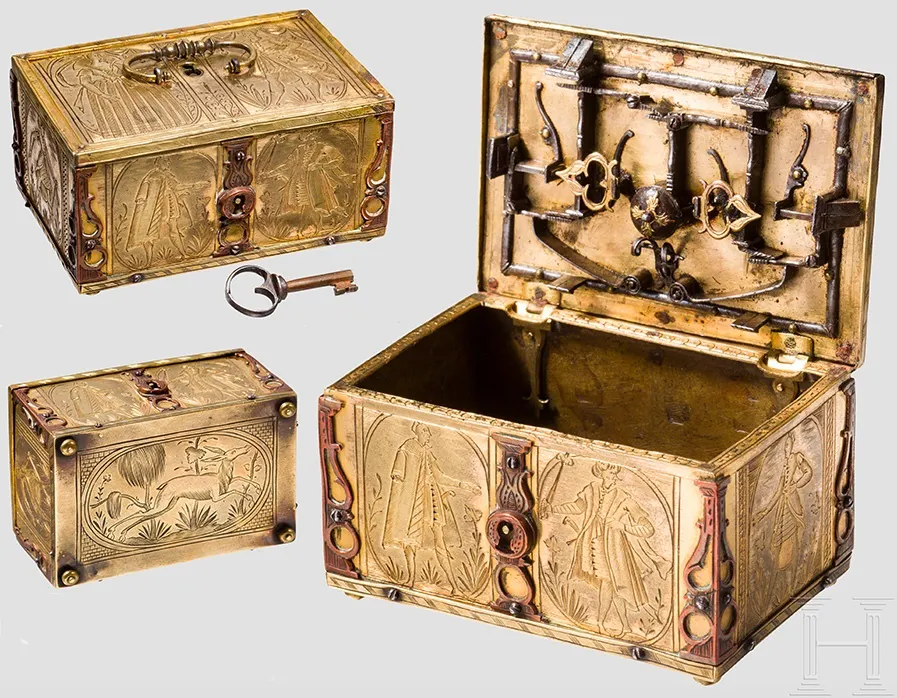
Also included in the realm of highest quality craftsmanship are a tapestry and a gilded miniature cassette from the 17th century. The cassette is one of the high-quality works of the workshop of the art-maker and gunsmith Michael Mann, who worked mainly in Nuremberg, but also in Augsburg and Fürth. The walls as well as the bottom and the lid of gilded sheet brass are decorated with fine engravings.
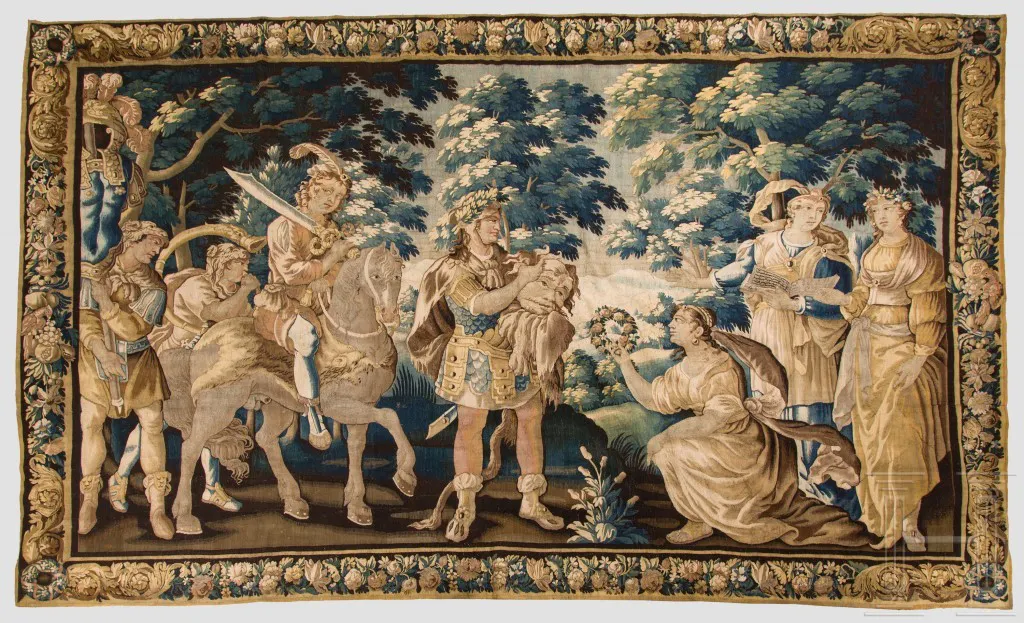
About half a century younger is a superb tapestry from the Flemish city Oudenaarde. Surrounded by a border of tendrils and fruits, there is a scene with the victorious David holding the head of Goliath in his hands.
Also of note is a highly interesting collection of historical measuring instruments.
Historic Weapons
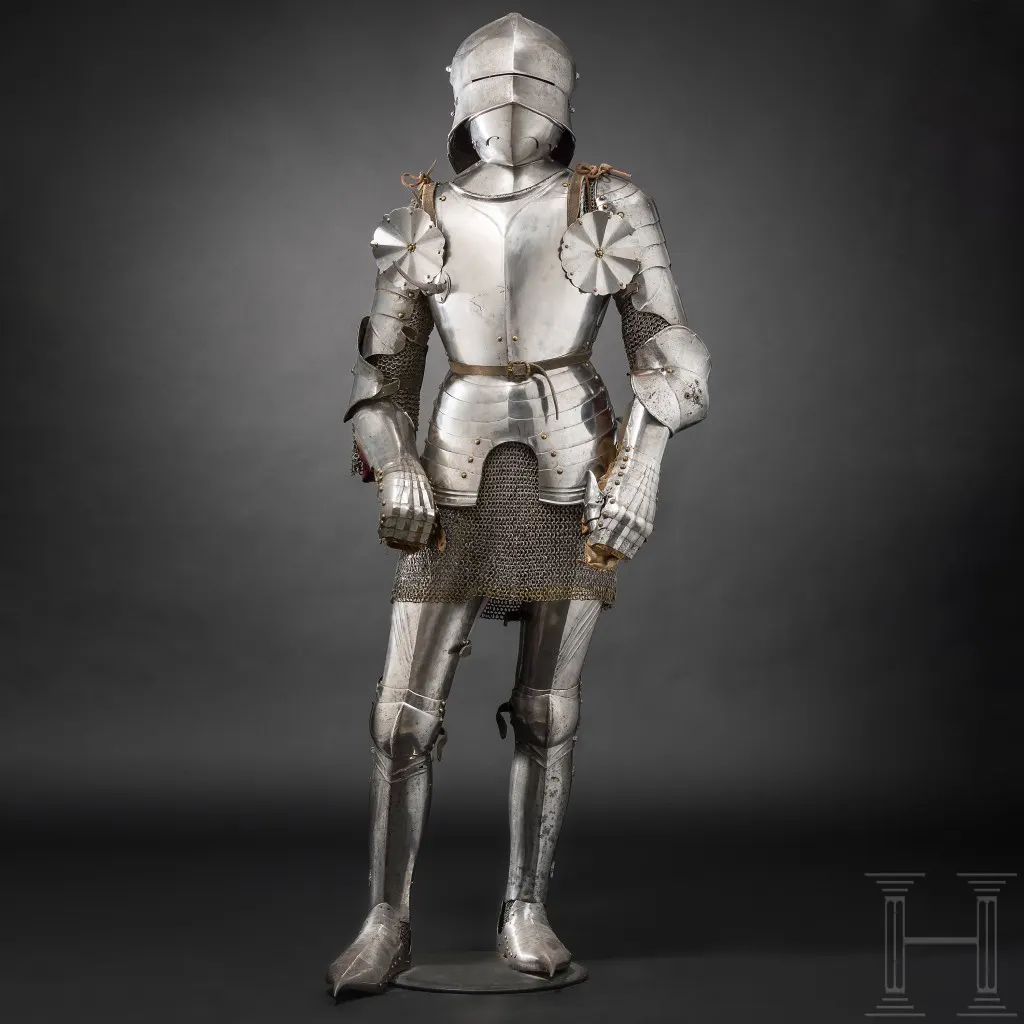
Armour made of metal plates, which gradually replaced or supplemented chains of the 13th century, had the task of providing their wearer in combat both protection and mobility. The solution was to make it from several parts connected by straps or hooks and eyes. An interesting example comes in this auction with a gothic touch, made in the late-15th century in southern Germany and Innsbruck.
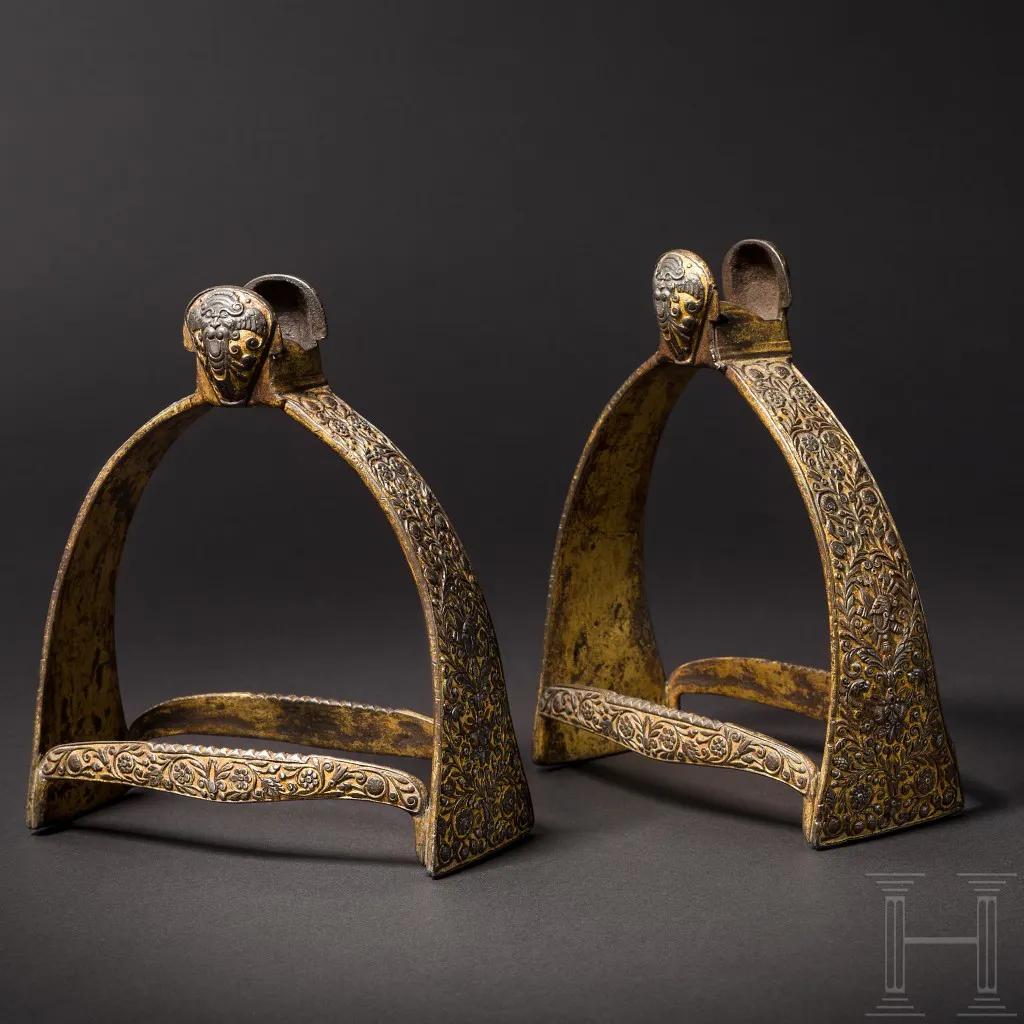
Weapons arsenals with a higher impact force made the knight armour heavier – so heavy that the riders had to be partially lifted with a crane onto their brave steed. Stirrups of course continued to be used. Here is a beautiful mid-17th century pair of partially-gilded wrought iron from the workshop of the Munich iron cutter Caspar Spät. At that time, armour was already obsolete and the stirrups returned to their eponymous function.
Asia, Orient and Africa
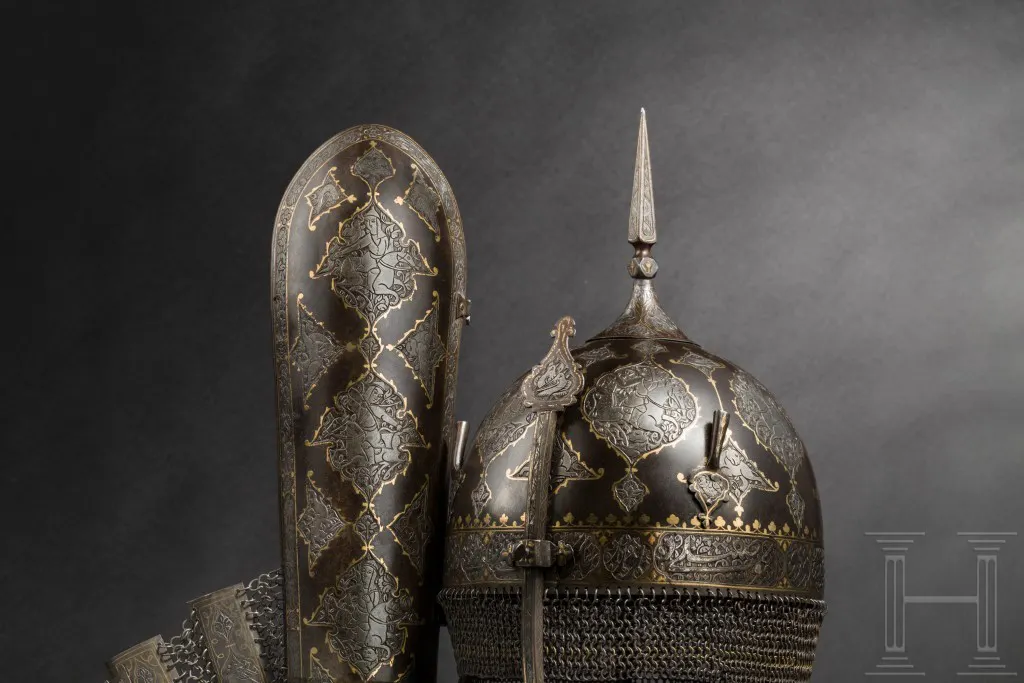
Fascinating pieces from distant lands have also found their way into the Munich auction house. From Persia from the first-half of 19th century comes a cut and gold-plated armour set, which was made from the typical for the region Wootzdamast.
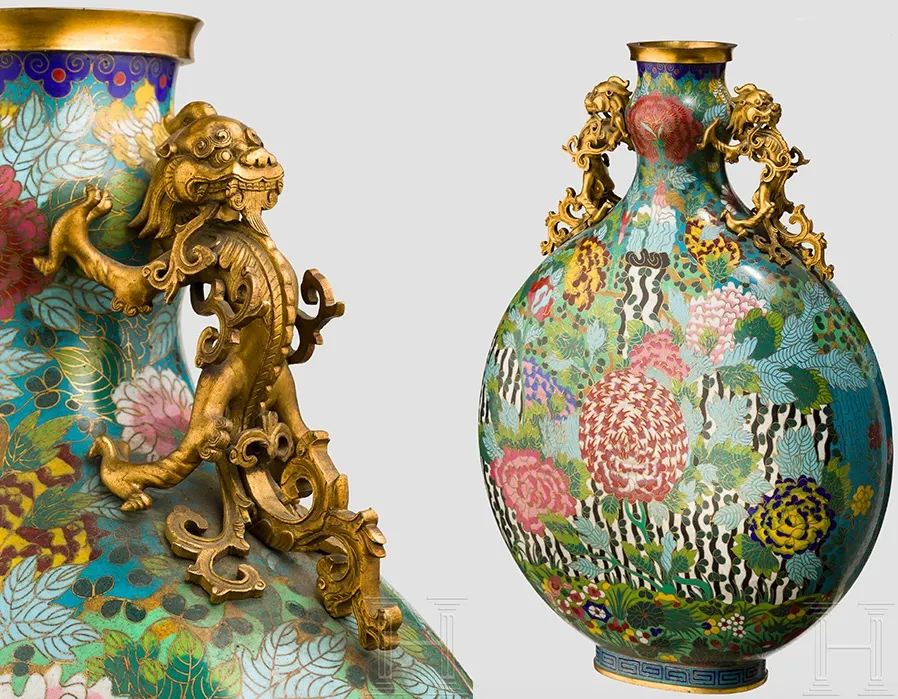
A few years later, a shallow bottle of copper was sculpted in China, decorated with an enchanting floral and foliate decoration of polychrome cloisonné enamel. It additionally has a fire-gilded mount which has the shape of a dragon on both sides of its bulbous neck.
Historical, including Military, Objects
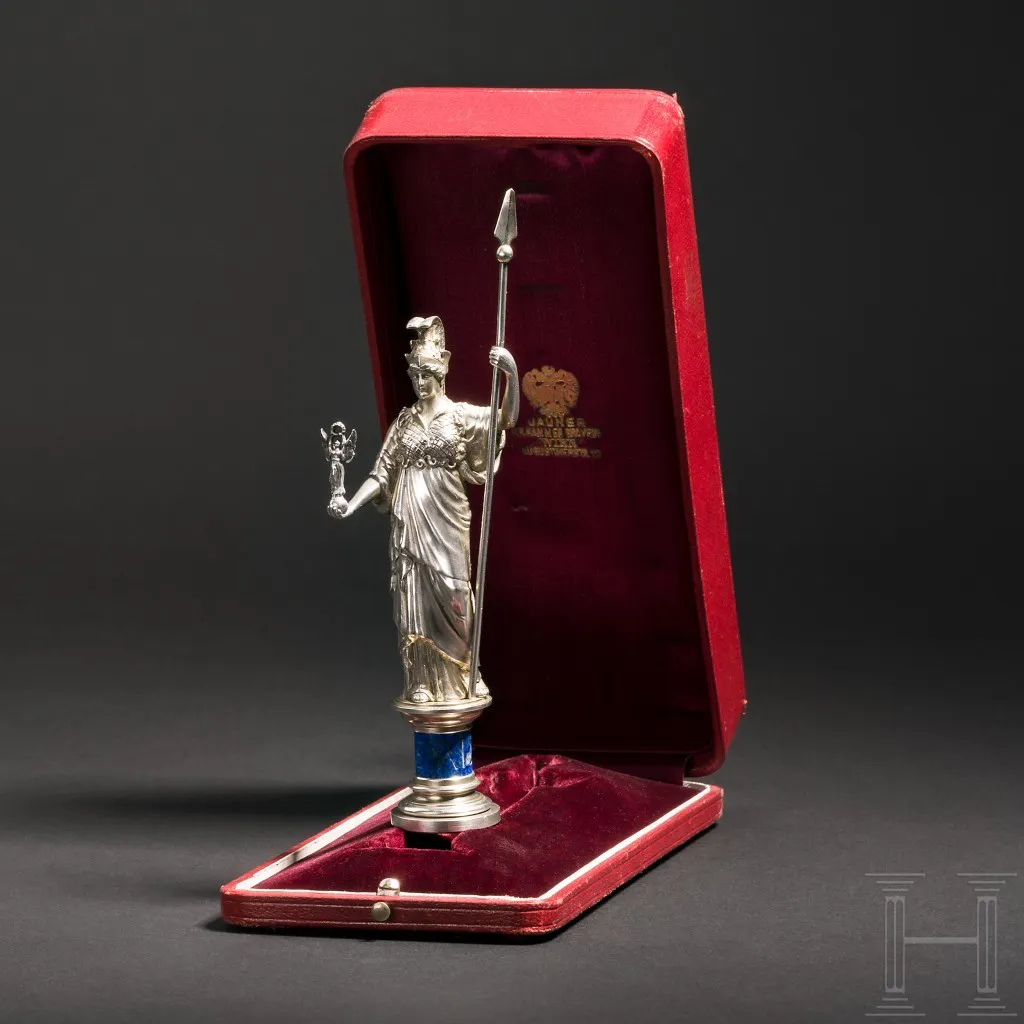
To own an object that once belonged to a known personality is a desirable goal for some. A historical person who has many admirers today is the Austrian Empress Elisabeth (‘Sisi’), known for her beauty and her ‘retired’ life. On her many travels, Elisabeth was seized by a special fondness for Greece. The magnificent seal with the silver figure of the goddess Pallas Athena, which was made around 1889 by the imperial-royal court engraver Heinrich Jauner, takes up this preference.
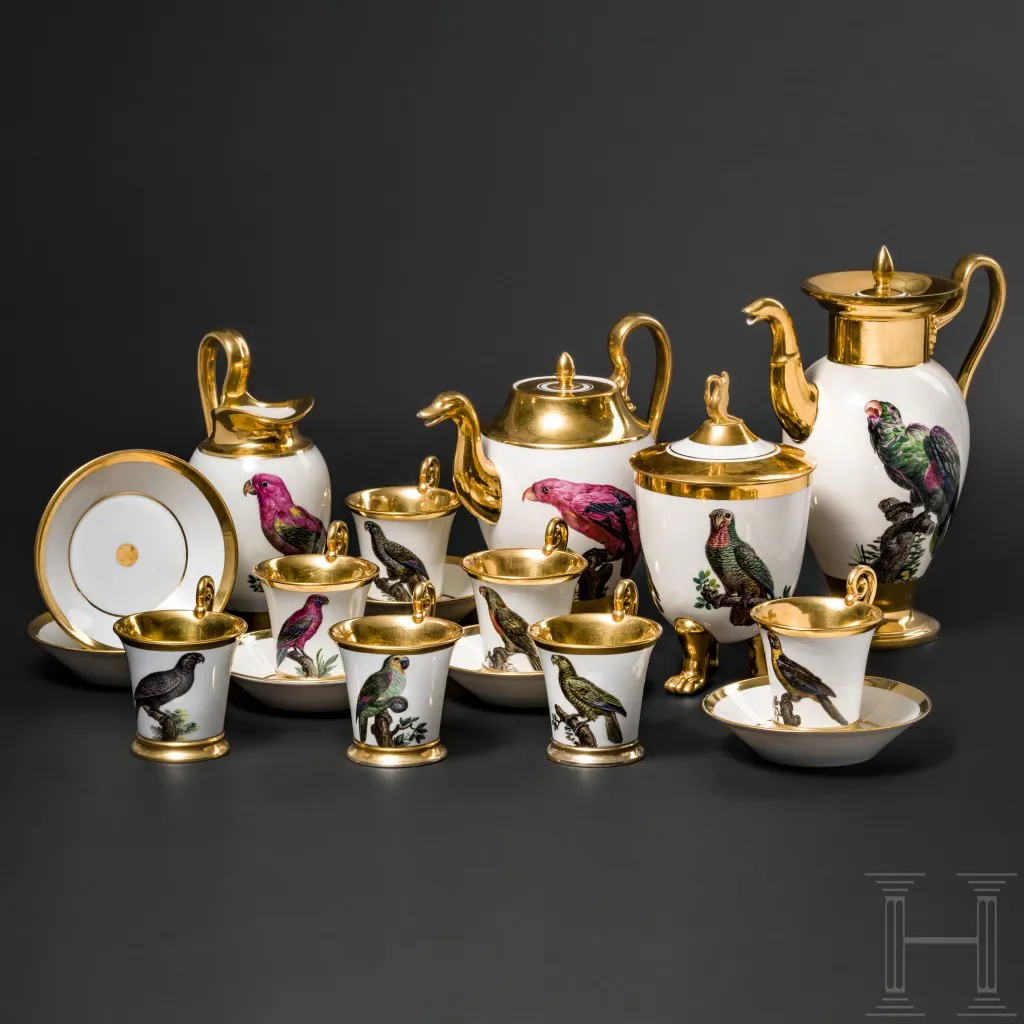
Owned by Elisabeth's maternal grandfather, King Maximilian I Joseph of Bavaria, a unique coffee and tea service was created around 1810-20 in Nymphenburg. The parrot motifs of the décor come from the ornithological work Histoire Naturelle des perroquets by Francois Levaillant and Jacques Barraband. The Bavarian monarch, whose eldest daughter Auguste was married to Napoleon Bonaparte's step-son, was to receive an edition of this work from the Emperor of the French.
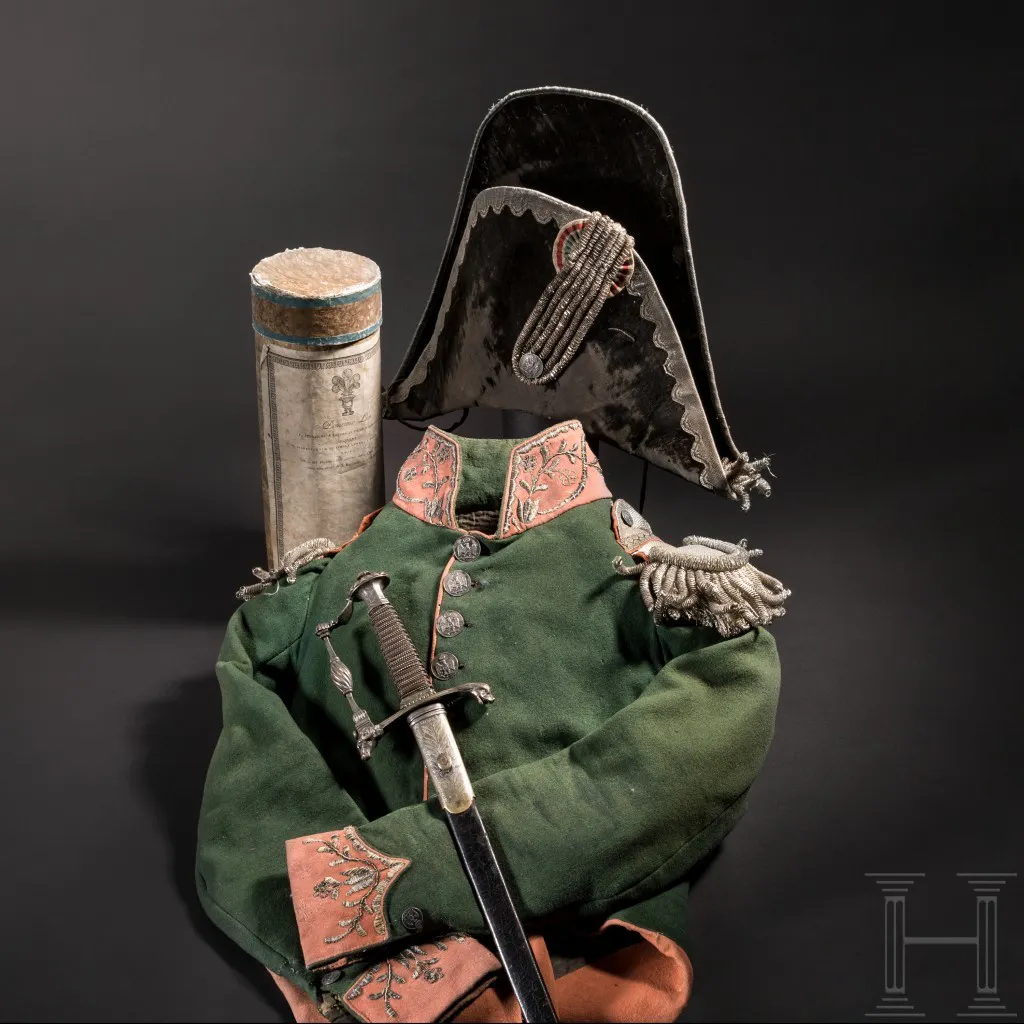
Another lot from the Napoleonic era arrives with a Venetian uniform. The uniform in green, white and red is complemented by the sword of the Commander of the Guard of Honor of the lagoon city, which between 1805 and 1814 was part of the then Kingdom of Italy.
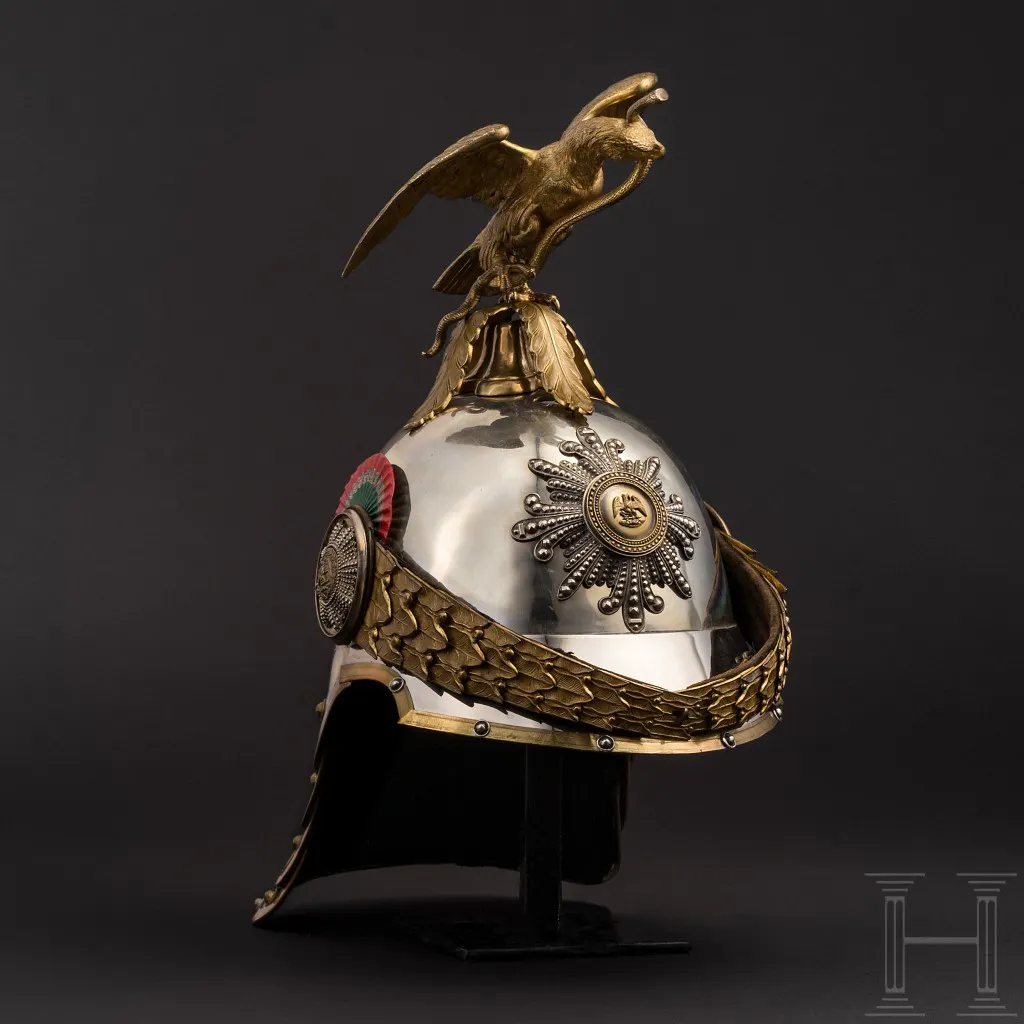
One of the rarest helmets ever is included in this Hermann Historica auction. It is a helmet of the Palace Guard of Emperor Maximilian I of Mexico, one of the younger brothers of the Austrian Emperor Franz Joseph I. Maximilian's rule lasted only three years, and the number of helmets his guard used was very slim, with only about 40 pieces sewn. Even fewer have survived the decades.
There is also an interesting selection of firearms from five centuries, as well as the Johann Lux collection, which includes many rare modern weapons.
The auction titles and dates at Hermann Historica include ‘Firearms for Five Centuries’, 5-7 November; ‘The Lux Collection’ with revolvers and pistols from around the world, November 8; ‘Old Weapons, Hunting and Handicrafts, Antiques’, 9-10 November; ‘Medals and Military Historical Collectibles, including Germany until 1918’, 20-21 November; ‘Major Italian Collection of Military Headgear, 1848-1945’, November 21; ‘German Contemporary History from 1919’, 22-23 November.