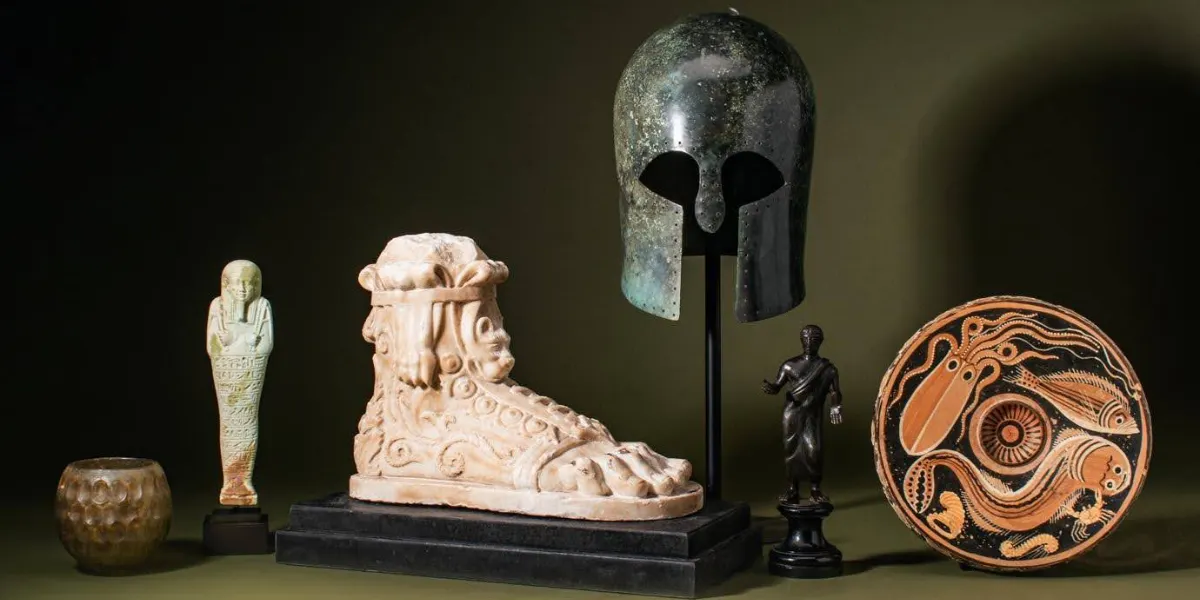
Kick start 2021 with a bang: on 10 January, London auction house Pax Romana is hosting a sale replete with exquisite Antiquities, Ancient Jewellery and Weaponry. Not only are many of the pieces from well-known collections, but much of the fantastic gold jewellery in the sale is authenticated through XRF tests. Similarly, many of the intricate Chinese terracotta statues and bronzes have also been scientifically authenticated. This is one of Pax Romana's most magnificent sales to date, and it’s not to be missed.
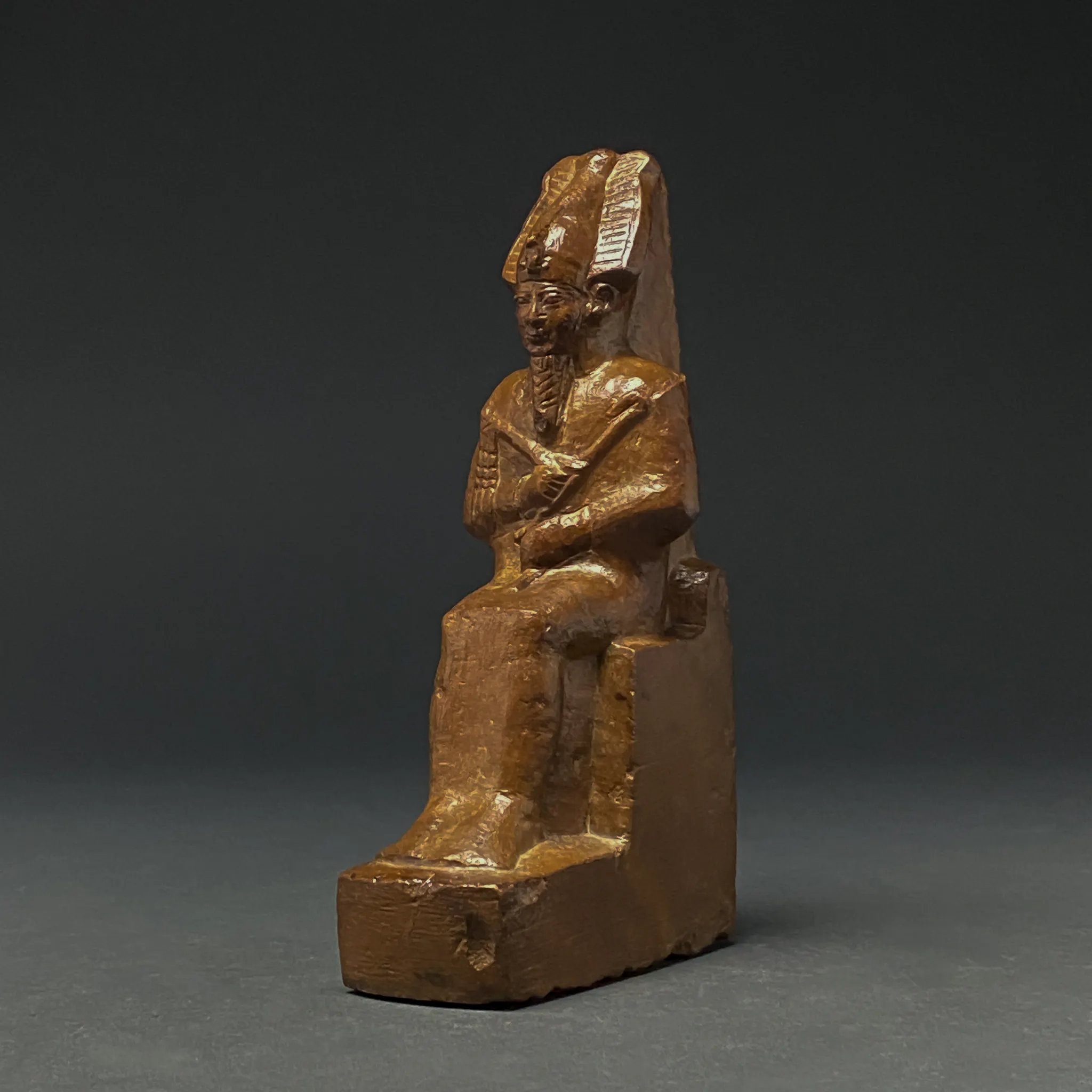
Going back to 664-30 BC, this Egyptian stone figure depicts the god Osiris, stead in mummiform with a braided divine beard, an atef-crown and a peaceful, idealised face. He is posed with arms folded across the chest holding a crook and flail. Osiris is the most significant and important god in the Egyptians pantheon. He is known firstly as a god of fertility and then as a god of the underworld. He is usually depicted as a gold or green-faced man, to declare his association with the underworld.
In his role of lord of the underworld, Osiris was associated with a pharaoh and is thus generally portrayed as a deceased pharaoh, as he is depicted on this figurine.This important example was exhibited at Kresge Art Gallery, Michigan State University, 1985 to 2002.
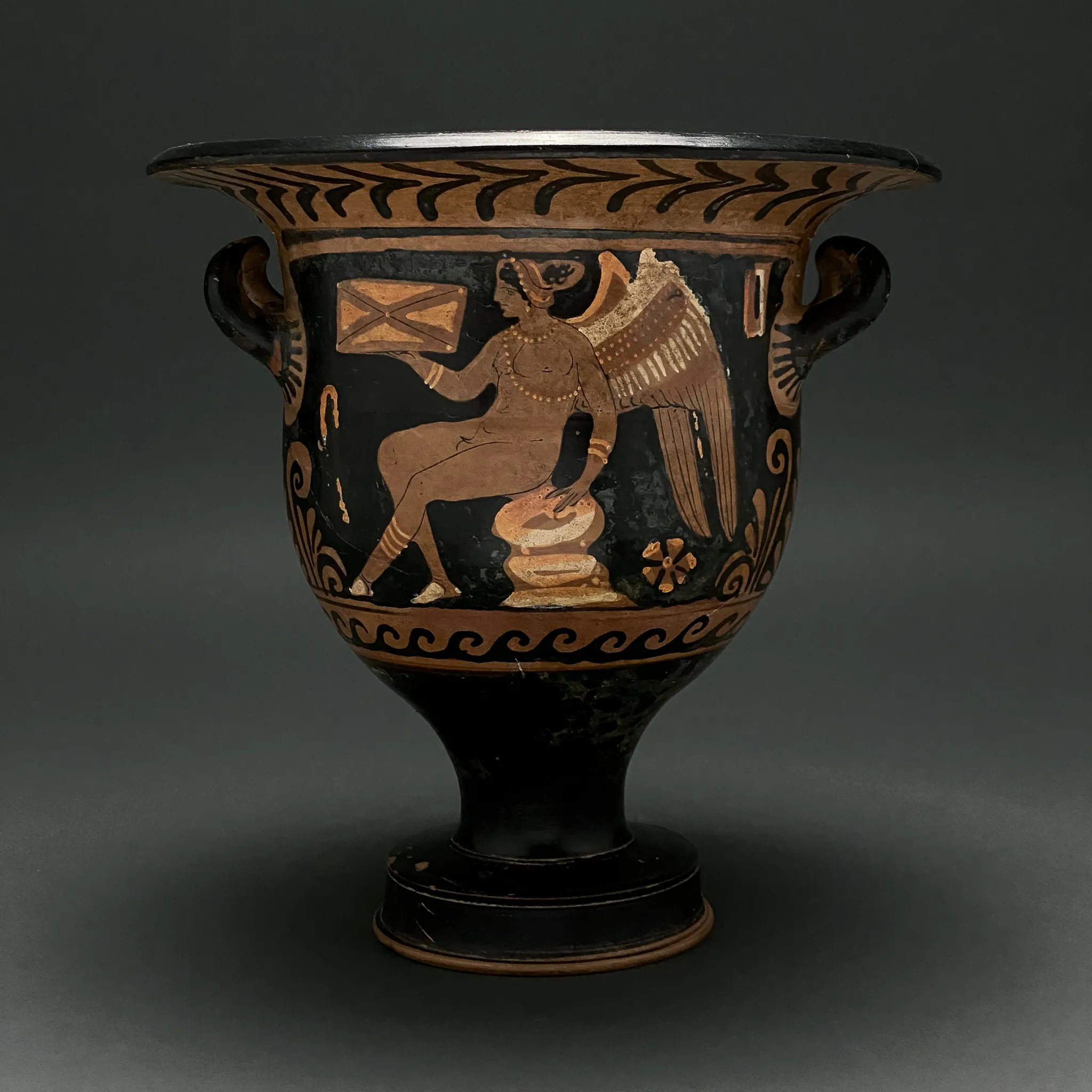
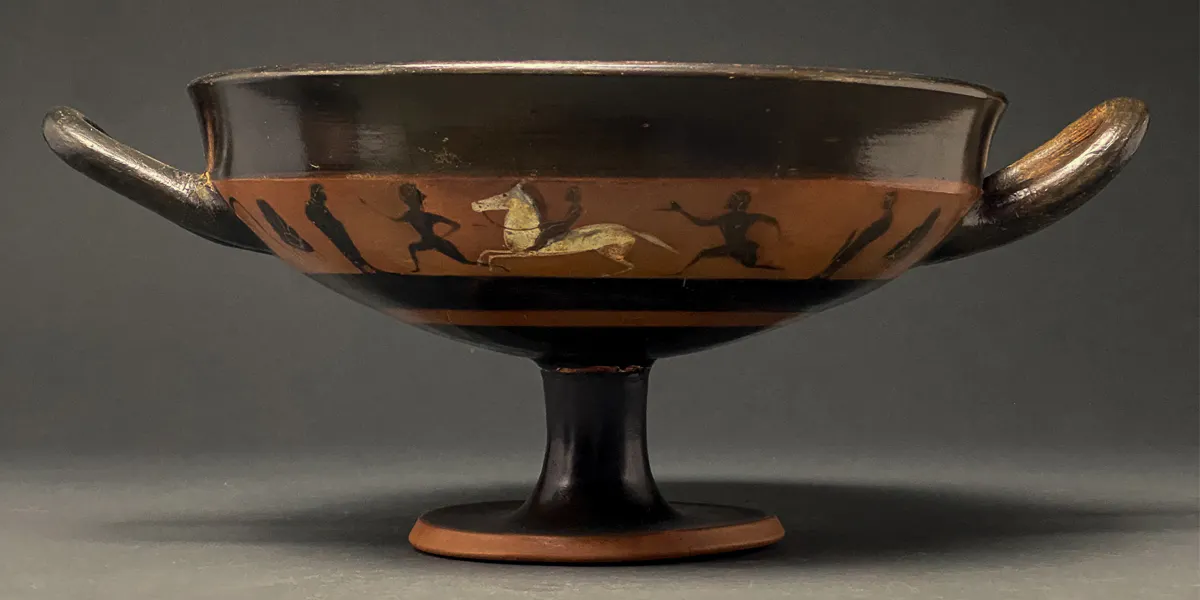
Heading further north into Ancient Europe, this c. 400 BC Greek Apulian terracotta krater features a red figure and pedestal foot, cylindrical stem, inverted bell-shaped body and two lug handles. The painted scenes show a winged victory, sitting and holding a platter or box, and, on the other side, a standing, cloaked figure with a walking cane. The scenes are framed by an upper and lower geometric border and flanked by vegetal motifs. Kraters such as this would have been used for mixing wine at drinking parties. This piece has been precisely dated having undergone Thermo Luminescence analysis by Ralf Kotalla, an independent German Laboratory.
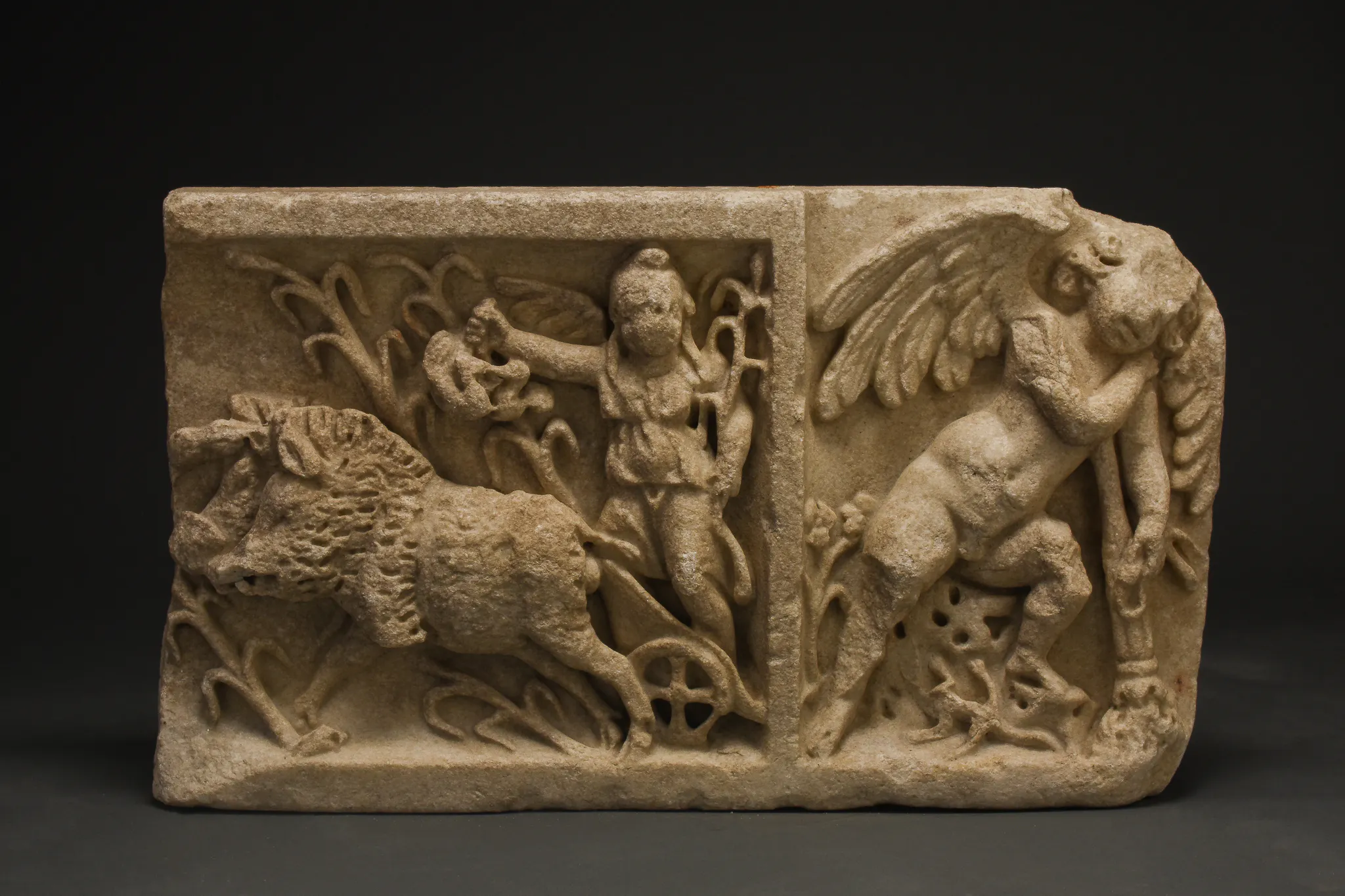
This 100-300 AD Roman frieze from a marble sarcophagus depicts an intriguing scene in low to high relief from the Calydonian Hunt – the hunt in progress – in which a winged Nike/Victory (her wings serving as an indicator of the celebration and the win to come) holds a pair of birds in her right hand and a corn stalk in her left. She is being pulled on a wheeled chariot/vehicle by two boars with additional corn stalks in the background. On the right is a large Cupid (Greek Eros) holding his left shoulder with his right hand and leaning upon a walking stick or possibly Hercules' club, with phytomorphic forms and a lizard-like critter on the ground. Provenance is an East Coast, USA collection, formerly of the William Froelich collection, New York, USA, acquired in the 1970s.
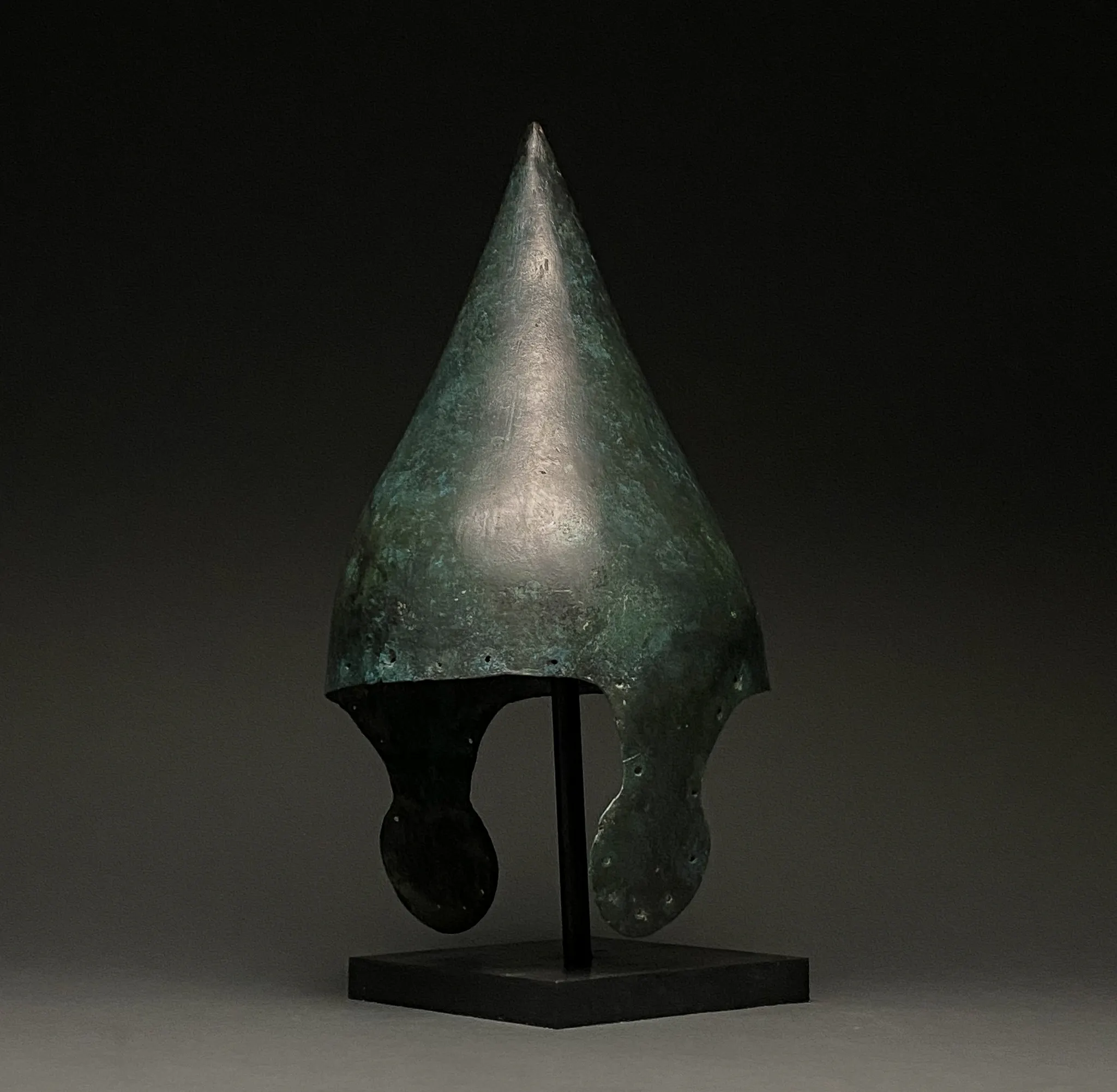
Those on the hunt for rare collectables will appreciate this Assyrian bronze helmet from c. 900-700 BC. The helmet comprises a conical cap with a sharp terminus and curvilinear hourglass-shaped cheek pieces. The Assyrian Empire was one of the Mesopotamian super powers in the Levant. This kingdom started as the city-state of Assur before conquering more territory during a series of violent expansions. By 609 BC, the Assyrian empire was no more and its territories were divided by the Median Empire and the Neo-Babylonian Empire.
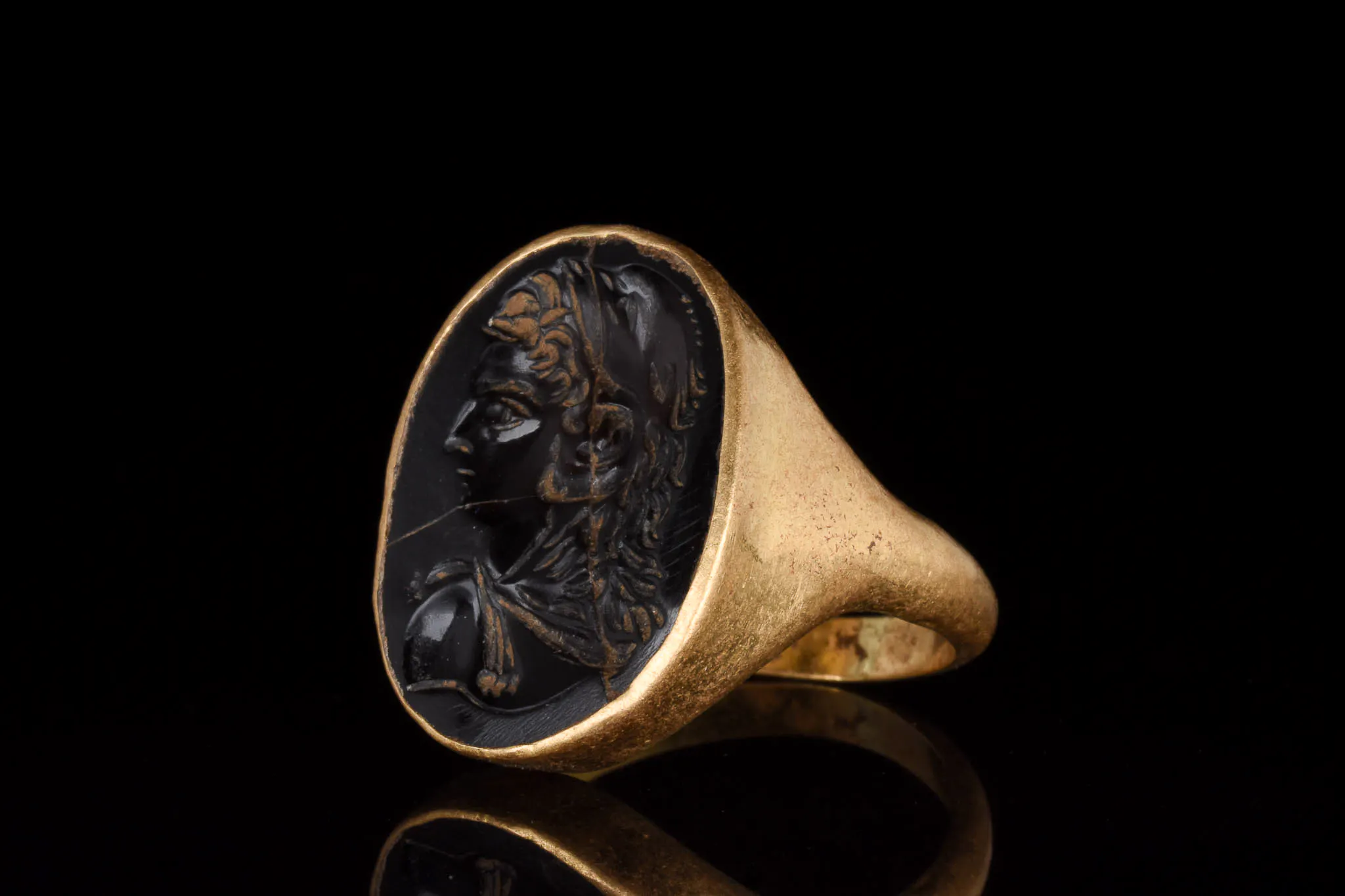
From the jewellery portion of the auction is this c. 100-300 AD Roman gold ring with circular hoop and elliptical bezel with a red hardstone setting. It is engraved with a highly naturalistic portrait of Alexander the Great. He is depicted looking left, with flowing locks and a serious expression. He wears a lion skin, which identifies him with the demigod Hercules.
After conquering much of the known world in the later 4th century BC, Alexander the Great, king of Macedonia, remained a major historical figure and subject of admiration for much of the rest of antiquity. He was commonly viewed as a model for aspiring generals and politicians; it is possible, therefore, that this item may have belonged to a Roman soldier. In order to confirm its authenticity, this piece has undergone X-Ray Fluorescence analysis by an independent Belgian Laboratory.
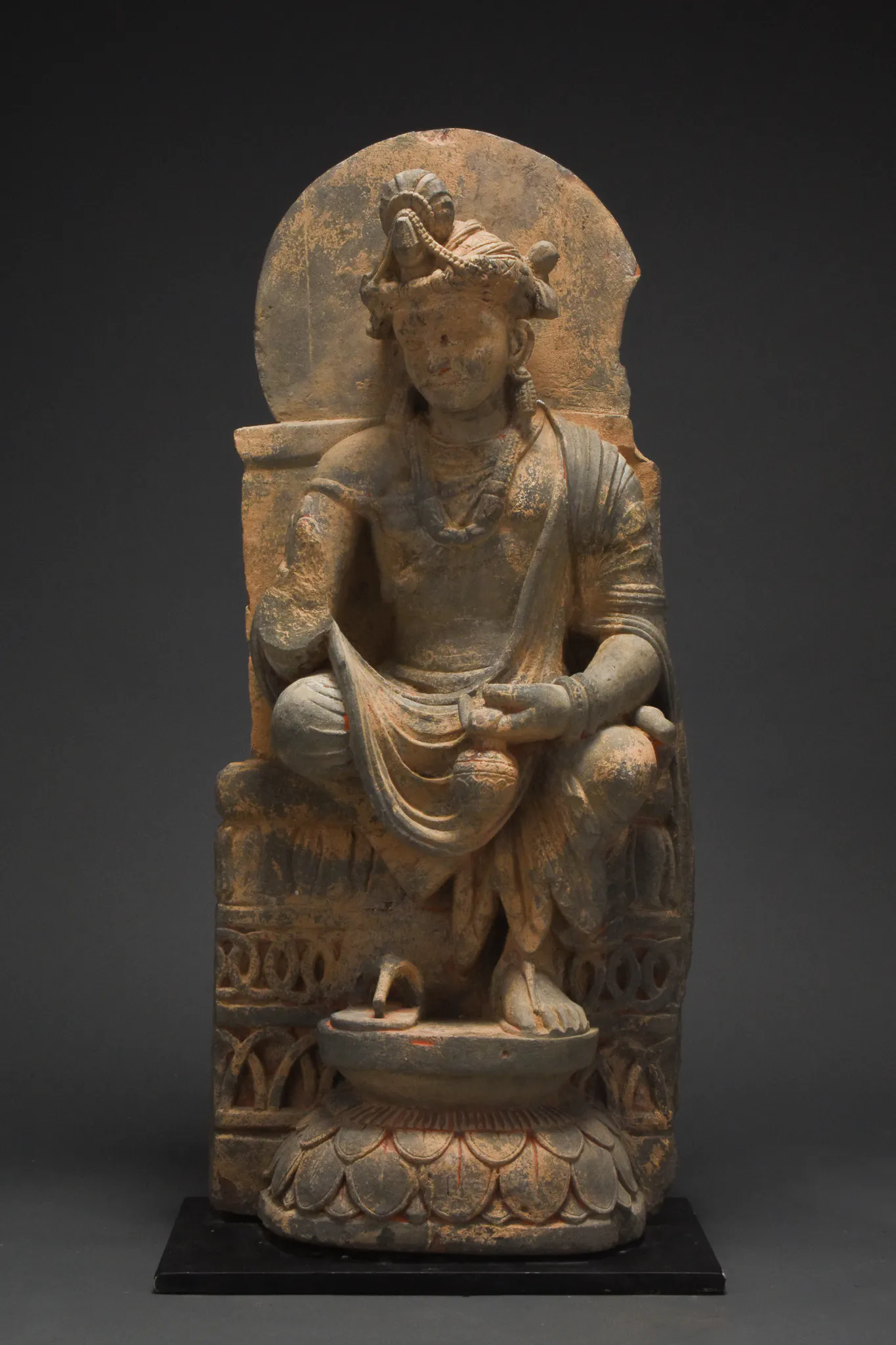
This giant Gandhara schist figure of a bodhisattva, backed by a halo, sits gazing serenely into the distance. From 100-300 AD, he is dressed in an elegant sanghati or mantle and wears elaborate jewellery, including a beaded necklace, armbands and bracelets, reflecting his spiritual wealth. His identity as a bodhisattva is established by the presence of an incised urna on his forehead, perhaps originally ornamented with a jewel. Together, these details create a majestic impression of a bodhisattva or individual who is able to reach nirvana (enlightenment) but delays doing so through compassion for suffering beings.
In one hand he holds fruit, perhaps to be identified as pomegranates, which symbolise fertility in Buddhist tradition. Gandhara was an ancient region in the Peshawar basin in the north-west of the ancient Indian subcontinent. The Kushan period (c. 75-451 AD) of Gandharan art, to which this schist figure belongs, was the golden age of artistic production in the area.
As a reminder, you have until 10 January to reflect and ruminate on ancient history – and take advantage of the many rare collectables on offer at Pax Romana.