Summer is officially here, which we often equate with relaxation and long, balmy days. For generations, the summer months have inspired artists to fill their canvases with leisurely scenes replete with shimmering light and vivid colour. Here we've rounded up ten of our favourite summertime paintings:
Conrad Felixmüller, Ma bonne l'onde, 1926
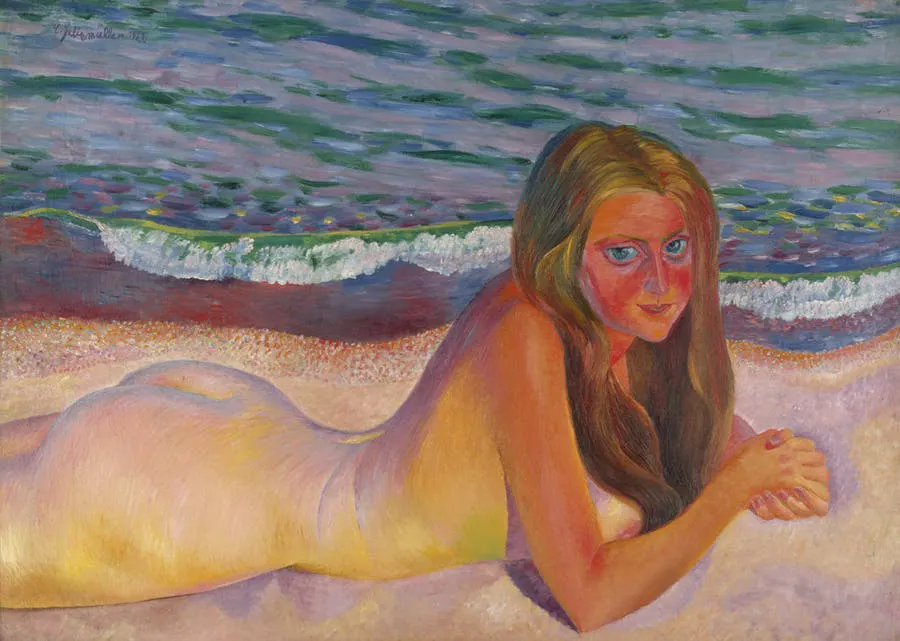
In 1926, German Expressionist Conrad Felixmüller and his wife Londa travelled to the French Riviera for a long stay. Taken with Londa's curves illuminated in the light of the setting sun, the artist picked up a brush and created the work Ma bonne l'onde – a play on words that refers to both Londa's name and the French word for wave.
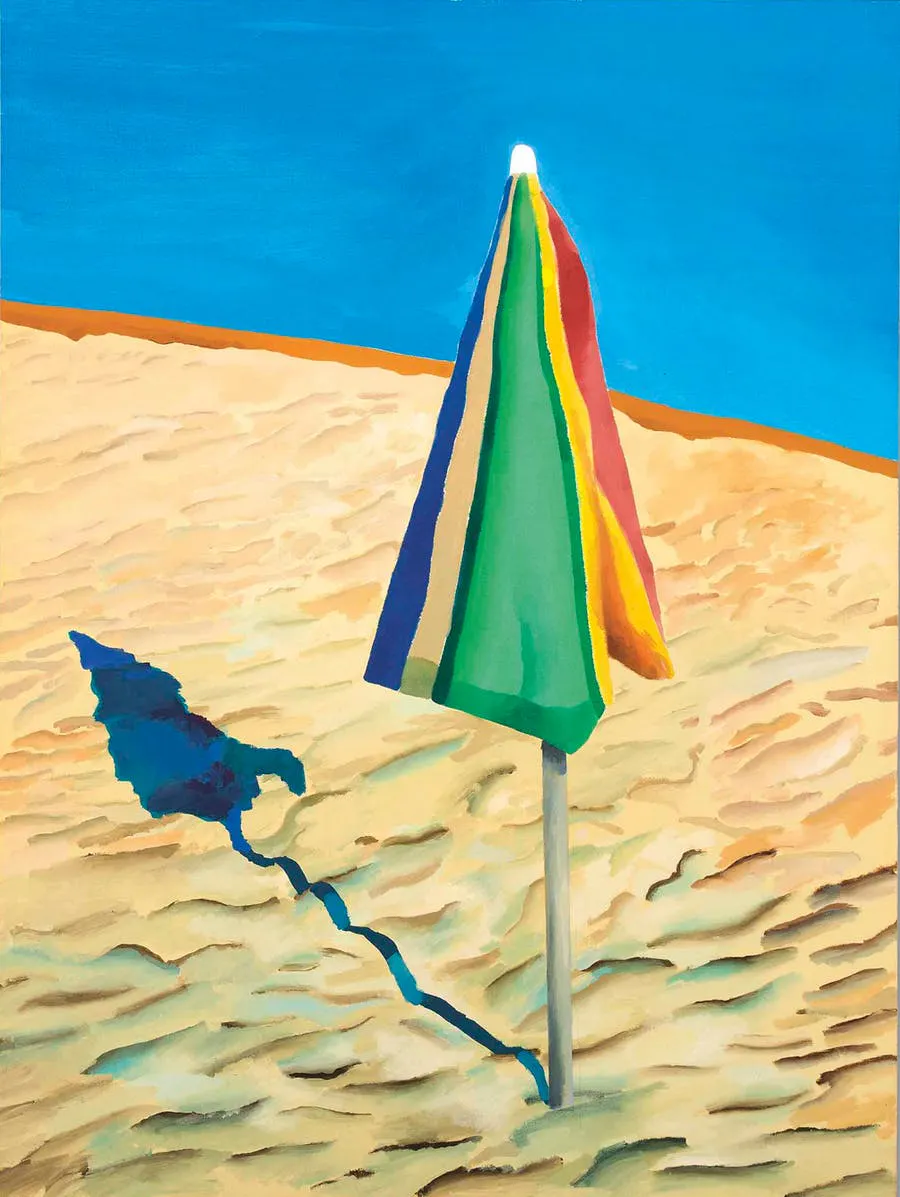
David Hockney, Beach Umbrella, 1971
See also: The 10 Most Expensive Living Artists
With David Hockney, the first summery motif that comes to mind are his swimming pools. But his painting of a parasol on the beach, also painted on the Côte d'Azur, exudes pure summer bliss. The iconic umbrella is a recurrent symbol of the Mediterranean beaches, providing some shade for sun-hungry tourists.
Max Liebermann, Terrace of the Restaurant Jacob in Nienstedten on the Elbe, 1902
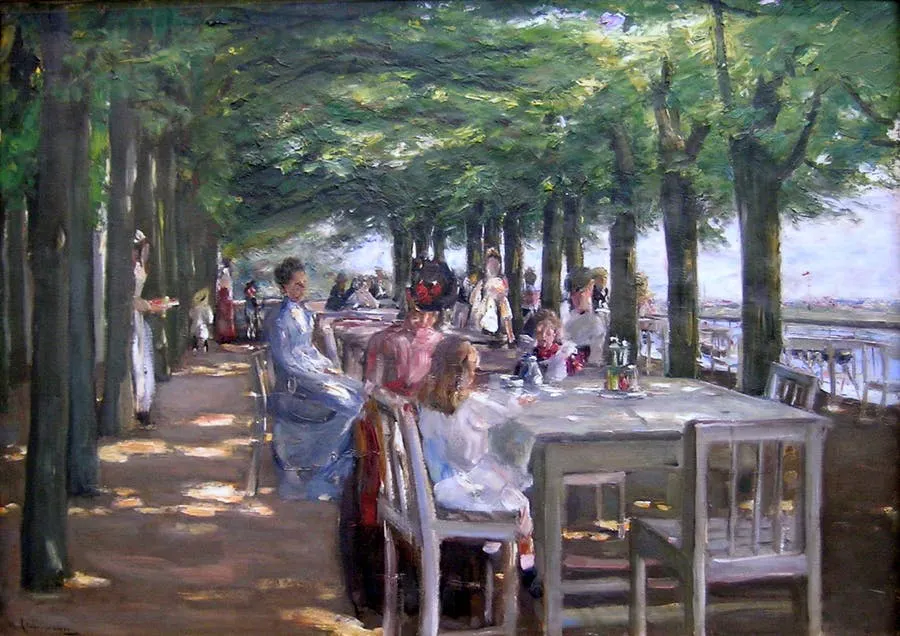
In the summer of 1902, Max Liebermann moved to the Hotel Jacob on Elbchaussee in Hamburg, Germany at the invitation of the director of the Hamburger Kunsthalle. It was intended that he should paint motifs of the Hanseatic city, but he found his favourite setting right in front of the hotel doors on the terrace. The result, including Liebermann's famous 'sunspots', is one of his best-known works today.
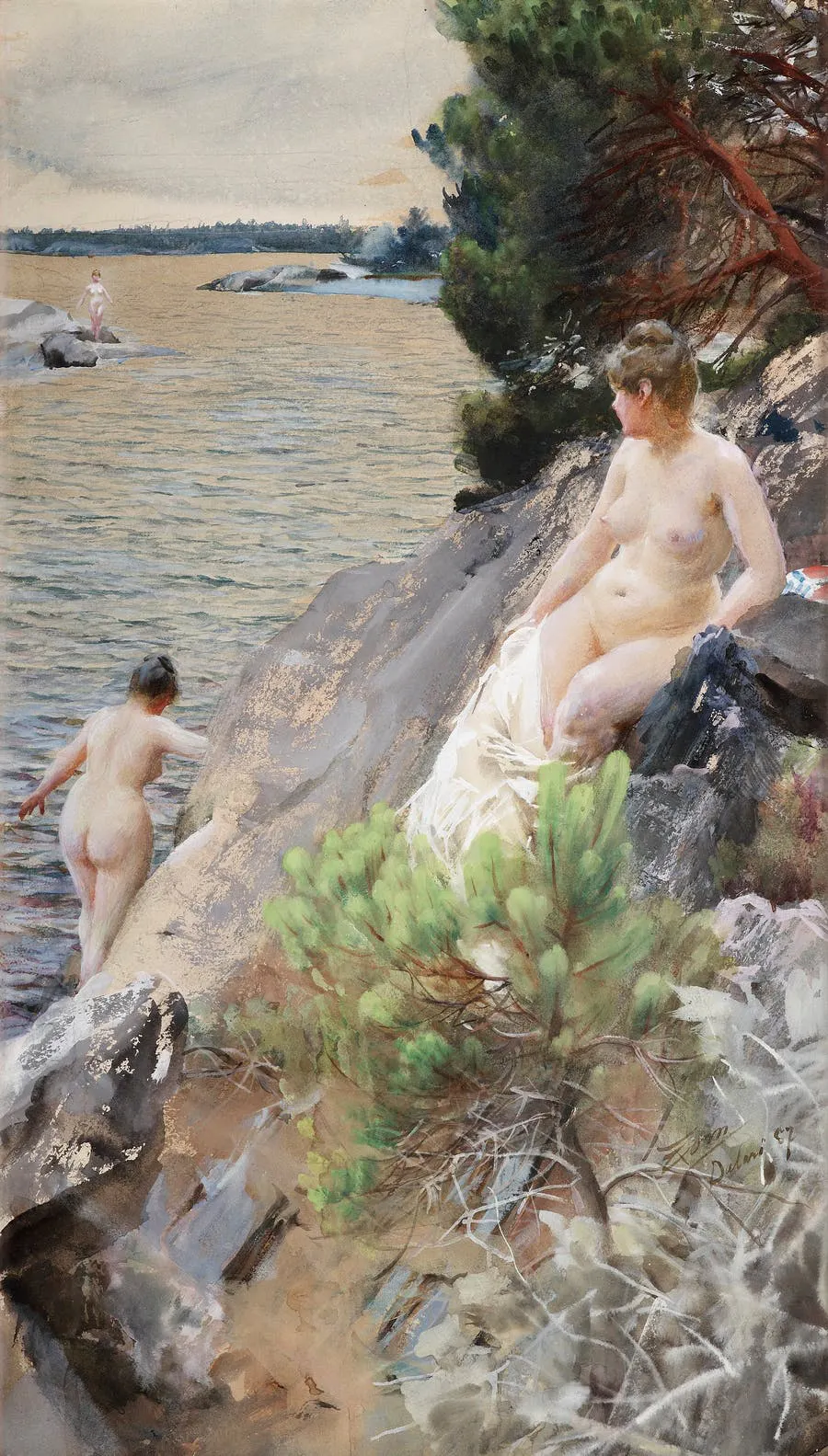
Anders Zorn, Sommar, 1887
See also: The 10 Most Famous Works of Art and Where to Find Them
After marrying in October 1885, the Swedish painter Anders Zorn and his newlywed wife Emma went on their honeymoon through Eastern Europe and Turkey. In the summer of 1886 they returned to Sweden and spent some time with Emma's family on the island of Dalarö off Stockholm before they began their life together in the town of Mora in Dalarna. Those idyllic summer days on the Swedish archipelago inspired this Sommar painting, completed the following year.
Paul Signac, Portrieux. La Comtesse, 1888
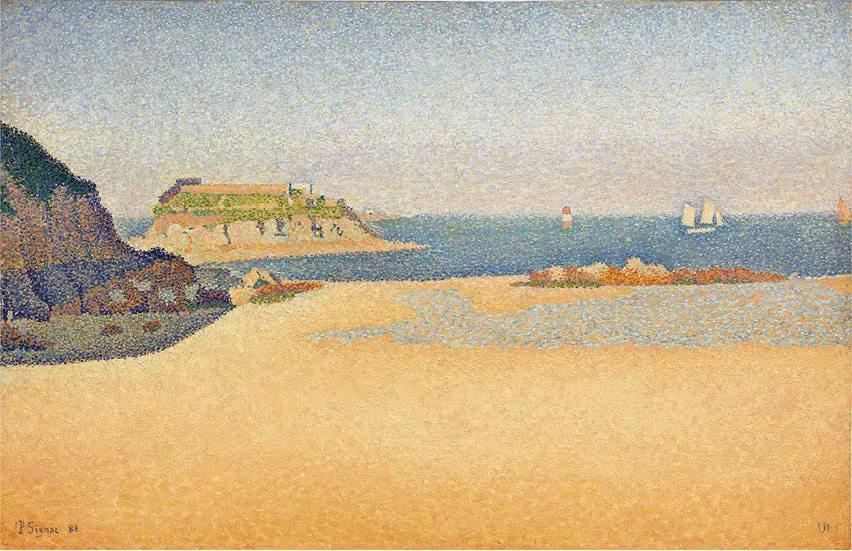
No other style seems better suited to reproducing the shimmering light of the summer sun than pointillism. In 1888, Paul Signac, one of the founders of this style of painting, spent the summer in the Breton coastal town of Portrieux, where he found motifs for 15 oil paintings. This one gives a view of the small island of La Comtesse off the local beach.
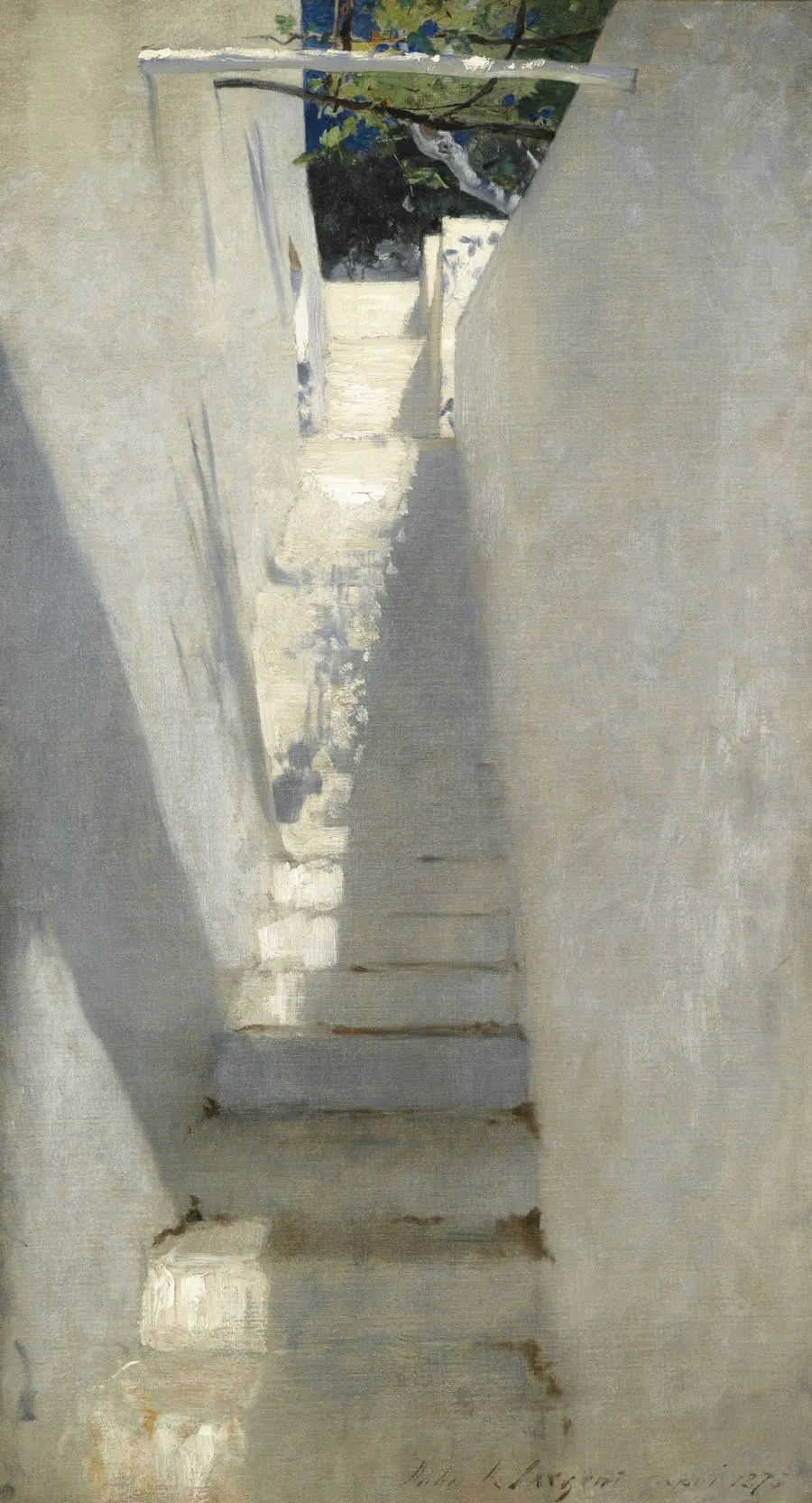
John Singer Sargent, Staircase in Capri, 1878
See also: 5 Portraits of Women in Black
This work by John Singer Sargent might not show a breathtaking view of the sea or a couple of bathing mermaids, but the staircase on the island of Capri is a definite slice of summer. Can't you feel the cooling shade between the whitewashed houses, providing a moment of relaxation from the strong rays of the sun?
Winslow Homer, Children on the Beach, 1873
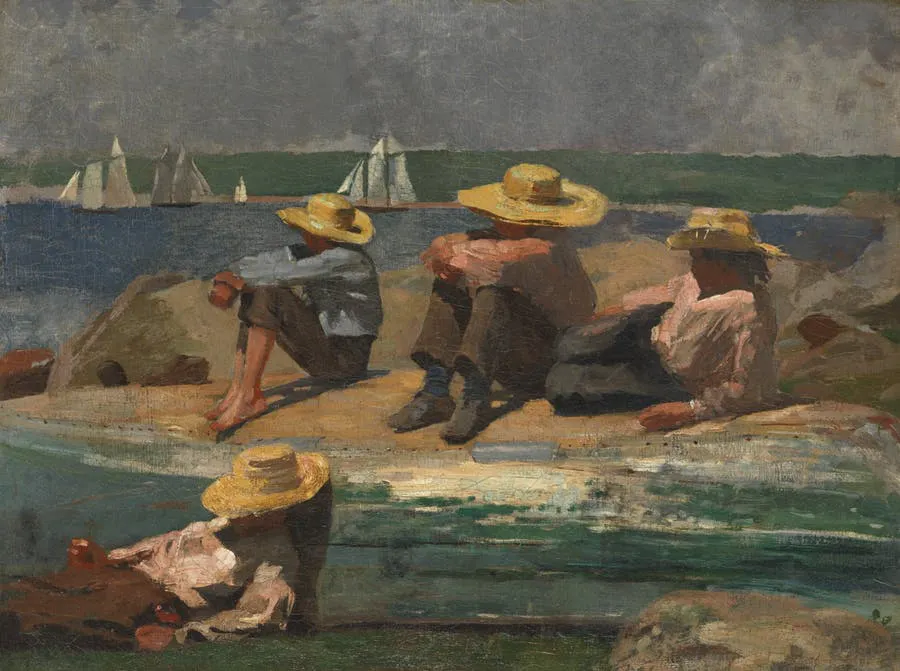
In 1873, Winslow Homer spent the summer in the then flourishing fishing village of Gloucester in his home state of Massachusetts. That summer, the course was set for Homer's future career as an artist as the self-taught painter explored the influence and representation of light and colour.
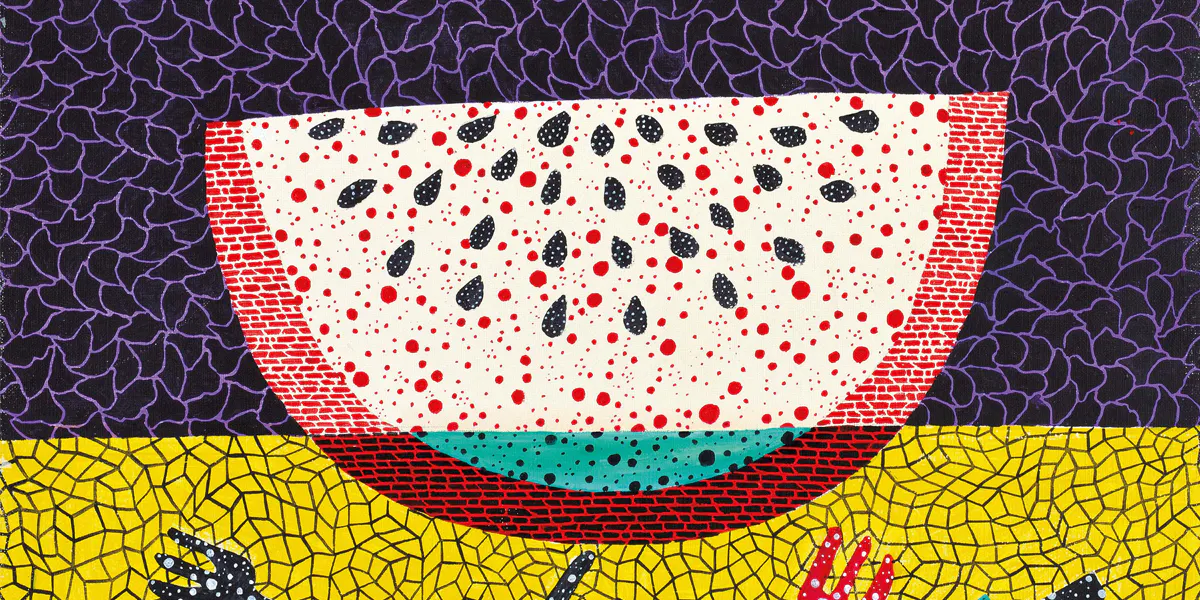
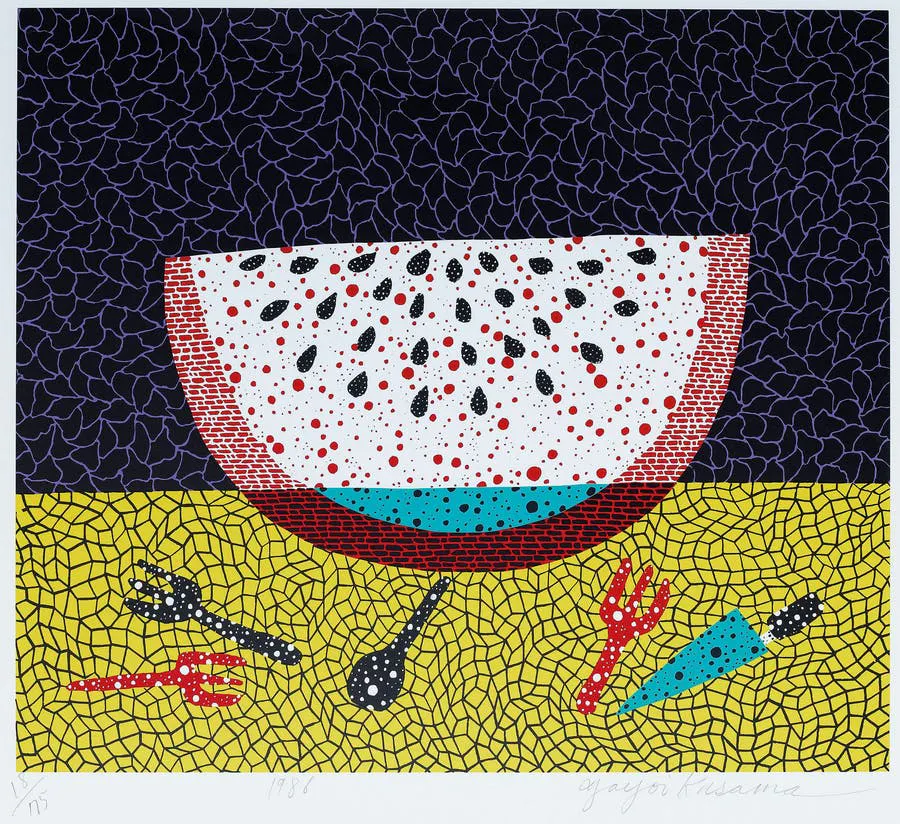
Yayoi Kusama, Watermelon, 1984
See also: 10 Artists Between Genius and Madness
Watermelon, mainly composed of water, is the refreshing fruit par excellence. In this 1986 work, produced in acrylic (in 1984) and in silkscreen printing, Yayoi Kusama takes up the fruity subject, adding her colourful style. This still life, composed of different patterns, reveals her famous polka dots in the main elements of the composition, namely the watermelon and the cutlery.
Édouard Manet, Le Déjeuner sur l’herbe, 1863
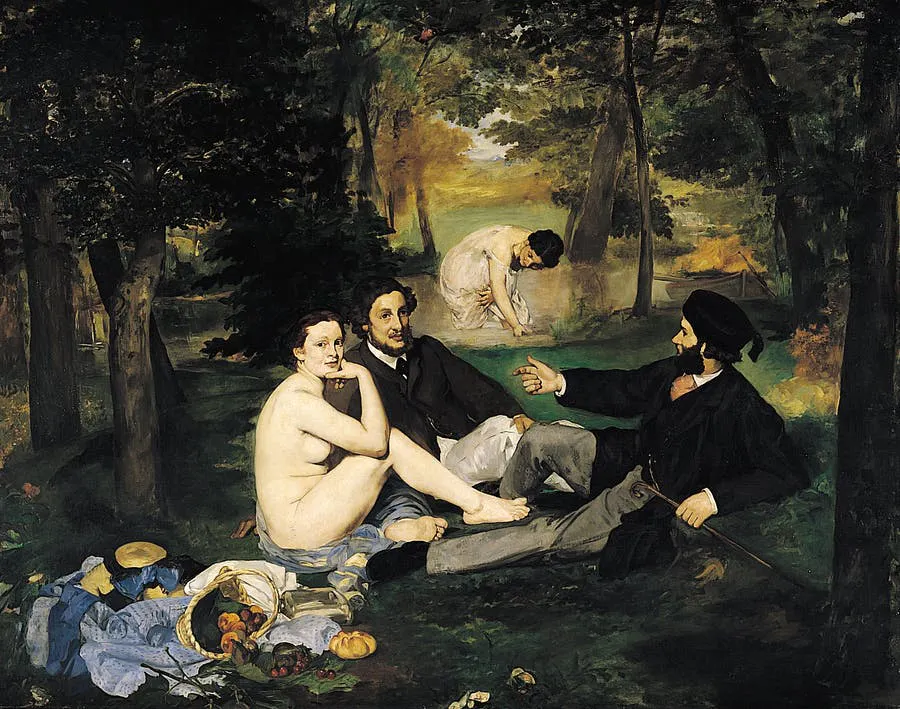
In 1863, Édouard Manet caused a scandal when he presented his Le Déjeuner sur l’herbe (The Luncheon on the Grass) in the Salon des Refusés, an exhibition of works rejected by the official Paris Salon. In addition to two fully clothed men, it depicted a naked woman, who in this context could only be a demi-mondaine (a woman whose status oscillates between luxury prostitute and mistress maintained by wealthy nineteenth-century Parisians). Despite the scandal, the painting reflects the simple pleasures of a summer picnic.
Edward Cucuel, Two Girls Sitting at Lake Starnberg, after 1918
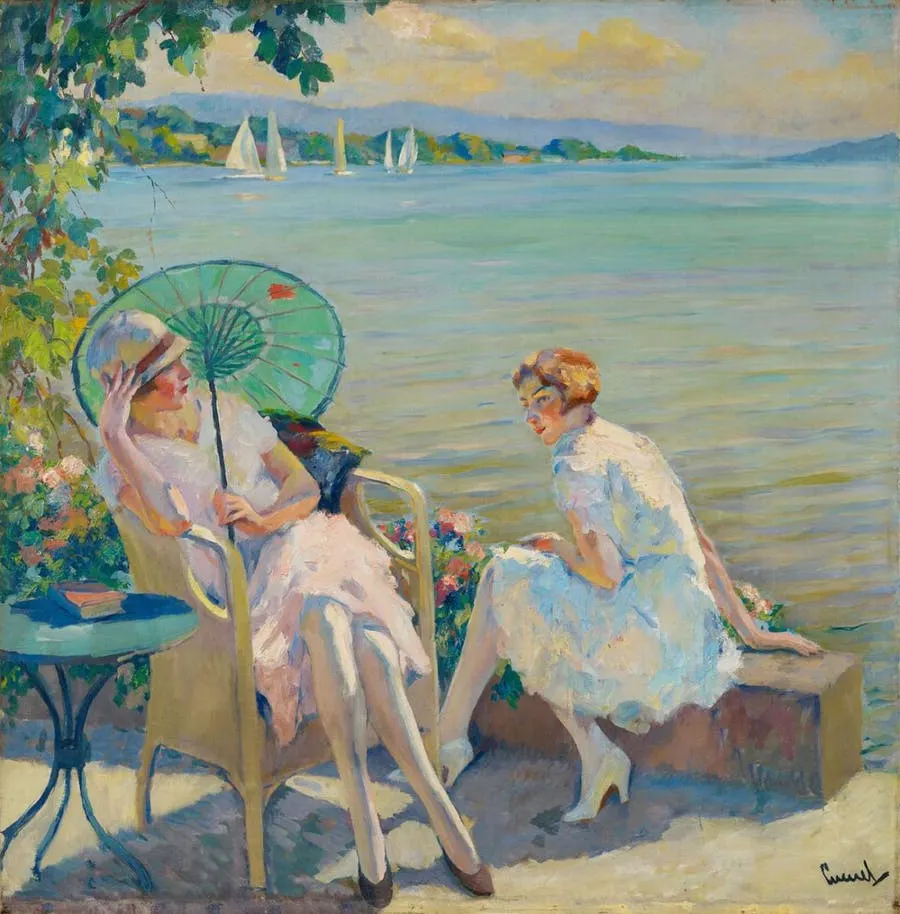
The American painter Edward Cucuel lived in San Francisco, Paris and New York and had travelled through Europe, North Africa and the Far East. But it was the Bavarian foothills of the Alps that permanently captivated his interest, first the Chiemsee, then the Ammersee and finally the Starnberger See, where he often painted young women garbed in airy clothes in front of a sunlit backdrop.