Studying and copying the works of other artists is part of the training of any painter. Even Vincent van Gogh (1853-1890), throughout his career, continued this practice, inspired by the artworks of his predecessors and contemporaries from many different regions and artistic movements.
The first copies were made after van Gogh moved to Paris to live with his brother Theo (1857-1891) in 1886. Vincent quickly became part of the avant-garde art scene and passed these contacts on to Theo, who worked as an art dealer.
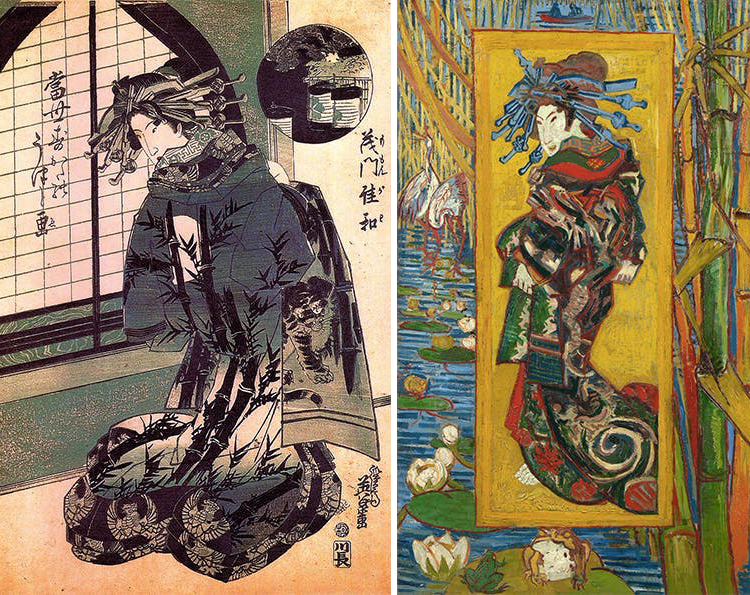
1. Kensai Eisen, A Courtesan, 1808
See also: 10 Artists Between Genius and Madness
In Paris at that time, Japonism was in vogue and van Gogh started collecting Japanese woodblock prints. Based on templates by Utagawa Hiroshige (1797-1858), he created the paintings Flowering Plum Tree and Bridge in the Rain. On the cover of Paris Illustré magazine from May 1886, he also discovered the woodcut A Courtesan by ukiyo-e artist Keisai Eisen (1790-1848), which he copied with a painting. However, he changed the posture of the sitter and chose a pond with water lilies and bamboo as the background instead of a Japanese room.
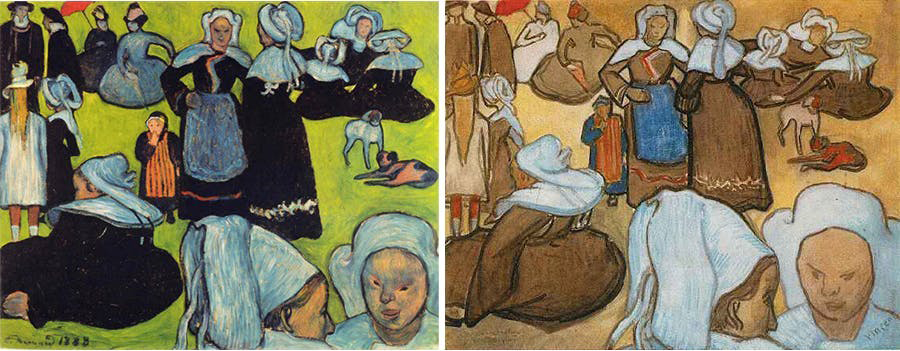
2. Émile Bernard, Breton Women in the Meadow, 1888
Émile Bernard (1868-1941) was among the young artists van Gogh met in Paris. Bernard's style of black contour outlines, from which cloisonnism and synthetism developed, greatly influenced van Gogh. Bernard was also one of the colleagues with whom he exchanged paintings.
See also: 8 Artists Inspired by the South of the France
In February 1888, Vincent van Gogh travelled to the south of France, where he fell in love with Arles and dreamed of founding an artist community there. Bernard sent van Gogh the painting Breton Women in the Meadow, which he had painted in August 1888. In November, van Gogh made a watercolour copy of it entitled Breton Women.
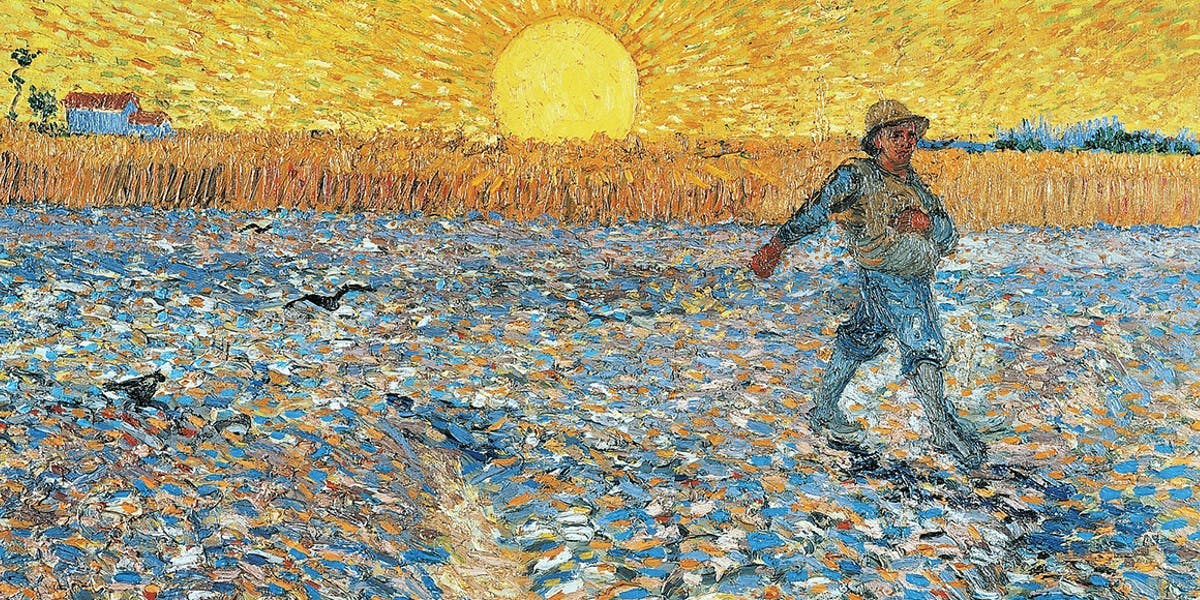
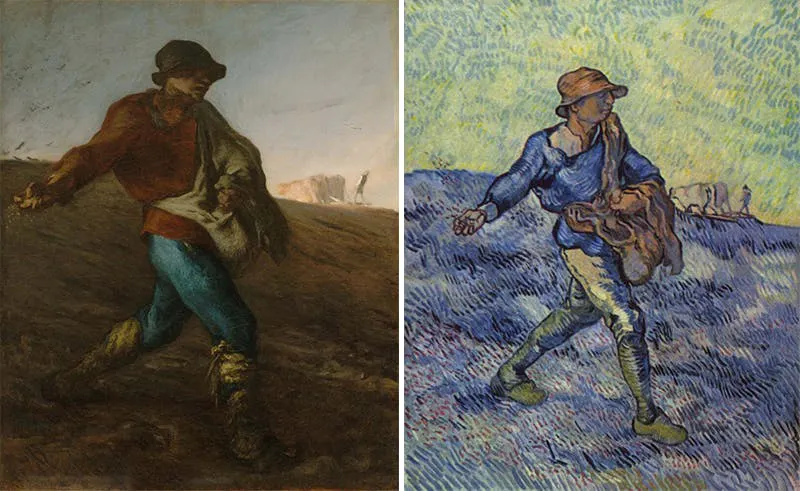
3. Jean-François Millet, The Sower, 1850
During an argument with Paul Gauguin (1848-1903), who was the only one of his Paris colleagues to follow him to Arles, van Gogh cut off part of his ear in January 1889 and suffered a nervous breakdown. He was institutionalised at the mental hospital in Saint-Rémy-de-Provence, not far from Arles. However, this time led to prolific creativity, including the painting of his most famous work Starry Night.
See also: The 10 Most Famous Artworks and Where to Find Them
See also: 8 Patrons of the Parisian Avant-garde
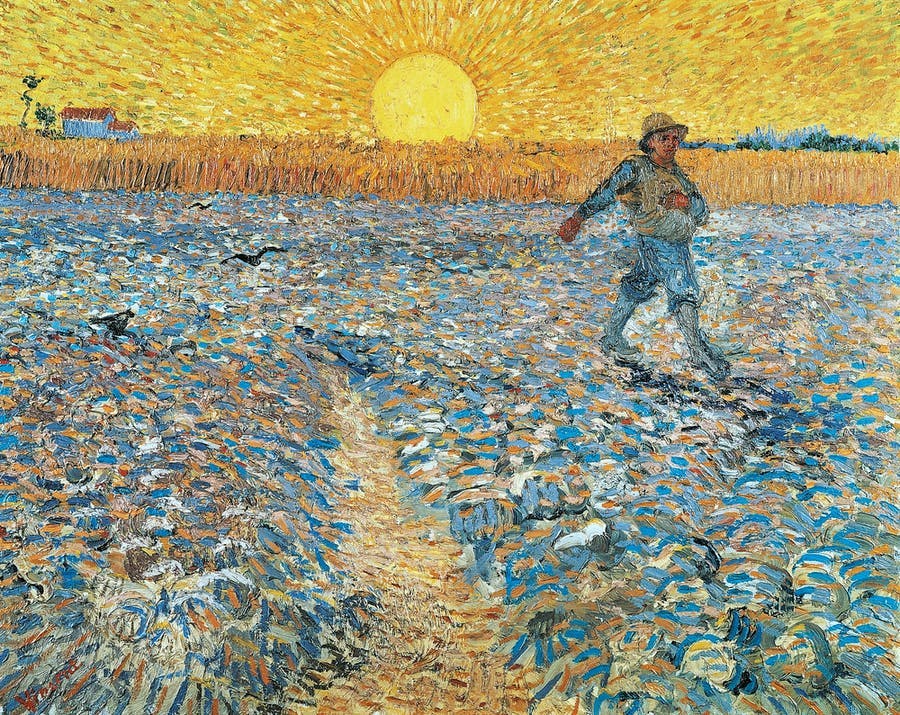
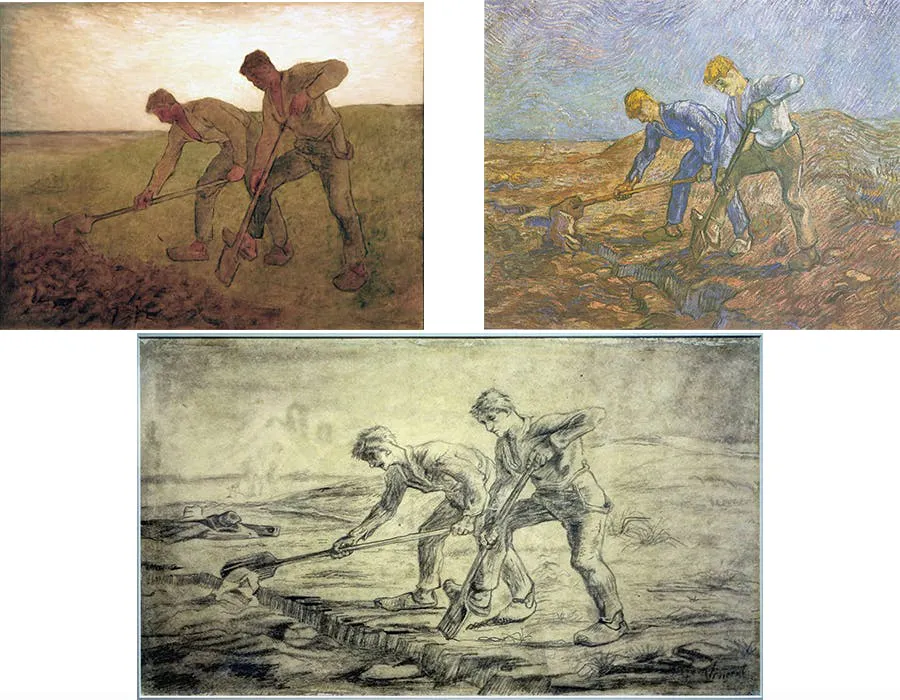
The limited radius in which van Gogh was allowed to move, however, led to boredom and for a change he resorted to copying works by other artists whom he admired and by whom he was inspired. Given his location in the countryside, van Gogh sought the people and landscapes around him. One of his great models was the realistic painter Jean-François Millet (1814-1875), one of the earliest artists of the Barbizon School. In September 1889, van Gogh began to make paintings based on wood engravings by Millet showing farmers at work. A total of twenty-one works after Millet were created.
4. Jean-François Millet, The Diggers, 1850-55
See also: The First Works of 10 Famous Artists
Van Gogh was most impressed by the motif of the sower, which he had previously used in paintings. Millet's painting The Diggers from 1850-55, van Gogh copied in October 1889, and also served as a template for his earlier drawing in 1880.
5. Eugène Delacroix, Pièta, 1850
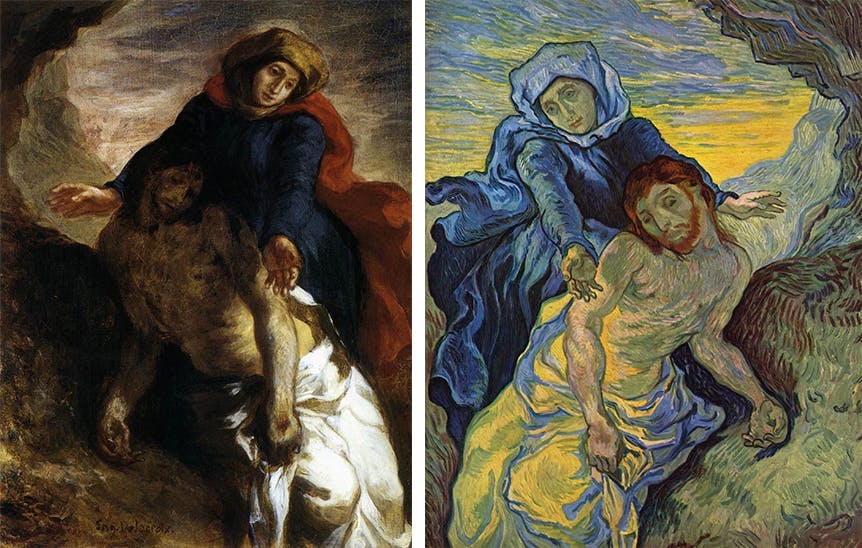
Although van Gogh was the son of a clergyman, religious motifs did not play a major role in his oeuvre. In Saint-Rémy, however, he copied religious works by two artists who inspired him. Firstly, Eugène Delacroix's (1798-1863) Pièta encouraged van Gogh to use more colour. The second artist was Rembrandt (1606-1669), whose use of light he had admired during his time in Amsterdam in the 1870s.
6. Rembrandt van Rijn, The Raising of Lazarus, 1630-32
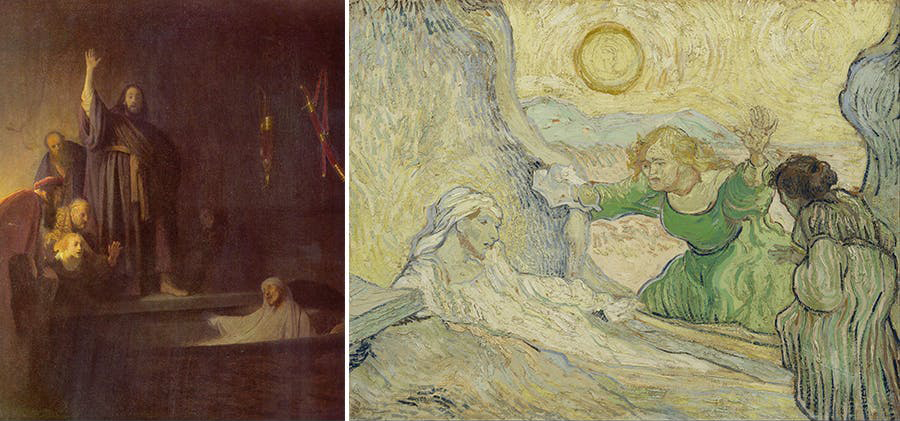
Inspired by Delacroix, he painted Pièta and The Good Samaritan (1890), after various works by Rembrandt he created Half Figure of an Angel (1889) and The Raising of Lazarus. It is noticeable that the Christ of the Pièta and the figure of Lazarus with his red hair seem to resemble Van Gogh.
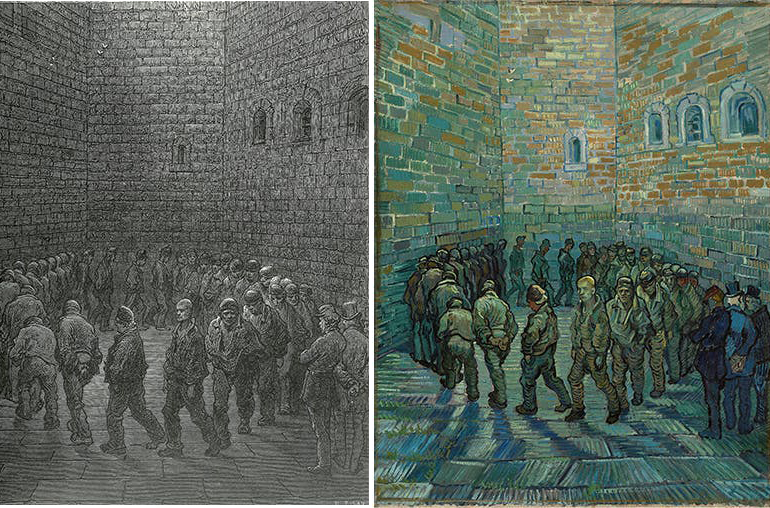
7. Gustave Doré, Newgate Exercise Yard, 1872
See also: The Secrets of Van Gogh's Final Painting Revealed
How restricted van Gogh felt in the mental hospital is most clearly expressed in Prisoners Exercising, painted in early 1890, based on a wood engraving by Gustave Doré (1832-1883) from the book London: A Pilgrimage, published in 1872.
8. Jacob Jordaens, Study with Five Cows, 1620
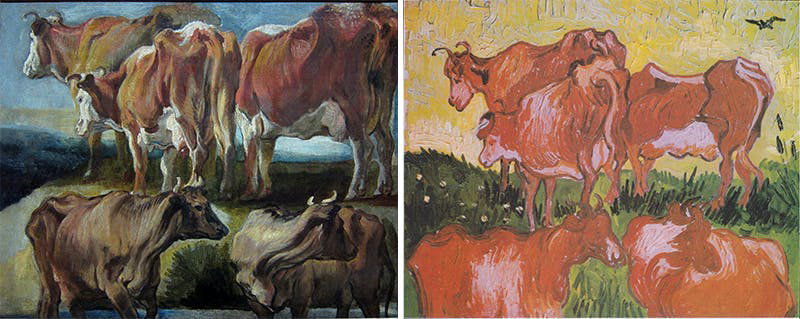
Van Gogh's last copy of an artwork was made in July 1890, shortly before his death. Beginning in mid-May he lived in Auvers-sur-Oise, northwest of Paris, where the doctor and art collector Paul Gachet (1828-1909) was supposed to keep an eye on his health.
This painting was a copy of an oil study with five cows by the Flemish Baroque painter Jacob Jordaens (1593-1678) from 1620, of which Dr Gachet owned a drawing.
In van Gogh's oeuvre of almost 2,000 paintings and drawings, the copies he made have provided an interesting insight into the artist's inspirations and interests.