
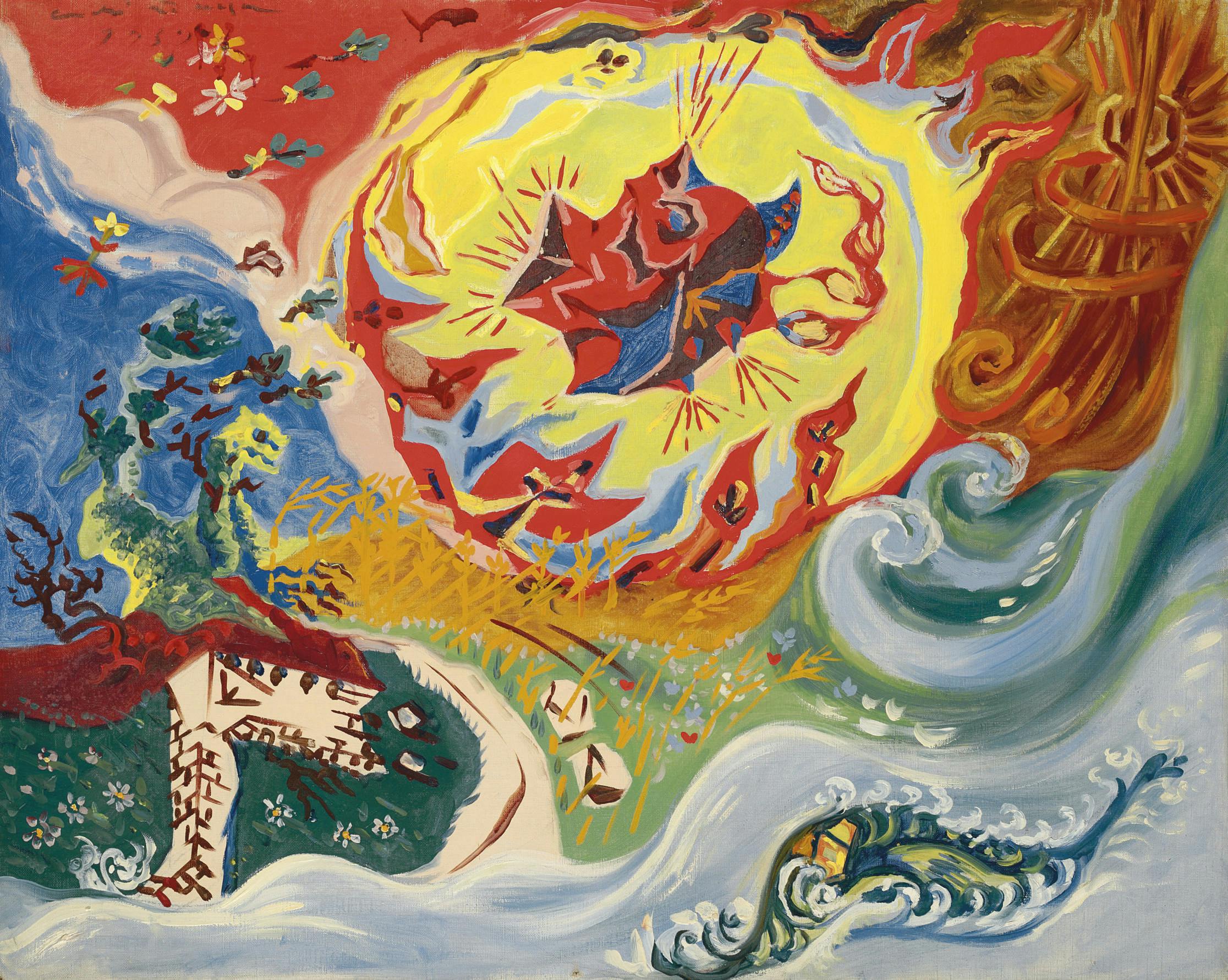
An important figure in the surrealist movement, particularly through his approach to automatic drawing, André Masson (1896-1987) never ceased in his work to question human barbarism (he was deeply marked by the First World War, during which he was injured). Between the Chemin des Dames and the Montagne Sainte-Victoire, near which he was buried, this close relative of the writer Georges Bataille ended up finding peace in his art.
“A willingness to take risks is undeniably the main driving force, which can lead man forward into the unfamiliar world. André Masson is at the highest level possessed of it”. This tribute is by André Breton, leader of surrealism, to whom Masson established a rather contrasting relationship over the course of his artistic career, in a mode similar to the “je t’aime, moi non plus” of Serge Gainsbourg, who also embraced the surrealist motif in a way through his first wife, Elisabeth Levitsky, in the late 1940s.
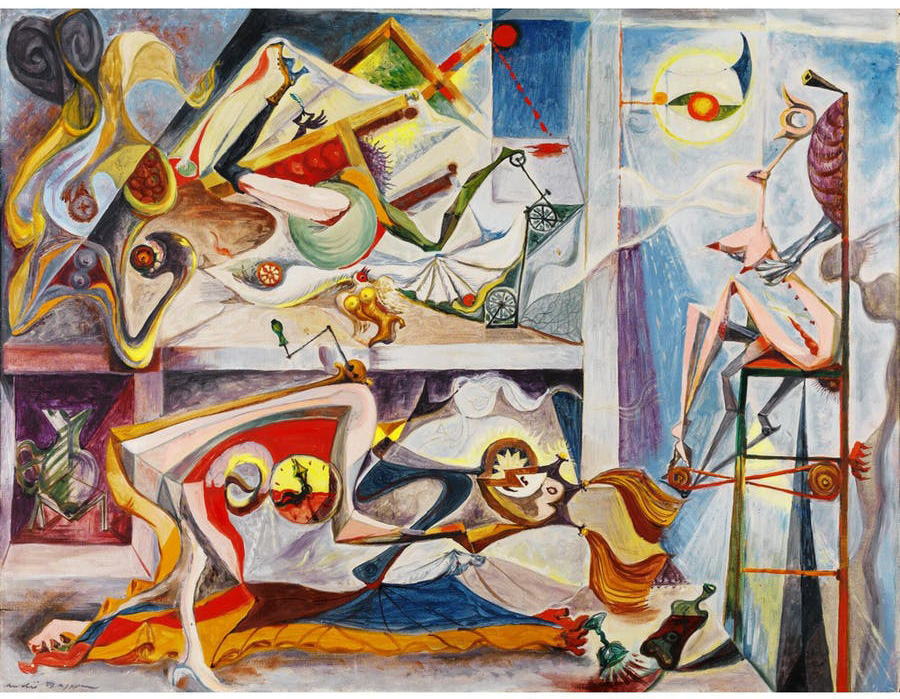
Masson was born in Balagny, near Beauvais, in the Oise region of France, on 4 January 1896. His family moved to Brussels, where he received his early training in painting, particularly mural decoration, at the Royal Academy of Fine Arts. His father was a wallpaper representative, although it was not necessarily a cause-and-effect relationship. It was in front of the anarchist artist James Ensor's paintings, co-founder some 25 years earlier of the avant-garde group ‘Les Vingt’ in the Belgian capital, that the young Masson had his first artistic crush, appreciating above all Ensor’s paintings’ divergent character.
See also: Abstract Art: From a Genre to a Movement
On the recommendation of one of his teachers, who introduced him to the symbolist poetry of Emile Verhaeren, the Masson family sent the young Masson to pursue his studies at the Beaux-Arts in Paris, where he enrolled in Paul Baudoüin's workshop until he was incorporated into the infantry in 1915. Left for dead in a shell hole on the Chemin des Dames in April 1917, Private Masson, seriously wounded in the chest, spent the rest of the Great War in various hospitals (this trauma later permeated his entire oeuvre), before settling in the South of France, in the footsteps of the great masters: namely, Henri Matisse, Paul Cézanne and Vincent van Gogh. In Céret, he married Odette Caballé in 1920; after having a daughter named Lily they divorced in 1929.
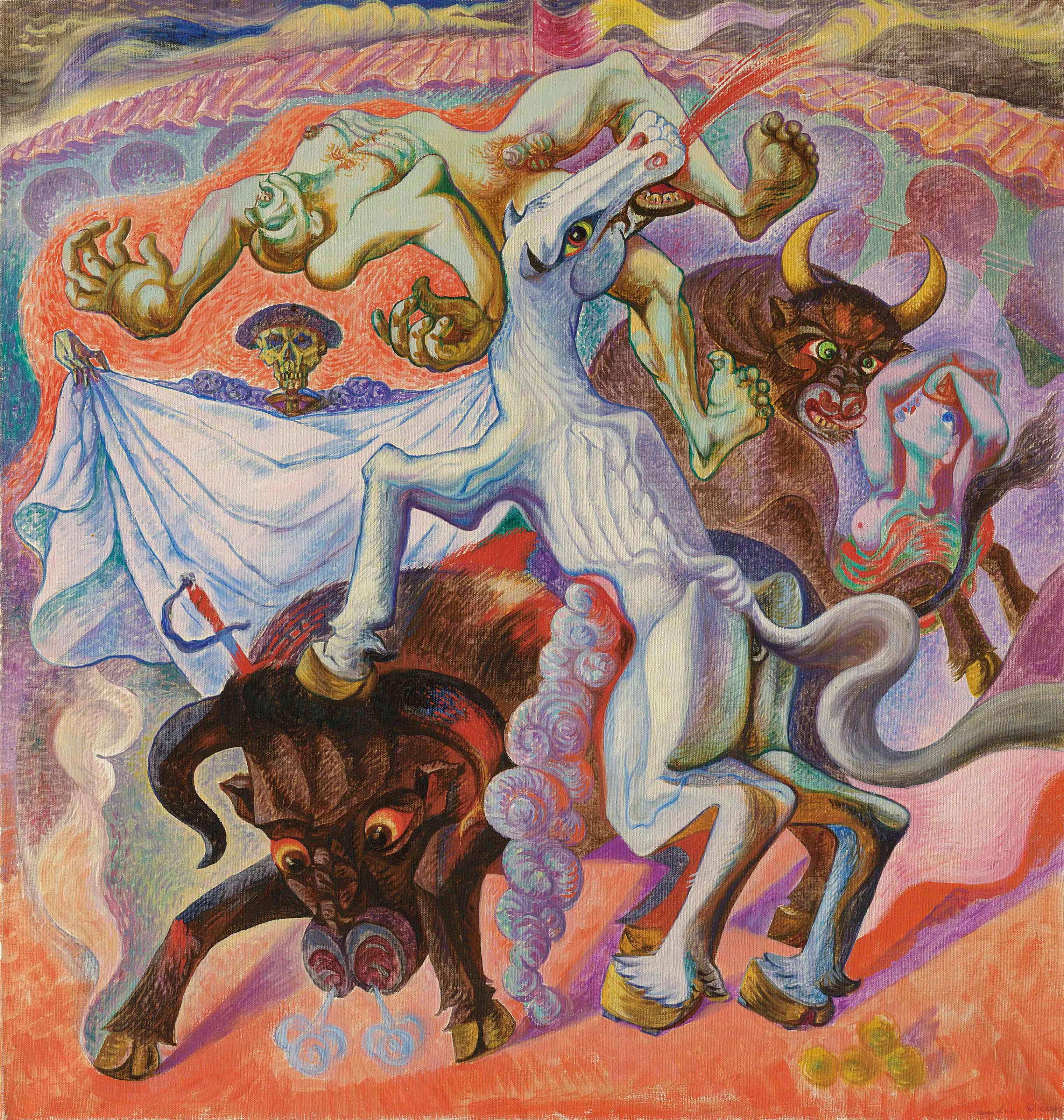
Back in Paris in the early 1920s, Masson shared a studio with Joan Miró at 45 rue Blomet, where his cubist temptation quickly evolved towards irrationalism and surrealism. He was notably in contact with writers Roland Tual, Max Jacob, Antonin Artaud, Michel Leiris and Robert Desnos. The studio became a kind of Bateau-Lavoir under a surrealist flag and Breton soon arrived with his manifesto theorising ‘pure psychic automatism’, published in October 1924.
See also: The First Works of 10 Famous Artists
In the same year, Breton acquired from Masson his painting Les Quatre éléments, which in a way sealed the painter's adherence to the movement, while the German-born art dealer Daniel-Henry Kahnweiler sold his first work to the Simon Gallery in the 8th arrondissement. In 1927, the painter began to produce his first ‘automatic drawings’, a pictorial counterpart to the automatic writing developed by Breton based on theories on the unconscious and Freudian psychoanalysis, but divergences appeared between these two strong personalities on the very concept of automatism, the painter preferring ‘the Dionysian spirit’.
A willingness to take risks is undeniably the main driving force, which can lead man forward into the unfamiliar world.
In the meantime, Masson met Pablo Picasso in Antibes, invented the technique of sand paintings in Sanary-sur-Mer – in which he projected the crystals on a support previously and randomly coated with glue – and travelled in Germany and the Netherlands. He was also learning about engraving, sculpture and theatre sets. Additionally, he became friends with the writer Georges Bataille, for whom he illustrated several collections in the early 1930s, some of which were published clandestinely because of their scruffy and indecent nature. He also participated alongside Bataille, the author of Histoire de l’œil, in the creation of the intellectual journal Acéphale, without however joining the secret society that was to emerge from it. Though out of touch with the surrealists, the artist was not ignored by the official circuits. In 1933, his Massacres, a series of drawings inspired by the horror of war, were exhibited in New York, and he created the sets and costumes for the ballet Les Présages for the Ballets Russes de Monte-Carlo.
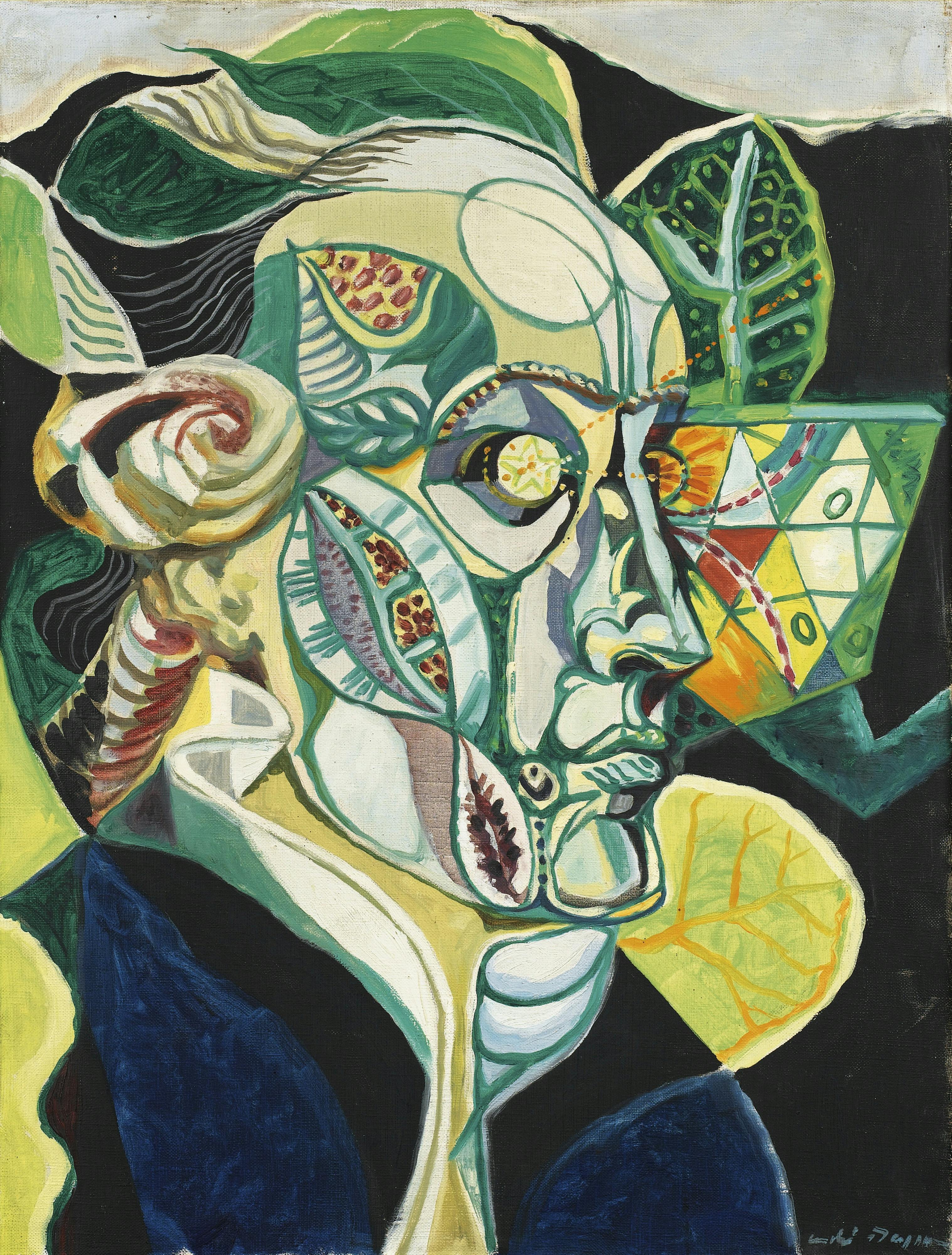
In 1936, when the Spanish War began, Masson, close to the anarchists, was found in Tossa de Mar, Catalonia, alongside European and American artists and intellectuals, including Marc Chagall. He married Rose Maklès with whom he had two sons. At the end of the 1930s, he produced the oil on canvas Gradiva, a surrealist composition of a psychoanalytical ‘myth’, acquired by the Centre Pompidou in December 2010 at a public auction at Sotheby’s in Paris, for €2.36 million (£2.1 mil).
See also: The 10 Most Famous Works of Art and Where to Find Them
The Jewish origins of his second wife forced the family into exile in America when the war set Europe on fire and France was occupied. In May 1941, he settled in New York, where he met up with Breton and Marcel Duchamp, and then to Connecticut, where he met his surrealist compatriot Yves Tanguy, alongside Alexander Calder and Arshile Gorky. Masson's painting then became less fantastical, gradually freeing itself from the unconscious, not without having inspired some great American figures of abstraction, starting with Jackson Pollock.
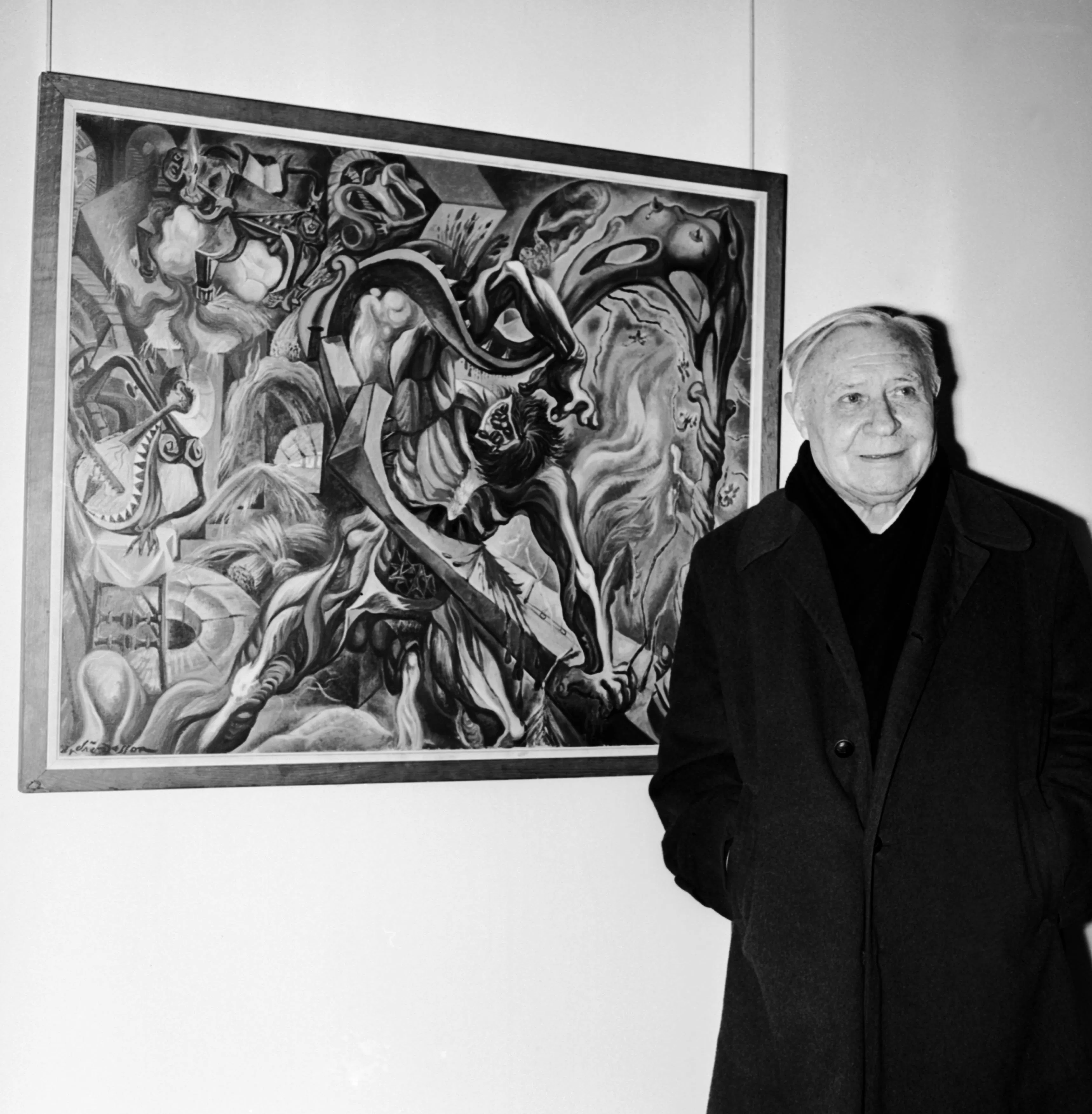
After the war, it was in Provence that he sought and found an inner peace, a serenity that translated in his art into a tribute to impressionism and a devotion to Claude Monet. If the critics disregarded this ‘Aix’ period in Masson's work, the honours however were there: The Grand Prix National des Arts in 1954; a documentary by Jean Grémillon, André Masson et Les Quatre Eléments (1958), presented at the Cannes Film Festival in 1959; the decoration of the Odéon theatre ceiling in 1965; and several major retrospectives in France and abroad, notably at MoMA in 1976, then, the following year, at the Grand Palais.
The artist passed away peacefully on the night of 27 to 28 October 1987 at his Parisian home. He was buried beside his wife at the Tholonet cemetery, at the foot of Montagne Sainte-Victoire.
![Candida Höfer, ‘Palais Garnier Paris XXX’, 2005, Chromogenic print, mounted [detail]. Photo © PHILLIPS](https://images.prismic.io/barnebys/2b58bcdf-dba2-4db3-b17e-47c351c110d0_unnamed.jpg?auto=compress,format)