Art is your heart's blood.
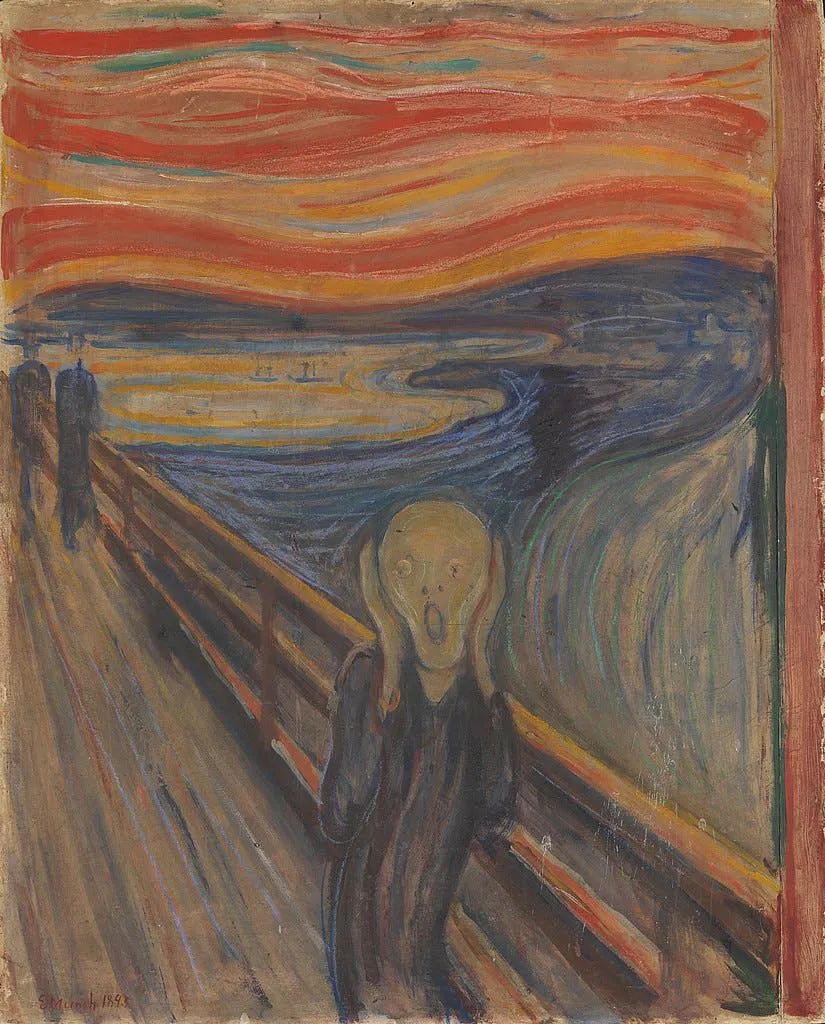
Despite having made countless paintings, Edvard Munch's best known work is undoubtedly The Scream (1893), a masterpiece in which the colours seem to almost 'shout' from the canvas, together with the character in the foreground. The painting, which has become the symbol of a society that's anguished and terrified by its surroundings, is however only one among many in which the Norwegian artist manifests his main intent: to transfer human truths to the canvas. Art for Munch, born from the desire to reveal oneself and open up to others, is the blood of the heart itself, as the artist once said.
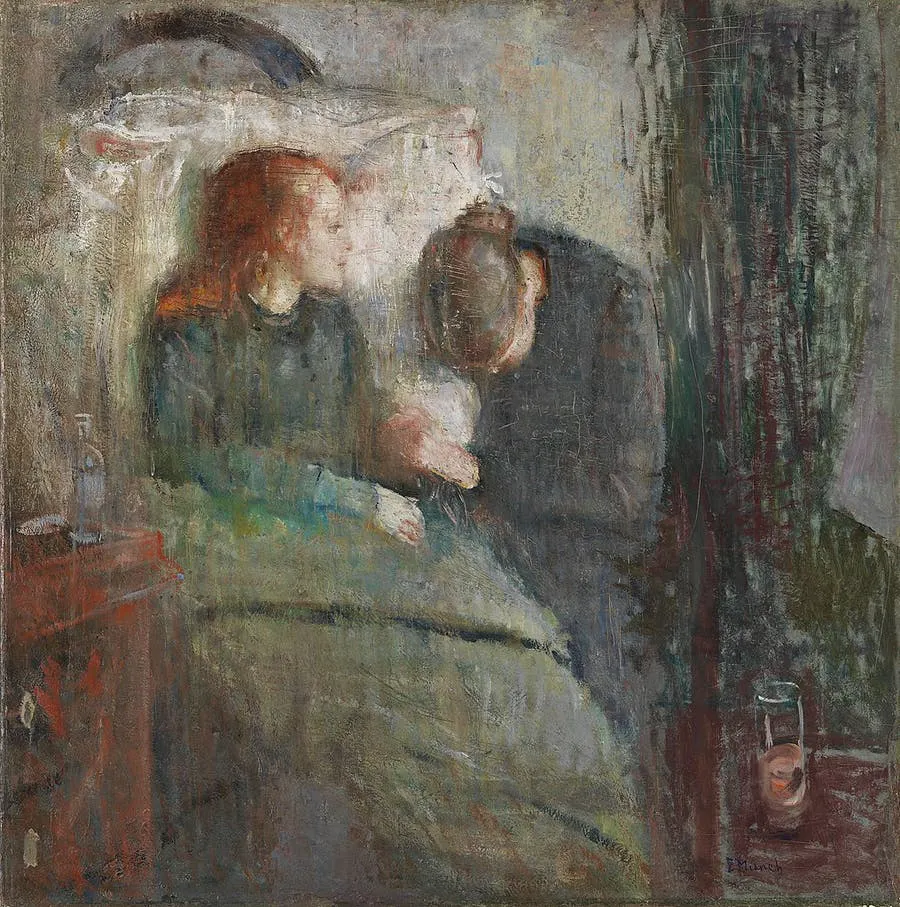
Born in Løten on 12 December 1863, Munch had a tormented and painful childhood, marked by sickness, deaths and neurosis. His mother died of tuberculosis in 1868, followed by his beloved older sister Johanne Sophie in 1877. In the painting The Sick Child (1885-86), considered a turning point for Munch's artistic production and his breaking point with Impressionism, Munch transported the agony of this death to canvas, implementing the teachings of bohemian friend Hans Jæger, who had urged him to paint his emotional and psychological state in a kind of 'soul painting'.
Added to his misfortunes was a series of psychological crises of his other sister, Laura, his father's manic-depressive syndrome and the death of another brother, Andreas. The family's economic conditions were rather precarious and Munch's earliest artistic works reflected the hardships he experienced in his youth, depicting the small and dark interiors in which he lived.
See also: 10 Artists Between Genius and Madness
Later, Munch became a passionate traveller and while exploring other countries, he came into contact with new influences and major European artistic currents. In Paris, for example, he learnt a lot from prominent artists such as Paul Gauguin, Vincent van Gogh and Henri de Toulouse-Lautrec, especially their use of colour.
See also: What Lies Beneath the Red Sky of Munch’s ‘The Scream’?
The decade 1892-1902 represents the most important period of Munch's activity: in these years the artist defined his pictorial language, which is enriched with Symbolism and which went on to influence Expressionism. His recurring themes were love, death and existential anguish, depicted by deformed images and garish colours. In this period his iconic Scream was also born, emblematic of the condition of the modern man, prey to anxiety, inner loneliness and mal de vivre. That 'great infinite scream' which, according to Munch, pervaded Nature, became the manifesto of his artwork, an expression of the lonely scream of all humanity.
See also: An Artistic Representation of Breasts Throughout the Centuries
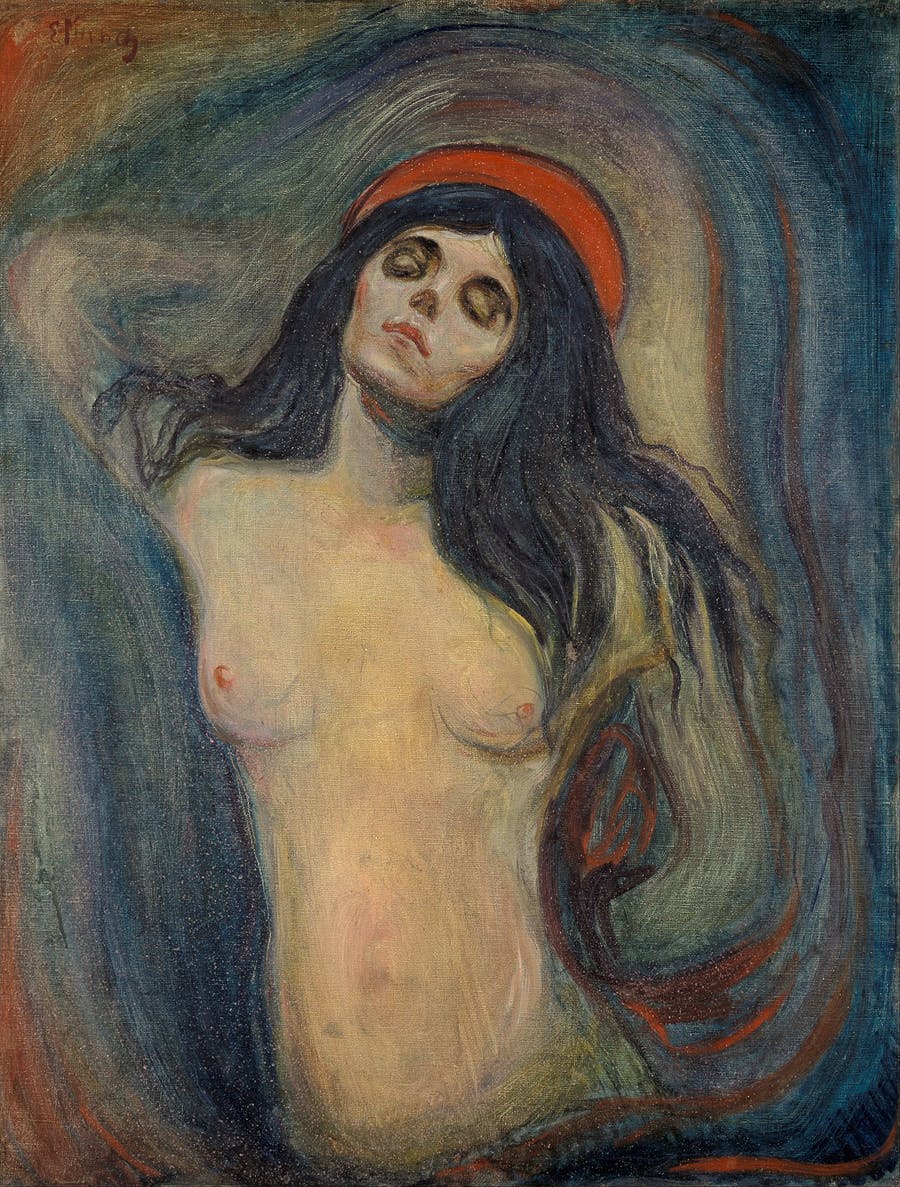
The bright tones and strong colours of the Scream, in particular the blood-red of the sunset, are also present in the work Madonna in which the artist intertwines the sacred and the profane, depicting a bare-breasted woman with an expression that some have compared to erotic ecstasy. The painting's duotone (the red of the halo and the black of the hair) seems to recall the dichotomy of love and death.
See also: New Secrets of Munch's 'The Scream' Are Revealed
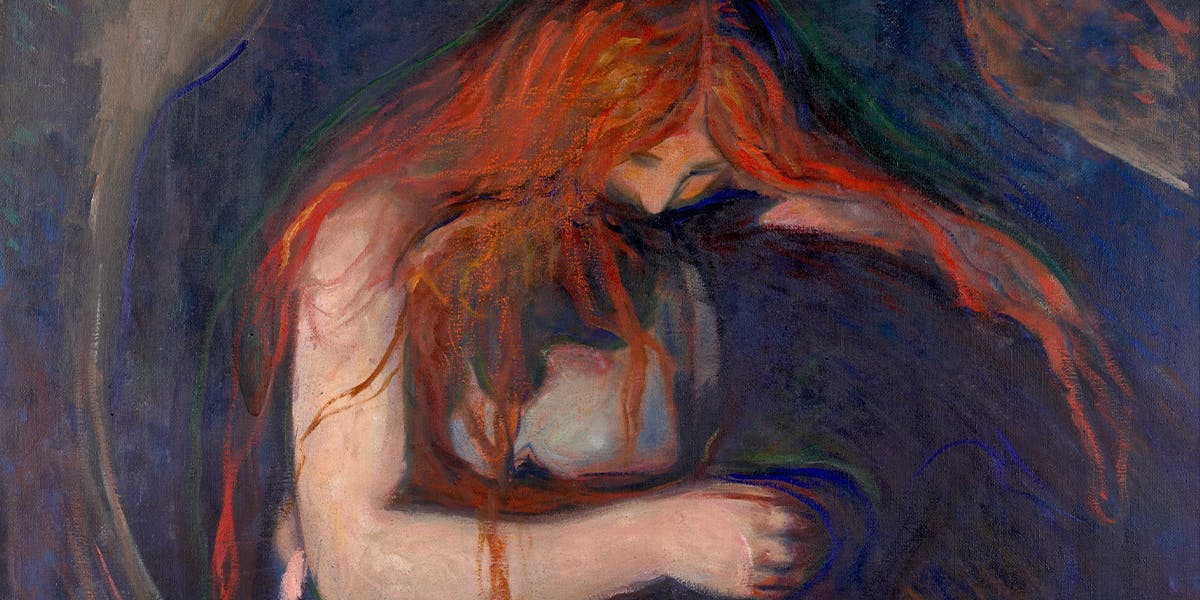
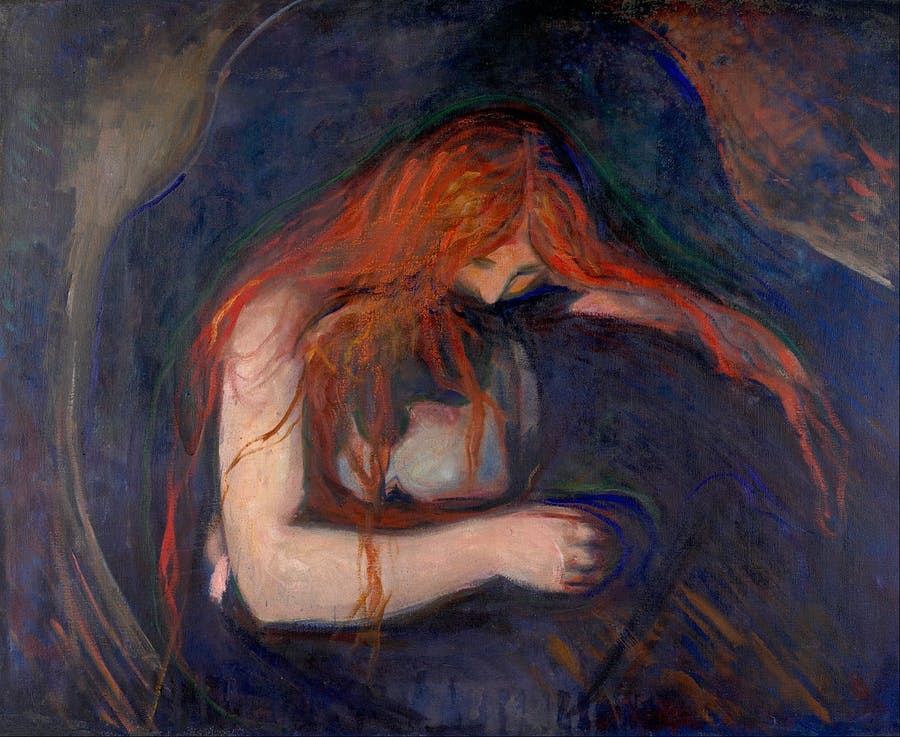
A similar duotone is found in the work Love and Pain (or simply Vampire), in which the artist portrays the woman as an enigmatic figure, endowed with an almost demonic charm capable of subjecting man to her will. The man seems to surrender to an apparently loving but deadly embrace, wrapped in the sprawling red hair of the 'vampire' as she bites or kisses his neck. Perhaps more than others, this work best represents the artist's complicated relationship with the opposite sex: for Munch, the woman was the epicentre of a tumultuous erotic mystery, inextricably linked to Death. To love means to suffer, as he considered it impossible to resist desire.
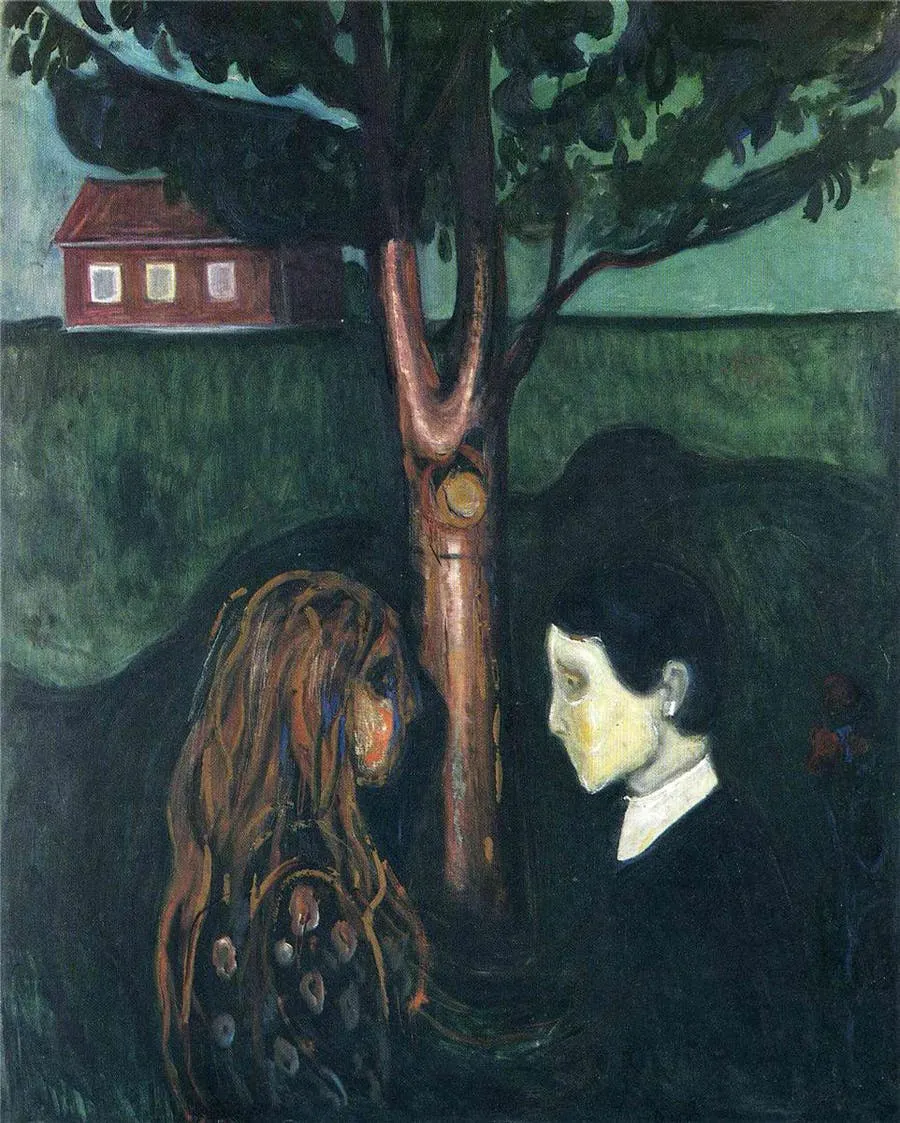
The painting Eye in Eye is a further example of the incommunicability between man and woman (but also of human incommunicability in general), with the man and woman facing each other, but unable to look or speak to each other as they have no eyes and mouth.
Due to this negative view of love, Munch often had tormented love affairs, such as his one with Mathilde 'Tulla' Larsen, which in 1902 resulted in a heated argument during which a gunshot hit the painter on his left hand.
See also: Mirror of the Soul: Eyes in Art
In the 1930s and '40s, after the Nazis occupied Norway, Munch's works were labelled degenerate and authorities removed eighty-two works of his exhibited in German museums.
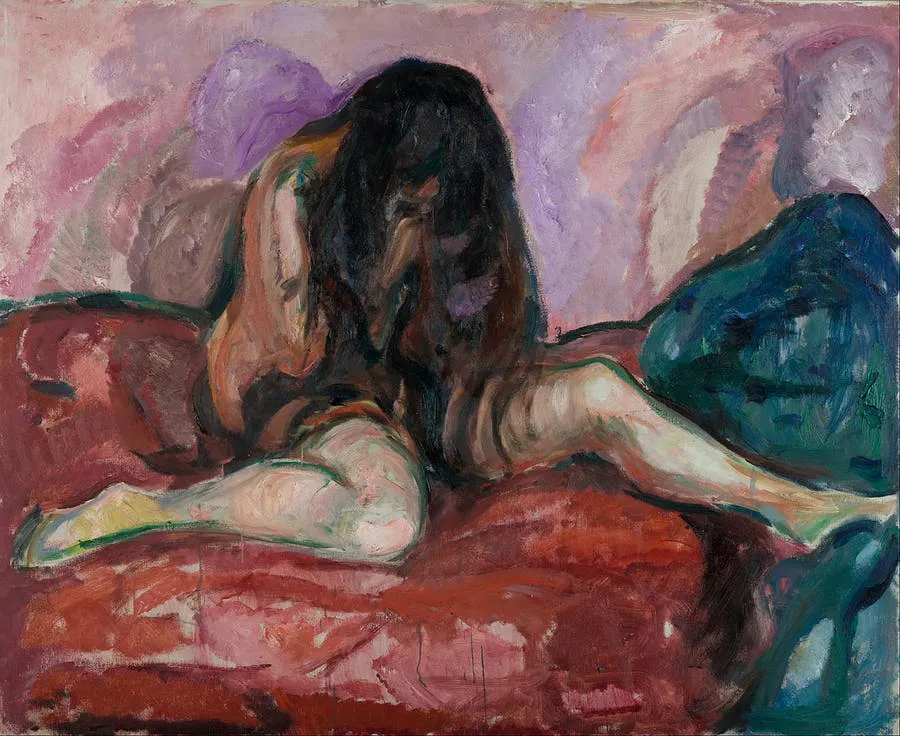
Munch passed away on 23 January 1944 in the idyllic estate near Oslo where he had retired in his later years. His works have since often caused a sensation at auction: one of the versions of The Scream was sold at Sotheby's in 2012 for the staggering sum of almost $120 million (£73.8 mil), further confirming his artistic recognition. Munch's art can be admired today at the grandiose new location of the Munch museum, opened in Oslo in October 2021 on the edge of a fjord. Among paintings, drawings, photographs, letters and personal objects you can immerse yourself in the colours of the soul of this fascinating and complex artist.
Discover more articles on art history with Barnebys Magazine