Domenikos Theotokopoulos was born in 1541 in Crete, which was then controlled by the Republic of Venice. While recent research has established that he trained as an icon painter and was recognised as a master there in 1566, few of his early works have been formally identified and details of his Cretan life and career are rare.
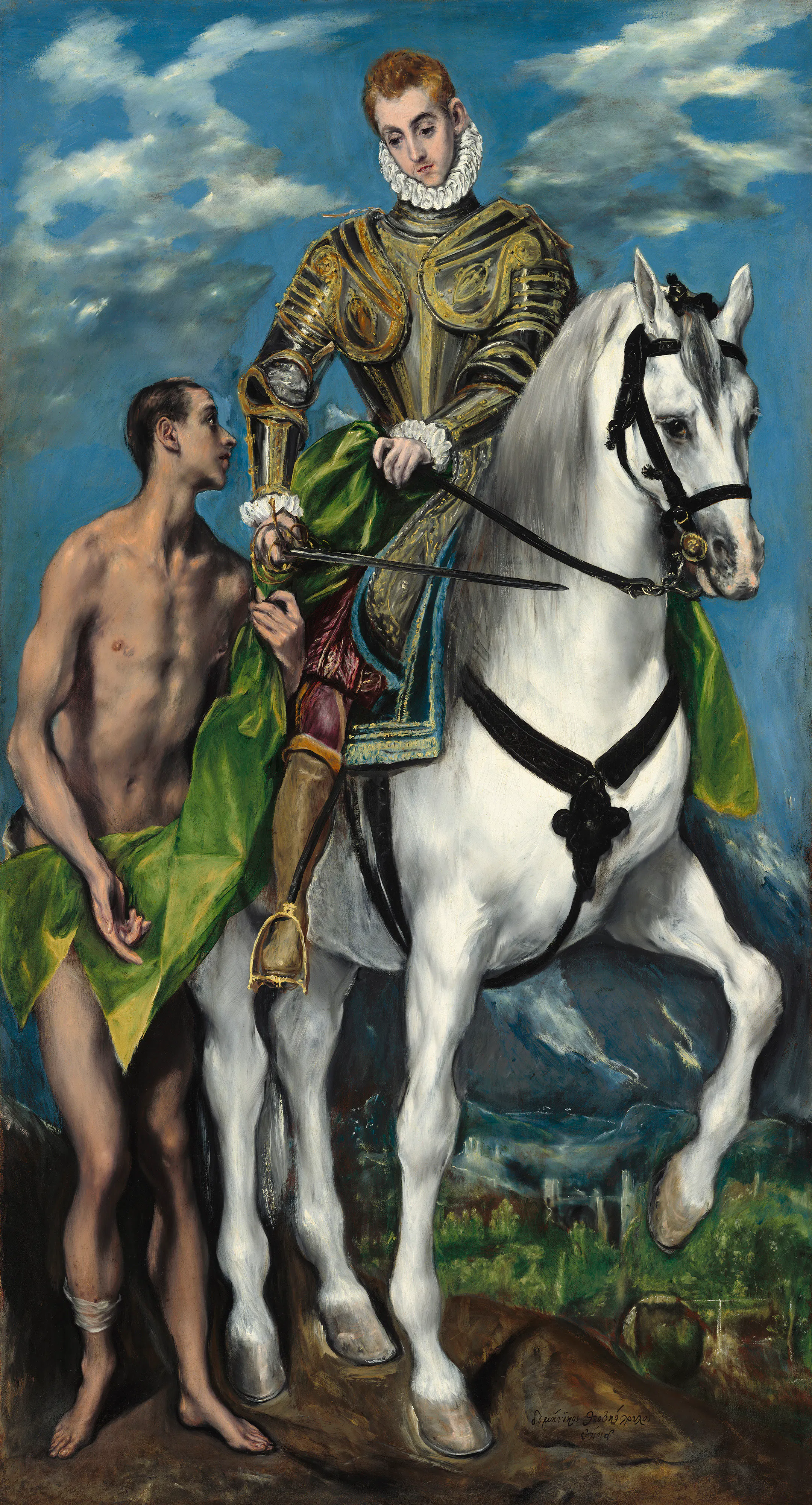
Around 1567 he travelled to Venice, where he adopted the expressive techniques of the Renaissance, influenced by Titian, Tintoretto, and Bassano. His Greek pictorial ‘roots’ were slightly obscured under the Venetian artistic ideals and their approach to colour.
See also: Tintoretto: The Venetian Virtuoso
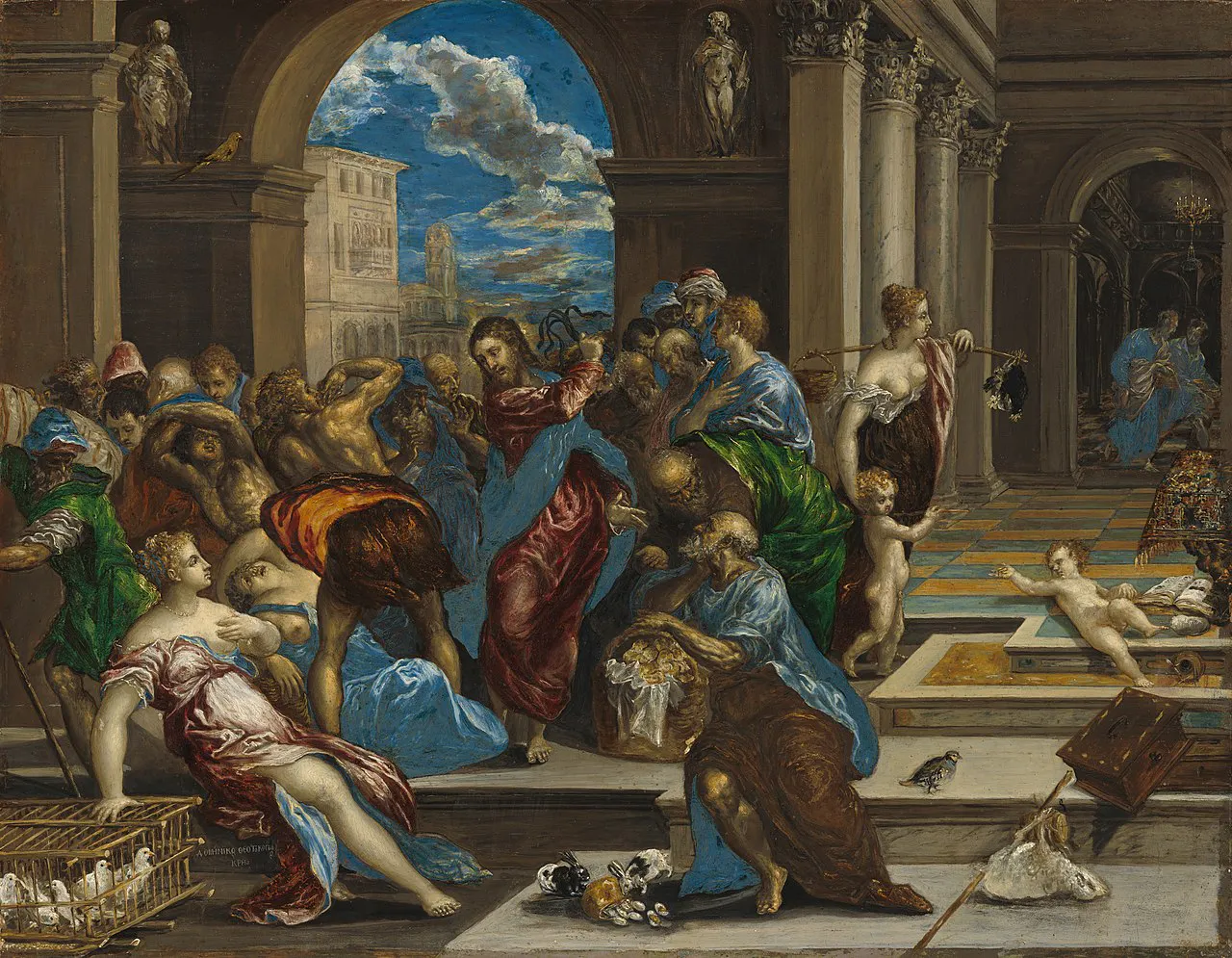
In 1570, El Greco moved on to Rome and worked in the service of Cardinal Farnese. There he discovered Michelangelo and greatly admired his sculptures and drawings, though not, apparently, his paintings. It was here met the late Mannerists Girolamo Siciolante da Sermoneta, Federico Zuccari, and Girolamo Muziano, and, under their influence, produced Christ Driving the Money Changers from the Temple. He also met several Spanish artists associated with the Church of Toledo who may have convinced him to migrate to Madrid, where the decoration project of the Escorial attracted many artists.
See also: Michelangelo: From Man to Genius

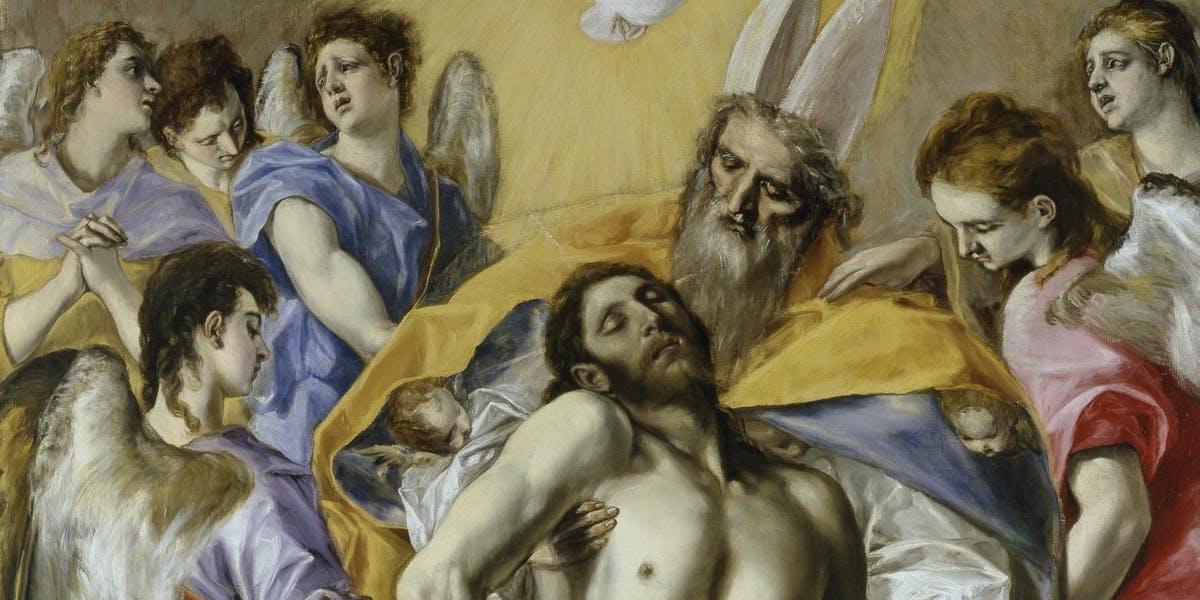
In 1576, El Greco moved to Madrid, near the court of Philip II, then relocated to nearby Toledo a few years later. Toledo was the centre of the Spain's artistic, intellectual and religious life, where, despite the Inquisition and threats of censorship, the ‘Golden Age’ was in full swing. El Greco had numerous institutional and private commissions, including monumental religious scenes, smaller paintings for personal devotions, and portraits. Carried out between 1577 and 1579 for the Cathedral of Toledo, El Expolio (Sharing the Tunic of Christ) is representative of his first successful Spanish works, while The Burial of the Count of Orgaz, completed in 1588 for the Toledo Church of San Tomé and considered his masterpiece, reveals El Greco at the height of his art and notoriety on Iberian soil.
See also: The Tales Behind the Greatest Works of Classicist Art
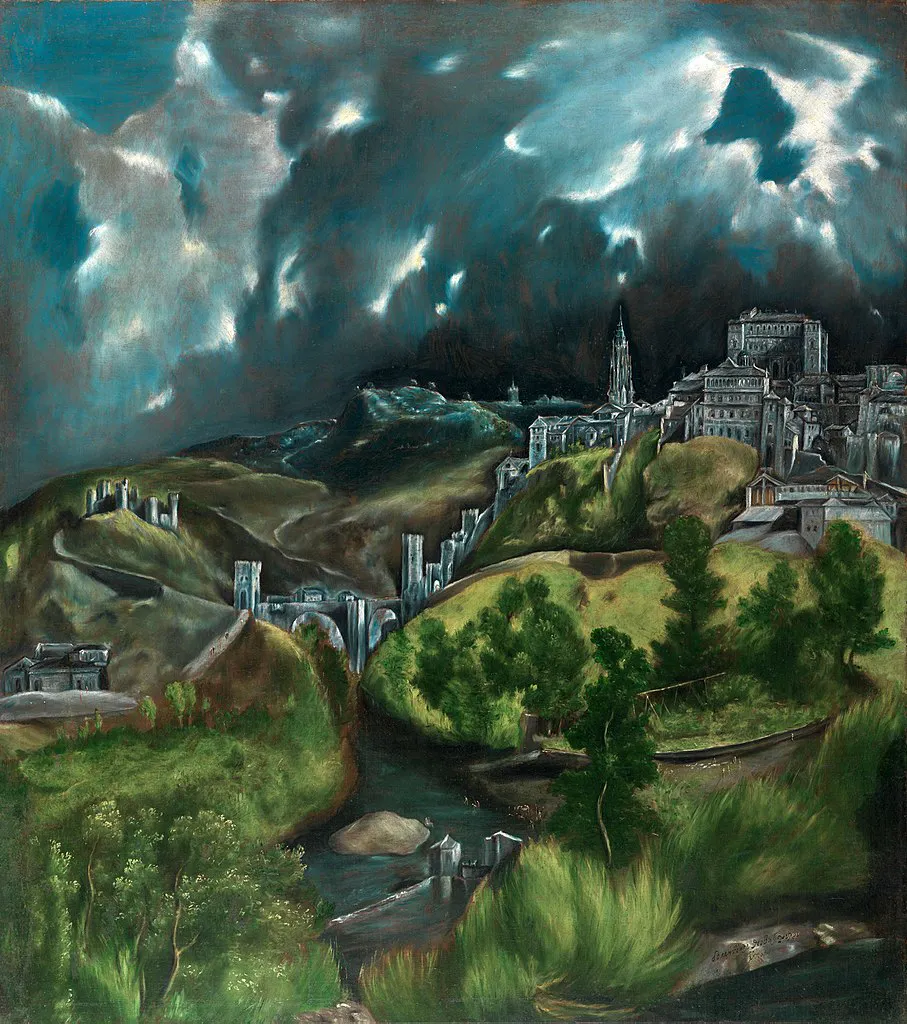
The painter brought an entrepreneurial spirit inherited from the great Venetian masters with him to Spain, and, after having learned the lessons of censorship, his studio became a real commercial company. Many assistants worked on the mass production of the original fully autographed pieces, including his son, Jorge Manuel, born in 1578. At the beginning of the 17th century, El Greco even recruited the Flemish engraver Diego de Astor and multiplied his works in the form of prints. The business was flourishing, and El Greco and his family were able to lead a comfortably lavish lifestyle.
Want more articles like this straight to your inbox? Subscribe to our free newsletter!

Beginning in 1604, El Greco had to face several lawsuits brought against him for unfinished paintings and altarpieces. When he died on 7 April 1614 at the age of 73, the artist was practically ruined, and his son struggled to save many of his works that creditors threatened to seize. After this inglorious end El Greco began to fall into obscurity, as artistic styles swayed towards a more realistic pictorial aesthetic. When Baroque and Neoclassicism became favoured, El Greco’s work was despised by theorists and other critics and he was almost entirely forgotten. At the beginning of the 19th century, few people in Europe knew about El Greco at all – his paintings were not included in representations of the Spanish school, and were absent from museum collections. French romantic writers, notably Théophile Gautier, rediscovered him in the middle of the century during trips to Spain, before painters like Delacroix, Millet, Manet, Cézanne, and Picasso became interested in their turn.
See also: Andalusian Painting: A Journey Into the Heart of Romanticism
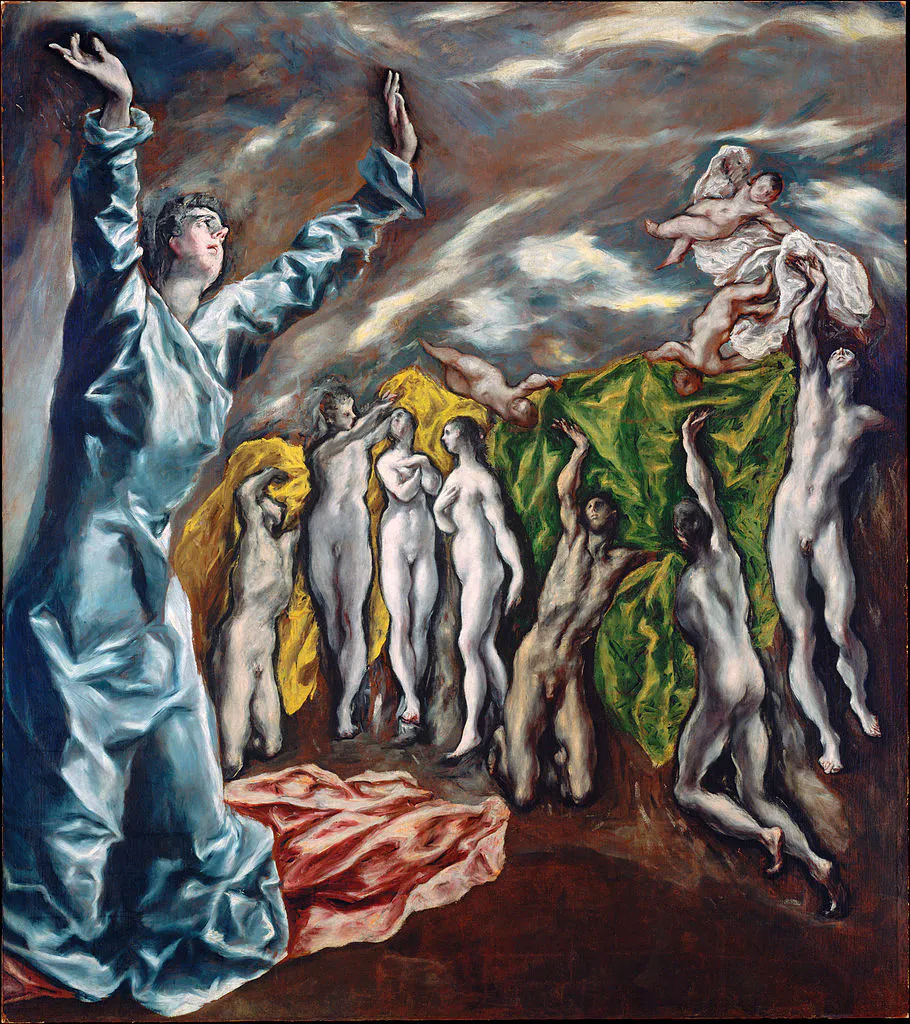
It was not until the beginning of the 20th century that El Greco’s Mannerist approach was again appreciated. Exhaustive catalogues of his works were published, and in 1911 at the initiative of the Marquis Benigno de la Vega-Inclán an El Greco museum was opened in Toledo. In his 1912 book Spanische Reise, the German critic Meier-Grafe described El Greco as “the precursor of modern art and expressionism”, a title of that neither Picasso, Delaunay, or Jackson Pollock could ever challenge. After all, they themselves drew inspiration from the works in which Apollinaire saw “all the splendours of the Christian faith united with the beauties of Hellenism”.
See also: 5 Mannerist Artworks to Know

Even today, El Greco's style is instantly recognisable, making him one of the preferred Mannerists among the public and collectors alike. Gifted with an innate sense of enterprise and inspired by the great Italian masters, the artist entranced the Spanish Church and court. Although he was nearly erased from art history, he reemerged to eminence and respect in the 20th century, and he his now remembered as one of the premier painters of the Spanish Golden Age. In 2014, the 400th anniversary of the painter’s death gave rise to various symposia and exhibitions, while the previous year, his Saint Dominic in prayer (1588) set a personal sales record at Sotheby’s by bringing in over £9 million. Clearly, El Greco is in no danger of being forgotten again.