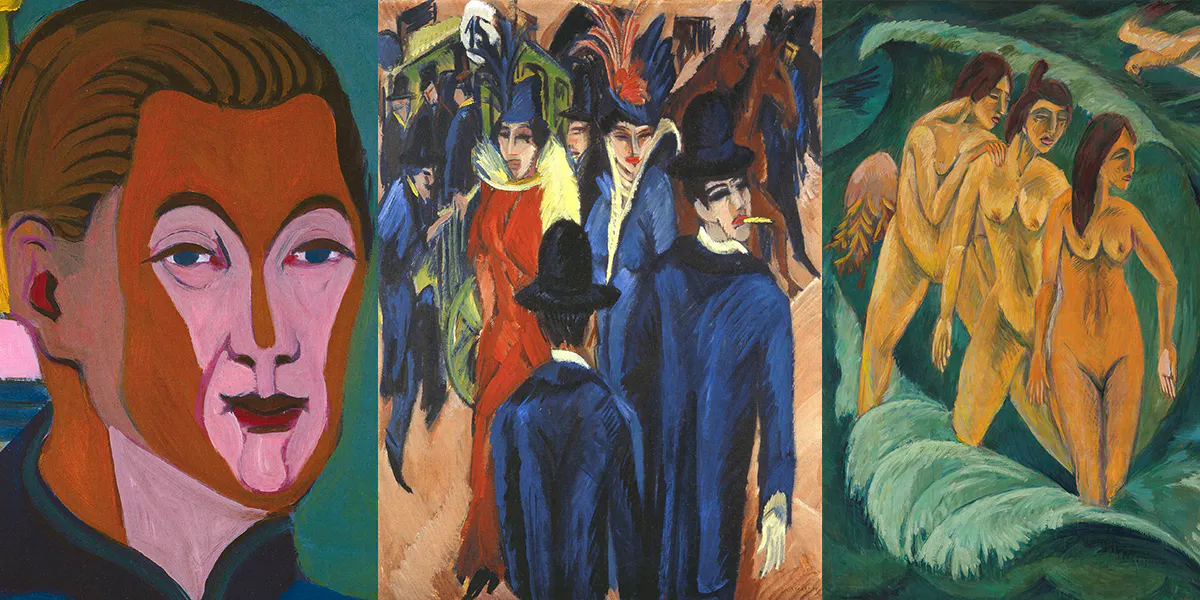
Ernst Ludwig Kirchner (1880-1938) was one of the most important German artists of the 20th century, whose Expressionist oeuvre played a vital role in the development of modern art. Here are 7 interesting facts about the versatile artist, who was not only a painter, draftsman, and printmaker, but also worked in sculpture, photography, and textile art.
1. Founding Member of the Brücke
After successfully completing his architecture studies in Dresden and Munich in 1905, where he also attended several courses at an art school, Ernst Ludwig Kircher decided to spend his life as a painter. On 7 June, he founded the Brücke artists' community in Dresden together with Karl Schmidt-Rottluff, Erich Heckel, and Fritz Bleyl, whom he had met at the school. The group's goal was to leave the old behind and explore new paths. They sought to achieve this through a shared style characterised by simplified forms (influenced by non-European art), the use of intense colours and colour contrasts, and the emphasis on a second level of meaning. Their role models were Vincent van Gogh, Henri Matisse, and especially Edvard Munch.
See also: Edvard Munch: The Colours of the Soul
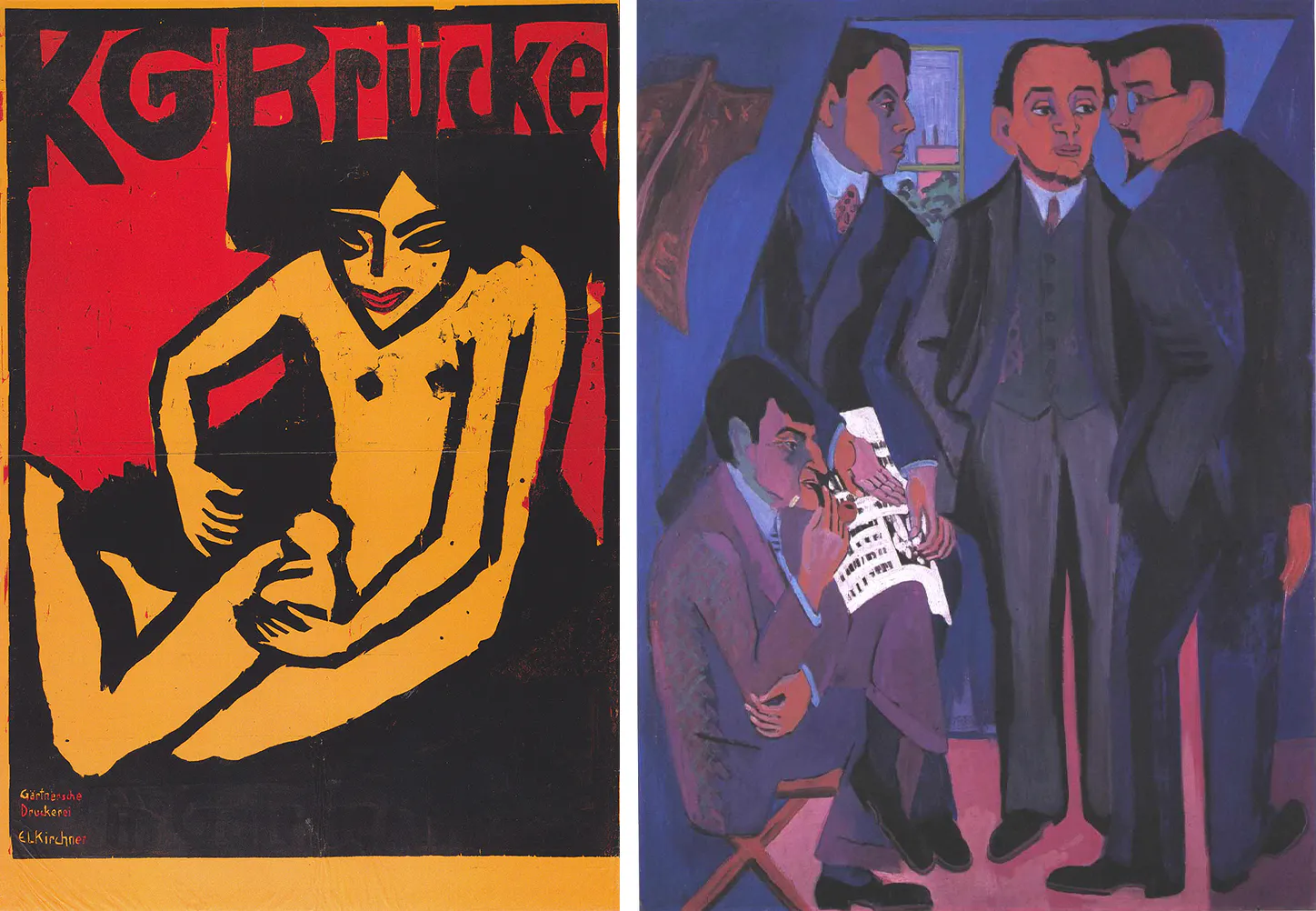
In 1906, Max Pechstein and Emil Nolde (who left again the following year) joined, and in 1910, Otto Mueller. The extended circle included artists such as Kees van Dongen and Cuno Amiet, as well as a large number of passive members. The group’s subjects were initially influenced by life in the big city (first Dresden, later Berlin), but they also turned to the human being in nature, for example during several stays by the Brücke artists at the Moritzburg lakes. Nudes were of central importance to the Brücke artists, as the naked human figure was considered the foundation of their artistic work.
After several members had already left over time (Bleyl in 1907, Pechstein in 1912), the Brücke was dissolved in 1913. The final blow came from a chronicle of the group written by Kirchner, in which he particularly overplayed his own importance.
2. Inspiration from Fehmarn
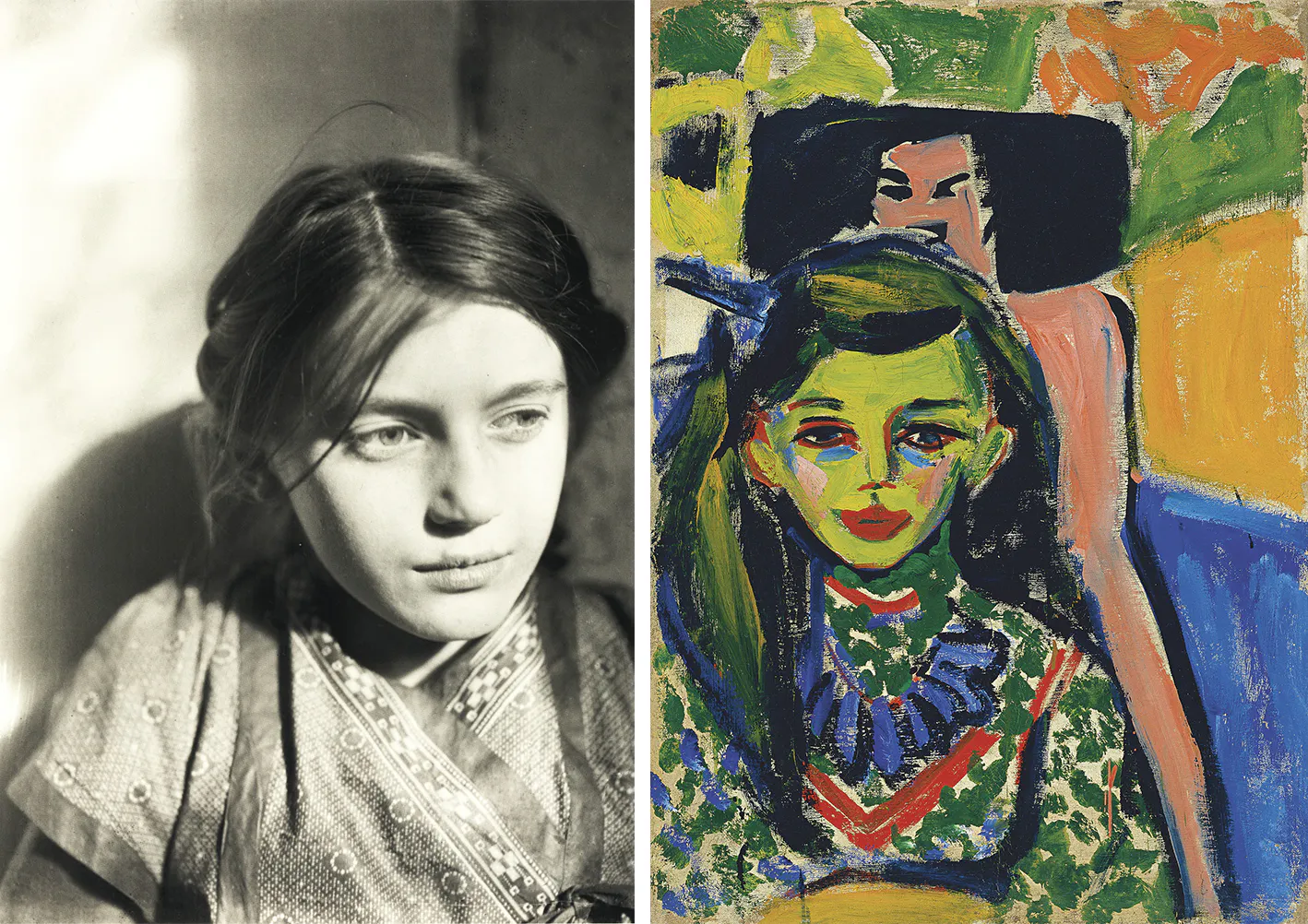
In the summer of 1908, Ernst Ludwig Kirchner traveled to the Baltic Sea island of Fehmarn for the first time. He was accompanied by the siblings Hans and Emmy Frisch, whom he had known since childhood. He created numerous paintings and drawings of the houses and landscape there. Further visits followed in 1912, 1913, and 1914, during which Kirchner was accompanied by Erna Schilling, whom he had met in Berlin and who remained his partner until his death. Visitors included Max Pechstein, Erich Bleyl, and Otto Mueller.
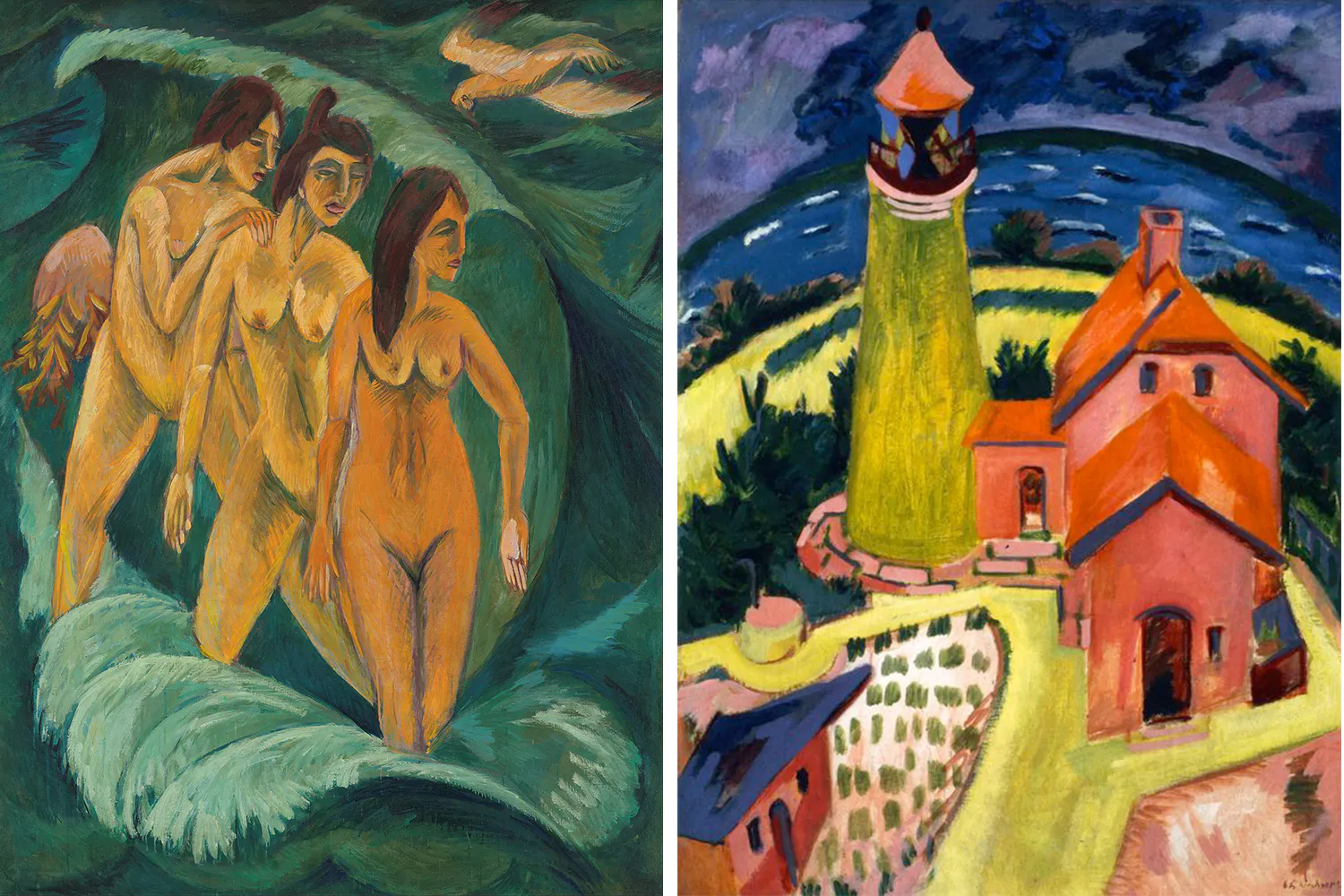
The time he spent on the island was successful for Kirchner in two respects. Firstly, he developed a more mature, personal style as an artist, and secondly, he found the simple life on Fehmarn, away from the hustle and bustle of the big city, extremely pleasant. This tranquility soon came to an end, however, when Ernst and Erna were surprised by the outbreak of the First World War during their last stay and were forced to return to Berlin early.
3. Inspiration from the Big City
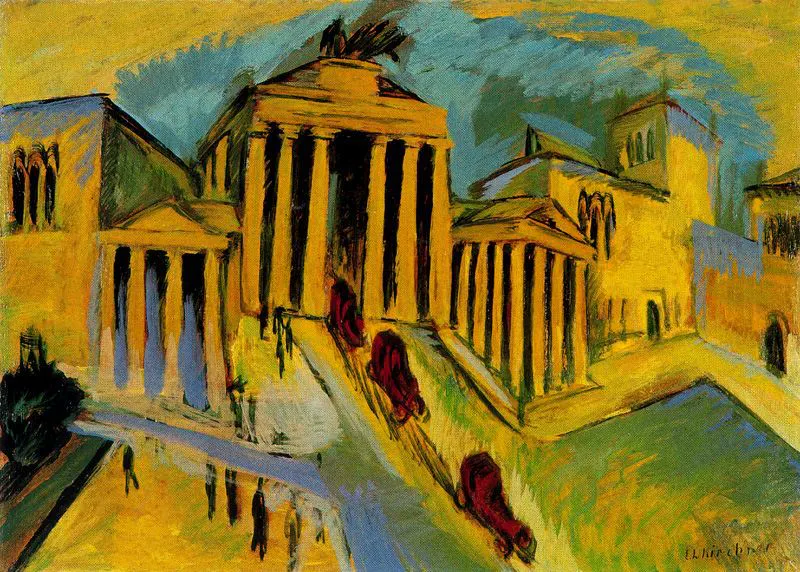
In the autumn of 1911, Kirchner moved from Dresden to the German capital, Berlin, then a vibrant metropolis with over 2 million inhabitants. He painted circus performers and vaudeville artists and portrayed the city's squares and streets, capturing their hustle and bustle in an increasingly angular style.
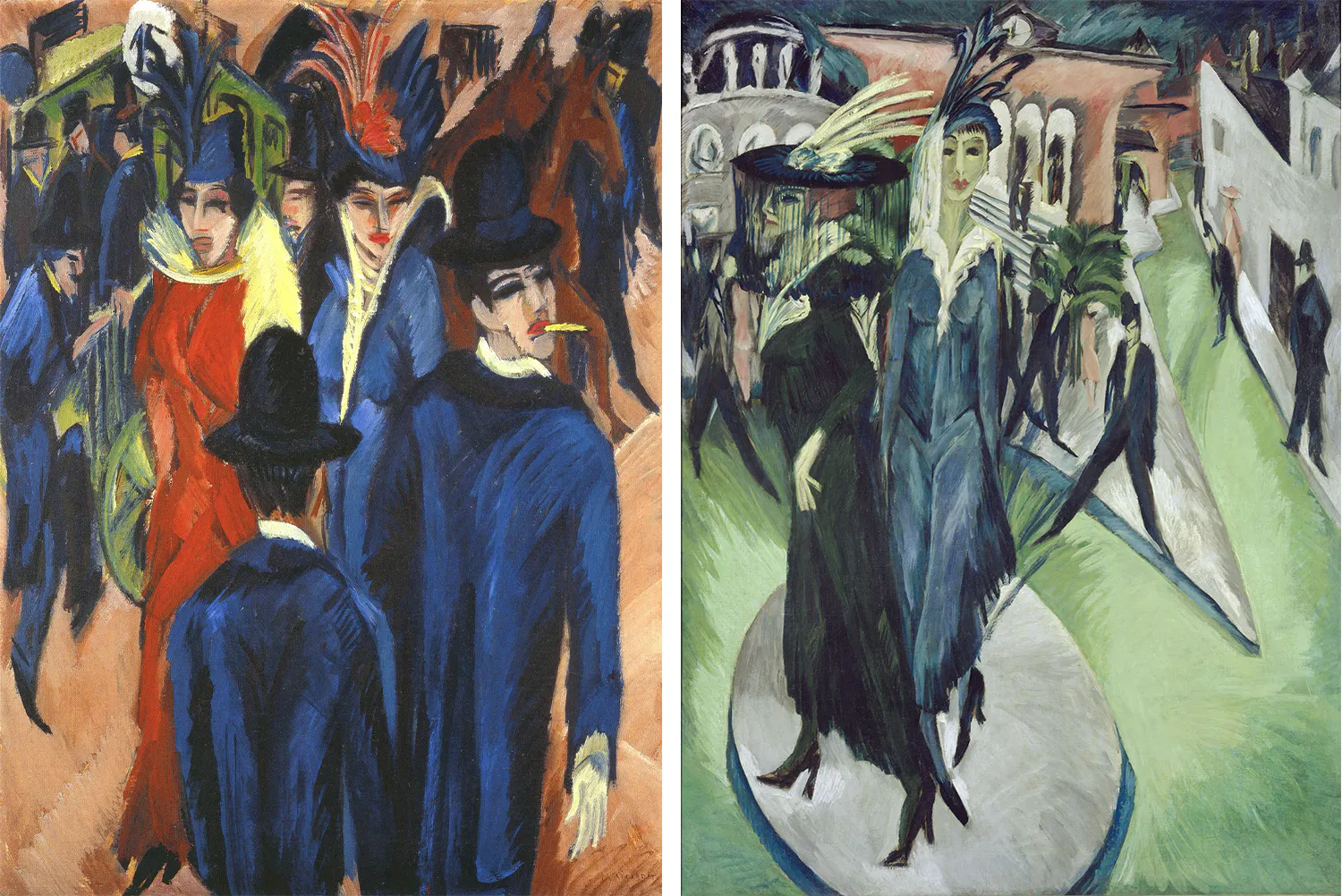
From 1913 onward, Ernst Ludwig Kirchner created his Street Scenes, the most important group of works in his career and a key achievement of German Expressionism. The cycle includes eleven paintings along with many sketches and drawings. In these works, Kirchner captured the growing sense of alienation in Berlin, which accompanied the city’s rapidly expanding population. He set this atmosphere against the presence of the strikingly dressed women who stood on many street corners and who became the focus of his compositions. These were sex workers seeking clients, yet despite their eye catching clothing, they had to stay as unnoticed as possible to avoid punishment by the vice squad. Kirchner showed them as central figures in a commercially driven society whose moral values no longer aligned with daily life. Although he was initially fascinated by Berlin, the city’s harshness and constant competition increasingly unsettled and repelled him.
See also: Kees van Dongen: The Fauvist Portraitist
4. Two is Better than One
It has been common throughout art history for artists to have to reuse their canvases due to lack of money. Older works were painted over or the backs of their canvases were used. Ernst Ludwig Kirchner was no exception, and he did it quite frequently. Shortly after the First World War, he wrote in a letter that this practice had become necessary due to the increased cost of materials. However, he had done it before and would continue to do so later. Not only did Kirchner occasionally use the front and back of a canvas, he sometimes also stretched two canvases on the same frame, creating his 'double canvases'.
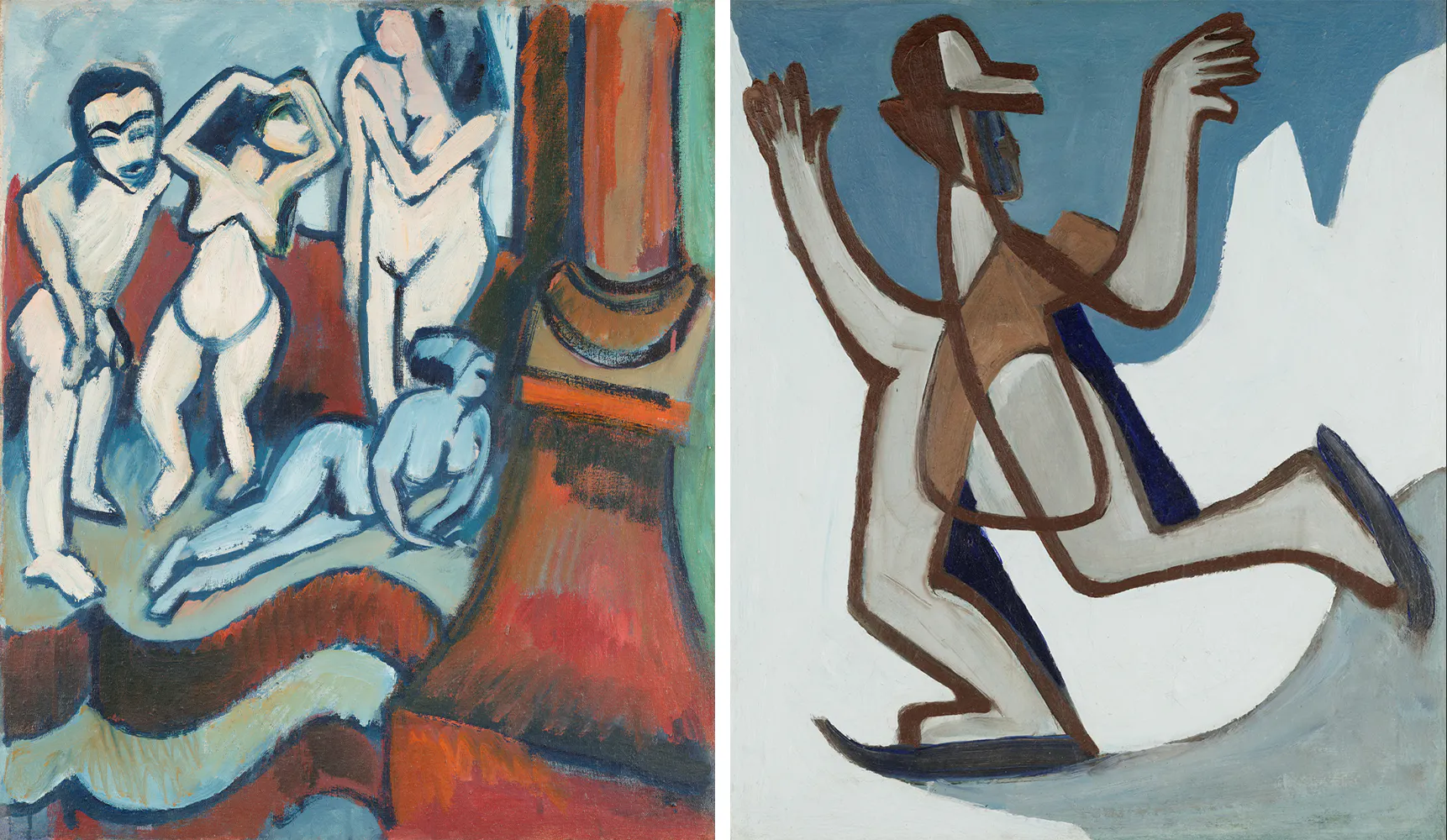
A relatively long period of time could elapse between the first and second use of a canvas. For example, the canvas of his 1912 painting Four Wooden Sculptures was not used again until 1929, when Kirchner painted the reverse with a figure of ice skaters in his new, striking style.
5. A Pseudonym as a Marketing Strategy
Over the years, Kirchner had made several important contacts that helped his art gain recognition and promote it. These included Ernst Gosebruch, the director of the new Folkwang Museum in Essen, the art historian Botho Graef, and the collector Carl Hagemann. His works were shown in various exhibitions, even in America at the famous Armory Show, which introduced European modernism to the American public for the first time. But Kirchner wanted more, especially more recognition. To achieve this, he resorted to a very unusual trick: he created a fictional character named Louis de Marsalle. As he told friends and acquaintances, de Marsalle was a French poet who greatly appreciated his work. In the 1920s, several articles appeared in various publications in which Louis de Marsalle spoke positively about Kirchner's work – all of which, of course, were written by Kirchner himself. But doubts gradually arose as to whether this conspicuous Louis de Marsalle actually existed, as no one had ever seen him. As a final consequence, Kirchner finally had de Marsalle killed in 1933.
Get more articles like this straight to your inbox! Subscribe to our free newsletter here.
6. Trauma of the First World War
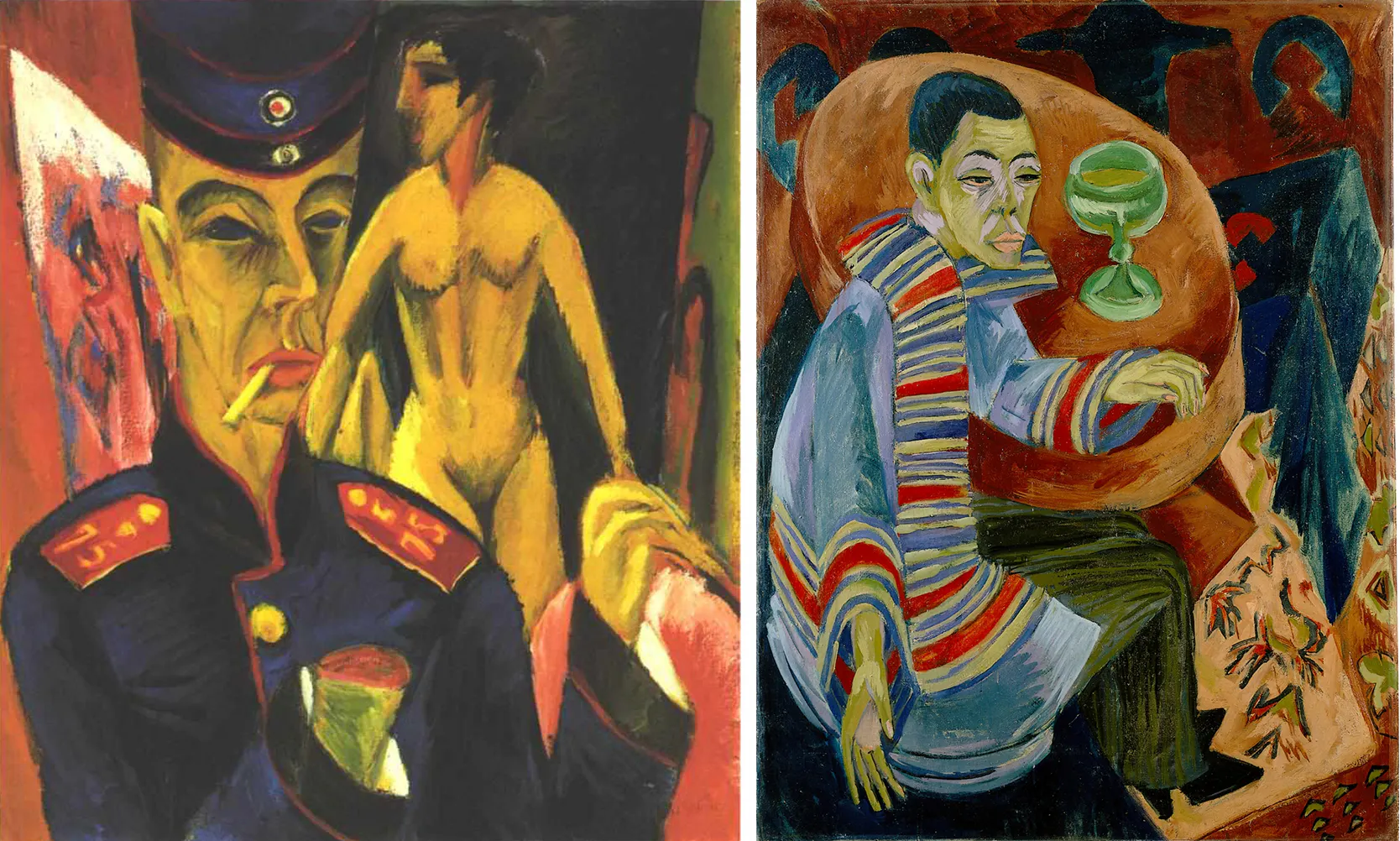
Ernst Ludwig Kirchner was among those who opposed the war that would go down in the history books as the First World War. He and Erna Schilling first encountered the new everyday life of war in 1914 during their return journey from Fehmarn to Berlin, during which they were arrested twice on suspicion of espionage. In order to have more say over his life as a soldier, Kirchner volunteered for military service in 1915. However, the training already took such a toll on him that he suffered a nervous breakdown from which he never fully recovered. The fear of being killed or maimed at the front dominated him so much that he eventually became addicted to morphine and alcohol and had to be sent to various sanatoriums for recovery.
7. Switzerland as a Place of Refuge
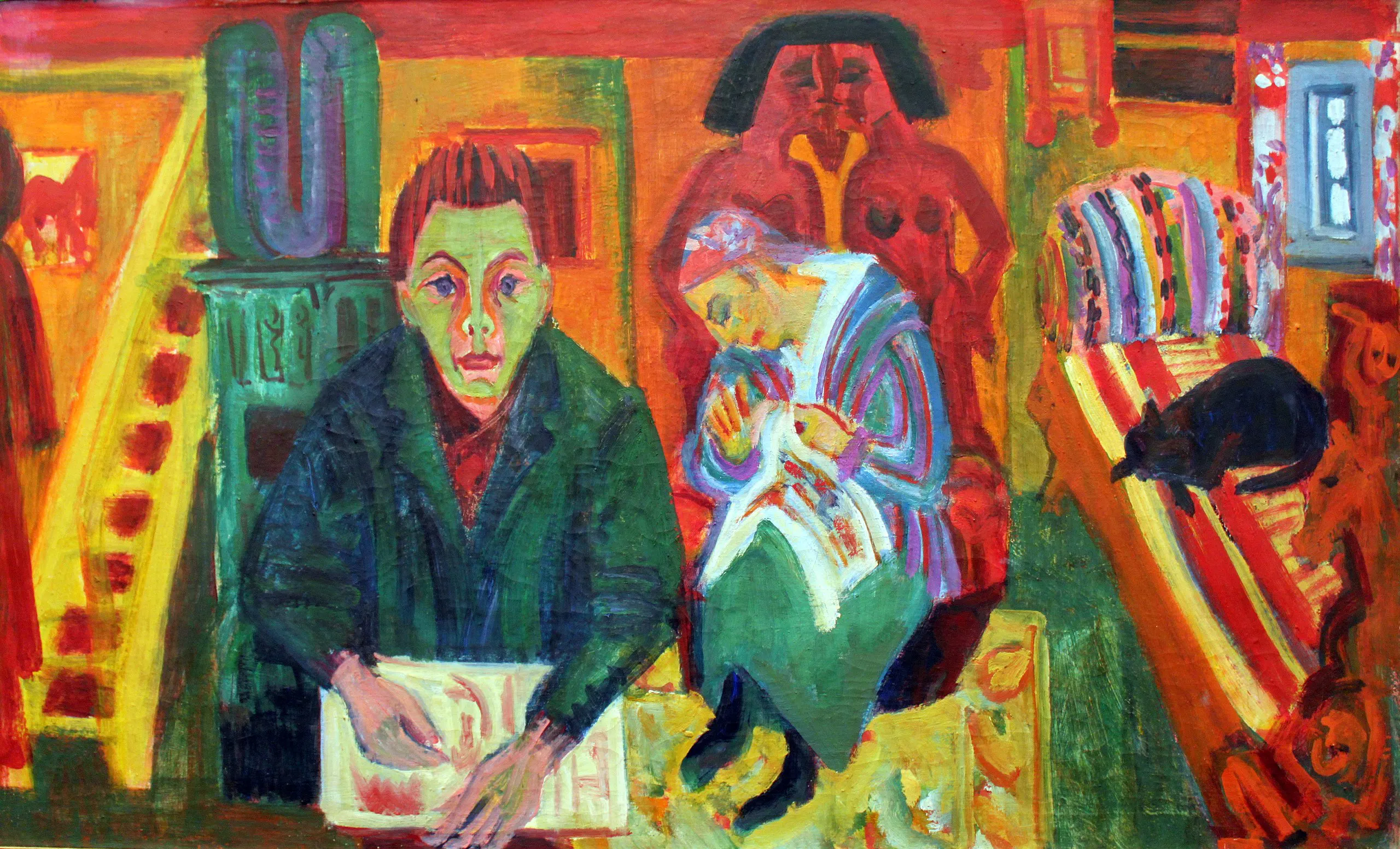
In January 1917, Kirchner traveled to the neutral Switzerland for further treatment. After a stay in a sanatorium in Kreuzlingen, he settled near Davos, which would remain his home until the end of his life. Eventually, Erna joined him, and together they decorated their two houses with homemade furniture and decorations, just as they had previously done in their Berlin studio.
See also: An Artist's Best Friend: 8 Painters and Their Pets
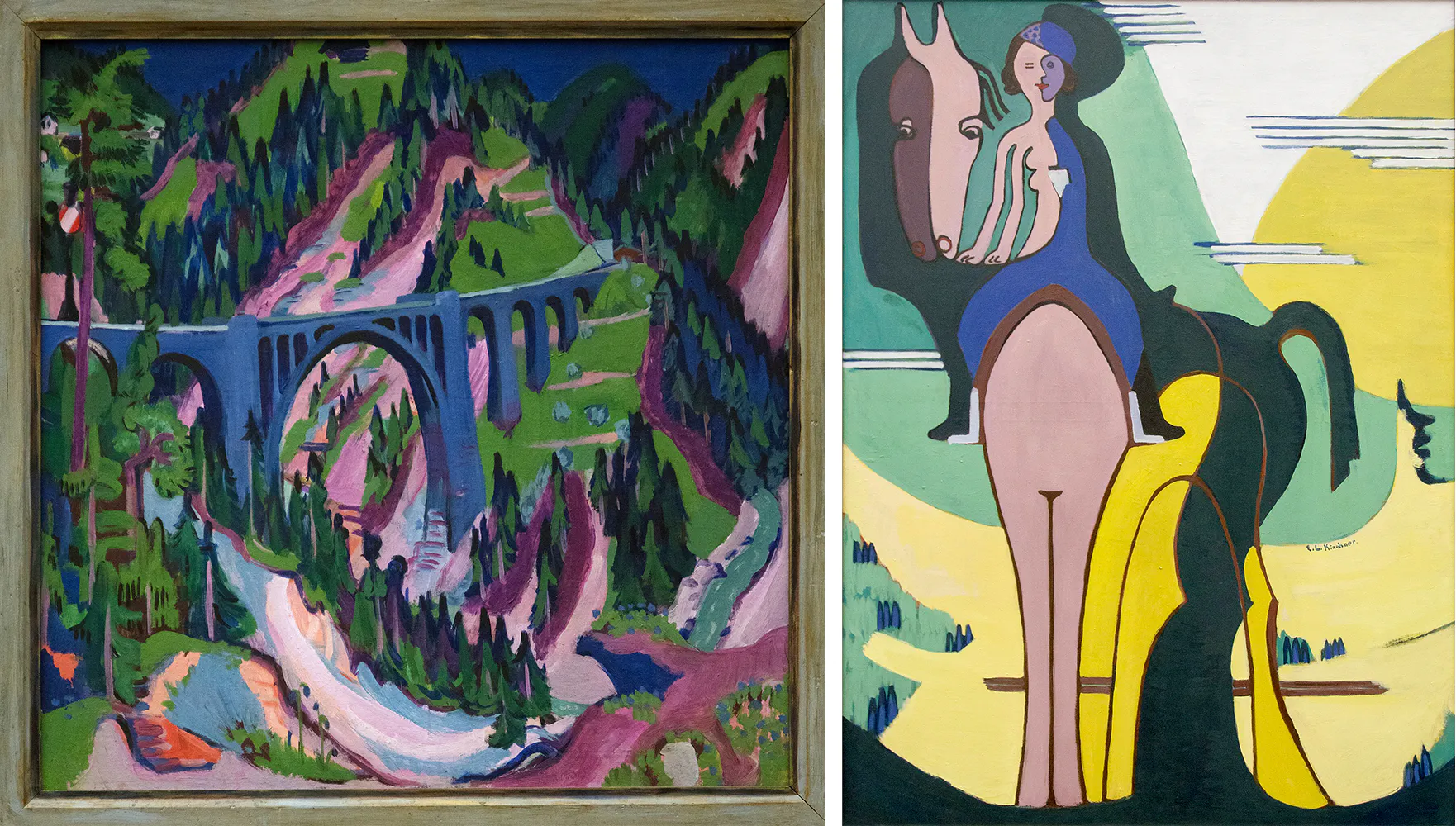
The new surroundings were good for Kirchner, as underscored by the vivid colour of his paintings from that period. He maintained contact with the German art scene, and a lengthy trip to his homeland in 1925/26 led to further stays and the consideration of returning home. However, the Nazi seizure of power in 1933 put an end to all such plans.
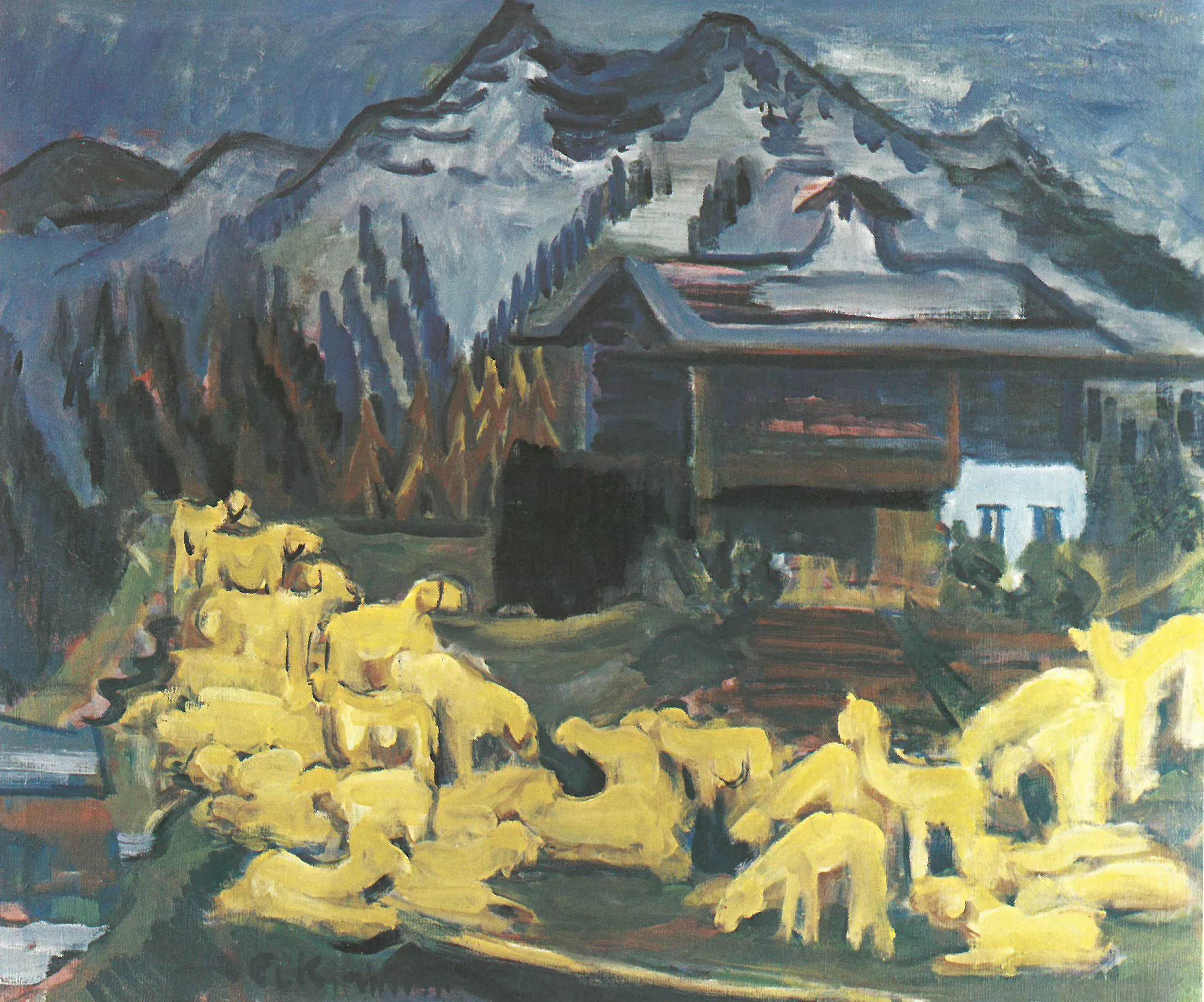
Eventually, Kirchner, who had become addicted to morphine again after a period of withdrawal, was vilified in Germany as a "degenerate artist," and his works, which had been the subject of many exhibitions in the 1920s, were removed from public collections. Kirchner's fear of isolation and a German invasion of Switzerland steadily increased. He canceled his planned wedding to Erna Schilling in June 1938. Instead, he took his own life with a pistol on 15 June.