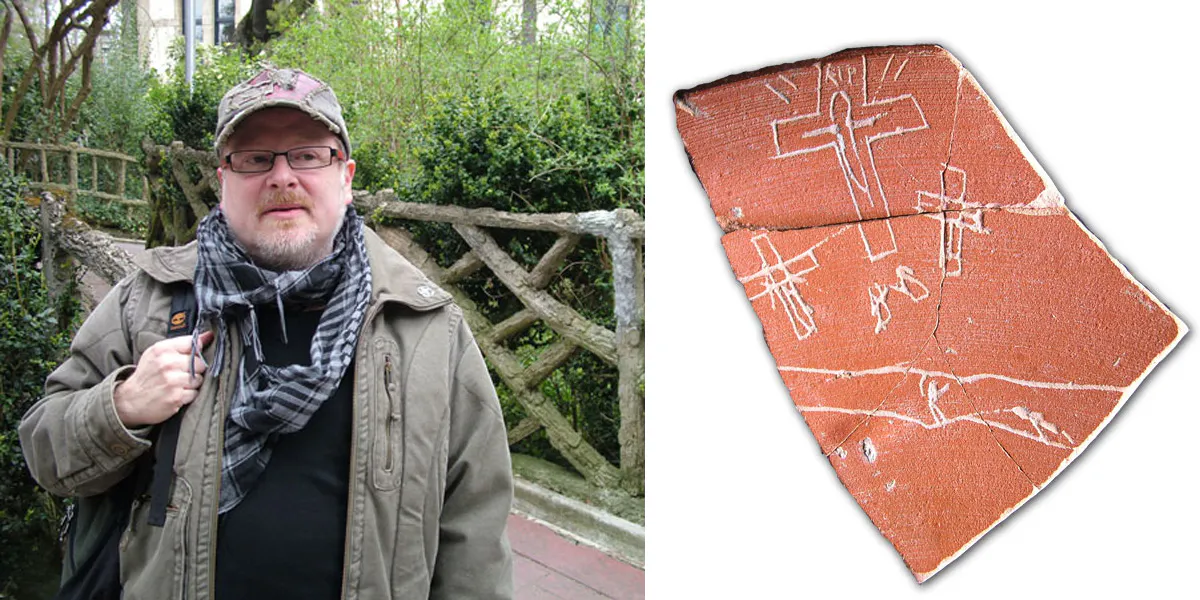
![Inigo Philbrick attends the opening of the Jean Royere exhibition at the Galerie Patrick Seguin in London on 25 February 2016 in London, England, image © Stuart C. Wilson / Getty Images for the Galerie Patrick Sequin [detail]](https://images.prismic.io/barnebys/2751169e-c500-472e-badd-704ff62fcad7_Cover.jpg?auto=compress,format)
Inigo Philbrick, a young art dealer well connected to a lush lifestyle, disappeared last year after being accused, among other things, of having sold the same work of art to different buyers several times and of having sold works he did not own. The police arrested him last Thursday in Vanuatu, a country in the southern Pacific Ocean.
The 33-year-old art dealer is now being prosecuted for electronic fraud and aggravated identity theft. This alleged ‘scheme’ swindled, between 2016 and 2019, collectors and art market entities for a total of $20 million (£15.8 mil), said federal prosecutors in Manhattan.
At the request of the U.S. Embassy in Papua New Guinea, Philbrick was taken to Guam, where he appeared in federal court on Monday. According to the Manhattan Prosecutor's Office, Philbrick had left the United States shortly before the allegations against him were made public. Vanuatu told American law enforcement that it has been living there since the end of October 2019.
Philbrick's galleries, located in the Mayfair district of London and Miami, Florida, exhibited top artists such as Rudolf Stingel, Christopher Wool, Wade Guyton and Mark Bradford. Philbrick built a reputation with players in the art market for having sold works not only to individuals, but also to groups of collectors. In just a few years, he positioned himself as an expert on the works of contemporary artists in vogue, whose prices increased sharply in the early 2010s.

In 2019, Philbrick sold a portrait of Pablo Picasso by Rudolf Stingel at Christie's for $5.5 million (£4.35 mil) (he had bought it for $6.7 million, or £5.3 million, several years earlier). However, following the auction, one person claimed to own 100% of the painting, while two others said they each owned 50%, suggesting that Philbrick had sold the work twice. The money he got from multiple sales was apparently used to acquire another, and so on.
He also allegedly used false documents, contracts and fraudulent records to deceive his investors and inflate the price of the works.
See also: The 5 Most Notorious Art Forgers
According to his friend and former collaborator, the New York writer and dealer Kenny Schachter, Philbrick’s fraudulent operations were made possible thanks to a lack of transparency of the art market. There is no centralised database and little regulation, despite the money at stake. It is difficult for investors to verify for how much their dealers bought their works, which allows them to add a margin on the price. The writer said he was shocked that Philbrick, such a brilliant and talented person, had been blinded by pride and greed.
Pursued by his former clients in New York, Miami and London, Philbrick disappeared last year and never appeared at court hearings on some of these disputes. At the end of 2019, the Miami gallery closed. He now faces up to 20 years in prison.
Find all the latest news from the art world on Barnebys Magazine
![A copy of Bartolomé Esteban Murillo's ‘Immaculate Conception’ and the final result of the restoration, images © Europa Press News / Europa Press via Getty Images [detail]](https://images.prismic.io/barnebys/01f63abe-6916-422a-9aa0-c40c3199e8fa_Cover.jpg?auto=compress,format)