![Tommy “Yannima” Watson, ‘Irika’ [detail], 2015, synthetic polymer paint on canvas, 301 x 182 cm. Photo: Cooee Art MarketPlace](https://images.prismic.io/barnebys/ad000269-1fe7-4f5b-916a-fdc61b720d0b_Cover.jpg?auto=format,compress)
On 20 October, Cooee Art MarketPlace – Australia’s oldest indigenous art specialist – is hosting its ‘Australian Indegenous Fine Art’ auction. The sale includes 110 artworks, valued within the vicinity of AUS$1.8-2.5 million (£1-1.38 million). 62 of these pieces come from the collection of Hank Ebes, owner of the Aboriginal Gallery of Deamings and one of Aboriginal art’s greatest promoters and supporters.
Ebes arrived in Australia as a Dutch migrant in 1962. A former crop-dusting pilot, he initially hoped to open a printing museum. He was running an antique print shop in Melbourne when he met Bob Edwards, the new director of the Melbourne Museum, who offered him an honorary job as curator of printing history and technology. Over the following decades, Ebes secured many of the world’s most prestigious venues for a touring Aboriginal art exhibition. He fell in love with Aboriginal art as the print business fell into a hole in the 1987 recession.

One artist whom Ebes is particularly fond of is Emily Kame Kngwarreye (1910-1996), who holds the auction record for the highest price ever achieved for the work of an Australian female artist – a feat set at Cooee Art in 2017 for the incredible sum of AUS$2.1 million (£1.16 mil). What makes this particular sale even more special was that Kngwarreye created her record-breaking masterpiece, titled Earth’s Creation I, in a workshop backed financially by Hank Ebes.
Ebes began personally collecting indigenous art in the early 1990s. His collection is vast and no less than 650 paintings by Kngwarreye have passed through his hands. These comprise works in every style from her seven-year painting career, including more than half of Kngwarreye’s final series artworks painted in the last weeks of her life.
13 works by Kngwarreye are for sale in Cooee Art’s 20 October sale, including My Country – Final Series (1996), a profusion of pink, yellow and blue, and a rare Final Series work. It is the second of the 24 works Kngwarreye created during the last weeks of her life to have ever been offered for public sale. Certainly one of the crown jewels of Aboriginal art, My Country – Final Series is a testament to the power, beauty and importance of Kngwarreye’s painting practice.
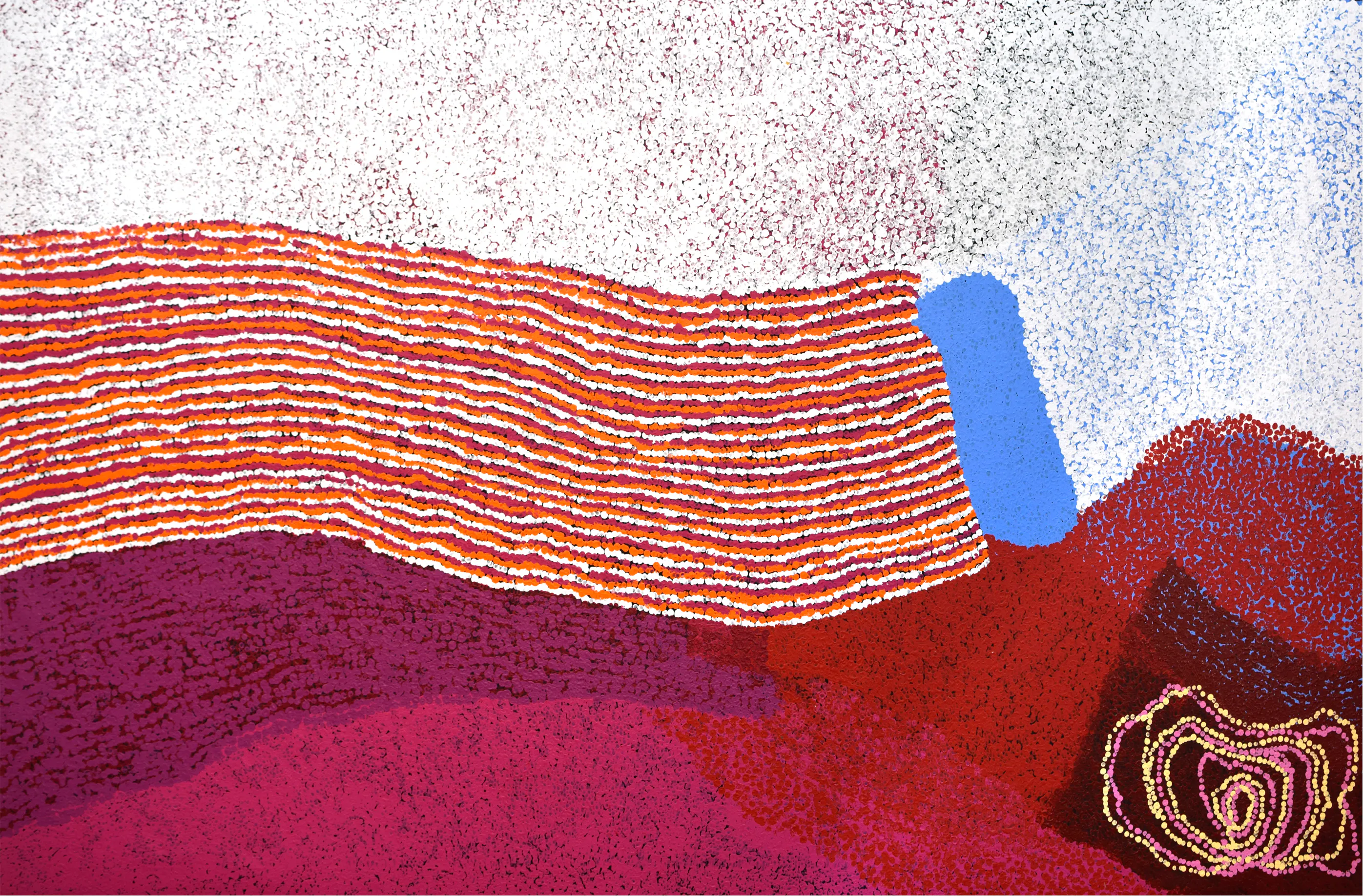
Cooee Art boasts two paintings by Tommy “Yannima” Watson (c. 1935-2017), an elder of Pitjantjatjara (Aboriginal people of the Central Australian desert near Uluru) who gained wide acclaim in a surprisingly short amount of time. Grounded in Watson’s paintings are rockholes, mountain ranges, creek beds, and important Dreaming sites created, according to the mythology of the region, during the major battle that took place between the White Cockatoo and the Eagle.
Irika (2015) is one of these two artworks. With its earthy reds and pinks, beautiful blues and smatterings of white, it is a major piece and in keeping with the depiction of Dreaming stories throughout the Western Desert: the landscape is rendered sacred and numinous.
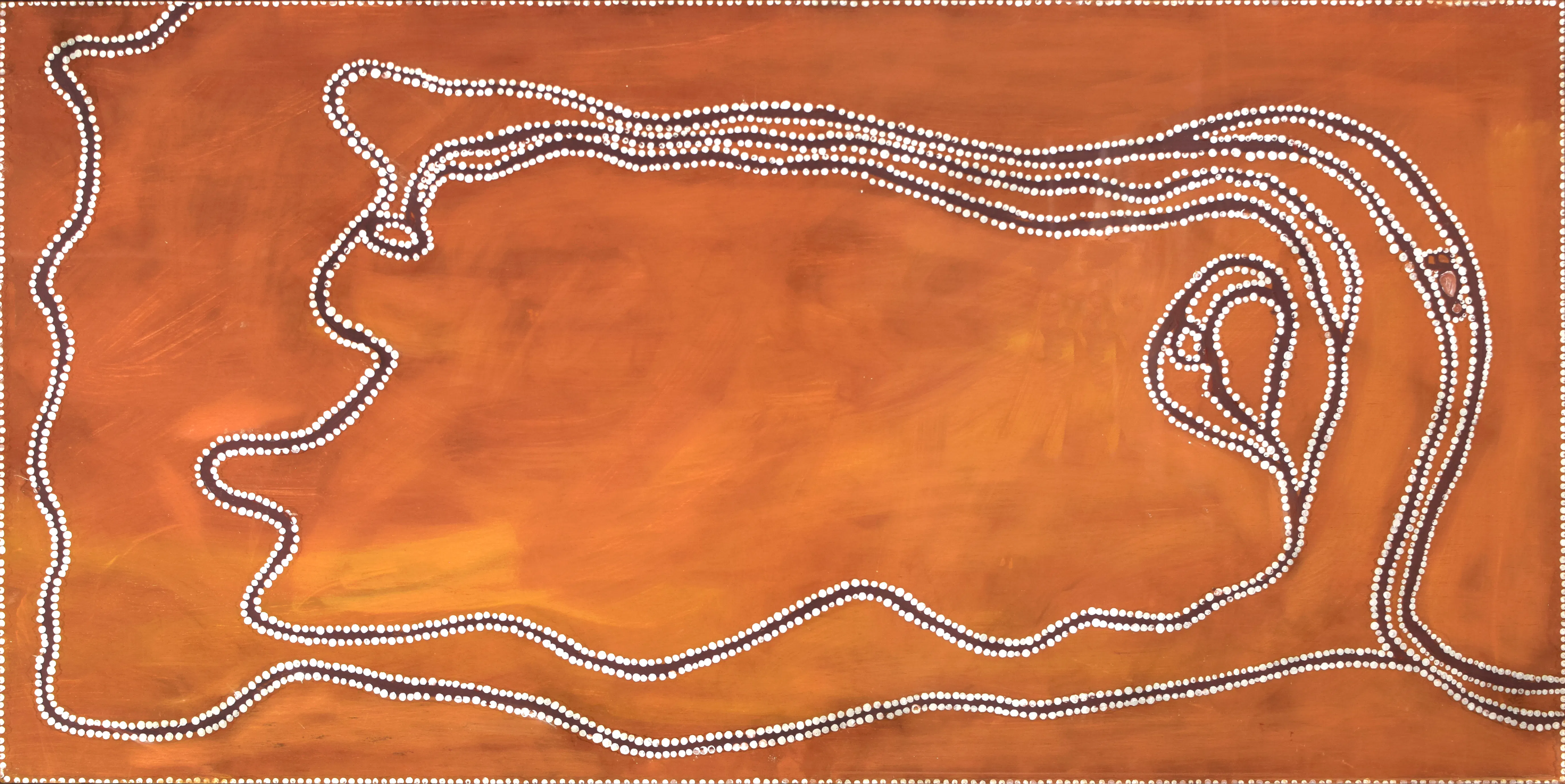
Two early paintings created by Rover Thomas (c. 1926-1998) on construction ply are included in the auction, both created soon after the dawn of the Kimberley (a region of north-west Australia) painting movement. Both works were also exhibited at museums throughout Europe and Japan between 1996 and 2006 as part of the exhibition Nangara.
Although Thomas occasionally included figurative elements and topographical profiles in his paintings, his work is more familiarly characterised by an aerial perspective in common with Central and Western desert art. His earliest works, created between 1981 and 1984, are planar, map-like paintings referring to sites and pathways of ancestral or historical significance and his own travels in the region.
As with Canning Stock Route (c. 1984), these works draw the viewer into spacious planes of painterly and textured ochre. The white dots serve to create emphasis and draw the eye along pathways of time and movement, following the forms of the land in which important events are encoded. Warm and earthy ochres, along with the palpable sense of spirituality, invite the viewer to consider the unfolding of important events, while at the same time placing the viewer within an ancient and timeless landscape.
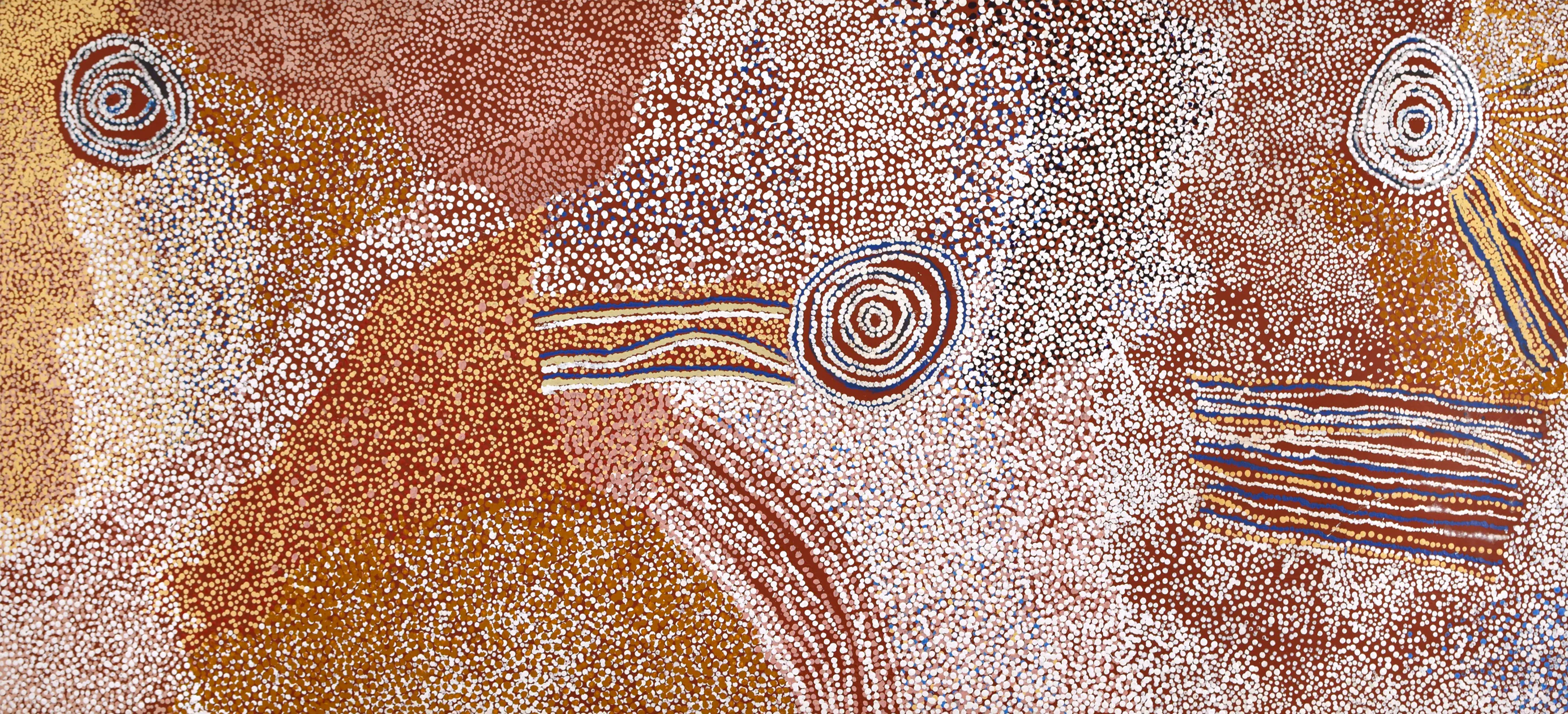
Bill “Tjapaltjarri” Whiskey (c. 1920-2008) didn’t begin painting on canvas until the last four years of his life, aged 84. By this time, he was widely renowned as a powerful healer and keeper of sacred knowledge.
His paintings are steeped in tradition, as with Cooee Art’s Rockholes Near the Olgas (2007). This work depicts the mythic battle related in the Cockatoo Dreaming, which occurred at Whiskey’s birthplace, Pirupa Alka near Uluru. During the battle, white feathers were scattered about the landscape which became indented when the entangled combatants crashed into the ground repeatedly. Subterranean streams filled these impressions with water and a circular amphitheatre was created by the sweep of wings. Today, a large, central, glowing white rock signifies the fallen cockatoo, still sipping the life-giving water from the sacred pools. In keeping with the depiction of Dreaming stories throughout the Western Desert, the mythic and numinous is inherent within the sacred geography.
In Rockholes Near the Olgas, water places such as Pirupa Akla are marked by sets of concentric circles, their dazzling presence representing their powerful life-giving significance. The actions of the White Cockatoo and Crow ancestors are encrypted as dotted patches that reference topographic features associated with the Dreaming.
Want to explore more of Australia’s important Aboriginal art?