It’s the beginning of 1900 and modernity and innovation is rich among artistic changes and innovations. Alfred Nehemias, a banker from Hamburg, and August Eberstein, an engineer from Berlin, grasp this prolific air and make the decision to dedicate themselves to the production of fountain pens. ‘Manufacturers of high quality gold fountain pens’ is the declaration with which the history of Montblanc begins.
In 1906 the company was founded, under the name ‘Simplo Filler Pen Co.’ – ‘simple’, like its design of a fountain pen with a built-in tank. At this time, the two founders were joined by another businessman from Hamburg, Claus Johannes Voss, and Max Koch, a banker who had the capital necessary to start production. Thus the company was formed and registered.
See also: 7 Greats and Their Favourite Fountain Pens
Despite its forthcoming success, the company’s early years were turbulent. The initial agreement saw Voss and Koch as investors, while the two original founders dealt with production, patents and know-how. Koch, however, had an expensive lifestyle and no longer wanted to provide the promised financing. Subsequently, Voss started looking for a new investor, which he found in Christian Lausen; that same year, ‘Simplo Filler Pen Co.’ became an official company.
See also: Tiffany: The King of Diamonds
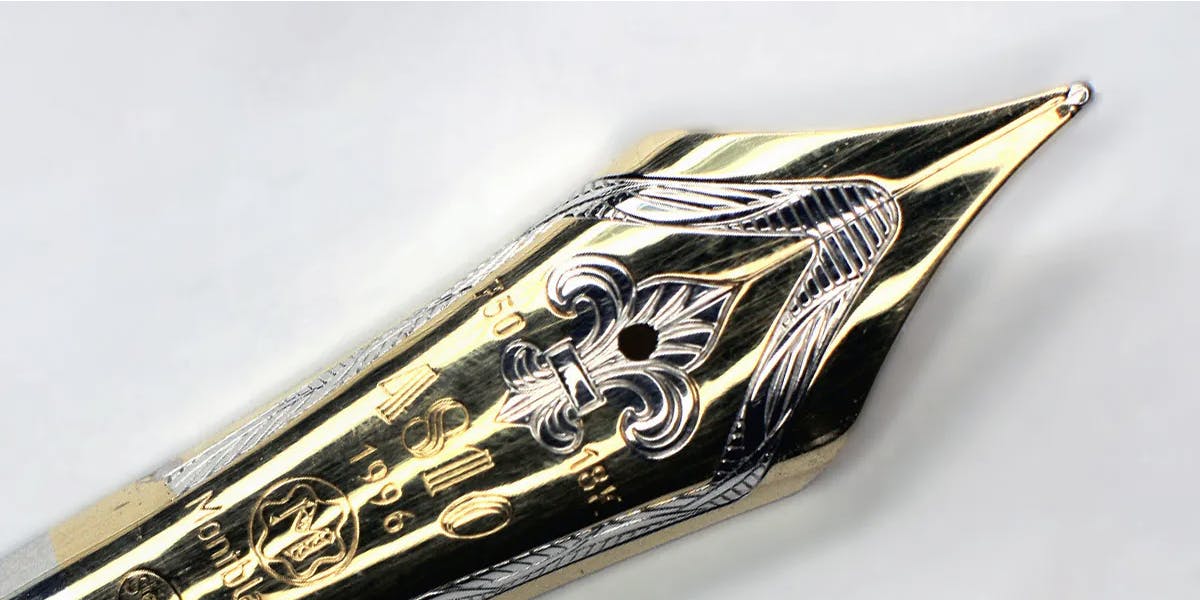
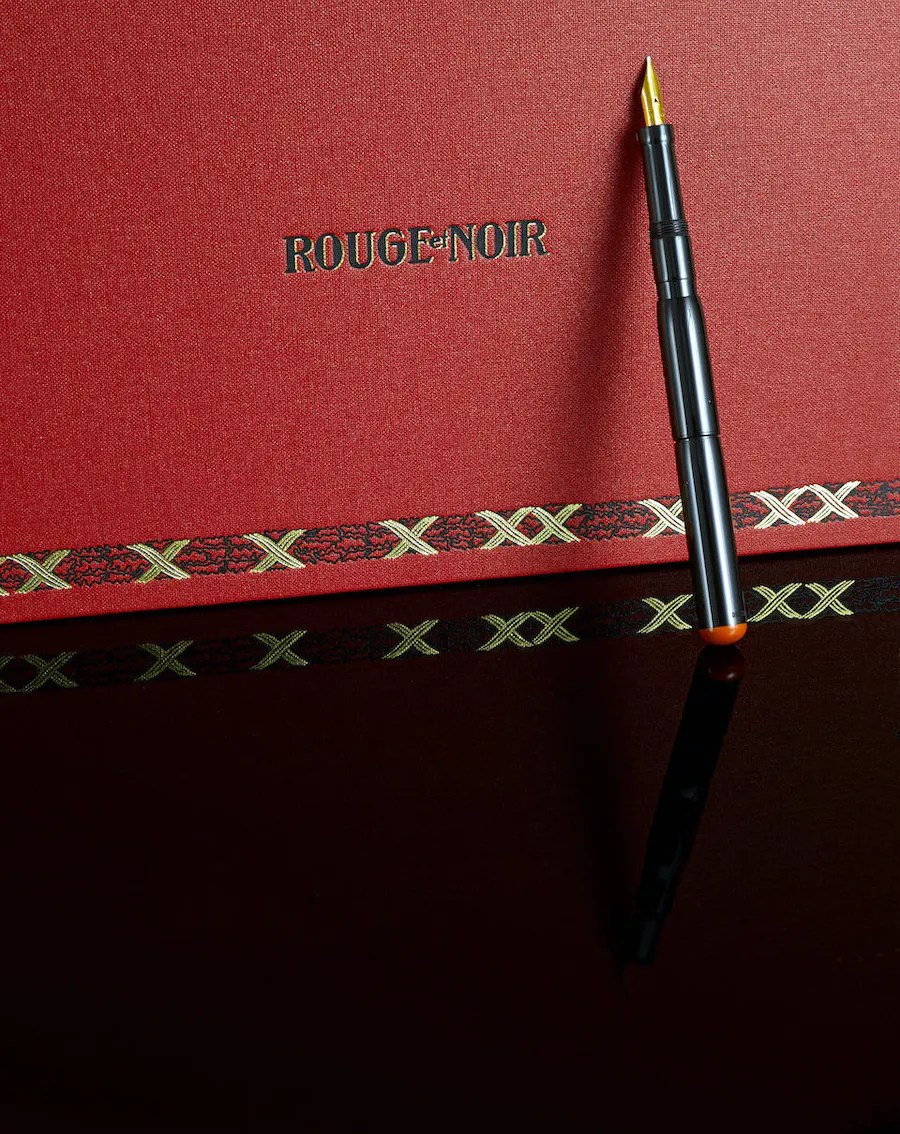
In 1909, the turbulence continued: Eberstein fled to the United States after stealing funds from the company; however, success was only just around the corner. It was at this same time that the ‘Rouge et Noir’, a pen in black and red ebonite, was launched on the market. In this same year the name ‘Montblanc’ was also established: legend has it that during a game of cards, a relative of one of the partners compared the pen, which had become the most excellent example of writing instruments, to Mont Blanc, the most majestic peak in the Alps. The famous logo, the rounded star that represents the summit of Mont Blanc, was born in 1913 – it is the symbol of the brand's commitment to high quality and the desire to achieve the highest levels of European artisanal production.
Want more articles like this delivered straight to your inbox? Subscribe to our free newsletter
In addition to the ‘Rouge et Noir’, Montblanc also began the production of the ‘Simple’, a pen with a dropper filling, and of the ‘Diplomatum’, a model with a short cap.
See also: Aston Martin: Luxury, Race and Velocity
Meanwhile, the original founder Nehemias died prematurely. The company moved into new management until World War I arrived, bringing with it complications with production. After 1918, the business managed to resume at full speed, thanks to the commercial strategies and advertisements created by a designer from the Bauhaus, Grete Gross.

1924 was a key year for Montblanc and the history of writing: the ‘Meisterstück’ collection was launched, which introduced one of the world's best known writing instruments, their ‘Masterpiece’. The new pens were produced in three versions (25, 35, 45, so called according to their prices), with a lifetime guarantee and the engraving ‘4810’ – the height of Mont Blanc in metres. In the late 1920s, the brand had established itself in over sixty countries worldwide. The company expanded its product range by introducing pencil cases, pen holders and notepad holders through the acquisition of a leather goods manufacturing in Offenbach, Germany.
See also: 6 Women Who Have Won the Nobel Prize in Literature
The Second World War slowed down production again and the company produced mainly for the government at that point but then, in 1944, during a bombing, the Montblanc factory was completely destroyed. After a quick reconstruction of the factory, in 1946 production resumed. The ‘50s then saw the launch of the legendary ‘Meisterstück 149’, later made famous by President John F. Kennedy when, in 1963, he lent it to the German Chancellor Konrad Adenauer, removing it to save the Chancellor a moment of embarrassment on such a public occasion.
See also: Cartier: A Love Affair
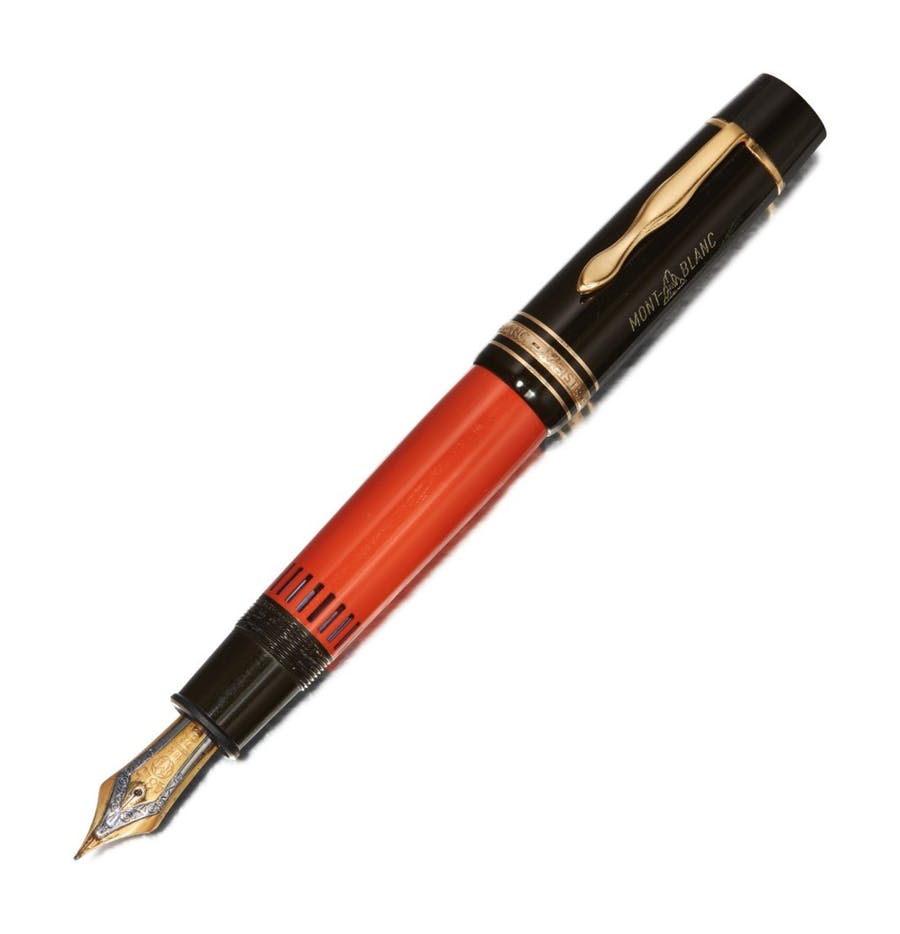
In the 1950s, plastic resin was introduced and previous production was subsequently discontinued. In addition to this, Montblanc managed to juggle the ballpoint pen revolution, initially relying on an external company for production. This was a significant decade, as the ‘60 Line’ was also introduced, the first great new line of the brand after ‘Meisterstück’.
In the 1980s the famous slogan ‘Montblanc – The Art of Writing’ was launched, which became a point of reference for many other luxury brands: the fountain pen became a true status symbol. In 1992, the project ‘Montblanc de la Culture Arts Patronage’ Award was born, which celebrated the great patrons of art and thus the first limited editions ‘Lorenzo de 'Medici’, the ‘Patron of Art’, and the Writers’ Edition ‘Hemingway’ were launched, which become loved by collectors all over the world.
See also: Christian Dior: A Flash of Brilliance
See also: Who Wore the First Wristwatch?
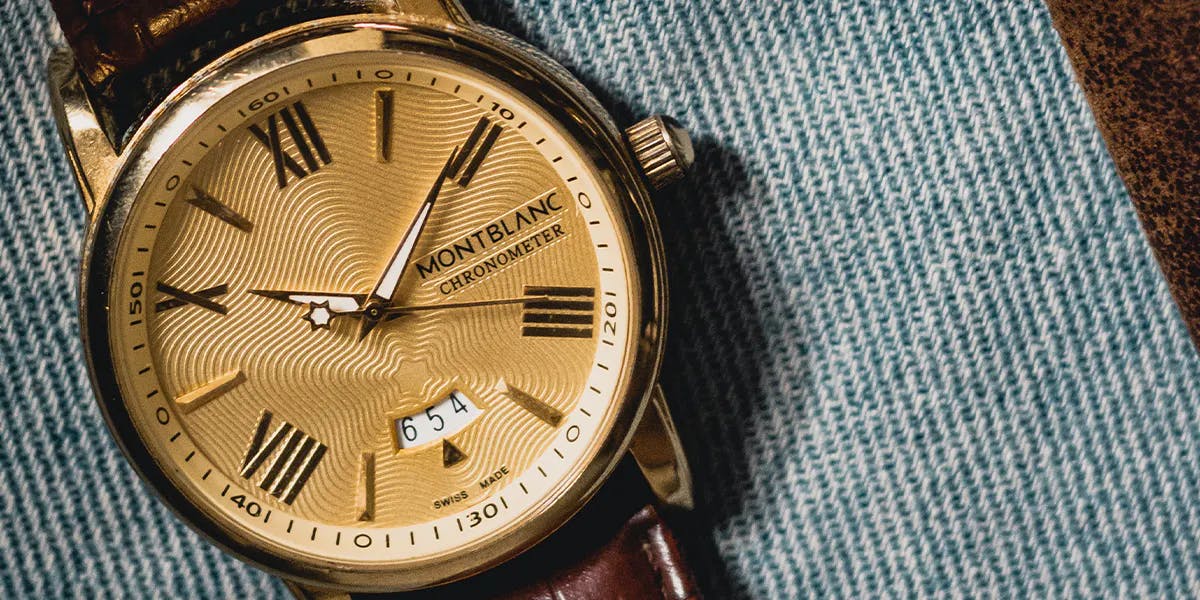
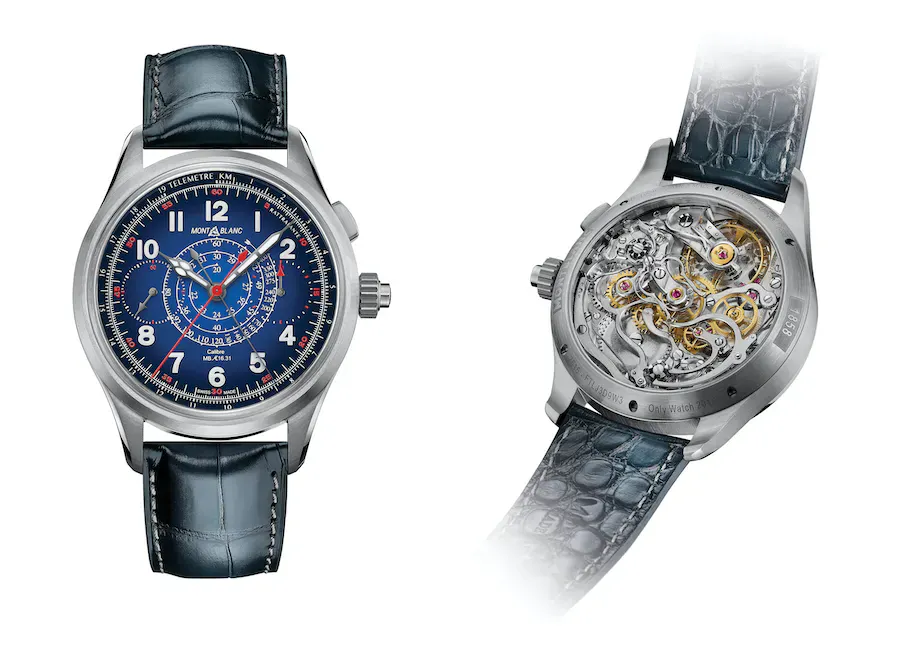
In recent years Montblanc has also dedicated itself to other luxury products, such as high-end watches, jewellery and perfumes, and is now part of the Richemont group. Precious collectable pens, as well as elegant watches, are increasingly desired by enthusiasts and collectors and often reach record prices. One of the most expensive pens of all is the Montblanc Taj Mahal Edition (worth $2 million), a tribute to the wealth of the Mughal dynasty and its splendour.