![Important portrait of Caius Julius Caesar of the Camposanto-Pitti type [detail]. Image © HVMC](https://images.prismic.io/barnebys/9270c0c0-ecf4-42c7-ada0-df168ad23e71_d00fa609-4cac-4c97-913d-99cc4b3fb3c0_hero.jpg?auto=format,compress)
On 29 April, Hôtel des Ventes de Monte-Carlo (HVMC) is hosting their auction ‘From César to César!’ at the Monaco Yacht Club.
"We noticed that there was a revival of collectors seeking sculptures – whether from antiquity or the present day – which had been curiously neglected for many years," declared Franck Baille, President of HVMC.
The auction house will therefore rise to meet the demand of collectors with their latest sale, in a catalogue featuring everything from an important portrait of Julius Caesar to a monumental work by César Baldaccini. The 77 lots have been carefully curated by experts, and will retrace the highlights of the history of sculpture.
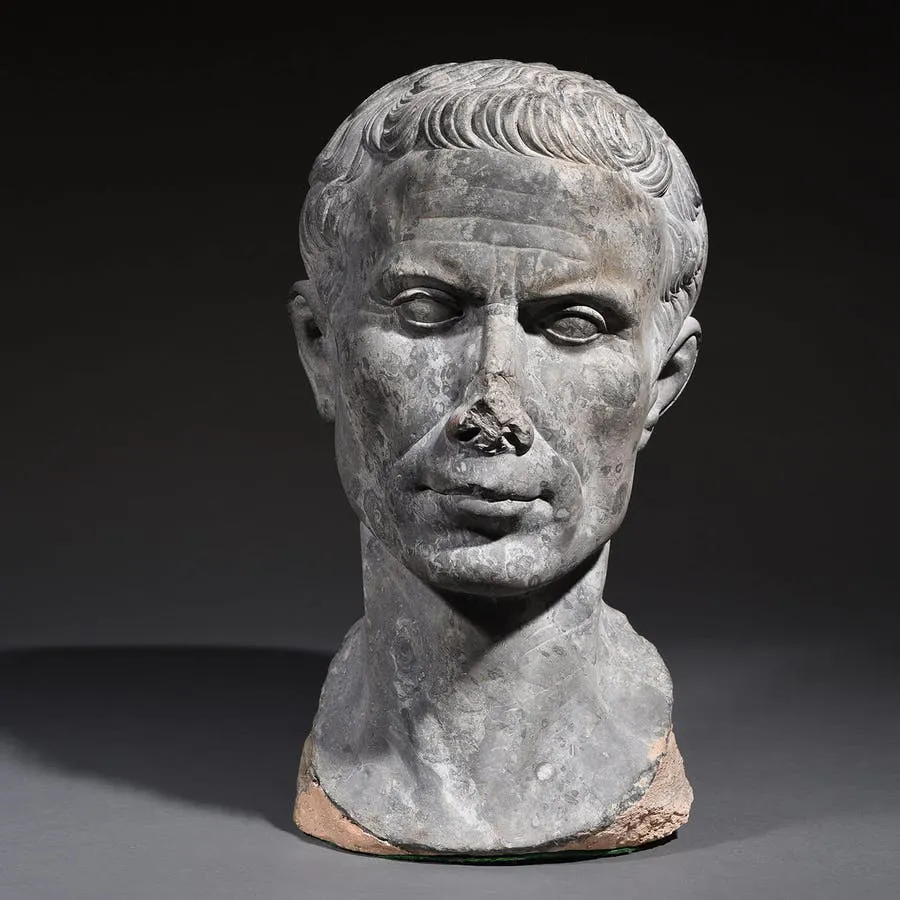
An important portrait of Caius Julius Caesar dated to the first quarter of the 1st century AD will undoubtedly be the highlight of the ancient sculpture selection. The square jaw, hollow cheeks, aquiline nose, tense neck muscles and pinched mouth are all characteristic of the dictator’s typical physiognomy, and are also seen in the head of Caesar from Palazzo Pitti and the Camposanto-type Caesar in Pisa. This work is presented as a ‘Camposanto-Pitti type’ portrait, for its similarities in the hair and idealised representation of the face. The determined look associated with the Roman leader was influenced by Julius Caesar himself, who had coins minted with his effigy during the last two months of his life, at the beginning of 44 BCE.
Made of an atypical material, a dark grey limestone with a slight marl component, the emperor's head is tilted slightly to the left and was probably inserted into a bust or statue.
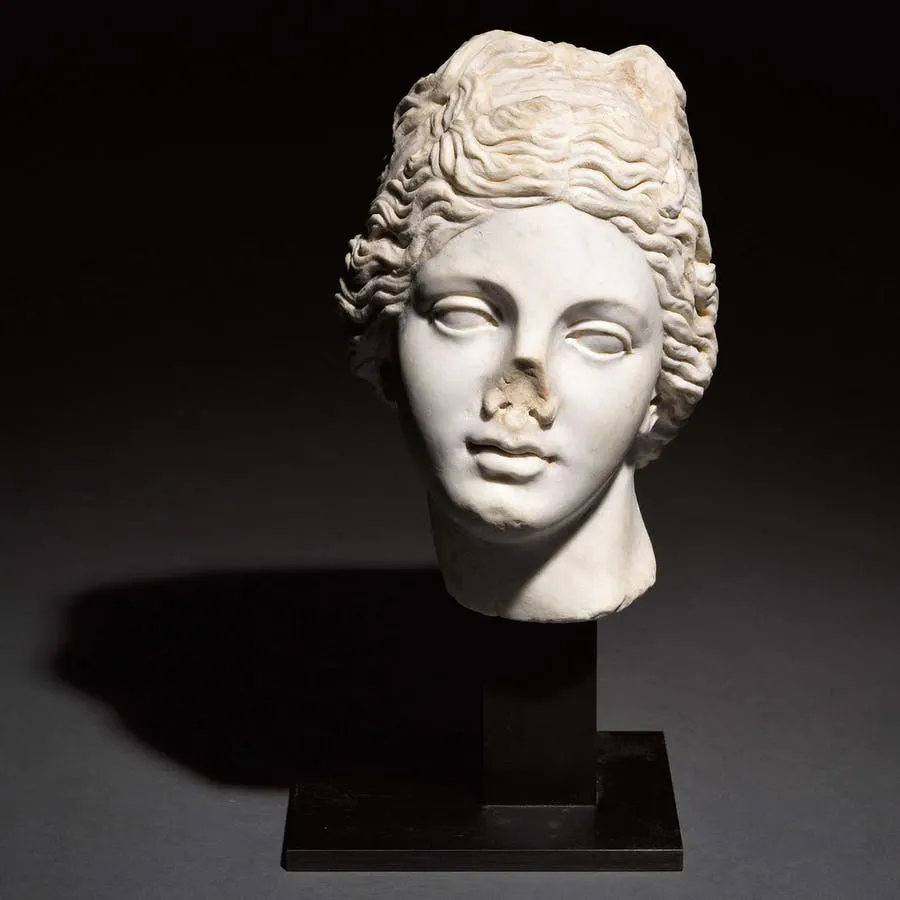
Dated from the beginning of the Trajan period (end of 1st - beginning of 2nd century AD), this Medici-type head of Aphrodite comes from a private French collection. The hairstyle of this Aphrodite refers to that of the Venus Medici at the Uffizi Gallery in Florence, which, according to ancient sources, came from the Trajan Baths. However, the lower bun and more voluminous hair differentiates it from the Medici model.
This 25cm high white marble head of Aphrodite depicts an elongated face, fine features, almond-shaped eyes and a voluptuous mouth. Although an inscription on the base attributes it to the sculptor Kleoménès, the work is dated to the Trajan period and could have been executed by a follower of Praxiteles.
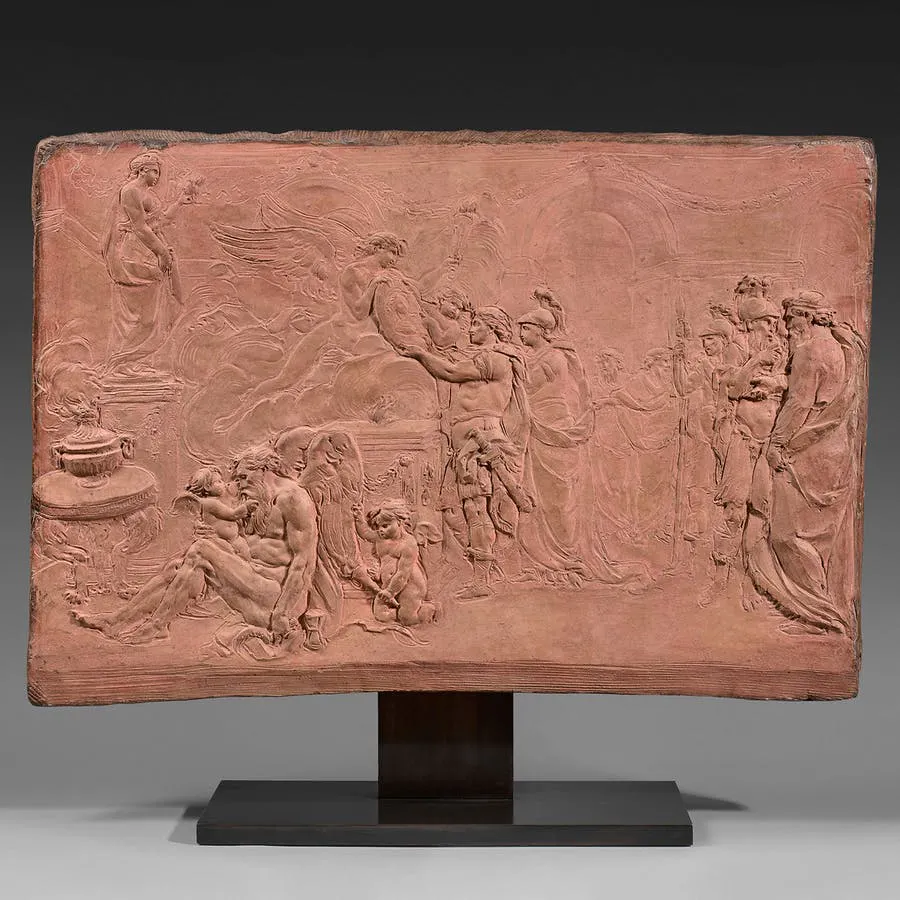
A bas-relief from the French school will transport us to the 18th century, to the generation of sculptors that included Augustin Pajou and Louis-Claude Cassé. Modelled around 1768, this lightly sketched bas-relief presents a learned and complex iconography. According to experts, it may have been carried out by Pajou or Cassé in the hope of obtaining a commission for the tombs of the former king of Poland, Stanislas, and his daughter, the queen of France, Marie Leszczynska, who died successively in 1766 and 1768.
This terracotta sketch must have remained at the draft stage, because no marble version is known to historians to this day.
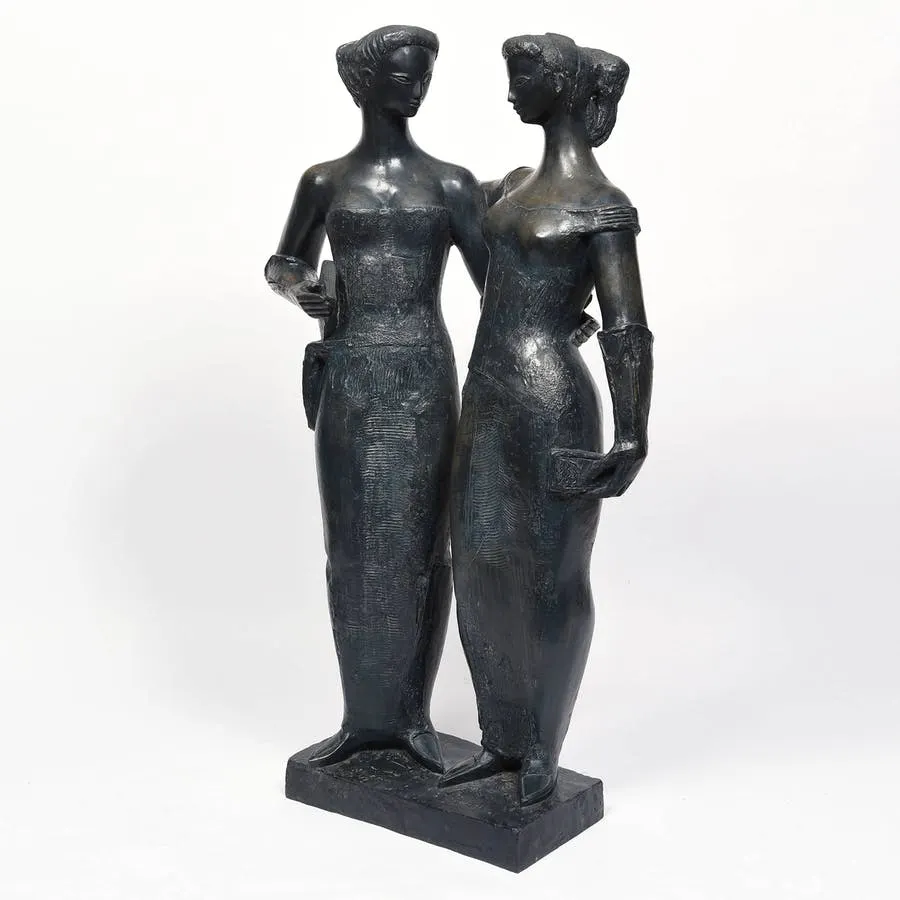
On the side of modern sculpture, we find the French-Italian Antoniucci Volti, a sculptor in the line of Aristide Maillol who remained faithful to the figurative tradition and dedicated his life to glorifying the female form. Les Parisiennes is part of a series, the first of which was presented at ‘Painters as Witnesses of Their Time’ in 1958, an exhibit specially dedicated to the subject of Parisiennes. Volti's series was made famous in 1992 with the creation of a stone version, which no longer exists today.
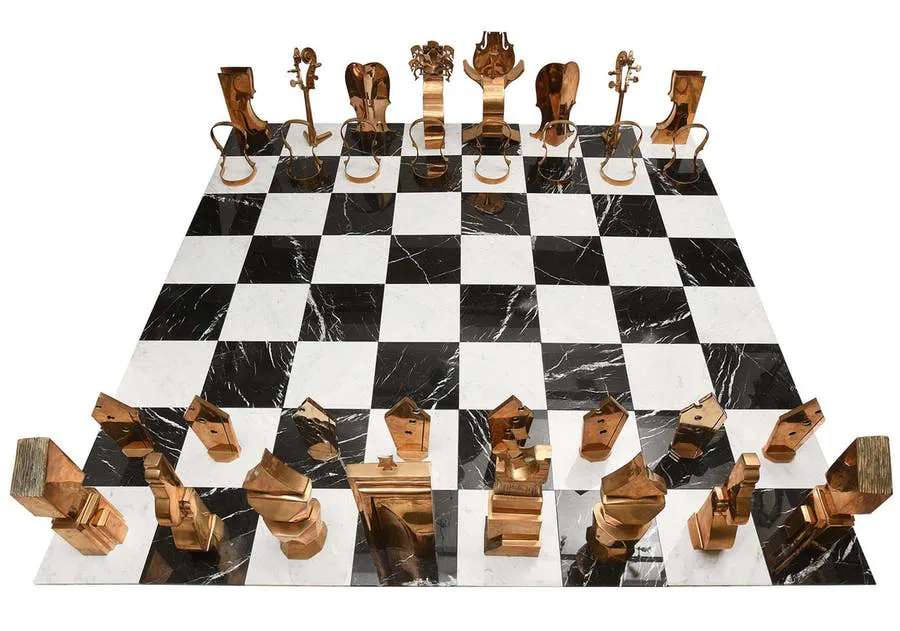
The result of the collaboration between Arman and Georges Boisgontier, the monumental chessboard Double Gambit is among the most impressive works in the catalogue. Designed in white and black marble and featuring 32 gilded bronze figures, five sets of the chess set were created in 1986, plus an original model certified by Arman and two artist's proofs. Sixteen of the bronze figures were made by Arman, while the other half were created by Boisgontier.
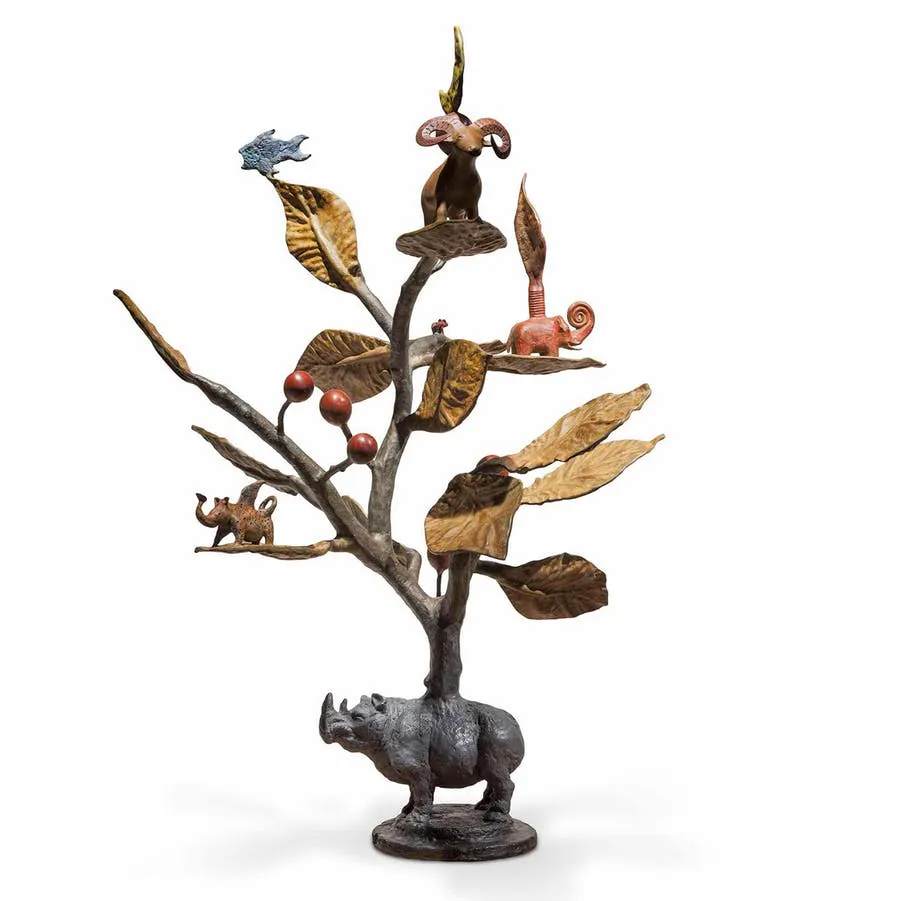
The French artist Richard Texier will be represented by his work Tree of Life IV – Rhino Tree, a 2017 bronze print from an edition of just eight copies. Here, the tree takes root in a rhino, a creature that has inspired many artists over the centuries, including Albrecht Dürer and Salvador Dalí.
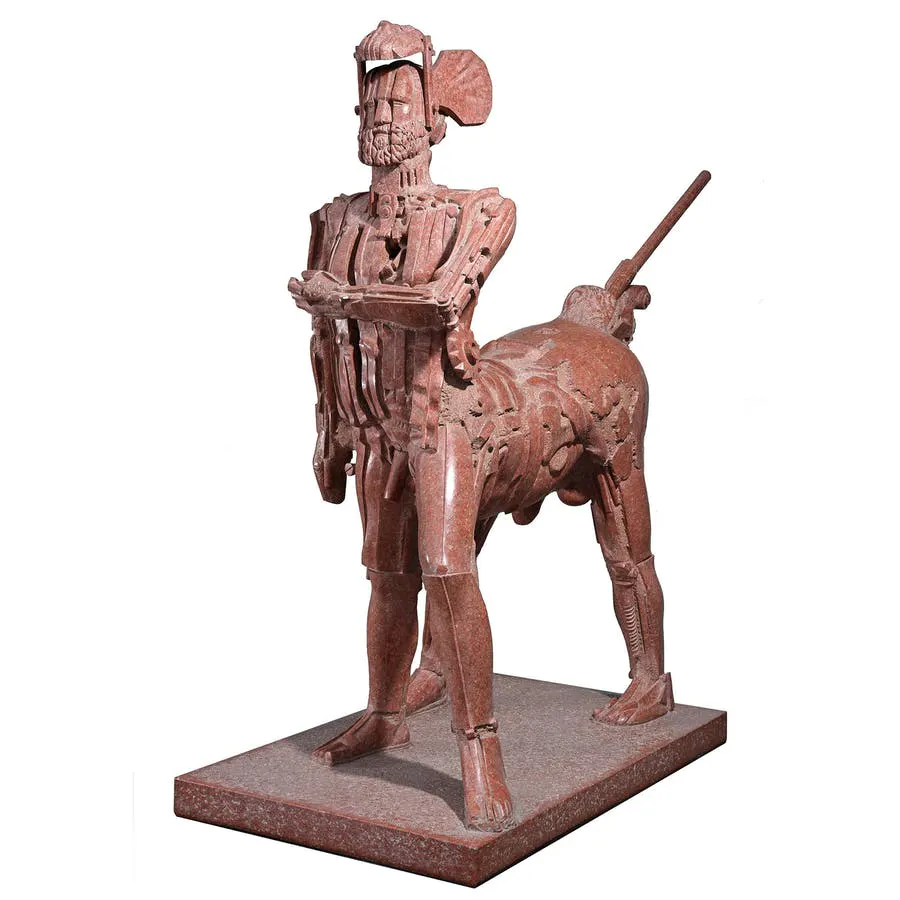
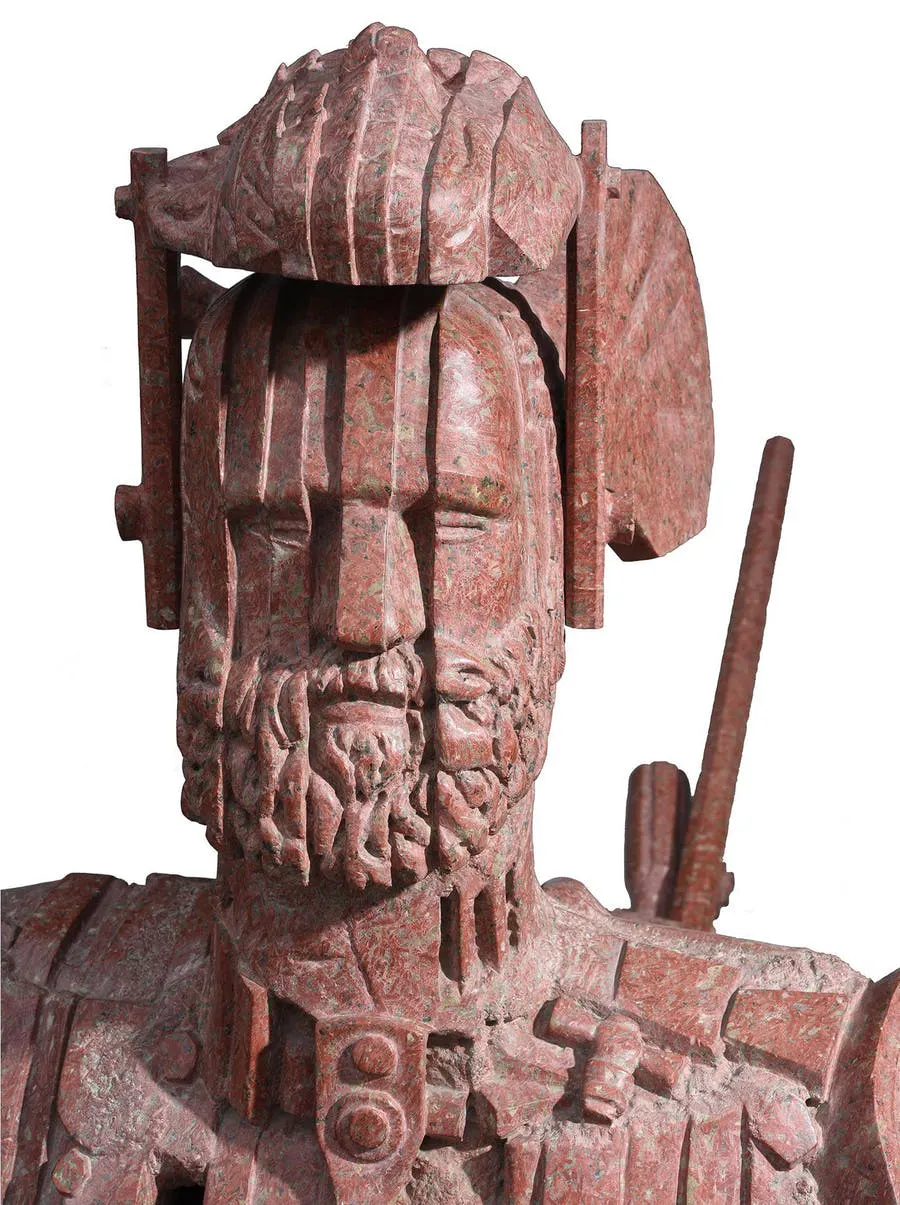
The name César comes back to us with the indisputable flagship lot of the modern and contemporary selection, a unique piece from a private collection entitled Centaure, Hommage à Picasso. It is signed by the artist César Baldaccini, a French sculptor of the New Realists movement who cultivated his image of the eternal craftsman.
The masterpiece presented here was executed in 1994 in red travertine marble and stands at a height of 2.3 meters. The artist gave the centaur his own face, which wears a mask of Picasso's head. The sculpture sat at the centre of an emblematic building in Monaco, and, according to the president of HVMC, should arouse a great deal of interest and mobilise many enthusiasts.
‘From Caesar to Caesar!’ will take place at the Yacht Club de Monaco on Thursday 29 April, under the HVMC’s hammer. For all information relating to the conditions of sale and the security measures in force, we invite you to consult the auction house’s website.