The Neoclassical style
The Neoclassical style, also known as the Louis XVI style, embodied modernity in late 18th-century Europe. Opposing the 'rococo' style, which accumulated organic forms ('ro' coming from 'rock') and rich ornamentation ('coco' coming from 'barroco', Portuguese for 'baroque'), Neoclassicism advocated for a return to moral rigour and stoicism based on the model of Greek antiquity. Artistic production under the reign of Louis XV was considered frivolous, and the virtuous Athens of Praxiteles and Pericles was thought to be more apt. The forms were logical and balanced, and the lines straight and pure. This trend coincided with the ideas of the Enlightenment and its revolutionary political ideals: the search for a just world governed by the immutable laws of reason and equity. Encouraged by the financial support of powerful patrons, and resulting from the discoveries of archaeological sites in Italy in the Naples region, the decorative arts experienced an extraordinary effervescence in the second half of the 18th century.
See also: A Brief History of Furniture Design
Neoclassical decorative arts and clocks
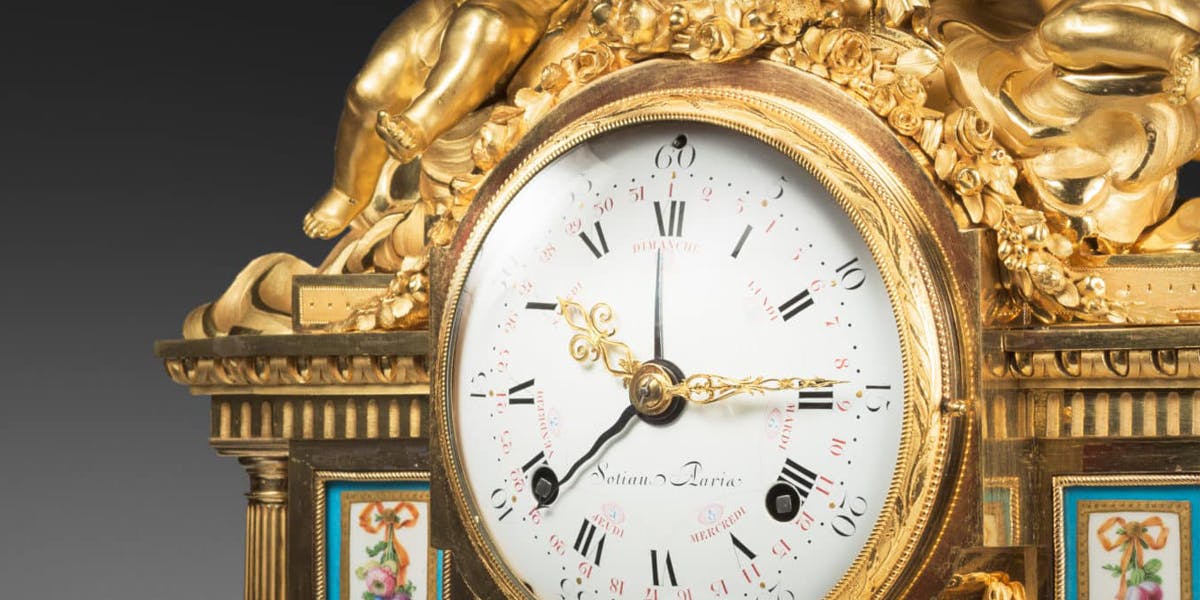
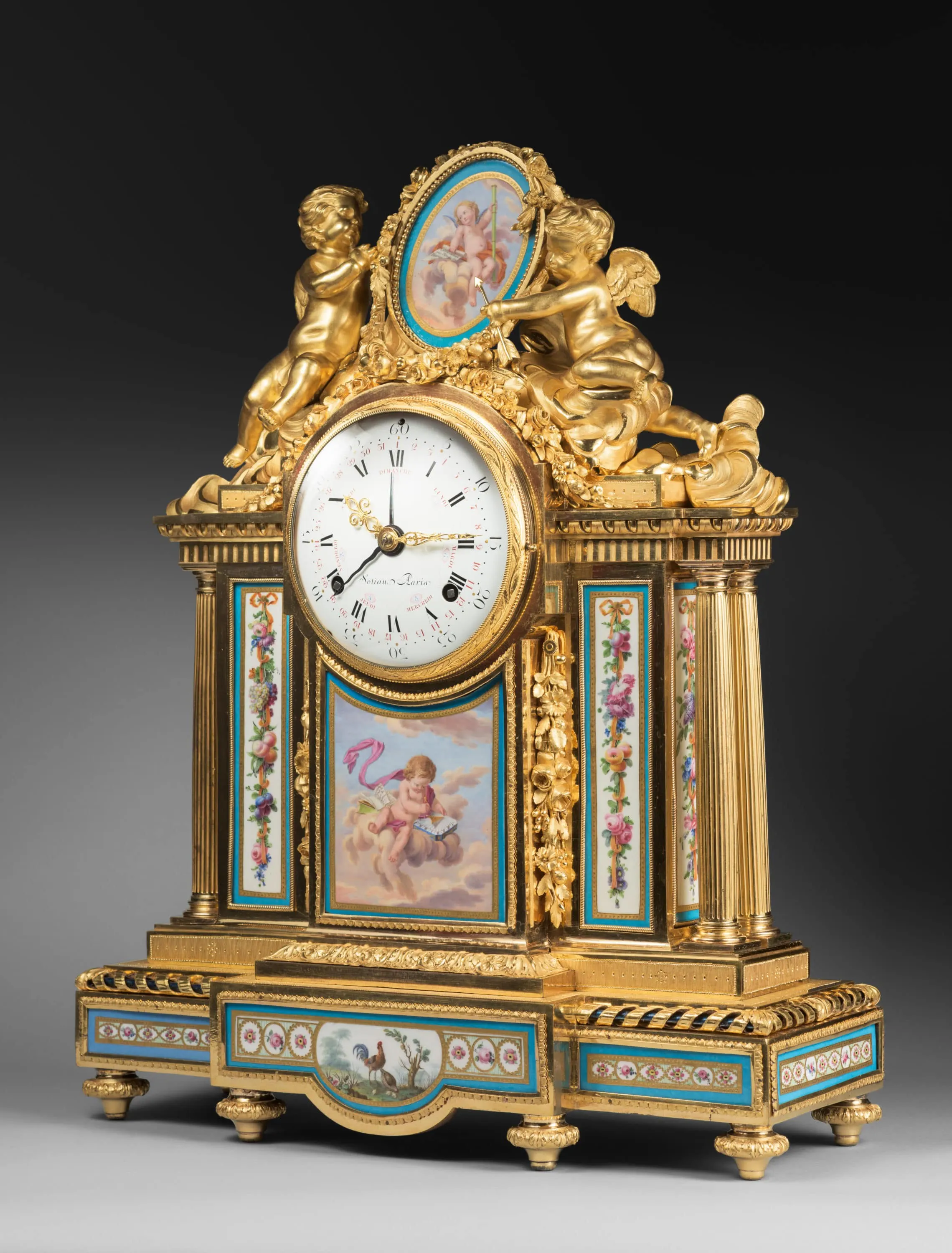
From the reign of Louis XVI onwards, the most luxurious clock models were embellished with polychrome porcelain plates made at the Royal Manufactory of Sèvres, as can be seen in this exceptional mantelpiece clock exhibited at La Pendulerie, a company specialising in exceptional antique clocks. The merchant Daguerre, who at the time had a monopoly on orders for luxury clocks, called on the best craftsmen of the day, including the enameler Georges-Adrien Merlet, the clockmaker Renacle-Nicolas Sotiau, and the bronzeworkers François Rémond (c. 1747-1812) and Pierre-Philippe Thomire (1751-1843).
See also: The Gilded Bronzes of the Empire Style
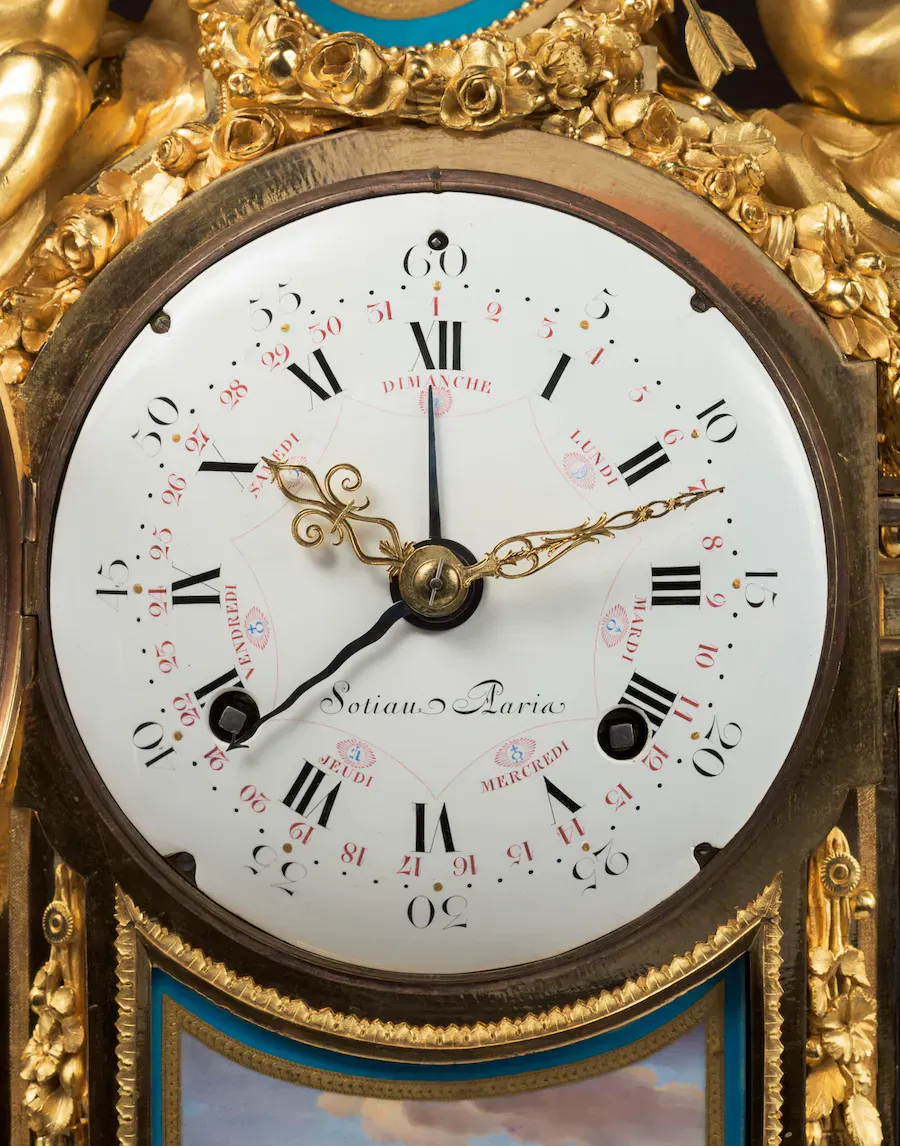
Renacle-Nicolas Sotiau: 'Watchmaker to Monseigneur le Dauphin'
This mantel clock in finely chased and gilded bronze and Sèvres porcelain plates is a perfect example of the French Neoclassical fashion of the period. Designed by Renacle-Nicolas Sotiau in collaboration with the above-mentioned craftsmen, there are only three examples of this object of art, all of which are owned by major European collectors. Renacle-Nicolas Sotiau's creations were very popular at the time. The watchmaker designed clock movements that were masterpieces of elegance and perfection for the greatest collectors, including members of the high clergy and great financiers.
See also: The Royal History of the World's Most Expensive Clock
Renacle-Nicolas Sotiau also created sumptuous pieces for the Prince Regent of England, the future King George IV, as well as for Mesdames de France, aunts of Louis XVI, and Queen Marie-Antoinette. This pedigree earned him the nickname of 'Watchmaker to Monseigneur le Dauphin', the eldest son of Louis XVI and Marie-Antoinette. Today, Renacle-Nicolas Sotiau's creations are mainly preserved in the Walters Art Gallery in Baltimore, the Frick Collection in New York, the Huntington Collection in San Marino and the Musée national du Château de Versailles.
This clock was made in only three copies, all commissioned by great European collectors, which makes it an exceptional model. Commissioned by the Duke and Duchess of Saxe-Teschen, it also has a unique provenance. The gilded bronze case can be attributed to either François Rémond (ca. 1747-1812) or Pierre-Philippe Thomire (1751-1843), two of the most important Parisian bronze workers of the time with whom Daguerre collaborated exclusively.
The three Louis XVI clocks
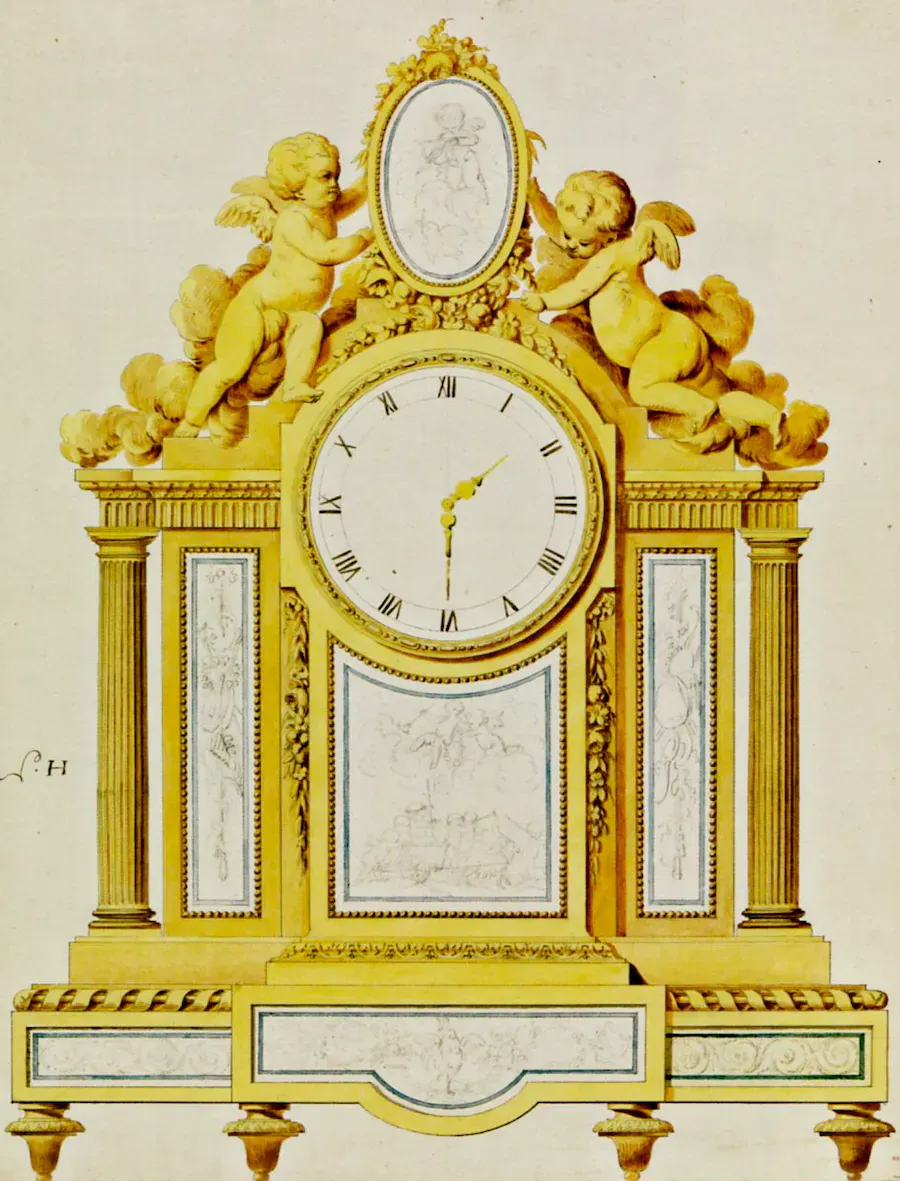
Of the three examples of this clock, one belongs to the Huntington Collection in San Marino, California; the second, signed by the clockmaker Louis Montjoye and dated 1782, is on display at the Rijksmuseum in Amsterdam (the clock was acquired the same year by the future Tsar Paul I and his wife Marie Féodorovna); the third is that of La Pendulerie. An anonymous drawing in the Metropolitan Museum of Art is, according to the experts at La Pendulerie, most likely a presentation plate sent by the dealer Daguerre to the Duke of Saxe-Teschen (1738-1822). The latter was an important collector of decorative arts and furniture and had a castle built at the time in Laeken (near Brussels) in the purest classical spirit, according to the plans of the architect Charles de Wailly.
Want more articles like this delivered straight to your inbox? Subscribe to our free newsletter!
According to La Pendulerie, a visitor to the estate described it as follows: "There was an infinite number of incredible bronzes, clocks of all kinds, sumptuous pieces of furniture... It is the richest and best furnished palace in the neighbouring countries". One can imagine this clock in this temple of luxury in the purest French neo-classical style. The duke, the youngest son of Augustus III, King of Poland, and husband of Marie-Christine of Habsburg-Lorraine (1742-1798) was a particularly important collector and patron of the arts of his time. His immense fortune, acquired through his marriage to Marie-Antoinette's older sister, enabled him to develop an exceptional art collection.