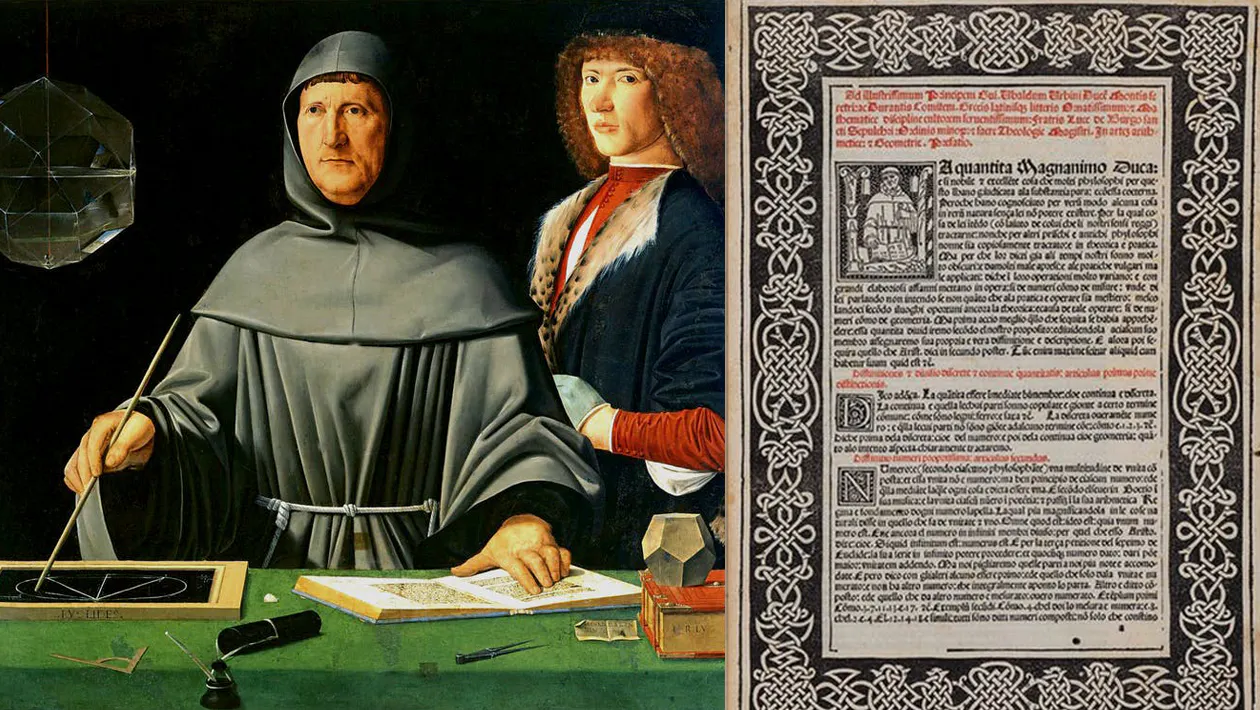
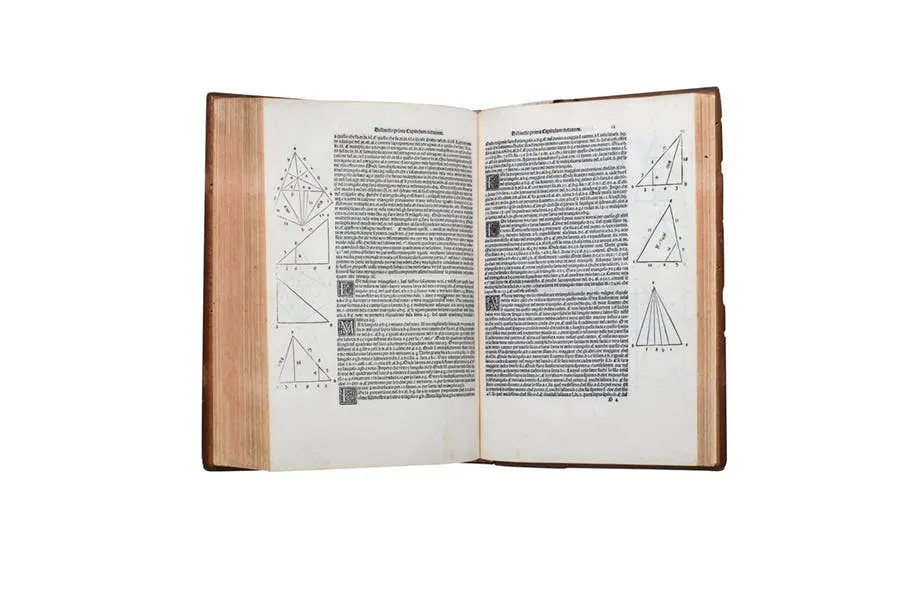
The famed Leonardo da Vinci is synonymous with Renaissance genius, but one of his friends and collaborators, Luca Pacioli, was also one of the era's brilliant minds and is considered the father of modern accounting. Pacioli's book Summa de arithmetica, geometria, proportioni et proportionalita, which was published in 1494, is the most important treatise of arithmetics, geometry and proportions of the Renaissance age and was written entirely in Italian, a complete novelty for the time. Leonardo da Vinci purchased the Summa in 1495, as evidenced by his notebook the Codex Atlanticus, and some time later, he befriended the author in Milan where Pacioli lived in 1496 following the success of the book. The book was always on Leonardo's work table and Pacioli's study of proportions helped him in the creation of his masterpiece The Last Supper.
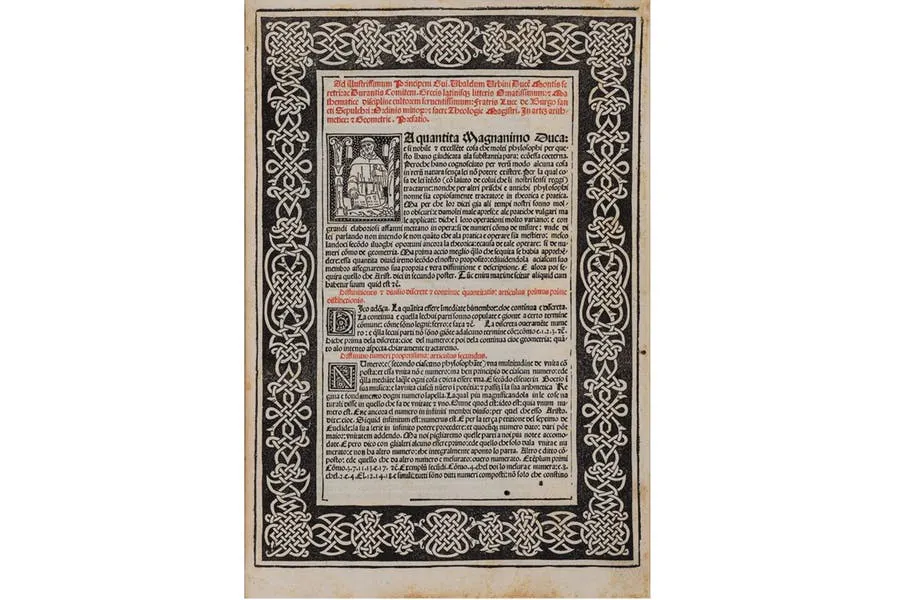
Considered the father of modern accounting because the Summa de Arithmetica introduces the double-entry accounting concept, Luca Pacioli was born in 1445 in Borgo Sansepolcro, Tuscany, and took his vows in 1470, entering the Franciscan Order. Pacioli summarizes in his book all the mathematical knowledge of the time and wrote it in the vernacular, Italian, which is notable because it was probably intended as a reference textbook for maths and business students in the merchant middle class.
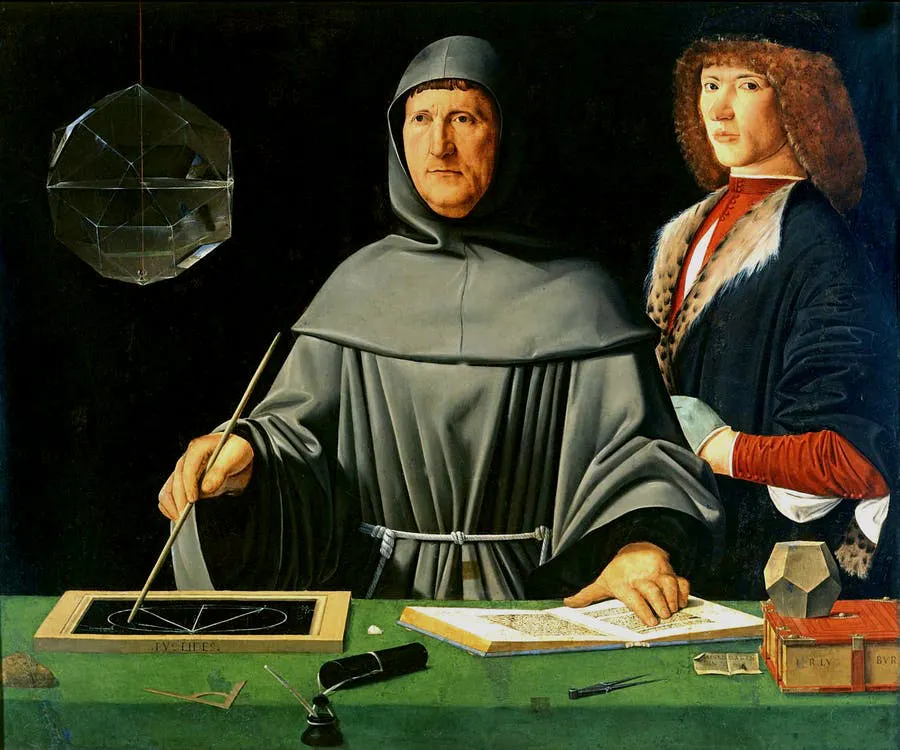
The Summa de arithmetica, geometry, proportioni et proportionalita was also the result of Pacioli's decades of meetings, studies and cultural exchanges with the most important Renaissance personalities, such as Leon Battista Alberti, who took the young Pacioli under his wing and taught him how important mathematics was in understanding art and science. Thanks to the humanist, Luca Pacioli arrived in Venice in the 1490s, the era's main centre of commerce, where he became tutor to a rich family of merchants, the Rompiasis, synthesising his years of studying mathematics and accounting with the business world of trade.
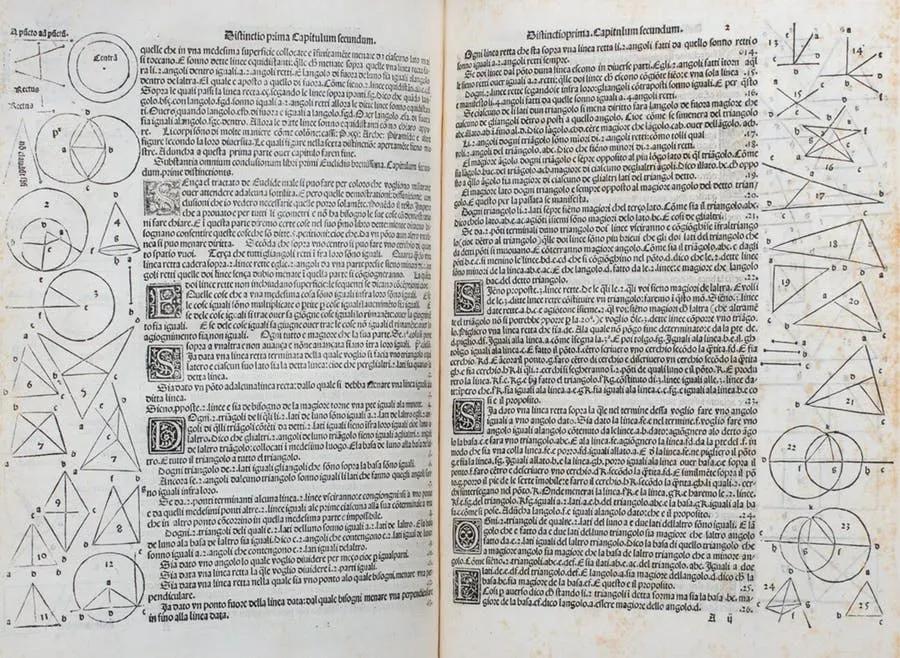
In Venice he also rediscovered treatises of other scholars, in particular those of Fibonacci, an Italian mathematician who had introduced the Arabic numerical system into Europe in the 13th century. The first part of the Summa, dedicated to algebra, owes a great deal to Fibonacci's Liber Abaci, while for the rest of the work is influenced by the theories of Boezio, Sacrobosco, Tolomeo, Euclid and Archimedes, in addition to humanist and mathematician Piero della Francesca. The Summa collected and ordered the knowledge of the past in a single work, thus becoming the most complete mathematical text ever published until then. The first edition was published in Venice in 1494 and was dedicated to Guidobaldo da Montefeltro, the Duke of Urbino, Pacioli's patron.
The work is divided into ten chapters, covering arithmetic, algebra, book-keeping, billing, investment, accounting and more. While Pacioli did not originate all of these ideas, he did aggregate them into one text. However, the accounting chapter is in fact the first modern treatise on economics: Pacioli defines and illustrates all the activities related to the market, analyses the concept of goods, productive activity, profits and losses, and how to resolve problems and accounting operations algebraically. For the first time, the double-entry method of accounting was disseminated through the press. The Italian word ragioniere (meaning accountant in English) was introduced by Pacioli to identify the key figures capable of making the calculations readable and clear.
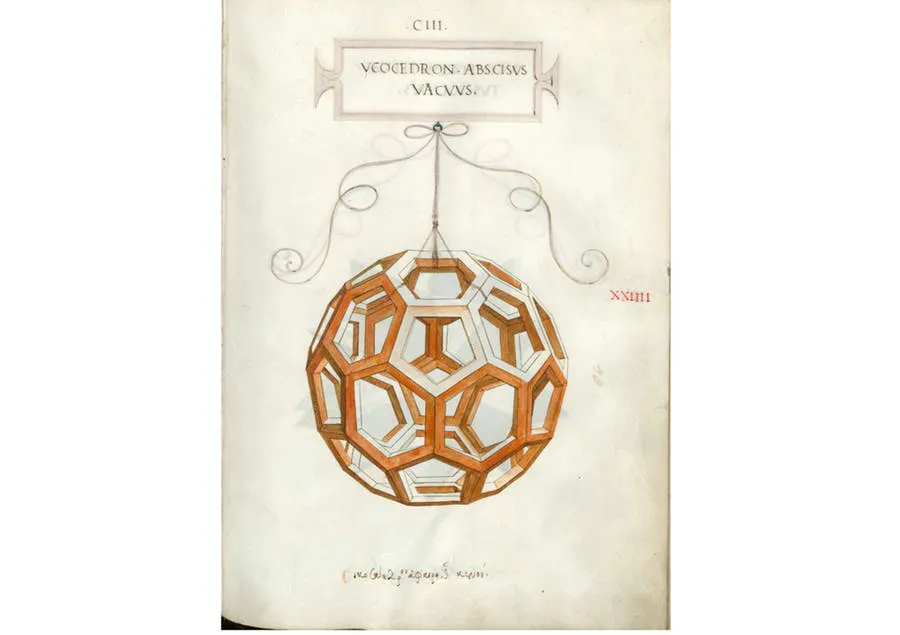
Between 1496-98, Pacioli and da Vinci collaborated on the book Divina Proportione that focused on proportions and mathematics, such as the golden ratio, in relation to a range of topics, including art, architecture and faith. Proportione delves into the concept that man has the desire to detach himself from earthly things to discover the metaphysical principle that allows him to understand God. Pacioli wrote the text and da Vinci illustrated. However, just a year later both Pacioli and da Vinci had to leave Milan because King Louis XII of France conquered the city. Therefore, the book wasn't published until a decade after in 1509 in Venice.
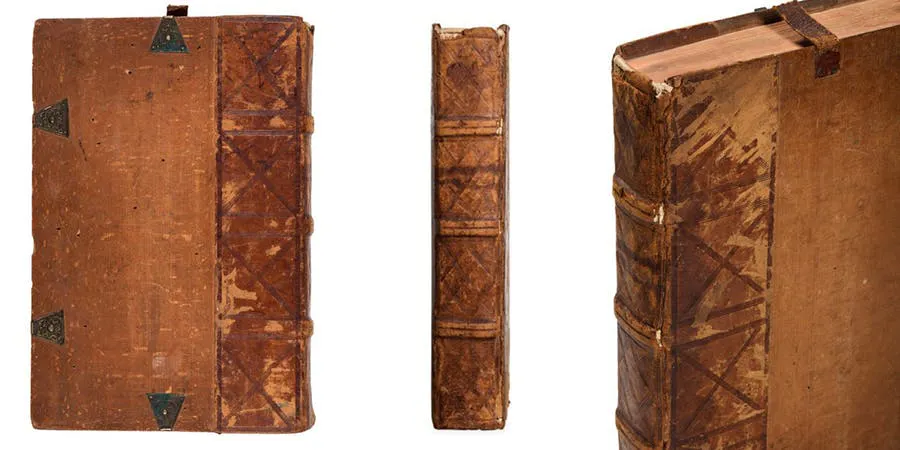
Now, collectors can own one of the most important works of Renaissance mathematics history: the first edition of the first issue of the Summa, dating from 10-20 November 1494, which will be auctioned by Finarte auction house in Rome on 20 June. This is especially unique at market, distinguishable from the two subsequent editions due to the presence of some internal changes recorded by DA Clarke. The estimate is available upon request.
The auction will be held on 20 June at Palazzo Odescalchi in Rome. In the meantime, you can also discover all the other Finearte lots for sale directly on Barnebys or browse the catalogue dedicated to the Summa.