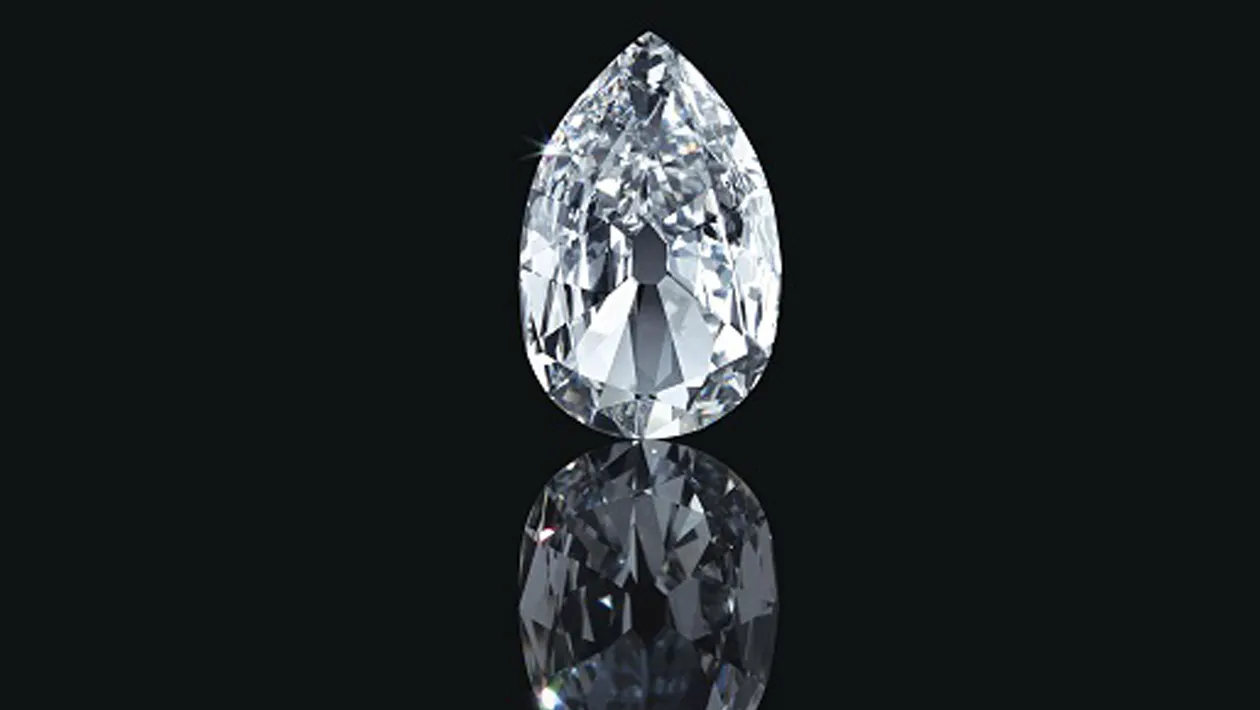
Christie's Maharajas and Mughal Magnificence auction on 19 June is arguably one of the most extravagant sales of jewellery to ever enter the auction room. With over 350 lots glittering with enormous diamonds, emeralds, rubies, natural pearls and more, the auction showcases the rich splendour of the Mughal Empire and India's Golden Age. The collection comes from the Al-Thani family, the Qatari royal family, with proceeds benefiting the Al Thani Foundation. One of the major highlights of the opulent collection is the Arcot II, one of a pair of diamonds that has a legendary history of ownership including the British royal family and Harry Winston.
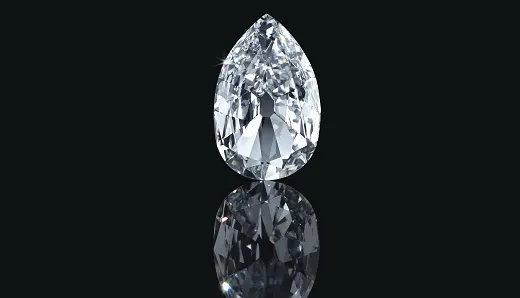
Extracted from the Golconda mine in India, where some of the most famous diamonds including the Hope Diamond and the Koh I Noor diamond in the Royal Collection were mined, the Arcot diamonds were originally owned by Muhammad Khan Wallajah, the Nawab of Arcot, an Indian viceroy. He collaborated with the British East India Company, paying them to defend his territory from other Indian kingdoms. As a gift of thanks to his British protectors, he presented Queen Charlotte (1744-1818), wife of King Charles II, with five diamonds in 1777.
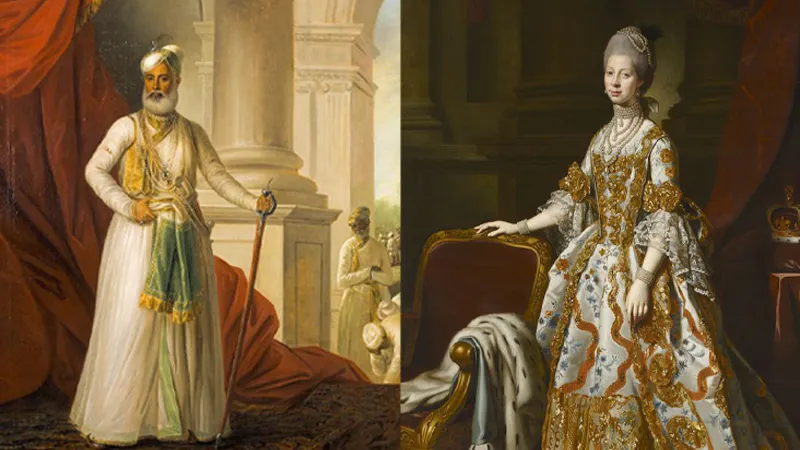
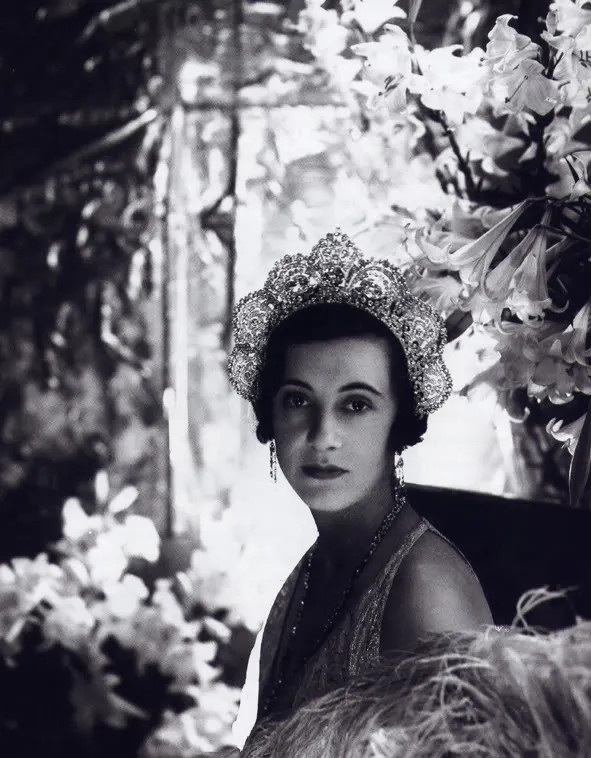
Upon Queen Charlotte's death, she willed the diamonds to her children, but her son Charles II, responsible for the jewels, sold them to the crown's royal jeweller. In 1837, two of the diamonds, referred to as Arcot I (33 carats) and II (23 carats), were purchased at auction by Robert Grosvenor, First Marquess of Westminster, who gave them as a present to his wife. They remained within the Grosvenor family for over a century and and were subsequently reset into a tiara in 1930. A year later, Cecil Beaton photographed Loelia, the third wife of Hugh Grosvenor, the second Duke of Westminster, wearing the tiara studded with the two Arcot diamonds. In 1953, the Duke's fourth wife wore the tiara to the coronation of Queen Elizabeth II.
In 1959, the Grosvenors sold the tiara at auction for £110,000 pounds (about £2.4 million today) to Harry Winston who removed the two Arcot stones. In 1960, Arcot II was purchased by socialite Baroness Stefania Von Kories Zu Geotzen, who had a penchant for fine jewellery. In fact, in the 1980s, she was accused of being involved in a jewellery heist at the Ritz Hotel in Paris after a couple was mugged in their suite and £3.15 million worth of jewellery was stolen.
The Arcot II later sold to QIPCO (a Qatari holding company) for the Al Thani royal family. Its larger twin, Arcot I, was acquired by Van Cleef & Arpels and set into a necklace, selling in 1993 to a Saudi diamond collector for almost £1 million (about £1.6 million today). Today, the Arcot II has been re-cut to weigh 17 carats and is estimated to achieve between £1.57-3.15 million at auction.
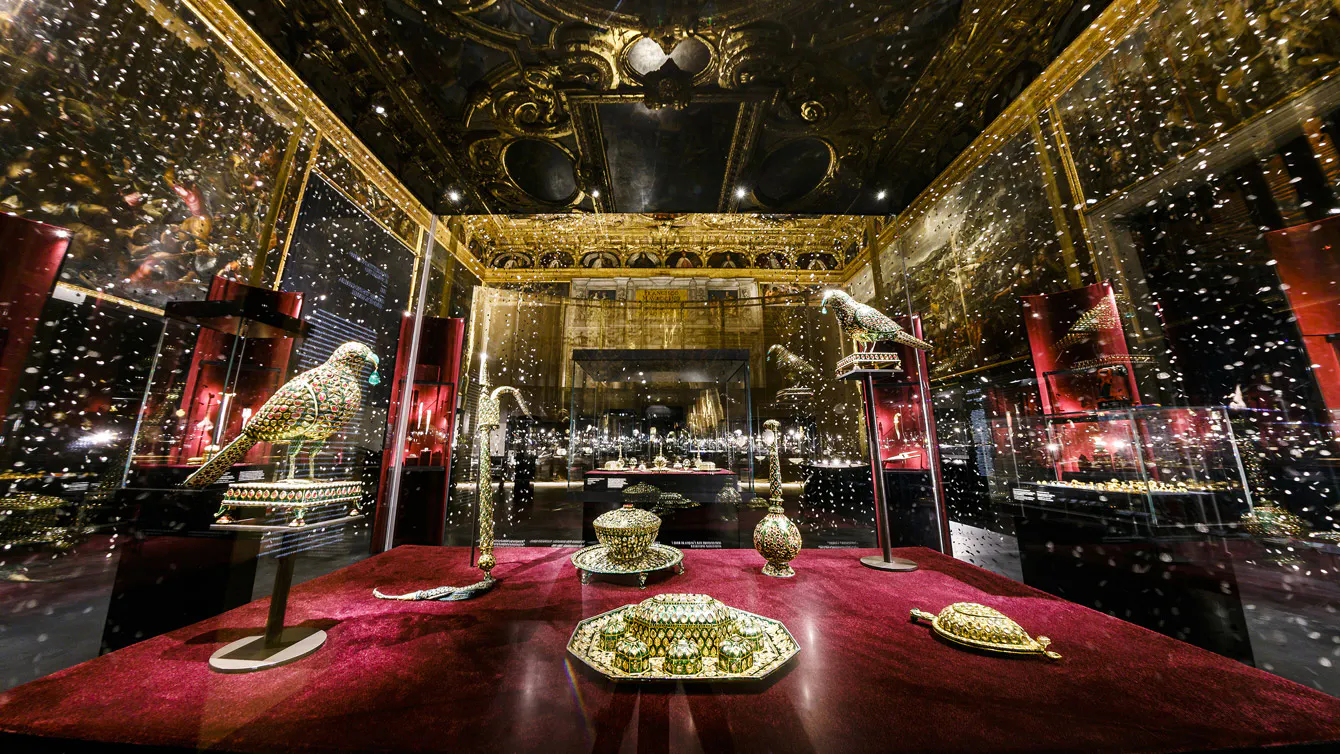
In addition to this impressive diamond, the auction has some seriously lavish jewels. The 290-lot Al Thani collection toured worldwide last year, from the Metropolitan Museum of Art to the Doge's Palace in Venice.

Highlights include ornate jewellery by Jacques Cartier, who visited India in 1911 and was commissioned by Indian royalty to create truly exquisite pieces with their crown jewels. These baubles often combined elements of Mughal opulence and Art Deco styles from Paris. The top lot is a diamond studded corsage that was commissioned by Solomon Barlato Joel, the head of a South African diamond mine, and boasts 34- and 23-carat diamonds.

Another Cartier treasure is a ruby and pearl choker that was originally part of an enormous ruby, diamond and pearl necklace ordered by Bhupinder Singh, Maharaja of Patiala (1891-1938), who was known for his indulgent lifestyle.

Also on offer will be a selection of turban headpieces called sarpechs (translating from Hindi to "head feather"), which were worn by Indian royals and became increasingly extravagant after 1857 when Queen Victoria because the Empress of India and crowns were outlawed. They were often bejewelled with priceless rubies, diamonds, emeralds and more to signify Indian royalty and wealth.

This diamond jigha turban ornament from the early 20th century attached with a snowy white plume incorporated designs of the European Belle Epoque to fit the attire of Indian royals.

Also incredible are the detailed enamelled and gem works, such as this parrot figurine, hookahs and dagger hilts. Rich in colour and incredibly crafted, many of these works were owned by the Nizams of Hyderabad, the Indian monarchy formed in 1724 as part of the Mughal Empire before its dissolution in the mid-20th century.